Blog

  • Bits & Pieces: BounceBack free CBT program, primary care guidance update & more

    Bits & Pieces: BounceBack free CBT program, primary care guidance update & more

    Your Weekly News & Updates


    In This Issue  
    • BounceBack free CBT program available
    • AFHTO on The Agenda
    • Members’ stories
    • Updated primary care guidance and more
    • Evidence of value- Health Tapestry
    • Seeking IHP input on current practice
    • Understanding Bronchiectasis webinar audio
    • Primary Care Dietitian Association
    • Doctors’ Day is May 1
    • Nominations open for the N4’s newcomer navigation program
    • Upcoming events including Safety Considerations with Chloroquine, Hydroxychloroquine and Azithromycin in the Management of COVID-19

    BounceBack free CBT program available

    Mental health concerns are among the many challenges Ontarians are currently facing amid the COVID-19 pandemic. The Canadian Mental Health Association wishes to remind you that their BounceBack program remains an effective option to support you and your patients who may be dealing with mild-to-moderate anxiety or depression, or may be feeling low, stressed, worried, irritable or angry.

    BounceBack is a free, evidence-based cognitive behavioural therapy (CBT) skill-building program for adults and youth 15 and older. You can find out more here- English and French.

    They also have a tip sheet- 10 things you can do right now to reduce anxiety, stress, and worry related to COVID-19English and French.


    AFHTO on The Agenda

    Be sure to watch last Friday’s episode of The Agenda, where AFHTO’s president and board chair, Dr. Tom Richard, joined Dr. Sarah Newbery, Marathon FHT and Dr. Javed Alloo to discuss how family physicians and primary care are coping with caring for patients during the COVID-19 pandemic.
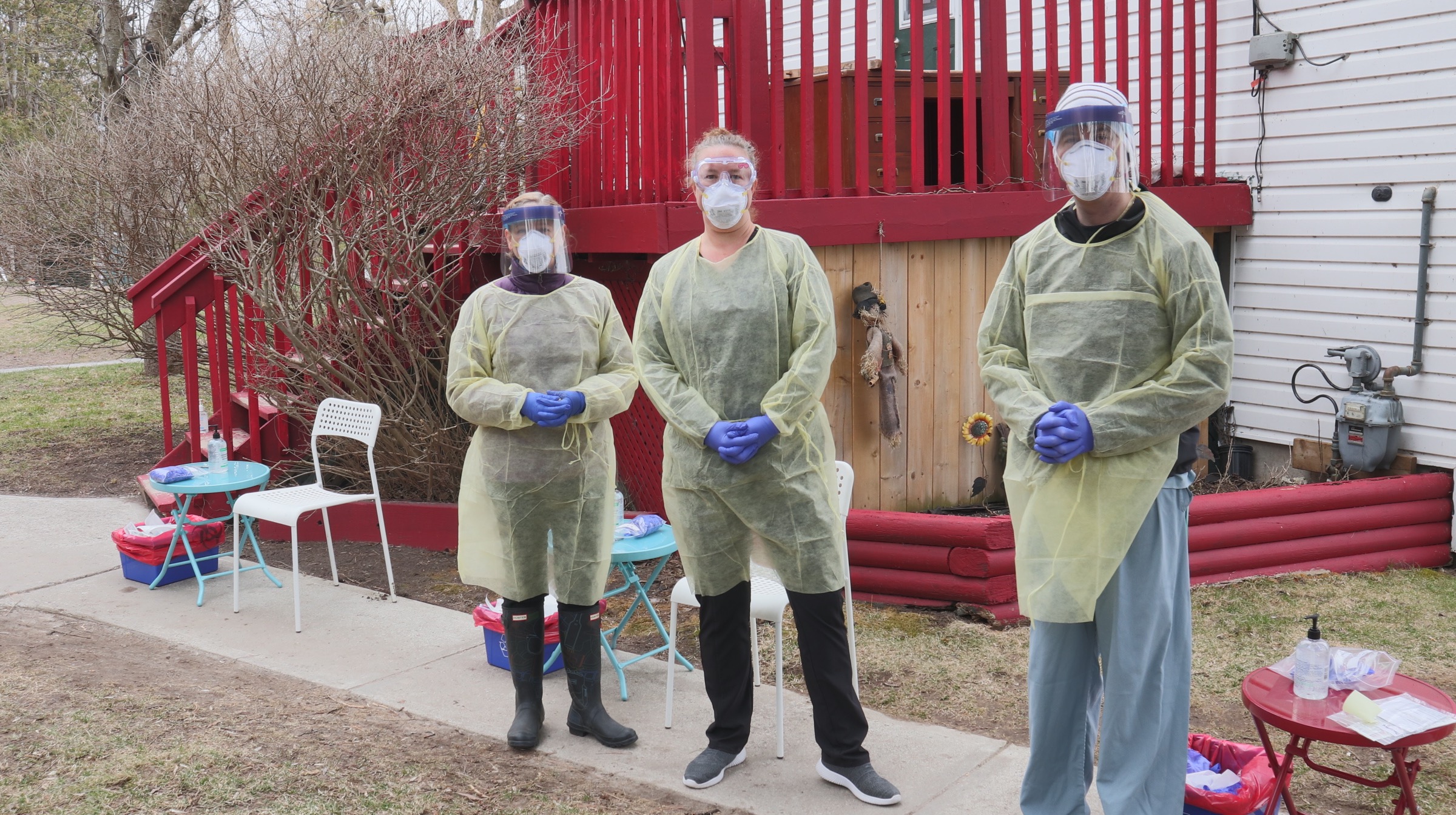

    Georgina NPLC NPs Beth Cowper-Fung, Melissa Cassidy & John Holbrook at their community outreach COVID testing visit

    Members’ stories

    Georgina NPLC- on April 24, held a community outreach COVID testing visit. They tested thirty-one people in twenty minutes, with York Region Community Paramedics performing the ‘clean work’.

    Hamilton and McMaster FHTsHamilton and McMaster FHTs provide drive-thru COVID-19 testing for 60 people per day

    STAR FHT– “We should not be distancing ourselves socially. We want to stay connected,” said Hayley Stretch, a psychotherapist with the STAR Family Health Team in Stratford.

    Wawa FHTHealthy Exercising During COVID-19 – video


    Updated primary care guidance and more

    Yesterday, the government released an updated primary care guidance document, amended from one released on Apr. 25 that needed further clarification. Other updates are:

    We continue to update several pages on our site with resources and news:

    We’ll update these on a regular basis as we receive relevant resources, while trying to reduce duplication with other sources. We will continue to update the news page daily.


    Evidence of value- Health Tapestry

    A study published on April 15 examines implementation of Health TAPESTRY in relation to interprofessional teamwork including volunteers. It contributes key strategies for effective implementation of interventions. Authors include Lisa Dolovich, Gina Agarwal, Cathy Risdon of McMaster FHT. Read more here.


    Seeking IHP input on current practice

    If you’re an interprofessional health provider at a FHT, A team of researchers wants to learn more about your experience as a provider during COVID-19. during the COVID-19 pandemic. Find out more here.


    Understanding Bronchiectasis webinar audio

    On April 21 we hosted a webinar about bronchiectasis, helping participants to understand the difference between bronchiectasis and COPD, recognize lifestyle changes needed to improve quality of life, and how to avoid environmentally acquired antibiotic-resistant bacteria.

    Presented by Isabelle LeClerc, Chronic Disease Self-Management and Support Registered Nurse, Bruyère Academic FHT, the audio for this session is now available. In true 2020 fashion, you can listen to it like a podcast while you do the dishes.


    Primary Care Dietitian Association

    Primary Care Dietitian Association

    The Primary Care Dietitian Association (PCDA) was created as a community of practice for Registered Dietitians practicing in team based primary care. PCDA will enable Registered Dietitians to provide evidence-based nutrition care.

    The Primary Care Dietitian Association enables Primary Care Dietitians to provide medical nutrition therapy, disease prevention and health promotion collaboratively within team based primary health care settings. The PCDA is committed to the Quadruple Aim and patient centric care.

    Please contact Marg Alfieri ( margalfieri@icloud.com) if you have any questions or wish to collaborate with hundreds of team-based primary care Dietitians to optimize Canadian’s health and wellness.


    Doctors’ Day  2020

    Doctors’ Day is May 1

    On Friday, May 1 we will be celebrating Doctors’ Day, to highlight the work doctors do to keep us healthy. With this year’s Doctors’ Day falling in the middle of COVID-19, the Ontario Medical Association is organizing a special moment so Ontarians can come together from a distance and participate in celebrating doctors.
    On May 1st at 9:00 p.m., they’re asking Ontarians to Shine A Light For All They Do. You can share through your channels with hashtags #DoctorsDay & #ShineALightForThem. You can also find out more at www.doctorsday.ca.


    Nominations open for the N4’s newcomer navigation program

    The National Newcomer Navigation Network (N4) is a national network for the diversity of providers who assist newcomers in navigating the complex Canadian healthcare and social service systems. They provide opportunities for education, virtual discussions, networking, and the sharing of data and resources.
    They are now accepting nominations for the second cohort of the online Newcomer Navigation Program. Teams may wish to consider nominating a member for the program! Deadline to nominate for this cohort is May 15. More information is here.


    Investigating The Current And Potential Use Of EMR Data For Primary Health Care Performance Measurement Across Canadian Jurisdictions, April 28, 2020
    Hosted by the Dalla Lana School of Public Health, listen in on the key findings for jurisdictions that are optimize EMR data and performance measurement. Learn more here.


    Considerations with Chloroquine, Hydroxychloroquine and Azithromycin in the Management of COVID-19, April 29, 2020
    Choosing Wisely Canada hosts weekly webinars to discuss pressing topics around COVID-19. Join to learn and connect around freeing up these limited healthcare resources. Learn more here.


    COVID-19 Virtual Psychosocial Support Groups, April 30, 2020
    The de Souza institute provides nurses and healthcare providers a platform to discuss fear, normalize stress reactions and learn effective coping mechanisms and build resilience during these times. Click here to learn more.


    How to do a Virtual Asthma Visit during COVID-19, April 30, 2020
    Join the Family Physician Airways group on Thursday evening. Click here for the webinar join link.


    Ask Me Anything about Health Privacy, May 6, 2020
    These monthly webinars give you the chance to ask Kate Dewhirst about your Health Privacy concerns. Register here.


    PEER’s review of the evidence for COVID-19, May 7, 2020
    Join this CFPC webinar as part of the COVID-19 Pivots. Find the webinar link posted here.

  • Nominations for the Newcomer Navigation Program now open!

    The N4 is accepting Nominations for the Online Program in Newcomer Navigation!

    The National Newcomer Navigation Network (N4) program is pleased to announce the call for nominations for the second cohort of the Online Program in Newcomer Navigation. Teams may wish to consider nominating a member for the program. Please note the deadline to nominate for this cohort is May 15.

    Based in Ottawa, N4 is a pan-Canadian professional platform funded by Immigration, Refugee and Citizenship Canada (IRCC). N4’s aim is to support newcomer-serving organizations to connect, learn, and collaborate around newcomer navigation, and ultimately to promote best practices and an equitable experience for newcomers across Canada. 

    The online program in newcomer navigation was co-developed by Saint-Paul University and N4 with the goal of providing candidates the knowledge and skills to help newcomers navigate our complex health and social services system.

    Key information:

    • This cohort is open to 30 professionals in the health and settlement sectors from across Canada.
    • All costs are covered by N4 (i.e., tuition, registration, books).
    • The program runs from July 2020 to June 2021. It consists of 10 courses and two practicums supported by the candidate’s current workplace. 
    • Individuals must be nominated by their organization.
    • The deadline for nomination is May 15.
    • Once nominated, N4 will contact nominees to proceed with the application process. 
    • More information about the program, the nomination process, and the application process are here.

    Anyone interested can contact the N4 Learning Specialist Natalie Graham at nagraham@cheo.on.ca for more information about the online program and nomination.


    What is the N4?: The National Newcomer Navigation Network (N4) is a national network for the diversity of providers who assist newcomers to navigate the complex Canadian healthcare and social service systems. They provide opportunities for education, virtual discussions, networking, and the sharing of data and resources. The aim is to promote best practices in the field of newcomer navigation, with the ultimate goal of improving the experience of new Canadians. 

    Vision: For Canadian newcomers to have a consistent and equitable experience in navigating health and social services during their settlement.  

    Mission: To create a national platform for newcomer serving professionals to connect, learn, and collaborate around system navigation.  

    More information about N4 is here.

  • Follow-up from ED calls, April 21 – 22 and more

    This email was sent to EDs/Administrative Leads, Board Chairs and Lead Clinicians of AFHTO member organizations.

    Dear triad members,

    Thank you to all the executive directors who joined our second round of regional ED calls last week. It’s proving helpful to hear what is working well, how you are managing the challenges you’re facing, and how we can help.

    This email is a follow-up to provide the information promised during the calls, as well as other updates and supports.

    PPE

    •         AFHTO, OCFP, and NPAO issued a joint letter to the Minister of Health on April 15 regarding the urgency for PPE across the primary care sector.
    •         Teams are encouraged to reach out to their Ontario Health regional leads to ensure they are part of regular communication across regions, and to provide updates and need regarding PPE supply. Regional table leads can be seen here.
    •           The ministry will be releasing PPE guidelines in about a week’s time, which will include an outline on how distribution is prioritised and strategies to help ensure PPE conservation.

    Virtual care

    •         Two documents have been posted to assist with virtual care: Hosting Group Platforms Virtually and Summary of Virtual Visit Platform Solutions.
    •         The amount of care that is being delivered in-person is fairly consistent across teams. Polls during the ED calls showed that the majority of physicians and nurse practitioners – 79% and 80%, respectively – are delivering 10% or less of the care in-person.
    •          Almost all teams polled on the calls have RNs and RPNs delivering at least some in-person care (97%). The other three professions most likely to be delivering in-person care, across the teams polled, were pharmacists (18%), chiropodists (15%), and physician assistants (13%).

    Financial Information

    • The federal and provincial governments have announced a series of tax changes and financial measures to build on the federal government’s COVID-19 Economic Response Plan, including:
      • 10% wage subsidy – teams may qualify for a federal payroll deduction rebate for employee compensation paid between March 18, 2020, and June 19, 2020 (up to $1,375 per employee and to a maximum of $25,000 total per employer).
      • Employer Health Tax (EHT) – Retroactive to January 1, 2020, the EHT exemption for 2020 will be increased from $490,000 to $1 million. If you have been remitting EHT, you can contact the Ministry of Finance to check your organization’s EHT account.
    • Teams should work with their accountants or financial advisors to determine and understand eligibility for any financial subsidies.
    • For teams that qualify, they can request repurposing money towards COVID-related costs. The ministry is developing guidelines on eligible reallocations for unintended expenses through the normal reallocation process. Teams are encouraged to contact their senior program consultant about applying for reallocations.

    Human resources

    • AFHTO has confirmed WSIB’s new Classification Structure does not apply to FHTs and NPLCs. These changes only impact Schedule 2 organizations (e.g. those that have a public board appointed municipally or provincially), so it is not mandatory for teams to carry WSIB coverage at this time.
    • We heard many teams are beginning to redeploy staff to other sectors/organizations in need of support. We encourage all teams to check with their insurers on the best approach to redeployment to mitigate risk and liability concerns. We can also provide teams with a sample secondment agreement to help outline the terms and conditions of deployment.
    • The current emergency order prohibits long-term care employees from working in more than one long-term care home, retirement home, or health care setting. However, if primary care staff are redeployed to a long-term care home (or hospital setting or a testing/assessment centre), there is no provincial recommendation preventing them from continuing to work at their home organization. Similarly, there is nothing prohibiting staff from working across multiple primary care sites. That said, we encourage teams to follow these best practice tips for staff that are working in more than one sector or organization:
      • Ensure staff working in other settings are provided with appropriate PPE.
      • Encourage staff working in more than one setting to provide as much virtual care as possible and limit any in-person visits to those deemed necessary.
      • Where possible, loan staff on a full-time basis to other sectors as required to limit the need to work in two different settings.
    • AFHTO will update teams if/when further provincial guidance is offered on redeployment.

    Quality and research projects

    •          A brief web-based survey is underway to understand the experiences of IHPs in FHTs and to describe their state of practice during the COVID-19 pandemic. We encourage you share the link to the survey with your teams: https://queensu.qualtrics.com/jfe/form/SV_cZQNQrpCqKAc8K1
    •          The QI in PC Council has started two projects to support all teams. Please consider speaking with QIDSS and QIDSS-like individuals to encourage they join these groups, and contact Sandeep Gill with any questions:
    •    Standardized Queries for Chronic Diseases & High-risk Patients: Creating standardized queries to identify chronic disease patients, high-risk patients, and OHT priority populations. This will help with lists for vulnerable check-in calls during COVID-19 and priority population identification for OHTs post-COVID-19
    •    Let’s Measure the Impact of Primary Care during COVID-19: Creating meaningful indicators for primary care that can measure care provided during COVID-19 (ex: support provided to patients by IHPs, number of screenings completed, number of case reports sent to Public Health). This will create indicators to measure the impact of virtual care transition pre-, during, and post-COVID-19

    A few other things

    •           On April 25, the government announced an additional $4/hour of ‘pandemic pay’ for the next four months for frontline workers. The current list of eligible workplaces and workers does not seem to include primary care, but we are seeking clarity, especially for those who have been redeployed to COVID-19 assessment centres, LTC/retirement homes, or hospitals, and for those providing in-person clinical care.
    •          On April 25, the ministry also released version 4 of “COVID-19 Guidance: Primary Care Providers in a Community Setting.” There are significant inconsistencies in the document, including the misalignment between the case definition and the screening guidance and when full PPE should be used in the clinics. We have let the Emergency Operations Centre know that there are inconsistencies and requested a thorough review be done before dissemination.
    •         On April 27, the premier announced a high-level framework for the reopening of the province. The news release, which includes a link to the framework, is here.
    •         The provincial government has announced it’s partnering with the federal government to provide urgent rent relief for small businesses.
    •         The CEO of Ontario Health, Matt Anderson, issued an update on Wednesday, April 22, from Ontario Health’s COVID-19 Health System Response Team. You can read the memo here.
    •          AFHTO will be reaching out to EDs in the coming weeks to arrange an interview on teams’ pandemic approach, how virtual care changed practice, and a vision for primary care post-COVID in the ‘new normal.’

    Be sure to watch last Friday’s episode of The Agenda, where AFHTO’s president and board chair, Dr. Tom Richard, joined Dr. Sarah Newbery and Dr. Javed Alloo to discuss how family physicians and primary care are coping with caring for patients during the COVID-19 pandemic.

    And a reminder to keep checking out our COVID-19 section that we regularly update with news, tools, and resources, including the daily situation reports and regular memos from the ministry’s command table.

    Please consider sharing success stories that we can post and spread to help teams learn from one another, and to continue to show how team-based primary care is stepping up in the wake of this pandemic.

    We’ll continue to keep you updated, and we’ll arrange another round of check-in calls to happen in about 2-3 weeks’ time.

    Please contact us any time. We’re here to support you through this.

    Sincerely,

    Your AFHTO Team

  • Hamilton and McMaster FHTs provide drive-thru COVID-19 testing for 60 people per day

    Y108 News article published April 23, 2020

    By Lisa Polewski

    Hamiltonians can now book a COVID-19 test at the city’s drive-thru site, based inside the Dave Andreychuk Mountain Arena.
    It’s not quite the same as a fast-food drive-thru, but the COVID-19 testing centre at the Dave Andreychuk Mountain Arena is as efficient as it gets.

    Since Hamilton’s third testing site opened its doors a week ago, they’ve been testing about 60 people per day.

    “We book every five minutes, and it takes about three and a half minutes for a client to come through,” said Laurel Turnbull, manager of nursing, complex care and quality improvement at the Hamilton Family Health Team.

    The arena is functioning as a COVID-19 testing centre between 10 a.m. and 3 p.m., seven days a week. The Hamilton Family Health Team and the McMaster Family Health Team are operating the site, which is staffed by primary care clinicians.

    Jill Berridge, co-executive director of the McMaster Family Health Team, said the response to the unique method of testing has been overwhelmingly positive, especially from those who are being tested.

    “They love the fact that they can stay in the comfort of their own car, and go through this process, and how quick it is,” said Berridge.

    The mountain site is also testing those who don’t have a car. Elderly residents or those who rely on mobility devices are able to get a ride through DARTS, and anyone who may get to the arena by public transit can also simply walk around the track to the different stations.

    It’s not as simple as turning up and getting tested, however. Appointments at the Hester Street location still need to be booked through a family doctor or Hamilton public health.

    Berridge said most people understand that process, although a handful of people are still showing up on a daily basis without an appointment.

    “But they’ve been very reasonable when we’ve asked them to go ahead and call public health and get an appointment to come back.”

    Although testing has ramped up across Hamilton — specifically in long-term care and retirement homes — Berridge said they are following the provincial guidelines on who qualifies for testing, which means you cannot simply request a test.

    “It would be hard to test everybody. The capacity for that type of testing just isn’t available right now. I think we do a good job of prioritizing people that really need to be tested.”

    During an update from the city last week, Dr. Elizabeth Richardson, Hamilton’s medical officer of health, said they’ve been getting requests from people who have had their employers ask them for a “clearance note” to go back to work.

    “That is not recommended at all, and in fact, it’s taking up resources that could be used for those who are symptomatic,” said Dr. Richardson.

    “We want to really get the message out that that kind of testing, it’s not helpful. For somebody who’s well, the fact that they have a negative test today means nothing about tomorrow, or even five minutes after they’re tested.”

    There have been 3,238 tests administered at the city’s testing and assessment centres since the first two opened their doors on March 16.

    To view the full article, click here.

  • Examining Interprofessional Teams Structures and Processes in the Implementation of Primary Care Intervention (Health TAPESTRY) for Older Adults using Normalization Process Theory

    Available in BMC Family Practice, published April 15, 2020

    Authors:

    Background

    Many countries are engaged in primary care reforms to support older adults who are living longer in the community. Health Teams Advancing Patient Experience: Strengthening Quality [Health TAPESTRY] is a primary care intervention aimed at supporting older adults that involves trained volunteers, interprofessional teams, technology, and system navigation. This paper examines implementation of Health TAPESTRY in relation to interprofessional teamwork including volunteers.

    Methods

    This study applied Normalization Process Theory (NPT) and used a descriptive qualitative approach [1] embedded in a mixed-methods, pragmatic randomized controlled trial. It was situated in two primary care practice sites in a large urban setting in Ontario, Canada. Focus groups and interviews were conducted with primary care providers, clinical managers, administrative assistants, volunteers, and a volunteer coordinator. Data was collected at 4 months (June–July 2015) and 12 months (February–March 2016) after intervention start-up. Patients were interviewed at the end of the six-month intervention. Field notes were taken at weekly huddle meetings.

    Results

    Overall, 84 participants were included in 17 focus groups and 13 interviews; 24 field notes were collected. Themes were organized under four NPT constructs of implementation: 1) Coherence- (making sense/understanding of the program’s purpose/value) generating comprehensive assessments of older adults; strengthening health promotion, disease prevention, and self-management; enhancing patient-focused care; strengthening interprofessional care delivery; improving coordination of health and community services. 2) Cognitive Participation- (enrolment/buy-in) tackling new ways of working; attaining role clarity. 3) Collective Action- (enactment/operationalizing) changing team processes; reconfiguring resources. 4) Reflective Monitoring- (appraisal) improving teamwork and collaboration; reconfiguring roles and processes.

    Click here to read the full article.

  • Bits & Pieces: COVID-19 has likely peaked in Ontario, guidance update & more

    Bits & Pieces: COVID-19 has likely peaked in Ontario, guidance update & more

    Your Weekly News & Updates


    In This Issue  
    • COVID-19 outbreak has likely peaked in Ontario
    • Open letter on PPE in primary care during COVID-19
    • COVID-19 provincial testing guidance update and more
    • Virtual annual general meetings
    • Leadership in a crisis- one-page guide
    • Faces of COVID- Healthy Debate seeking frontline worker profiles
    • Upcoming events including Resource Stewardship in Primary Care During COVID-19

    COVID-19 outbreak has likely peaked in Ontario

    Yesterday the Ontario government released updated COVID-19 modelling, which shows that the enhanced public health measures are working to contain the spread of the virus and flatten the curve. However, the Chief Medical Officer of Health says emergency measures must remain in place to continue reducing the number of cases and deaths.

    Find out more on our site.

    A reminder that the Ministry has created a new website (https://covid-19.ontario.ca/) that includes the link to check your lab results if you have been tested for COVID-19, allows you to take the self-assessment and includes up to date number of COVID-19 cases, that is updated daily at 10:30 a.m.


    Open letter to Minister PPE Mask and gloves April 2020

    Open letter on PPE in primary care during COVID-19

    On Wednesday, April 15 an open letter regarding the lack of PPE in Primary Care during COVID-19 was released from the Association of Family Health Teams of Ontario (AFHTO), Nurse Practitioners’ Association of Ontario (NPAO) and the Ontario College of Family Physicians (OCFP). On behalf of our members we are seeking urgent assistance from Ontario’s Ministry of Health in ensuring access to appropriate PPE in order to safeguard patient access to primary care.

    We are recommending that the Ontario Ministry of Health immediately streamline the procurement of PPE through one central source for distribution to primary care through Ontario Health/regions and not leave primary care clinics to have to find PPE on their own. Read the full letter here.

    We are happy to hear that discussions related to the lack of PPE are continuing at the newly created Provincial Primary Care Advisory Table and at the Ontario Health regional tables.


    COVID-19 provincial testing guidance update and more

    The Ministry released multiple updates, including with situation report #83 last week, such as:

    We continue to update several pages on our site with resources and news:

    We’ll update these on a regular basis as we receive relevant resources, while trying to reduce duplication with other sources. We will continue to update the news page daily.


    Virtual annual general meetings

    Virtual collaboration is being considered and used more than ever considering the pandemic. On March 31, 2020, the Government of Ontario issued an Emergency Order that permits nonprofits to hold meetings of directors, shareholders, and members electronically or over the phone, even if there is legislation or bylaws (ex: Ontario’s Corporations Act) that say otherwise.

    Boards may consider this option for their Annual General Meetings (AGM). The Ontario Non-profit Network (ONN) has provided some tools to help boards move AGMs online and to facilitate them effectively and efficiently. Get resources here.


    Leadership in a crisis- one-page guide

    The coronavirus has caused LEADS Canada to shift immediately and dramatically to offering support to health leaders across the country in leading through (and following) the pandemic.
     
    In response, they developed a one-page guide called “Leadership in a Crisis”, which is based on recent research and input from a cadre of health and military experts (listed at the bottom of the document).


    Faces of COVID- Healthy Debate seeking frontline worker profiles

    Healthy Debate is looking to share the experience of frontline workers. If you are or if you know anyone currently on the front lines of COVID-19, send an email to contactus@healthydebate.ca or DM them on Twitter.


    CMHA Ontario and Mental Health Works Webinars – In response to COVID-19 pandemic, April 22, 2020
    For health care professionals and workers: with topics relevant to both hospitals and clinics, as well as telehealth professionals and those who work to support patient outcomes, such as custodial staff, security professionals, and administrators.

    General Workplace Supports:

    • Being Mindful at Work (office and from home) –(FR) April 22, 1 pm

    Less is More: Resource Stewardship in Primary Care During COVID-19, April 22, 2020
    Learn what primary care practices and re-organizing resources can protect staff while ensuring continuity of care in response to COVID-19. Choosing Wisely Canada invites you to their weekly discussions. Learn more here.


    Optimizing Care of the Elderly and Long-term Care Residents during the Pandemic, April 23, 2020
    Tune into this CFPC webinar hosted by AFHTO’s VP, Dr. Allan Grill. This webinar is part of the CFPC’s COVID-19 Pivots. Links will be available here.


    Investigating The Current And Potential Use Of EMR Data For Primary Health Care Performance Measurement Across Canadian Jurisdictions, April 28, 2020
    Hosted by the Dalla Lana School of Public Health, listen in on the key findings for jurisdictions that are optimize EMR data and performance measurement. Learn more here.


    Ask Me Anything about Health Privacy, May 6, 2020
    These monthly webinars give you the chance to ask Kate Dewhirst about your Health Privacy concerns. Register here.

  • COVID-19 Outbreak Has Likely Peaked in Ontario

    Ontario News Release

    Modelling shows physical distancing still needed to prevent further spread

    TORONTO — The Ontario government today released updated COVID-19 modelling, which shows that the enhanced public health measures, including staying home and physically distancing from each other, are working to contain the spread of the virus and flatten the curve. However, the Chief Medical Officer of Health says emergency measures must remain in place to continue reducing the number of cases and deaths.

    “The modelling clearly demonstrates that we are making progress in our fight against this deadly virus. That’s due to the actions of all Ontarians, those who are staying home and practising physical distancing, and to the heroic efforts of our frontline health care workers,” said Premier Doug Ford. “But COVID-19 continues to be a clear and present danger, especially to our seniors and most vulnerable citizens. That is why we must continue to follow the advice of our Chief Medical Officer of Health and stay the course in order to keep people safe and healthy.”

    Key highlights from the modelling update include:

    • The wave of new community spread cases of COVID-19 in Ontario appears to have peaked.
    • Outbreaks in long-term care and congregate settings continue to be a major concern. Concerted actions are underway to protect vulnerable people in these settings.
    • Ontario is now trending toward a best case scenario rather than a worst case scenario and has significantly improved its standing as compared to March modelling.
    • The province has avoided a significant surge in cases. Total cumulative cases are forecast to be substantially lower than worst case or even moderate case scenarios projected by previous models.
    • While several hundred new cases are identified daily in Ontario, hospitals across the province have not been overwhelmed by the COVID-19 outbreak as a result of capacity planning and the public health measures currently in place. The rate of growth day-over-day is declining.
    • To further reduce the number of cases and deaths, it remains critical that Ontarians continue to adhere to public health measures, including staying home and practicing physical distancing if they must go out for essential reasons only.

    ADDITIONAL RESOURCES

  • An Open Letter from AFHTO, NPAO and the OCFP on PPE in Primary Care During COVID-19

    An Open Letter from AFHTO, NPAO and the OCFP on PPE in Primary Care During COVID-19

    April 15, 2020

    An open letter regarding PPE in Primary Care during COVID-19 was released today from the Association of Family Health Teams of Ontario (AFHTO), Nurse Practitioners’ Association of Ontario (NPAO) and the Ontario College of Family Physicians (OCFP). On behalf of our members – who are caring for patients in communities across Ontario in the midst of COVID-19 – we are seeking urgent assistance from Ontario’s Ministry of Health in ensuring access to appropriate PPE in order to safeguard patient access to primary care.

    Ontarians should not feel reluctant to visit their clinicians who can take the precautions necessary for that visit, and our members are working tirelessly to keep primary care open and operating – despite PPE shortages.

    However, we are quickly reaching a breaking point in primary care. Without the needed PPE to keep everyone in our medical offices and clinics safe, some will be forced to close their doors to in-person care. This may prompt some patients to go to the ER for in-person care, or worse, not seek care at all.

    We are recommending that the Ontario Ministry of Health immediately streamline the procurement of PPE through one central source for distribution to primary care through Ontario Health/regions and not leave primary care clinics to have to find PPE on their own.

    Read the full letter here.

  • Bits & Pieces: how Lakelands FHT handled COVID-19, Business Continuity Toolkit now available & more

    Bits & Pieces: how Lakelands FHT handled COVID-19, Business Continuity Toolkit now available & more

    Your Weekly News & Updates


    In This Issue  
    • How Lakelands FHT handled a positive COVID-19 result at their clinic
    • COVID-19 provincial testing guidance update and more
    • Business continuity toolkit for COVID-19 now available
    • Advance Care Planning Day (April 16): Approach to Goals of Care Conversations
    • Member renewal payments- accepting payments via Interac and EFT
    • Update on the 2020/21 QIP submission deadline
    • Upcoming events including CMHA Ontario and Mental Health Works Webinars – In response to COVID-19 pandemic

    How Lakelands FHT handled a positive COVID-19 result at their clinic
    “In late March, Lakelands FHT discovered that there was a positive case at our Northbrook site. That resulted in the immediate closure of our building.

    We all had to go home and finish 14-day periods of self-isolation. To our surprise, this meant having to distance ourselves from our own families, which was very difficult.”– Dr. Matt Dumas, Lead Physician, Lakelands FHT

    Find out more on our site.


    COVID-19 provincial testing guidance update and more
    The Ministry released a COVID-19 provincial testing guidance update as of Apr. 8. Also last week, we created a page Providing Comprehensive Care During COVID-19 which includes resources related to COVID-19 for providing comprehensive primary care.

    We continue to update several pages on our site with resources and news:

    We’ll update these on a regular basis as we receive relevant resources, while trying to reduce duplication with other sources. We will continue to update the news page daily.


    Business continuity toolkit for COVID-19


    Business continuity toolkit for COVID-19 now available

    On Thursday, April 9 we launched our business continuity toolkit, developed to help our teams plan for and adapt to the disruption of COVID-19. It can potentially be used for future pandemic disruptions as well.

    Within the toolkit you will find tools and resources to help develop a plan for your own organization. A reminder to check the AFHTO website for templates your colleagues have developed if you are looking for tools you can adapt. Please also send us any materials you are developing so we can share with your colleagues as well.


    Advance Care Planning Day (April 16): Approach to Goals of Care Conversations
    Health can change without warning. That is more evident than ever in the COVID-19 reality.
    We all need to help patients, their families and our health care providers have conversations that will lead to the care people need and want, reflecting their values and wishes.

    HPCO, in collaboration with Speak Up Ontario, has been hosting a series of Physician Forums around goals of care and advance care planning for healthy and high-risk patients. Last week they hosted a Physician Forum entitled, “Conversations with your Patients during COVID Pandemic”. You can access all recordings (both past and present) using this link.

    On National Advance Care Planning Day (April 16th) they will be co-hosting a Palliative Care and COVID-19 Forum on Approach to Goals of Care Conversations with the Ontario Medical Association from 7:00 – 8:30 p.m. Your feedback on the forum and recommendations for future webinar topics that you would like to see covered are welcome here.


    Member renewal payments- accepting payments via Interac and EFT
    As we mentioned several weeks ago, we understand members are focused on COVID-19 right now. Last week Ontario extended the state of emergency until April 23 and our building remains closed. If you plan to pay by cheque, please continue to hold.

    However, we can still accept payments via Interac and EFT. We’ll provide another update as soon as we’re able to do so. Please contact info@afhto.ca for further information.


    Update on the 2020/21 QIP submission deadline
    Ontario Health (Quality) has decided to pause the 2020/21 QIP submission for now to allow organizations to focus their efforts on supporting their staff, their health care providers, and their communities to manage the treatment and containment of COVID-19.

    If your QIP is near completion and you would like to submit, please proceed, as the QIP Navigator will remain open. They will continue to monitor this situation closely and will provide an update by the end of June. Please contact QIP@hqontario.ca if you have any questions or concerns.


    CMHA Ontario and Mental Health Works Webinars – In response to COVID-19 pandemic, April 15-21, 2020
    For health care professionals and workers: with topics relevant to both hospitals and clinics, as well as telehealth professionals and those who work to support patient outcomes, such as custodial staff, security professionals, and administrators.

    1.    Mental Health for TelehealthApril 15, 6-7 pm
    2.    Mental Health for Support Staff: Taking Care of YourselfApril 17, 6-7 pm

    General Workplace Supports:
    3.  Being Mindful at Work (office and from home) April 17, 10 – 11 AM; (FR) April 22, 1 pm
    4.  Isolation and LonelinessApril 21, 12 – 1 pm


    ECHO Coping with COVID, April 15 & 17, 2020
    These weekly webinars are for healthcare providers responding to the COVID-19 pandemic to share and learn about ways to build resilience and overall wellness. Learn more here.


    Understanding Bronchiectasis Webinar, April 21, 2020
    Learn more about this neglected pulmonary disease. By the end of this webinar, you will be able to help patients self-manage the disease and avoid the acquisition of nontuberculosis mycobacteria. Find out more here


    The COVID-19 Pivots: April 15 & 16, 2020
    Jon the upcoming CFPC COVID-19 Pivot webinars: Le virage COVID-19 : Adapter la pratique de médecine de famille aux soins virtuels on April 15, and Examining public health campaigns in the pandemic battle on April 16. Find the webinar links here.


    Person-Centered Decision-Making Conversations Webinar, April 16, 2020
    Gain awareness for Person-Centred Decision Making (PCDM) components and more with the Palliative Care CoP.  Find out more here


    When Video Isn’t an Option: Counselling via E-mail Chat and Phone, April 20, 2020
    Learn how to maximize your text and phone-based counselling methods in this online training, hosted by the OASW. Learn more here.

  • How Lakelands FHT Handled a Positive COVID-19 Result At Their Clinic

    As told by Dr. Matt Dumas, Lead Physician, Lakelands FHT*

    In late March, Lakelands FHT discovered that there was a positive case at our Northbrook site. That resulted in the immediate closure of our building. We all had to go home and finish 14 day periods of self-isolation. To our surprise, this meant having to distance ourselves from our own families, which was very difficult.

    The day that we realized we would have to close our building, we decided to build a clinic without walls. We accomplished this by creating an email account for patients to contact us and posted this on our website and Facebook pages. Our 3 physicians and 2 NPs were able to remotely access the PSS EMR and fax prescriptions from our own homes. Our super RN/IT expert also had remote access and provided critical support. We were able to create schedules for ourselves and call patients from our homes by turning off the Caller ID’s on our phones. Our Mental Health Social Worker was able to call the patients in her schedule as well.

    The Lead Physician monitored the email daily and transferred the emails to the appropriate provider for action. Once the emails were completed, they were moved to a separate folder and our RN copy/pasted the emails into the patient’s chart before deleting them from the email entirely, limiting the amount of time that personal information was kept in cyberspace. With this system, we were able to respond to over 20 patient emails per day, as well as call the patients that were scheduled previously. This made for busy days, and it was a relief to sign out of the email every day at 4:30!

    We were discouraged that we couldn’t answer the phones at our clinic while we were shutdown, but we were able to respond to patient requests in ways that we had not done before: by answering emails to patients or calling them directly from our homes. This was an evolution from the days of paper charting.

    We also created call lists of all of our patients who are above the age of 70 and had our NPs call them to ask how they were doing, find out if they had any needs, and to remind them of the importance of physical distancing, which the vast majority of our patients were already following.

    With the advice of KFLA Public Health we have reopened the clinic. We have separated our staff at the Denbigh and Northbrook sites so that if there is another shutdown, the phone can be forwarded to the site that is still open, and the providers can work from home as before.

    *In the first version of this post, Janice Powell, Executive Director, was listed as the source. It has now been updated to reflect Dr. Matt Dumas’s contribution.