Tag: Effective Use of EMRs

  • April 5th Update on COVID-19 Vaccination Roll Out

    In This Issue:

    • Vaccinating in Primary Care
    • COVaxON
    • Primary Care Community of Practice
    • COVID@Home Monitoring for Primary Care
    • Provincial Antigen Screening Program
    • COVID-19 Vaccine Eligibility EMR Searches
    • COVID-19 Learning Opportunities
    • New Resources
    • Relevant Ministry Guidance Documents for Primary Care

    Dear Members,
    We are writing to provide you with an update from our united Primary Care COVID-19 Vaccination Collaborative (PC-VAC*). March 26th key messages we shared with vaccine decision-makers can be found here.  

    The April 1st Update on COVID-19 Projections from the Science Table paints a very grim picture for the upcoming month. The third wave is here, and it is being driven by the Variants of Concern (VOC) where we are seeing younger Ontarians ending up in hospitals, with ICU beds at full capacity. The update also highlights that the vaccine rollout has not reached the highest risk communities where there are high rates of COVID-19.

    The Primary Care Collaborative had an opportunity to speak about the rollout challenges at the Associate Minister’s Collaboration Table with a deliberate ask – please employ an equity lens NOW and make sure vaccines are going to those who need it the most, in the communities where they live. Ensure primary care is front and center in that rollout to get more #NeedlesInArms.

    Vaccinating in Primary Care
    Ontario is expanding pharmacy and primary care locations for COVID-19 vaccinations. Approximately 120,000 doses of the AstraZeneca vaccine have been allocated to public health and primary care practices in the 34 regions. The clinics have already heard or will hear directly from their public health units about when to expect the vaccines in their practices.

    We are currently working with government to ensure that all thirty-four public health units also allocate Moderna and other vaccines to primary care settings soon, learning from regions like Kingston, Frontenac, Lenox & Addington (KFLA) and Lambton where utilization of Moderna is part of the norm.

    COVaxON
    If you will be vaccinating in your clinic or are involved in future rollouts, please sign up for COVaxON training on the OntarioMD website. Training will be scheduled on an ongoing basis. OntarioMD is suggesting that each practice have one or more (depending on the size of practice) member of their staff trained on the ‘End to End Training’ module.

    Primary Care Community of Practice
    Ontario Health (OH) and your primary care associations have collected resources and lessons learned through a series of Community of Practice meetings with the primary care pilot participants. Please join the Primary Care Vaccination Pilot CoP online forum for resources. If you have trouble signing up for Quorum, please message janine.theben@ontarioehealth.ca for assistance.

    COVID@Home Monitoring for Primary Care
    Ontario Health is providing tools and resources for COVID@Home to help primary care providers who wish to remotely monitor people who have mild to moderate COVID-19 in the community. For further guidance on the implementation of this initiative at a site level, please refer to the Ontario Health resource toolkit COVID@Home Monitoring for Primary Care, which includes clinical pathways as well as instructions for the use and proper handling in collecting and disinfecting the monitors for use by the next patient.

    To request oxygen saturation monitors for the COVID@Home initiative, please complete the Oxygen Saturation Monitor Eligibility and Intake Form. Requests will then be reviewed for eligibility purposes by Ontario Health, prior to fulfilling requests. Please note that the Ministry of Health reserves the right to limit quantities as needed.

    Provincial Antigen Screening Program
    The Provincial Antigen Screening Program allows employers in priority settings to add an additional safety measure in high-risk and essential workplaces, to help reduce the spread of COVID-19. Through the program, rapid antigen point-of-care tests (POCTs) can be distributed to primary care settings to enhance existing routine screening measures for asymptomatic employees and other identified groups.

    Rapid antigen POCTs may allow for workplaces to proactively identify cases of COVID-19 that may have otherwise been missed, supporting employee safety and business continuity in a variety of workplaces. In addition, primary care practices are also eligible to access the diagnostic point-of-care rapid testing with ID Now that can be used to diagnose COVID-19 in symptomatic patients. Please click here for more information or contact Heather Nichol if you have any questions.

    COVID-19 Vaccine Eligibility EMR Searches
    The eHealth Centre of Excellence has updated the COVID-19 Vaccine Eligibility EMR Searches for Telus PSS EMR. The COVID-19 Vaccine Eligibility EMR Searches version 2.0 was built to service Phase 2 in the Ontario COVID-19 vaccination plan. You can find more information on this phase here, and can download the latest tool version here.

    If you are interested in further training or a review of the upgraded version, you can schedule a Coaching Session to answer any questions. All Coaching Sessions are free of charge and are accredited by CFPC for Mainpro+ CPD credits.
    COVID-19 Learning Opportunities

    Updated COVID-19 vaccination e-learning series

    • The COVID-19 vaccination e-learning series has been updated with a new module called “Emerging Topics”. The new module includes information on the impact of variants on vaccination, transmission post-vaccination, the four-month dosing interval, and the latest information about AstraZeneca and VIPIT. It is free to access following a short registration here.

    The COVID-19 Vaccine: Building vaccine confidence in the Black community, evolving guidance, and more
    The next Ontario College of Family Physicians (OCFP) Community of Practice will be on Friday, April 9, 2021 at 8:00-9:00am (ET). They will be continuing our discussion on COVID-19 vaccines, this time focusing on building vaccine confidence in the Black community. As usual, the panelists will also be speaking about the latest changes in guidance and policy and answering the questions you have. Register here.

    New Resources:

    Relevant Ministry Guidance Documents for Primary Care:
    Below are the reference and guidance documents developed by the Ministry of Health that are relevant to primary care for your reference.

    Vaccine Prioritization Resources:

    1. Guidance for Prioritizing Health Care Workers for COVID-19 Vaccination
    2. Phase 2 Prioritization for COVID-19 Vaccination

     Health Care Provider Education Documents:

    1. COVID-19 Vaccine Approval Process and Safety
    2. About COVID-19 Vaccines
    3. COVID-19 Vaccine Availability and Rollout
    4. COVID-19 Vaccine Information Sheet
    5. Extension of the Second Dose Interval Memo

     General Immunization Documents for Patients:

    1. What you need to know about your COVID-19 vaccine appointment
    2. After Your COVID-19 Vaccine
    3. COVID-19 What you need to know V2.0

    General Immunization Documents for Immunizers and Vaccine Clinics:

    1. COVID-19 Vaccine Clinic Operations Planning Checklist
    2. Vaccine Storage and Handling Guidance- Pfizer-BioNTech and Moderna COVID-19 Vaccines
    3. Administration of Pfizer-BioNTech COVID-19 Vaccine
    4. Administration of Moderna COVID-19 Vaccine
    5. Administration of AstraZeneca COVID-19/COVISHIELD Vaccine
    6. COVID-19 Vaccination Recommendations for Special Populations
    7. COVID-19 Vaccination: Allergy Form

    Consent for COVID-19 Vaccination Documents:

    1. Pre-Screening Assessment Tool for Health Care Providers
    2. COVID-19 Vaccine Consent Form

    Find resources from previous weeks here.

    We look forward to continually updating you on the provincial vaccination strategy. Please do not hesitate to contact us if you have any questions or ideas.

    Yours in good health,

    The AFHTO Team

    *Ontario Primary Care COVID-19 Vaccination Collaborative Partners 

    • Alliance for Healthier Communities
    • Association of Family Health Teams of Ontario
    • Indigenous Primary Health Care Council
    • Nurse Practitioner-Led Clinic Association/Nurse Practitioners’ Association of Ontario
    • Ontario College of Family Physicians
    • Ontario Medical Association Section on General and Family Practice
    • Ontario’s Academic Chairs of Family Medicine

  • March 19th Update on COVID-19 Vaccination Roll Out

    Dear Members,
    We are writing to provide you with an update from our united Primary Care COVID-19 Vaccination Collaborative (PC-VAC*). This week’s key messages that we shared with vaccine decision-makers can be found here.  

    The projections from the Ontario COVID-19 Science Advisory Table and Modelling Consensus update on COVID-19 Table on March 11 suggests that vaccination in long-term care has paid off but progress has otherwise stalled. There are increasing concerns about variants of concern (VOC) that are spreading across Ontario and our behaviour over the next few weeks will determine what our summer will look like.

    However, given that VOCs make up nearly half of the confirmed cases being reported and there has been an increase in ICU numbers trending up, the Ontario Hospital Association and the Science Advisory Table have indicated that Ontario has entered a third wave of the COVID-19 pandemic.     

    Key Updates:

    Primary Care Vaccination Pilot Community of Practice:
    Together with Ontario Health (OH), the primary care associations have formed a Community of Practice to support those involved in vaccinations in these regions. Initially the CoP will include those participating in the pilot and will scale as other PHUs are included. If you are currently participating in the pilot and would like to join the CoP, you can register for the upcoming series of connecting calls here weekly Thursdays from 8 am to 9 am.

    Resources are available on the Quorum Community Space Primary Care Vaccination Pilot CoP. If you have trouble signing up for Quorum, please message janine.theben@ontariohealth.ca for assistance.

    COVaxON:
    OntarioMD will be providing additional training and onboarding on COVaxON (the vaccine registration system) for clinical providers, initially focused on those who are directly involved in vaccine pilots, including support for technical questions that arise throughout the process. You can register for training directly. A Clinical Workflow Training recording is also available.

    If you are beginning to participate in vaccine administration with your PHU and are not yet connected, below are OMD contacts by existing pilot site:

    COVID-19 Vaccine Eligibility EMR Searches
    Version 1.0 of COVID-19 Vaccine Eligibility EMR Searches are now available, created by the eHealth Centre of Excellence. This work is based on the Vulnerable populations and COVID-19 resource published by the Public Health Agency of Canada (PHAC) and informed by the COVID-19: Vaccines Resource developed by the Centre for Effective Practice (CEP).

    It aims to equip Primary Care with resources for your EMR which will enable you to identify and prioritize ambulatory patients from within your roster who are in greatest need of the COVID-19 Vaccination to avoid negative healthcare outcomes. Version 1.0 of the searches are all available to download right now from our Community site for all three EMRs.

    IMPORTANT: The Province of Ontario has announced the focus for Phase Two of Ontario’s vaccination distribution plan. The list of eligible health conditions provided in this announcement does not align with the Version 1.0 searches currently released by the eHealth Centre of Excellence. Their team is hard at work putting together Version 2.0 of our COVID-19 Vaccine Eligibility EMR Searches which will align with the health conditions listed in the Province’s announcement.

    COVID-19 Vaccination in Canada: an educational series for primary care professionals
    “COVID-19 vaccination in Canada” is now certified for up to 1 Mainpro+® credits.  This self-learning series from DFCM and the Ontario College of Family Physicians is designed to provide primary care professionals with the knowledge and skills to support Canada’s COVID-19 vaccination effort. Added is a new module on viral vector vaccines that includes extensive information on the AstraZeneca vaccine and available information on the Janssen vaccine. There is also updated content throughout the series including on the vaccine rollout, dosing interval and more. To learn more and to register please click here.

    The next COVID-19 Community of Practice for Ontario Family Physicians is on Friday, March 26th from 8:00 a.m. to 9:00 a.m. and will include dialogue with some of the family physicians involved in the AZ pilot sites. Click here to register.  Previous COVID-19 Community of Practice sessions can be found here.

    New Resources:

    Find resources from previous weeks here.

    Finally, the OMA has relaunched its burnout survey to understand the impact of COVID-19 on physician burnout. Physicians are invited to complete this 5-7 minute survey.

    We look forward to continually updating you on the provincial vaccination strategy. Please do not hesitate to contact us if you have any questions or ideas.

    Yours in good health,

    The AFHTO Team

    *Ontario Primary Care COVID-19 Vaccination Collaborative:

    • Alliance for Healthier Communities
    • Association of Family Health Teams of Ontario
    • Indigenous Primary Health Care Council
    • Nurse Practitioner-Led Clinic Association/Nurse Practitioners’ Association of Ontario
    • Ontario College of Family Physicians
    • Ontario Medical Association Section on General and Family Practice
    • Ontario’s Academic Chairs of Family Medicine
  • QI in Action eBulletin # 105: Ontario Health Submission March 2021

    QI in Action eBulletin # 105: Ontario Health Submission March 2021

    In this Issue:

    • A new tool for primary care providers: Quality Standard Placemats
    • Quality Improvement Plans – Update
    • A Peoples’ Panel on how race and ethnicity data should be used for health data research in Ontario
    • Upcoming Webinars

    Content below developed by Ontario Health

    A new tool for primary care providers: Quality Standard Placemats

    Quality standards outline what high-quality care looks like for conditions or processes where there are large variations in how care is delivered in Ontario. They are based on the best evidence and designed to help you know what to do to reduce gaps and variations in care – there are over 25 quality standards developed by Ontario Health, in collaboration with health care professionals, patients, and caregivers across Ontario.

    Ontario Health is pleased to share a newly developed tool called the Quality Standard (QS) Placemat that is a resource for primary care practitioners. The placemat highlights key elements of care for a condition and:

    • is an evidence-based, quick-reference tool that concisely summarizes key information from the quality standard
    • includes links to helpful resources and tools
    • can be used to facilitate patient-centered discussions

    Three quality standard placemats have been developed to date:

    Illustration of someone touching their lower back with pain radiating from it

    Low Back Pain QS Placemat – summarizes content from the Low Back Pain Quality Standard, focusing on care for people 16 years of age and older with persistent or recurrent episodes of acute lower back pain. French version.


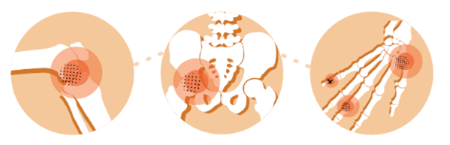
    3 pics of parts of the skeleton- knee, hip, hand- with pain radiating


    Osteoarthritis QS Placemat – summarizes content from the Osteoarthritis Quality Standard, focusing on care for adults with osteoarthritis of the knee, hip, or hand (i.e., thumb or fingers). French version.


    Acute low back pain and osteoarthritis represent two of the most common clinical conditions encountered on a daily basis in the primary care setting. We have received feedback from primary care providers that concise, evidence-based materials help to not only support dialogue between patients and providers, but also support clinical decision-making regarding patients presenting with acute low back pain and osteoarthritis.
     

    • Dr Colin Wilson, Primary Care Clinical Lead, Ontario Health

    Hear more from Colin here

    2 men seated facing each other, one with hand raised with pen and notepad in the other hand


    Anxiety Disorders Quality Standard (QS) Placemat – summarizes the Anxiety Disorders Quality Standard, highlighting the key elements of diagnosis, assessment, and treatment, as well as includes links to helpful resources and tools. French version.


    The placemats can also be uploaded and used within EMRs for easy access. Resources to support adding these tools into your EMR system will be added on Quorum soon, so please stay tuned for more information!

    In the context of the ongoing COVID-19 pandemic, we are observing an increasing unease among individuals in the communities and families. As health care providers, it is critical for us to appropriately diagnose anxiety disorders and differentiate them from other conditions that may arise in these uncertain times.

    • Dr. David Kaplan, Chief, Clinical Quality, Ontario Health

    Hear more from David here

    Access the quality standard and related resources at the links below:

    We would like to hear from you about how we can support you and if there are other topics you would find helpful for future QS placemats. Please email qualitystandards@ontariohealth.ca  

    Upcoming Events: Webinar
    As part of the release and dissemination of the quality standard, Ontario Health and Provincial Geriatrics Leadership Ontario will be co-hosting a webinar for health care providers about delirium, in alignment with World Delirium Awareness Day on March 17, 2021.

    Webinar | Delirium – A New Quality Standard for an Important Health Concern| Wednesday March 17, 12–1 p.m.  
    Provincial Geriatrics Leadership Ontario and Ontario Health co-host a webinar with clinical experts to share information and resources to support patients who are at risk for delirium or who are experiencing symptoms of delirium. The session will review delirium and its significance to COVID-19 infection, introduce key statements from the quality standard, and showcase related resources available to support people who are at risk for delirium or who are experiencing symptoms of delirium. Please register here to join the session.

    Quality Improvement Plans – Update from OH(Q)
    Last April, QIP submissions for 2020/21 were paused to allow organizations to focus on supporting their staff, health care providers, and communities during the COVID-19 pandemic. The QIP Navigator remained open so that organizations that had the capacity to continue working on their submissions were able to do so. We will be closing the 2020/21 cycle in Navigator on March 24, 2021.

    As we look ahead to the 2021/22 QIPs, we understand that organizations continue to be under unprecedented pressure related to the COVID-19 pandemic and that this will likely continue for the next several months. As such, we are making adjustments to the 2021/22 QIP to help ensure that organizations are able to focus their efforts on responding to urgent needs related to COVID-19. While quality improvement is of critical importance in our collective response to COVID-19, for now, the pause on the program will continue.

    We will monitor the situation and will share a revised approach in the coming months, ensuring that it is responsive to circumstances in the health system and that you have sufficient time to prepare. The approach to 2021/22 will be designed to provide organizations with flexibility to reflect where they are with their quality improvement efforts given the pandemic, local needs, pressures, and goals for the recovery period. We encourage organizations to continue with their local quality improvement initiatives and we will be in touch soon.  

    As always, please do not hesitate to contact us at QIP@OntarioHealth.ca if you have any questions.

    A Peoples’ Panel on how race and ethnicity data should be used for health data research in Ontario
    ICES is working together with the Tamarack Institute and Digital Justice Lab to lead a Peoples’ Panel on how race and ethnicity data should be used for health data research in Ontario. Through this Peoples’ Panel, ICES seeks to recognize the ways that science has perpetuated racism and understand the complexities in the use of race, ethnicity, and immigration data.

    The Peoples’ Panel will involve 30-60 diverse and representative individuals who will meet weekly for 5 weeks starting on March 17, 2021. ICES is seeking regular people—no experience in health, science or policy needed. If you live in Ontario and have an interest in how race data is used, and especially if you identify as racialized individual, they invite you to express your interest in being part of the Peoples’ Panel. Participants will be compensated.

    Learn more and apply

    Upcoming Webinars:
    OHT Improvement Measures from Health Administrative Data: Where are OHTs Starting From?
    March 23, 2021 (12:00 – 1:30 pm EST)
    Click here for more information and to register.

    Supporting Older Persons At Home – Learning And Collaboration During The COVID-19 Pandemic And Beyond
    March 25, 2021 (12-1 pm EST)
    COVID-19 highlighted numerous barriers and challenges to providing integrated care for older persons living in the community. Join Provincial Geriatrics Leadership Ontario in a discussion on how to better support older persons in the community using lessons learned during the first year of the COVID-19 pandemic. We will discuss needs in primary care – focusing on the role of interprofessional teams – and offer some resources and tools to better support team-based care for older persons. We will also discuss how specialized geriatric service programs in your area can provide support to primary care clinicians. Click here to learn more and register.

    Interested in sharing your teams’ initiatives in a future webinar? Email Sandeep Gill – Sandeep.gill@afhto.ca to learn more about the AFHTO KTE Webinar Schedule!

    In Case You Missed It: Check out eBulletin #104 or other back issues here!
    Questions? Comments? Contact us at improve@afhto.ca.

  • QI in Action eBulletin # 104 – Identifying Priority Populations for COVID-19 Vaccination from EMRs

    QI in Action eBulletin # 104 – Identifying Priority Populations for COVID-19 Vaccination from EMRs

    In this Issue:

    • What is POPLAR?
    • POPLAR and COVID-19 Vaccine Prioritization
    • Data Security & Privacy
    • How to Register?
    • COVID-19 Cancer Screening Tip Sheet for Primary Care Providers
    • Primary Care Patient/Client Virtual Care Experience Survey
    • Upcoming Webinars

    What is POPLAR?

    The Primary Care Ontario Practice-based Learning and Research Network (POPLAR) is an initiative of Ontario’s six University Departments/Sections of Family Medicine and the Alliance for Healthier Communities. POPLAR securely collects and de-identifies electronic medical record (EMR) data to support practices in delivering optimal care across Ontario and strengthen practice-based clinical research and quality improvement processes.

    POPLAR works with clinicians, researchers, and policy makers, providing information on the vital work primary care does, while supporting practices in delivering optimal care across Ontario. Currently, over 1,000 family physicians are contributing EMR data for over 1.8 million patients to the POPLAR database.

    POPLAR and COVID-19 Vaccine Prioritization

    Building on the work POPLAR has done in the past 10+ years, POPLAR can assist practices wishing to identify patients that should be prioritized for COVID-19 vaccinations. This relies on EMR data that have been extracted from primary care practices, cleaned, and standardized. The data can accurately identify groups of patients meeting various criteria.
    Complex queries can sometimes be difficult to run in EMRs. POPLAR can readily flag patients to be prioritized when the identification parameters rely on multiple criteria (e.g., age range + uncontrolled diabetes + obesity).

    POPLAR data is also linkable to census data, which means that differences in neighborhood socio-economic levels can be added to health data in EMRs; this allows a more comprehensive assessment of risks. This is especially relevant for vaccination prioritization: we know that social challenges our patients live with, such as poverty, can be associated with a greater risk of contracting COVID-19 and greater risk of serious complications once infected.

    POPLAR can obtain aggregate measures from census data at the neighbourhood level, including type of residence, immigration status, average household income, unemployment, education.

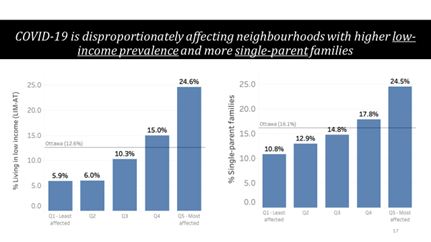
    There is strong evidence in Ontario that the risk of infection varies by neighbourhood and is associated with each neighborhood’s socio-demographic profile. For example, in Ottawa, neighbourhoods with more Black, Middle Eastern, low income, and single-family residents have higher rates of COVID-19 infections.

    COVID an neighbourhood chart- ebulletin #104

    We can only understand the impact of COVID-19 on our practices and our patients through collecting and analyzing accurate and representative health data. The pandemic has exposed many data gaps in Ontario. Our teams are vitally important to ensure that those we serve are included, as our information reflects our settings, patients, and communities. Collectively, primary care’s voice can be heard by providing safe and secure access to real-world data; this is possible with your help!  Register with the POPLAR network member closest to you today to start contributing your EMR data.

    Data Security & Privacy

    POPLAR only studies de-identified patient and practice data. POPLAR complies with robust ethics, governance and security measures. Individual patients have the right to opt out of their data being collected through POPLAR’s networks for research.

    Data for QI in Your practice

    Generation of de-identified EMR dataset


    How to Register?

    Help POPLAR build practical evidence in family medicine, by supporting the collective Culture of Curiosity and by contributing data. The time and effort it takes to safely and securely contribute is minimal. All you need do is fill out a consent form and a brief survey; POPLAR staff will coordinate data extraction at your practice, with all safeguards in place.

    If you are interested in registering, or if you would like to find out more information about POPLAR, please contact Sandeep Gill at Sandeep.gill@afhto.ca, who will then direct your query to your local network contact. More information can also be found on the AFHTO website here.

    COVID-19 Cancer Screening Tip Sheet for Primary Care Providers

    In June 2020, Ontario Health (Cancer Care Ontario) released COVID-19 Tip Sheet #15: Guidance for primary care providers resuming breast, cervical and colorectal cancer screening to support primary care providers as they resumed cancer screening. This updated streamlined tip sheet was developed to continue to support primary care providers with cancer screening based on ongoing fluctuations in COVID-19 cases and local variation in COVID-19 trends.

    Primary Care Patient/Client Virtual Care Experience Survey

    Primary Care Patient/Client Virtual Care Experience Survey

    Last year, we launched the Primary Care Patient/Client Virtual Care Experience Survey for teams to implement in order to capture the patient experience with virtual care. Moving ahead we are collecting teams’ aggregate responses as we create a narrative of how virtual care could be permanently included in the patient care journey – submit your data here!


    Upcoming Webinars:

    Primary Care Virtual Groups – Transitioning A CBT Program & Cardio-Pulmonary Rehab Program To Virtual
    February 17, 2021 (12-1 pm EST)
    This webinar is in collaboration with two Family Health Teams transitioning in person programs to virtual. Scarborough Academic FHT will share how they transferred their CBT skills group for depression and anxiety to online along with the benefits and challenges. Arnprior FHT is presenting on how they modified an in-person Cardio-Pulmonary Rehab to Virtual in the rural community of Arnprior, ON. Learn more and register here.

    Engaging and Supporting Caregivers In Primary Care Teams: Working Together To Improve Outcomes And Enhance The Patient, Caregiver, And Family Experience
    February 25, 2021 (12-1 pm EST)
    In this webinar, learn about the Ontario Caregiver Organization and the key programs, services, and resources they offer. Learn about three key caregiver-related strategies that can positively impact health outcomes and the patient/family/caregiver experience. Find out about resources, programs, and actions that primary care teams can take to help advance these strategies. Learn more and register here.


    Interested in sharing your teams’ initiatives in a future webinar? Email Sandeep Gill – Sandeep.gill@afhto.ca to learn more about the AFHTO KTE Webinar Schedule!

    In Case You Missed It: Check out eBulletin #103 or other back issues here!
    Questions? Comments? Contact us at improve@afhto.ca.


  • Bits & Pieces: primary care virtual groups webinar, immunization for specific groups, and more

    Bits & Pieces: primary care virtual groups webinar, immunization for specific groups, and more

    Your Weekly News & Updates


    In This Issue  
    • Primary care virtual groups – transitioning a CBT program & cardio-pulmonary rehab program to virtual
    • Members’ stories
    • Planning immunization for specific groups, complicated grief and more
    • Online safety and data backup- tips from TechSoup Canada
    • IBS/Low FODMAP diet: video series from Thames Valley FHT RDs
    • Ontario Health Connection newsletter
    • MEQ and MME update
    • Statistics Canada hiring for 2021 census
    • Upcoming events including The Globe and Mail COVID-19 vaccine series and more

    Primary care virtual groups – transitioning a CBT program & cardio-pulmonary rehab program to virtual

    This webinar is in collaboration with two FHTs transitioning in-person programs to virtual. Scarborough Academic FHT will share how they transferred their CBT skills group for depression and anxiety to online along with the benefits and challenges.

    Arnprior FHT is presenting on how they modified an in-person Cardio-Pulmonary Rehab to Virtual in their rural community. In this webinar they will share their patients’ thoughts and feelings on the program adjustment, discussing wins and struggles along the way. Register here.


    Members’ stories

    Georgian Bay FHT – what it’s like at a COVID assessment centre
    Mount Sinai Academic FHT- Supporting family medicine residents during a pandemic


    Planning immunization for specific groups, complicated grief and more

    Recent updates include:

    We continue to update several pages on our site with resources and news:


    The Nonprofit Guide to Online Safety: Protectign Your Passwords


    Online safety and data backup- tips from TechSoup Canada

    If you’re not signed up for TechSoup Canada’s newsletter, their latest addresses issues of online safety and data backup, among other relevant WFH technical and IT topics for nonprofits.


    IBS and the Low Fodmap Diet


    IBS/Low FODMAP diet: video series from Thames Valley FHT RDs

    Thames Valley FHT RDs have produced a patient education video series on managing IBS. Each video is 4-5 minutes in length.

    Find out more here.


    Ontario Health Connection newsletter

    Ontario Health has just sent their first newsletter of 2021. If you haven’t done so already, you can sign up for them to get up to date information on resources available to you.


    MEQ and MME update

    eHealth Centre of Excellence’s Opioid Management Toolkit calculates MEQ and the Telus PS Suite update now features MME calculations. Get the details here.


    Statistics Canada hiring for 2021 census
    The next census will take place in May 2021 and Statistics Canada is hiring approximately 32,000 people across the country to assist in census data collection activities. Please promote this to your patients if they may have been financially affected by COVID-19.


    Now is the Time to Choose Wisely: Advancing Quality Improvement in Primary Care, Jan. 27, 2021

    Engaging primary care providers in QI is particularly relevant now, as the pandemic has further emphasized the importance of resource stewardship given the urgent care needs and constraints related to COVID-19. Learn more and register here.


    Let’s Talk… About the things that make you happy, Jan. 28, 2021

    MindBeacon webinar on Bell Let’s Talk Day for a talk about values, taking positive action and living a more resilient life. Register here.


    Digital Health/EServices for OHTs, Jan. 28, 2021 

    Gain an understanding of the digital supports available and how to leverage eConsult and eReferral to support your OHT’s priority patient populations.
    Learn more about this RISE webcast here.


    Recognizing and Managing Anxiety Disorders in Primary Care during COVID-19, Feb. 9, 2021
    Ontario Health webinar with experts in the field and resources about how to support patients presenting in primary care with symptoms of anxiety. Register here.


    Mental health for adults with developmental disabilities during COVID: A virtual course for family caregivers, starting Feb. 2, 2021
    This course will run for 6 weeks beginning on Tuesday February 2, 2021. Find out more here.


    Changing the way we work: Update on COVID-19 Vaccines, Feb. 5, 2021
    The next in OCFP/DFCM COVID-19 CoP sessions. Find out more here.


    What do Covid-19 vaccines mean for me? Feb. 18, 2021
    Part two of The Globe and Mail and The Royal Society of Canada’s COVID-19 vaccine series. Register here.

  • QI in Action eBulletin #103 – Moving Forward with Quality Improvement in the New Year

    QI in Action eBulletin #103 – Moving Forward with Quality Improvement in the New Year

    In this Issue:

    • Quality Improvement on the Fly & QIPs
    • QI Resources
    • Upcoming Events

    Quality Improvement on the Fly & QIPs

    At this time, teams usually start to plan for their annual QIPs submission. We can expect an update in the upcoming weeks. In the meantime, the QI in PC Council has collaboratively gathered the following information about what initiatives teams led this year and hope to do in the upcoming year.

    Will your team(s) submit a 2021/22 QIPS? Unsure 50%, Yes 50% n=16 QIDSS/QIDSS-like

    Did your team(s) submit a 2020/21 QIPS? Yes 50%, No 18.8%, Some 31.3% n=16 QIDSS/QIDSS-like


    Priorities for 2021/22 QIPS - Unsure 13.5%; 7 day post hospital discharge 16.2%; documented assessment of palliative care needs 16.2%; patient involvement in decisions about care 18.9%; timely access to a primary care provider 18.9% n= 14 QIDSS/QIDSS-like


    Initiatives on the Go:

    • Virtual care adoption for one-on-one visits along with groups & online booking
    • Social Determinants of Health Training for all team members
    • Reconciliation of prevention care data within EMRs
    • Updated patient demographic information within EMRs
    • Regional lung health projects specifically focusing on COPD
    • Increased influenza vaccination – one team vaccinated 90% of their roster
    • Senior wellness initiatives and home blood pressure monitoring

    COVID-19 Member Initiatives Table


    Recognizing that many organizations are very busy with their local COVID efforts, we would anticipate that the 2021/2022 QIPs would have flexibility to allow organizations to reflect what they are doing to manage COVID locally or what they’re doing to maintain services (e.g. tracking access, patient experience, etc.).

    We are continuously capturing these initiatives, in the COVID-19 Member Initiatives Table. If you have an initiative you would like to share, please email improve@afhto.ca!


    Primary Care Patient/Client Virtual Care Experience Survey

    Given what we have seen in the past year with the huge transition to virtual care, this will be a key factor for measuring access to care and patient experience. To aid teams in capturing this experience, please refer to the Primary Care Patient/Client Virtual Care Experience Survey. The survey was created to help fill informational gaps to inform future planning and further support the implementation of virtual care in primary care.

    To help you get started on planning your team’s annual Quality Improvement Initiatives, we have partnered with Choosing Wisely to host a webinar:

    Now is the Time to Choose Wisely: Advancing Quality Improvement in Primary Care  

    January 27, 2021 (12-1 pm EST)

    In this webinar, Dr. Kimberly Wintemute, Primary Co-Lead for Choosing Wisely Canada, and Dr. Peter Kuling, Family Physician at The Ottawa Hospital Academic FHT, provide insights on how to advance resource stewardship and implementation efforts in primary care using Choosing Wisely Canada recommendations and resources.   

    Click here to read more and register.

    QI Resources
    Below are measurement and quality-related tools, resources, slides, and videos. You can flag these emails or bookmark the related posts, so they will be easy to find for future reference.

    Upcoming Events:

    Better Breathing Conference 2021
    January 18 & 22, 2021
    LOCATION: VIRTUAL

    Join the Lung Health Foundation’s Better Breathing Conference! Their conference’s accredited respiratory education programming is 100% free for all Canadian healthcare professionals.

    Click here to register.

    Early ID for Palliative Care: Lessons Learned and Moving Forward
    January 21, 2021 (12-1 pm EST)

    Please join the CoP as they celebrate successes, learn about progress to date on the palliative care indicator, and discuss plans for 2021 to improve palliative care in Ontario.

    Click here to register.

    SCALE Program (Supporting Caregiver Awareness, Learning and Empowerment)
    February 3, 2021 – March 23, 2021

    Back by popular demand, the SCALE Program aims to empower you with practical information and skills to enhance self-awareness with a focus on your own needs and well-being.

    The program consists of:

    • a series of eight weekly webinars
    • online group coaching
    • one-on-one, individualized telephone counselling

    Select just one topic that you are interested in each week or take the entire program – as a caregiver, we understand how valuable your time is and that is why we developed a program to best suit your schedule.

    Click here to learn more and register.

    E-QIP Conference: QI Innovations, Understand – Pivot – Change
    April 13, 2021

    In this one-day virtual conference will offer virtual networking opportunities, poster presentations, concurrent sessions, wellness activities, and more. You will have the opportunity to hear from QI and data experts in mental health and addiction, engage in rich discussions, and ask their experts a lot of questions.

    Click here for more information.

    Interested in sharing your teams’ initiatives in a future webinar? Email Sandeep Gill – Sandeep.gill@afhto.ca to learn more about the AFHTO KTE Webinar Schedule!

    In Case You Missed It: Check out eBulletin #102 or other back issues here!
    Questions? Comments? Contact us at improve@afhto.ca.


  • QI in Action eBulletin #99: Capturing Primary Care’s Response to COVID-19

    QI in Action eBulletin #99: Capturing Primary Care’s Response to COVID-19

    In this Issue:

    • Primary Care Patient/Client Experience Virtual Care Survey
    • Responding to COVID-19: Understanding How Primary Care Teams Stepped up to Help Support Their Communities and Patients
    • IHP Experience During the Early Phase of COVID-19
    • Upcoming Virtual Events

    Primary Care Patient/Client Virtual Care Experience Survey

    Primary Care Patient/Client Virtual Care Experience Survey


    The rapid adoption of virtual care during the pandemic not only addresses the current needs but it will most likely shape the future of primary care delivery, beyond the pandemic.

    As a result, the Association of Family Health Teams of Ontario (AFHTO) formed a working group with a number of primary care, health system and health research organizations to measure the patient/client experience with virtual care during the COVID-19 pandemic. These organizations included: Quality Improvement in Primary Care Council (QI in PC Council), Women’s College Hospital Institute for Health System Solutions and Virtual Care (WIHV), eHealth Centre of Excellence (eCE), Ontario Health (Quality) (OH(Q)), and Partnering for Quality.

    We created the Primary Care Patient/Client Virtual Care Experience Survey to help fill informational gaps to inform future planning and further support the implementation of virtual care in primary care. This survey can also be used for quality improvement purposes to allow providers to look at ways to improve their care delivery.

    For online surveys, a template survey for Microsoft Forms has been created that can be duplicated. If you will be using SurveyMonkey, please email Sandeep.gill@afhto.ca and a copy of the survey will be shared with you.

    Ocean (CognisantMD) is offering a free platform to patient experience data; however, please refer to this guide  to ensure that you have completed all the steps to qualify. For your convenience, eCE has created an Ocean eForm version of the survey, now available to be imported to your Ocean (CognisantMD) site. Instructions on how to import and configure the survey and data extraction can be found here.

    We also highly recommend you report back to AFHTO to support AFHTO’s Provincial Initiative. To further support practices in expanding and solidifying virtual care in primary health at a provincial-level, AFHTO will be collecting the practice-level aggregate responses to the survey. Please click here to find more information.

    Responding to COVID-19: Understanding How Primary Care Teams Stepped up to Help Support Their Communities and Patients
    Since the beginning of the COVID-19 pandemic, we’ve heard countless stories of our teams’ commitment, diligence and initiative to continue providing team-based primary care around the province. We’re here to ensure that your hard work gets noticed – but to do so, we need your help.

    AFHTO in collaboration with Dr. Rachelle Ashcroft and Dr. Catherine Donnelly are conducting a research study to capture the efforts of all our members to ensure no story is left untold. This information will help influence and shape how teams will continue to adapt virtual care after the pandemic, as well as to meet patient needs.

    Interviews end August 14- don’t miss your chance to participate! Please sign up for a 30-minute interview to share your team’s story.

    IHP Experience During the Early Phase of COVID-19
    At the beginning of pandemic Dr. Catherine Donnelly and Dr. Rachelle Ashcroft created a survey to capture the interprofessional health provider (IHP) experience as the transition to virtual care began. The objective of the study was to describe the state of IHP practice within primary care teams during the COVID-19 pandemic.

    Some of the preliminary findings of the study were that 48% of IHPs felt that teamwork collaboration increased during the pandemic, 18% of IHPs felt that it remained the same whereas 34% felt it decreased.

    Most of the IHPs delivered care to patients via phone. Before the pandemic this was the most popular mechanism of virtual care delivery. As the pandemic progressed and teams explored creative ways to outreach to patients, teams started to explore social media. The preliminary findings of this survey are that IHPs are the least confident with patient care delivery via social media compared to other virtual care options and in-person care.

    As the pandemic evolves so does the expertise of providers with virtual care. Dr. Catherine Donnelly and Dr. Rachelle Ashcroft will release another survey to capture the IHP experience at multiple time points. Stay tuned for the next survey!

    Upcoming Virtual Events
    211 Ontario – Connecting Patients to Community Programs and Services Webinar
    Thursday August 20, 2020 – 12:00 – 1:00 pm EDT
    A webinar about how 211 can assist Family Health Teams. 211 has been helping the people of Ontario navigate community, health, and social services for many years. Learn more about 211 Ontario by registering here.

    Electronic Asthma Management System (eAMS) – Tool Demonstration Webinar
    Tuesday September 15, 2020 – 12:00 – 1:00 pm EDT
    The Electronic Asthma Management System (eAMS) is an evidence-based clinical decision support system developed to improve your ability to deliver best care for patients with asthma. Learn more about the tool by registering here.

    AFHTO 2020 Conference Tectonic shifts: rebuilding primary care in a new world
    Thursday, October 8, 2020 – Friday, October 9, 2020
    Before 2020, anyone with experience in Ontario’s healthcare system thought they knew what change meant. Now such changes seem almost a lifetime ago. COVID-19 has shifted our priorities with a focus on how to support our patients and our teams in new ways of delivering care.

    Primary care has risen to the challenge, but the ground is still shifting, and the future is uncertain. In short, we need to rebuild primary care for this new world. Registration to open soon. Learn more here.


    In Case You Missed It: Check out eBulletin #98 or other back issues here!
    Questions? Comments? Contact us at improve@afhto.ca.


  • Bits & Pieces: Dr. Rueben Devlin, June 11 webinar, COVID-19 Innovation grants & more

    Bits & Pieces: Dr. Rueben Devlin, June 11 webinar, COVID-19 Innovation grants & more

    Your Weekly News & Updates


    In This Issue  
    • Dr. Rueben Devlin, Chair of the Premier’s Council, has passed
    • Team based care supporting patient communities through COVID-19 webinar
    • COVID-19 Innovation grant program
    • Member renewal – you can now send in your cheques!
    • COVID-19 in Ontario – A Focus on Diversity: Public Health Ontario report
    • Phase two, resources for re-opening, more details in situation report #135 and more
    • EMR communities of practice transition to OntarioMD – update
    • Coping with COVID-19: support for frontline health care workers
    • Ambulatory care residency for pharmacists
    • Ontario Health survey: COVID-19 response
    • Upcoming events hosted by Lung Health Foundation and more


    Dr. Rueben Devlin


    Dr. Rueben Devlin, Chair of the Premier’s Council, has passed

    We’re saddened to hear of Dr. Rueben Devlin’s passing. Dr. Devlin was appointed as Special Advisor and Chair of the Premier’s Council on Improving Health Care and Ending Hallway Medicine in June 2018.

    You can learn more about his life and legacy here.


    Team based care supporting patient communities through COVID-19 webinar

    Team-Based Care Supporting Patient Communities Through COVID-19 Webinar

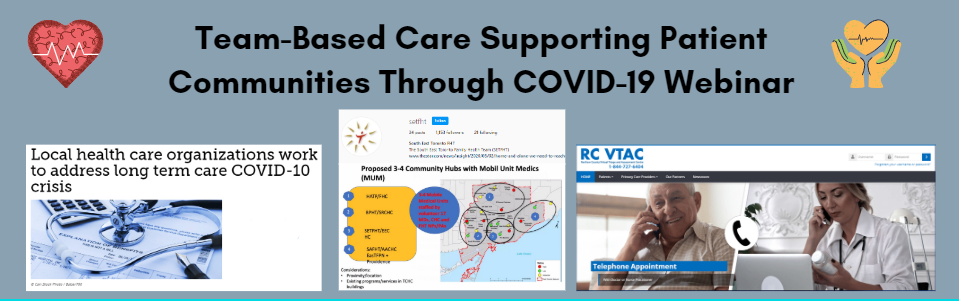
    This Thursday, June 11, 2020, we will be hosting a webinar to share initiatives teams are currently doing to help support patients in their communities during COVID-19. Learn from these teams about how they created virtual care communities, helped long-term care homes, engaged with patients via social media and much more! Teams that will be presenting are South East Toronto FHT, Brockton Area and Kincardine FHTs, Arnprior & District FHT, North Renfrew FHT, West Champlain FHT,  Petawawa Centennial Family Health Centre and Madawaska Valley FHT. Register here for the webinar!


    COVID-19 innovation grant program

    Joule’s COVID-19 innovation grant program is providing up to $1,000,000 in flexible funding to CMA members working on innovative solutions – with each initiative eligible for up to $200,000 in funding.

    Their focus areas are:

    • Supporting and protecting the physical and mental health and well-being of front-line health care workers;
    • Improving access to care during the COVID-19 pandemic; and
    • Addressing the social determinants of health and improving health equity for vulnerable populations affected by the pandemic.

    As long as there is a CMA member on your team, you’re eligible to apply. Deadline June 21.


    Member renewal – you can now send in your cheques!

    Thank you to the teams who have checked in regarding sending cheques for member renewal. While we still encourage teams to pay via electronic means if they can, we are now accepting cheques again.

    Since Canada Post is experiencing delays, we have extended the deadline to July 31. Please don’t delay as access to resources, benefits and members-only updates will be cut off after this date. If you have any questions, please feel free to email info@afhto.ca.


    COVID-19 in Ontario – A Focus on Diversity: Public Health Ontario report

    On June 1, Public Health Ontario released Enhanced Epidemiological Summary COVID-19 in Ontario – A Focus on Diversity . Findings included that people living in the most diverse neighbourhoods were also more likely to experience severe outcomes (hospitalizations, ICU admissions and deaths) than people living in the least diverse neighbourhoods:

    • hospitalization rates were four times higher;
    • ICU admission rates were four times higher; and
    • death rates were twice as high.

    Read the full report here.

    Per a related Globe and Mail article, until recently:
    “You couldn’t really go after the general public and test within the context of communities,” said Tia Pham, lead physician at the South East Toronto Family Health Team and one of the co-ordinators of MGH’s assessment centre in Crescent Town.


    Phase two, resources for re-opening, more details in situation report #135 and more

    Yesterday the province announced that 24 out of the province’s 34 public health units will be permitted to move into stage two as of Friday, June 12, 2020. You can also read H+K’s insight note for more details.

    We added a new Resources for Re-opening page and we continue to update several pages on our site with resources and news:


    EMR communities of practice transition to OntarioMD – update
    The EMR communities of practice (CoP) transitioned from AFHTO to OntarioMD effective March 31, 2020. It is important that if you wish to participate in any Community of Practice you fill out this form to receive meeting invites and updates about the community. You will also be added to the eMailDodo lists.

    The form only takes a few minutes to complete.

    If you have any problems or concerns, please feel free to reach out to nancy.gunn@ontariomd.com.


    Coping with COVID-19: support for frontline health care workers

    Message from the Mental Health and Addictions Centre of Excellence at Ontario Health
    MHACoE@ontariohealth.ca

    Health and community care workers across Ontario are showing incredible strength through the COVID-19 pandemic. But even the strongest among us need help sometimes. For health and community care workers, stress, anxiety, exhaustion, and compassion fatigue are all normal responses in this pandemic. It’s ok to say it: this is really hard. And it’s ok to seek support to help with coping.
     
    Five hospitals have partnered with the Ministry of Health and the Mental Health and Addictions Centre of Excellence at Ontario Health to provide confidential support, including access to iCBT. Frontline health and community care workers from across the province can self-refer online or by phone to any of the five hospital access points below:

    *Les travailleurs de la santé désirant leur premier contact et leur évaluation en français sont invités à remplir le formulaire en ligne du Centre de santé mentale Royal Ottawa.
     
    Health and community care workers from across Ontario can access more information on mental health support here.


    Ambulatory care residency for pharmacists

    The University of Waterloo/Centre for Family Medicine Family Health Team residency program is fully accredited and aims to produce pharmacy practitioners who are well equipped to provide exemplary patient care in ambulatory care practice settings.

    The Centre for Family Medicine (CFFM) Family Health Team in Kitchener is the primary teaching site but required rotations also include Grand River Hospital (GRH), and the School of Pharmacy at the University of Waterloo. Find out more here.


    Ontario Health survey: COVID-19 response

    Ontario Health is gathering lessons learned about our COVID-19 response to-date and invite you to complete this brief survey by Monday, June 15th to provide them with your input.

    This 4-question survey will help to inform future planning. They will also be conducting focus group discussions, and in collaboration with the Ministry of Health, based on what they learn.


    Leveraging Virtual Technology to Ensure Seamless Transitions in Care for Patients Living with Chronic Conditions, June 10, 2020

    Hosted by Lung Health Foundation. Register here.


    COVID-19 Virtual Town Hall with Kawartha Lakes Health Leaders, June 11, 2020
    Join this virtual town hall with the City of Kawartha Lakes healthcare leaders. Learn more here.


    Delivering Virtual Care to Manage Chronic Respiratory Disease: Tips for Healthcare Providers, June 17, 2020

    Hosted by Lung Health Foundation. Register in advance.


    Approaches to Advance Care Planning and Goals of Care Conversations, June 15, 2020

    Discuss approaches to ACP and Goals of Care conversations and gain awareness of Person-Centered Decision-Making.
    Learn more here.

  • Getting started on a COPD registry

    This document explains how to use standardized queries in your EMR to start building chronic disease registries.  The instructions below focus on COPD. The COPD query is intended for teams that do not yet have a reliable list of COPD patients and don’t have the time or resources to start from scratch in reviewing all their patients to generate such a list.  Right now, it is also only for teams with PSS or Accuro although work is continuing to expand the standardized query to OSCAR and Nightingale. The following steps will help your team use the query to generate a list of COPD patients, starting from your EMR.

    Step 1. Estimate how many patients you think this will affect.  Multiply the number of patients your team serves by 0.12 (the average rate of COPD in Ontario) to get a rough idea of how many of your patients likely have COPD.  If you still think this is a big enough group of patients for you to generate a registry for, carry on to step 2.

    Step 2. Import the query into your EMR.  Right now, you can only do this if have either Telus PSS,  QHR Technologies Accuro or OSCAR EMRs.  You will likely need the help of your QIDSS, IT staff or other person who usually works with your EMR to do this.

    • For PSS, click here to import the PSS SRX file into your EMR.
    • For Accuro, download the query “AFHTO COPD Frontend Search” from their publisher.
      • Click here for instructions on how to download the query
    • For Nightingale EMR queries cannot be exported and shared so please access the “how to” instructions on Trello – they explain the process to create a COPD registry.
    • For OSCAR copy the query text into a Notepad file and save locally to your computer.  Instructions on how to import the query into your OSCAR EMR can be found here.

    Step 3.  Run the query in your EMR. Again, you might need the help of your QIDSS, IT staff or other person who usually runs queries in your EMR.  Running the query will produce a list of patients with COPD.  The list will not be perfect – probably 15% of the patients identified by the query will NOT have COPD.  The query gets you STARTED in building the COPD registry but doesn’t do the whole job for you.

    Step 4. Find the patients who might not have COPD. Review the list of patients generated by the query to separate out those patients that are clearly already coded as having COPD.  What’s left will the list of patients who MIGHT have COPD based on other data in the EMR besides formal coding.

    Step 5. Prepare your physicians to review the list  Subdivide the list of possible COPD patients into separate, shorter lists for each physician.  Work with your physicians to find out if they would prefer a list on paper or electronically and how they might like it sorted (ie by name or most recent visit or some other parameter).

    Step 6Invite each physician to review their list of patients.  They know their patients best and can likely quickly confirm which ones do or do not have COPD, even though that information might not be easy for others to find in the EMR.

    Step 7Clean up your EMR data.  Add COPD codes to the EMR for each patient that the physician confirms as having COPD.  This so-called “data cleaning” work is a great job for a student.  AFHTO has created a toolkit to assist members in recruiting and using students for data clean-up. Click here for the toolkit.

    Step 8Re-run the query .  After you have corrected the EMR, re-run the query to generate a list of patients with COPD.  This is your new COPD patient registry.  Going forward, you can run the query anytime you need to generate a list of COPD patients.  You can use the list to invite patients to a lung health program, track progress with outcomes on these patients once you have started such a program or any other purpose. This query was produced by and for QIDSS in support of all AFHTO members. 

    If you have any questions please contact improve@afhto.ca.

     
  • QI in Action eBulletin #98: Team-Based Care Supporting Patient Communities Through COVID-19

    In this Issue:

    • Team Based Care Supporting Patient Communities Through COVID-19 Webinar

    • Virtual Visits: Beginning to End Q&A Document

    • QI Resources

    Team-Based Care Supporting Patient Communities Through COVID-19 Webinar

    Team-Based Care Supporting Patient Communities Through COVID-19 Webinar

    On June 11, 2020 (12-1pm EST) AFHTO, in collaboration with 3 primary care teams, will be hosting a webinar to share initiatives teams are currently doing to help support patients in their communities during COVID-19. Learn from these teams about how they created virtual care communities, helped long-term care homes, engaged with patients via social media and much more! Teams that will be presenting are South East Toronto FHT, Brockton Area and Kincardine FHTs, Arnprior & District FHT, North Renfrew FHT, West Champlain FHT, Madawaska Valley FHT and Petawawa Centennial Family Health Centre.

    COVID-19 Member initiatives table

    Register here for the webinar!


    We have also created a table highlighting the great work teams are doing! Help us grow this list by emailing improve@afhto.ca to share what your team is doing.

    Let’s make this into a webinar series! Email us at improve@afhto.ca to share what your team is doing. You may be featured in an upcoming webinar!


    Virtual Visits Q&A Document – One on One & Group Visits

    Virtual Visits Q&A Document

    On Wednesday, May 20 we held a discussion around virtual visits (one on one & group) with our expert panel. Panelists went through multiple components of how to conduct a virtual visit and a Q&A portion.

    The recording, slide deck and Q&A document for the webinar are available here. As a follow up AFHTO and the panelists have created a Q&A document for a few questions that were not covered such as:

    • How are providers conducting phone call visits remotely?
    • Is it necessary to repeat consent at every virtual visit?
    • How do you obtain consent for group programs?
    • What Mental Health Programs are being run virtually and open to the public?
    • What platforms are teams using for secure messaging?


    QI Resources
    Below are measurement and quality-related tools, resources, slides, and videos. You can flag these emails or bookmark the related posts, so they will be easy to find for future reference.


    In Case You Missed It: Check out eBulletin #97 or other back issues here!
    Questions? Comments? Contact us at improve@afhto.ca.