Tag: eBulletin

  • QI in Action News and eBulletin

    The QI in Action ebulletin (formerly Data to Decisions ebulletin) is released monthly. The ebulletin gives updates and reminders for key dates and activities on QI related topics

    All those not on AFHTO’s distribution list can sign-up for future eBulletins by signing up on the home page or emailing info@afhto.ca. Please forward this to interested members of your team to give them the opportunity to receive the latest updates.


    Click here to access past ebulletins


    Other D2D and QI News: 

  • QI in Action eBulletin #129: Celiac Disease Awareness Month

    In this Issue:

    • Celiac Disease in Ontario
    • Celiac Canada Webinars
    • Celiac Resources
    • Food for thought
    • Past Webinars
    • Upcoming Events

    Celiac Disease in Ontario

    May is Celiac Disease Awareness month and we join Celiac Canada in helping to bring this initiative to the attention of team-based Primary Care. The Ontario Ministry of Health has announced it is extending a pilot program for free celiac disease diagnostic testing through community based labs. This extension is active until March 31, 2024 and includes first time diagnostic blood tests (IgA and tTg IgA) for patients. The Minister of Health has recently informed Celiac Canada that these tests will become permanently covered by OHIP following the pilot’s completion. 

    Celiac Canada aims to raise the index of suspicion with physicians as it takes an average of 10 years from symptom onset to celiac diagnosis for Canadian patients. The majority of patients with celiac disease remain undiagnosed.

    Celiac Canada Webinars 

    Celiac Resources

    Food for Thought

    Ontario has been the ONLY province in the country not to cover the blood screening test for CD.
    This is despite the tests being part of standard clinical practice around the world. Ontario patients have had to pay anywhere from $60-$150 for the test. For many families, this cost is unaffordable. Since celiac testing is not on the standard lab requisition form, it is often missed by doctors in their health screening.  This cost also impacts the ongoing disease management for currently diagnosed celiac disease patients who are required to monitor their bloodwork on an ongoing basis.

    New free celiac blood tests could benefit 128,000 Ontarians and save $1 billion
    News Provided by
    Celiac Canada 
    Mar 30, 2023, 11:00 ET

    The provincial government’s decision to make simple but crucial blood tests for celiac disease available at no cost to patients will improve the quality of life for as many as 128,000 Ontarians and potentially save Ontario’s health care system as much as $1 billion1, Celiac Canada said today.

    Past Webinars

    PHO Rounds: Health Conditions Attributable to Smoking and Alcohol by Public Health Unit in Ontario

    Every year in Ontario, smoking and alcohol consumption are responsible for thousands of deaths, hospitalizations, and emergency department visits. A new report by Ontario Health and Public Health Ontario provides estimates of the prevalence of smoking and alcohol use in the province and includes detailed estimates of the number of harms caused by smoking and alcohol consumption. The report also provides estimates of the number of cancer, cardiovascular, diabetes, respiratory, communicable disease, neuropsychiatric, and injury harms. These are provided for all of Ontario and for each public health unit.

    Upcoming Events

    Check out some of the coming events

    OHT Engagement Learning Series – Session 6 of 7: Engagement Methods

    • May 16, 2023 11:30 am – 01:00 pm

    This series focuses on building connections and competencies for meaningful patient engagement. This session will be the 6th of a 7-part engagement learning series. In this session, you will get to experience various co-design strategies and use of different virtual platforms. Learn how to co-design in a way that avoids tokenism. Eliminate barriers to engagement, and tailor engagement methods to different individuals and groups.

    PHO Rounds: The 2023 Ontario HIV Testing Guidelines

    • Tuesday, May 23, 2023 | 12:00 pm to 1:00 pm

    Intended audience: Public health physicians, nurses, nurse practitioners, STBBI case managers, supervisors, Medical Officers of Health overseeing public health units, front-line physicians, nurses, nurse practitioners in public health sexual health clinics

    By the end of this session, participants will be able to:

    • Identify population groups that should be tested for HIV according to the new Ontario HIV testing guidelines
    • Describe scenarios and conditions where it is appropriate to test (and retest) people for HIV; and
    • List additional HIV prevention interventions and when to recommend them.


    In Case You Missed It: Check out eBulletin #128 or other back issues here!
    Questions? Comments? Contact us at improve@afhto.ca.


  • QI in Action eBulletin #127: Nutrition Month

    QI in Action eBulletin #127: Nutrition Month

    In this Issue:


    • Nutrition month resources
    • Food for thought
    • NEW- Eating Disorders Quality Standard
    • NEW- Surgical Site Infections Quality Standard
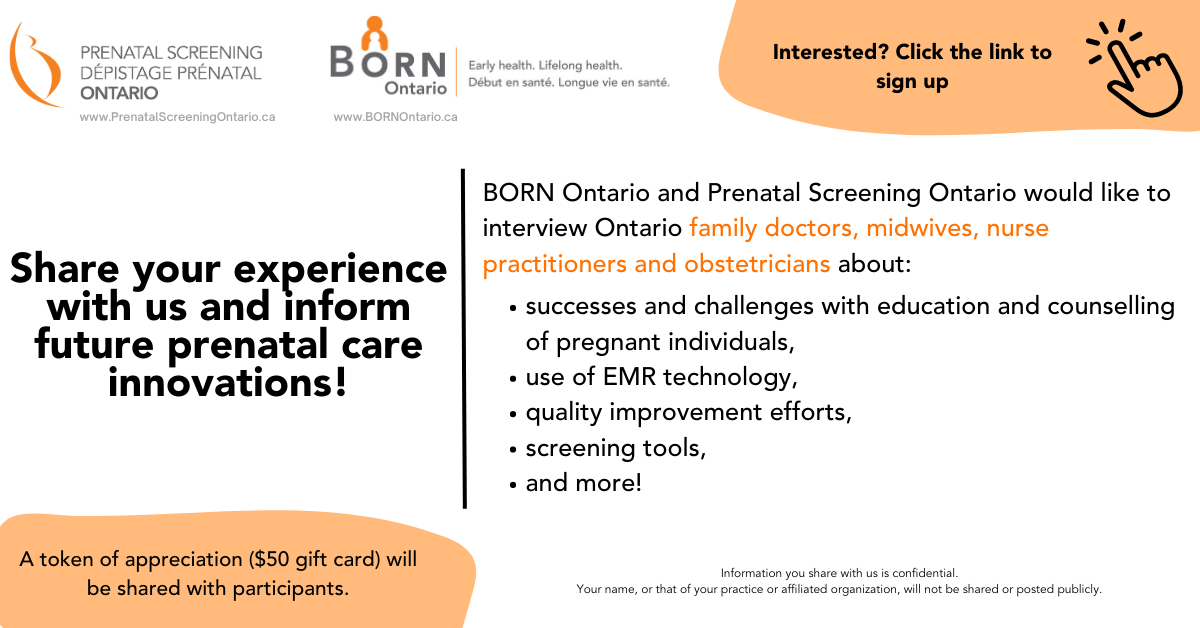
    • Share your experience and inform future prenatal care innovations
    • Upcoming Events

    Nutrition month resources
    This month we join our Registered Dietitians in celebrating the impact of good nutrition on our patients’ health outcomes. Examples successfully integrating this focus in primary care teams include:

    Webinars and conference sessions

    Posters

    Select Resources

    Food for Thought

    NEW- Eating Disorders Quality Standard
    Ontario Health’s Eating Disorders quality standard consists of nine quality statements that describe what high quality care looks like for people with anorexia nervosa, bulimia nervosa, and binge eating disorder. It applies to all care settings and the accompanying patient guide and caregiver guide can help inform conversations between health care providers and people with an eating disorder and their families and caregivers. Find out more.

    NEW- Surgical Site Infections Quality Standard
    Ontario Health’s latest quality standard consists of seven quality statements highlighting key areas for improvement to prevent surgical site infections for people having surgery that requires an incision. Its accompanying patient guide can help inform conversations between health care providers and people having surgery. Find out more.

    Share your experience and inform future prenatal care innovations

    Share your experience with us and inform future prenatal care innovations


    BORN and Prenatal Screening Ontario are funded by the Ministry of Health with mandates focused on improving the health outcomes of individuals during and after pregnancy. Prenatal Screening Ontario, who currently oversees aneuploidy screening, is expanding its reach to offer high-quality prenatal screening for conditions amenable to populated-based screening to better inform care and prenatal management.

    They want to hear about your experiences caring for pregnant individuals. Interviewees will receive a $50 gift card as a token of their appreciation. Sign up here.


    Upcoming Events

    Surgical Site Infections: A New Quality Standard for High-Quality Care in Ontario
    Apr 13, 2023, 12:00pm
    This session will introduce Ontario Health’s recently released Surgical Site Infections quality standard and describe how it can drive quality improvement and improve care for Ontarians across the health system. Register here.

    Eating Disorders: A New Quality Standard for High-Quality Care in Ontario
    May 5, 2023, 12:00pm
    This session will introduce Ontario Health’s recently released Eating Disorders quality standard and describe how it can drive quality improvement and improve care for Ontarians across the health system. Register here.

    QI Innovations: Better Data, Better Decisions, Better Outcomes
    April 18, 2023
    This year’s free QI Innovations conference is for mental health and addiction providers and system planners who are interested in data driven decision making and quality improvement. Register here.


    In Case You Missed It: Check out eBulletin #126 or other back issues here!
    Questions? Comments? Contact us at improve@afhto.ca.


  • QI in Action eBulletin #126: The Health Equity Questionnaire

    QI in Action eBulletin #126: The Health Equity Questionnaire

    In this Issue:

    • The Health Equity Questionnaire: Standardized Entry of Social Determinants of Health into EMRs
    • Resources for social determinants of health
    • Food for thought
    • Updated Primary Care Data Reports for Ontario Health Teams
    • Help shape the future of virtual health care in Ontario
    • Phase I Guidance for Clinically Appropriate Use of Virtual Care for Primary Care evaluation survey
    • Virtual Care Guidance Statements Checklist for Clinicians and other resources
    • Upcoming Events


    The Health Equity Questionnaire: Standardized Entry of Social Determinants of Health into EMRs

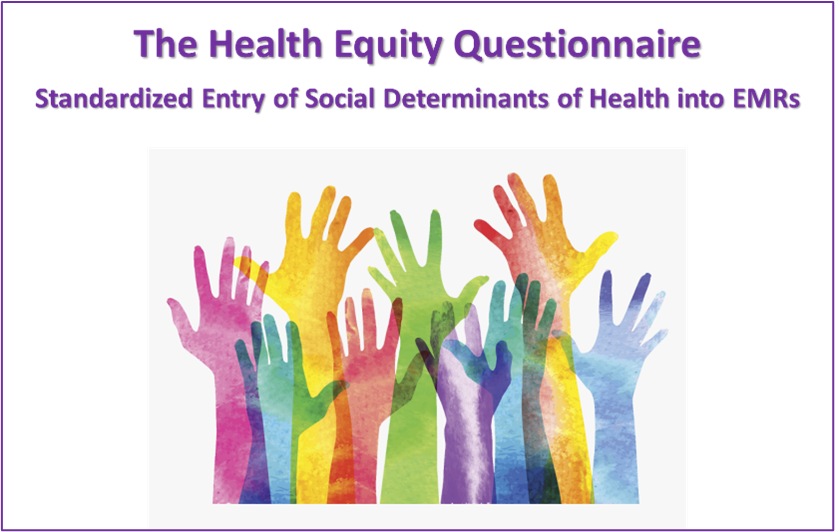
    The Health Equity Questionnaire: Standardized Entry of Social Determinants of Health into EMRs. Below are a group of hands in different watercolours reaching upwards

    To provide the most equitable care for our patients we need to know their social determinants of health. Current EMR specifications don’t require that this information is included in the dataset for each patient and EMRs don’t provide a standardized way to enter it.

    The Health Equity Questionnaire (HEQ) has been developed to allow social determinants of health information to be entered into EMRs efficiently and in a standardized way, allowing it to be easily accessed, updated, and searched.

    Questions and data elements from an extensive set of existing tools were collected, prioritized, and distilled into a practical new format designed around provider workflows. Many stakeholders, including several EDI specialists, were consulted.

    At the time of a visit, clicking on the ‘HEQ’ button in the chart will bring up the Questionnaire form. The provider can then enter any information that may be relevant to the patient’s care and save it to the chart. Clicking the button again will bring up a new copy of the form which is pre-populated with any previously entered data and can be updated as needed. The form is designed to display all the information in an “at a glance” view which means that all the information is shown in one window without any clicking or scrolling.

    The questions can also be sent directly to the patient via secure messaging. They can then answer any of the questions that they’re comfortable with and their responses will be automatically entered directly into their charts. If an HEQ form is not already in the chart, then a new one will be created. If there is an existing form in the chart, then it will simply be updated with their responses.

    Care must be taken to ensure that the patient understands why the questions are being asked, that the information will be treated with the same confidentiality as the rest of their medical information, that it will only be used to provide them with the best care possible, and that they only need to provide whatever responses they’re comfortable with.

    A video demonstration of the tool is available here.

    The toolkit can be downloaded from the TELUS Health Practice Solutions Community Portal by navigating in Chatter to Groups, Active Groups and then the East Wellington Family Health Team group. Plans are in progress to migrate the toolkit to the other main EMRs as well.

    Questions and feedback are welcome and can be directed to Dr. Kevin Samson kevin.samson@ewfht.ca.

    Resources for social determinants of health
    Webinars and conference sessions

    Select Resources

    Food for Thought

    Updated Primary Care Data Reports for Ontario Health Teams
    INSPIRE PHC has posted the updated Primary Care Data Report for all of Ontario. These reports track key primary care health system indicators and guide attachment strategies in Ontario Health Teams (OHTs). The Primary Care Data Working Group produced reports specific to each OHT and are intended to provide a deeper understanding of the attributed population of each OHT. Find out more.

    Help shape the future of virtual health care in Ontario
    Help shape the future of virtual health care in Ontario! We are looking for patients and caregivers in Ontario to take a 15 to 20-minutes survey on the experiences and expectations with virtual care appointments as a patient or caregiver with a doctor, nurse, or another healthcare professional in a family practice. This study from the University of Toronto and the Bruyére Research Institute is led by Dr. Rachelle Ashcroft and Dr. Simone Dahrouge.

    To take the survey, please click one of the links below:

    As part of the recruitment efforts, primary care clinics will have the opportunity to receive a customized report based on the template regarding the experiences of their patients with virtual care. In addition, you can view the report last year on virtual care that was shared broadly to key decision makers. Should you be interested in participating or learning more, please contact Simon Lam, research coordinator, at sck.lam@utoronto.ca.

    Phase I Guidance for Clinically Appropriate Use of Virtual Care for Primary Care evaluation survey
    Ontario Health is conducting an evaluation of the ‘Phase I Guidance for Clinically Appropriate Use of Virtual Care for Primary Care’ developed in collaboration with an Expert Panel. You’re invited to complete this survey to capture your awareness of, access to and adoption of the Phase I Guidance for Clinically Appropriate Use of Virtual Care for Primary Care.   

    You may access the survey here.  

    The survey should take approximately 5-10 minutes to complete, and your responses will remain anonymous. If you have any questions or concerns regarding the survey, please do not hesitate to contact Mimosa Zhao by email at zhao@theevidencenetwork.com.


    Upcoming Events

    Sickle Cell Disease: A New Quality Standard for High-Quality Care in Ontario
    February 22, 2023, 12:00pm
    This session will introduce Ontario Health’s recently released Sickle Cell Disease quality standard and describe how it can drive quality improvement and improve care for Ontarians across the health system. Register here.

    Media Messaging on Equity: How do we do better?
    March 6, 2023, 4:30 pm
    The third-annual Vohra Miller Lectures in Critical Public Health Issues in collaboration with the Institute for Pandemics puts a spotlight on the media’s handling of equity issues, including health equity, during the COVID-19 pandemic and beyond. What are the forces that shape media coverage of equity matters? What does the future of the media landscape hold and, what are the possibilities? Register here.

    In Case You Missed It: Check out eBulletin #125 or other back issues here!
    Questions? Comments? Contact us at improve@afhto.ca.

  • QI in Action eBulletin #125: Patient and Family support for pregnancy loss

    In this Issue:

    • Patient with a pregnancy loss? There is support – for you, and for families
    • Primary care clinicians can directly refer frontline health workers to psychological practitioners for MOH-covered psychological treatment
    • Mental Health Resources
    • CMHA Ontario’s Your Health Space
    • The Indigenous Voice | Daadibaajimo
    • Virtual Care Guidance Statements Checklist for Clinicians and other resources
    • Upcoming Events


    Patient with a pregnancy loss? There is support – for you, and for families
    Content developed by Pregnancy and Infant Loss (PAIL) Network

    Lisa Marie Buccella stands in front of a group of health care workers and shares tips for engaging with patients experiencing possibly one of the worst events of their lives: losing a baby.

    As a parent who has had a loss, she provides feedback on what wasn’t very helpful: Never start a sentence with “At least you have other children…” or “Just be grateful for…”. The room is clearly engaged and pipe up with questions. Families with an experience of pregnancy and infant loss will also share the importance of being connected with meaningful support, and how validating it feels for a professional to offer information and a referral.  

    Offered by Sunnybrook’s Pregnancy and Infant Loss (PAIL) Network, the workshop is just one example of a resource for professionals to help support bereaved parents and families during a loss. PAIL Network also offers suggestions for communication with families, memory making, forming bereavement committees, and practical information and handouts for families on issues like lactation after loss and employment leave.

    For families living in Ontario, PAIL Network organizes peer-led group and individual support services at no cost. The supports are comprehensive, including groups for each trimester of loss, and groups focused on infant/neonatal loss, SIDS, termination of pregnancy, pregnancy after loss, partners in grief and grief after abortion. Referring a family for support can be done online by any health care or service professional through a secure form that is sent directly to PAIL Network and ensures that a family will be contacted to be connected with peer support online or over the phone.

    We encourage you to check out their resources and consider signing up for a session as well as ordering handouts to support families. For more information, visit Pregnancy and Infant Loss (PAIL) Network.

    Primary care clinicians can directly refer frontline health workers to psychological practitioners for MOH-covered psychological treatment
    Content below developed by Ontario Psychological Association

    Primary care providers can now refer patients directly to psychologists from their Electronic Medical Record system (EMR) enabling increased access to timely specialized mental health services. The new development is made possible through a partnership between the Ontario Psychological Association and Ontario’s eServices Program which saw the integration of the Ocean and Strata Health e-referral platforms thereby allowing family physicians, nurse practitioners, and other primary care providers to connect with psychologists.
     
    The Covid-19 Psychological Support Program, funded by the Ministry of Health, ensures that frontline health workers can receive up to 12 psychotherapy sessions with a registered psychologist or psychological associate at no cost. Primary care clinicians wishing to learn more can email opa@psych.on.ca or read our e-referral guidelines for more details. For a demo, please click here.

    Mental Health Resources
    Webinars

    Select Resources

    CMHA Ontario’s Your Health Space
    Just a reminder that the Canadian Mental Health Association, Ontario has launched Your Health Space, a free mental health service for Ontario’s health care organizations. This program provides the training, resources, and tools needed to encourage complex conversations about stress and burnout and promote psychological health and safety in health care workplaces.

    Your Health Space offers self-directed modules and live workshops, the latter of which can be tailored to your organization’s unique needs. This programming is delivered through three distinct spaces designed to address the needs of 1) Leaders, 2) Health Care Workers, and 3) Support Staff working within an organization. Furthermore, Your Health Space has a team of trainers across Ontario that are available to facilitate workshops virtually or in person, at your workplace. Upon completion of the program, primary care teams will receive a digital badge and individuals will receive a digital certificate.

    If you are an organizational leader interested in bringing this free program to your workplace, please visit www.yourhealthspace.ca or contact yourhealthspace@ontario.cmha.ca.

    The Indigenous Voice | Daadibaajimo
    Content developed by IPHCC

    The IPHCC recently launched a public facing newsletter titled: Indigenous Voice | Daadibaajimo to keep the audience informed on how we are improving Indigenous health outcomes and supporting the advancement and evolution of Indigenous primary health care services throughout Ontario. This newsletter is designed for both non-Indigenous and Indigenous audiences as it entails specific content and resources to promote education and awareness about Indigenous Peoples. To learn more about how the IPHCC is shaping Indigenous health care, subscribe to our newsletter here or send an email to communications@iphcc.ca. Click here to view the past issue.

    Virtual Care Guidance Statements Checklist for Clinicians and other resources
    The Virtual Care Guidance Statements Checklist for Clinicians and other support tools for the Clinically Appropriate Use of Virtual Care Guidance in Primary Care are now live on the Ontario Health website. They are currently available in English and French. For feedback/questions, email PCP.Gudance@ontariohealth.ca.

    Upcoming Events

    ECHO Ontario Child and Youth Mental Health
    Beginning January 19, 2023, 12:00-1:00 pm
    Many Ontarian children and youth live in remote and underserved communities. Eighteen percent of Ontarians live in rural areas, where only 2% of the province’s child psychiatrists live. ECHO Ontario CYMH aims to change diagnostic, prescribing, treatment and referral practices of Primary Care Providers (PCPs) who are caring for children and youth with mental health problems. Register here.


    In Case You Missed It: Check out eBulletin #124 or other back issues here!
    Questions? Comments? Contact us at improve@afhto.ca.

  • QI in Action eBulletin #124: Celebrating the Resilience of Teams in 2022, QIPs 2023-2024

    In this Issue:

    • Thank You to our Wonderful Teams
    • Celebrating Teams: Collaborating to Improve Palliative Care
    • Celebrating Teams: Filling Gaps in the Community
    • Healthcare Excellence Canada: Partnering on Appropriate Virtual Care
    • Physician Consultations on PHIPA Changes
    • Support Tools for Clinically Appropriate Use of Virtual Care Guidance in Primary Care
    • Quality Improvement Plans (QIPS) 2023/24
    • Farewell and Thank You from Raveen Bahniwal
    • Upcoming Events


    Thank You to our Wonderful Teams
    2022 has been a difficult year for primary care and we want to thank our teams for their resilience and capacity to adapt to the constant challenges that came their way. You have all continued to support not only your patients but non-rostered patients in your communities, collaborated with partners to advance your programs and continued to advocate for the ongoing expansion of team-based care. We aren’t able to highlight all the wonderful work for teams in 2022 in this short newsletter, but we encourage you all to read our Annual Report and explore our Bright Lights Nominees and Award Winners.

    Celebrating Teams: Collaborating to Improve Palliative Care

    Care for Palliative End of Life Patients with Bancroft FHT

    Content developed by Bancroft FHT
    In April 2022 the Bancroft Community Family Health Team formed a partnership and collaboration with North Hastings Hospice in Bancroft Ontario to provide an alternative level of care to their palliative end of life patients and residents of the community.

    Through the System Navigation Program, patients can be referred directly from physicians, nurse practitioners, Home and Community Care Services, Hospitals, and other community support agencies. The Palliative System Navigator RN will complete the initial intake process by meeting with the patient to discuss their end-of-life care and wishes. The nurse will then make the appropriate arrangements for the patient, coordinating in home services or admission to Hospice House in collaboration with one of the BCFHT FHO physicians.

    The goal is to provide effective, quality, compassionate, and coordinated care to palliative end of life patients and community residents in an appropriate setting while at the same time reducing hospital admissions. For any questions, please email mkelly@bancroftfht.com.

    Couchiching FHT Streamlines Access to Palliative Care Resources

    Couchiching FHT has provided leadership and resources to the Couchiching Palliative Care Working Group for several years. With the creation of the Couchiching Ontario Health Team (COHT), this working group was able to leverage the strong collaboration within the COHT to make incredible strides towards accomplishing their goals.

    This group of service providers and system users has created a central referral system which went live in February 2022. There is one referral form to access all palliative care services in the sub-region and a list of primary care practitioners who will accept non-rostered palliative patients, so no palliative patient in Couchiching is going without primary care. In addition, they have streamlined and coordinated resources to reduce duplication and make it easier for patients and their caregivers to find the right resources at the right time. For more information, please email a.munday@cfht.ca.

    Celebrating Teams: Filling Gaps in the Community

    Community Newborn Program at the Belleville NPLC

    Content provided by Belleville NPLC
    The purpose of the Community Newborn program is to provide follow up care to newborns who do not have a primary care provider in the community. Infants are seen by the program staff within 72 hours of discharge from the hospital. The Community Newborn Program consists of a Nurse Practitioner-Paediatrics, a Registered Nurse, and an Admin Support who each work 20 hours per week to support patients in this program. The NP and RN provide routine follow up care and non-emergent assessments for the infants up until 6 months of age. They also provide routine vaccinations for siblings of their infant patients who also do not have a primary care provider. For any inquiries about this program, please email admin@bnplc.ca.

    Prenatal and Well Baby Program at Barrie and Community FHT

    The Prenatal and Well Baby (PNWB) Program provides prenatal and well-baby care for women and children (up to the age of 6) without a family physician in the Barrie and surrounding area. The program has nurses, nurse practitioners, physicians and lactation consultants that provide care, education and referrals into community supports. The program also performs tongue tie releases and has a paediatrician available for consultation.

    Throughout the pandemic, the PNWB Program and Breastfeeding Services continued to see patients daily for essential care. During the pandemic, the Barrie area has seen an influx of new residents. Many of these new community members do not have a family doctor close to home, and the PNWB clinic is a place they can receive this essential service in the community they live. For more information, please click here and for any questions, please email jthomas@bcfht.ca.

    Healthcare Excellence Canada Opportunity: Partnering on Appropriate Virtual Care
    The Partnering on Appropriate Virtual Care collaborative will support primary care practices, organizations, and multidisciplinary teams from across Canada to determine when and how virtual care should be used in their respective healthcare settings. Participants will receive up to $20,000 in seed funding to develop a framework that supports shared decision-making with patients, ensuring choices around virtual care are based on patient needs and capabilities, their care requirements and clinician capacity. This program runs between January and November 2023 and involves a range of online learning and design activities. Learn more about the program and how to apply here.

    Physician Consultations on PHIPA Changes
    The Ministry of Health is seeking physicians interested in participating in a focus group to talk about their experiences with the Personal Health Information Protection Act, 2004 (PHIPA). This work is part of the Ministry’s Dialogue on Data engagement strategy. Your knowledge and experience will inform the development of a data strategy report to the Ontario Health Data Council that will be seen by the Minister of Health, the Information and Privacy Commissioner of Ontario, and many other important stakeholders. Click here to learn more. Focus groups will take place January 17 to 19, from 12-1 pm and we are looking for 20 physician volunteers spread over the three days. If you are interested in participating, please email info@afhto.ca.

    Support Tools for Clinically Appropriate Use of Virtual Care Guidance in Primary Care
    The two patient-facing support tools for the Clinically Appropriate Use of Virtual Care Guidance in Primary Care are now live on the Ontario Health website. The patient-facing tools, ‘Learning about Virtual Care Options’ and ‘Checklist for Use of Virtual Care’, are currently available in English and French. There is work underway to translate the patient-facing tools into additional languages. This will be made available on the Ontario Health website when ready. For feedback/questions, email PCP.Gudance@ontariohealth.ca.

    Quality Improvement Plans (QIPs) 2023/24
    Ontario Health announced the start of the Quality Improvement (QIP) program cycle for 2023/24. This year’s QIPs will continue to focus on a small number of quality issues that are important to the health care system, such as issues that have been particularly impacted by COVID-19 and need our attention to help support health system recovery.

    Priority indicators have been developed in consultation with the Ministry of Health, Ministry of Long-Term Care, and other teams across Ontario Health; however, organizations may also choose to focus on local issues that are important to their communities. Ontario Health encourages organizations to work on improving equity and supporting cultural safety and responsiveness. Organizations can choose to add custom indicators aimed at improving equitable access to care and/or share goals in the Narrative section.

    QIP Navigator, the online QIP development and submission platform, has been updated for this year’s submission and is now open for 2023/24 QIP submissions. Organizations can download pre-populated templates and current performance will be pre-populated with administrative data in January where available. Ontario Health will be hosting drop-in sessions on Zoom which are optional and will provide you with an opportunity to ask questions about the QIP program, QIP Navigator and learn about available quality improvement resources. QIPs must be submitted by March 31, 2023. Please email QIP@ontariohealth.ca if you have any questions or concerns.

    Planning Resources:

    Farewell and Thank You
    To end this ebulletin with some bittersweet news, I will be leaving AFHTO at the end of December to begin medical school in January. Thank you to all our members and partners for sharing your stories and initiatives with me. It was a pleasure for me to bring you these monthly ebulletins and KTE webinars. I will truly miss this community but hope our paths cross again someday. Stay tuned to the next ebulletin in January and have a wonderful holiday season. –Raveen Bahniwal, Quality Improvement and Knowledge Translation Specialist

    Upcoming Events

    HSPN: IFIC Canada and Health System Performance Network Virtual Community

    Tuesday, December 20, 2022, 12-1:30 pm
    Integration is the lever to enable population health and well-being. A key component of integration is the role of partnering with the volunteer sector to improve outcomes for our patients, caregivers, and our population. In this session, we will take a deep dive to learn firsthand about the role of engaging the volunteer sector from the perspectives of policymakers, researchers, and a person with lived experience. This session will discuss the available evidence, the volunteer sector’s role in policy, and share approaches and practical examples of local work that engages with the volunteer sector. Register here.

    ADVANCE Special Topic Series- Balancing Task and Process in Leading Integrated Care Systems
    Monday, January 9, 2023, 12-1 pm
    Developing integrated care systems often requires newly constituted intersectoral teams to form and rapidly engage in mutually reinforcing activities of integration, while attending, in parallel, with the processes by which these new teams engage in collaborative leadership, decision-making and/or system improvement. Professor Robin Miller, based at the University of Birmingham, will discuss the promise and pitfalls of collaborative leadership within integrated care systems and how attending to process can support inter-sectoral teams to achieve the aim of collaborative governance. To register, click here.


    In Case You Missed It: Check out eBulletin #123 or other back issues here!
    Questions? Comments? Contact us at improve@afhto.ca.

  • QI in Action eBulletin #123: HFHT Green Initiative, Clinically Appropriate Use of Virtual Care Guidelines

    In this Issue:

    • The HFHT Green Initiative
    • Clinically Appropriate Use of Virtual Care- Guidance for Primary Care
    • Primary care clinicians can how directly refer frontline health workers to psychological practitioners for MOH-covered psychological treatment
    • Evidence2Practice Ontario Program
    • Upcoming Events

    The HFHT Green Initiative
    Content below developed by Hamilton FHT

    The HFHT Green Initiative is an interprofessional team developing practical solutions to improve patient healthcare outcomes while simultaneously reducing climate change. The initiative provides a free and evidence-based program which includes an action-based checklist, poster orders (1148 so far delivered), a monthly newsletter (17 sent so far), a CFPC Mainpro+ accredited webinar series (212 attendees thus far), an infographic series (31 different topics), 2 waiting room videos, 2 EMR-embedded prescription templates, patient-facing group education, resource kits, and project support.

    Since its launch in 2019, this project has supported environmental efforts in 19 different Ontario Family Health Teams as well as additional primary care teams across Ontario and Canada and has helped direct the efforts of our local OHT as well as national sustainable health care initiatives such as CASCADES. For more information, please contact the HFHT Green Team at green.team@hamiltonfht.ca.

    The Hamilton FHT’s Green Initiative recently presented a disease prevention webinar highlighting practical tools that will make cancer screening and smoking cessation easier in both the clinical setting and for QI projects. Please watch this 20 min webinar recording to hear family physician and project lead Dr. Meghan Davis speak about:

    • Understanding how cancer screening/smoking cessation is good for our patients and the environment
    • Accessing a cancer screening dashboard for teams and individual practices  
    • The Screening Activity Report
    • Finding patients who were lost to follow-up after screening positive
    • A new digital patient communication pathway for ordering FITs
    • Managing colonoscopy results
    • Providing paps: Pathway for interprofessional health care training & updated guidelines
    • Guidelines for mammograms post-COVID-19 vaccine
    • Videos for your waiting room
    • Helping patients to quit smoking

    Clinically Appropriate Use of Virtual Care- Guidance for Primary Care
    Ontario Health recently released new virtual care guidance materials for primary care clinicians. The “Clinically Appropriate Use of Virtual Care Guidance for Primary Care” aims to help primary care clinicians feel supported in the decisions they make related to the planning and delivery of virtual care. This is ‘phase one’ of the virtual care guidance for primary care. More detailed virtual care guidance will be released in the future, including materials focused on other specialties and areas of care. The virtual care guidance materials can be accessed here in English and French. Click here to watch the Ontario Health Community of Practice recording from November 9 where Dr. Kaplan and Dr. Bordman speak about the guidance document.

    Primary care clinicians can now directly refer frontline health workers to psychological practitioners for MOH-covered psychological treatment
    Content below developed by Ontario Psychological Association

    Primary care providers can now refer patients directly to psychologists from their Electronic Medical Record system (EMR) enabling increased access to timely specialized mental health services. The new development is made possible through a partnership between the Ontario Psychological Association and Ontario’s eServices Program which saw the integration of the Ocean and Strata Health e-referral platforms thereby allowing family physicians, nurse practitioners, and other primary care providers to connect with psychologists.
     
    The Covid-19 Psychological Support Program, funded by the Ministry of Health, ensures that frontline health workers can receive up to 12 psychotherapy sessions with a registered psychologist or psychological associate at no cost. Primary care clinicians wishing to learn more can email opa@psych.on.ca or read our e-referral guidelines for more details.
     
    This work builds on a prior collaboration between the Association of Family Health Teams of Ontario (AFHTO), the Nurse Practitioners’ Association of Ontario (NPAO), the Ontario College of Family Physicians (OCFP), the Nurse Practitioner-Led Clinic Association, Ontario Medical Association’s (OMA) section of General & Family Practice, and the Alliance for Healthier Communities. For a demo, please click here.  

    Evidence2Practice Ontario Program
    Content below developed by Centre for Effective Practice

    CEP is proud to lead the launch of Evidence2Practice Ontario (E2P) and its first set of digital tools and supports for heart failure. Co-led with the eHealth Centre of Excellence and North York General Hospital, E2P is a province-wide initiative developed to strengthen and support the delivery of evidence-based care and best practice in primary and acute care settings. The first E2P tool, developed in the Telus PSS EMR, focuses on enhancing care of patients with suspected or diagnosed heart failure.

    CEP’s renowned academic detailing service and accompanying clinical tools on heart failure are available to further support primary care providers. Tools and supports in additional EMRs (e.g., Oscar and Accuro QHR) will follow in 2023, focused on supporting adult patients living with major depression, anxiety disorders and type 2 diabetes. Click here to learn more.


    Upcoming Events

    Evidence2Practice Ontario
    Friday, November 18, 2022, 12-1 pm
    Evidence2Practice Ontario is co-hosting a webinar with Ontario Health: Dr. David Kaplan, Vice President, Quality at Ontario Health, and Young Lee, Vice President, Corporate Performance and Digital Health Innovation at North York General Hospital will provide an overview of how this key initiative is embedding quality standards into health information systems to support clinician adoption. Register here.

    CCHL Webinar: Leading Climate Resilient and Low Carbon, Sustainable Health Systems
    Tuesday, November 22, 2022, 12-1 pm
    Climate and environmental change pose accelerating and complex threats for 21st century health systems- and these modern health systems are a significant contributor to global carbon emissions. Increasingly, the executive boards, and healthcare staff leading Canada’s health systems are recognizing the need to address these challenges. New Leadership and Governance standards include explicit requirements to consider environmental stewardship, with implications for patient engagement, enterprise risk management plans, capital investment plans, talent management and acquisition, procurement policies and practices and budgeting. Click here to register.

    Infection Prevention and Control in Primary Care “Spread Prevention- Not Infection”
    Wednesday, November 23, 2022, 12:30-2 pm
    The Hamilton Family Health Team’s Patient and Provider Safety committee has planned a virtual IPAC information session with their partners from Public Health Ontario and Hamilton Public Health Services. The content shared will be focused on increasing the learner’s knowledge of current IPAC trends as well as providing practical strategies for primary care providers to enhance IPAC practices in their clinical setting. Click here to register.

    Supporting Caregivers Supports Patients- The Critical Role of Primary Care in Preventing Caregiver Burnout
    Thursday, November 24, 2022, 12-1 pm
    Primary care providers can play a key role in preventing burnout and enhancing caregiver well-being by initiating early interventions and connecting caregivers to support. Co-hosted by The Ontario Caregiver Organization and the Primary Care Collaborative, this webinar will include insights from a caregiver with lived experience, as well as examples of primary care initiatives across Ontario that are connecting caregivers to support. Click here to register.

    Highlights and Implications of the Ontario Science Table’s Brief on Primary Care
    Wednesday, November 30, 2022, 7:45-8:45 am
    On October 3, 2022, the Ontario COVID-19 Science Advisory Table (OST) released its final brief, a 3-part exploration of how primary care responded to and was affected by the pandemic, and implications for ongoing health system planning and policy. In this webinar, you will hear from a panel of primary healthcare experts who contributed to that brief, as they share some of the most significant findings and implications. To register, click here.

    Climate Conscious Inhaler Prescribing
    Thursday, December 8, 2022, 12-1 pm
    This webinar will explore the carbon footprint of healthcare systems and how inhalers contribute to it, examine two problems related to inhaler prescribing and imagine practice change that results in an immediate reduction in emissions: “high value, low carbon care”. To register, click here.


    In Case You Missed It: Check out eBulletin #122 or other back issues here!
    Questions? Comments? Contact us at improve@afhto.ca.

  • QI in Action eBulletin #122: Clinically Appropriate Use of Virtual Care in Primary Care

    In this Issue:

    • Phase One Guidance for Clinically Appropriate Use of Virtual Care in Primary Care
    • Wawa FHT in the News
    • Canada-Wide Study on Health Equity and Virtual Primary Care
    • Upcoming Events


    Phase One Guidance for Clinically Appropriate Use of Virtual Care in Primary Care
    Content below developed by Ontario Health and edited for length

    Dr. David Kaplan, Vice President, Quality, at Ontario Health, and Co-Chair of the Primary Care Expert Panel for Guidance for Clinically Appropriate Use of Virtual Care, explains how the guidance was developed, informed and why it can be a helpful resource for primary care clinicians.

    Q: Why is Ontario Health developing guidance for clinically appropriate use of virtual care?
    A:  As we know, the COVID-19 pandemic spurred the necessity for the health care system to pivot and rapidly adopt new ways of using available technology to reach patients and deliver care. While this was an extraordinary feat and has paved the way for the innovation we are seeing within health care, there have been reports of variation in practice and clinicians and patients alike have questions about the ‘best’ uses of virtual care. To address some of the questions about virtual care and put the learnings gleaned over the pandemic into practice, we, at Ontario Health, thought it would be helpful to build on the work previously conducted by the Ontario Telehealth Network (OTN) and provide some new guidance to clinicians around virtual care.

    The Ministry of Health provided funding to Ontario Health to undertake this work and develop guidance for clinically appropriate use of virtual care. While important for all specialties, we started with developing virtual care guidance for primary care because we felt it had the potential to reach more people across Ontario and have the most impact. Over time, Ontario Health will develop tailored guidance documents that apply to other specialties.

    Q: What does the guidance include?
    A: The Phase I Guidance is expected to be released this fall. These materials are intended to be used by primary care clinicians and lays the foundation for decision-making around use of virtual care, patient-centric approaches, and respecting clinicians’ comfort with virtual care. The guidance also outlines the supports available to both clinicians and patients related to virtual care. Patient-facing ‘tools’ have been developed to complement the guidance materials and can assist clinicians to explain virtual care, the various modalities of virtual care and support patients to decide if virtual care is appropriate for their needs. We want clinicians to feel confident in their decisions related to virtual care.

    Q: How has the guidance been developed?
    The development of the guidance was modeled after related work led by Ontario Health, such as Quality Standards and Person-Centred Virtual Cancer Care Clinical Guidance. A review of statements, policies and standards set out by professional regulatory agencies, an inventory of existing guidelines and evaluation of these guidelines against a method for determining strength of this guidance, and a scoping review was conducted. We also looked at available data to determine how virtual was being used in Ontario to help inform our work.

    A primary care-specific expert panel was also established to help give direction to this work and included a mixed membership of primary care physicians, nurse practitioners and patient partners. It was important to our project team to include people from each of the six Ontario Health regions so we could be inclusive of and capture how primary care exists and is practiced across the province.

    Q: How has the use of virtual care shifted?
    A: Before March 2020, clinicians had regularly used the telephone for sharing lab results and refilling medication prescriptions. Video was being used, but primarily by specialists in Ontario and only if certain conditions were met. It was also used by primary care clinicians, though on a smaller scale. Virtual care in this context wouldn’t have been considered ‘mainstream’ until the pandemic.

    Through work we conducted with INSPIRE-PHC, a research group based out of Queen’s University, we’ve been monitoring use of telephone and video primary care delivered by clinicians. Recent data demonstrates virtual care continues to see uptake and use in primary care settings. This is a formative time for the evolution of virtual care in primary care and Ontario Health’s guidance can support primary care clinicians to take a systematic, stepwise approach to planning and delivering virtual care.

    The Guidance for Clinically Appropriate Use of Virtual Care in Primary Care is expected to be released later this Fall and we will share once they are available.  

    Wawa FHT in the News
    In a twist on the traditional rural-to-urban referrals, Wawa FHT received a request for help from a nearby urban centre. With no providers delivering medical abortions in the city or surrounding area, Wawa FHT expanded their medical abortion program to include a virtual component and provide care to this underserviced urban population. The team won a 2022 Spotlight Bright Lights Award and has been featured on CBC News.

    Canada-Wide Case Study on Health Equity and Virtual Primary Care
    Dr. Jay Shaw is leading a project with the Canadian Network for Digital Health Evaluation that aims to gain insights into how primary care organizations across Canada have successfully incorporated health equity into virtual primary care design, implementation, and delivery. The Primary Care Research Network is inviting primary care organizations across Canada to participate in a 30-to-40-minute phone interview about how equity considerations were incorporated when they implemented virtual primary care. For more information, email the research coordinator, Simone Shahid, at WCH.

    Upcoming Events
    Guidance for Clinically Appropriate Use of Virtual Care
    Wednesday, November 9, 2022, 8-9 am
    Please join Dr. David Kaplan and Dr. Risa Bordman from the Primary Care Expert Panel – Guidance for Clinically Appropriate Use of Virtual Care, as they present the third of a 3-part series on the Guidance for Clinically Appropriate Use of Virtual Care.  Please register in advance.  

    Primary Care Report: Using Data for Improvement – a focus on using the opioid prescribing indicators to drive improvements in patient care
    Thursday, November 10, 2022, 12-1 pm
    Ontario Health is hosting a webinar for primary care providers on using the opioid prescribing indicators in the MyPractice: Primary Care report to drive improvements in patient care. Please REGISTER HERE to join the session. This is the fourth installment of an accredited series that will focus on using data from the MyPractice: Primary Care report for quality improvement. This 1-credit-per-hour Group Learning program has been certified by the CFPC and the Ontario Chapter for up to 1.0 Mainpro+Ⓡ credits.

    Supporting Caregivers Supports Patients- The Critical Role of Primary Care in Preventing Caregiver Burnout
    Thursday, November 24, 2022, 12-1 pm
    Primary care providers can play a key role in preventing burnout and enhancing caregiver well-being by initiating early interventions and connecting caregivers to support. Co-hosted by The Ontario Caregiver Organization and the Primary Care Collaborative, this webinar will include insights from a caregiver with lived experience, as well as examples of primary care initiatives across Ontario that are connecting caregivers to support. Click here to register.

    Highlights and Implications of the Ontario Science Table’s Brief on Primary Care
    Wednesday, November 30, 2022, 7:45-8:45 am
    On October 3, 2022, the Ontario COVID-19 Science Advisory Table (OST) released its final brief, a 3-part exploration of how primary care responded to and was affected by the pandemic, and implications for ongoing health system planning and policy. In this webinar, you will hear from a panel of primary healthcare experts who contributed to that brief, as they share some of the most significant findings and implications. To register, click here.

    Climate Conscious Inhaler Prescribing
    Thursday, December 8, 2022, 12-1 pm
    This webinar will explore the carbon footprint of healthcare systems and how inhalers contribute to it, examine two problems related to inhaler prescribing and imagine practice change that results in an immediate reduction in emissions: “high value, low carbon care”. To register, click here.


    In Case You Missed It: Check out eBulletin #121 or other back issues here!
    Questions? Comments? Contact us at improve@afhto.ca.

  • QI in Action eBulletin #121: Primary Care Ontario Practice-Based Learning and Research Network (POPLAR)

    QI in Action eBulletin #121: Primary Care Ontario Practice-Based Learning and Research Network (POPLAR)

    In this Issue:

    • What is POPLAR and How to Join
    • Examining the Work Done by Interprofessional Healthcare Providers
    • Pan-Canadian Study on Outpatient Interventions for Mild to Moderate COVID-19
    • CareCanvas: A New Tool to Support Practice Improvement
    • Upcoming Events


    What is POPLAR and How to Join
    Content below developed by POPLAR

    The Primary Care Ontario Practice-based Learning and Research Network (POPLAR) is an initiative of Ontario’s six University Departments/Sections of Family Medicine and the Alliance for Healthier Communities. POPLAR works with clinicians, researchers, and policy makers, providing information on the vital work primary care does, while supporting practices in delivering optimal care across Ontario.

    POPLAR securely collects and de-identifies electronic medical record (EMR) data. Currently, over 1,000 primary care providers are contributing EMR data for over 1.5 million patients to the POPLAR database. The time and effort it takes to safely and securely contribute is minimal. All you need do is fill out a consent form and a brief survey; POPLAR staff will coordinate data extraction at your practice, with all safeguards in place.

    If you are interested in registering, or if you would like to find out more information about POPLAR, please visit www.poplarnetwork.ca or contact info@poplarnetwork.ca.

    Collectively, primary care’s voice can be heard by providing safe and secure access to real-world data; this is possible with your help!  

    Examining the Work Done by Interprofessional Healthcare Providers in Primary Care Teams
    Content below developed by AFHTO & POPLAR

    Interprofessional Healthcare Providers (IHPs) are key members of interprofessional teams.  Disciplines include nursing, social work, clinical pharmacy, dietetics, chiropody and more. IHPs run programs that include, amongst others, diabetes education, mental health supports, and smoking cessation. However, the impact of patient encounters by IHPs and through IHP-led programs on health outcomes at a larger scale is challenging to capture.  

    Billing data are often used to measure and monitor services to patients provided by physicians on a provincial scale. Since IHPs do not bill OHIP, these data are of limited value for examining their work. AFHTO has been working on finding ways to show the value of interprofessional healthcare providers for many years and the standardized, cleaned, and curated provincial-level EMR data for analytics available through POPLAR provides an avenue to do this work.

    Currently, AFHTO is working with POPLAR on a project that involves developing methods to determine which encounters involved IHPs from which discipline, and what types of encounters these were. Larger scale information on IHP work can then be used to correlate patient outcomes and IHP activity. Knowing more about what IHPs do and their impact on patient care and outcomes is a key aspect of planning for team-based care across Ontario.

    To learn more about this project, visit us at the AFHTO Conference during Concurrent Session A: The Value of IHPs In Team-Based Primary Care: Large Scale Measurement and Effects on Outcomes.

    POPLAR to Help Lead Pan-Canadian Study of Outpatient Interventions for Mild to Moderate COVID-19

    Content below developed by CanTreatCOVID Team & POPLAR

    CanTreatCOVID Canadian Adaptive Platform Trial of Treatments for COVID in Community Settings To the left is a graphic of stylised molecule with pills at the center

    While public health measures and vaccines have reduced the impact of COVID-19, most scientists predict that new variants will continue to emerge, and that the virus will become endemic. The Canadian Adaptive Platform Trial of Treatments for COVID in Community Settings (CanTreatCOVID) spans 6 provinces across Canada and aims to identify effective and affordable out-patient medications for COVID-19 so that they can be made readily available in community settings, including for those at a higher risk for hospitalization and death.

    Currently, the evidence supporting existing medications is weak and provincial guidelines are complex, making decision-making by health care providers, provincial decision-makers, public health leaders, and patients extremely difficult. Adaptive platform trials (APTs) are designed to concurrently compare multiple interventions and allow the inclusion, exclusion, and removal of treatment arms over time-based on a decision algorithm. This makes APTs uniquely suited to studying medications for this novel and dynamic virus.

    During the COVID-19 pandemic, APTs have been crucial in identifying what does and does not work in the treatment of COVID-19 among in-patients, and CanTreatCOVID hopes to replicate this success at the community level. The trial is open to Canadian residents aged 50 years and older, or between the ages of 18 and 49 with 1 or more chronic high-risk medical condition or immunosuppression. Eligible patients must also be within the first 5 days of experiencing symptoms associated with COVID-19 and test positive for the condition.

    In Ontario, building on work done in the past 10+ years, POPLAR will be supporting CanTreatCOVID’s multi-faceted recruitment strategy through prospective recruitment of patients using EMR data from its primary care research and learning networks.

    Recruitment of patients is set to launch in late 2022. To find out how you and your patients can participate, follow the project through their webpage and newsletter, or on Twitter using #CanTreatCOVID.

    CareCanvas: A New Tool to Support Practice Improvement

    Content below developed by the University of Toronto Department of Family and Community Medicine & POPLAR

    The University of Toronto Department of Family and Community Medicine and the POPLAR network are launching a new tool to support practice improvement. CareCanvas is an interactive web-based dashboard that summarizes clinical information from your practice EMR to make it easier to care for your patients. Three types of dashboards are available: one for physicians, one for clinics, and one for Ontario Health Teams.

    CareCanvas summarizes more than 15 quality of care measures including information on diabetes, hypertension, prescribing, and immunizations. You can see trends in your practice over time and can compare your practice to your peers. For some measures, you can see differences in care by age, gender, and neighbourhood income. Click here to view the dashboard.

    CareCanvas makes it easier for you to catch up on chronic disease and preventative care. Physicians can download a list of at-risk patients who would benefit from follow-up.

    CareCanvas is private, secure, and available at no cost. Physicians will be able to use their OneID account to sign-in. Data will be updated approximately every 6 months.

    To access CareCanvas, physicians need to use Telus Practice Solutions, Accuro, or Oscar and contribute their data to one of the seven Practice Based Research Networks that make up the POPLAR network.

    Starting in November, CareCanvas will be available to existing UTOPIAN contributors, with plans to expand the program to all of POPLAR in early 2023.  There is no limit to the number of physicians that can sign up and the value of CareCanvas will grow as more physicians participate and contribute data to POPLAR.


    Upcoming Events

    POPLAR Webinar Series: EDIIA in Research
    Equitably improving primary health care requires research and practice-based learning that are thoroughly grounded in the principles of Equity, Diversity, Inclusion, Indigeneity, and Accessibility (EDIIA). POPLAR, Ontario’s provincial primary healthcare Practice-Based Learning and Research Network has the vision to advance equitable primary healthcare delivery and health outcomes for everyone in Ontario, and is hosting the following webinars for anyone who wants to learn more about building these principles into their work:

     
    Part 3: Embedding Equity in Leadership and Teams- Measuring EDIIA
    Wednesday, September 21, 2022, 12-1 pm | Dr. Nicole Kaniki, University of Toronto
    Learn more and register here.

    Part 4: EDIIA and Data – Building Capacity
    Wednesday, October 19, 2022, 12-1 pm | Dr. Andrew Pinto, Upstream Labs
    Learn more and register here.

    NPAO 2022 Annual Conference
    Thursday, September 22 to Friday September 23, 2022
    This year’s theme is The NP Experience: Pushing Boundaries Towards Common Goals. Find out more here.

    HSPN OHT Webinar: Leadership Survey Results
    Tuesday, September 27, 2022, 12-1:30 pm
    This webinar will provide new findings from the HSPN Organizing for Ontario Health Teams’ Survey comparing and contrasting current state with results from the same surveys undertaken in 2020 and 2021. Register here.

    OMD Digital Health and Virtual Care Conference
    Thursday, September 29 to Friday, September 30, 2022
    Learn how to take advantage of innovative technologies to realize more of their benefits and integrate them with your EMR workflows. Find out more here.
     
    AFHTO 2022 Conference
    Wednesday, October 12, 2022
    Join your peers from across Ontario and beyond as we reconnect and reimagine, moving forward together. Members get more than 50% off registration. Register here.


    In Case You Missed It: Check out eBulletin #120 or other back issues here!
    Questions? Comments? Contact us at improve@afhto.ca.
  • QI in Action eBulletin #120: Striving for Health Equity and Better Health Outcomes

    In this Issue:

    • Striving for Health Equity and Better Health Outcomes at McMaster FHT
    • Targeted Poverty Screening Process Improves Health Equity
    • Collecting Race-Based and Indigenous Identity Data
    • Learning Opportunities
    • Upcoming Events


    Striving for Health Equity and Better Health Outcomes at McMaster FHT
    Content below developed by McMaster FHT

    Through the expertise and passion of Dr. Tejal Patel, Andrea Pansoy (PA), Dr. Amanda Ramdyal and Dr Anjali Menezes, McMaster FHT (MFHT) has developed an interactive program focused on equity, diversity, inclusion (EDI), anti-racism and anti-oppression (AR/AO) that has led to the hiring of a full-time EDI and AR Partner. Initially, a 4-part EDI & AR/AO educational session was created in response to a global awakening that is ongoing but came to a head in 2020.

    After the tremendous success of the initial series, the 3 creators and the EDI/AR Partner continue to support both the MFHT and our community partners formally and informally, through continued offerings including workshops, a lending library, a community of practice, weekly newsletter updates regarding internal and external events and learning opportunities, multi-cultural calendars and more. The MFHT has changed its approach to recruitment and retention and collaborates with equity deserving suppliers.

    Finally, the launch of the DFM Racialized Community of Support took place in June 2022, creating a safe space for self-identifying Black, Indigenous and/or racialized staff and faculty. Such a support group already exists for the family medicine residents learning at the MFHT, started by 2 residents in 2020/21.

    The team has created a Community of Practice and support groups, shared their reflective anti-racism and EDI prompts with 3 clinical Departments and their residency programs, as well as with the GHHN. Invitations have been extended further to other McMaster staff and faculty, as well as community partners to attend education sessions and promote the dissemination of this material.

    The team is working with resident groups to integrate this educational framework into resident education at McMaster University, and they are working on a literature review of anti-racism teaching within medical education. Find more information here or contact Jill Berridge at berridj@mcmaster.ca.

    Targeted Poverty Screening Process Improves Health Equity
    A research team at North York General Hospital and the Department of Family and Community Medicine at the University of Toronto created an innovative way for family physicians to use a validated tool to screen their patients for poverty.

    The project used data managed by the University of Toronto Practice-Based Research Network (UTOPIAN) to identify patients living in low-income neighbourhoods by postal code and Statistics Canada census information and create a chart alert. During patient visits, physicians could then see the alert and use the evidence-based clinical tool to assess for poverty. Then if needed, physicians could offer referrals to North York FHT case workers to provide supports to improve patients’ well-being, which includes tax-filing assistance and income optimization. The results from this study are published in this peer-reviewed article.

    This project is one of the first to incorporate neighbourhood-level data into EMRs in community primary care settings and was funded through a Patient’s Medical Home Caring and Compassion Grant from the College of Family Physicians of Canada. For more information, please contact Joyce Lo at jlo@nyfht.com.

    Collecting Race-Based and Indigenous Identity Data
    CIHI released pan-Canadian minimum standards for collecting race-based and Indigenous identity data in health systems, along with guidance on their use. You can also view a supplementary report that identifies some key concepts and considerations related to collecting and using race-based and Indigenous identity data. For questions on the guidance and standards, please contact populationhealth@cihi.ca.

    Learning Opportunities
    2SLGBTQI Identity and Dementia: An Introduction for Healthcare and Social Service Professionals
    Egale Canada has a free e-module that takes 45-60 minutes to complete and is designed for healthcare providers, social work professionals, and other support personnel specializing in the care of people living with dementia. It may also be of interest to anyone working in homecare, community care or long-term care settings. For more information and to fill out the form to access any of Egale’s e-modules, click here.

    Call It Out: Racism, Racial Discrimination and Human Rights
    A 30-minute interactive eCourse from the Ontario Human Rights Commission that offers a foundation for learning about race, racial discrimination, and human rights protections under Ontario’s Human Rights Code. The course offers a historical overview of racism and racial discrimination, explains what “race”, “racism” and “racial discrimination” mean, and provides approaches to preventing and addressing racial discrimination.

    Upcoming Events

    Health Care Innovation: New Opportunities in the Digital Era
    Monday, September 12, 2022, 12:30-4:00 pm | Globe and Mail
    This half-day event will bring leading voices and experts in health care innovation together to discuss where the greatest opportunities lie, along with strategies to overcome barriers to implementation. Register here.

    Wellness Check: Dealing with Transitions and Managing Stress Webinar
    Thursday, September 15, 2022, 12-1 pm | Canadian Mental Health Association Ontario & AFHTO
    In a webinar hosted in partnership with CMHA Ontario, participants will have the opportunity to gain insight into change processes and their impact on workplace mental health from Nancy Hood, the head trainer of the Your Health Space program. Strategies for managing hybrid working models and combating stress will also be explored. Learn more and register here.

    POPLAR Webinar Series: EDIIA in Research
    Equitably improving primary health care requires research and practice-based learning that are thoroughly grounded in the principles of Equity, Diversity, Inclusion, Indigeneity, and Accessibility (EDIIA). POPLAR, Ontario’s provincial primary healthcare Practice-Based Learning and Research Network has the vision to advance equitable primary healthcare delivery and health outcomes for everyone in Ontario, and is hosting the following webinars for anyone who wants to learn more about building these principles into their work:
     
    Part 2: Building Research Projects with an EDIIA Lens
    Friday, August 26, 2022, 12-1 pm | Dr. Vivian R. Ramsden, University of Saskatchewan
    Learn more and register here.

     
    Part 3: Embedding Equity in Leadership and Teams- Measuring EDIIA
    Wednesday, September 21, 2022, 12-1 pm | Dr. Nicole Kaniki, University of Toronto
    Learn more and register here.

    Part 4: EDIIA and Data – Building Capacity
    Wednesday, October 19, 2022, 12-1 pm | Dr. Andrew Pinto, Upstream Labs
    Learn more and register here.

    OMD Digital Health and Virtual Care Conference
    Thursday, September 29 to Friday, September 30, 2022
    Learn how to take advantage of innovative technologies to realize more of their benefits and integrate them with your EMR workflows. Find out more here.
     
    AFHTO 2022 Conference
    Wednesday, October 12, 2022
    Join your peers from across Ontario and beyond as we reconnect and reimagine, moving forward together. Members get more than 50% off registration. Register here.


    In Case You Missed It: Check out eBulletin #119 or other back issues here!
    Questions? Comments? Contact us at improve@afhto.ca.