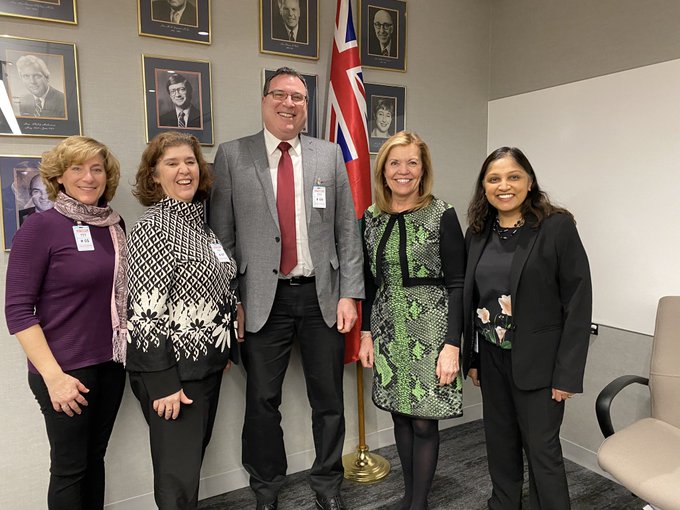
On November 17th, 2017, 75 interprofessional health-care providers from across Ontario came together to share their knowledge and experiences in order to spread innovative practices in team-based medication management across the province. The workshop was organized around four core themes:
- Managing polypharmacy and deprescribing
- Medication management to support transitions in care
- Medication management for chronic disease
- Managing health to reduce the need for medication
Read on and follow the links to learn more about programs that are currently in place and ready for spread. One (or more) of them may be a perfect fit for your team!
Opening Remarks
Michael Pe, Pharmacist | Caroline FHT Preventable drug-related incidents bring patients to emergency departments and create a burden on the health system. In this word, “preventable,” lies an incredible opportunity for primary care. Pharmacists are one piece of the puzzle, but it is through interprofessional approaches to medication management that we can have the most impact on population health.
An Interdisciplinary Approach to Deprescribe Sedative-Hypnotics in Elderly Patients.
Dr. Maria Muraca, MD, Medical Director | North York FHT Heather Rambharack, Social Worker | North York FHT Eric Lui, Pharmacist | North York FHT The North York Family Health Team took an interprofessional approach to deprescribe sedative-hypnotics in elderly patients with chronic insomnia. Evidence shows that the harms of taking sedative-hypnotics considerably outweigh the benefits. This FHT has taken the approach to wean patients off sedative-hypnotics by introducing a non-pharmacological therapy known as Cognitive Behavioural Therapy – Insomnia (CBT-I), where a combination of behavioural and cognitive techniques is used to rebuild the body’s natural sleep system. The patient is weaned off their sedative-hypnotics, with consultations and assessments with both the pharmacist and family physician, before starting CBT-I, which is a 13-week program, outlined below:
- Orientation with social workers, pharmacists and dieticians
- 2 weeks to maintain sleep logs
- 5 weeks of group sessions with social workers
- 1 individual session with social workers
For this team to conduct this interdisciplinary approach, they had Dr. Colleen Carney from Ryerson come to their FHT to run a workshop about CBT-I. Other resources necessary for this program are EMR data mining to identify patients, experts in CBT-I, a space to conduct the group sessions and communication between social workers, pharmacists and family physicians.
Managing to Reduce Need for Medication: Lower Back Pain Program
Robin Brown, Pharmacist | Mount Forest FHT and Minto-Mapleton FHT Jenna Crane, Registered Kinesiologist |Rural Wellington Low Back Pain Pilot Karin McEachern, Registered Occupational Therapist | Rural Wellington Low Back Pain Pilot Dr. Sean Lisk, Chiropractor | Rural Wellington Low Back Pain Pilot A pharmacist, kinesiologist, occupational therapist, and chiropractor from rural Wellington described an interprofessional, interorganizational low back pain program which focuses on increasing access to physical therapies. It started as a ministry-funded pilot program in seven primary care models across Ontario. The key players are kinesiologists, physiotherapists, occupational therapists, a pharmacist and chiropractors from three Family Health Teams: East Wellington FHT, Minto-Mapleton FHT, and Mount Forest FHT.
- A pharmacist provides consultations on the appropriate use of medications for the treatment of low back pain to patients.
- A kinesiologist works with patients to develop home exercise routines to help manage their pain through individualized programs involving targeted exercises to improve core strength and increase flexibility as well as helping patients to increase overall activity levels and their level of fitness.
- An occupational therapist helps participants better self-manage their pain using an interdisciplinary, functional restorative approach.
- A chiropractor provides assessment, treatment, and consultation.
Medication Management to Support Transitions in Care
Medication Management follows Medication Reconciliation in Rural Family Health Team
Glenys Vanstone, Pharmacist | Atikokan Family Health Team A pharmacist from Atikokan FHT described how their team works together with other partners, including hospitals, community pharmacists, and medical clinics to ensure that primary-care providers have the most accurate list possible of all medications the patient is taking. This information often changes as a result of hospitalization, provision of care by an outside prescriber, or patient purchases of over-the-counter medications, or it may have already been outdated. After the FHT receives and scans a discharge report into the EMR, the pharmacist receives a message and follows up with the patient to do a preliminary medication review and update the EMR. If the patient wishes to do so, they also schedule a one-on-one meeting to take place over the phone or via OTN. The pharmacist then consults with the physician to develop recommendations for the patient, from which she creates a user-friendly medication schedule in the EMR. The physician prints this schedule and gives it to the patient when they come in for a follow-up visit. The FHT pharmacist in this setting works remotely, providing collaborative care over the phone or telemedicine portal. This allows her to consult with far more patients than she could see in person. By working with the physician to develop recommendations before the patient’s follow-up visit, she is able to streamline those visits and help to ensure that a medication review takes place if needed. Of the 81 Atikokan FHT patients discharged from hospital this year, medication reconciliations have been conducted for 77. This makes patients safer and improves their health literacy.
IDEAS Project for Medication Reconciliation
Karen Peters, Pharmacist | Northumberland FHT Christine McCleary, Registered Dietitian | Northumberland FHT The Northumberland FHT identified a need to get better at following up with their patients after discharge from hospital, and they were able to do so with the help of an IDEAS grant and QI training from HQO. They used the grant to obtain access to MediTech (the hospital’s records management system), which allows them to generate daily discharge reports. FHT staff reach out to patients two days after discharge to schedule an appointment with the FHT pharmacist, which takes place either in the office, in the patient’s home, or by phone, and it includes a medication review as well as an opportunity for the patient to ask questions or share any concerns. The pharmacist updates the EMR and links the patient to other services as appropriate. The team implemented this program using a QI approach – start small, grow slowly, improve as you grow. The team’s three sites were brought into the program one at a time, each time starting with a single physician who then championed it to his or her peers. Early results are positive. The average time between hospital discharge and follow-up with a Family Health Team clinician has been reduced from 30 days to 6. In responding to patient experience surveys, patients describe it as helpful and a good use of their time. An average of 10.8 medication discrepancies have been identified between what a patient is taking and what is listed in the EMR. An additional benefit has been the availability to connect patients to the FHT dietitian in the first few days after hospital discharge. Many patients are at risk of malnutrition during transitions in care, and they may have new dietary restrictions, difficulty swallowing, digestive problems, or anxiety about eating. When a patient shares this with their pharmacist, she immediately refers them to the team dietitian, who follows up with a phone call the same or next day.
Medication Management for Chronic Disease: Diabetes Medical Visit
Shared Medical Appointments
Catherine Bednarowski, Pharmacist | Hamilton FHT The Hamilton Family Health Team implemented shared medical appointments (SMAs) as a way to improve patient access for diabetes care. Shared medical appointments are 90-minute appointments held simultaneously with 8-10 patients with chronic diseases or similar medical conditions in an interactive visit. There is a range of evidence supporting the use of SMAs including improved clinical outcomes, increased patient satisfaction and provider benefits. The SMAs take 3-6 months to implement and the roles of the providers are outlined prior to the SMA. Recruitment strategies include personal invitations as well as advertisements within the clinic. In order to implement SMAs a team will need the following: certified diabetes educator, physician champion, planning committee, physical space for the group, and medical supplies.
Patient Work Sheet and Drug Therapy Recommendations
Mary Nelson, Pharmacist| Burlington FHT A pharmacist at Caroline FHT has developed patient work sheets and drug therapy recommendations to help to increase the impact of pharmacist involvement in the diabetes clinic while reducing pharmacist time. The worksheets and drug therapy recommendations improve pharmacist access by reducing one-on-one appointments, so they can be involved in other patient care initiatives. The pharmacist’s role is to update medication lists in patient files, prepare patient flow sheets, provide lab requisitions and review patient results prior to the diabetes clinic. The physician or resident then review the worksheet and recommendations with the patient during the clinic. One-on-one appointments with the pharmacists are reserved for specific cases such as insulin starts, patients with adherence issues, new diagnoses and extremely elevated A1c/FBS. Next steps include improving the efficiency of completing the worksheets by receiving assistance from administration and nursing and improve the diabetes roster to better identify potential patients.
Wisdom from the Field: AFHTO member stories about their medication management initiatives
In addition to the above presentations, we heard short stories from two other teams who are currently using interprofessional programs to help manage and reduce reliance on medication.
Guelph Family Health Team Chronic Pain Program
Matthew Mendes | Registered Kinesiologist Chung-Ying Chou | Mental Health Counsellor Shawna Druif | Occupational Therapist The Guelph FHT Chronic Pain Program is an integrated program focusing on mindfulness-based self-management strategies to help patients improve quality of life when living with chronic pain. The program has three components: A series of five workshops led by a mental health counsellor; one-on-one consultations with an occupational therapist and kinesiologist to develop pain-management plans for patients; and an ongoing peer support group. The program helps patients to move from a pain-centred life to a function-centred life by identifying and acknowledging the pain cycle. Participating patients report being better able to understand and self-manage their pain.
Sinai Health System HeLp Program
Jessica Munro | Nurse Practitioner The HeLP program (Healthy Living with Pain) demonstrates how an interdisciplinary non-cancer chronic pain management team can support best practices in opioid prescribing and patient care. The program was designed to mitigate certain challenges and risks that arise when medical residents provide opioid prescriptions. The program supports residents through education and mentorship and EMR tools. A nurse practitioner leads the program and conducts periodic “check ins” with patients as well as back-up visits when a resident is unavailable. When a patient calls, staff know to contact the NP for guidance. The program so far shows that more patients are being counselled and supported to taper their opioid use and fewer opioids are being prescribed. Residents report being significantly more comfortable in managing chronic non-cancer pain.
DO try this at home!
At the end of the day, we asked participants, What is ONE thing we can do to be more INTERprofessional in our approaches to medication management? Here are some of the answers we got:
- Really learn what other allied health do and teach them your expertise.
- Would love to see time to collaborate, even within a team, incorporated into day-to-day work.
- Don’t be afraid to start with a small idea. Find one person who supports you and go from there.
- Find and use more interdisciplinary & shared EMR tools.
- Have joint appointments with other providers.
- Share homemade potato chips!
Thank you to our supporting partner
Managing Medication as a Team was supported by a contribution from our partner, FeelingBetterNow® by Mensante.