Tag: Measurement and Quality Improvement

  • QI in Action eBulletin #103 – Moving Forward with Quality Improvement in the New Year

    QI in Action eBulletin #103 – Moving Forward with Quality Improvement in the New Year

    In this Issue:

    • Quality Improvement on the Fly & QIPs
    • QI Resources
    • Upcoming Events

    Quality Improvement on the Fly & QIPs

    At this time, teams usually start to plan for their annual QIPs submission. We can expect an update in the upcoming weeks. In the meantime, the QI in PC Council has collaboratively gathered the following information about what initiatives teams led this year and hope to do in the upcoming year.

    Will your team(s) submit a 2021/22 QIPS? Unsure 50%, Yes 50% n=16 QIDSS/QIDSS-like

    Did your team(s) submit a 2020/21 QIPS? Yes 50%, No 18.8%, Some 31.3% n=16 QIDSS/QIDSS-like


    Priorities for 2021/22 QIPS - Unsure 13.5%; 7 day post hospital discharge 16.2%; documented assessment of palliative care needs 16.2%; patient involvement in decisions about care 18.9%; timely access to a primary care provider 18.9% n= 14 QIDSS/QIDSS-like


    Initiatives on the Go:

    • Virtual care adoption for one-on-one visits along with groups & online booking
    • Social Determinants of Health Training for all team members
    • Reconciliation of prevention care data within EMRs
    • Updated patient demographic information within EMRs
    • Regional lung health projects specifically focusing on COPD
    • Increased influenza vaccination – one team vaccinated 90% of their roster
    • Senior wellness initiatives and home blood pressure monitoring

    COVID-19 Member Initiatives Table


    Recognizing that many organizations are very busy with their local COVID efforts, we would anticipate that the 2021/2022 QIPs would have flexibility to allow organizations to reflect what they are doing to manage COVID locally or what they’re doing to maintain services (e.g. tracking access, patient experience, etc.).

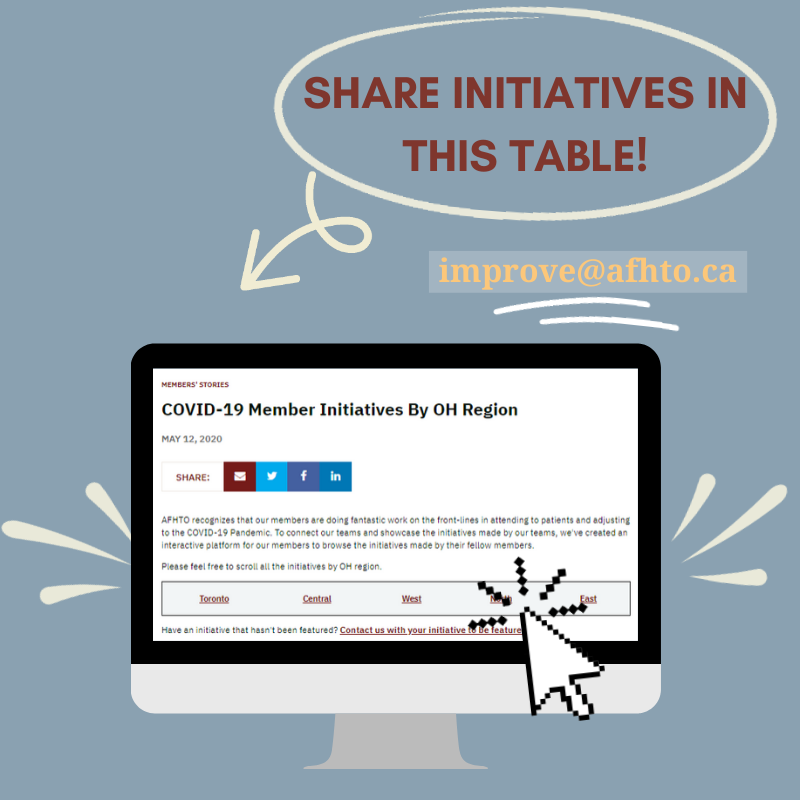
    We are continuously capturing these initiatives, in the COVID-19 Member Initiatives Table. If you have an initiative you would like to share, please email improve@afhto.ca!


    Primary Care Patient/Client Virtual Care Experience Survey

    Given what we have seen in the past year with the huge transition to virtual care, this will be a key factor for measuring access to care and patient experience. To aid teams in capturing this experience, please refer to the Primary Care Patient/Client Virtual Care Experience Survey. The survey was created to help fill informational gaps to inform future planning and further support the implementation of virtual care in primary care.

    To help you get started on planning your team’s annual Quality Improvement Initiatives, we have partnered with Choosing Wisely to host a webinar:

    Now is the Time to Choose Wisely: Advancing Quality Improvement in Primary Care  

    January 27, 2021 (12-1 pm EST)

    In this webinar, Dr. Kimberly Wintemute, Primary Co-Lead for Choosing Wisely Canada, and Dr. Peter Kuling, Family Physician at The Ottawa Hospital Academic FHT, provide insights on how to advance resource stewardship and implementation efforts in primary care using Choosing Wisely Canada recommendations and resources.   

    Click here to read more and register.

    QI Resources
    Below are measurement and quality-related tools, resources, slides, and videos. You can flag these emails or bookmark the related posts, so they will be easy to find for future reference.

    Upcoming Events:

    Better Breathing Conference 2021
    January 18 & 22, 2021
    LOCATION: VIRTUAL

    Join the Lung Health Foundation’s Better Breathing Conference! Their conference’s accredited respiratory education programming is 100% free for all Canadian healthcare professionals.

    Click here to register.

    Early ID for Palliative Care: Lessons Learned and Moving Forward
    January 21, 2021 (12-1 pm EST)

    Please join the CoP as they celebrate successes, learn about progress to date on the palliative care indicator, and discuss plans for 2021 to improve palliative care in Ontario.

    Click here to register.

    SCALE Program (Supporting Caregiver Awareness, Learning and Empowerment)
    February 3, 2021 – March 23, 2021

    Back by popular demand, the SCALE Program aims to empower you with practical information and skills to enhance self-awareness with a focus on your own needs and well-being.

    The program consists of:

    • a series of eight weekly webinars
    • online group coaching
    • one-on-one, individualized telephone counselling

    Select just one topic that you are interested in each week or take the entire program – as a caregiver, we understand how valuable your time is and that is why we developed a program to best suit your schedule.

    Click here to learn more and register.

    E-QIP Conference: QI Innovations, Understand – Pivot – Change
    April 13, 2021

    In this one-day virtual conference will offer virtual networking opportunities, poster presentations, concurrent sessions, wellness activities, and more. You will have the opportunity to hear from QI and data experts in mental health and addiction, engage in rich discussions, and ask their experts a lot of questions.

    Click here for more information.

    Interested in sharing your teams’ initiatives in a future webinar? Email Sandeep Gill – Sandeep.gill@afhto.ca to learn more about the AFHTO KTE Webinar Schedule!

    In Case You Missed It: Check out eBulletin #102 or other back issues here!
    Questions? Comments? Contact us at improve@afhto.ca.
     

  • QI in Action eBulletin #102: Choosing Wisely during the Pandemic and Beyond, Health Equity and Provider Experience

    In collaboration with the Alliance for Healthier Communities

    In this Issue:

    • Toolkits – Choosing Wisely Canada
    • AFHTO Resources as You Plan Ahead
    • Provider Experience during COVID-19 – Dr. Catherine Donnelly
    • Health Equity – Public Health Ontario
    • Upcoming Events

    These are unprecedented times. COVID-19 is an era of resource scarcity and deciding which method of care delivery is best can be challenging. In response, and per Ministry directive, we have seen many teams transition to virtual care (mostly telephone) while being available and accessible when in-person care is required. Health care systems and providers are rapidly learning and changing in response to ongoing COVID-19 developments. As we wrap up this year and think of 2021, we have collaborated with Choosing Wisely Canada to provide you with a set of resources that can help shape your new year.

    Toolkits:

    • The Cold Standard:
      • A revised toolkit for Using Antibiotics Wisely in the Era of COVID-19 and Virtual Care
      • A webinar recording to learn more about this can be found here
      • A recent article on Using Antibiotics Wisely and The Cold Standard toolkit written by Drs. Jerome Leis and Allan Grill was published in The BMJ. The article can be found here
    • Drowsy without Feeling Lousy:
      • A toolkit for reducing inappropriate use of benzodiazepines and sedative-hypnotics among older adults in primary care
    • BYE-BYE, PPI:
      • A toolkit for deprescribing proton pump inhibitors in EMR-enabled primary care settings
    • Understand the Gland:
      • A toolkit for appropriate ordering practices of free thyroid hormone testing

    Now is the Time to Choose Wisely: Advancing Quality Improvement in Primary Care  

    January 27, 2020 (12-1 pm EDT)

    Engaging primary care providers in quality improvement can play an important role in improving practice, enhancing patient experiences, and reducing unnecessary tests and treatments. This is particularly relevant now, as the pandemic has further emphasized the importance of resource stewardship given the urgent care needs and constraints related to COVID-19.  

    In this webinar, Dr. Kimberly Wintemute, Primary Co-Lead for Choosing Wisely Canada, and Dr. Peter Kuling, Family Physician at The Ottawa Hospital Academic FHT, provide insights on how to advance resource stewardship and implementation efforts in primary care using Choosing Wisely Canada recommendations and resources.   

    The webinar will:

    • Describe Choosing Wisely Canada as it relates to primary care
    • Identify ways to implement Choosing Wisely Canada recommendations in primary care  
    • Review tools and resources to support implementation of Choosing Wisely Canada recommendations in primary care

    Click here to register.

    AFHTO Resources as You Plan Ahead

    A survey of interprofessional health care providers in Family Health Teams during the COVID-19 pandemic

    We are now nine months since the initial restrictions of COVID-19 and we are interested in hearing about your experiences working in Family Health Teams during this time. IHPs are invited to participate in a brief web-based survey to understand the evolving experiences of interprofessional health care providers in Family Health Teams in Ontario during the COVID-19 pandemic.

    Click on the link here to complete the web-based survey!

    This research is being led by Drs. Catherine Donnelly (Associate Professor, Queen’s University) and Jordan Miller (Assistant Professor, Queen’s University). If you have any questions, please contact Dr.  Donnelly by email at catherine.donnelly@queensu.ca.

    COVID-19 and Health Equity
    Health Equity and COVID-19 Website:

    • Social determinants of health (SDOH), such as gender, socioeconomic position, race/ethnicity, occupation, Indigeneity, homelessness, and incarceration, are factors that potentially increase risk and severity of COVID-19 infection.
    • Incorporating SDOH into risk considerations and assessments is crucial for supporting an equitable COVID-19 response.

    Take the health equity impact assessment course to understand how to measure the impact of SDOH in your community and learn how to use the tool.

    Learn more from the webinar: Introduction to race, income, and language data collection, hosted by PHO.

    Upcoming Events:
    Virtual Learning Exchange in Virtual Primary Care
    The virtual learning exchange will be delivered in three 90-minute webinars and will focus on the following identified priority topics within the overarching theme of virtual primary care:

    • Enhancing Equity and Access (January 29, 2021, 1:30-3:00pm ET)
    • Patient and Family Centred Care (March 5, 2021, 1:30-3:00pm ET)

    To find out more information please click here.

    Choosing Wisely Canada’s 2021 National Meeting (May 12-13, 2021)

    • Choosing Wisely Canada in collaboration with the Canadian Medical Association will be hosting a two-day virtual event on May 12 & 13, 2021. Please save the dates! More details about the meeting can be found here
    • Choosing Wisely Canada is now accepting abstract submissions for the National Meeting. Please click here for more details and to submit your abstract

    Interested in sharing your teams’ initiatives in a future webinar? Email Sandeep Gill – Sandeep.gill@afhto.ca to learn more about the AFHTO KTE Webinar Schedule!

    In Case You Missed It: Check out eBulletin #101 or other back issues here!
    Questions? Comments? Contact us at improve@afhto.ca.
     

  • Bits & Pieces: always open, updated primary care guidance and more

    Bits & Pieces: always open, updated primary care guidance and more

    Your Weekly News & Updates


    In This Issue  
    • We may be working differently, but we never stopped working
    • Celebrating Nurse Practitioner Week
    • Designing integrated care and indicators for older persons’ health services
    • QSC patient advisor needed
    • 2020 Ontario Budget overview
    • Updated primary care guidance and more
    • Diabetes Awareness Month
    • Upcoming events on advancing diversity and inclusion and more

    We may be working differently, but we never stopped working

    As part of our ongoing efforts to promote primary care stepping up during the pandemic, we have partnered with OCFP and SGFP on their latest campaign to your availability in your communities. Here’s the information sheet, which partners have already started sharing on social media. Please share widely with your own patients and communities.

    We are also collecting your flu vaccine success stories as well as any fall COVID Wave 2 initiatives your teams are doing so please share those (with pictures if you have them) so we can use them in our advocacy work with the government.  #PrimaryCareAlwaysThere


    Essex County NPLC

    Celebrating Nurse Practitioner Week

    This week, we’d like to recognize the important work of NPs in primary care teams. No matter the team, whether it be FHTs, NPLCs, CHCs or other, nurse practitioners are truly invaluable in providing comprehensive care to Ontarians. Thank you to our NP team members!


    Designing integrated care and indicators for older persons’ health services

    The Provincial Geriatrics Leadership Office has recently provided two important updates:


    QSC patient advisor needed

    Involving patients as partners on our Quality Steering Committee (QSC) is integral to advance best practice and optimize performance measurement capacity across team based primary care and ensuring we meet the needs of patients, caregivers, and their families.

    We are seeking individuals who can see beyond their personal experience and share insights around quality improvement for team-based primary care. If you have a patient that you believe would be interested, please read here.


    2020 Ontario Budget overview
    On Thursday, Nov. 5 the PC government released their 2020 Ontario Budget entitled “Ontario’s Action Plan: Protect, Support, Recover”.

    Investments in health mainly centred on the Long-Term Care and hospital sectors and focused mainly on strengthening the Ontario healthcare system’s pandemic response. Here is a brief prepared by AFHTO on the budget and the announcements and investments being committed.

    Unfortunately, there were no announcements made to support primary care, team-based primary care or any additional supports to mental health and addictions beyond what was already announced.

    We will continue to work with our partners and advocating around the importance of primary care in the pandemic response and the integral role the sector plays in supporting the most vulnerable populations.


    Updated primary care guidance and more

    Updates recently released include:

    We continue to update several pages on our site with resources and news:


    Diabetes Awareness Month
    November is Diabetes Awareness Month, and Wounds Canada has organised a national social media campaign to #EndDiabetes and #PreventAmputations. Teams can get engaged by use pre-made posts created by Wounds Canada or create your own using the hashtags provided. A campaign activation kit, social media content, and infographics can be seen here.  You could also send a jpeg of your logo to katie.bassett@woundscanada.ca to be included on their website and in other communications.


    Governance Master Class: Advancing Diversity and Inclusion, Nov. 12, 2020
    Miller Thomson Health Industry Group is holding a Special Edition of their Health Industry Directors Series. It’s also free! Find out more here.


    COVID-19 Community of Practice for Ontario Family Physicians, Nov. 13, 2020

    The eleventh in the series on “Supporting patients with COVID-19, evolving guidance, fatigue and more”. Register here.


    Diabetes Care and Management for Ontario, Nov. 12, 2020

    This HeathcareRounds virtual event will be a discussion with leaders devoted to the health and care of those living with diabetes to discuss next steps and action items.
    Find out more here.


    COVID-19 Preparedness and Management in Primary Care, Nov. 13, 2020
    Public Health Ontario (PHO) is holding a webinar to introduce primary care stakeholders to the new PHO Checklist: COVID-19: Infection Prevention and Control Assessment for Primary Care Facilities. Register here.


    Cultural Safety and Indigenous Partnership, Nov. 27, 2020
    Join the first webinar of this Virtual Learning Exchange in Primary Care series held by the Canadian Foundation for Healthcare Improvement. Learn more here.


    Race, Racism, And COVID-19: The Institute For Pandemics Inaugural Lecture, Nov. 24, 2020
    This panel will explore evidence and examine the implications for using policy and other strategies to dismantle structural racism.
    Learn more here.

  • Bits & Pieces: conference videos and posters and more

    Bits & Pieces: conference videos and posters and more

    Your Weekly News & Updates


    In This Issue  
    • AFHTO 2020 conference videos and posters
    • Hybrid model of pharmacist services in a large multisite FHT
    • Blast from the past: Data to Decisions article
    • COVID-19 response framework and more
    • Upcoming events regarding health promotion, diabetes and more


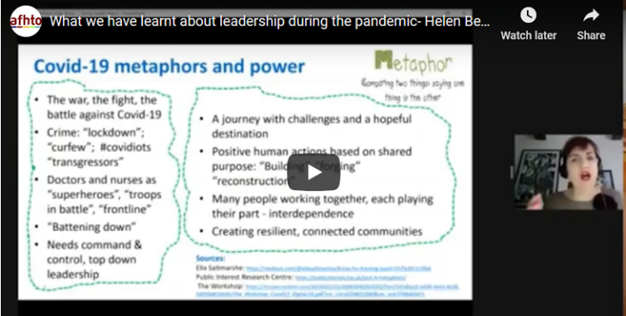
    Helen Bevan presenting at AFHTO 2020 conference

    AFHTO 2020 conference videos and posters

    Recordings from special sessions at the AFHTO 2020 Conference are now available for members, including Helen Bevan, Jane Philpott, Minister Elliott, and Matt Anderson on our site here.

    Posters are also uploaded here.

    Other session videos are also available for those who registered for the conference so please stay tuned for an email later today. If you don’t see it, please check your junk mail.


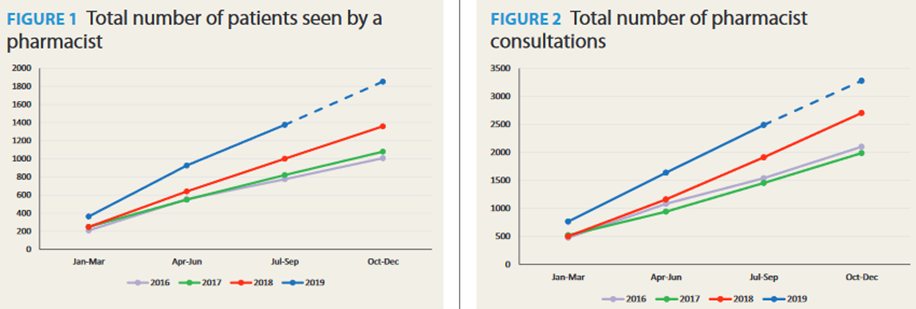
    Hybrid model of pharmacist services in a large multisite FHT

    NYFHT pharmacist hybrid graphs

    “Hybrid model of pharmacist services in a large multisite family health team” details the experience of North York FHT’s pharmacist team as published in The Canadian Pharmacists Journal (CPJ).


    Blast from the past: Data to Decisions article

    “The data reinforce the need to consider differences between rural and urban settings. They also suggest that further analysis is needed to identify characteristics that teams can change to improve the quality of care their patients experience.”

    “High and Sustained Participation in a Multi-year Voluntary Performance Measurement Initiative Among Primary Care Teams”, authored by Carol Mulder and Jennifer Rayner, was recently published in the International Journal of Health Policy and Management.


    COVID-19 response framework and more

    Updates recently released include:

    We continue to update several pages on our site with resources and news:


    Health Promotion Ontario conference, Nov. 5- 26, 2020
    The Annual Health Promotion Ontario conference will be a free virtual experience this year. There will be a four-part webinar series on Health Promotion in a Global Pandemic in November. Find out more here.


    COVID-19 Community of Practice for Ontario Family Physicians, Nov. 13, 2020

    The eleventh in the series on “Supporting patients with COVID-19, evolving guidance, fatigue and more”. Register here.


    SGFP semi-annual general meeting, Nov. 9, 2020
    Taking place from 5 to 7 p.m., there will be updates on negotiations, public health policies, elections and sharing of mid-year financials. Please share with your family physician colleagues. Register here.


    Diabetes Care and Management for Ontario, Nov. 12, 2020

    This HeathcareRounds virtual event will be a discussion with leaders devoted to the health and care of those living with diabetes to discuss next steps and action items.
    Find out more here.


    Race, Racism, And COVID-19: The Institute For Pandemics Inaugural Lecture, Nov. 24, 2020
    This panel will explore evidence and examine the implications for using policy and other strategies to dismantle structural racism.
    Learn more here.


    Osgoode Professional Development, Oct. 5, 2020 – Apr 28, 2021
    AFHTO is partnering with York University’s OPD to provide members 10% off a variety of health law programs for professional development. For discount code and course offerings, click here.

  • High and Sustained Participation in a Multi-year Voluntary Performance Measurement Initiative Among Primary Care Teams

    Research paper published in the International Journal of Health Policy and Management

    Abstract

    Background: The province of Ontario, Canada has made major investments in interdisciplinary primary care teams. There is interest in both demonstrating and improving the quality of care they provide. Challenges include lack of consensus on the definition of quality and evidence that the process of measuring quality can be counter-productive to actually achieving it. This study describes how primary care teams in Ontario voluntarily measured quality at the team level.

    Methods: Data for this 4-year observational study came from electronic medical records (EMRs), patient surveys and administrative reports. Descriptive statistics were calculated for individual measures (eg, access, preventive interventions) and composite indicators of quality and healthcare system costs. Repeated measures identified patient and practice characteristics related to quality and cost outcomes.

    Results: Teams participated in an average of 5 of 8 possible iterations of the reporting process. There was variation between teams. For example, cervical cancer screening rates ranged from 21 to 86% of eligible patients. Rural teams had significantly better performance on some indicators (eg, continuity) and worse on others (eg, cancer screening). There were some statistical but small changes in performance over time.

    Conclusion: High, sustained voluntary participation suggests that the initiative served a need for the primary care teams involved. The absence of robust data standards suggests that these standards were not crucial to achieve participation. The constant level of performance might mean that measurement has not yet led to improvement or that measures used might not accurately reflect improvement. The data reinforce the need to consider differences between rural and urban settings. They also suggest that further analysis is needed to identify characteristics that teams can change to improve the quality of care their patients experience. The study describes a practical, sustainable real-world approach to performance measurement in primary care that was attractive to interdisciplinary teams.

    Authors:

    • Carol Mulder, InfoAccess Consulting
    • Jennifer Rayner, Alliance for Healthier Communities

    Relevant Links:


  • QI in Action eBulletin #99: Capturing Primary Care’s Response to COVID-19

    QI in Action eBulletin #99: Capturing Primary Care’s Response to COVID-19

    In this Issue:

    • Primary Care Patient/Client Experience Virtual Care Survey
    • Responding to COVID-19: Understanding How Primary Care Teams Stepped up to Help Support Their Communities and Patients
    • IHP Experience During the Early Phase of COVID-19
    • Upcoming Virtual Events

    Primary Care Patient/Client Virtual Care Experience Survey

    Primary Care Patient/Client Virtual Care Experience Survey


    The rapid adoption of virtual care during the pandemic not only addresses the current needs but it will most likely shape the future of primary care delivery, beyond the pandemic.

    As a result, the Association of Family Health Teams of Ontario (AFHTO) formed a working group with a number of primary care, health system and health research organizations to measure the patient/client experience with virtual care during the COVID-19 pandemic. These organizations included: Quality Improvement in Primary Care Council (QI in PC Council), Women’s College Hospital Institute for Health System Solutions and Virtual Care (WIHV), eHealth Centre of Excellence (eCE), Ontario Health (Quality) (OH(Q)), and Partnering for Quality.

    We created the Primary Care Patient/Client Virtual Care Experience Survey to help fill informational gaps to inform future planning and further support the implementation of virtual care in primary care. This survey can also be used for quality improvement purposes to allow providers to look at ways to improve their care delivery.

    For online surveys, a template survey for Microsoft Forms has been created that can be duplicated. If you will be using SurveyMonkey, please email Sandeep.gill@afhto.ca and a copy of the survey will be shared with you.

    Ocean (CognisantMD) is offering a free platform to patient experience data; however, please refer to this guide  to ensure that you have completed all the steps to qualify. For your convenience, eCE has created an Ocean eForm version of the survey, now available to be imported to your Ocean (CognisantMD) site. Instructions on how to import and configure the survey and data extraction can be found here.

    We also highly recommend you report back to AFHTO to support AFHTO’s Provincial Initiative. To further support practices in expanding and solidifying virtual care in primary health at a provincial-level, AFHTO will be collecting the practice-level aggregate responses to the survey. Please click here to find more information.

    Responding to COVID-19: Understanding How Primary Care Teams Stepped up to Help Support Their Communities and Patients
    Since the beginning of the COVID-19 pandemic, we’ve heard countless stories of our teams’ commitment, diligence and initiative to continue providing team-based primary care around the province. We’re here to ensure that your hard work gets noticed – but to do so, we need your help.

    AFHTO in collaboration with Dr. Rachelle Ashcroft and Dr. Catherine Donnelly are conducting a research study to capture the efforts of all our members to ensure no story is left untold. This information will help influence and shape how teams will continue to adapt virtual care after the pandemic, as well as to meet patient needs.

    Interviews end August 14- don’t miss your chance to participate! Please sign up for a 30-minute interview to share your team’s story.

    IHP Experience During the Early Phase of COVID-19
    At the beginning of pandemic Dr. Catherine Donnelly and Dr. Rachelle Ashcroft created a survey to capture the interprofessional health provider (IHP) experience as the transition to virtual care began. The objective of the study was to describe the state of IHP practice within primary care teams during the COVID-19 pandemic.

    Some of the preliminary findings of the study were that 48% of IHPs felt that teamwork collaboration increased during the pandemic, 18% of IHPs felt that it remained the same whereas 34% felt it decreased.

    Most of the IHPs delivered care to patients via phone. Before the pandemic this was the most popular mechanism of virtual care delivery. As the pandemic progressed and teams explored creative ways to outreach to patients, teams started to explore social media. The preliminary findings of this survey are that IHPs are the least confident with patient care delivery via social media compared to other virtual care options and in-person care.

    As the pandemic evolves so does the expertise of providers with virtual care. Dr. Catherine Donnelly and Dr. Rachelle Ashcroft will release another survey to capture the IHP experience at multiple time points. Stay tuned for the next survey!

    Upcoming Virtual Events
    211 Ontario – Connecting Patients to Community Programs and Services Webinar
    Thursday August 20, 2020 – 12:00 – 1:00 pm EDT
    A webinar about how 211 can assist Family Health Teams. 211 has been helping the people of Ontario navigate community, health, and social services for many years. Learn more about 211 Ontario by registering here.

    Electronic Asthma Management System (eAMS) – Tool Demonstration Webinar
    Tuesday September 15, 2020 – 12:00 – 1:00 pm EDT
    The Electronic Asthma Management System (eAMS) is an evidence-based clinical decision support system developed to improve your ability to deliver best care for patients with asthma. Learn more about the tool by registering here.

    AFHTO 2020 Conference Tectonic shifts: rebuilding primary care in a new world
    Thursday, October 8, 2020 – Friday, October 9, 2020
    Before 2020, anyone with experience in Ontario’s healthcare system thought they knew what change meant. Now such changes seem almost a lifetime ago. COVID-19 has shifted our priorities with a focus on how to support our patients and our teams in new ways of delivering care.

    Primary care has risen to the challenge, but the ground is still shifting, and the future is uncertain. In short, we need to rebuild primary care for this new world. Registration to open soon. Learn more here.


    In Case You Missed It: Check out eBulletin #98 or other back issues here!
    Questions? Comments? Contact us at improve@afhto.ca.
     

  • Measuring the Patient/Client Experience with Virtual Care in Primary Care

    Measuring the Patient/Client Experience with Virtual Care in Primary Care

    Measuring the Patient/Client Experience with Virtual Care in Primary Care 

    Let's Capture the Patient Experience with Virtual Care!

    Purpose: 
    In the last year, Ontarians attended nearly 1,000,000 virtual care visits (Ontario Telemedicine Network, 2019). Virtual care is provided through a vast number of modalities such as voice, video, teleconference, online platforms, and mobile texting (Pearl et al, 2014). While many primary care practices in Ontario have provided virtual care in varying degrees prior to the COVID-19 pandemic, virtually overnight, primary care providers shifted most of their practice to virtual care to reduce COVID-19 spread. With this major transition in the delivery of care, it is important to understand how patients/clients are experiencing virtual care so that care can be optimized to best meet their needs. 

    This survey was created to help fill informational gaps to inform future planning and further support the implementation of virtual care in primary care. This survey can also be used for quality improvement purposes to allow providers to look at ways to improve their care delivery. 

    Survey Development: 
    The rapid adoption of virtual care during the pandemic not only addresses the current needs, but it will most likely shape the future of primary care delivery beyond the pandemic. As a result, the Association of Family Health Teams of Ontario (AFHTO) formed a working group with a number of primary care, health system and health research organizations to measure the patient/client experience with virtual care during the COVID-19 pandemic. These organizations included: Quality Improvement in Primary Care Council (QI in PC Council), Women’s College Hospital Institute for Health System Solutions and Virtual Care (WIHV), eHealth Centre of Excellence (eCE), Ontario Health (Quality) (OH(Q)), and Partnering for Quality. 

    AFHTO created a first draft of the survey based on a literature review of virtual care surveys used in primary care. Due to the need to start surveying during the pandemic, and because many of the questions were adopted from existing and/or validated surveys, this survey did not undergo testing. The draft questions were reviewed and refined by the working group members. 

    Additionally, AFHTO engaged with four Ontario Health Primary Care Quality Advisory Committee patient advisors and one of AFHTO’s Quality Steering Committee patient advisors to review and refine questions. The focus of the patient engagement is to identify questions that are meaningful to patients/clients and can help inform quality improvement of patient/client experience with virtual care in the primary care setting. 

    How this Survey can be Used:
    Data from this survey can be used to inform quality improvement and planning efforts. The survey was not designed to be used for benchmarking or comparative reporting; however, results can help guide practices as they plan service changes to improve their patients’ experience with virtual care. This survey complements practices’ existing patient/client experience surveys (ex: Primary Care Patient Experience Survey developed by OH(Q)).

    Practices can deploy surveys based on the type of visit the patient had:
    Thinking of your most recent visit, was it provided to you in person or virtually (i.e., phone, video, or messaging)? 
    a)    In person ⇒ please complete practice’s existing patient/client experience survey
    b)    Virtually ⇒ please complete the Patient/Client Virtual Care Experience Survey

    The results from this survey will help provide a high-level overview of the patient/client experience with virtual care; however practices are  encouraged to capture few additional data elements to provide a more comprehensive picture of virtual care provided and support the interpretation of the patient/client experience. In particular, the collection of the following two elements will be helpful: 

    a) Virtual Appointment – Reason for Visit/Appointment 

    To accurately capture this information, it is recommended that this data is extracted from the EMR via searches/queries and provide the context for the results of this survey within similar timelines. Queries can be structured to search for which appointment modality (i.e. in-person, telephone, video etc.) was used with which reason for the visit/appointment.

    b) Additional Demographic and Health Equity Data 

    The pandemic has highlighted health care inequities already existing in the population. It is important for practices to understand the variances in their patients’/clients’ experiences which can help inform quality improvement and service planning. It is important to capture social determinants of health (SDOH) such as health-related behaviours, socioeconomic factors, and environmental factors, as they can account for 80-90% of a person’s health (Magnan, 2017). Towards the end of the survey, a few questions capture demographic and health equity data, however practices are strongly encouraged to examine the following resources for additional questions:

    Data Collection: 
    Practices may choose to implement the survey via various modalities such as website, online survey platforms (ex., Microsoft Forms, SurveyMonkey, RedCap, Qualtrics etc.), email, paper, and telephone. For online surveys, a template survey for Microsoft Forms has been created that can be duplicated. If you will be using SurveyMonkey, please email improve@afhto.ca and a copy of the survey will be shared with you. 

    Ocean (CognisantMD) is offering a free platform to patient experience data; however, please refer to this guide to ensure that you have completed all the steps to qualify. For your convenience, eCE has created an Ocean eForm version of the survey, now available to be imported to your Ocean (CognisantMD) site, titled “Primary Care Patient/Client Virtual Care Experience Survey”. Instructions on how to import and configure the survey and data extraction can be found here. 

    For telephone appointments there may be some options available such as adding telephone surveys as an additional duty to screeners at your clinic, creating a telephone survey student project, looking for volunteers and using a telephone survey software. 

    Once you have identified the method of dissemination, it is recommended that the survey be fielded for a specific period (ex. 3 weeks) and that practices review results prior to relaunching the next round of the survey. This will allow you to conduct Plan-Do-Study-Act (PDSA) cycles that are manageable and will allow for time to implement quality improvement changes to improve patient/client experience. 

    Survey PDFs:


    AFHTO Provincial Initiative: Help Provide a Provincial Overview of the Patient/Client Virtual Care Experience! 
    Some survey questions may not be applicable to your practice. In collaboration with patient advisors we have identified 5 core questions that we highly recommend remain consistent when being asked. The 5 core questions include: 2, 3, 5, 7, 8 (Appendix A).

    We also highly recommend you report back to AFHTO to support AFHTO’s Provincial Initiative. To further support practices in expanding and solidifying virtual care in primary health at a provincial level, AFHTO will be collecting the practice-level aggregate responses to the survey. 

    A minimum of 5 responses per question will be required for the submission of aggregate results. At the end of June 2021, an aggregate report will be generated with the findings from this survey without any identification of practices. This data will not be used for practice-level funding or public reporting and will only be used to support planning and quality improvement at a regional and provincial level. Participation is highly encouraged, however voluntary. If you choose to participate, please fill in this survey within the first week of the given months: 

    • The week of November 1st, 2020
    • The week of February 1st, 2021
    • The week of May 1st, 2021


    For more information, please contact: 

    improve@afhto.ca

    References: 
    Magnan, S. 2017. Social Determinants of Health 101 for Health Care: Five Plus Five. NAM Perspectives. Discussion Paper, National Academy of Medicine, Washington, DC. doi: 10.31478/201710c
    Pearl R. Kaiser Permanente Northern California: current experiences with internet, mobile, and video technologies. Health Aff (Millwood). 2014;33(2):251-257. doi:10.1377/hlthaff.2013.1005
    OTN. “Virtual Care in Action.” OTN, 28 Aug. 2019, www.otn.ca/virtual-care-in-action-archives/
     

  • QI in Action eBulletin #98: Team-Based Care Supporting Patient Communities Through COVID-19

    In this Issue:

    • Team Based Care Supporting Patient Communities Through COVID-19 Webinar

    • Virtual Visits: Beginning to End Q&A Document

    • QI Resources

    Team-Based Care Supporting Patient Communities Through COVID-19 Webinar

    Team-Based Care Supporting Patient Communities Through COVID-19 Webinar

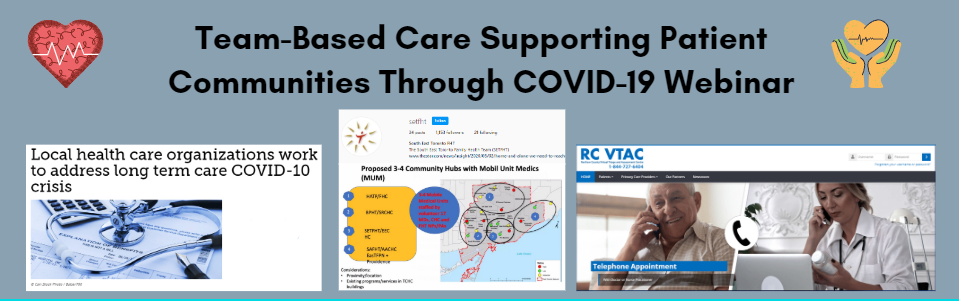
    On June 11, 2020 (12-1pm EST) AFHTO, in collaboration with 3 primary care teams, will be hosting a webinar to share initiatives teams are currently doing to help support patients in their communities during COVID-19. Learn from these teams about how they created virtual care communities, helped long-term care homes, engaged with patients via social media and much more! Teams that will be presenting are South East Toronto FHT, Brockton Area and Kincardine FHTs, Arnprior & District FHT, North Renfrew FHT, West Champlain FHT, Madawaska Valley FHT and Petawawa Centennial Family Health Centre.

    COVID-19 Member initiatives table

    Register here for the webinar!


    We have also created a table highlighting the great work teams are doing! Help us grow this list by emailing improve@afhto.ca to share what your team is doing.

    Let’s make this into a webinar series! Email us at improve@afhto.ca to share what your team is doing. You may be featured in an upcoming webinar!


    Virtual Visits Q&A Document – One on One & Group Visits

    Virtual Visits Q&A Document

    On Wednesday, May 20 we held a discussion around virtual visits (one on one & group) with our expert panel. Panelists went through multiple components of how to conduct a virtual visit and a Q&A portion.

    The recording, slide deck and Q&A document for the webinar are available here. As a follow up AFHTO and the panelists have created a Q&A document for a few questions that were not covered such as:

    • How are providers conducting phone call visits remotely?
    • Is it necessary to repeat consent at every virtual visit?
    • How do you obtain consent for group programs?
    • What Mental Health Programs are being run virtually and open to the public?
    • What platforms are teams using for secure messaging?


    QI Resources
    Below are measurement and quality-related tools, resources, slides, and videos. You can flag these emails or bookmark the related posts, so they will be easy to find for future reference.


    In Case You Missed It: Check out eBulletin #97 or other back issues here!
    Questions? Comments? Contact us at improve@afhto.ca.
     

  • QI in Action eBulletin #98: Team-Based Care Supporting Patient Communities Through COVID-19

    QI in Action eBulletin #98: Team-Based Care Supporting Patient Communities Through COVID-19

    In this Issue:

    • Team Based Care Supporting Patient Communities Through COVID-19 Webinar

    • Virtual Visits: Beginning to End Q&A Document

    • QI Resources

    Team-Based Care Supporting Patient Communities Through COVID-19 Webinar

    Team-Based Care Supporting Patient Communities Through COVID-19 Webinar

    On June 11, 2020 (12-1pm EST) AFHTO, in collaboration with 3 primary care teams, will be hosting a webinar to share initiatives teams are currently doing to help support patients in their communities during COVID-19. Learn from these teams about how they created virtual care communities, helped long-term care homes, engaged with patients via social media and much more! Teams that will be presenting are South East Toronto FHT, Brockton Area and Kincardine FHTs, Arnprior & District FHT, North Renfrew FHT, West Champlain FHT, Madawaska Valley FHT and Petawawa Centennial Family Health Centre.

    COVID-19 Member initiatives table

    Register here for the webinar!


    We have also created a table highlighting the great work teams are doing! Help us grow this list by emailing improve@afhto.ca to share what your team is doing.

    Let’s make this into a webinar series! Email us at improve@afhto.ca to share what your team is doing. You may be featured in an upcoming webinar!


    Virtual Visits Q&A Document – One on One & Group Visits

    Virtual Visits Q&A Document

    On Wednesday, May 20 we held a discussion around virtual visits (one on one & group) with our expert panel. Panelists went through multiple components of how to conduct a virtual visit and a Q&A portion.

    The recording, slide deck and Q&A document for the webinar are available here. As a follow up AFHTO and the panelists have created a Q&A document for a few questions that were not covered such as:

    • How are providers conducting phone call visits remotely?
    • Is it necessary to repeat consent at every virtual visit?
    • How do you obtain consent for group programs?
    • What Mental Health Programs are being run virtually and open to the public?
    • What platforms are teams using for secure messaging?


    QI Resources
    Below are measurement and quality-related tools, resources, slides, and videos. You can flag these emails or bookmark the related posts, so they will be easy to find for future reference.


    In Case You Missed It: Check out eBulletin #97 or other back issues here!
    Questions? Comments? Contact us at improve@afhto.ca.
     

  • QI in Action eBulletin #97: Quality Improvement on the Go

    QI in Action eBulletin #97: Quality Improvement on the Go

    In this Issue:

    • Team Based Care Supporting Patient Communities Through COVID-19

    • Quality Improvement in Primary Care Council Updates

    • Primary Care Practice Reports

    • Upcoming Webinars

    COVID-19 Member initiatives table


    Team-Based Care Supporting Patient Communities Through COVID-19
    Primary care continues to step up and ensure our patients get the care they need. From the beginning of this pandemic to now as the province transitions to re-opening services, teams have rapidly been adapting to change. It is important that teams’ innovative initiatives are shared as they continue to do quality improvement initiatives on the go. To facilitate this sharing, we have created a table highlighting the great work teams are doing!

    Email us at improve@afhto.ca to share what your team is doing. You may be featured in an upcoming webinar!


    Quality Improvement in Primary Care Council Updates

    With rapid change comes QI on the go. QI in PC Council members are helping teams adapt to these rapid changes. With an increased urgency to connect with vulnerable, isolated, and high-risk patients during this challenging time, QIDSS and QIDSS-like folks have created queries to help identify who these patients are.

    • Barrie and Community FHT has created a script that teams can use to reach out to their patients.
    • Sudbury District NPLCs has created a script and documentation for Accuro which can be found here.
    • City of Lakes FHT has created a Telus PS Encounter Assist, Screen Tool and Script that can be found here.

    QI in PC Council members have also started two working groups to address important areas during COVID-19:

    • Let’s Measure the Impact of Primary Care during COVID-19 Working Group will be specifically focusing on standardizing patient and provider experience survey questions for primary care.
    • Standardized Queries for Chronic Diseases & High-Risk Patients Working Group will help identify standardized queries to identify patients with chronic diseases and at a high-risk.

    QI in PC Council members continue to support teams with the rapid transition to virtual care. Some of the resources council members and AFHTO have created are:

    Primary Care Practice Reports

    The MyPractice: Primary Care Family Health Team report is typically released bi-annually with the next report release scheduled for May 2020. Due to COVID-19, the next release will be postponed.
    Ontario Health Quality will notify you by email once your report is refreshed and include it as an attachment. It will also be made available in the MyPractice web portal. In the meantime, you can still access your previous reports by logging in here: www.hqontario.ca/pcreport.

    Upcoming Webinars:

    Virtual Visits: Beginning to End Webinar– May 20, 2020 (12:00-1:00 pm EDT)
    Please join us for a discussion around virtual visits (one on one & group) with our expert panel. During this IHP-focused webinar, panelists will go through multiple components of how to conduct a virtual visit and a Q&A portion. Click here to register!

    In Case You Missed It: Check out eBulletin #96 or other back issues here!
    Questions? Comments? Contact us at improve@afhto.ca.