Tag: eBulletin

  • QI in Action eBulletin #99: Capturing Primary Care’s Response to COVID-19

    QI in Action eBulletin #99: Capturing Primary Care’s Response to COVID-19

    In this Issue:

    • Primary Care Patient/Client Experience Virtual Care Survey
    • Responding to COVID-19: Understanding How Primary Care Teams Stepped up to Help Support Their Communities and Patients
    • IHP Experience During the Early Phase of COVID-19
    • Upcoming Virtual Events

    Primary Care Patient/Client Virtual Care Experience Survey
    Primary Care Patient/Client Virtual Care Experience Survey


    The rapid adoption of virtual care during the pandemic not only addresses the current needs but it will most likely shape the future of primary care delivery, beyond the pandemic.

    As a result, the Association of Family Health Teams of Ontario (AFHTO) formed a working group with a number of primary care, health system and health research organizations to measure the patient/client experience with virtual care during the COVID-19 pandemic. These organizations included: Quality Improvement in Primary Care Council (QI in PC Council), Women’s College Hospital Institute for Health System Solutions and Virtual Care (WIHV), eHealth Centre of Excellence (eCE), Ontario Health (Quality) (OH(Q)), and Partnering for Quality.

    We created the Primary Care Patient/Client Virtual Care Experience Survey to help fill informational gaps to inform future planning and further support the implementation of virtual care in primary care. This survey can also be used for quality improvement purposes to allow providers to look at ways to improve their care delivery.

    For online surveys, a template survey for Microsoft Forms has been created that can be duplicated. If you will be using SurveyMonkey, please email Sandeep.gill@afhto.ca and a copy of the survey will be shared with you.

    Ocean (CognisantMD) is offering a free platform to patient experience data; however, please refer to this guide  to ensure that you have completed all the steps to qualify. For your convenience, eCE has created an Ocean eForm version of the survey, now available to be imported to your Ocean (CognisantMD) site. Instructions on how to import and configure the survey and data extraction can be found here.

    We also highly recommend you report back to AFHTO to support AFHTO’s Provincial Initiative. To further support practices in expanding and solidifying virtual care in primary health at a provincial-level, AFHTO will be collecting the practice-level aggregate responses to the survey. Please click here to find more information.

    Responding to COVID-19: Understanding How Primary Care Teams Stepped up to Help Support Their Communities and Patients
    Since the beginning of the COVID-19 pandemic, we’ve heard countless stories of our teams’ commitment, diligence and initiative to continue providing team-based primary care around the province. We’re here to ensure that your hard work gets noticed – but to do so, we need your help.

    AFHTO in collaboration with Dr. Rachelle Ashcroft and Dr. Catherine Donnelly are conducting a research study to capture the efforts of all our members to ensure no story is left untold. This information will help influence and shape how teams will continue to adapt virtual care after the pandemic, as well as to meet patient needs.

    Interviews end August 14- don’t miss your chance to participate! Please sign up for a 30-minute interview to share your team’s story.

    IHP Experience During the Early Phase of COVID-19
    At the beginning of pandemic Dr. Catherine Donnelly and Dr. Rachelle Ashcroft created a survey to capture the interprofessional health provider (IHP) experience as the transition to virtual care began. The objective of the study was to describe the state of IHP practice within primary care teams during the COVID-19 pandemic.

    Some of the preliminary findings of the study were that 48% of IHPs felt that teamwork collaboration increased during the pandemic, 18% of IHPs felt that it remained the same whereas 34% felt it decreased.

    Most of the IHPs delivered care to patients via phone. Before the pandemic this was the most popular mechanism of virtual care delivery. As the pandemic progressed and teams explored creative ways to outreach to patients, teams started to explore social media. The preliminary findings of this survey are that IHPs are the least confident with patient care delivery via social media compared to other virtual care options and in-person care.

    As the pandemic evolves so does the expertise of providers with virtual care. Dr. Catherine Donnelly and Dr. Rachelle Ashcroft will release another survey to capture the IHP experience at multiple time points. Stay tuned for the next survey!

    Upcoming Virtual Events
    211 Ontario – Connecting Patients to Community Programs and Services Webinar
    Thursday August 20, 2020 – 12:00 – 1:00 pm EDT
    A webinar about how 211 can assist Family Health Teams. 211 has been helping the people of Ontario navigate community, health, and social services for many years. Learn more about 211 Ontario by registering here.

    Electronic Asthma Management System (eAMS) – Tool Demonstration Webinar
    Tuesday September 15, 2020 – 12:00 – 1:00 pm EDT
    The Electronic Asthma Management System (eAMS) is an evidence-based clinical decision support system developed to improve your ability to deliver best care for patients with asthma. Learn more about the tool by registering here.

    AFHTO 2020 Conference Tectonic shifts: rebuilding primary care in a new world
    Thursday, October 8, 2020 – Friday, October 9, 2020
    Before 2020, anyone with experience in Ontario’s healthcare system thought they knew what change meant. Now such changes seem almost a lifetime ago. COVID-19 has shifted our priorities with a focus on how to support our patients and our teams in new ways of delivering care.

    Primary care has risen to the challenge, but the ground is still shifting, and the future is uncertain. In short, we need to rebuild primary care for this new world. Registration to open soon. Learn more here.


    In Case You Missed It: Check out eBulletin #98 or other back issues here!
    Questions? Comments? Contact us at improve@afhto.ca.
     

  • QI in Action eBulletin #98: Team-Based Care Supporting Patient Communities Through COVID-19

    In this Issue:

    • Team Based Care Supporting Patient Communities Through COVID-19 Webinar

    • Virtual Visits: Beginning to End Q&A Document

    • QI Resources

    Team-Based Care Supporting Patient Communities Through COVID-19 Webinar

    Team-Based Care Supporting Patient Communities Through COVID-19 Webinar

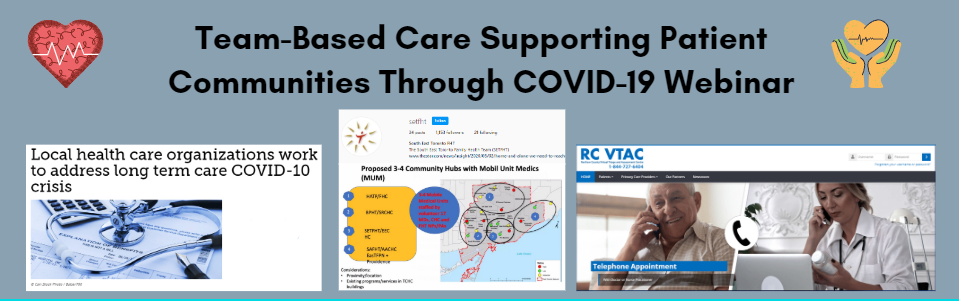
    On June 11, 2020 (12-1pm EST) AFHTO, in collaboration with 3 primary care teams, will be hosting a webinar to share initiatives teams are currently doing to help support patients in their communities during COVID-19. Learn from these teams about how they created virtual care communities, helped long-term care homes, engaged with patients via social media and much more! Teams that will be presenting are South East Toronto FHT, Brockton Area and Kincardine FHTs, Arnprior & District FHT, North Renfrew FHT, West Champlain FHT, Madawaska Valley FHT and Petawawa Centennial Family Health Centre.

    COVID-19 Member initiatives table

    Register here for the webinar!


    We have also created a table highlighting the great work teams are doing! Help us grow this list by emailing improve@afhto.ca to share what your team is doing.

    Let’s make this into a webinar series! Email us at improve@afhto.ca to share what your team is doing. You may be featured in an upcoming webinar!


    Virtual Visits Q&A Document – One on One & Group Visits

    Virtual Visits Q&A Document

    On Wednesday, May 20 we held a discussion around virtual visits (one on one & group) with our expert panel. Panelists went through multiple components of how to conduct a virtual visit and a Q&A portion.

    The recording, slide deck and Q&A document for the webinar are available here. As a follow up AFHTO and the panelists have created a Q&A document for a few questions that were not covered such as:

    • How are providers conducting phone call visits remotely?
    • Is it necessary to repeat consent at every virtual visit?
    • How do you obtain consent for group programs?
    • What Mental Health Programs are being run virtually and open to the public?
    • What platforms are teams using for secure messaging?


    QI Resources
    Below are measurement and quality-related tools, resources, slides, and videos. You can flag these emails or bookmark the related posts, so they will be easy to find for future reference.


    In Case You Missed It: Check out eBulletin #97 or other back issues here!
    Questions? Comments? Contact us at improve@afhto.ca.
     

  • QI in Action eBulletin #98: Team-Based Care Supporting Patient Communities Through COVID-19

    QI in Action eBulletin #98: Team-Based Care Supporting Patient Communities Through COVID-19

    In this Issue:

    • Team Based Care Supporting Patient Communities Through COVID-19 Webinar

    • Virtual Visits: Beginning to End Q&A Document

    • QI Resources

    Team-Based Care Supporting Patient Communities Through COVID-19 Webinar

    Team-Based Care Supporting Patient Communities Through COVID-19 Webinar

    On June 11, 2020 (12-1pm EST) AFHTO, in collaboration with 3 primary care teams, will be hosting a webinar to share initiatives teams are currently doing to help support patients in their communities during COVID-19. Learn from these teams about how they created virtual care communities, helped long-term care homes, engaged with patients via social media and much more! Teams that will be presenting are South East Toronto FHT, Brockton Area and Kincardine FHTs, Arnprior & District FHT, North Renfrew FHT, West Champlain FHT, Madawaska Valley FHT and Petawawa Centennial Family Health Centre.

    COVID-19 Member initiatives table

    Register here for the webinar!


    We have also created a table highlighting the great work teams are doing! Help us grow this list by emailing improve@afhto.ca to share what your team is doing.

    Let’s make this into a webinar series! Email us at improve@afhto.ca to share what your team is doing. You may be featured in an upcoming webinar!


    Virtual Visits Q&A Document – One on One & Group Visits

    Virtual Visits Q&A Document

    On Wednesday, May 20 we held a discussion around virtual visits (one on one & group) with our expert panel. Panelists went through multiple components of how to conduct a virtual visit and a Q&A portion.

    The recording, slide deck and Q&A document for the webinar are available here. As a follow up AFHTO and the panelists have created a Q&A document for a few questions that were not covered such as:

    • How are providers conducting phone call visits remotely?
    • Is it necessary to repeat consent at every virtual visit?
    • How do you obtain consent for group programs?
    • What Mental Health Programs are being run virtually and open to the public?
    • What platforms are teams using for secure messaging?


    QI Resources
    Below are measurement and quality-related tools, resources, slides, and videos. You can flag these emails or bookmark the related posts, so they will be easy to find for future reference.


    In Case You Missed It: Check out eBulletin #97 or other back issues here!
    Questions? Comments? Contact us at improve@afhto.ca.


  • QI in Action eBulletin #97: Quality Improvement on the Go

    QI in Action eBulletin #97: Quality Improvement on the Go

    In this Issue:

    • Team Based Care Supporting Patient Communities Through COVID-19

    • Quality Improvement in Primary Care Council Updates

    • Primary Care Practice Reports

    • Upcoming Webinars

    COVID-19 Member initiatives table


    Team-Based Care Supporting Patient Communities Through COVID-19
    Primary care continues to step up and ensure our patients get the care they need. From the beginning of this pandemic to now as the province transitions to re-opening services, teams have rapidly been adapting to change. It is important that teams’ innovative initiatives are shared as they continue to do quality improvement initiatives on the go. To facilitate this sharing, we have created a table highlighting the great work teams are doing!

    Email us at improve@afhto.ca to share what your team is doing. You may be featured in an upcoming webinar!


    Quality Improvement in Primary Care Council Updates

    With rapid change comes QI on the go. QI in PC Council members are helping teams adapt to these rapid changes. With an increased urgency to connect with vulnerable, isolated, and high-risk patients during this challenging time, QIDSS and QIDSS-like folks have created queries to help identify who these patients are.

    • Barrie and Community FHT has created a script that teams can use to reach out to their patients.
    • Sudbury District NPLCs has created a script and documentation for Accuro which can be found here.
    • City of Lakes FHT has created a Telus PS Encounter Assist, Screen Tool and Script that can be found here.

    QI in PC Council members have also started two working groups to address important areas during COVID-19:

    • Let’s Measure the Impact of Primary Care during COVID-19 Working Group will be specifically focusing on standardizing patient and provider experience survey questions for primary care.
    • Standardized Queries for Chronic Diseases & High-Risk Patients Working Group will help identify standardized queries to identify patients with chronic diseases and at a high-risk.

    QI in PC Council members continue to support teams with the rapid transition to virtual care. Some of the resources council members and AFHTO have created are:

    Primary Care Practice Reports

    The MyPractice: Primary Care Family Health Team report is typically released bi-annually with the next report release scheduled for May 2020. Due to COVID-19, the next release will be postponed.
    Ontario Health Quality will notify you by email once your report is refreshed and include it as an attachment. It will also be made available in the MyPractice web portal. In the meantime, you can still access your previous reports by logging in here: www.hqontario.ca/pcreport.

    Upcoming Webinars:

    Virtual Visits: Beginning to End Webinar– May 20, 2020 (12:00-1:00 pm EDT)
    Please join us for a discussion around virtual visits (one on one & group) with our expert panel. During this IHP-focused webinar, panelists will go through multiple components of how to conduct a virtual visit and a Q&A portion. Click here to register!

    In Case You Missed It: Check out eBulletin #96 or other back issues here!
    Questions? Comments? Contact us at improve@afhto.ca.

  • QI in Action eBulletin #96: Lung Health in Primary Care

    In this Issue:


    • Primary Care Lung Health Programs
    • Electronic Asthma Management System Tool for Oscar Users
    • Understanding Bronchiectasis
    • Vaping
    • Upcoming Webinars

    Primary Care Lung Health Programs
    In 2015, there were 60, 530 new Chronic Obstructive Pulmonary Disease (COPD) diagnoses for people in Ontario ages 35 and older and 883,400 Ontarians were living with a COPD diagnosis . 61, 580 Ontarians ages 1 and older were newly diagnosed with asthma in 2015, with 1.9 million living with an asthma diagnosis1. COPD and asthma are only 2 of the 5 major chronic respiratory diseases also including lung cancer, tuberculosis (TB) and cystic fibrosis. Primary care provides care for these lung health conditions and many more in team-based care settings; this document highlights some of the lung health programs within primary care.

    eAMS Tool for OSCAR Users – Webinar
    The Electronic Asthma Management System (eAMS) is an evidence-based clinical decision support system developed to improve your ability to deliver best care for patients with asthma.

    WHAT DOES THE eAMS DO?

    The eAMS was designed to help providers to bridge the main evidence-to-practice gaps that have been identified across care settings and are believed to be the major cause of poor disease control and healthcare utilization in patients with asthma.

    WHO IS THE eAMS FOR?

    The eAMS was designed by primary care providers, for primary care providers. The tool was designed to assist clinicians in busy real-world primary care settings. The system can be used by any health care provider but because the system makes prescription recommendations, the most common users are physicians, nurse practitioners, and physician assistants. Other team members could also use the system and receive signoff from a prescriber for any required medication changes. The system is available for all asthma patients aged 16 years and older.

    Join the OSCAR CoP Webinar and Dr. Samir Gupta, to learn more about this tool!

    Understanding Bronchiectasis

    Bronchiectasis is not rare, but it is currently a neglected pulmonary disease which poses a significant burden to the health care system. Learning how to counsel patients regarding the modifiable factors can affect prognosis and improve the patients’ quality of life. Self-management support plays an important role in the patient’s ability to make lifestyle changes to reduce symptoms, prevent recurrent lung infections, prevent emergency department visits, hospital admission and decrease mortality.

    We’re pleased to be hosting a webinar with Bruyère Academic FHT, so that our teams can learn more about bronchiectasis. At the end of this webinar, participants will be able to:

    • Verbalize their understanding of bronchiectasis and how to help patients self-manage this disease  
    • Learn how to avoid the acquisition of nontuberculosis mycobacteria.
    • Understand the bronchiectasis self-management plan

    Learn more at an upcoming webinar- sign up here!

    Vaping
    The Heart & Stroke Foundation, in collaboration with Dr. Andrew Pipe, hosted a webinar on the impact of vaping on the health of Canadians. The youth vaping trend and the concept of nicotine as a gateway along with challenges of vaping for cardiovascular disease prevention were discussed within this webinar.

    To address some of the dangers of vaping in youth, on Feb. 28 Minister Elliott announced proposed regulatory changes that, if approved, would limit where flavoured and high nicotine vapour products are sold at retail. At the same time, the province intends to expand prevention initiatives and services to quit vaping.

    To better understand the impact of vaping, please listen to the webinar by Dr. Pipe with learning objectives that included:

    1. Examine and explain the controversies surrounding vaping and the importance of influencing healthy public policy.
    2. Describe the risks associated with vaping and the impact on cardiovascular disease prevention.
    3. Discuss how to engage in meaningful discussion about vaping and smoking cessation with individuals.
    4. Recognize the advantages and shortcomings of nicotine replacement therapy.

    Listen to this webinar here.

    Upcoming Webinars:

    In Case You Missed It: Check out eBulletin #95 or other back issues here!
    Questions? Comments? Contact us at improve@afhto.ca.

  • QI in Action eBulletin #95: Made-In Ontario High Impact Actions in Primary Care

    In this issue

    • Primary Care Virtual Community
    • High Impact Action Items
    • Local Change Ideas
    • Upcoming Webinars

    Primary Care Virtual Community:

    The primary care virtual community is Ontario’s novel collaborative designed to unleash the power of primary care in health system change. As a community, they have co-defined a list of High Impact Actions that are felt to spark meaningful improvements in primary care, building on lessons learned from the UK’s own transformation efforts. The community has also shared insight on the actions they feel are within their control, in addition to where support is needed. As a community they continue to work collaboratively to refine the list of High Impact Action Items for Ontario. Here is the latest list of 10:

    High Impact Action Items:

    1. Navigate & Coordinate

    • Promote patient navigator role that can enable easier patient/caregiver access to resources including those that go beyond health care resources. This could include linking home care coordination to primary care.

    2. Integrate EMRs

    • Either single or intra-operable EMR/EHR systems that can both push and pull required information. Integration of EMRs can enhance quality of care provided and practice efficiency by promoting easier and better communication.

    3. Access to Mental Health and Addictions

    • Provide mental health and addictions supports in the community, embedding these supports in primary care.

    4. Organizing Primary Care

    • Come together at the local level to organize primary care and move towards more team-based care for more Ontarians, opening up the FHO model for primary care delivery.

    5. Practice Facilitation & Change Management

    • Provide dedicated resources to enable peer -to -peer coaching and uptake by providers. A QI-enabled, evidence-driven health care system, in turn, enables best practices.

    6. Build the Extended Team

    • Identify and provide support to the extended team that wraps around the patient/ family/caregivers and provide supports to enable the team to be high performing.

    7. Streamline & Reduce Administrative Burden

    • Reduce bureaucracy and administrative burden.

    8. Recognize and Support Primary Care Continuity

    • Promote the patient/caregiver and provider relationship, ensuring that the care is provided according to the principles of comprehensiveness and continuity.

    9. Build Connections to Address the Social Determinants of Health

    • Recognize the social determinants of health as factors that influence health and well being outside of access to healthcare services, adopting practices like social prescribing.

    10. Patients as Partners

    • Empower patients to take greater control and ownership over their health.

    Local Change Ideas:

    The Primary Care Virtual Community has given communities the opportunity to identify what’s meaningful to them. What are their pain points, headaches or areas that can be improved? And more importantly what changes can be made at the local level to support providers, their clinical practices and the delivery of patient care. Building on the change ideas identified in the primary care high impact actions for Ontario, this document highlights local challenges and solutions to improve clinical practices and care delivery in your own communities. This document is only the beginning of creating a repository of change ideas. Please complete this survey to provide local change ideas within your community!

    The February 13th and the November 21st Virtual Community focused on Organizing Primary Care – the community learned from a number of primary care leaders about how they are mobilizing the primary care community to self-organize and identify what their needs are. We’re pleased to share their lessons and advice with the release of Primary Care Physicians: Working Together for Change primer which highlights strategies that can be employed for organizing primary care at the local level.

    Resources:

    Upcoming Webinars:

    • Improving cancer screening rates in your practice and reducing related disparities – Feb 20, 2020 – Sign up here

    In Case You Missed It: Check out eBulletin #94 or other back issues here!
    Questions? Comments? Contact us at improve@afhto.ca.
  • QI in Action eBulletin #94: Quality and Measurement New Beginnings

    QI in Action eBulletin #94: Quality and Measurement New Beginnings

    In this issue

    • Moving Forward with AFHTO’s Quality Agenda
    • Formation of the Quality Improvement in Primary Care Council
    • Mental Health and Addictions Support
    • Support for Teams
    • Tools and Resources (including standardized EMR queries)
    • Webinar videos and slides (including opioid stewardship)
    • Workshops, events and presentations (including focus on follow up)
    • Upcoming Webinars

    Moving Forward with AFHTO’s Quality Agenda

    2019 was a challenging and busy year with ongoing health system transformation changes along with changes to the QI program at AFHTO. Despite the sunset of D2D, AFHTO will continue its efforts to support teams in the field of quality and demonstrate the value of team-based primary care.

    Quality improvement remains a key focus, and AFHTO’s Quality Steering Committee (QSC), in partnership with key stakeholders, is currently working on a priority list and areas of focus for this year. As we begin this new year, we wanted to provide you with a wrap-up of 2019 along with resources that will help projects this year.

    If you would like to share a tool, resource or highlight a successful program or service in your team, we would love to hear from you! Please fill out this quick survey.

    Formation of the Quality Improvement in Primary Care Council

    In January of 2019, the Quality Improvement in Primary Care (QI in PC) Council was formed. The QI in PC council consists of 5 appointed QIDSS and QIDSS-like individuals with the goal to support the QIDSS Community of Practice (CoP) and strengthen collective QI capacity across the sector.

    The priority areas for the group are primary care QI priorities, EMR queries and much more. eCE has partnered with AFHTO to help support this council in areas such as 7-day post-hospital discharge follow up.

    The members of the council include:

    • Cameron Berry, QIDSS, Kawartha North FHT
    • Abigail Scott, Data and Quality Improvement Analyst, Queen’s FHT
    • Brice Wong, QIDSS, Windsor FHT
    • Mitch Chartier, QIDSS, Elliot Lake FHT
    • David Raan, QIDSS, Humber River FHT

    Contact the council by emailing: qiprimarycouncil@emaildodo.com.  

    Mental Health and Addictions Support

    AFHTO continues to advocate for more supports in primary care, especially as it pertains to ensuring more patients have access to team-based care, in particular in the areas of mental health and care coordination. This year, the Mental Health and Addictions webinar series in collaboration with CMHA & AMHO will continue and you can participate in the remaining 3 parts.

    AFHTO, along with our mental health and addictions and primary care partners, is co-leading the development of a OHT Guidebook for Mental Health and Addictions and Primary Care Integration which will be helpful not only to those teams that are moving forward with OHTs in their community but will also be helpful with program planning at the local level.

    We are also partnering with other organizations like OntarioMD, Ontario Health, CEP, eCE, OCFP, ECHO project and the Ontario Pain Management Resources (OPMR) group partners to help support a learning collaborative for the NorthWest LHIN addressing opioids prescribing.

    The Algorithm Project team at AFHTO is in the final stage of completing a MEQ tool/query that will be compatible with OSCAR, Telus PS and Accuro. If you’re interested in piloting these tools, please reach out to us at improve@afhto.ca.

    Support for Teams:

    AFHTO has a library of resources that you may find helpful in developing your programs and services and with your Quality Improvement Plan. As always, if you have an innovation you want to share please let us know, by completing this quick survey.

    Measuring tape

    Tools and Resources:

    We have so many tools and resources available for members, but since they have been announced throughout the

    years, we thought a refresher would be welcome, especially since we know you’re exposed to so much information every day.

    Just a reminder that in our Dec. 17 communique we provided you a comprehensive list of Governance and Leadership tools, resources and training. .


    Below are measurement and quality-related tools, resources, slides and videos. You can flag these emails or bookmark the related posts, so they’ll be easy to find for future reference.

    Webinars:


    Business chart

    Workshops, Events and Presentations


    Upcoming Webinars:

    If you have a suggestion for a webinar/QI in Action eBulletin topic or if you would highlight a tool, resource, successful program and/or innovation please let us know by filling out this quick survey.

    In Case You Missed It: Check out eBulletin #93 or other back issues here!
    Questions? Comments? Contact us at improve@afhto.ca.

  • QI in Action eBulletin #93: Change Ideas for Quality Improvement Plans

    In this issue


    • Quality Improvement Plan (QIP) Priority Indicators
    • 7 Day Post Hospital Discharge Follow Up
    • Same Day & Next Day Appointments
    • Involving Patients in Decisions About Their Care and Treatment
    • Identifying Patients for Palliative Care who Subsequently have their Palliative Care needs Assessed using a Comprehensive and Holistic Assessment
    • Non-Palliative Patients Newly Dispensed an Opioid
    • Resources
    • Upcoming Webinars   

    Quality Improvement Plan (QIP) Priority Indicators

    On November 27, 2019 the 2020/21 Quality Improvement Plans (QIPs) were launched. The priorities that will guide quality improvement efforts over the coming year remain similar as last year. Please see the following resources for specifics on the priority indicators:

    To help you plan this year’s change ideas, please see initiatives other teams have taken within their 2019/2020 QIPs for each priority indicator:  

    Percentage of those hospital discharges (any condition) where timely (within 48 hours) notification was received, for which follow-up was done (by any mode, any clinician) within 7 days of discharge


    • Aurora-Newmarket FHT will be collaborating with the local hospital to book post hospital appointments prior to the patient’s discharge
    • City of Lakes FHT will pilot integrating a tool to identify patients at risk for readmission
    • East Elgin FHT will be introducing coordinated care plans at follow up appointments
    • Petawawa Centennial FHT will be checking the local hospital’s database for discharge reports
    • Summerville FHT will be working with partners to develop a portal and educational materials
    • Sunset Country FHT will be collaborating with the local hospital to connect unrostered patients seeking primary care services at a hospital with a primary care physician
    • Teams are conducting medication reconciliations for patients discharged from the hospital
    • Teams have RNs performing telephone follow-ups with patients or are printing out a list of patients discharged daily for providers

    Percentage of patients and clients able to see a doctor or nurse practitioner on the same day or next day, when needed
    Teams are:

    • Adding additional survey questions to better understand access
      • Credit Valley FHT is creating an Access Survey to create a patient focus group to understand what access means to patients
    • Blocking times within NP/MD Schedules for same day/next day acute appointments
    • Analyzing appointment availability data
    • Offering after-hour clinics
      • Lakehead NPLC will expand office hours to include more evening and weekend hours and open walk-in access six days a week
    • Offering e-visits and expanding e-booking of appointment

    Percent of patients who stated that when they see the doctor or nurse practitioner, they or someone else in the office (always/often) involve them as much as they want to be in decisions about their care and treatment

    • Survey Completion Targets
      • Teams administer the survey upon the completion of programs
      • Teams have set weekly, monthly, quarterly and/or annual targets
      • Grandview FHT will be developing an EMR search to query patients that have had a visit in the last 4 weeks to request targeted survey feedback
      • Smithville FHT will incentivize patients and staff to meet survey completion targets
      • Windsor FHT is creating pre and post surveys for their Team Care Centre
    • Modes of Communication
      • Teams survey patients via tablets, kiosks, website, paper surveys, emails, patient portals, patient feedback cards, newsletters and social media
      • Carefirst FHT will have posters in their waiting room in different languages
      • Guelph FHT will encourage patient centered goal setting across disciplines through standardized prompts in charting tools
      • Harbourview FHT will be creating patient self-management resources
      • Kincardine FHT will have Patient Navigator Volunteers that will help with way-finding questions and encourage the completion of surveys
      • North Shore FHT will be developing an introductory handout for locums to highlight their commitment to patient centred care
    • Sharing Survey Results
      • Teams accumulate survey results to present at team meetings and/or to patients
        • Belleville NPLC will have open discussions at huddles and team meetings around including patients in decisions about their care
      • University of Ottawa Health Services FHT will have a dedicated Survey Working Group to analyze survey results and make recommendations for improvement
    • Patient Advisory Committees
      • Bridgepoint FHT will draft letters to recruit patients to participate in the Patient Advisory Committee

    Proportion of patients with a progressive, life-limiting illness who were identified to benefit from palliative care who subsequently have their palliative care needs assessed using a comprehensive and holistic assessment

    • Carefirst FHT intends to introduce the Palliative Performance Scale (PPS) assessment for their complex patients in the INTEGRATE program
    • Mount Forest FHT, in partnership with eHealth Centre of Excellence (eCE), will contact patients who have been identified in the EMR as having 4 or more chronic conditions and/or have had 4 or more emergency room visits in the past 6 months and invite them to engage in developing a coordinated care plan
    • Teams are implementing the use of the Palliative Toolbar created by eCE
    • Teams are providing advanced care education for providers
    • Teams are developing and implementing standardized identification methods within EMRs
      • Great Northern FHT will be incorporating the surprise question “Would you be surprised if patient were to die next year?” within their workflow
      • St. Joseph’s Urban FHT plans to create a list of diagnoses that capture the diseases that are potentially progressive and life threatening from our patient population. From this group of patients, they will determine palliative status using a possible prognosis of less than 1 year.

    Percentage of non-palliative patients newly dispensed an opioid within a 6-month reporting period prescribed by any provider in the health care system within a 6-month reporting period

    • Identification of patients on opioids:
      • Bancroft FHT will implement a Rural Outpatient Opioid Treatment Program
      • Brockton and Area FHT will incorporate the review of hospital discharge opioid prescriptions as part of their Medication Reconciliation Program
      • Chapleau and District FHT will implement a telepharmacist-led opioid stewardship program
      • Lakehead NPLC will be using a standardized approach to safe prescribing in which patients will have a risk assessment tool, pain assessment tool and treatment agreement completed
      • Nipigon District FHT will implement the HARMS program developed by Marathon FHT
      • Petawawa Centennial FHT will increase the number of opioid contracts completed and plan a process to follow up with patients prescribed an opioid
      • St. Michael’s Hospital Academic FHT will collaborate with St. Michael’s Hospital departments to develop patient-oriented discharge plans for opioid taper when initiated in hospital
      • Thamesview FHT will implement a cannabinoid program focusing on the reduction of polypharmacy
      • Wawa FHT will participate in a RAAM clinic with other community agencies
      • Teams are working on developing queries to identify patients
    • Pain Management Programs:
      • Alliston FHT will be performing a falls risk assessment of all patients in the geriatric program
      • Dufferin Area FHT will continue to offer the Power Over Pain group and individual appointments
      • Hanover FHT will review a rehab plan after joint replacement surgeries
      • Powassan and Area FHT will offer patients a mindfulness for chronic pain program
    • Increase physician sign up for MyPractice reports
    • Increase Opioid Toolbar Use
    • Teams are focusing on education and awareness for patients and providers:
      • Exploring professional development opportunities for providers to educate on pain management programs and/or opioid prescribing
      • Post-operative pain management handouts for patients

    To learn more about the initiatives listed above please email improve@afhto.ca.

    Resources:

    Upcoming Webinars:


    In Case You Missed It: Check out eBulletin #92 or other back issues here!
    Questions? Comments? Contact us at improve@afhto.ca.

  • QI in Action eBulletin #92: How Can Teams Help Meet The E-Service Needs of Patients?

    QI in Action eBulletin #92: How Can Teams Help Meet The E-Service Needs of Patients?

    In this issue

    • What are Patients’ E-service Needs?   
    • Prescription Renewals
    • Consult with any Healthcare Provider Online (Email, Virtual Visits, etc.)  
    • Specialist Referral Confirmations and Notifications
    • How have Other Teams Implemented Digital Health Tools?   
    • Digital Health Week and the QIDS-Essential Summary
    • Resources
    • Upcoming Webinars and Conferences


    What are Patients’ E-service Needs?   
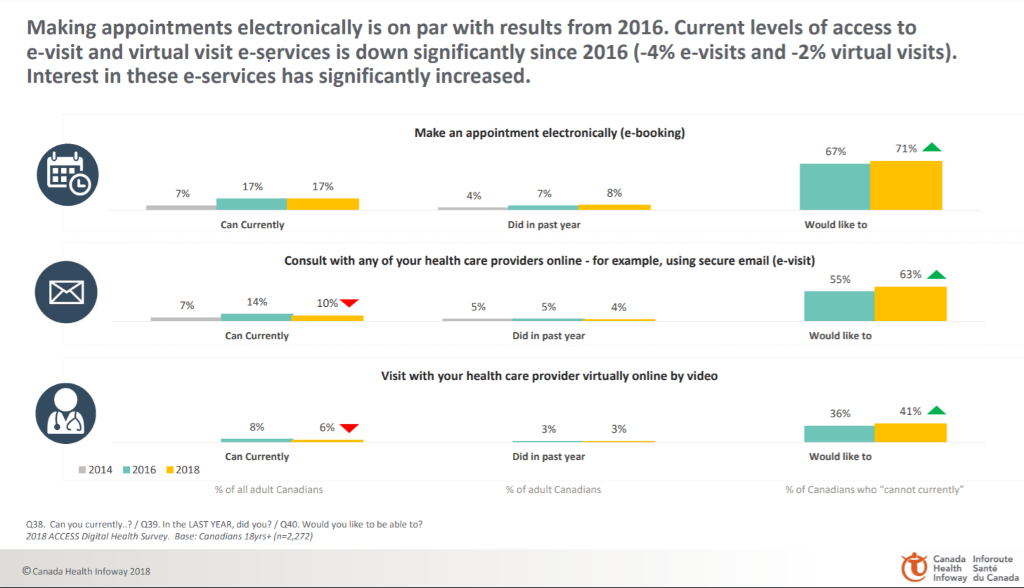
    Canada Health Infoway conducted 4 public surveys throughout Canada between 2014 and 2018 to assess the availability, use and public interest in digital access to their health information and e-services.1 Some of the key takeaways from the survey results were:  

    • The availability of e-services isn’t meeting the demands of Canadians  
    • Canadians accessing their health information online has doubled between March 2017 to March 2018
    • The four e-services that Canadians want the most are1:  
      • Prescription renewal (4 million Canadians have lost or damaged a prescription and as a result 700,000 Canadians have gone without medication)  
      • Online access to health records
      • Specialist referral confirmations and notifications for confirmed appointments with specialists  
      • Online booking for appointments  

    Survey data from Connecting Patients for Better Health 2018 report by Canada Health Infoway

    Survey data from Connecting Patients for Better Health 2018 report by Canada Health Infoway

    However, over the years despite the increased interest for e-services, the access for the services has not increased.  


    Prescription Renewals

    • PrescribeIT allows providers to directly transfer prescriptions to the pharmacies of the patient’s choice. PrescribeIT fully integrates with existing electronic medical records (Telus PSS is live, OSCAR to be available early 2020) and pharmacy management systems. Health Canada has provided Canada Health Infoway the funding to create and launch PrescribeIT and it’s being provided at no charge to prescribers.
      • Benefits include:
        • Enhanced security and patient privacy: prescriptions sent through PrescribeIT are transmitted as data via an encrypted two factor authentication process and details entered directly into the pharmacy software.
        • Rx Dispense notifications in the EMR: Rx dispense, and cancellations notifications are sent to the EMRs when a PrescribeITTM order has been received and processed through the a PrescribeITTM enabled pharmacy.
        • Enhanced Communication: Replace fax or phone calls with secure messaging directly from the EMR (currently available for select PrescribeITTM enabled pharmacies)
        • Renew Rx Requests electronically from the EMR: Reduce administrative work in faxing/scanning renewals


    Consult with any Healthcare Provider Online  

    • Provider to specialist: eConsults are available through OTN for physicians and nurse practitioners to access specialist advice in a timely manner. Non-urgent matters have a response time of an average 2 days! This program also consists of Teledermatology and Teleophthalmology
      • A case study illustrating timely patient care through eConsult use in primary care, can be found here.
      • A case study illustrating the use of eConsult to support timely access to specialist advice, reducing anxiety and decreasing unnecessary referrals, can be found here.
    • Patient to Provider: Interprofessional teams can sign up with ThinkResearch to access VirtualCare allowing family physicians, nurse practitioners, registered nurses, social workers, dietitians and other clinicians to host virtual visits.
      • Virtual visits are a way for patients and providers to communicate directly over a safe, secure, online platform via chat messaging, phone, or video.
      • Since the launch of this program, in collaboration with eCE and the Waterloo Wellington LHIN in March 2018 14,200 virtual visits have been provided.
      • Patient and provider-initiated visits are available
      • Admins (reception/nursing) can triage and book virtual visits, supporting clinical workflow
      • Visit transcripts and attachments can be exported to the EMR via HRM
      • A published case study illustrating the patient experience with virtual visits in primary care can be found here.
      • A published case study on the provider experience with virtual visits in primary care can be found here.
      • Use and benefits of provider-initiated virtual visits are highlighted within a published case study here.


    Specialist Referral Confirmations and Notifications

    • The eHealth Centre of Excellence (eCE) leads the System Coordinated Access (SCA) Program, outlined in the Ontario Health Teams: Digital Health Playbook (August 2019). The SCA Program deploys the Ocean eReferral technology developed from an innovation procurement (with a consortium consisting of ThinkResearch, CognizantMD and the Centre for Effective Practice) to delivering more than 60,000 eReferrals integrated from within primary care EMRs (Telus PSS, QHR Accuro, OSCAR).
      • Providers from the eight LHINs involved in the SCA procurement can gain access to this service within the existing government investment.
      • Learnings from System Coordinated Access in Waterloo-Wellington:
      • Over 38,000 were processed electronically over the last 12 months in Waterloo Wellington within the diabetes, diagnostic imaging and orthopedics referral pathways.
      • Additional services added include Home and Community Care, Mental Health and Addictions.
      • For the referrals sent, 33% of patients included their email address and were enabled to digitally access their referral status and efficiently book and confirm appointments.
      • Patient experience surveys results (N=2,060) show 80%-90% satisfaction.


    How have Teams Implemented Digital Health Tools?   

    • Teams provide Health Records Access Online and Online Appointment Booking in different ways. Some of the publicly available services are:
      • Multiple resources within the Ontario Health Teams: Digital Health Playbook, some of which may be of interest to you:  
        • Immunization Connect Ontario (ICON) is publicly available for patients to look up their immunization records. (The link to this varies depending on your location)  
        • Teams can reach out to EMR vendors to discuss the availability of these features.
      • There are several technology options available to implement online appointment booking. Some teams have reached out to EMR vendors for these features (ex: Medeo, HealthMyself). Some teams use standalone appointment booking software that aren’t integrated with EMRs. Another option is that teams have implemented an appointment booking email address through which patients can email appointment requests.
    • Click here to read more about how teams are (Register for Digital Health webinars below for more information!):
    • Increasing Patient e-communications
    • Providing Online Booking for Appointments
    • Providing Virtual Visits
    • Increasing Access for Unattached Patients through Virtual Care
    • Collaborating to Create and Distribute EMR Forms


    Digital Health Week (Nov 11-17) and the QIDS-Essential Summary

    Let’s celebrate all the digital health initiatives our teams have taken! You can also read about the Making and Meaning of the Quality Improvement Decision Support Program in the QIDS-Essential Summary.

    Join the Digital Health Week conversation by tweeting #ThinkDigitalHealth and share your teams’ stories.

    Resources:


    Upcoming Webinars and Conferences:
    Digital Health Week – November 11-17, 2019

    IHPs OHTs and Health System Transformation Webcast -Nov 14, 2019 12 – 1:30 pm

    Toronto International Conference on Quality in Primary Care – Nov 16, 2019

    The Digital Health Toolbox: Enabling High-Performance Teams in The Delivery of Integrated, Patient-Centred Care Webinar – Nov 28, 2019 12-1 pm

    Increasing Access to Patients through Virtual Care Visits Webinar – Dec 10, 2019 12-1 pm

    References:  
    1 https://www.infoway-inforoute.ca/en/component/edocman/3564-connecting-patients-for-better-health-2018/view-document?Itemid=101


    In Case You Missed It: Check out eBulletin #91 or other back issues here!
    Questions? Comments? Contact us at improve@afhto.ca.

  • QI in Action eBulletin #91: Breast Cancer Screening

    In this issue

    • What is Breast Cancer?
    • Recommendations on Breast Cancer Screening
    • Initiatives by Teams
    • Resources and Research
    • Support Services for Patients and Caregivers
    • Upcoming QI Events
    • Other Resources

    What is Breast Cancer?

    • Breast cancer starts in the cells of the breast and be described in two ways1:
      • Invasive: breast cancers that grow past the walls of the milk duct and into the surrounding tissues1
      • Non-Invasive: breast cancers that remains contained within the walls of the milk duct1

    Recommendations for Breast Cancer Screening

    • Canadian Task Force on Preventive Health Care recommends:
      • The Task Force recommends against screening women aged 40 to 49 years old
      • The Task Force recommends in favour of screening women aged 50 to 74 years with mammography every 2-3 years
    • HQO recommends magnetic resonance imaging as an adjunct to mammography for breast cancer screening in women at less than high risk for breast cancer  
    • HQO recommends ultrasound as an adjunct to mammography for breast cancer screening

    Initiatives by Teams
    Our teams are doing some great work with breast cancer screening. Below are some initiatives that your team can implement if you’re looking to enhance cancer screening.

    • Quarterly Reconciliation between the EMR and SAR reports
    • EMR queries to search for patients overdue for their screening
      • With EMRs teams are also documenting whether breast cancer screening was offered and if the patient declined
    • Using flags within EMRs generated via queries
    • Broadcasting a message via HealthMyself or OCEAN to patients
    • Integrating cancer screening promotion into flu shot clinics while patients wait for 10-15 minutes post immunizations

    Resources and Research

    Support Services for Patients and Caregivers

    Upcoming QI Events:

    Other Resources:

    • The eHealth Centre of Excellence (eCE) is committed to supporting the OHTs throughout the application and selection process. To understand exactly how the eCE can support OHTs with the digital health components outlined in the full application, read eCE’s Role in the Full OHT Application.  
    • Speak to a drug information pharmacist for any questions about opioid tapering, switching, interactions and withdrawal through the Opioid Prescribing Hotline.

    References

    1. Breast Cancer. (2019, June 11). Retrieved from https://www.cancercareontario.ca/en/types-of-cancer/breast-cancer .

    In Case You Missed It: Check out eBulletin #90 or other back issues here!
    Questions? Comments? Contact us at improve@afhto.ca.