Tag: eBulletin

  • QI in Action eBulletin #109: Cancer Screening during the Pandemic and Onwards

    QI in Action eBulletin #109: Cancer Screening during the Pandemic and Onwards

    In this Issue:

    • Cancer Screening during the Pandemic and Onwards
    • Tip Sheets for Primary Care Providers
    • Breast Screening
    • Cervical Screening
    • Colorectal Cancer Screening
    • Ontario Health’s Screening Activity Report
    • EMR Tips to Help you Resume Cancer Screening
    • Upcoming Webinars

    Cancer Screening during the Pandemic and Onwards

    Check out our recent Cancer Screening during the Pandemic and Onwards webinar co-hosted by AFHTO, The Alliance for Healthier Communities, the Ontario College of Family Physicians, the Nurse Practitioner Led Clinics Association and Ontario Health, hosted on June 21, 2021.

    Learn some practical tips and examples on resuming cancer screening from our speakers:

    • Dr. Ed Kucharski, Family Physician, Regional Primary Care Lead (Toronto Central)
    • Dr. Jennifer Rayner, Director of Research and Evaluation, Alliance for Healthier Communities
    • Diana Noel, Executive Director, Village Family Health Team
    • Teresa Wetselaar, NP, West Parry Sound Health Centre
    • Dr. Neil Naik, Family Physician, Interim Regional Primary Care Lead (Waterloo Wellington)
    Cancer screening webinar title slide

    Content below developed by Ontario Health (Cancer Care Ontario)

    Tip Sheets for Primary Care Providers

    Ontario’s health care system has been significantly impacted by COVID-19 and these impacts will be felt for a while. Cancer screening was paused in March 2020 because of the pandemic, and gradually started to resume after the Chief Medical Officer of Health’s Directive 2 for healthcare providers was amended in late May 2020.

    Ontario Health (Cancer Care Ontario) runs the province’s organized cancer screening programs, the Ontario Breast Screening Program (OBSP), the Ontario Cervical Screening Program (OCSP) and ColonCancerCheck (CCC). Ontario Health released Tip Sheets on gradually starting up breast, colorectal and cervical screening in June 2020, and most recently, has updated and streamlined the Tip Sheet for primary care providers. Tip Sheets have also been developed for OBSP sites, colposcopy, and endoscopy. Guidance in the Tip Sheets is based on the best available evidence as well as expert opinion.

    As we begin the process of system recovery from the COVID-19 pandemic, here are some tips based on Ontario Health’s guidance to help you make decisions about how to resume screening for your patients. Please contact Ontario Health if you have any questions: cancerinfo@ontariohealth.ca.

    1 in 8 women will get breast cancer in her lifetime

    Breast Screening
    For most people at average risk of breast cancer, routine breast screening is a mammogram every two years for people ages 50 to 74.  If capacity is limited in your area, OBSP sites have been asked to focus on the following groups and you can support by encouraging these patients to be screened:

    • High Risk OBSP participants
    • People at average risk who have never been screened before
    • Average risk participants who have been told to rescreen in one year

    The Ontario Health (Cancer Care Ontario) website has more information on the current routine breast cancer screening guidelines.

    Know the facts- cervical cancer is almost always preventable

    Cervical Screening
    If someone comes to your office and they are due for cervical screening, the OCSP suggests screening them. Routine cervical screening every three years with cervical cytology (Pap test) is recommended for people with a cervix. While formal OCSP guidelines currently recommend starting screening at age 21, Ontario Health encourages primary care providers to start cervical screening for patients at age 25 in alignment with best new evidence.  

    OCSP guidelines will be formally updated with the implementation of human papillomavirus (HPV) testing in the OCSP. Routine cervical screening can stop at age 70 for people with three or more normal cytology tests in the previous 10 years.

    If you are unable to provide routine cervical screening, people at elevated risk for cervical cancer should be prioritized because they need annual screening. Examples of people at elevated risk include anyone who is:

    • Discharged from colposcopy with persistent low-grade cytology
    • Discharged from colposcopy with an HPV-positive test and a normal or low-grade cytology
    • Immunocompromised (e.g., HIV positive)

    Colposcopy services have also resumed. To make sure people at the highest risk for cervical cancer are able to get timely colposcopy appointments, it is recommended that primary care providers refer patients with:

    • a single high grade cytologic abnormality (e.g., HSIL+, AIS) or
    • two consecutive low grade cytologic abnormalities (e.g., LSIL, ASCUS).

    Patients with a single low grade cytologic abnormality should be re-screened in primary care in approximately 12 months with cytology. As a reminder, any patient that is positive for HPV strains 16 or 18 should be referred to colposcopy, regardless of cytology result.

    Colorectal Cancer Screening
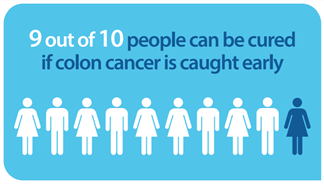
    9 out of 10 people can be cured if colon cancer is caught early

    Routine screening with the fecal immunochemical test (FIT) should be done every two years for people ages 50 to 74 with no first-degree relatives diagnosed with colorectal cancer. 
    If you have limited capacity for screening, CCC recommends focusing your screening efforts on people over the age of 60.

    Here are some tips for sending in FIT requisitions to prevent delays:
     

    fit for colon cancer

    • Please do not batch fax requisitions as this can lead to errors and subsequent delays
    • Ensure that your patient’s mailing address information is correct including apartment numbers
    • Do not send repeat orders until at least 4 to 6 weeks have passed to allow for processing and mailing time
    • To request a replacement kit for your patient, ensure that the replacement kit checkbox near the top of the requisition is marked and submit the new requisition to LifeLabs

    Referrals to colonoscopy can also be resumed, especially for patients with an abnormal FIT result, patients who are at increased risk for colorectal cancer, or patients who are eligible for post-polypectomy surveillance with colonoscopy.

    As a reminder, patients with a previous low risk adenomas (1 to 2 tubular adenoma(s) <10mm in diameter with no high-grade dysplasia) should return to average risk screening with FIT five years after their colonoscopy instead of continued surveillance with colonoscopy. You can find out more about the current colorectal cancer screening recommendations on our website.

    Ontario Health’s Screening Activity Report
    The Screening Activity Report (SAR) is an online tool available to primary care physicians who practice as part of a patient enrolment model (PEM), or to non-patient enrolment model physicians and nurses who practice in the Sioux Lookout Municipality and Sioux Lookout Zone (27 First Nation communities).

    The SAR provides screening data for breast, cervical and colorectal cancers and can help to improve screening participation by identifying patients who are eligible for screening or require follow-up tests. Physicians can also view a comparison of their screening rates to other registered PEM physicians in their region.

    As we recover from COVID-19 in the coming months, and catch up on preventive care like cancer screening, a tool like the SAR can support your practice. The SAR uses ONE® ID to authenticate users; for more information on how to register visit our website.
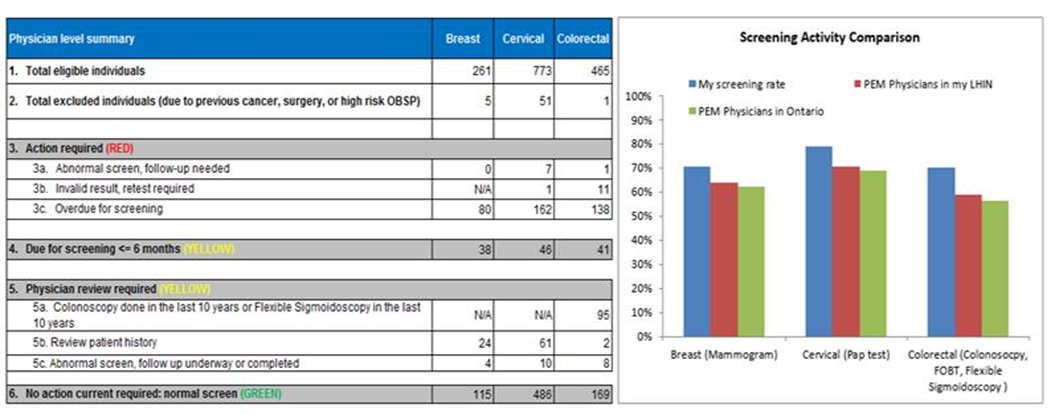
     

    SAR chart and graph

    EMR Tips to Help you Resume Cancer Screening
    In fall 2020, Ontario Health partnered with OntarioMD on a blog on EMR tips to help primary care start to screen patients again for cancer. The blog includes tips to identify higher-priority patients for cancer screening in your EMR systems and can be found here.

    Upcoming Webinars:

    In Case You Missed It: Check out eBulletin #108 or other back issues here!
    Questions? Comments? Contact us at improve@afhto.ca.

  • QI in Action eBulletin #108: COVID-19 Vaccination Data & GeriMedRisk

    QI in Action eBulletin #108: COVID-19 Vaccination Data & GeriMedRisk

    In this Issue:

    • COVID-19 Vaccination Data Workflow Updates
    • COVID-19 Vaccination Information Available via the Digital Health Drug Repository (DHDR)
    • Digital Health OHT Community of Practice (CoP)
    • GeriMedRisk
    • Upcoming Webinars

    COVID-19 Vaccination Data Workflow Updates
    As of May 18, 2021, and onwards, Health Report Manager (HRM) has been pushing data prospectively to physicians/nurse practitioners when their name has been collected through COVaxON at point of vaccination. Further information around HRM COVaxON Vaccination Reports can be found on the OntarioMD website here.

    COVaxON is now up to date to allow for documentation of mixed vaccines for those who received the AZ vaccine as their first dose. When adding the second dose vaccine a pop up will appear to remind you that this is not the same vaccine as the first dose. To proceed to the next step, you can write “guideline update” within the text box.

    COVID vaccination data is now also available through the provincial clinical viewers, Connecting Ontario and Clinical Connect. Access to the viewers can be requested via Ontario Health’s Digital Health Service’s website. In the upcoming weeks, you will also see curated lists of enrolled patients that have been vaccinated made available on a monthly basis to physicians through the eReport tool which is available to any patient enrollment model (PEM) physicians in Ontario.

    Any PEM physician with an Ontario Health ONE ID account will have access to their reports. Physicians without a One ID account can get one through the CPSO website or by making a request at Ontario Health’s Digital Health Service’s website.

    Please click here for the COVID-19 vaccination toolbar created by Guelph FHT to help support providers in vaccine data documentation. In addition, please click here for a HRM workflow document, thanks to Dr. Scott Laing of Ottawa. As the vaccination reports are sent via HRM, some issues have been flagged and OntarioMD is working to resolve these issues as they become aware of them. Please check out the OntarioMD website for up-to-date notes on any issues identified and fixed. Below is a list of updates as of June 8, 2021:

    Content below developed by Ontario Health
    COVID-19 Vaccination Information Available via the Digital Health Drug Repository (DHDR)

    The DHDR is a provincial repository of publicly funded drugs and pharmacy services, and all monitored drugs (regardless of payor). Ontarians’ COVID-19 vaccination information from COVaxON (the ministry’s provincial solution for COVID-19 vaccination information) is being made available through the DHDR as a quick solution to enable secure and easy access to authorized health care practitioners throughout the province.

    Similar to existing DHDR records, COVID-19 vaccination information available through the DHDR is limited to patients with a valid Ontario Health Number (HN).

    More information can be found within this document here.

    Content below developed by Ontario Health (Population Health and Digital Excellence) and the Ministry of Health

    Digital Health OHT Community of Practice

    Ontario Health (Population Health and Digital Excellence) and the Ministry of Health are proposing that a province-wide Digital Health OHT Community of Practice (COP) be established that would provide a framework for OHTs to collaborate and share at a provincial level related to their digital and virtual needs and programs. This group would be a sub-component of the broader OHT Learning Collaboratives and Communities of Practice and supported by the Ministry of Health and Ontario Health.

     
    The COP will be co-facilitated by OH regional digital leads and OHTs would be invited to showcase their best practices and lessons learned related to digital needs/programs for mutual learning across the province on a given topic. This collaborative should make it easier for OHTs to work on their requirements.

    This group will meet quarterly but the COP would serve as a forum for engagement more broadly in between the meetings. This will include ongoing collaboration, on-line sharing, webinars, and workshops on key subjects. Importantly, the group will have an online collaboration space on the OHT Collaborative platform called the Digital Health OHT Community of Practice that can help support these activities. The COP will be used to facilitate sharing of leading practices, enabling scale of successful initiatives and standardization across OHTs/regions.   

    To learn more, please check out the Digital Health OHT Community of Practice Quorum group.

    Content below developed by GeriMedRisk
    A Geriatric Specialist Resource for Primary Care Providers: GeriMedRisk

    GeriMedRisk is an Ontario Ministry of Health-funded clinical consultation and education service for doctors, nurse practitioners and pharmacists practicing in Ontario.

    GeriMedRisk provides virtual access to an interdisciplinary specialist team from geriatric psychiatry, clinical pharmacology, geriatric pharmacy, and geriatric medicine who collaborate to answer clinical questions regarding your older patients’ medications, physical and mental health conditions.

    Within approximately 5 business days, GeriMedRisk provides a coordinated response and educational materials back to the primary care provider for use with their patient.


    How to consult GeriMedRisk
    Ontario Telemedicine Network or Champlain BASE™ eConsult: select “GeriMedRisk”
     
    Fax: (519) 279-2959
     
    Call toll-free 1 (855) 261-0508 (Mon-Fri 9:00 am – 5:00 pm ET)
     
    Specialized Geriatric Services (SGS) Intake Forms


    GeriMedRisk Consultation Process:

    Shows lifecycle of gerimedrisk process

    1. Prescriber (doctor, nurse practitioner, specialist) or allied health care professional* identifies medication, mental health or physical concern in their patient.
    2. Clinician sends consult question and patient medical records to GeriMedRisk via eConsult, phone, fax, or central intake referral.
    3. GeriMedRisk team reviews question, medical records, and conducts a best possible medication history with patient/caregiver.
    4. Clinician receives a single, integrated consult note and relevant educational materials typically within 5 business days.

    *Includes pharmacists, nurses, physician assistants or other clinicians in partnership and with the consent of the prescriber.

    Example of Gerimedrisk resource

    Educational Resources for Primary Care Providers

    • Drug information: GeriMedRisk creates geriatric drug information summaries and infographics on safe prescribing for older adults.
      • Browse the library here and request at no cost.
    • GeriMedRisk- Geriatric Clinical Pharmacology rounds:
    • Monthly online accredited rounds on topics in safe prescribing.
    • COVID-19 Drug Information Resources

    Upcoming Event: Geriatric Clinical Pharmacology And GeriMedRisk: Drug Safety For Older Adults Beyond “Start Low, Go Slow”

    On June 24, 2021 at 12 pm, join Dr. Joanne Ho (geriatrician, clinical pharmacologist and co-executive director of GeriMedRisk) to learn more about how GeriMedRisk can support your patients’ care. Click here to register.

    For more information: www.GeriMedRisk.com |1 (855) 261-0508| info@GeriMedRisk.com | @GeriMedRisk

    Upcoming Webinars:

    In Case You Missed It: Check out eBulletin #107 or other back issues here!
    Questions? Comments? Contact us at improve@afhto.ca.

  • QI in Action eBulletin #107: COVID-19 Vaccination Clinic Workflow and Mass Upload Tips & Tricks

    QI in Action eBulletin #107: COVID-19 Vaccination Clinic Workflow and Mass Upload Tips & Tricks

    In this Issue:

    • COVID-19 Vaccination Clinic Workflow and Mass Upload Tips & Tricks
    • Ontario Health Updates: Quality Standards (QS)
    • Recent Research Publications
    • Upcoming Webinars


    COVID-19 Vaccination Clinic Workflow and Mass Upload Tips & Tricks

    COVID-19 vaccination clinic workflow cover data & emr edition tips & tricks


    As teams move from pilot COVID-19 vaccination clinics to mass vaccination clinics, drive-thru vaccination clinics and in-clinic vaccinations, we have put together a document geared towards the Super User, with some tips and tricks. Learning from the experience of Windsor FHT, Hamilton FHT, Upper Grand FHT, London FHT and many more we have summarized the key learnings for you!

    OntarioMD continues to provide live and recorded series of webinars for the COVaxON system. In addition, it’s recommended to keep an eye on their website for any updates on End to End sessions, EMR Tools and Queries, Job Aids and much more!


    COVID-19 vaccination mass client upload workflow


    In collaboration with the QI in PC Council, we have put together a Mass Client Upload Workflow document with tips and tricks for data extraction, manipulation, and upload.

    In addition, to these tips and tricks it is highly recommended to keep an eye on the OntarioMD and eHealth Centre of Excellence Community Portal for up-to-date queries to help identify patient lists for vaccinations.


    Ontario Health Updates: Quality Standards (QS)

    Recognizing World Asthma Day (May 5th)

    Asthma is one of the most common chronic conditions in Canada. Two million Ontarians have asthma and an estimated 90% of them have uncontrolled asthma that could be improved by optimizing medication. It’s more important than ever for people with asthma to get the best treatments to prevent emergency room visits for asthma flare-up during the pandemic.

    Ontario Health has also developed placemats based on the Asthma quality standards to support you and your patients living with asthma. The placemat is a quick-reference tool that concisely summarizes key information from the quality standard and can be used by primary care providers to facilitate patient-centered discussions. See the links below to access the asthma placemats:

    EMR Resources for primary care providers
    Ontario Health is making the QS placemats more accessible by supporting their use within electronic medical record (EMR) systems. They have developed EMR user guides to help you access the QS placemats in Accuro and Practice Solutions Suite EMR systems. A step-by-step guide to support OSCAR EMR users will be available soon.

    OH encourages you to share these resources with your colleagues and networks. Please let them know how these resources are being used in the field and in your EMR systems. To share your feedback, please email qualitystandards@hqontario.ca.  

    Research Publications

    Upcoming Webinars:

    In Case You Missed It: Check out eBulletin #106 or other back issues here!
    Questions? Comments? Contact us at improve@afhto.ca.

  • QI in Action eBulletin # 106: COVID-19 Vaccination Eligibility – EMR Searches for Primary Care

    QI in Action eBulletin # 106: COVID-19 Vaccination Eligibility – EMR Searches for Primary Care

    In this Issue:

    • EMR Searches for Primary Care
    • eConsult Specialty Groups
    • Share your COVID-19 Initiatives
    • Upcoming Webinars

    EMR Searches for Primary Care
    To support primary care with COVID-19 vaccination during Phase Two of Ontario’s roll out strategy, the team at the eHealth Centre of Excellence can provide EMR searches that enable clinicians to more efficiently identify and prioritize ambulatory patients from their roster who are in greatest need of the COVID-19 vaccination.

    Searches are now available for Telus PS Suite, Oscar and Accuro EMRs. Searches prioritize patients according to the eligibility criteria outlined in the Ministry of Health’s provincial Phase Two vaccination roll-out plan.

    The three searches created prioritise patients according to highest risk, high risk and at-risk populations.

    highest, high and at risk population search

    To download these searches, please join the community portal.

    eConsult Specialty Groups

    As a result of the current COVID-19 pandemic, OTN and the eConsult Centre of Excellence in partnership with Public Health, OMA, OntarioMD, Ontario Health and the MOH have created new specialty groups;

    • a COVID-19 BASETM managed eConsult specialty group. This group enables physicians and nurse practitioners to ask general clinical questions to infectious disease specialist electronically and receive a response within days. The COVID-19 BASE™ Managed Specialty Group is now available province-wide.
    • a COVID-19 – Allergy/Immunology BASE™ Managed Specialty Group. This group enables physicians and nurse practitioners to ask COVID-19 vaccine allergy related clinical questions to Allergy and Clinical Immunology specialists electronically and receive a response within days.
    • a COVID-19 and Pregnancy BASE™ Managed Specialty Group. This group enables physicians and nurse practitioners to ask COVID-19 and Pregnancy related clinical questions to Obstetrics specialists electronically and receive a response within days.
    • a COVID-19 and Autoimmune Disorders BASE™ Managed Specialty Group. This group enables physicians and nurse practitioners to ask COVID-19 and Autoimmune Disorders related clinical questions to Rheumatology specialists electronically and receive a response within days.

    These are the only group that allows for population-based, non-patient specific clinical questions. Specialists can answer both patient-specific and general questions about COVID-19.


    • For non-patient specific questions please enter the patient information as follows:
      • First Name: COVID19
      • Last Name: COVID19
      • Date of Birth: 1900-01-01
      • Select OHIP number not available
    • Please note: Patient screening for COVID-19 must still be done through Public Health Services. For more information on the COVID-19 vaccine in Ontario, visit Getting a COVID-19 vaccine in Ontario.
    • If you would like to sign up for eConsult, visit www.otnhub.ca or complete the Intake Form and someone can assist you.
    • If you need a refresher on how to submit an eConsult, you can watch the training video here.

    Tell us what COVID-19 initiatives you’re proud of!
    News is that COVID-19 has been rapidly evolving- and so are your teams!
    AFHTO is committed to advocating for your teams by amplifying stories of your team’s efforts, pandemic or not. Tell us what your team is doing to continue providing care to your patients, whether it’s:

    –    COVID-19 vaccination efforts
    –    Adaptations to your programs or clinic
    –    New programs emerging from newly recognized demands
    –    Stories of collaboration with other organizations or the community
    … or any other initiatives your team is proud of- we want to hear from you.

    Submit your COVID-19 stories & photos here, OR tag us on Facebook or Twitter
    … and we could be celebrating your team’s work next!

    Picture of first tweet in vaccine tweet thread


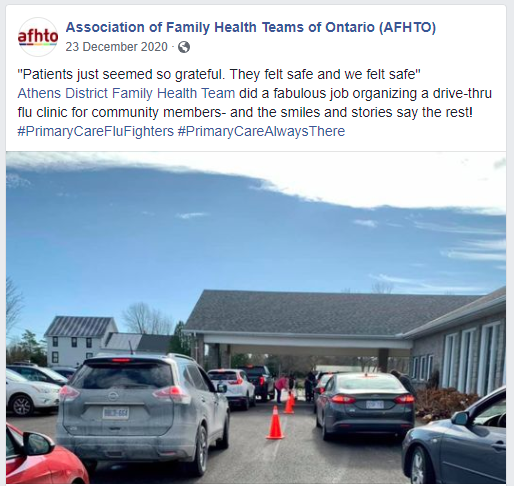
    Facebook post of Athens District vaccine drive through


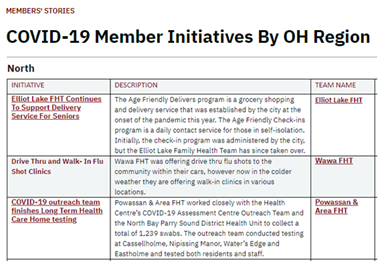
    COVID member initiatives table

    Upcoming Webinars:

    Respiratory Care During COVID-19: What Have We Learned One Year Later
    Wednesday, April 21, 2021, 12:00 PM – 1:00 PM | In collaboration with the LUNG HEALTH FOUNDATION

    This webinar will highlight practice changes and considerations for the diagnosis and management of chronic lung diseases such as COPD. This includes highlighting the challenges of respiratory diagnostics such as spirometry testing and policies and changes that were needed to provide a safe testing environment. Additionally, the webinar will highlight clinical resources and community support programs provided by the Lung Health Foundation to support primary care practices and their patients.
    For more info and to register, click here.


    In Case You Missed It: Check out eBulletin #105 or other back issues here!
    Questions? Comments? Contact us at improve@afhto.ca.

  • QI in Action eBulletin # 105: Ontario Health Submission March 2021

    QI in Action eBulletin # 105: Ontario Health Submission March 2021

    In this Issue:

    • A new tool for primary care providers: Quality Standard Placemats
    • Quality Improvement Plans – Update
    • A Peoples’ Panel on how race and ethnicity data should be used for health data research in Ontario
    • Upcoming Webinars

    Content below developed by Ontario Health

    A new tool for primary care providers: Quality Standard Placemats

    Quality standards outline what high-quality care looks like for conditions or processes where there are large variations in how care is delivered in Ontario. They are based on the best evidence and designed to help you know what to do to reduce gaps and variations in care – there are over 25 quality standards developed by Ontario Health, in collaboration with health care professionals, patients, and caregivers across Ontario.

    Ontario Health is pleased to share a newly developed tool called the Quality Standard (QS) Placemat that is a resource for primary care practitioners. The placemat highlights key elements of care for a condition and:

    • is an evidence-based, quick-reference tool that concisely summarizes key information from the quality standard
    • includes links to helpful resources and tools
    • can be used to facilitate patient-centered discussions

    Three quality standard placemats have been developed to date:

    Illustration of someone touching their lower back with pain radiating from it

    Low Back Pain QS Placemat – summarizes content from the Low Back Pain Quality Standard, focusing on care for people 16 years of age and older with persistent or recurrent episodes of acute lower back pain. French version.


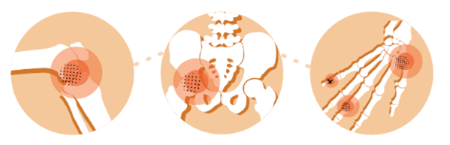
    3 pics of parts of the skeleton- knee, hip, hand- with pain radiating


    Osteoarthritis QS Placemat – summarizes content from the Osteoarthritis Quality Standard, focusing on care for adults with osteoarthritis of the knee, hip, or hand (i.e., thumb or fingers). French version.


    Acute low back pain and osteoarthritis represent two of the most common clinical conditions encountered on a daily basis in the primary care setting. We have received feedback from primary care providers that concise, evidence-based materials help to not only support dialogue between patients and providers, but also support clinical decision-making regarding patients presenting with acute low back pain and osteoarthritis.
     

    • Dr Colin Wilson, Primary Care Clinical Lead, Ontario Health

    Hear more from Colin here

    2 men seated facing each other, one with hand raised with pen and notepad in the other hand


    Anxiety Disorders Quality Standard (QS) Placemat – summarizes the Anxiety Disorders Quality Standard, highlighting the key elements of diagnosis, assessment, and treatment, as well as includes links to helpful resources and tools. French version.


    The placemats can also be uploaded and used within EMRs for easy access. Resources to support adding these tools into your EMR system will be added on Quorum soon, so please stay tuned for more information!

    In the context of the ongoing COVID-19 pandemic, we are observing an increasing unease among individuals in the communities and families. As health care providers, it is critical for us to appropriately diagnose anxiety disorders and differentiate them from other conditions that may arise in these uncertain times.

    • Dr. David Kaplan, Chief, Clinical Quality, Ontario Health

    Hear more from David here

    Access the quality standard and related resources at the links below:

    We would like to hear from you about how we can support you and if there are other topics you would find helpful for future QS placemats. Please email qualitystandards@ontariohealth.ca  

    Upcoming Events: Webinar
    As part of the release and dissemination of the quality standard, Ontario Health and Provincial Geriatrics Leadership Ontario will be co-hosting a webinar for health care providers about delirium, in alignment with World Delirium Awareness Day on March 17, 2021.

    Webinar | Delirium – A New Quality Standard for an Important Health Concern| Wednesday March 17, 12–1 p.m.  
    Provincial Geriatrics Leadership Ontario and Ontario Health co-host a webinar with clinical experts to share information and resources to support patients who are at risk for delirium or who are experiencing symptoms of delirium. The session will review delirium and its significance to COVID-19 infection, introduce key statements from the quality standard, and showcase related resources available to support people who are at risk for delirium or who are experiencing symptoms of delirium. Please register here to join the session.

    Quality Improvement Plans – Update from OH(Q)
    Last April, QIP submissions for 2020/21 were paused to allow organizations to focus on supporting their staff, health care providers, and communities during the COVID-19 pandemic. The QIP Navigator remained open so that organizations that had the capacity to continue working on their submissions were able to do so. We will be closing the 2020/21 cycle in Navigator on March 24, 2021.

    As we look ahead to the 2021/22 QIPs, we understand that organizations continue to be under unprecedented pressure related to the COVID-19 pandemic and that this will likely continue for the next several months. As such, we are making adjustments to the 2021/22 QIP to help ensure that organizations are able to focus their efforts on responding to urgent needs related to COVID-19. While quality improvement is of critical importance in our collective response to COVID-19, for now, the pause on the program will continue.

    We will monitor the situation and will share a revised approach in the coming months, ensuring that it is responsive to circumstances in the health system and that you have sufficient time to prepare. The approach to 2021/22 will be designed to provide organizations with flexibility to reflect where they are with their quality improvement efforts given the pandemic, local needs, pressures, and goals for the recovery period. We encourage organizations to continue with their local quality improvement initiatives and we will be in touch soon.  

    As always, please do not hesitate to contact us at QIP@OntarioHealth.ca if you have any questions.

    A Peoples’ Panel on how race and ethnicity data should be used for health data research in Ontario
    ICES is working together with the Tamarack Institute and Digital Justice Lab to lead a Peoples’ Panel on how race and ethnicity data should be used for health data research in Ontario. Through this Peoples’ Panel, ICES seeks to recognize the ways that science has perpetuated racism and understand the complexities in the use of race, ethnicity, and immigration data.

    The Peoples’ Panel will involve 30-60 diverse and representative individuals who will meet weekly for 5 weeks starting on March 17, 2021. ICES is seeking regular people—no experience in health, science or policy needed. If you live in Ontario and have an interest in how race data is used, and especially if you identify as racialized individual, they invite you to express your interest in being part of the Peoples’ Panel. Participants will be compensated.

    Learn more and apply

    Upcoming Webinars:
    OHT Improvement Measures from Health Administrative Data: Where are OHTs Starting From?
    March 23, 2021 (12:00 – 1:30 pm EST)
    Click here for more information and to register.

    Supporting Older Persons At Home – Learning And Collaboration During The COVID-19 Pandemic And Beyond
    March 25, 2021 (12-1 pm EST)
    COVID-19 highlighted numerous barriers and challenges to providing integrated care for older persons living in the community. Join Provincial Geriatrics Leadership Ontario in a discussion on how to better support older persons in the community using lessons learned during the first year of the COVID-19 pandemic. We will discuss needs in primary care – focusing on the role of interprofessional teams – and offer some resources and tools to better support team-based care for older persons. We will also discuss how specialized geriatric service programs in your area can provide support to primary care clinicians. Click here to learn more and register.

    Interested in sharing your teams’ initiatives in a future webinar? Email Sandeep Gill – Sandeep.gill@afhto.ca to learn more about the AFHTO KTE Webinar Schedule!

    In Case You Missed It: Check out eBulletin #104 or other back issues here!
    Questions? Comments? Contact us at improve@afhto.ca.

  • QI in Action eBulletin # 104 – Identifying Priority Populations for COVID-19 Vaccination from EMRs

    QI in Action eBulletin # 104 – Identifying Priority Populations for COVID-19 Vaccination from EMRs

    In this Issue:

    • What is POPLAR?
    • POPLAR and COVID-19 Vaccine Prioritization
    • Data Security & Privacy
    • How to Register?
    • COVID-19 Cancer Screening Tip Sheet for Primary Care Providers
    • Primary Care Patient/Client Virtual Care Experience Survey
    • Upcoming Webinars

    What is POPLAR?

    The Primary Care Ontario Practice-based Learning and Research Network (POPLAR) is an initiative of Ontario’s six University Departments/Sections of Family Medicine and the Alliance for Healthier Communities. POPLAR securely collects and de-identifies electronic medical record (EMR) data to support practices in delivering optimal care across Ontario and strengthen practice-based clinical research and quality improvement processes.

    POPLAR works with clinicians, researchers, and policy makers, providing information on the vital work primary care does, while supporting practices in delivering optimal care across Ontario. Currently, over 1,000 family physicians are contributing EMR data for over 1.8 million patients to the POPLAR database.

    POPLAR and COVID-19 Vaccine Prioritization

    Building on the work POPLAR has done in the past 10+ years, POPLAR can assist practices wishing to identify patients that should be prioritized for COVID-19 vaccinations. This relies on EMR data that have been extracted from primary care practices, cleaned, and standardized. The data can accurately identify groups of patients meeting various criteria.
    Complex queries can sometimes be difficult to run in EMRs. POPLAR can readily flag patients to be prioritized when the identification parameters rely on multiple criteria (e.g., age range + uncontrolled diabetes + obesity).

    POPLAR data is also linkable to census data, which means that differences in neighborhood socio-economic levels can be added to health data in EMRs; this allows a more comprehensive assessment of risks. This is especially relevant for vaccination prioritization: we know that social challenges our patients live with, such as poverty, can be associated with a greater risk of contracting COVID-19 and greater risk of serious complications once infected.

    POPLAR can obtain aggregate measures from census data at the neighbourhood level, including type of residence, immigration status, average household income, unemployment, education.

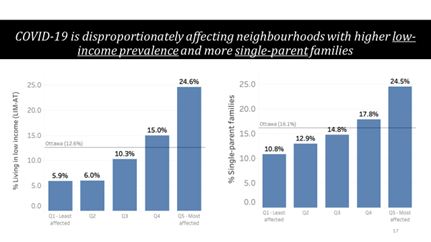
    There is strong evidence in Ontario that the risk of infection varies by neighbourhood and is associated with each neighborhood’s socio-demographic profile. For example, in Ottawa, neighbourhoods with more Black, Middle Eastern, low income, and single-family residents have higher rates of COVID-19 infections.

    COVID an neighbourhood chart- ebulletin #104

    We can only understand the impact of COVID-19 on our practices and our patients through collecting and analyzing accurate and representative health data. The pandemic has exposed many data gaps in Ontario. Our teams are vitally important to ensure that those we serve are included, as our information reflects our settings, patients, and communities. Collectively, primary care’s voice can be heard by providing safe and secure access to real-world data; this is possible with your help!  Register with the POPLAR network member closest to you today to start contributing your EMR data.

    Data Security & Privacy

    POPLAR only studies de-identified patient and practice data. POPLAR complies with robust ethics, governance and security measures. Individual patients have the right to opt out of their data being collected through POPLAR’s networks for research.

    Data for QI in Your practice

    Generation of de-identified EMR dataset


    How to Register?

    Help POPLAR build practical evidence in family medicine, by supporting the collective Culture of Curiosity and by contributing data. The time and effort it takes to safely and securely contribute is minimal. All you need do is fill out a consent form and a brief survey; POPLAR staff will coordinate data extraction at your practice, with all safeguards in place.

    If you are interested in registering, or if you would like to find out more information about POPLAR, please contact Sandeep Gill at Sandeep.gill@afhto.ca, who will then direct your query to your local network contact. More information can also be found on the AFHTO website here.

    COVID-19 Cancer Screening Tip Sheet for Primary Care Providers

    In June 2020, Ontario Health (Cancer Care Ontario) released COVID-19 Tip Sheet #15: Guidance for primary care providers resuming breast, cervical and colorectal cancer screening to support primary care providers as they resumed cancer screening. This updated streamlined tip sheet was developed to continue to support primary care providers with cancer screening based on ongoing fluctuations in COVID-19 cases and local variation in COVID-19 trends.

    Primary Care Patient/Client Virtual Care Experience Survey

    Primary Care Patient/Client Virtual Care Experience Survey

    Last year, we launched the Primary Care Patient/Client Virtual Care Experience Survey for teams to implement in order to capture the patient experience with virtual care. Moving ahead we are collecting teams’ aggregate responses as we create a narrative of how virtual care could be permanently included in the patient care journey – submit your data here!


    Upcoming Webinars:

    Primary Care Virtual Groups – Transitioning A CBT Program & Cardio-Pulmonary Rehab Program To Virtual
    February 17, 2021 (12-1 pm EST)
    This webinar is in collaboration with two Family Health Teams transitioning in person programs to virtual. Scarborough Academic FHT will share how they transferred their CBT skills group for depression and anxiety to online along with the benefits and challenges. Arnprior FHT is presenting on how they modified an in-person Cardio-Pulmonary Rehab to Virtual in the rural community of Arnprior, ON. Learn more and register here.

    Engaging and Supporting Caregivers In Primary Care Teams: Working Together To Improve Outcomes And Enhance The Patient, Caregiver, And Family Experience
    February 25, 2021 (12-1 pm EST)
    In this webinar, learn about the Ontario Caregiver Organization and the key programs, services, and resources they offer. Learn about three key caregiver-related strategies that can positively impact health outcomes and the patient/family/caregiver experience. Find out about resources, programs, and actions that primary care teams can take to help advance these strategies. Learn more and register here.


    Interested in sharing your teams’ initiatives in a future webinar? Email Sandeep Gill – Sandeep.gill@afhto.ca to learn more about the AFHTO KTE Webinar Schedule!

    In Case You Missed It: Check out eBulletin #103 or other back issues here!
    Questions? Comments? Contact us at improve@afhto.ca.


  • QI in Action eBulletin #103 – Moving Forward with Quality Improvement in the New Year

    QI in Action eBulletin #103 – Moving Forward with Quality Improvement in the New Year

    In this Issue:

    • Quality Improvement on the Fly & QIPs
    • QI Resources
    • Upcoming Events

    Quality Improvement on the Fly & QIPs

    At this time, teams usually start to plan for their annual QIPs submission. We can expect an update in the upcoming weeks. In the meantime, the QI in PC Council has collaboratively gathered the following information about what initiatives teams led this year and hope to do in the upcoming year.

    Will your team(s) submit a 2021/22 QIPS? Unsure 50%, Yes 50% n=16 QIDSS/QIDSS-like

    Did your team(s) submit a 2020/21 QIPS? Yes 50%, No 18.8%, Some 31.3% n=16 QIDSS/QIDSS-like


    Priorities for 2021/22 QIPS - Unsure 13.5%; 7 day post hospital discharge 16.2%; documented assessment of palliative care needs 16.2%; patient involvement in decisions about care 18.9%; timely access to a primary care provider 18.9% n= 14 QIDSS/QIDSS-like


    Initiatives on the Go:

    • Virtual care adoption for one-on-one visits along with groups & online booking
    • Social Determinants of Health Training for all team members
    • Reconciliation of prevention care data within EMRs
    • Updated patient demographic information within EMRs
    • Regional lung health projects specifically focusing on COPD
    • Increased influenza vaccination – one team vaccinated 90% of their roster
    • Senior wellness initiatives and home blood pressure monitoring

    COVID-19 Member Initiatives Table


    Recognizing that many organizations are very busy with their local COVID efforts, we would anticipate that the 2021/2022 QIPs would have flexibility to allow organizations to reflect what they are doing to manage COVID locally or what they’re doing to maintain services (e.g. tracking access, patient experience, etc.).

    We are continuously capturing these initiatives, in the COVID-19 Member Initiatives Table. If you have an initiative you would like to share, please email improve@afhto.ca!


    Primary Care Patient/Client Virtual Care Experience Survey

    Given what we have seen in the past year with the huge transition to virtual care, this will be a key factor for measuring access to care and patient experience. To aid teams in capturing this experience, please refer to the Primary Care Patient/Client Virtual Care Experience Survey. The survey was created to help fill informational gaps to inform future planning and further support the implementation of virtual care in primary care.

    To help you get started on planning your team’s annual Quality Improvement Initiatives, we have partnered with Choosing Wisely to host a webinar:

    Now is the Time to Choose Wisely: Advancing Quality Improvement in Primary Care  

    January 27, 2021 (12-1 pm EST)

    In this webinar, Dr. Kimberly Wintemute, Primary Co-Lead for Choosing Wisely Canada, and Dr. Peter Kuling, Family Physician at The Ottawa Hospital Academic FHT, provide insights on how to advance resource stewardship and implementation efforts in primary care using Choosing Wisely Canada recommendations and resources.   

    Click here to read more and register.

    QI Resources
    Below are measurement and quality-related tools, resources, slides, and videos. You can flag these emails or bookmark the related posts, so they will be easy to find for future reference.

    Upcoming Events:

    Better Breathing Conference 2021
    January 18 & 22, 2021
    LOCATION: VIRTUAL

    Join the Lung Health Foundation’s Better Breathing Conference! Their conference’s accredited respiratory education programming is 100% free for all Canadian healthcare professionals.

    Click here to register.

    Early ID for Palliative Care: Lessons Learned and Moving Forward
    January 21, 2021 (12-1 pm EST)

    Please join the CoP as they celebrate successes, learn about progress to date on the palliative care indicator, and discuss plans for 2021 to improve palliative care in Ontario.

    Click here to register.

    SCALE Program (Supporting Caregiver Awareness, Learning and Empowerment)
    February 3, 2021 – March 23, 2021

    Back by popular demand, the SCALE Program aims to empower you with practical information and skills to enhance self-awareness with a focus on your own needs and well-being.

    The program consists of:

    • a series of eight weekly webinars
    • online group coaching
    • one-on-one, individualized telephone counselling

    Select just one topic that you are interested in each week or take the entire program – as a caregiver, we understand how valuable your time is and that is why we developed a program to best suit your schedule.

    Click here to learn more and register.

    E-QIP Conference: QI Innovations, Understand – Pivot – Change
    April 13, 2021

    In this one-day virtual conference will offer virtual networking opportunities, poster presentations, concurrent sessions, wellness activities, and more. You will have the opportunity to hear from QI and data experts in mental health and addiction, engage in rich discussions, and ask their experts a lot of questions.

    Click here for more information.

    Interested in sharing your teams’ initiatives in a future webinar? Email Sandeep Gill – Sandeep.gill@afhto.ca to learn more about the AFHTO KTE Webinar Schedule!

    In Case You Missed It: Check out eBulletin #102 or other back issues here!
    Questions? Comments? Contact us at improve@afhto.ca.
     

  • QI in Action eBulletin #102: Choosing Wisely during the Pandemic and Beyond, Health Equity and Provider Experience

    In collaboration with the Alliance for Healthier Communities

    In this Issue:

    • Toolkits – Choosing Wisely Canada
    • AFHTO Resources as You Plan Ahead
    • Provider Experience during COVID-19 – Dr. Catherine Donnelly
    • Health Equity – Public Health Ontario
    • Upcoming Events

    These are unprecedented times. COVID-19 is an era of resource scarcity and deciding which method of care delivery is best can be challenging. In response, and per Ministry directive, we have seen many teams transition to virtual care (mostly telephone) while being available and accessible when in-person care is required. Health care systems and providers are rapidly learning and changing in response to ongoing COVID-19 developments. As we wrap up this year and think of 2021, we have collaborated with Choosing Wisely Canada to provide you with a set of resources that can help shape your new year.

    Toolkits:

    • The Cold Standard:
      • A revised toolkit for Using Antibiotics Wisely in the Era of COVID-19 and Virtual Care
      • A webinar recording to learn more about this can be found here
      • A recent article on Using Antibiotics Wisely and The Cold Standard toolkit written by Drs. Jerome Leis and Allan Grill was published in The BMJ. The article can be found here
    • Drowsy without Feeling Lousy:
      • A toolkit for reducing inappropriate use of benzodiazepines and sedative-hypnotics among older adults in primary care
    • BYE-BYE, PPI:
      • A toolkit for deprescribing proton pump inhibitors in EMR-enabled primary care settings
    • Understand the Gland:
      • A toolkit for appropriate ordering practices of free thyroid hormone testing

    Now is the Time to Choose Wisely: Advancing Quality Improvement in Primary Care  

    January 27, 2020 (12-1 pm EDT)

    Engaging primary care providers in quality improvement can play an important role in improving practice, enhancing patient experiences, and reducing unnecessary tests and treatments. This is particularly relevant now, as the pandemic has further emphasized the importance of resource stewardship given the urgent care needs and constraints related to COVID-19.  

    In this webinar, Dr. Kimberly Wintemute, Primary Co-Lead for Choosing Wisely Canada, and Dr. Peter Kuling, Family Physician at The Ottawa Hospital Academic FHT, provide insights on how to advance resource stewardship and implementation efforts in primary care using Choosing Wisely Canada recommendations and resources.   

    The webinar will:

    • Describe Choosing Wisely Canada as it relates to primary care
    • Identify ways to implement Choosing Wisely Canada recommendations in primary care  
    • Review tools and resources to support implementation of Choosing Wisely Canada recommendations in primary care

    Click here to register.

    AFHTO Resources as You Plan Ahead

    A survey of interprofessional health care providers in Family Health Teams during the COVID-19 pandemic

    We are now nine months since the initial restrictions of COVID-19 and we are interested in hearing about your experiences working in Family Health Teams during this time. IHPs are invited to participate in a brief web-based survey to understand the evolving experiences of interprofessional health care providers in Family Health Teams in Ontario during the COVID-19 pandemic.

    Click on the link here to complete the web-based survey!

    This research is being led by Drs. Catherine Donnelly (Associate Professor, Queen’s University) and Jordan Miller (Assistant Professor, Queen’s University). If you have any questions, please contact Dr.  Donnelly by email at catherine.donnelly@queensu.ca.

    COVID-19 and Health Equity
    Health Equity and COVID-19 Website:

    • Social determinants of health (SDOH), such as gender, socioeconomic position, race/ethnicity, occupation, Indigeneity, homelessness, and incarceration, are factors that potentially increase risk and severity of COVID-19 infection.
    • Incorporating SDOH into risk considerations and assessments is crucial for supporting an equitable COVID-19 response.

    Take the health equity impact assessment course to understand how to measure the impact of SDOH in your community and learn how to use the tool.

    Learn more from the webinar: Introduction to race, income, and language data collection, hosted by PHO.

    Upcoming Events:
    Virtual Learning Exchange in Virtual Primary Care
    The virtual learning exchange will be delivered in three 90-minute webinars and will focus on the following identified priority topics within the overarching theme of virtual primary care:

    • Enhancing Equity and Access (January 29, 2021, 1:30-3:00pm ET)
    • Patient and Family Centred Care (March 5, 2021, 1:30-3:00pm ET)

    To find out more information please click here.

    Choosing Wisely Canada’s 2021 National Meeting (May 12-13, 2021)

    • Choosing Wisely Canada in collaboration with the Canadian Medical Association will be hosting a two-day virtual event on May 12 & 13, 2021. Please save the dates! More details about the meeting can be found here
    • Choosing Wisely Canada is now accepting abstract submissions for the National Meeting. Please click here for more details and to submit your abstract

    Interested in sharing your teams’ initiatives in a future webinar? Email Sandeep Gill – Sandeep.gill@afhto.ca to learn more about the AFHTO KTE Webinar Schedule!

    In Case You Missed It: Check out eBulletin #101 or other back issues here!
    Questions? Comments? Contact us at improve@afhto.ca.
     

  • QI in Action eBulletin #101: Primary Care Team Lessons and Patient & Provider Virtual Experience During COVID-19

    QI in Action eBulletin #101: Primary Care Team Lessons and Patient & Provider Virtual Experience During COVID-19

    In collaboration with the Alliance for Healthier Communities

    In this Issue:

    • Crossing Chasms: Primary Care Teams’ Response to COVID-19 Pandemic
    • Thank You for Sharing Your Teams’ Experiences During The COVID-19 Pandemic
    • Primary Care Patient/Client Virtual Care Experience Survey  
    • Primary Care Experience Surveys – Updated Version for OH QIPs
    • Provider virtual care experience survey
    • IHP experience during COVID-19
    • Coordinating Care During the COVID-19 Pandemic: An Evaluation of Providers’ Perspectives of their Practices (The CONCEPT Study)
    • Survivors of Homicide Victims and Mental Health Project FOCUS GROUPS WITH SERVICE PROVIDERS
    • Upcoming Events

    Crossing Chasms: Primary Care Teams’ Response to COVID-19 Pandemic

    Crossing Chasms

    In July we asked teams to participate in an AFHTO Research Project to look at how teams stepped up during the pandemic and we received an overwhelming response. A special thank you to our teams for participating in this very important work!

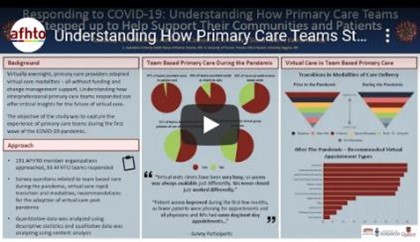
    Click here to see a recap of how teams stepped up during the first wave of the pandemic and continue to do so. We have also recorded your experiences within a video!

    trillium day presentation 2020

    Thank You for Sharing Your Teams’ Experiences During The COVID-19 Pandemic

    We are sharing your experience! AFHTO along with our research partners presented at Trillium Research Day demonstrating the value of primary care teams’ response to COVID-19 and patients’ experience with virtual care. Please see the video for the poster presentation and visit our site to see the other research we presented!


    Primary Care Patient_Client Virtual Care Experience Survey

    Primary Care Patient/Client Virtual Care Experience Survey  
    In August, we launched the Primary Care Patient/Client Virtual Care Experience Survey for teams to implement in order to capture the patient experience with virtual care. Moving ahead we are collecting teams’ aggregate responses as we create a narrative of how virtual care could be permanently included in the patient care journey – submit your data here!

    Another option of patient experience data collection is to provide the survey link created by Women’s College Hospital Institute of Health Systems Solutions and Virtual Care (WIHV). WIHV is conducting a third-party evaluation of virtual care in the COVID-19 era on behalf of the Ontario Ministry of Health. If you would like to share your current virtual survey and results, please email Rebecca Liu – Rebecca.Liu@wchospital.ca.

    NOTE: Participation in this survey should only take 10-15 minutes and includes the option to enter a draw for one of four $50 gift cards to Amazon, the Bay or Shoppers Drug Mart. This data will go directly with WIHV and you will not have access to the data.  

    This research will be important as the Ministry looks at the future of virtual care – please spread the word and encourage your patients to participate!

    Primary Care Experience Surveys – Updated Version for OH QIPs
    We have heard from multiple teams that they would like to see an updated version of the Patient Experience Survey. We have had conversations with our partners about next steps as many of the questions within are aligned with QIPs. To do this update, there will be a thorough review of all current teams’ surveys. Please share your current survey with Sandeep Gill at Sandeep.gill@afhto.ca, to help support this important initiative!

    Provider virtual care experience survey
    Women’s College Hospital Institute of Health Systems Solutions and Virtual Care (WIHV) is conducting a third-party evaluation of virtual care in the COVID-19 era on behalf of the Ontario Ministry of Health, measuring the provider experience on virtual care. The objectives are to provide the Ontario Ministry of Health anonymous feedback on:

    • Health care Provider experiences with and preferences for virtual care during the pandemic;
    • The types and features of virtual services which provide the most value for health care providers;  
    • The clinical utility and appropriate uses of virtual services in Primary Care; and
    • Policy recommendations related to virtual care services in Primary Care for the provincial government.  

    You can participate in providing feedback by filling this short 10-15 mins online survey, which includes the opportunity to enter a draw to win one of four $50 electronic gift cares to the Bay, Shoppers Drug Mart or Amazon. Your participation will remain completely anonymous and confidential. Feel free to reach out to Jamie Fujioka (Jamie.fujioka@wchospital.ca) if you have any questions or concerns.

    This research will be important as the Ministry looks at the future of virtual care – please spread the word and we really encourage you to participate!

    IHP experience during COVID-19

    IHP experience during COVID-19

    At the beginning of COVID-19, Dr. Catherine Donnelly reached out to IHPs to hear their experience during the pandemic. You can review the findings from the earlier survey here. We are now seven months since the initial restrictions of COVID-19 and Queen’s University researchers are interested in hearing about your experiences working in Family Health Teams during this time. You are invited to participate in a brief web-based survey to understand the evolving experiences of interprofessional health care providers in Family Health Teams in Ontario during the COVID-19 pandemic. Complete the web-based survey here.

    Coordinating Care During the COVID-19 Pandemic: An Evaluation of Providers’ Perspectives of their Practices (The CONCEPT Study)
    Researchers are writing to invite you to participate in an exciting research endeavour evaluating existing complex care programs within team-based care models, and how these programs have been impacted by the COVID-19 pandemic. This study will evaluate providers’ perspectives on existing care coordination practices for patients with multiple comorbidities and adaptations made during the COVID-19 pandemic.  

    If you agree to participate in this study, you will be asked to complete an electronic survey which should take about 10 minutes to complete. You are asked to answer each question based on your opinion of the care coordination provided in your team before and during COVID-19. You may also seek clarification from your physicians, NPs or IHPs within your team in order to answer some of the questions.
     
    Your participation in this study is voluntary. You may decide not to be in this study, or to be in the study and then change your mind later. You may refuse to answer any question you do not want to answer. You may choose to end your participation at any time without having to provide a reason.

    Responses will be kept strictly confidential. No identifying information is being collected and only aggregate data will be presented or published.

    The survey can be accessed using this link:  The CONCEPT Study Survey
                                     
    Thank you for considering this request.  If you have any questions, please contact Ms. Joanne Permaul, Study Coordinator, at jpermaul@msh.on.ca or Dr. Donatus Mutasingwa, Principal Investigator, at dmutasingwa@msh.on.ca.

    Survivors of Homicide Victims and Mental Health Project FOCUS GROUPS WITH SERVICE PROVIDERS

    Led by The Centre for Research and Innovation for Black Survivors of Homicide Victims (The CRIB), the Factor-Inwentash Faculty of Social Work, and the Canadian Mental Health Association Ontario (CMHA Ontario), the Survivors of Homicide Victims and Mental Health Project is exploring the impact of supporting surviving family members and friends of murdered victims (survivors), and the service providers (i.e. clinicians, law enforcement, legal services, medical professionals, etc.) that support them. They are recruiting for providers from the Brantford, Toronto, Thunder Bay, Ottawa, and Windsor regions.

    LINK TO REGISTER: SERVICE PROVIDER FOCUS GROUPS Or visit:https://serviceprovfocusgroups.eventbrite.ca

    If you have any questions, please contact Megan McPolland at megan.mcpolland@mail.utoronto.ca.

    Upcoming Events:
    Health Promotion Ontario conference
    Nov. 5- 26, 2020
    The Annual Health Promotion Ontario conference will be a free virtual experience this year. There will be a four-part webinar series on Health Promotion in a Global Pandemic in November. Find out more here.

    Employing Digital Health Tools During COVID-19 – and Beyond
    November 16, 2020 12:00 pm – 1:15 pm EST
    As part of Digital Health Week, eHealth Centre of Excellenc will be hosting a webcast/webinar that provides a comprehensive overview of how their suite of digital health tools can be used during COVID-19 and beyond.
    You’ll have an opportunity to learn more about their innovative EMR decision support tools, virtual visit platforms, Ontario eServices Program (eReferral & eConsult), eCE Automates “bots”, tablets, and ePrescribing, as well as hear from a primary care physician on how these tools have impacted his practice.
    Please join Ted Alexander, VP of Partnerships and Clinical Innovation, for this webinar (with an interactive Q&A session to follow). Register here.

    2020 CMHO Virtual Conference
    Nov 23-Dec 4
    Register today for 2020 CMHO Virtual Conference sessions. They’re covering the latest in innovating and advancing child and youth mental health, with short, engaging sessions and leading speakers spread over two weeks. Click here to find out more.

    Virtual Learning Exchange in Virtual Primary Care
    The virtual learning exchange will be delivered in three 90-minute webinars and will focus on the following identified priority topics within the overarching theme of virtual primary care:

    • Cultural Safety and Indigenous Partnership (November 27, 2020, 1:30-3:00pm ET)
    • Enhancing Equity and Access (January 29, 2021, 1:30-3:00pm ET)
    • Patient and Family Centred Care (March 5, 2021, 1:30-3:00pm ET)

    To find out more information please click here.

    Interested in sharing your teams’ initiatives in a future webinar? Email Sandeep Gill – Sandeep.gill@afhto.ca to learn more about the AFHTO KTE Webinar Schedule!

    In Case You Missed It: Check out eBulletin #100 or other back issues here!
    Questions? Comments? Contact us at improve@afhto.ca.

     

  • QI in Action eBulletin #100- Rx: Social Prescribing

    QI in Action eBulletin #100- Rx: Social Prescribing

    In collaboration with the Alliance for Healthier Communities

    In this Issue:

    • What is Social Prescribing?
    • What does Social Prescribing look like in practice?
    • Social prescribing: tools for equitable healthcare
    • Reminders
    • Upcoming Virtual Events

    What is Social Prescribing?

    Social prescribing is an evidence-based plan to address the social determinants of health, with focus on social isolation and loneliness. Importantly, social prescribing reduces reliance on expensive and inappropriate medical interventions and gives patients the confidence to manage their own health.

    Social Prescribing is:

    • A structured means of referring people who visit their doctor or nurse practitioner to a range of local, non-clinical services that seek to address people’s needs in a holistic way.
    • An asset-based approach that goes beyond treating illnesses, recognizing clients as people with a range of talents and non-medical needs.
    • A way to support individuals in taking greater control of their own health and enable them to engage with and contribute back to the community.
    A survey conducted with providers from the Alliance for Healthier Communities (n=31), identified 42% of participating providers report social prescribing has decreased the number of repeat visits by patients, and 84% of believe social prescriptions have improved their patient’s health.

    What does Social Prescribing look like in practice?

    Throughout the pandemic, many teams stayed open to meet the ongoing healthcare and social needs of their communities and clients. From your interviews and surveys (still open until Sept 18th!) we heard that the majority of teams reached out to vulnerable patients and made proactive check-in calls to screen for and support health and social needs. Humber River FHT conducted telephone outreach to assess social determinants of health and domestic safety. Central Lambton and Delhi FHTs worked directly with migrant workers to deliver trusted health and social care.
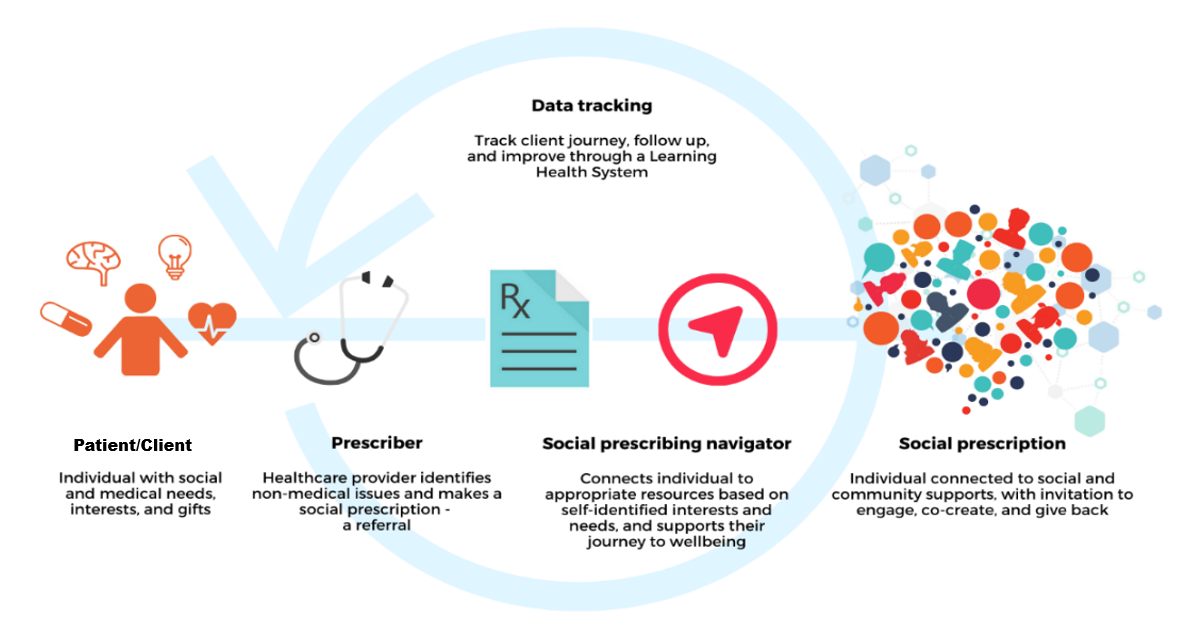
    Social prescribing is a way to capture, formalize and continue this work. It looks different in different communities, depending on local needs and capacity, but generally includes these 5 components:

    Social prescribing components

    How are you using Social Prescribing in your team – let us know! Interested in learning more and implementing in your team? Join us at the AFHTO conference or drop us a line at improve@afhto.ca.

    Social prescribing: tools for equitable healthcare:

    Reminders:
    Responding to COVID-19: Understanding How Primary Care Teams Stepped up to Help Support Their Communities and Patients
    AFHTO in collaboration with Dr. Rachelle Ashcroft and Dr. Catherine Donnelly are conducting a research study to capture the efforts of all our members to ensure no story is left untold. This information will help influence and shape how teams will continue to adapt virtual care after the pandemic, as well as to meet patient needs.

    September 18th, 2020 is the last day to participate in a survey, don’t miss your chance to participate! Please click here to share your team’s story.

    Primary Care Patient/Client Virtual Care Experience Survey
    The Primary Care Patient/Client Virtual Care Experience Survey was created to help fill informational gaps to inform future planning and further support the implementation of virtual care in primary care. We also highly recommend you report back to AFHTO to support AFHTO’s Provincial Initiative. To further support practices in expanding and solidifying virtual care in primary health at a provincial-level, AFHTO will be collecting the practice-level aggregate responses to the survey.

    Upcoming Events

    Electronic Asthma Management System (eAMS) – Tool Demonstration Webinar
    Tuesday September 15, 2020 – 12:00 – 1:00 pm EDT
    The Electronic Asthma Management System (eAMS) is an evidence-based clinical decision support system developed to improve your ability to deliver best care for patients with asthma. Learn more about the tool by registering here.

    AFHTO 2020 Conference Tectonic shifts: rebuilding primary care in a new world
    Thursday, October 8, 2020 – Friday, October 9, 2020
    Before 2020, anyone with experience in Ontario’s healthcare system thought they knew what change meant. Now such changes seem almost a lifetime ago. COVID-19 has shifted our priorities with a focus on how to support our patients and our teams in new ways of delivering care. Primary care has risen to the challenge, but the ground is still shifting, and the future is uncertain. In short, we need to rebuild primary care for this new world.

    Register an individual or team for the conference here. Early-bird registration closes October 1, 2020.


    In Case You Missed It: Check out eBulletin #99 or other back issues here!
    Questions? Comments? Contact us at improve@afhto.ca.