Tag: advocacy

  • Joint Letter to release Mental Health and Addiction Funding

    January 19, 2021

    Dear Minister,

    We would like to thank you and your team for your ongoing work in ensuring the people of Ontario stay safe
    as we combat the pandemic. Your tireless efforts are greatly appreciated.

    We are writing about a commitment of funding that was made by your government in the Fall 2020 budget to
    provide interprofessional teams with additional funding to support people in the community struggling with
    mental health and addiction challenges. As your government pointed out in the budget COVID-19 has had
    significant impact on mental health and addictions (MHA) across the province. There has also been a
    disproportionate impact on individuals with existing mental health and addictions challenges.
    Prior to COVID,
    MHA was the biggest clinical pain point in primary care with limited support and resources. With the
    pandemic, the crisis has only increased and every primary care provider is now seeing MHA at each visit,
    whether in-person or virtual.

    That is why we were grateful for the $3M that was committed through the budget to help Community Health
    Centres, Family Health Teams, Indigenous Primary Health Care Teams and Nurse Practitioner-Led Clinics with
    the increased demand of MHA in their clinics. Though we are grateful for this funding support, Minister, we
    are very concerned that the funding has not yet flowed to the teams. Primary care teams do not carry reserve
    dollars in their budgets and as a result, they cannot roll out clinical or service support without the funds in
    their accounts. We are now in mid January and the funding has not yet flowed and yet, the funding is
    expected to be spent by March 31st. Added to the complexity is that CHCs receive their funding from Ontario
    Health so they have an added layer of approvals which means their funding may take even longer to get to
    the respective CHCs in the province.

    Minister, we are sure you are just as concerned as we are with the MHA crisis that currently exists so we are
    writing to ask your office for help to expedite the approval letters so that the funding can flow to the
    respective interprofessional teams. Given the tight timelines to actually spend the funds, we are also asking
    you to allow those funds to spread into the next fiscal year so that the money can be spent thoughtfully to
    help support those who need it the most.

    We look forward to hearing from you soon and would be happy to answer any questions or address any
    concerns you may have.

    Yours sincerely,

    Sarah Hobbs, Chief Executive Officer, Alliance for Healthier Communities
    Kavita Mehta, Chief Executive Officer, Association of Family Health Teams of Ontario
    Jennifer Clement, Past Chair, Nurse Practitioner Led Clinics Association

    Cc:
    Helen Angus, Deputy Minister, Ministry of Health
    Joyce Mankarios, Director of Policy, Minister’s Office
    Laurel Brazill, Director of Stakeholder Relations, Minister’s Office
    Nadia Surani, Director of Primary Health Care, Ministry of Health
    Caroline Lidstone-Jones, CEO, Indigenous Primary Health Care Council

    See the pdf version here.

  • Joint Letter on Paid Sick Leave

    January 14, 2021

    Sent via email

    Premier of Ontario
    Legislative Building
    Queen’s Park
    Toronto ON M7A 1A1

    Dear Premier Ford,

    Throughout the COVID-19 pandemic, the evidence has become clear: paid sick leave is essential to protecting our province from the catastrophic impacts of unchecked virus transmission, and its toll on marginalized populations.

    We are a coalition of healthcare and social service providers writing to express our urgent appeal for the immediate implementation of paid sick days for Ontario workers, including temporary and precariously employed workers, as a central measure to improve population health and stop the spread of COVID-19. Our request is in addition to the benefit provided by the federal government through The Canada Recovery Sickness Benefit.

    We request that the Government of Ontario require all employers to provide a minimum of five annual paid sick days, and that the 2021 provincial budget fund and support employers to increase this to ten annual sick days during a declared infectious disease emergency like COVID-19.

    This week’s modelling shows the situation is dire and requires a swift and immediate response to prevent our health systems from becoming further overwhelmed. Employers, workers, and their communities cannot wait any longer. Due to the urgency of this matter, we are requesting your immediate response.

    Signed

    Allan O’Dette, Chief Executive Officer, Ontario Medical Association
    Sarah Hobbs, Chief Executive Officer, Alliance for Healthier Communities
    Dr. Doris Grinspun, RN, MSN, PhD, LLD(hon), Dr(hc), FAAN, FCAN, O.ONT, Chief Executive Officer, Registered Nurses’ Association of Ontario (RNAO)
    Kavita Mehta, Chief Executive Officer, Association of Family Health Teams of Ontario
    Leanne Clarke, Chief Executive Officer, Ontario College of Family Physicians
    Dana Cooper MBA, CAE, Chief Executive Officer, Nurse Practitioners’ Association of Ontario
    Jennifer Clement, Past Chair, Nurse Practitioner Led Clinics Association
    Deborah Simon, Chief Executive Officer, Ontario Community Support Association
    Caroline Lidstone-Jones, Chief Executive Officer,Indigenous Primary Health Care Council

    Cc:
    Hon. Christine Elliott, Deputy Premier and Minister of Health
    Hon. Monte McNaughton, Minister of Labour
    Dr. David Williams, Ontario Chief Medical Officer of Health

    See the pdf version here.

  • COVID vaccine update: what you can do to prepare

    Dear members,

    We know that you are already receiving many questions about the COVID-19 vaccine(s) and the distribution plan from your communities. The people you care for are going to see many messages from a variety of sources. Your communities look to you for trusted advice.
     
    As a united partnership, we are advocating for what you need to support your communities. The links below from the Ontario Ministry of Health provide some of the key facts, and we are working on further resources. We also know many communities will need tailored approaches specific to geography, culture, and other nuances. Please let us know your specific needs. Together, we can leverage the trust you have earned with your patients to help implement the most important vaccination campaign of our era.

    In the meantime, we can all do our part by taking the following steps:
     
    1.    Stay informed.
    Understand the facts about the vaccines available, how they work, and what the trial results showed. Over 70,000 patients were enrolled in the Pfizer-BioNTech and Moderna mRNA vaccine trials combined, with no serious adverse events. The efficacy data from the trials was reported to be approximately 95%. Read the Government of Canada’s info page about the Pfizer-BioNTech vaccine here.

    Summary guidance released on December 14th by the Ministry of Health includes the following:

    2.    Get vaccinated.
    Our patients and communities look to us to model healthy behaviours. When you get vaccinated, it will signal to your patients and communities that vaccination is the wise choice. At every opportunity, in virtual or in-person visits, and on social media, consider sharing with your patients your intention to get yourself and your loved ones vaccinated. The literature shows that this personal sharing will have a positive influence.

    Offer to provide the facts and to address any concerns. We will need to work together to ensure every Ontarian who wants the vaccine has a plan to receive it; be ready to share with them the when/where/how details, and a reminder about the second dose.

    3.    Keep up with the Education
    We know you are fielding questions daily about the vaccine from your patients, your staff, and your community. Further tools and supports will be available very soon to help you proactively address hesitancy and misinformation. In the meantime, here are some educational opportunities that may be of interest:

    Have more questions about the vaccine, the implementation plan in primary care, or how it will affect you and your patients? We want to hear them. Please connect with us by email. We are also attaching a template letter that you can adapt and use for your patients and community members if you wish to send them an update as well.

    We also would welcome you to join the Ontario Hospital Association’s Take the Pledge to Stop the Spread campaign and continue to do our part in protecting Ontario’s health system capacity and its vulnerable populations, especially over the coming winter months. Using the hashtag #StopTheSpread, please consider sharing your stories about how you’re doing your part – especially over the holiday season – then encourage others to do the same.

    Thank you for your tireless work in supporting and caring for your patients and your communities.  We know you are tired, but we remain hopeful that there is a light at the end of the tunnel. As we head into the holiday break, we will continue to update you on the vaccine rollout as we get more information.  More importantly, we hope you all get a well-deserved break with your loved ones.
     
    Sincerely,

                              
    Dr. Allan Grill                                             Kavita Mehta
    Chair and President, AFHTO                    Chief Executive Officer, AFHTO
     
    In unity with our dedicated partners in Ontario’s primary care:

    • Alliance for Healthier Communities
    • Indigenous Primary Health Care Council
    • Nurse Practitioners’ Association of Ontario
    • Ontario College of Family Physicians
    • Ontario College of Pharmacists
    • Ontario Medical Association Section of General and Family Practice
    • Ontario’s Academic Chairs of Family Medicine
  • Critical Role of Comprehensive Primary Care in COVID-19 Wave 2 Response

    To: Helen Angus, Deputy Minister of Health
    Alison Blair, Assistant Deputy Minister
    Matt Anderson, CEO, Ontario Health
    David Williams, Chief Medical Officer of Health (MOH)

    Re: Critical Role of Comprehensive Primary Care in COVID-19 Wave 2 Response

    Our calls to action in a joint letter to the Ministry of Health and Ontario Health

    1. Prioritize flu vaccination in comprehensive primary care
    2. Support immunization in primary care
    3. Include primary care in planning and rollout of COVID-19 vaccination
    4. Enable community-led testing and contact tracing in hotspot communities
    5. Ensure ongoing management of illnesses, chronic disease, disease prevention, health promotion, and community connection
    6. Expand virtual care that supports continuity and develop a comprehensive digital equity strategy

    Signed

    Sarah Hobbs, CEO, Alliance for Healthier Communities
    Caroline Lidstone Jones, CEO, Indigenous Primary Health Care Council
    Kavita Mehta, CEO, Association of Family Health Teams of Ontario
    Jennifer Clement, Chair, Nurse Practitioner-Led Clinic Association
    Leanne Clarke, Chief Executive Officer, Ontario College of Family Physicians

    See the full letters and the provincial response below.

    Relevant Links

  • What you need to know now that Health Canada has approved the first COVID vaccine

    Dear Members,

    This week, the Public Health Agency of Canada released Canada’s COVID-19 immunization plan, and Health Canada approved our first COVID-19 vaccine. Both represent significant progress in our COVID-19 efforts and are a testament to our scientific community worldwide and the power of unity.

    As provinces look to deploy vaccines, your voice and the role of primary care will be critical. We have shared challenges ahead before hopefully moving to a post-pandemic era, among them logistics, vaccine hesitancy, and more. We know there is no greater antidote to vaccine hesitancy than advice from someone we trust; for most Ontarians, that means a community’s primary care professional.
     
    Although there is no primary care (or public health) representation on the Ontario Ministers’ COVID-19 Vaccine Distribution Task Force, we are working hard to influence and connect with them for the benefit of Ontarians. Partnering with our primary care associations and representatives, we will ensure your community’s needs are heard and that they inform the Task Force’s decisions.
     
    The Task Force is yet to release details regarding its COVID-19 vaccination plan. What we understand is that healthcare workers will be in the first priority group, along with the highest risk members of the population. It is likely that the long-term care sector will be prioritized ahead of community-based primary care settings, but we know that availability of vaccines will increase substantially over the coming months.
     
    We believe it is critical that all of us get vaccinated for at least three reasons:

    1. to protect ourselves and our loved ones
    2. to protect our patients, as well as their families and caregivers
    3. to act as role models for our communities

    The details on how you will access the vaccine for yourselves and your practices is still to be determined. As you have likely heard, there are challenges related to availability and logistics. We understand that the details will be available soon. We are connected with relevant stakeholders and members of the Task Force, and we will share details as soon as we have them.
     
    In the meantime, working collaboratively, we are creating educational materials to understand the vaccine, and to help you have these discussions in your communities. We are also working with stakeholders across Ontario and Canada to ensure you have the resources and support you need to care for your patients.

    Our ask: To help us prepare, we ask you to please complete this important survey from the Public Health Agency of Canada (PHAC) so that we can fully understand your needs, unique challenges, and opportunities as they relate to undertaking the most important vaccine program in our recent history. Please also reach out to us if you have ideas beyond the survey.

    PHAC is also planning a series of national webinars for health professionals. To register for the first webinar, “COVID-19 Vaccine Foundations for Health Care Providers,” please click on one of the following options:

    Dr. Howard Njoo, Canada’s Deputy Chief Public Health Officer, will provide the opening remarks on December 14th. We will also complement their webinars with tailored materials for your practices, patients, communities and more.
     
    Thank you for completing the survey, and helping us learn more about your needs. We will share more information as soon as we can.
     
    Sincerely,
                              
    Dr. Allan Grill                                             Kavita Mehta
    Chair and President, AFHTO                    Chief Executive Officer, AFHTO
     
    In unity with our dedicated partners in Ontario’s primary care:

    • Alliance for Healthier Communities
    • Indigenous Primary Health Care Council
    • Nurse Practitioners’ Association of Ontario
    • Ontario College of Family Physicians
    • Ontario College of Pharmacists
    • Ontario Medical Association Section of General and Family Practice
    • Ontario’s Academic Chairs of Family Medicine
  • Bits & Pieces: always open, updated primary care guidance and more

    Bits & Pieces: always open, updated primary care guidance and more

    Your Weekly News & Updates


    In This Issue  
    • We may be working differently, but we never stopped working
    • Celebrating Nurse Practitioner Week
    • Designing integrated care and indicators for older persons’ health services
    • QSC patient advisor needed
    • 2020 Ontario Budget overview
    • Updated primary care guidance and more
    • Diabetes Awareness Month
    • Upcoming events on advancing diversity and inclusion and more

    We may be working differently, but we never stopped working

    As part of our ongoing efforts to promote primary care stepping up during the pandemic, we have partnered with OCFP and SGFP on their latest campaign to your availability in your communities. Here’s the information sheet, which partners have already started sharing on social media. Please share widely with your own patients and communities.

    We are also collecting your flu vaccine success stories as well as any fall COVID Wave 2 initiatives your teams are doing so please share those (with pictures if you have them) so we can use them in our advocacy work with the government.  #PrimaryCareAlwaysThere


    Essex County NPLC

    Celebrating Nurse Practitioner Week

    This week, we’d like to recognize the important work of NPs in primary care teams. No matter the team, whether it be FHTs, NPLCs, CHCs or other, nurse practitioners are truly invaluable in providing comprehensive care to Ontarians. Thank you to our NP team members!


    Designing integrated care and indicators for older persons’ health services

    The Provincial Geriatrics Leadership Office has recently provided two important updates:


    QSC patient advisor needed

    Involving patients as partners on our Quality Steering Committee (QSC) is integral to advance best practice and optimize performance measurement capacity across team based primary care and ensuring we meet the needs of patients, caregivers, and their families.

    We are seeking individuals who can see beyond their personal experience and share insights around quality improvement for team-based primary care. If you have a patient that you believe would be interested, please read here.


    2020 Ontario Budget overview
    On Thursday, Nov. 5 the PC government released their 2020 Ontario Budget entitled “Ontario’s Action Plan: Protect, Support, Recover”.

    Investments in health mainly centred on the Long-Term Care and hospital sectors and focused mainly on strengthening the Ontario healthcare system’s pandemic response. Here is a brief prepared by AFHTO on the budget and the announcements and investments being committed.

    Unfortunately, there were no announcements made to support primary care, team-based primary care or any additional supports to mental health and addictions beyond what was already announced.

    We will continue to work with our partners and advocating around the importance of primary care in the pandemic response and the integral role the sector plays in supporting the most vulnerable populations.


    Updated primary care guidance and more

    Updates recently released include:

    We continue to update several pages on our site with resources and news:


    Diabetes Awareness Month
    November is Diabetes Awareness Month, and Wounds Canada has organised a national social media campaign to #EndDiabetes and #PreventAmputations. Teams can get engaged by use pre-made posts created by Wounds Canada or create your own using the hashtags provided. A campaign activation kit, social media content, and infographics can be seen here.  You could also send a jpeg of your logo to katie.bassett@woundscanada.ca to be included on their website and in other communications.


    Governance Master Class: Advancing Diversity and Inclusion, Nov. 12, 2020
    Miller Thomson Health Industry Group is holding a Special Edition of their Health Industry Directors Series. It’s also free! Find out more here.


    COVID-19 Community of Practice for Ontario Family Physicians, Nov. 13, 2020

    The eleventh in the series on “Supporting patients with COVID-19, evolving guidance, fatigue and more”. Register here.


    Diabetes Care and Management for Ontario, Nov. 12, 2020

    This HeathcareRounds virtual event will be a discussion with leaders devoted to the health and care of those living with diabetes to discuss next steps and action items.
    Find out more here.


    COVID-19 Preparedness and Management in Primary Care, Nov. 13, 2020
    Public Health Ontario (PHO) is holding a webinar to introduce primary care stakeholders to the new PHO Checklist: COVID-19: Infection Prevention and Control Assessment for Primary Care Facilities. Register here.


    Cultural Safety and Indigenous Partnership, Nov. 27, 2020
    Join the first webinar of this Virtual Learning Exchange in Primary Care series held by the Canadian Foundation for Healthcare Improvement. Learn more here.


    Race, Racism, And COVID-19: The Institute For Pandemics Inaugural Lecture, Nov. 24, 2020
    This panel will explore evidence and examine the implications for using policy and other strategies to dismantle structural racism.
    Learn more here.

  • Bits & Pieces: member stories in AFHTO annual report, call for stricter measures to address COVID-19 & more

    Bits & Pieces: member stories in AFHTO annual report, call for stricter measures to address COVID-19 & more

    Your Weekly News & Updates


    In This Issue  
    • AFHTO annual report featuring your stories
    • Letter to the Premier for stricter measures to address COVID-19
    • Two days to the #AFHTO2020 early bird deadline
    • Indigenous relationship and cultural safety (IRCS) courses
    • COVID-19 testing guidance update and more
    • Survey of IHPs in FHTs during the COVID-19 pandemic
    • OMA flu vaccination administration survey
    • Guelph FHT annual report
    • Reminder- research participant recruitment – concussion telerehabilitation study
    • Reminder-engagement of patients with diabetes via virtual health apps survey
    • Upcoming events regarding Arts on Prescription and more

    2020 annual report


    AFHTO annual report featuring your stories

    We released our 2020 annual report in the notice for our annual general meeting sent to the triad yesterday. Read for a reflection on a tumultuous year, including ways primary care teams have risen to the challenge.


    Letter to the Premier for stricter measures to address COVID-19

    “The measures announced on September 25th are not sufficient. Protecting the most vulnerable in the province and conserving the limited health care resources we have should be our number one priority.”

    Today AFHTO, NPAO and OCFP sent a letter to the Premier calling for stricter measures to address escalating numbers of COVID-19 cases before the situation becomes unmanageable. Read the full letter here.


    Two days to the #AFHTO2020 early bird deadline

    AFHTO 2020 Conference logo-cropped

    We’re connecting with our speakers including Helen Bevan, editing the Bright Lights video, and preparing for a memorable conference next week. Don’t forget to do your part and register by this Thursday, Oct. 1 for the early bird discount. Group discount now available!

    In previous years we have sometimes extended the deadline, but this is the closest to the conference we’ve ever had, so there will be no extension this year.


    Indigenous relationship and cultural safety (IRCS) courses
    Primary care can pick from 13 e-learning courses on Indigenous Relationship and Cultural Safety by Cancer Care Ontario and earn certified credits. Find out more here.


    COVID-19 testing guidance update and more

    Updates recently released include:

    We continue to update several pages on our site with resources and news:


    Survey of IHPs in FHTs during the COVID-19 pandemic

    We are now six months since the initial restrictions of COVID-19 and Queen’s University researchers are interested in hearing about your experiences working in FHTs during this time. You’re invited to participate in a brief web-based survey to understand the evolving experiences of interprofessional health care providers in Family Health Teams in Ontario during the COVID-19 pandemic.

    This research is being led by Drs. Catherine Donnelly (Associate Professor, Queen’s University) and Jordan Miller (Assistant Professor, Queen’s University). If you have any questions, please contact Dr. Catherine Donnelly by email at catherine.donnelly@queensu.ca.


    OMA flu vaccination administration survey

    Many primary care providers will have difficulty conducting their usual flu vaccine clinics due to limits on physical space, PPE supply and office cleaning requirements, among other challenges. OMA has developed a survey to find out the barriers you’re anticipating, what supports might be helpful and the innovative ideas you are leading or participating in as you prepare for flu vaccine administration. They would greatly value your input through this five-to-seven-minute survey. Please respond by Oct. 7.

    If the survey is being done as a group, please note as such and do not complete the survey more than once.


    Guelph FHT annual report

    The Guelph Family Health Team 2019-2020 Annual Report is available to read online. Learn about the work they do to provide patient-guided quality focused care.


    Reminder- research participant recruitment – concussion telerehabilitation study

    Researchers in the Department of Occupational Therapy at the University of Toronto are currently recruiting youth with concussion to participate in a study exploring the use of telerehabilitation for concussion management. Youth will participate in a 6-week rehabilitation program consisting of education, support and low-intensity exercise delivered by a kinesiologist or occupational therapist through weekly videoconferencing appointments.

    Who can participate?

    • Youth (ages 13-18 years) experiencing concussion symptoms
    • At least 2 weeks post-concussion

    For more information click here. To help with participant recruitment, please contact the research team at oaktelerehab@utoronto.ca or 416-946-3273.


    Reminder-engagement of patients with diabetes via virtual health apps survey
    A York University researcher is seeking input from family physicians, nurses and nurse practitioners. The aim of their research is to improve practice and policy about the potential of Virtual Health Apps use in primary care settings with a special focus on vulnerable and marginalized patient populations. To provide your input, please fill out this survey. Updated deadline Oct. 30.


    Nontuberculous mycobacterial (NTM) pulmonary disease diagnosis and management: An overview for general practitioners, Sept. 30, 2020

    Recognize clinical factors and learn to treat NTM pulmonary disease.
    Learn more here.


    Arts on Prescription: Improving health and wellbeing through arts participation, Oct. 6, 2020

    Explore considerations from experts working with diverse youth on considerations for health and service providers.
    Learn more here.


    AFHTO 2020 Conference, Oct. 8-9, 2020

    Registration has opened for Tectonic shifts: rebuilding primary care in a new world, our 2020 virtual conference! Members receive a significant discount so contact your administrator for your member access code. Early bird deadline Oct. 1. Find out more here.


    Respiratory Health Forum, Oct. 21, 2020.

    This year’s forum will be held virtually and is completely free! Learn more about lung health alongside other primary care professionals.
    Learn more here.


    COVID-19 Community of Practice for Ontario Family Physicians, October 16, 2020

    Join the OCFP and Department of Family and Community Medicine at UofT for their 10th CoP meeting in their series ‘Changing the way we work”, focusing on rising case counts, respiratory assessment centres, flue shots and more during COVID-19.
    Learn more here.

  • A Joint Open Letter for stricter measures to address COVID-19

    September 29, 2020

    The Honourable Doug Ford
    Premier’s Office
    Room 281, Legislative Building, Queen’s Park
    Toronto, ON M7A 1A1

    Dear Premier,

    Ontario has now surpassed the highest number of daily cases that were identified during wave 1 in the spring. With 700 cases reported yesterday, it is time to look at stricter public health measures to curb the escalation of the pandemic this fall.

    Family Physicians, Nurse Practitioners and primary care teams are at the frontline of care and many of them were, and continue to be, redeployed to hospitals, long-term care facilities and assessment centres. We support the Ontario Hospital Association and multiple other health and community sector stakeholders with the call for stricter measures to address these escalating numbers before the situation becomes unmanageable. The measures announced on September 25th are not sufficient. Protecting the most vulnerable in the province and conserving the limited health care resources we have should be our number one priority.

    Increased support for schools to reduce class sizes and facilitating physical distancing is essential. Parents must feel safe sending their children to school and not worry about a child’s sickness possibly impacting their ability to work, especially those on the frontlines. To enable schools to stay open and to prevent an unmanageable demand on the healthcare system, temporary restrictions should also be in place for non-essential businesses, such as indoor dining and bars, movie theatres, gyms and places of worship. A return to Stage 2 in regions where numbers are increasing substantially such as Toronto, the Greater Toronto Area and Ottawa is necessary now in order to reduce what will be an overwhelming impact on not just acute care capacity but also congregate settings like Long-Term Care Homes that have already been hit with so much devastation and loss of lives this year.

    Stronger contact tracing and faster testing with increased lab capacity must be priorities, especially with expanded asymptomatic testing in pharmacies. Public communications need to be clearer with direct messaging about what each individual is responsible for if we are to combat this virus. COVID-19 can be managed if people act on physical distancing, practice proper hand washing, and wear a face covering when needed. Social bubbles have exploded and these need to be rolled back to smaller numbers. The health and economic wellbeing for all Ontarians rely on the actions taken by each one of us. Expectations must be understood and enforced across the province and by the province.
    The repercussions on businesses forced to close will be devastating and we all know that many businesses are still struggling today. Government supports at all levels will be needed to help, but right now there is an immediate need to act decisively and return to Stage 2 for those regions experiencing a high number of cases.

    Family Physicians, Nurse Practitioners and primary care teams stepped up to keep our communities and hospitals safe during the first wave and are prepared to continue to be the foundation, but the demand for that care must be manageable, and at this rate it will not be.

    Thank you for your continued work to battle this pandemic and to support the lives and wellbeing of every Ontarian.
    Sincerely,

    Dr. Tom Richard, President and Board Chair, Association of Family Health Teams of Ontario

    Kavita Mehta, CEO, Association of Family Health Teams of Ontario

    Shawn Dookie, President, Nurse Practitioners’ Association of Ontario

    Dana Cooper, Executive Director, Nurse Practitioners’ Association of Ontario

    Dr. Elizabeth Muggah, President and Board Chair, Ontario College of Family Physicians

    Leanne Clarke, Chief Executive Officer, Ontario College of Family Physicians

    Cc:
    Hon. Christine Elliott, Deputy Premier and Minister of Health
    Hon. Merrilee Fullerton, Minister of Long-Term Care
    Dr. David Williams, Chief Medical Officer of Health
    Mark Lawson, Deputy Chief of Staff, Policy, Office of the Premier
    Heather Watt, Chief of Staff, Minister of Health
    Laurel Brazill, Director of Stakeholder Relations, Minister of Health
    Anthony Dale, President & CEO, Ontario Hospital Association

    See the pdf version here.

  • Connecting People to Home and Community Care Act, 2020 (Bill 175) – AFHTO’s Submission

    On June 17, AFHTO presented its submission to the Standing Committee on the Legislative Assembly on Bill 175: Connecting People to Home and Community Care Act, 2020. Our key recommendations are:

    1. Delay the passage of Bill 175, Connecting People to Home and Community Care Act, 2020Delay the passage of Bill 175, Connecting People to Home and Community Care Act, 2020 until the findings of the LTC commission and investigation are completed and the challenges to the pandemic response are detailed, including how care was or was not provided in people’s homes or in the community.
    2. Embed care coordination in primary care– We recommend the relationship between primary care and home and community care be strengthened by transitioning the function and associated resources of care coordination to primary care. This will bring greater efficiency and patient-centredness to care. Care will be integrated, allowing for seamless transitions of care for patients. It will reduce duplication and inefficiencies in the care coordination process and allow for more flexibility and integration in care planning. Patients will move through the system and providers with a single care plan, and outcomes will improve due to greater continuity and coordination of person-centred care.
    3. Supporting the patient’s journey through the health and social system with one patient record– The role of a care coordinator needs to be less administrative in nature and more systems related. What is critical is care coordination as a function and a role that will support the patient through the complex health and social systems. That individual needs to be a member of a team who works with the patient and the team as a system navigator for both health and social care, using the same electronic medical record to ensure one fulsome patient story.

    Read the full document here


    Input on proposed regulations 

    AFHTO and OCFP Response to Proposed Home and Community Care Regulations Related to the Connecting People to Home and Community Care Act

    AFHTO’s feedback on proposed Home and Community Care Regulations – July 2021


  • Bits & Pieces: open letter on pandemic pay, updated primary care guidance & more

    Bits & Pieces: open letter on pandemic pay, updated primary care guidance & more

    Your Weekly News & Updates


    In This Issue  
    • Joint open letter on pandemic pay, updated primary care guidance and testing memo
    • AFHTO 2020 Conference: switching things up
    • Nominations to the AFHTO Board of Directors open until July 3, 2020
    • Updated symptoms document and more
    • Update on COVID-19 testing- Primary Health Care Branch
    • Reminder- Ontario Community Support Association meals/essentials delivery
    • Upcoming events including Hospice Palliative Care CoPs and more

    Joint open letter on pandemic pay, updated primary care guidance and testing memo

    Yesterday we submitted an open letter with ten other organizations to Premier Ford and Minister Elliott calling for immediate clarity on the implementation details and timing on pandemic pay for frontline workers. Read the full letter here.

    It was highlighted by the Toronto Star and also picked up across their regional network, landing in many local papers from Hamilton to Windsor, Ottawa and across the GTA.

    On a related note, on Friday, May 22 the government released updated primary care guidance. On Sunday they also provided a memo describing new testing direction for COVID 19 (English and French).  It outlines that testing is available to all people with at least one symptom as well as those who are not experiencing symptoms but are at risk or are concerned about exposure. 



    Excited children at laptop

    AFHTO 2020 Conference: switching things up

    In March, as we prepared to announce our 2020 conference themes and program, the COVID-19 pandemic overtook our plans. Thank you for your patience as we monitored the situation and made decisions about how it might affect the 2020 Conference, set to take place this October in Toronto.

    Based on information from the World Health Organization (WHO), Public Health Canada, Public Health Ontario, and others, we find we cannot hold the conference in-person as originally planned. Our focus and priority are member and stakeholder safety and well-being.

    Last year attendees said they wanted a change so we’re exploring virtual options. Without an in-person component, we can create something new and envision the conference differently. What can it look like without those familiar constraints?

    We’re working on this right now and we need your help. What do you want to hear more about and how would you like it? Tell us in this quick survey. Deadline tomorrow, Wed. May 27, 8:00 a.m.


    Nominations to the AFHTO Board of Directors open until July 3, 2020

    Are you interested in serving on the AFHTO Board of Directors? The governance committee of AFHTO’s board invites anyone who works within an AFHTO member organization to apply. Priority for the directors to be elected will be given to candidates who are:

    • Interprofessional health care providers (IHPs), especially those working in mental health and addiction;
    • Board members, especially community members in the position of Chair of the Board; or
    • Experienced in finance, including accreditation as a financial professional (e.g. CA, CPA, CMA).

    Deadline is July 3, 2020. Find out more here.


    Updated symptoms document and more

    Yesterday the government released an updated symptoms document to include some additional language around how multisystem inflammatory vasculitis may present in children.

    We continue to update several pages on our site with resources and news:

    We’ll update these on a regular basis as we receive relevant resources, while trying to reduce duplication with other sources. We will continue to update the news page daily.

    COVID-19 assessment centres


    Update on COVID-19 testing- Primary Health Care Branch

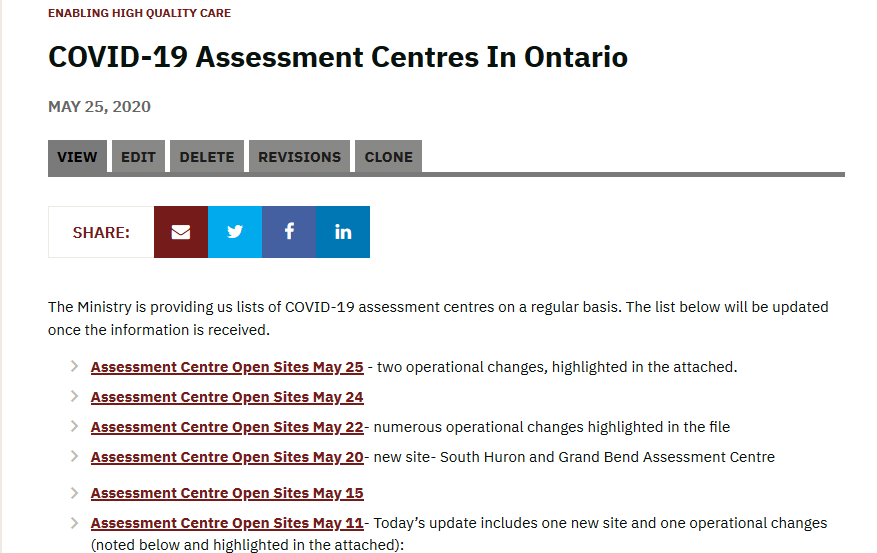
    Yesterday we received an important email from the Primary Health Care Branch regarding COVID-19 testing. It included a link to the Personal Protective Equipment Intake Form and referred to the list of assessment centres.

    This list is updated on our site on a regular basis.


    Reminder- Ontario Community Support Association meals/essentials delivery
    OCSA seniors help


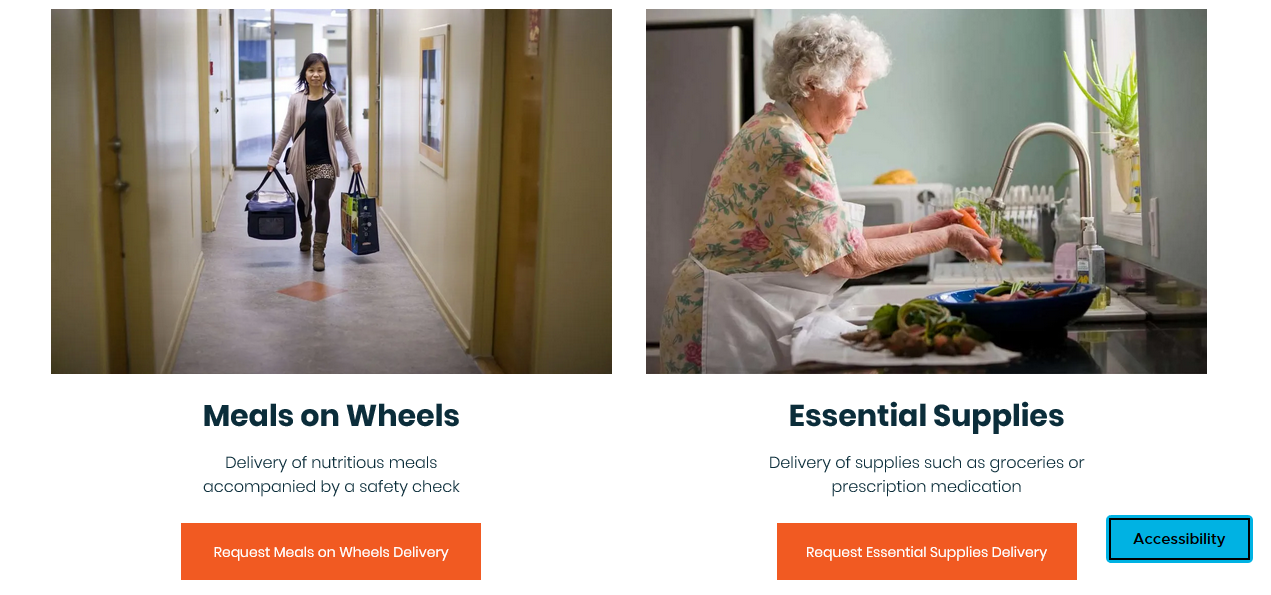
    Weeks ago Ontario Community Support Association established a link on their website to connect individuals/community providers to meals services/essentials delivery.

    As the province prepares to reopen for business, there are still millions of seniors and people with disabilities and chronic conditions that will continue to need to self-isolate at home. So, they think their work has only just begun.  
     
    If there are cohorts of populations or individuals that members feel need support during COVID-19, please contact OCSA so they can help.  

    In this portal, you can search Meals providers or Essential Service providers by searching based on address. If service providers exist in the area, a referral can be made directly through the portal to the provider. If nothing can be found there, a link will pop up asking to “Sign Me Up” to receive a phone call from a Canadian Red Cross (CRC) Coordinator to make connection to services. 


    Choosing Wisely – Canada’s National Meeting, May 26, 2020
    The Virtual National Meeting will bring together health professionals, patients, system leaders, and researchers from across the country to discuss and engage in topics related to overuse in health care. Learn more here.


    Meeting Social Needs in an Integrated Health System: Social Prescribing During COVID-19 and Beyond, May 27, 2020

    The Alliance for Healthier Communities has made their social prescribing meeting virtual. Join the conversation around integrating healthcare and social supports. Learn more here.


    Driving and Accelerating a ‘One System’ Response: Why COVID-19 has Shone a Spotlight on Integrated Care, May 27, 2020
    This webinar will profile Canadian and international examples that demonstrate what teams have leveraged and accelerated in order to respond to COVID-19 as one connected team and community. Learn more and register here.


    Hospice Palliative Care CoPs, Ongoing

    HPCO hosts virtual CoPs related to:

    • Health Care Consent, Advance Care Planning
    • Rural Hospice Palliative Care
    • Compassionate Communities

    Find out how you can join.


    Psychological PPE: Exploring Compassion Fatigue and Learning How to Keep Ourselves Psychologically Well, May 27, 2020
    The University of Toronto Faculty of Medicine is holding a webinar on Wednesday evening around the impact of compassion fatigue and burnout on health care professionals. Learn more here.


    ECHO Ontario Bariatric Network, June 3- August 26, 2020
    Learn how to work with your patients living with obesity who have received specialty care from a Bariatric Centre of Excellence (BCoE). Find out more.