Blog

  • February 6th Update on COVID-19 Vaccination Roll Out

    Dear Members,

    We are writing to provide you with an update from our united Primary Care COVID-19 Vaccination Action Council (*PC-VAC). This week’s key messages that we shared with vaccine decision-makers can be found here.

    We are mindful that the news regarding vaccines is evolving daily, and we will have to continue to be prepared for changes and uncertainties in the coming months as a sector. Along with our partners in primary care, we are committed to sharing regular updates, usually weekly, except on weeks where there are no significant new developments to share.

    New Resources:

    • The Ministry has provided a number of guidance documents describing common side effects following vaccination including an After Care sheet and Guidance for Health Care Workers.
    • We know that vaccine supply issues are an ongoing concern but phase 1 continues to roll out with the intent to accelerate the vaccination of long-term care, high-risk retirement, and First Nations elder care residents. Please click here to read the most up to date COVID-19 Vaccination Technical Briefing.
    • The OCFP has developed a resource for special populations and the recording for their most recent Community of Practice session on New Vaccines, building vaccine confidence and more from February 5, 2021 can be found here.
    • A COVID-19 – Allergy/Immunology BASE™ Managed Specialty Group is now available through Ontario eConsult. Physicians and nurse practitioners can ask COVID-19 vaccine allergy related clinical questions to Allergy and Clinical Immunology specialists electronically and receive a response within days.

    Patient Resources:

    Other Information:

    • The updated prioritization framework for the population is being finalized for approval by the cabinet over the next few weeks and we will share the guidance document once it is received.
    • The COVID-19 Science Table released its lessons learned from Israel’s vaccine rollout, including: “leveraging primary care providers, including family doctors, nurse practitioners and other community-based clinicians who have established relationships with patients is key to promoting vaccine confidence, while increasing human resources required to administer vaccines as quickly as the supply will allow.”
    • The Ontario Hospital Association released a media statement calling for the need to migrate vaccination efforts away from hospitals to public health, primary care, and pharmacies.
    • We continue to work with public health to encourage all the public health units to engage primary care early, are supporting connections with local primary care leaders, and are soon releasing a practical guide to primary care partnership in vaccine rollout. Please ask your PHU for your region’s vaccine rollout strategy if you have not seen it and share with us so we can support best practices across the province.  
    • COVAXON is the provincial system to record COVID vaccination, adverse events and eventually also integrate the approved prioritization sequence.  
      • See ADM Memo to Primary Care – COVID-19 Vaccination and COVAXON, February 1, 2021.
      • The prioritization framework will be integrated into COVAXON and an associated scheduling system is planned that will enable patients to choose their preferred locations and make direct appointment bookings.
      • While it likely won’t be fully integrated into your EMR, we understand COVAXON system will be able to send reports of your vaccinated patients to your EMR.  

    To facilitate coordinated action in primary care, we are seeking to understand beliefs relating to the COVID-19 vaccine and what supports are needed for healthcare professionals in primary care. Please complete this new, very brief survey to help gain a better understanding of your perspectives and experience. Click here to access the survey.

    We look forward to continually updating you on the provincial vaccination strategy. Please do not hesitate to contact us if you have any questions or ideas.

    Yours in good health,

    The AFHTO Team

    *Ontario Primary Care COVID-19 Vaccination Action Council:

    • Alliance for Healthier Communities
    • Association of Family Health Teams of Ontario
    • Indigenous Primary Health Care Council
    • Nurse Practitioner-Led Clinic Association/Nurse Practitioners’ Association of Ontario
    • Ontario College of Family Physicians
    • Ontario Medical Association Section on General and Family Practice
    • Ontario’s Academic Chairs of Family Medicine
  • Georgian Bay FHT launches a Home Monitoring Program with their OHT for COVID patients at home

    Collingwood Today article published January 29, 2021

    By Collingwood Today

    To better support residents in South Georgian Bay who have been diagnosed with COVID-19 and are recovering at home, the South Georgian Bay Ontario Health Team (SGB OHT) has launched a Home Monitoring Program to care for high-risk patients with suspect or confirmed COVID-19.

    A similar program was created at the London Health Sciences Centre (LHSC) in response to the emerging evidence and research surrounding the dangers of ‘silent hypoxia’ in patients who tested positive for COVID-19. Silent hypoxia occurs when a patient’s oxygen levels fall dangerously low, while not displaying significant respiratory symptoms, such as shortness of breath. If not attended to, silent hypoxia can result in serious health complications, including respiratory failure.

    In response to this risk, The Georgian Bay Family Health Team, Collingwood General and Marine Hospital, and the North Simcoe Muskoka Local Health Integration Network Home and Community Care collaborated to develop a shared community response to care for high-risk patients with suspected or confirmed COVID-19. The LHSC team provided consultation and resources to the SGB OHT clinical team – enabling them to adapt the program to the South Georgian Bay community.

    Patients in the program receive a pulse oximeter and education on its use, in addition to daily nurse-led virtual visits to assess oxygen levels, symptoms and overall health, as they monitor for signs of silent hypoxia.

    “Patients with COVID-19 may only have mild symptoms when they are first diagnosed, but things can progress quickly, especially from day 5-10 after the onset of symptoms,” says Dr. Mark Quigg, a family physician with the Georgian Bay Family Health Team. “Through this program, our nurses are able to proactively identify patients who are showing signs of silent hypoxia and get them into treatment before their oxygen levels become critical and they require intensive care. This is especially important as the number of COVID-19 cases in our community continue to rise and potentially become more contagious. Any efforts to reduce the use of intensive care resources is essential to the integrity and sustainability of our health care system.”

    The COVID-19 Home Monitoring Program is a powerful tool in helping patients receive early intervention when needed, and thereby avoiding rapid decline and requirement for intubation and ventilation. It is believed that as a result of this program, a number of lives have been saved in South Georgian Bay, through a collaborative approach to care.

    May Porter and her husband Gord from Wasaga Beach, Ontario have been enrolled in the COVID-19 Home Monitoring Program since their COVID-19 diagnosis in the New Year. Porter says that she looks forward to the call from the program nurses every day. “The equipment helps me to know that my oxygen levels are OK and that I don’t need to worry about every little change in my symptoms. The regular calls from the nurses have given me reassurance and support and we are so grateful for all that has been done for us, while I was in the hospital and at home.”

    Dr. Quigg has seen firsthand how the program has not only helped patients deal with their physical symptoms, but also provides a level of emotional support. “Being diagnosed with COVID 19 is very frightening for many patients and the program nurses are able to provide emotional support and guidance during their daily ‘virtual rounds’ that many patients appreciate.”

    Patients can be referred into the COVID-19 Home Monitoring Program through their primary healthcare provider, public health, and the Collingwood General and Marine Hospital, upon discharge.

    For more information about the South Georgian Bay COVID-19 Home Monitoring Program and criteria for referral, please visit www.gbfht.ca.

    Read the full article here

    To learn more and view other COVID-19 initiatives by AFHTO members, click here.

  • Bits & Pieces: engaging and supporting caregivers webinar Feb. 25 and more

    Bits & Pieces: engaging and supporting caregivers webinar Feb. 25 and more

    Your Weekly News & Updates


    In This Issue  
    • Engaging and Supporting Caregivers, Feb. 25
    • Members’ stories
    • Anti-racism webinar series open to members
    • Mental Health and Additions Centre of Excellence supports for HCW and more
    • Now is the Time to Choose Wisely: Advancing QI slides and video
    • Improving access and navigation to psychological services during COVID-19
    • Prenatal Screening Ontario seeking working group members
    • Survey to better understand public beliefs and perceptions of the COVID-19 vaccines
    • COVID-19 cohort study in GTA
    • Joint letter on vaccination roll-out and community providers
    • Upcoming events including transitioning a CBT program & cardio-pulmonary rehab program to virtual and more

    Engaging and Supporting Caregivers, Feb. 25

    There are 3.3 million family caregivers in Ontario who play a critical role in health outcomes. We are pleased to cohost a webinar with the Ontario Caregiver Organization which will highlight resources and opportunities for teams to support and engage caregivers:

    • Learn about the Ontario Caregiver Organization and the key programs, services and resources they offer.
    • Learn about three key caregiver-related strategies that can positively impact health outcomes and the patient/family/caregiver experience.
    • Find out about resources, programs, and actions that teams can take to help advance these strategies.

    Register for this webinar on Feb. 25.


    Members’ stories

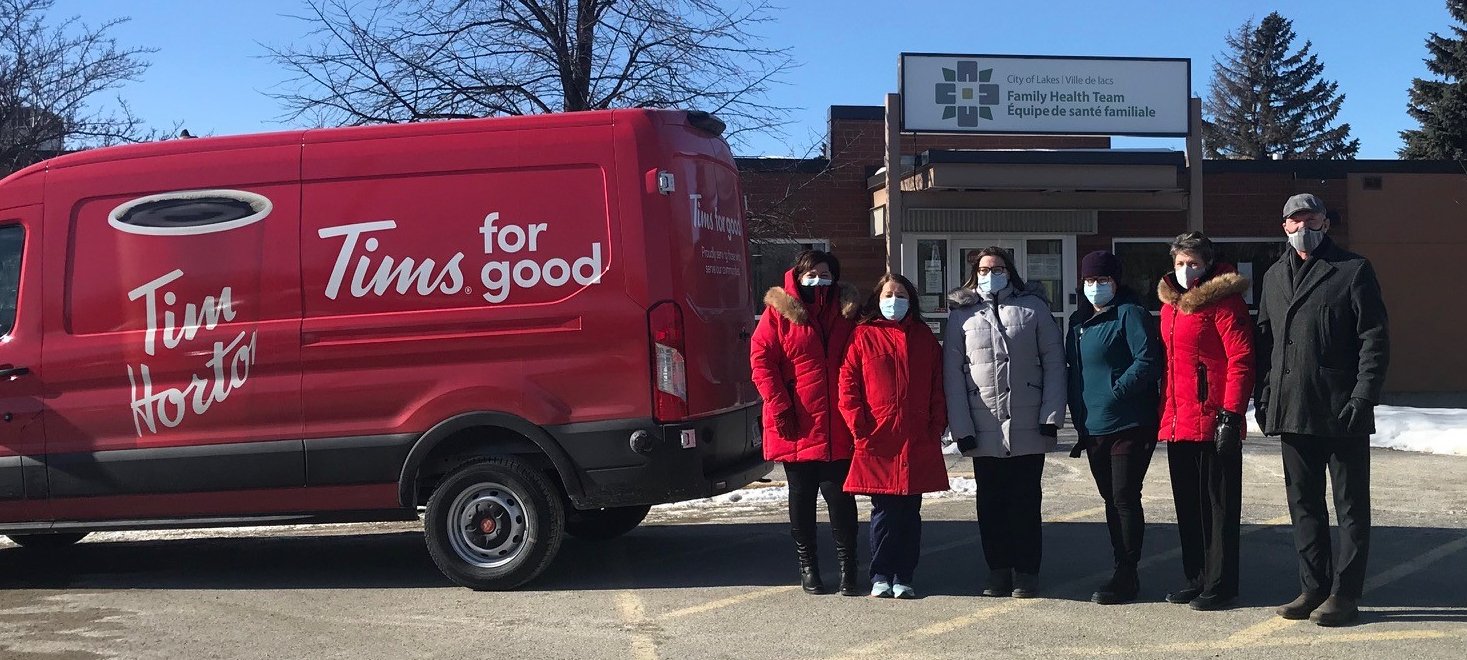
    City of Lakes Family FHT staff with the Tim Hortons for Good campaign van

    City of Lakes FHT – The City of Lakes Family FHT was visited by the Tim Hortons for Good campaign Feb. 1.

    Georgian Bay FHT – South Georgian Bay OHT has launched a Home Monitoring Program to care for high-risk patients with suspect or confirmed COVID-19.


    Anti-racism webinar series open to members
    Hosted by Central Brampton FHT’s mental health team & CMHA Toronto Opening Doors Project, Anti-Racism – What is it and Where do you fit in? is a webinar workshop series which offers an opportunity to explore our own individual identities and how it relates to practicing anti-racism:

    • Part 1: Reflecting on our own Identities -Feb. 17 & 24
    • Part 2: Building Bridges: Anti-Racism 101- Mar. 3 & 10

    Members are welcome to attend.


    Mental Health and Additions Centre of Excellence supports for HCW and more

    Recent updates include:

    We continue to update several pages on our site with resources and news:


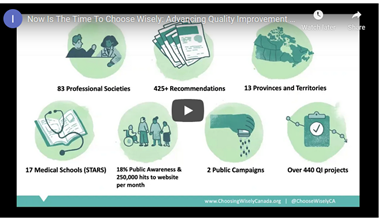
    Now is the Time to Choose Wisely: Advancing QI slides and video

    Choosing Wisely webinar slide

    On January 27 we cohosted a webinar with Choosing Wisely Canada on improving practice, enhancing patient experiences, and reducing unnecessary tests and treatments. Slides and video are now available.


    Improving access and navigation to psychological services during COVID-19

    Ontario Psychological Association has recently launched Askforhelptoday.ca, a new e-referral and matching service that improves the way Ontarians connect to psychological services. Funded by RBC Insurance, it utilizes technology from Strata Health Solutions to match patients to the most appropriate provider. OPA navigators will ensure each patient is connected quickly and confidentially to a psychologist based on their needs and personal preferences. This can be paid either through benefits or out of pocket.

    The Ontario Psychological Association is also still working with AFHTO to improve access to psychological services in times of need. Last spring, they activated the Disaster Response Network to connect essential front-line workers who needed support from psychologists. Until March 31st, Ontario physicians, nurse practitioners and FHTs may still refer essential workers with no or limited health benefits directly to OPA or inform patients to call 211 to be connected to a psychologist within 48 hours. Up to 6 counselling sessions are offered at no cost.


    Woman in blue shirt making heart on stomach


    Prenatal Screening Ontario seeking working group members

    Consider using your experience to support Ontario’s prenatal screening system. Prenatal Screening Ontario depends on input from experts and advisors from relevant fields to ensure that all the elements of a robust screening program are best carried out.

    They’re looking for representation from across all regions of Ontario including Northern Ontario, rural and Indigenous communities, to join the Genetics Working Group and Education Working Group. Check out their website for more details about the working groups, and how to apply. The deadline for applications is February 19, 2021.


    Survey to better understand public beliefs and perceptions of the COVID-19 vaccines

    To facilitate coordinated action in primary care, Women’s College Research Institute is seeking to understand beliefs relating to the COVID-19 vaccine and what supports are needed for healthcare professionals in primary care.

    You are invited to complete a brief survey to help them better understand your perspectives and experience.

    Note: They will be distributing this survey monthly for a total of four months to understand how experiences are changing over time.

    Click here to access the survey.


    COVID-19 cohort study in GTA

    A COVID-19 Research Study led by Mt. Sinai Hospital and funded by Weston Foundation, Physicians’ Services Inc., and COVID-19 Immunity Task Force is looking for people working in private medical offices and clinics in the Toronto area. The COVID-19 Cohort Study (CCS) follows staff and their families throughout the pandemic to find out the rate of COVID-19 infection, antibody levels over time, and the uptake of vaccines against COVID-19.

    The researchers are looking for staff who have direct patient contact as well as those that have no contact with patients.

    For more information about the study visit here.


    Joint letter on vaccination roll-out and community providers
    AFHTO, in partnership with other primary care and home care associations, wrote to Premier Ford and Minister Elliott last week regarding the need to plan the vaccination roll-out to vulnerable and home-bound individuals.

    “While we understand that currently, there is a shortage of vaccines, and that this reality is outside of the province’s control, we are concerned that there is not a transparent plan around how needles are going to get into the arms of people identified to be in Stage 2, namely those that are vulnerable and/or home-bound and the providers that care for them.”

    Read the full letter here.


    Primary care virtual groups – transitioning a CBT program & cardio-pulmonary rehab program to virtual

    This webinar is in collaboration with two FHTs transitioning in-person programs to virtual. Scarborough Academic FHT will share how they transferred their CBT skills group for depression and anxiety to online along with the benefits and challenges.

    Arnprior FHT is presenting on how they modified an in-person Cardio-Pulmonary Rehab to Virtual in their rural community. In this webinar they will share their patients’ thoughts and feelings on the program adjustment, discussing wins and struggles along the way. Register here.


    Mental health for adults with developmental disabilities during COVID: A virtual course for family caregivers, starting Feb. 2, 2021
    This course will run for 6 weeks beginning on Tuesday February 2, 2021. Find out more here.


    Changing the way we work: Update on COVID-19 Vaccines, Feb. 5, 2021
    The next in OCFP/DFCM COVID-19 CoP sessions. Register here.


    Recognizing and Managing Anxiety Disorders in Primary Care during COVID-19, Feb. 9, 2021
    Ontario Health webinar with experts in the field and resources about how to support patients presenting in primary care with symptoms of anxiety. Register here.


    What do Covid-19 vaccines mean for me? Feb. 18, 2021
    Part two of The Globe and Mail and The Royal Society of Canada’s COVID-19 vaccine series. Register here.


    Advancing Excellence in Transgender Health, Mar. 4, 2021
    The aim of this conference is to bridge this gap and provide information and resources to better equip Nurse Practitioners providing care to Gender Diverse individuals. The highlight is hearing the patient perspective. Find out more.

  • Follow-up on ED check-in calls Jan. 26 & 27 – and additional tools and resources

    This email is being sent to EDs/Admin Leads, Board Chairs and Lead Clinicians of AFHTO member organizations.

    Dear triad members,

    We had our first 2021 regional ED check-in calls on January 26 and 27. The eight check-ins last year were valuable to AFHTO for our advocacy and support efforts, and teams tell us the calls remain of value to them, so we’re pleased to continue with them this year.

    This is a follow-up communique with the materials promised on the January calls, and some additional reminders, tools, and resources.

    Vaccine roll-out

    • We polled EDs during the calls for input on vaccine roll-out, as well as training topics and hospital partnerships. Thank you to all EDs who participated! The results of the polls are here.
    • AFHTO’s most recent vaccine roll-out update was circulated and posted on January 22. While we hope to make this collaborative communique a weekly event, we will only send an update when there is new information to share. We expect to send a new update out in the next couple of days. Stay tuned!
    • All PHUs were required to submit their regional vaccination plans to the Ministry on January 20; however, we understand some PHUs received an extension for the submission. Each PHU was directed to meaningfully engage with primary care in the development of these local plans.
    • We encourage all of you to reach out to your local PHU to access their regional plan and identify the role of primary care in vaccination roll out.
    • Please continue to share these regional plans and how local organization is proceeding with AFHTO. It is helpful to learn regional strategies and what is going well, as well as concerns or issues that teams are facing.
    • In preparation for wave 2, regional strategies could include developing vaccination confidence/hesitancy tools, stratifying population based on age/illness, obtaining informed consent now, and establishing a list of staff support and capacity for deployment.
    • The most updated vaccine screening and consent form from the Ministry of Health is now posted on our site. Just a reminder that the Ministry is posting ongoing COVID-19 Vaccine-Relevant Information and Planning Resources on their site.
    • On February 1, the Ministry sent a memo to the primary care associations indicating that the COVAXON access and training at the moment is only for health care providers currently engaged with the hospitals and local PHUs that are administering the vaccines in mass clinics and congregate settings. When more vaccines become available in phase 2 and 3, the ministry will issue usernames and login credentials to primary care providers who indicate they will be administering COVID vaccines. This will be done in collaboration with the PHUs so, once again, it is important to connect with your PHU to see what their rollout training plan is. Please let us know if you have any concerns or questions and will try to seek out any answers you need.

    Conversation with the Mental Health and Additions Centre of Excellence (Ontario Health)

    • The Mental Health and Addictions Centre of Excellence updated members on the work they are doing, particularly on psychotherapy hubs and the possible role of primary care in these models. This work is early in development but will build on the current Ontario Structured Psychotherapy program for depression and anxiety.
    • AFHTO and our provincial primary care partners meet frequently with the Centre of Excellence and will continue the conversation. Working groups or other avenues to further primary care partnerships and to support this work will be discussed.
    • The Centre spoke to their first first measurement-based care webinar series that was held in January: “The Why: Why should Ontario apply measurement-based care in mental health and addiction services?” More about this series can be seen here.
    • We know health care workers are burning out and need ongoing supports. OH has developed some tools to help providers cope with COVID:
    • AFHTO, in partnership with the three other interprofessional primary care associations, wrote to Minister Elliott last week regarding the $3M in federal mental health funding that had been committed to last year, but has yet to flow.
      • Given the tight timelines to spend funds by the end of the fiscal year, we have asked the government to permit the funds to spread into the next fiscal year. This will help ensure the money can be spent thoughtfully to support those who need it the most.

    Knowledge Translation and Exchange (KTE) webinars

    As we look at priorities, we ask triad members to please complete a short survey by Wednesday at noon. The survey is one main question:

    “In your role, what do you think is the biggest opportunity for primary care teams to focus on over the next 3 to 6 months?”

    Please provide your input here.

    Thank you, and please reach out at any time with questions or suggestions on how we can continue to support you.

    Stay well,

    Your AFHTO Team

  • Joint Letter on Vaccination roll-out and Community Providers

    Wednesday, January 27th, 2021

    Subject: Vaccination roll-out

    Dear Premier Ford and Minister Elliott:

    Our members/staff are engaged community health providers who have been fighting on the front lines of the COVID-19 pandemic since it began. We are aware that vulnerable and home-bound individuals in the community are slated as the next priority group to receive vaccinations. These people are cared for by our providers.

    While we understand that currently, there is a shortage of vaccines, and that this reality is outside of the province’s control, we are concerned that there is not a transparent plan around how needles are going to get into the arms of people identified to be in Stage 2, namely those that are vulnerable and/or home-bound and the providers that care for them.

    The province must use this delay to engage with us NOW, so that we are ready to deploy our existing vaccine capabilities to reach our patients expeditiously. Waiting will result in damaging delays.Trying to recreate alternative distribution networks when they currently exist will result in further damaging delays and confusion.

    Community health care providers, including primary care nurses, doctors, and pharmacists, as well as home care nurses have demonstrated experience reaching out to our patients to deliver vaccines. Our members/staff are trained in vaccine handling and program delivery. Patients trust their health care providers the most and for the vulnerable, homebound patients, it is imperative that they receive vaccines from the people who know them best. 34 Public Health Units with 34 different approaches – for the most vulnerable there needs to be a consistent approach so that they do not fall through the cracks.

    It has been well-established since November, that the Pfizer vaccine has a shelf-life of five days after freezing. The risk of our members/staff not utilizing the vaccinations within this time frame is non-existent, as collectively SE Health, VON and Bayshore complete over 40,000 home visits per day. Unlike the recent vaccine rollout, we are certain that doses provided to our members/staff will be used on the cohorts for which they were intended. We base this on our experience delivering vaccination programs, on the number of people we serve and our ability to access them quickly.

    Many who can travel to appointments should be vaccinated through their primary care providers and those who are home-bound will require visits from community nurses. Use our expertise as vaccines are our ‘bread and butter’ and we know our patients best.

    Our members/staff need to be ready to mobilize immediately. For this reason, we are asking for more provincial direction to plan this critical effort and need government and public health leadership to engage with us. We are all in this together.

    Sincerely,

    Kavita Mehta, Chief Executive Officer, Association of Family Health Teams of Ontario

    Stuart Cottrelle Chief Executive Officer, Bayshore Healthcare

    Leanne Clarke, Chief Executive Officer, Ontario College of Family Physicians

    Dr. Doris Grinspun RN, MSN, PhD, LLD (hon), Dr (hc), FAAN, FCAN O.ONT, Chief Executive Officer, Registered Nurses Association of Ontario

    Shirlee Sharkey Chief Executive Officer, SE Health

    Jo-Anne Poirier, Chief Executive Officer, VON Canada

    Dr. Cathy Faulds, MD, CCFP, FCFP, CAC (PC), Family Physician Focus Practice in Palliative Care

    Dr. Thuy-Nga (Tia) Pham, MD, MSc, CCFP, FCFP, East Toronto Family Practice Network Physician Lead

    Cc:
    Matthew Anderson, President and CEO – Ontario Health

    Helen Angus, Deputy Minister of Health

    Emily Beduz, Director of Pandemic Response

    Alison Blair, Associate Deputy Minister – Pandemic Response and Recovery

    Steven Del Duca, Ontario Liberal Party Leader

    Colleen Geiger, President and CEO (acting) – Public Health Ontario

    MPP France Gelinas, NDP Health Critic

    Andrea Horwath, NDP Leader

    Joyce Mankarios, Director of Policy

    Mike Schreiner, Leader of the Green Party of Ontario

    Rana Shamoon, Director of Health Policy (Office of the Premier)

    James Wallace, Chief of Staff (to the Premier)

    Heather Watt, Chief of Staff (to the Minister of Health)

    See the pdf version here.

  • Executive director polling – January 26 and 27

    EDs joined AFHTO’s regular regional calls on January 26 and 27. Eight polls were conducted to help AFHTO get a sense of work on the ground and where supports are needed or should focus. The results of the polls are below.


    Q1 Do you have a copy of your region’s vaccination plan from your local PHU?

    Response ED votes
    Yes 31
    No 65

    Q2 Has your team received COVAX training?

    Response ED votes
    Yes 5
    No, but scheduled or scheduling underway 6
    No 94

    Q3 Has your team been mobilized to support vaccination efforts?

    Response ED votes
    Yes 40
    No 66

    Q4 Is your team involved in assessment centres (leading and/or supporting)?

    Response ED votes
    Yes 43
    No 62

    Q5 Would your team be interested in AFHTO offering resiliency training?

    Response ED votes
    Yes 68
    No 8
    Undecided 14

    Q6 Would your team be interested in AFHTO offering inclusion and diversity training?

    Response ED votes
    Yes 72
    No  10
    Undecided 13

    Q7 Do you and your local hospital(s) have any program partnerships in place, such as shared staff, location, or EMR?

    Response ED votes
    Yes 49
    No 41

    Q8 Have any programs been transferred from the hospital to your team over the last year or two?

    Response ED votes
    Yes 7
    No 82


  • Bits & Pieces: primary care virtual groups webinar, immunization for specific groups, and more

    Bits & Pieces: primary care virtual groups webinar, immunization for specific groups, and more

    Your Weekly News & Updates


    In This Issue  
    • Primary care virtual groups – transitioning a CBT program & cardio-pulmonary rehab program to virtual
    • Members’ stories
    • Planning immunization for specific groups, complicated grief and more
    • Online safety and data backup- tips from TechSoup Canada
    • IBS/Low FODMAP diet: video series from Thames Valley FHT RDs
    • Ontario Health Connection newsletter
    • MEQ and MME update
    • Statistics Canada hiring for 2021 census
    • Upcoming events including The Globe and Mail COVID-19 vaccine series and more

    Primary care virtual groups – transitioning a CBT program & cardio-pulmonary rehab program to virtual

    This webinar is in collaboration with two FHTs transitioning in-person programs to virtual. Scarborough Academic FHT will share how they transferred their CBT skills group for depression and anxiety to online along with the benefits and challenges.

    Arnprior FHT is presenting on how they modified an in-person Cardio-Pulmonary Rehab to Virtual in their rural community. In this webinar they will share their patients’ thoughts and feelings on the program adjustment, discussing wins and struggles along the way. Register here.


    Members’ stories

    Georgian Bay FHT – what it’s like at a COVID assessment centre
    Mount Sinai Academic FHT- Supporting family medicine residents during a pandemic


    Planning immunization for specific groups, complicated grief and more

    Recent updates include:

    We continue to update several pages on our site with resources and news:


    The Nonprofit Guide to Online Safety: Protectign Your Passwords


    Online safety and data backup- tips from TechSoup Canada

    If you’re not signed up for TechSoup Canada’s newsletter, their latest addresses issues of online safety and data backup, among other relevant WFH technical and IT topics for nonprofits.


    IBS and the Low Fodmap Diet


    IBS/Low FODMAP diet: video series from Thames Valley FHT RDs

    Thames Valley FHT RDs have produced a patient education video series on managing IBS. Each video is 4-5 minutes in length.

    Find out more here.


    Ontario Health Connection newsletter

    Ontario Health has just sent their first newsletter of 2021. If you haven’t done so already, you can sign up for them to get up to date information on resources available to you.


    MEQ and MME update

    eHealth Centre of Excellence’s Opioid Management Toolkit calculates MEQ and the Telus PS Suite update now features MME calculations. Get the details here.


    Statistics Canada hiring for 2021 census
    The next census will take place in May 2021 and Statistics Canada is hiring approximately 32,000 people across the country to assist in census data collection activities. Please promote this to your patients if they may have been financially affected by COVID-19.


    Now is the Time to Choose Wisely: Advancing Quality Improvement in Primary Care, Jan. 27, 2021

    Engaging primary care providers in QI is particularly relevant now, as the pandemic has further emphasized the importance of resource stewardship given the urgent care needs and constraints related to COVID-19. Learn more and register here.


    Let’s Talk… About the things that make you happy, Jan. 28, 2021

    MindBeacon webinar on Bell Let’s Talk Day for a talk about values, taking positive action and living a more resilient life. Register here.


    Digital Health/EServices for OHTs, Jan. 28, 2021 

    Gain an understanding of the digital supports available and how to leverage eConsult and eReferral to support your OHT’s priority patient populations.
    Learn more about this RISE webcast here.


    Recognizing and Managing Anxiety Disorders in Primary Care during COVID-19, Feb. 9, 2021
    Ontario Health webinar with experts in the field and resources about how to support patients presenting in primary care with symptoms of anxiety. Register here.


    Mental health for adults with developmental disabilities during COVID: A virtual course for family caregivers, starting Feb. 2, 2021
    This course will run for 6 weeks beginning on Tuesday February 2, 2021. Find out more here.


    Changing the way we work: Update on COVID-19 Vaccines, Feb. 5, 2021
    The next in OCFP/DFCM COVID-19 CoP sessions. Find out more here.


    What do Covid-19 vaccines mean for me? Feb. 18, 2021
    Part two of The Globe and Mail and The Royal Society of Canada’s COVID-19 vaccine series. Register here.

  • January 22nd Update on COVID-19 Vaccination Roll Out

    Dear Members,

    We are writing to provide you with an update from our united Primary Care COVID-19 Vaccination Action Council (*PC-VAC). This week’s key messages that we shared with vaccine decision-makers can be found here.

    There are several updates this week:

    Vaccination Availability:

    • The delays reported from Pfizer seem likely to affect availability of vaccination of community-based primary care providers over the next month, but it remains a goal to ensure all healthcare workers are vaccinated by the end of March.
    • We heard from Public Health that the rate-limiting step is currently vaccine supply, and there are currently no first doses available for healthcare workers.  
    • Second doses are available for those that have had their first doses but may be delayed up to 42 days to prioritize LTC/RH residents.  

    Collaborating with Others:

    • Each public health unit has developed a regional vaccination plan that was sent to the Ministry on January 20th. Some public health units have shared their playbooks with their partners, and we will be requesting that all 34 units share them in their regions. If you have a copy of your region’s vaccination plans, please feel to share with us and we will share with our partners.
    • Each Public Health Unit (PHU) will have different needs that you may have an opportunity to support in the months ahead. We will share approaches and actively help to spread best practices across regions.
    • While we are working collaboratively at the Provincial level with a variety of partners including public health, we have recognized that an instrumental component to enabling an efficient and equitable vaccination process across regions will be establishing relationships and networks at the regional level, inclusive of all healthcare professionals that will be part of the process.
    • We are working with public health to formalize primary care leads in each of the 34 PHUs to enable communication channels and to support public health in their engagement of primary care. Primary care professionals willing to get engaged will be able to work with their PHU.
    • The OHA shared with us that many hospitals are reaching capacity and are concerned about critical care bed occupancy. They are working to determine innovative solutions around transferring people amongst hospitals.
    • The OHA acknowledged that there has been some frustration around who is receiving vaccinations and are committed to working with community physicians/primary care to figure out how to vaccinate efficiently and effectively.  
    • As a reminder, the Guidance for Prioritizing Health Care Workers for COVID-19 Vaccination has been released. The associations have sent a letter requesting further clarity on some elements of the guidance.
    • Watch for a communication about COVAX in the coming days on how to register for this system and the associated guidance.

    Resources

    To facilitate coordinated action in primary care, we are seeking to understand beliefs relating to the COVID-19 vaccine and what supports are needed for healthcare professionals in primary care. Please complete this new, very brief survey to help us better understand your perspectives and experience. Click here to access the survey.

    We look forward to continually updating you on the provincial vaccination strategy. Please do not hesitate to contact us if you have any questions or ideas.

    Yours in good health,

    The AFHTO Team

    *Ontario Primary Care COVID-19 Vaccination Action Council:

    • Alliance for Healthier Communities
    • Association of Family Health Teams of Ontario
    • Indigenous Primary Health Care Council
    • Nurse Practitioner-Led Clinic Association/Nurse Practitioners’ Association of Ontario
    • Ontario College of Family Physicians
    • Ontario Medical Association Section on General and Family Practice
    • Ontario’s Academic Chairs of Family Medicine
  • Georgian Bay FHT: what it’s like at a COVID assessment centre

    Collingwood Today article published January 6, 2021

    By Erika Engel, Collingwood Today

    Since March Maureen Sullivan’s work as a nurse practitioner has centred around testing for COVID-19. 

    She is a member of the Georgian Bay Family Health Team and has been overseeing the Collingwood and Wasaga Beach COVID-19 assessment centres. She was among the first to staff the makeshift tent set up outside the Collingwood General and Marine Hospital just days after the World Health Organization declared the COVID-19 pandemic. 

    “I can’t say any of us were prepared for this in the grand scheme of things,” said Sullivan. “We were cautious, that’s for sure. We were very well-supported with the proper PPE, so there was no fear in the sense we were going to acquire the disease. We were all just learning.” 

    The Georgian Bay Family Health Team existed as a healthcare group before the pandemic, something Sullivan said made things a little easier when they were redeployed to run the COVID assessment centre. 

    “We supported each other emotionally and clinically as well,” she said. “We were a good functioning team from the beginning because we already knew each other.” 

    Much has changed since the first tent was set up. The assessment centre moved away from the hospital entrance and to the parking lot of the Erie Street medical building. On the first evening in the new location, Sullivan had her first obvious COVID case at the drive-thru testing site. 

    “It was a man that had returned from travel and I knew right away looking at him that he was COVID positive and he was sent to the hospital immediately,” said Sullivan, noting it’s one of the moments that still stands out in her mind. 

    In the earliest days, announcements from Ontario Health and the provincial government came fast and furious, sometimes adding a symptom to the growing list of COVID indicators, sometimes changing the criteria for who could get a test swab. Add to that the unknowns of COVID-19 as the world raced to learn more about the novel coronavirus. 

    “Keeping up to date … with all the ministry guidelines and the clinical component of COVID itself …  was probably the biggest challenge,” said Sullivan. 

    Several times, the government changed the list of things that would qualify someone for a COVID test. The testing centre has always operated as an appointment-based service. Even now people call for an appointment even if they don’t qualify for a test based on Ontario Health guidelines. 

    “Everybody wants to know if they have it, and you  can’t blame them,” said Sullivan. “But we know, in speaking with public health, that we just don’t have the capacity to swab all of Ontario.” 

    Marie LaRose, the executive director of the Georgian Bay Family Health Team, said she and the rest of the team feels for their patients, including those who drive through the assessment centre. 

    “We have trouble keeping up with the guidelines since they are changing so frequently, so clearly the public are always struggling to know when they can be tested,” said LaRose. 

    She said the group of more than 35 staff is trying to maintain a patient-focused approach. 

    Those wishing to get a test or ask if they need a test can call and speak to a human, or join an online waiting list and they’ll get a callback from the health team. 

    “We make it very easy for patients to be contacted and have a consultation,” said LaRose. “Patients … had lots of questions.” 

    The appointment-based system from day one allowed the local assessment centres to prevent the long lines reported in other parts of the province. 

    Since March, the capacity of testing at the assessment centres has increased significantly. 

    “When we first started, we thought we were busy when we had 30 patients in a day,” recalled Sullivan. “We would take 15 minutes per patient.” 

    Now that the process is streamlined with most of the paperwork and labels printed before the patient’s arrival, a person getting tested for COVID can get through the drive-thru assessment centres (one at Collingwood Legion and one at Wasaga Beach RecPlex)  in about a minute. 

    In December, the team saw 3,121 patients at its Collingwood drive-thru and 1,062 patients at its Wasaga drive-thru. 

    Included in the responsibilities of the assessment centre staff is tracking for every swab ordered and shipped to a lab. Every result is sent back to the assessment centre and staff will update the test records they keep with the result. 

    Of the 4,183 tests completed in Collingwood and Wasaga in December, 89 produced positive results. 

    In November, the two sites completed 2,527 tests with 28 positive results. 

    Not every person who comes through the tent is a permanent resident of Collingwood, Wasaga Beach, or Clearview Township. 

    “As we know, Collingwood and Wasaga Beach is a tourist area, and people who do have their secondary residences, unfortunately, are still coming up here,” said Sullivan. “We do educate every time they come in for a swab that maybe it’s best to stay in one location.” 

    She urges people to follow public health measures and regulations from Ontario Health, the provincial government, and the region’s public health unit. 

    “I think the public health measures are pretty clear, and I wish people would listen to it better,” she said. “Stay in your community.” 

    The test centres, like the hospital, wouldn’t send anyone away based on their address, though. And LaRose said the family health team could increase the daily capacity at both the Collingwood and Wasaga Beach assessment centres. Though they are outdoor drive-thrus and are limited by daylight, LaRose said they could find a way to accommodate more patients if need be. 

    Currently, the team is working on shortened shifts since they have to work outdoors in the cold weather. There are heaters in the tent, but it is still a tent with open sides for cars to drive through. And staff have to change gloves and wash their hands between patients. 

    To book an appointment at the COVID-19 assessment centres in Collingwood or Wasaga Beach visit gbfht.ca/cac or call 705-444-5885 between 8 a.m. and 6 p.m. Monday to Friday. 

    Read the full article here