Tag: social determinants of health

  • April 27th Update on COVID-19 Vaccination Roll Out

    In This Issue:

    • Introduction including Ontario Science Table brief
    • Responding to Patient Concerns About the AstraZeneca Vaccine
    • Message from Ontario Health (Cancer Care) – Guidance for Primary Care & General Medical Imaging for Vaccine-related Adenopathy
    • COVaxON
    • Primary Care Community of Practice
    • New and Updated Resources

    Dear Members,
    We are writing to provide you with an update from our united Primary Care COVID-19 Vaccination Collaborative (PC-VAC*).  

    We know the last few weeks have been exceptionally challenging and you are all exhausted – we all share in your anger and frustration with how poor policy decisions have led us to this devastating third wave, but we are continually inspired with how much primary care continues to step up and support your patients, your community, your colleagues, and the health care system.

    Whether it’s pivoting to supporting vaccination or continuing with in-person care to prevent people going to hospitals, working in the assessment centres or, more recently, managing COVID@Home, primary care has been at the cornerstone of this pandemic.

    This brief from Ontario’s Science Table lays out very clearly the six things that will reduce transmission, protect our health care system, and allow us to re-open safely as soon as possible. As the Primary Care Collaborative we support these principles – specifically for fair, evidence-based measures that will limit the risk of illness for workers and their families, and to provide tools to help overcome other barriers to vaccination, such as hesitancy.

    While we also welcome the government walk back on the potential of introducing paid sick days, we still do not know any details on this. So, as we wait on details we are also requesting still further clarity on some of the additional measures that have been introduced. We will share more information as it becomes available.

    On April 23rd, the Ministry added Pregnant Individuals under the highest risk conditions in the Phase 2 prioritization guidance. While we wait for the updated Prioritization Guidance Document to reflect this change, you can read the memo that was sent to the PHUs from Dr. Dirk Huyer, Lead, Clinical Guidance and Surveillance Workstream. Additional updated information can be found below.

    Responding to Patient Concerns About the AstraZeneca Vaccine
    The OMA has developed key messages to help physicians address patient concerns about the AstraZeneca vaccine, including the rare occurrence of vaccine-induced prothrombotic immune thrombocytopenia (VIPIT).

    The Ontario COVID-19 Science Advisory Table has developed guidance for VIPIT for both Emergency Medicine/In-Patient Settings and Outpatient Settings, including a triage flowchart for diagnosis and recommendations for management. A lay summary is also available for physicians to refer to when speaking with their patients.

    Thrombosis Canada has put together this FAQ on COVID-19 vaccines and blood clots.

    OCFP has developed a message that can be used/adapted by your practice to update patients on use of the AZ vaccine, including questions about safety. The CEP also has tips for conversations  with your patients.

    NACI updated its recommendations on the use of authorized COVID-19 vaccines to incorporate its analysis of a rare but serious safety signal of vaccine-induced immune thrombotic thrombocytopenia (VITT), following vaccination with the AstraZeneca vaccine. Also released was a summary of the  vaccine statement and the CCMOH also followed-up with a statement.

    Message from Ontario Health (Cancer Care) – Guidance for Primary Care & General Medical Imaging for Vaccine-related Adenopathy
    Axillary adenopathy has been reported as a common side effect of the COVID-19 vaccine. Due to the mass vaccination underway, it is expected to be increasingly found in breast and other imaging. Ontario Health (Cancer Care Ontario) has developed guidance for primary care on COVID-19 vaccine-related adenopathy. The guidance provides recommendations on management of adenopathy detected during breast screening, general medical imaging, and patient detected adenopathy.

    COVaxON
    If you will be vaccinating in your clinic or would like to in the next phases of the rollout, we encourage you to sign up for COVaxON training on the OntarioMD website. Training will be scheduled on an ongoing basis. OntarioMD is suggesting that each practice have one or more (depending on the size of practice) member of their staff trained on the ‘End to End Training’ module.

    Primary Care Community of Practice
    Ontario Health (OH) and your primary care associations have collected resources and lessons learned through a series of Community of Practice meetings with the primary care pilot participants.

    Please join the Primary Care Vaccination CoP online forum for resources. If you have trouble signing up for Quorum, please message janine.theben@ontarioehealth.ca for assistance.

    If you’re participating in vaccination efforts and would like to learn from other primary care sites that are currently vaccinating please register for upcoming webinars. You can view the recording from the April 22 Community of Practice here.

    New and Updated Resources

    “Safer” vaccination site for those who are uninsured

    • Uninsured Network is developing a list of “safer” vaccination sites where migrants including undocumented residents can receive access to the vaccine in a safe, dignified way. Organizations and practices standing up vaccination sites can fill out their Declaration: Access Without Fear Access to Vaccines in Ontario form online if they are interested in implementing the recommended practices (as listed on the form), and be listed/promoted as a “safer” vaccination site.

    Multilingual resources

    • riomix.ca is a collaborative, centralized, and accessible repository of translated materials and multilingual websites relating to health and community care and support from Access Alliance. The resource library includes but is not limited to COVID-19 materials.

    Find resources from previous weeks here.

    We look forward to continually updating you on the provincial vaccination strategy. Please do not hesitate to contact us if you have any questions or ideas.

    Yours in good health,

    The AFHTO Team

    *Ontario Primary Care COVID-19 Vaccination Collaborative Partners 

    • Alliance for Healthier Communities
    • Association of Family Health Teams of Ontario
    • Indigenous Primary Health Care Council
    • Nurse Practitioner-Led Clinic Association
    • Ontario College of Family Physicians
    • Ontario Medical Association Section on General and Family Practice
    • Ontario’s Academic Chairs of Family Medicine
  • Bits & Pieces:Doctors’ Day, identify patients in hot spots and more

    Bits & Pieces:Doctors’ Day, identify patients in hot spots and more

    Your Weekly News & Updates


    In This Issue  
    • Doctors’ Day May 1, 2021
    • New EMR postal code search helps identify patients in hot spots
    • Member stories
    • Key messages to address AstraZeneca concerns and more
    • Respiratory Care During COVID-19 slides and video
    • Community Health Equity Builders program
    • 2021 census update
    • Upcoming events including EMR/EHR auditing obligations and more


    Doctors' Day MAY 1 9PM SHINE A LIGHT FOR ALL THEY DO


    Doctors’ Day May 1, 2021

    On Saturday, May 1st at 9:00 p.m., OMA is asking Ontarians to Shine A Light For All They Do. Ontarians can show their appreciation for doctors’ service during the pandemic by turning on their phone flashlights and holding them high.

    You can spread the word and share the picture above with hashtags #DoctorsDay & #ShineALightForThem through your channels. You can also find out more at www.doctorsday.ca.


    New EMR postal code search helps identify patients in hot spots

    Today the eHealth Centre of Excellence deployed a new EMR search that will help primary care providers quickly identify patients in hot spot communities who are now eligible for the COVID-19 vaccine by post code.

    This search can also be found on their community portal. Visit their site to learn more.


    Member stories

    Central Lambton FHT:

    Rideau FHT –Ottawa family doctors vaccinate hundreds at drive-thru clinic

    You can share your own vaccination stories with our member initiative webform. If you have any questions, please email us at info@afhto.ca.


    Key messages to address AstraZeneca concerns and more

    Recent updates include:

    We continue to update several pages on our site with resources and news:


    lung health webinar apr 21


    Respiratory Care During COVID-19 slides and video

    On April 21, 2021 we held a webinar co-hosted with the Lung Health Foundation which reflected on best practices & considerations for diagnosing and managing lung diseases during the pandemic.
    Slides and video are now available


    Join today and be a part of the movement for health equity!

    Community Health Equity Builders program

    The Alliance for Healthier Communities is launching its new Community Health Equity Builders program. Individuals and organizations who support health equity can join the movement for a small fee, and gain access to resources, discounted conference and learning session admissions, and get the chance to access primary care research developments and networking events.

    The Alliance has designed the program to be an important tool for sharing information, resources, research, and stories of health equity. It’s also a way to expand, enliven and strengthen the collective voice for health equity. Learn more and join the Community Health Equity Builder program, and be part of the movement for the best possible health and wellbeing for everyone.


    2021 census update

    2021 census collection will begin on May 3, 2021. They have developed the Community Supporter Toolkit and brought together products and resources to help organizations spread the word. And as previously mentioned, for any team whose community has been affected by job losses due to COVID, they are still hiring.


    Primary Care Vaccine QI Support Group Webinar Series, April 22- May 13, 2021

    Join Ontario Health to learn valuable lessons from pilot sites, gain access to resources, information and quality improvement tips to assist you in moving forward with your vaccine plans.

    Register here


    A Deep Dive into Co-Designing Care Models for your Priority Populations, May 6, 2021
    The RISE OHT webcasts will show how your OHT can re-design care for patients in your priority populations, and help every patient in those populations experience coordinated transitions between providers.
    Learn more here.


     EMR/EHR auditing obligations, May 7, 2021

    Join Kate Dewhirst Law to better understand the obligations to audit EMR and EHRs. Learn more here.


    McMaster University Review Course in Psychiatry, May 27-28, 2021
    Hosted by Continuing Professional Development, McMaster University and accredited. Find out more here.

  • Bits & Pieces: respiratory care during COVID-19, Stay-at-Home order and more

    Bits & Pieces: respiratory care during COVID-19, Stay-at-Home order and more

    Your Weekly News & Updates


    In This Issue  
    • Member stories
    • Reminder – Your role in improving the population health of people at risk or living with diabetic foot complications
    • Register now! A webinar on EMR/EHR auditing obligations
    • Revised Phase 2 vaccination plan, identifying vaccine-eligible patients and more
    • Data governance framework for health data collected from Black communities in Ontario
    • Resources for injectable opioid agonist treatment
    • Team-based primary care improved health behaviors among patients with multimorbidity
    • Insulin therapy and managing At-Risk Drinking and Alcohol Use Disorder (AUD) during COVID-19
    • Upcoming events including respiratory care during COVID-19and more


    Member stories
    Bancroft Community FHTBancroft Community FHT physician raises awareness about COVID-19

    Temagami FHTTemagami FHT hosts successful COVID-19 vaccine clinic

    Haliburton Highlands FHTvaccination clinic provides relief to elders

    You can share your own vaccination stories with our member initiative webform. If you have any questions, please email us at info@afhto.ca.


    Reminder – Your role in improving the population health of people at risk or living with diabetic foot complications, April 15, 2021

    Co-hosted with Wounds Canada, this interactive webinar on Thursday, April 15 will provide an overview of your role to improve the population health of people at risk or living with diabetic foot complications across the full continuum of care settings to improve patient experience, outcomes and costs. Register here.


    Register now! A webinar on EMR/EHR auditing obligations

    Teams are invited to join AFHTO and Kate Dewhirst (Kate Dewhirst Health Law) on Friday, May 7, from 12 PM to 1:30 PM to better understand obligations to audit electronic medical records (EMR) and electronic health records (EHR). Topics discussed will include why you have an audit, how often you should audit, and how to audit. More information and registration are here.


    Revised Phase 2 vaccination plan, identifying vaccine-eligible patients and more

    Recent updates include:

    We continue to update several pages on our site with resources and news:


    Framework with black women- one in wheelchair and anotheer holding a black girl in her arms


    Data governance framework for health data collected from Black communities in Ontario

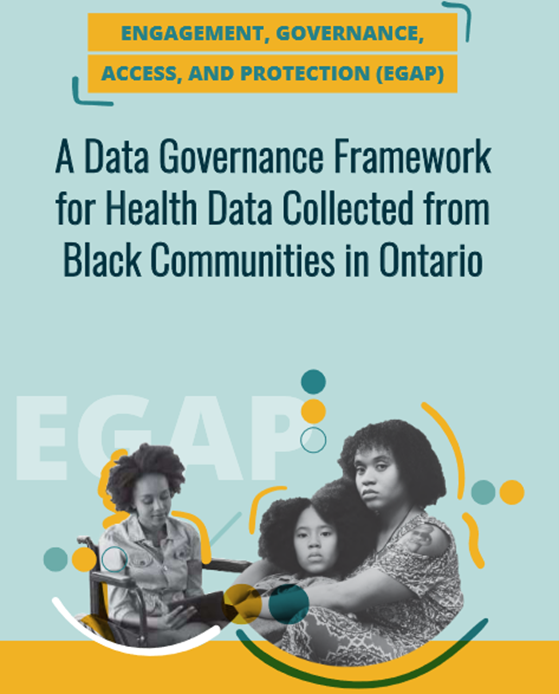
    The Black Health Equity Working Group has released the latest version of the Engagement, Governance, Access and Protection Framework (E-GAP), which is designed to guide the implementation of race and socio-demographic data collection strategies at the local and provincial levels in Ontario.

    • Download the report in English or French
    • Download the Consultation Summary Report in English or French

    You can contact the working group at info@blackhealthequity.ca


    Resources for injectable opioid agonist treatment
    Addictions and Mental Health Ontario (AMHO) has new resources to support increased access to injectable opioid agonist treatment (iOAT). iOAT is an evidence based and cost-effective medical intervention that is recommended for people with severe opioid dependence who have not responded to oral opioid agonist treatment or for whom oral opioid agonist treatment is not appropriate. More information and resources are here.


    Team-based primary care improved health behaviors among patients with multimorbidity
    Recently published in The Annals of Family Medicine, this research highlighted results when health care professionals (nurses, nutritionists, kinesiologists) were trained to deliver patient-centered intervention based on a motivational approach and self-management support. Read more here.


    Insulin therapy and managing At-Risk Drinking and Alcohol Use Disorder (AUD) during COVID-19

    Centre for Effective Practice recently launched new tools:


    Respiratory Care During COVID-19: What Have We Learned One Year Later, April 21, 2021

    Reflect on best practices & considerations for diagnosing and managing lung diseases during the pandemic. Co-hosted with the Lung Health Foundation
    Find out more here.


    Project ECHO (UHN), Starting April 2021
    Join ECHO Ontario (UHN) for their newly released programs starting this spring.
    For more information:

    To register, click here.


    COVID-19 CoP: Vaccination in primary care, evolving vaccine evidence, and more, April 23, 2021
    The OCFP & University of Toronto DFCM will be discussing evolving vaccine evidence and experience delivering vaccines as part of primary care pilots.
    Learn more here.


    Primary Care Vaccine QI Support Group Webinar Series, April 22- May 13, 2021

    Join Ontario Health to learn valuable lessons from pilot sites, gain access to resources, information and quality improvement tips to assist you in moving forward with your vaccine plans.

    Register here


    A Deep Dive into Co-Designing Care Models for your Priority Populations, May 6, 2021
    The RISE OHT webcasts will show how your OHT can re-design care for patients in your priority populations, and help every patient in those populations experience coordinated transitions between providers.
    Learn more here.

  • Bits & Pieces: respiratory care during COVID-19, Stay-at-Home order and more

    Bits & Pieces: respiratory care during COVID-19, Stay-at-Home order and more

    Your Weekly News & Updates


    In This Issue  
    • Respiratory care during COVID-19: what have we learned one year later, Apr. 21
    • Ontario needs a Stay-at-Home order
    • Member stories
    • Lessons learned from KFLA Moderna community vaccination clinics and more
    • UpToDate discount reminder
    • Evaluation and performance improvement for OHTs CoP and webinar
    • Upcoming events including improving the population health of people at risk or living with diabetic foot complications and more


    Respiratory care during COVID-19: what have we learned one year later, Apr. 21

    The COVID-19 pandemic has required healthcare professionals to change the way care is delivered and has allowed for the development of innovative practices and partnerships for the continued provision of quality care.

    On April 21 this webinar, co-hosted with the Lung Health Foundation, will highlight practice changes and considerations for the diagnosis and management of chronic lung diseases such as COPD. This includes highlighting the challenges of respiratory diagnostics such as spirometry testing and policies and changes that were needed to provide a safe testing environment.

    Find out more and register here.


    Ontario needs a Stay-at-Home order

    Ontario needs a Stay-at-Home order, community vaccination plans, and paid sick leave for ALL workers to stop spread of COVID-19 variants, reduce the burden on health care.

    Today the Primary Care Collaborative (PCC) issued a statement urging the government to do more to suppress the transmission of COVID-19, including these 5 vital actions:

    1. Move the province from a shutdown to a stay-at-home order
    2. Ensure vaccines are reaching those who are most at risk for infection and who need them the most
    3. Prioritize vaccination of teachers, educators and school staff
    4. Create a broad education and communications campaign to address vaccine hesitancy
    5. Implement paid sick leave for all essential workers now.

    Read the full statement here.


    Member stories

    Dr. Allan Grill on CTV

    Markham FHTour president and chair Dr. Allan Grill on CTV on protecting schools from outbreaks and more

    Multiple members- our Twitter thread highlighting members’ vaccine efforts. One tweet already has nearly 20,000 views!


    Lessons learned from KFLA Moderna community vaccination clinics and more

    Recent updates include:

    We continue to update several pages on our site with resources and news:


    UpToDate discount reminder

    Thanks to our partnership with Wolters Kluwer, AFHTO members have access to special benefits on UpToDate®. Physicians, residents, NPs, pharmacists, and PAs are all eligible.  For more details, please contact your ED or Admin Lead.

    EDs and Admin Leads, if you have any questions, please email us at info@afhto.ca.


    Evaluation and performance improvement for OHTs CoP and webinar

    HSPN is hosting a new community for those working on evaluation and performance improvement in OHTs. You can join here.

    The next OHT Evaluation Webinar will be OHT Improvement Measures for Focus Populations on April 27. Register here


    Your role in improving the population health of people at risk or living with diabetic foot complications, April 15, 2021
    Co-hosted with Wounds Canada, this interactive webinar will provide an overview of your role to improve the population health of people at risk or living with diabetic foot complications across the full continuum of care settings to improve patient experience, outcomes and costs. Register here.


    Together We Care Virtual Conference, April 20-22, 2021
    Join the OLTCA & ORCA as they connect the LTC and retirement community sector to help shape the future of senior’s care.
    Find out more here.


    Building vaccine confidence in the Black community, evolving guidance, and more, Apr. 9, 2021

    The OCFP’s COVID-19 COP will focus on building vaccine confidence in the Black community.
    Find out more here.


    A Deep Dive into Co-Designing Care Models for your Priority Populations, May 6, 2021
    The RISE OHT webcasts will show how your OHT can re-design care for patients in your priority populations, and help every patient in those populations experience coordinated transitions between providers.
    Learn more here.

  • Ontario needs a Stay-at-Home order

    Ontario needs a Stay-at-Home order

    Primary Care Collaborative logos


    Ontario needs a Stay-at-Home order, community vaccination plans, and paid sick leave for ALL workers to stop spread of COVID-19 variants, reduce the burden on health care

    TORONTO – April 6, 2021 – Amid an alarming rise in COVID-19 cases and hospitalizations, the Primary Care Collaborative shares concerns expressed by the Ontario Hospital Association, Ontario Medical Association, Registered Nurses Association of Ontario and other health care providers that the province needs stronger measures to curb the growing spread of the virus. Ontario’s Science Table has confirmed how dangerous the variants of concerns are, including an increased risks of serious illness and death. As the number of cases and hospitalizations increase daily, it is vitally important that Ontario enforce stricter public health measures and roll out policy initiatives to curb the spread of these deadly variants of the COVID-19 virus.

    We implore the government to listen to Ontario’s experts and those front-line health care workers seeing the devastation of COVID-19 in hospitals and communities first-hand.

    Instead of an emergency brake, which does little to stop the spread, we need a full stop now to suppress transmission of the virus and preserve the tenuous capacity of our ICUs in hospitals. Now is the time to intensify all efforts and employ an equity-lens to protect those most vulnerable and at risk from the virus. That is the clearest path through the toughest part of this pandemic. To do so, we strongly support and urge the government to take the following vital actions:

    1. Move the province from a shutdown to a stay-at-home order with people only leaving their homes for medical/health appointments, essential grocery shopping, outdoor exercise and essential work;
    2. Ensure vaccines are reaching those who are most at risk for infection and who need them the most; we need to prioritize essential workers, those with limited mobility/homebound and others with approaches that will get more vaccines in arms (in their communities, in their workplaces, in their homes); employ community-based, tailored approaches that focus vaccination efforts on communities that have been disproportionately impacted by the pandemic;
    3. Prioritize vaccination of teachers, educators and school staff to ensure we have #SafeSchools – use the upcoming spring break to vaccinate the education sector;
    4. Create a broad education and communications campaign to address vaccine hesitancy, using culturally sensitive and straight-forward messages to encourage vaccine confidence and directly address myths and misinformation;   
    5. Implement paid sick leave for all essential workers now. This is essential to ensuring businesses that remain open, such as warehouses, retail and others, can remain open safely for all workers while offering curbside pick-up and continuing essential work.

    Family Physicians, Nurse Practitioners and primary care providers continue to educate, collaborate, communicate, vaccinate and support the people we serve. But like their acute and home care colleagues, getting a handle on cases that are out of control in the community is not within their grasp. We need government leadership to support our ongoing work to protect the health of everyone in Ontario, and we need it urgently, because many health care providers are at a breaking point and our health system’s sustainability is at risk. In order to provide even a glimmer of hope in combatting this wave, we need to employ stricter public health measures now and protect all the citizens of Ontario, especially those most vulnerable. 

    Media contact for interview requests, comments or inquiries:      
    Paula Myers
    Manager, Membership and Communications
    Association of Family Health Teams of Ontario
    Email: paula.myers@afhto.ca
    Phone: (647) 234-8605 extension 1200

    About the Primary Care Collaborative (PCC):
    We are a coalition of primary care organizations collectively representing 14,000 family doctors, 1,000+ primary care nurse practitioners, 286 primary care teams, 28 Indigenous primary care teams, including northern, rural, and remote teams. This alliance of comprehensive primary care organizations joined together by common purpose to build on the collaborative work during the COVID-19 pandemic as we move towards recovery in a time of health system transformation. The PCC provides a collective and cohesive voice with the purpose of advancing equitable person-centred primary care in Ontario and is focused on influencing policy by creating a unified voice towards resolving barriers or challenges that prevent comprehensive primary care from being the foundation of the health system.

    Relevant Links:

  • Bits & Pieces: oxygen saturation monitors for COVID@Home, Primary Care Collaborative and more

    Bits & Pieces: oxygen saturation monitors for COVID@Home, Primary Care Collaborative and more

    Your Weekly News & Updates


    In This Issue  
    • Oxygen saturation of COVID home monitoring
    • Announcing the Primary Care Collaborative
    • Your role in improving the population health of people at risk or living with diabetic foot complications
    • Member stories
    • Joint letter on vaccine dose intervals for indigenous populations
    • Patient-facing document updates, Gen. Hillier memo and more
    • Supporting older persons at home slides and video
    • Canada’s Volunteer Awards National Advisory Committee
    • AMS Healthcare research fellowships: provider mental health and wellbeing
    • Upcoming events including Building a Resilient Nonprofit Organization through Proactive Risk Management and more

    Oxygen saturation of COVID home monitoring

    COVID-19 pandemic has led to unexpected surges in demand on the provincial healthcare system, and healthcare settings across the province face patient capacity constraints, potentially affecting care for all patients. To help ease these constraints, Ontario Health is providing tools and resources for COVID@Home to help primary care providers who wish to remotely monitor people who have mild to moderate COVID-19 in the community.

    Oxygen saturation monitors are now available to be ordered by primary care physician offices and interprofessional primary care team offices through the provincial pandemic stockpile. Find out more about the initiative and how to order here.


    Announcing the Primary Care Collaborative

    COVID-19 shows the vital roles primary care providers play every day for community health and wellbeing and health system cooperation in Ontario.

    On March 29 we announced the launch of the Primary Care Collaborative with five other partners, including Alliance for Healthier Communities, IPHCC, NPLCA, OCFP and SGFP. Visit our site for the full release.

    Working more collaboratively together, we hope a unified primary care sector can help advance the important role that primary care will play towards recovery from this pandemic.


    Your role in improving the population health of people at risk or living with diabetic foot complications

    Co-hosted with Wounds Canada, this interactive webinar on April 15 will provide an overview of your role to improve the population health of people at risk or living with diabetic foot complications across the full continuum of care settings to improve patient experience, outcomes and costs.

    By the end of the webinar participants will:

    • Discuss prevention and management approaches based on risk stratification of people at risk or living with diabetic foot complications
    • Explore ways to leverage telehealth / virtual care assessments to support patients at risk or living with diabetic foot complications
    • Leverage Wounds Canada resources to optimize your practice

    Register here.


    Member stories
    Bancroft FHTBancroft FHT vaccinates over 1000 people from COVID-19

    Central Lambton and Rapids FHTsFamily doctors join vaccine rollout in Sarnia-Lambton

    Georgian Bay FHTvideo tour of the Collingwood and Wasaga drive-thru vaccine clinics

    Queen Square FHTOntario family physicians seek clarity on when they can administer COVID-19 vaccines in office


    Joint letter on vaccine dose intervals for indigenous populations
    On March 26 we sent a joint letter to Premier Ford and Minister Elliott on changes to the vaccine dosing schedule for Indigenous populations.

    “We are standing in solidarity with the Indigenous Primary Health Care Council and asking that, at bare minimum, those Indigenous people living in urban areas who’ve already received their first doses of vaccines be grandfathered in, and permitted to receive their second doses within 21-28 days. This allows for continuity of care, and confidence in this process and the vaccine itself.”

    Read the full letter on our site.


    Patient-facing document updates, Gen. Hillier memo and more

    Recent updates include:

    We continue to update several pages on our site with resources and news:


    Supporting older persons at home title screenshot

    Supporting older persons at home slides and video

    On Mar. 25 Provincial Geriatrics Leadership Ontario discussed how to better support older persons in the community using lessons learned during the first year of the COVID-19 pandemic. Slides and video are now available.


    Canada’s Volunteer Awards National Advisory Committee
    Canada’s Volunteer Awards (CVA) will be accepting applications for the CVA National Advisory Committee (NAC) until April 8. Members of the National Advisory Committee play a leading role in the selection of Canada’s Volunteer Awards recipients by reviewing nominations and making recommendations to the Minister of Families, Children and Social Development. They will also support the promotion of the program throughout their term. To apply visit their site.


    AMS Healthcare research fellowships: provider mental health and wellbeing

    AMS Healthcare is offering one-year fellowships of up to $75,000 to early and mid-career academic researchers and scholars and academically trained regulated health care professionals to study and develop expertise/competence in the impact of digital technology/artificial intelligence on compassionate care. Some projects will have an additional focus on the wellbeing and mental health of healthcare providers, patients and caregivers to address the challenges of living and working through the COVID-19 pandemic. Letter of intent due Apr. 7. Visit their site for details.


    Foundations to QI (IDEAS) Program e-Learning Course, Mar. 31 & Apr. 1, 2021
    E-QIP is holding this comprehensive introductory QI course designed for the community mental health sector. You’ll be well versed in a common language and approach to QI with the aim of improving client care, experience and outcomes after this course.
    Find out more here.


    ECHO Managing COVID-19 in Primary Care, Starting Apr. 13, 2021
    UHN’s ECHO series is back- now with 12 parts. Join other primary care providers in this interactive online program.
    Find out more here.


    Building a Resilient Nonprofit Organization through Proactive Risk Management, Apr. 22, 2021
    Charity Village webinar with Risk Management Consultants Lilli Chiu and Isaac Monson from HUB International and insights on how to navigate uncertainty and prepare for the unexpected. Register here.


    Excellence through Quality Improvement (E-QIP) Conference, Apr. 13, 2021
    Hosted by CMHA Ontario, this one-day virtual conference is being offered for FREE.
    Visit their site.

  • Joint Letter on Vaccine dose intervals for Indigenous populations

    To:    Premier Doug Ford
    Christine Elliott, Deputy Premier, Minster of Health

    Cc:    Dr. Dirk Huyer, Coordinator, Provincial Outbreak Response
    Greg Rickford, Minister of Indigenous Affairs
    Dr. David Williams, Chief Medical Officer of Health (MOH)

    Re: Changes to dosing schedule for COVID-19 Vaccine Distribution to Urban Indigenous populations

    March 26, 2021

    Dear Premier Ford and Minister Elliott,

    We write to you today, urgently, with regards to the announcement made on March 18, 2021 that, while on-reserve First Nations people will receive their second vaccine doses within 21-28 days, those living in urban areas will have to wait up to four months for their second doses.

    Indigenous adults were prioritized within the vaccine framework with good reason; due to historical health barriers linked to colonialism and continued pervasive anti-Indigenous racism, Indigenous people living everywhere in Ontario – on reserve and in urban areas – face health vulnerabilities that others living in Ontario do not. For those living in urban areas, this includes higher rates of homelessness and transient housing, overcrowded housing, and poor health status, among other factors. In addition, there are still many Indigenous people living in urban areas who have yet to receive their first shots. This sudden change to the priority of Indigenous people undercuts the confidence and trust in the vaccines themselves, and in the system that is distributing them, as well as the providers tasked with reaching marginalized Indigenous people. This is, simply put, unacceptable, and frankly avoidable.

    We are standing in solidarity with the Indigenous Primary Health Care Council and asking that, at bare minimum, those Indigenous people living in urban areas who’ve already received their first doses of vaccines be grandfathered in, and permitted to receive their second doses within 21-28 days. This allows for continuity of care, and confidence in this process and the vaccine itself.

    Premier, Minister, there is already mistrust mounting in Indigenous communities because of this confusion. There are different approaches being taken across Public Health Units, further adding to the potential for miscommunication and misinterpreted guidance. These moments risk seeing the spread of COVID-19 into First Nations communities, and creating more challenges for all. Urban Indigenous vaccine strategies must be delivered consistently across the province to avoid these ambiguities and variances in the delivery of COVID-19 care for the Indigenous population.
     
    As many Alliance members serve urban Indigenous populations across the province, alongside the members of the Indigenous Primary Health Care Council, we look forward to working with you to ensure that the clearest possible plan and strategies can be enabled to ensure the safety of all Indigenous communities in the province.

    Sincerely,

    Sarah Hobbs, CEO, Alliance for Healthier Communities
    Kavita Mehta, CEO, Association of Family Health Teams of Ontario Leanne Clarke, CEO, Ontario College of Family Physicians

    cc.:
    Shawn Batise, Deputy Minister, Indigenous Affairs
    Nadia Surani, Acting Director, Primary Care Branch, Ministry of Health

    See the pdf version here.

  • Bits & Pieces: community investment grants, free legal services and more

    Bits & Pieces: community investment grants, free legal services and more

    Your Weekly News & Updates


    In This Issue  
    • CIRA community investment grants
    • Happy Nutrition Month
    • Members’ stories
    • Family Justice Centre -free legal services
    • AstraZeneca COVID-19 vaccine & thromboembolic events, MOH updates and more
    • COVID-19 support available for isolated seniors and people with physical disabilities
    • OMA burnout survey
    • White papers on population health management and population segmentation
    • Upcoming events including supporting older persons at home and more


    CIRA community investment grants

    AFHTO members and/or their partners may be eligible for Canadian Internet Registration Authority (CIRA)’s Community Investment Program grants.

    Applications for more than $1 million in grants for Canadian internet projects are now open. They’re looking for not-for-profits, charities, and researchers with projects to improve Canada’s internet – with a special focus on students and northern, rural, and Indigenous communities. Learn more on how to apply. Deadline is April 14.


    Nutrition month 2021 -colourful pics of people and food


    Happy Nutrition Month

    March is Nutrition Month, and tomorrow is Dietitian’s Day. We appreciate our registered dietitians and their ongoing commitment to teamwork and helping patients #FindYourHealthy!


    Members’ stories

    Elliot Lake FHT Elliot Lake Health Team plans first mass vaccination clinic this week

    Grandview Medical Centre & Two Rivers FHTsVaccination clinic now open at Langs in Cambridge

    Guelph FHT Guelph FHT to operate 2 new vaccination clinics


    Infographic- English

    Family Justice Centre -free legal services

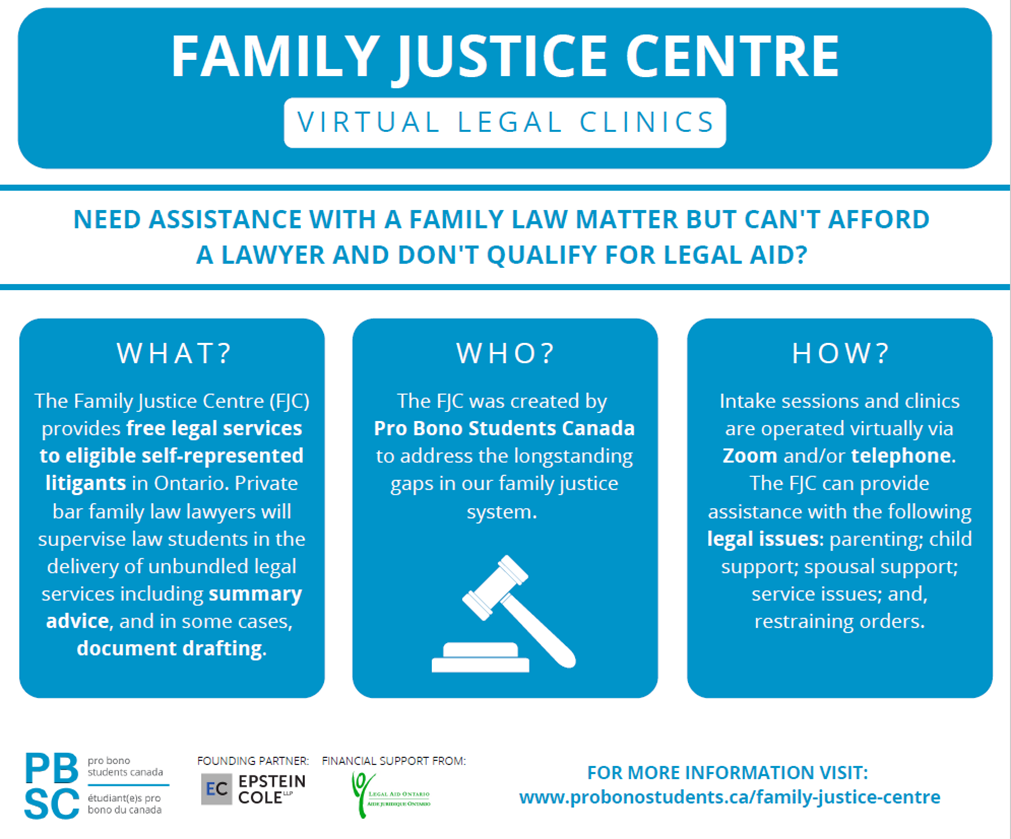
    There is a substantial and long-standing disparity in the ability of Ontarians to access the family justice system. In some jurisdictions, upwards of 80% of litigants begin their court cases self-represented. The inequity in access has been exacerbated by the COVID-19 pandemic, and the backlogs caused by court closures and the inability of people to pay for legal services due to job and/or income loss.
     
    Pro Bono Students Canada (PBSC) recently launched Family Justice Centre (FJC) to bridge this gap.

    Through the creation of public legal education resources and regularly held virtual legal clinics, family lawyers in private practice and law students provide FREE unbundled legal services (summary advice, document preparation, legal education, and legal coaching) to individuals who are unable to afford a lawyer. Learn more by visiting their website.


    AstraZeneca COVID-19 vaccine & thromboembolic events, MOH updates and more

    Recent updates include:

    We continue to update several pages on our site with resources and news:


    know a senior?

    COVID-19 support available for isolated seniors and people with physical disabilities

    Do you know an isolated, low income senior or person living with a physical disability, without family or community support, who needs help getting essentials during the current COVID-19 pandemic?  
    The Ontario Community Support program helps those in need get meals, groceries, medicine, and other essentials delivered through Meals on Wheels so that they can safely isolate at home. Service is available through March 2022.

    To identify a local community provider and request service, visit their site or dial 211 or 1-877-330-3213 (toll free). TTY service is also available at 1-888-340-1001.


    OMA burnout survey

    The OMA has relaunched its burnout survey to understand the impact of COVID-19 on physician burnout. The results will be compared to findings from the burnout survey completed in March 2020 to assess the impact of the pandemic on burnout over the past year. You can complete the survey here.


    White papers on population health management and population segmentation

    Health System Performance Network (HSPN)’s three supporting white papers on population health management and population segmentation are now available on their site.

    They will hosting their next webinar on OHT Improvement Measures from Health Administrative Data: Where are OHTs Starting From? on March 23 from 12:00 to 1:30 p.m. Click here to register.


    Supporting Older Persons at Home – Learning and Collaboration During the COVID-19 Pandemic and Beyond, Mar. 25, 2021

    Cohosted with Provincial Geriatrics Leadership Ontario, join us for a discussion on how to better support older persons in the community using lessons learned during the first year of the COVID-19 pandemic. Register here.


    Primary Care and the Digital Health Revolution, Mar. 17, 2021

    The University of Toronto’s webinar, hosted by the Sandra Rotman Centre for Health Sector Strategy, will cover the digital revolution in primary care, and how providers and patients are changing in response to it.
    Learn more here.


    Wise Practices for COVID Vaccinators, Mar. 23, 2021
    Learn how to actively design and deliver vaccination services to support high quality, safe experiences for Indigenous patients. You’ll walk away with wise practices & strategies for working in a culturally safe & respectful way.
    Find out more here.


    The COVID-19 vaccine: An interactive panel discussion, Mar. 18, 2021
    DFCM City Wide Research Rounds from 4:30-6:30 p.m. Join on Zoom.


    Lessons from vaccine pilots, evolving guidance, and more, Mar 26, 2021
    The COVID-19 CoP, held by the OCFP and the University of Toronto DFCM, will be discussing lessons learned and new guidance around COVID-19 vaccines and rollout.
    Learn more here.


    Workplace investigation training course
    Training managers and/or HR people to conduct internal investigations by McDonald HR Law and Noxon Workplace Investigation. Learn more here.

  • Joint Letter on Ensuring Equity in Ontario’s Vaccination Campaign

    March 1, 2021

    To: Premier Doug Ford
    Christine Elliott, Deputy Premier, Minister of Health

    Cc: General (Ret.) Rick Hillier, COVID-19 Vaccine Distribution Task Force
    Dr. Dirk Huyer, Coordinator, Provincial Outbreak Response
    Dr. David Williams, Chief Medical Officer of Health
    Alison Blair, Associate Deputy Minister, Pandemic Response and Recovery
    Patrick Dicerni, Assistant Deputy Minister
    Nadia Surani, Acting Director, Primary Care Branch
    Loretta Ryan, Executive Director, Association of Local Public Health Agencies

    Re: Ensuring Equity in Ontario’s Vaccination Campaign

    Dear Premier Ford and Minister Elliott,

    We are writing today as your partners in Ontario’s vaccination rollout plan. We have appreciated the opportunity to consult with the vaccine task force regularly over the last several months, and the recent meetings with Ret. General Hillier. We are encouraged by the leadership role of Public Health Units in the vaccine rollout, and know that health equity is a key consideration in General Hillier’s communications and in regional plans to ensure an efficient, equitable access to COVID-19 vaccines. Our health professionals and teams stand ready to support #TeamVaccine in Ontario.

    As has been seen and talked about for some time among public health units, in media stories, and among community providers at the front lines of testing and community supports, COVID-19’s effects have not been felt equally in Ontario. We know that communities who’ve seen the highest rates of infections during the pandemic, the highest impacts on health and wellbeing, have been communities already marginalized before the pandemic hit, and for whom health and social services can be more difficult to access. We also know that it’s many of these people who will have difficulty accessing online or phone system booking, are home bound, or are otherwise hesitant or unable to visit mass vaccination clinics or pharmacies. Premier and Minister, we believe it is critical to have a plan to ensure that the people facing the most barriers and risks due to COVID-19 are given particular attention in vaccine plans.

    The good news is that throughout the pandemic, community health leaders and their partners have worked hard to build lines of trust, and to work with other community leaders, local ambassadors and others to ensure that their services, including testing and isolation supports, could reach people marginalized due to a variety of factors.

    From the experience of implementing COVID-19 testing, we know that one-size-fit-all mass vaccination clinics, even if accessibly located within priority neighbourhoods, will not be effective by themselves. Mobile testing clinics that deliver testing to the door, and smaller testing sites located in trusted community spaces, performed by trusted organizations, have been the keys to success. These lessons can be applied to ensure a successful and equitable rollout of the COVID-19 vaccination campaign.

    Premier and Minister, we ask for your leadership in supporting all Public Health Units across Ontario to work with primary care to include and implement the following in the regional vaccination rollout:

    1. A comprehensive, multilingual, and culturally safe approach to addressing vaccine hesitancy and building vaccine confidence in communities where distrust and marginalization, as well as language and social barriers can play a role in vaccine uptake, by partnering with and resourcing community organizations that have existing lines with trust and have already been supporting COVID-19 response in these priority neighbourhoods. This might mean flyers in building lobbies, door-to-door visits, local language radios, leveraging faith leaders, and other high touch strategies that have already been used during testing and isolation campaigns in the hardest hit communities.
    2. A multi-pronged approach that builds access to the vaccine into existing partnerships, mobile units, community testing sites, and pop-up community campaigns with priority populations. This may include innovative solutions that were successful for testing, such as repurposing public buses to set up vaccination clinics outside of seniors’ residences, social housing, and isolated areas within the hardest hit postal codes.
    3. Collection, review, and reporting of race-based and socio-demographic data as the rollout takes place across marginalized communities to ensure that the people who are at the highest risk are being helped first by the vaccine, and to prevent future outbreaks. This type of collection and reporting will enable healthcare and community providers to know which of their clients require additional outreach immediately, and inform a more just and equitable system going forward.

    We have come this far together, building on the strength of individual, tailored community outreach and supports to help reduce the risk of further outbreaks in the hardest hit areas of Ontario’s most marginalized communities. To get Ontario back on its feet, and begin the recovery we all so desperately want to see, we have to start with those who’ve been pushed the furthest down by this pandemic. Mass vaccination sites alone, however well placed or advertised using social media and traditional advertising buys will only take us so far.

    We have to help those at the greatest risk through community approaches that have proven to be successful. We have seen in other jurisdictions, particularly in the United States, that without a coordinated plan to reach the hardest hit communities, vaccination rates in postal codes with the highest number of outbreaks are often the ones with the lowest vaccination rates. We have a chance to write a different story here in Ontario. Together, we can do it.

    Sincerely,
    Sarah Hobbs, CEO, Alliance for Healthier Communities
    Kavita Mehta, CEO, Association of Family Health Teams of Ontario
    Dana Cooper, Executive Director, Nurse Practitioners Association of Ontario
    Jennifer Clement, CEO, Nurse Practitioner-Led Clinic Association
    Leanne Clark, CEO, Ontario College of Family Physicians
    Anthony Dale, CEO, Ontario Hospital Association
    Dr. Samantha Hill, President, Ontario Medical Association
    Dr. Alykhan Abdulla, Chair, Section on General and Family Practice, Ontario Medical Association

    See the pdf version here.

  • Bits & Pieces: vaccine learnings webinar, 2021 conference and more

    Bits & Pieces: vaccine learnings webinar, 2021 conference and more

    Your Weekly News & Updates


    In This Issue  
    • Learnings from primary care: Vaccine roll-out across Ontario
    • Urgent reminder- Supply Ontario needs primary care voices
    • AFHTO 2021 Conference: tell us what YOU want, what you really, really want
    • Black Health Matters: Building a primary health care system that works
    • Prescribing nature: PaRx launches in Ontario
    • Updated provincial testing guidance, workflow, COVID-19 educational series x 2 and more
    • Member stories
    • Primary care virtual groups slides and video available
    • Humber College Healthcare Management student placements
    • Upcoming events including engaging caregivers, cybersecurity and more

    Learnings from primary care: Vaccine roll-out across Ontario

    Please join us this Friday, February 26, from 1 – 2:30 p.m. to hear from teams who have stepped up to provide leadership for vaccine distribution in their communities. They will speak to work that is underway; offer guidance and advice; speak to challenges faced and how they are resolving them; and answer questions you may have.
     

    Speakers:

    • Jill Berridge (ED, McMaster FHT)
    • Robin Mackie (ED, Delhi FHT)
    • Teri Arany (ED, Toronto Western FHT) and Camille Lemieux (Lead Physician, Toronto Western FHT)
    • Michèle Lajeunesse (Community Health Promotion Coordinator, Marathon FHT)

    Ministry of Health officials, including Daniel Warshafsky (Senior Medical Consultant, Office of the Chief Medical Officer of Health) and Nadia Surani (Director, Primary Health Care Branch), will be on a portion of the webcast to provide an update on vaccine roll-out and to take questions. Register now.


    Urgent reminder- Supply Ontario needs primary care voices

    Supply Ontario is a single integrated supply chain across the public sector that will leverage the province’s purchasing power to provide greater value and consistent access to high-quality products and services.

    They need your input to help identify opportunities to improve the value they can deliver for your organization and patients, through better supply chain processes. Deadline now March 9.


    AFHTO 2021 Conference: tell us what YOU want, what you really, really want

    It’s the last week of February and we’re starting to plan this year’s conference. We’re going virtual again and although we haven’t set a date yet, the earliest would be some time in October. Now that we’ve tried it once, we’d like to make the next better for you- more streamlined and focused on your needs.

    We need your help. What do you want to hear more about and how would you like it?Tell us in this really quick survey. Deadline now March 9

    Note: Yes, we made a Spice Girls reference. If you’d like a trip down memory lane or a dance break (we hear looking away from your screen occasionally is good for you) click here.


    Black Health Matters: Building a primary health care system that works

    BHM panel 2020

    In recognition of Black History Month, we offer this session from our 2020 conference (video link below). Anti-Black racism was already a pre-COVID pandemic, with its roots in history. What does this mean for primary care? For this session there was:

    • An overall focus on Black people’s experience with healthcare in Ontario
    • Context for this at the system/ policy level- including the ways in which seemingly neutral instruments and tools feed an anti-Black narrative
    • Replicable programs addressing these issues as carried out by Black health leaders
    • What primary care teams can do

    Watch the video


    Prescribing nature: PaRx launches in Ontario

    2 people walking through fall foliage

    Nature prescriptions were named one of the top 8 global wellness trends in 2019. And it’s no surprise—research shows that kids and adults who spend more time in nature are happier and healthier. Starting with a BC launch in November 2020 to significant media attention (The Globe & Mail, CBC), PaRx is breaking ground as Canada’s first national, evidence-based nature prescription program.  
     
    On February 22nd PaRx officially launched in Ontario. Featuring practical resources like quick tips and patient handouts, its goal is to make prescribing time in nature simple, fun and effective.

    As part of the Ontario launch, and out of gratitude to health-care workers, the BC Parks Foundation is offering free remote nature therapy sessions led by certified nature therapy guides to all prescribers in March so they can experience the stress-relieving benefits of nature themselves.
     
    Check out www.parkprescriptions.ca for more information on nature prescriptions and to register to become a prescriber.


    Member stories

    Guelph FHT – 98 doctors write letter encouraging community to get vaccinated

    Markham FHT – AFHTO president and Markham FHT Lead MD Dr. Allan Grill on vaccine rollout to 80+ with CP24 and Global News

    Six Nations of the Grand River FHT- Six Nations band members can soon preregister for COVID-19 vaccine


    Updated provincial testing guidance, workflow, COVID-19 educational series x 2 and more

    Recent updates include:

    We continue to update several pages on our site with resources and news:


    Transitiong to virtual title slide screenshot

    Primary care virtual groups slides and video available

    On Feb. 17 we hosted the webinar Primary Care Virtual Groups – Transitioning a CBT Program & Cardio-Pulmonary Rehab Program to Virtual with Arnprior and District FHT and Scarborough Academic FHT. Video and slides are now available. 


    Humber College Healthcare Management student placements

    The Honours Degree, Healthcare Management Bachelor of Commerce program takes the best of business management practices – business law, marketing, microeconomics, financial management, and business research methods- then add the edges: an in-depth study of healthcare issues and systems. Key courses including Population Health, Health Data and Analysis, Health Economics Health Policy and Evaluation and Healthcare Financial Management.    
     
    This program equips third year students with the skills required to contribute to your organization with good understanding of the best management practices through the Healthcare Management lens. Additional key courses include Health Informatics, Healthcare Strategy and Markets, Healthcare Systems and Health Services Organization and Management. See their flyer.


    Engaging and supporting caregivers in primary care teams: working together to improve outcomes and enhance the patient, caregiver, and family experience, Feb. 25, 2021

    Cohosted with Ontario Caregiver Organization, this webinar will highlight resources and opportunities for teams to support and engage caregivers.

    Register today.


    Saegis Cybersecurity Clinic Update 2021, Mar. 4, 2021
    Cohosted with Saegis, this webinar discusses the top security threats facing your team and explores best practices to decrease the risk of breaches in the clinic setting. Learn more here.


    Atopic dermatitis seminar for healthcare professionals, Mar. 1, 2021

    The Eczema Society of Canada and University of Ottawa is hosting this webinar aimed towards primary care providers.
    Find out more here.


    Personal Resilience for Hospice Palliative Care, Mar. 3, 2021
    Learn how to enhance personal resilience during even the most challenging times.
    Find out more here.


    Advancing Excellence in Transgender Health, Mar. 4, 2021
    The aim of this conference is to bridge this gap and provide information and resources to better equip Nurse Practitioners providing care to Gender Diverse individuals. The highlight is hearing the patient perspective. Find out more.