Tag: members in the media

  • Chatham-Kent’s Physician Recruitment and Retention Task Force to bring more doctors to the area

    The Blackburn News article published November 5, 2019

    By Allanah Wills, Blackburn News

    The Municipality of Chatham-Kent is moving forward with a new Physician Recruitment and Retention Task Force aimed at bringing more doctors to the area.

    On Monday night, council unanimously approved a report that detailed the task force and its initiatives. The program will look at various ways to attract physicians to Chatham-Kent and keep them here including attending family doctor job fairs, enhancing advertising practices and providing financial incentives to new physicians to cover their moving expenses and setup costs.

    In December 2018, Councillor Trevor Thompson brought forward a motion requesting that administrative staff prepare the report looking at a primary care practitioner recruitment and retention program for Chatham-Kent. Almost a year later, Thompson said it feels good to see all the hard work come to fruition.

    “It was a lot of work,” he said. “It took a little bit longer than I was actually hoping for, I would have liked to have seen it back about six months ago. But at the same time, staff did a lot of work to get us to this point and I think really found a good balance.”

    A total of $100,000 towards the Physician Recruitment and Retention Task Force was approved in the 2019 budget and the project will start in 2020. The Chatham-Kent Family Health Team (CK FHT) will look after and distribute the funds on behalf of the other medical groups (Chatham-Kent Family Health Team, Thamesview Family Health Team, Tilbury District Family Health Team, CK Community Health Centres, and the Chatham-Kent Health Alliance) with resource support from the Erie St. Clair LHIN, HealthForce Ontario and the municipality.

    “As soon as we approved the $100,000 there were questions about where does it go to, who does it help? What I wanted to make sure of is that we weren’t just offsetting somebody else’s budget,” Thompson explained. “But, this was new money for a new initiative. [I’m] really happy to see this campaign promise come through, really happy to be addressing a crisis in our community.”

    When Thompson brought forward his original motion in 2018, Chatham-Kent’s rate of family doctors was 76.9 per 100,000 population against the provincial average of 109.4 per 100,000. The report approved by council on Monday recommended that only running the task force for 2020 was not enough to address the chronic doctor shortage and suggested that ongoing funding for the program be referred to the 2021 budget process as well. Thompson said he was pleased to see this option approved.

    “At the time it was one-time funding — $100,000 and from there, who knows what happens. One time isn’t going to bring it, it has to be an ongoing funding request. I’m glad to see that come back again,” he said.

    Now that it’s been given the green light to move forward, the task force will provide council with bi-annual updates on what’s been accomplished and any future initiative plans. Thompson said overall, he believes this is an important step in the right direction.

    “The health of our residents is the economic and the demographic lifeblood of our community,” he exclaimed. “Making this a happier healthier place to live is one of the most important things we can do as Chatham-Kent councillors.”

    To view the full The Blackburn news article, click here.

  • Ingersoll NPLC and other Nurse practitioners filling health-care gaps, despite lack of funding

    CTV News article published October 26, 2019

    By Avis Favaro, CTV National News and Elizabeth St. PhilipCTV News

    TORONTO — Amid doctor shortages across the country, nurse practitioners have been filling in the health-care gap in many communities, helping to diagnose and treat patients who don’t have access to a family physician.

    But despite growing demand, many clinics can’t get adequate funding to employ enough nurse practitioners (NPs). The issue is evident in communities such as Ingersoll, a rural southwestern Ontario town where many residents often experience long waits for primary care.

    Among the approximately 110,000 people who live in Oxford County, which includes Ingersoll, Elizabeth Wilson considers herself fortunate. Unlike many people in the region who don’t have a family physician, she gets regular and timely care thanks to nurse practitioner Adrienne Bienot.

    Sue Tobin, a nurse practitioner and clinical director in Ingersoll, Ont., meets with physician consultant Dr. Rob Hiemstra.

    NPs are registered nurses with advanced education and training that allows them to diagnose and treat minor illnesses and injuries, screen for the presence of chronic disease and monitor patients with stable conditions.

    “It’s just like going to the doctor…it’s the same to me,” Wilson told CTV News. Even better, she said, is that the nurse practitioner has the time to listen and discuss her problems.

    There are four nurse practitioners at the Ingersoll Nurse Practitioner-Led Clinic, handling more than 2,100 patients. The clinic, which also houses support services such as social workers and mental health counsellors, looks just like a doctor’s office. On the desk in the front office, there are hundreds of applications from people who want to join the clinic as registered patients.

    Like many rural communities across Canada, Ingersoll has seen a number of its doctors retire or die. And while some new ones have been recruited, there aren’t enough physicians to meet the demand.

    Almost a quarter of the doctors in Ingersoll are over the age of 60, and there is only one walk-in clinic. But while other provinces are expanding NP services, Ontario — which has the largest number of nurse practitioner-led clinics in the country — is not funding new NP positions.

    The Nurse Practitioners Association of Ontario said it spoke with 10 NP-led clinics across the province, and found that funding for all of them has been reduced by between three and 10 per cent, with no new funding on the horizon. Only three of the clinics are accepting new patients and five clinics stated that their general practitioners are retiring, but they are not aware of any replacements.

    “We are really hopeful that the ministry is going to see that we have a situation here, that we would like to provide services for these patients,” Ingersoll nurse practitioner Sue Tobin told CTV News. “We have 3,000 that already don’t have a primary care provider, and expect to have about another 3,000 or possibly more who will lose their primary care provider in the next few months.”

    “We could easily hire four to five nurse practitioners and help take care of the situation here,” Tobin added.

    About a quarter of the patients who walk through the ER doors at the Alexandra Hospital in Ingersoll — just down the road form the Nurse Practitioner-Led Clinic — are people who don’t have access to a family doctor or an NP, often referred to as “orphaned” patients.

    “They’re coming in with a rash, an ingrown toenail, sore throat….We will see anyone, but I think if those people have a different avenue to pursue then maybe we will see less of those visits,” said Dr. Max Rachinsky, a physician at the hospital who said that for such patients, ER visits are a last resort.

    “Any solution that would help patients that are orphaned, or patients that don’t have access to primary care, should inevitably reduce some of the volume and maybe some of the pressure and strain that we’re facing in emergency,” he said.

    However, the growing role of nurse practitioners hasn’t always been well-received in Ontario, with some physicians suggesting that NPs don’t provide the same level of care.

    “I don’t think that opinion is well-founded, however, because the nurse practitioners do an excellent job,” said Dr. Rob Hiemstra, a physician consultant at the NP-led clinic in Ingersoll.

    Hiemstra is more than happy to work with NPs at the local hospital and he consults at the clinic once a week on more complex cases. His view is that NP-led clinics are a win for the patients.

    “They get extra attention with longer visits and more spectrum of care, whereas many family doctors are tight for time,” he said. “I think there is a role for more nurse practitioners in clinics such as this one.”

    The Nurse Practitioners Association of Ontario said research shows that NP-led care can be more cost effective, with the average annual cost per patient between $500 and $700. Doctor-led care costs can be as low as $200 or as high as $12,000 per patient, per year, the association said.

    The Ingersoll NP-led clinic also offers a wider range of hours and makes room for same-day or next-day appointments, ready to help more patients who don’t have a family doctor.

    To view the full CTV News article, click here.

  • Dufferin Area FHT and other local agencies to benefit from overhaul of Ontario’s health care bureaucracy

    The Orangeville Citizen article published October 21, 2019

    By Mike Baker, Orangeville Citizen

    Eight months on from the Ford government’s announcement of plans to overhaul Ontario’s health care system, service providers in Dufferin-Caledon feel our community is “well placed” to become one of the provincial leaders in the new movement. 

    In this first instalment of a three-part series, the Citizen is taking an in-depth look into how the government’s plans to dissolve more than a dozen specialized provincial health care agencies, while establishing between 30 and 50 localized Ontario Health Teams, will impact services in Dufferin-Caledon.

    “As far as we are concerned, this is a good thing. It’s a positive move,” said Stacey Daub, who, until last Wednesday (Oct. 9) was the President and CEO at Headwaters Health Care Centre, and co-chair of the Hills of Headwaters Collaborative (HOHC). She has vacated her position at the local hospital to take on a new challenge at a health care facility closer to her Toronto-area home. 

    The reason for this story dates back to Feb. 26, when Health Minister Christine Elliott announced plans to develop a new super-agency called Ontario Health, which would effectively consolidate the 14 Local Health Integration Networks (LHINs) operating across the province, as well as other provincial agencies such as Cancer Care Ontario, eHealth Ontario and Trillium Gift of Life Network. While Ms. Elliott stressed at the time that this move “is not a financial exercise”, it is expected to save approximately $200 million annually by 2021. 

    As a part of this reconstruction, the provincial government wants to build as many as 50 Ontario Health Teams – local organizations that will encourage hospitals, long-term care facilities, home-care agencies and other health service providers to form integrated care entities. 

    Back in July, it was revealed that the Hills of Headwaters Collaborative was one of 31 teams selected by the provincial government to proceed through the application process to potentially become one of the first Ontario Health Teams. 

    So, what exactly is the Hills of Headwaters Collaborative?  It’s a group made up of 36 different health care-related agencies and organizations. Their goal? To create one community working together to improve the health and wellbeing of everyone who lives in and provides care across Dufferin-Caledon. 

    “For years and years, communities like Dufferin County and Caledon have felt that the way the provincial government, being more centralized, has organized health care doesn’t make sense locally,” Ms. Daub told the Citizen. 

    She added, “Right now, the government separately funds a multitude of different organizations to deliver care in communities all across the province. They have different agreements with all those organizations and different funding arrangements too.”

    She added, “Their idea moving forward, and one of the ways to change organizations who focus only on their own service, is to make a major change. They want to essentially create a single funding envelope and single accountability agreement for communities. So, instead of having 20 organizations accountable only to themselves, the Province is saying they want to see these organizations be accountable together for the overall health and wellness of your population.”

    Locally, organizations such as Headwaters Health Care Centre, Dufferin Area Family Health Team, Wellington-Duffer-Guelph Public Health, Caledon Community Services, Dufferin Child and Family Services, Bethell Hospice and the Canadian Mental Health Association of Peel Dufferin have been involved in the HOHC. The group meets bi-weekly to run ideas, issues and stories by one another.

    Through those discussions, the HOHC has identified three key priorities to improve health care services in Dufferin Caledon. Those include improving integration of mental health and addictions services to expand access across our community and improve care, creating an integrated palliative care team, and enhancing services and programs for individuals with complex health care needs, who are currently seeing and dealing with multiple organizations and agencies.

    Lianne Barbour, Executive Director of the Dufferin Area Family Health Team, has served alongside Ms. Daub as co-chair of the HOHC. Speaking to the Citizen last week, she shared her belief that this pending transition was a positive one, both for those involved in the health care sector and residents all across Ontario. 

    “What I try to say to residents is we want this to be so that health care is wrapped around patients. That there are fewer seams, fewer issues. That patients are at the core of everything the primary care provider does, and that they are involved in their decisions and abreast of who is involved in their care and supporting them,” Ms. Barbour said. 

    She also opined that any move from the Province to hand over the ability to make key decisions regarding funding of programming and services to local entities was a positive one.

    “I think what’s most exciting from my perspective is that, for once, we can have funds flow locally to make decisions that matter locally. That’s the biggest thing really,” Ms. Barbour said. “Right now, we all report to various branches of various ministries, either in Ottawa, Kingston or Toronto. For them to understand what happens in Dufferin-Caledon, it’s challenging. If we can make the decisions and put money where it needs to be to help people here, that would be huge.”

    The HOHC submitted a new application to the Province on Oct. 8. While there has been no official timeline discussed regarding when a final decision may be made, Ms. Barbour noted she’s hoping to hear something before the end of 2019. Next steps should the application be approved is for provincial officials to carry out a comprehensive site visit to ensure the community is suitable OHT option. 

    While Ms. Daub is no longer officially involved in the Hills of Headwaters Collaborative, she provided clarity on a number of questions posed by the Citizen prior to vacating her position. When asked  who would essentially lead and make the decisions on behalf of local health care service providers, should HOHC be successful in its application, Ms. Daub noted that would be decided at a later date.

    “Looking at the leadership component and who would make important decisions, you can’t really do that or decide that until you’ve developed trust and relationships. You can’t go from zero to 60 mph overnight. It’s a reasonable question, and I’m sure everyone wants to know the answer, but right now all I can say is we have to co-create that format together as a team,” Ms. Daub said. 

    She did note that the most likely scenario would be the formation of a community board, made up of individuals from different service providers and members of the public.

    As far as relationships go, Ms. Daub is convinced the reason Dufferin-Caledon is even being considered by the Province at this point is due to the collaboration that already exists amongst various service providers in the region. Now, she hopes to see those relationships blossom to further improve health care services in the region.

    “We recently held a symposium for frontline staff from all of the local agencies in our region, and it was magic. I remember the facilitator asked the room who had met somebody new they didn’t know before, and the entire room put up their hand. Then the facilitator asked who had learned about another program or service that would benefit a patient they currently serve and, again, everybody put up their hand,” Ms. Daub said. “So there are all sorts of benefits accruing as we go through this process, but the key is creating a sense of community and having a commitment towards a shared purpose.”

    When asked to explain, in a simple way, what the formation of a OHT here in Dufferin-Caledon would do to improve services for patients and residents, Ms. Daub noted the creation of one entity that can communicate with all health care providers would be a huge step towards accomplishing that goal.

    “For me, a big positive for local residents, something they’d be able to see right away, is the communication between service providers. Having one team, patients would no longer need to share their story 100 times when they go to different places. They won’t feel like they need to tell their primary care (physician) that they went to the hospital – they would have one integrated team who shares information and serves the community together, versus feeling served by various organizations and having to carry their story to many different people and entities,” Ms. Daub stated.

    Building on that notion, Ms. Barbour noted a strong aspect of the HOHC submission centred around an enhanced digital support system.

    “I think it’s key that, eventually, we have the digital tools to support one system where everyone talks to each other. One digital health record,” Ms. Barbour said. “I think there are opportunities on the horizon. There are a lot of tools out there, but there are a lot of dollars and cents involved.”

    In closing, Ms. Daub addressed concerns echoing around the province that this transition could be viewed as a reduction in services.

    “This is absolutely not intended to be a reduction. The goal is to find different ways to release time and energy, so instead of having a physician following up on a million different things, they have a team in place and information at their fingertip ready to use. That way, the physician can spend more time with their patient,” Ms. Daub said. “I don’t see this as a centralization, I see it as creating one team to serve the community and to serve individual patients, to break down those barriers and silos that have existed for far too long.”

    Check in next week for part two of the series, where we will discuss the pending changes with various service providers in the community, and the potential impacts, both positive and negative they may have. Also, we will have comments from Kim Delahunt, the new interim President and CEO of Headwaters Health Care Centre, and new co-chair of the Hills of Headwaters Collaborative.

    To view The Orangeville Citizen article, click here.
  • Temagami FHT Marks 10 Years In New Clinic HQ


    The Temiskaming Speaker article (PDF) published October 16, 2019

    TEMAGAMI (Special) — It’s been ten years since the Temagami Family Health Team moved into its new home. 
    The Temagami Medical Centre opened its doors on O’Connor Drive in the fall of 2009, at a construction cost of about $2.3 million. 
    It’s home to the family health team that has a roster of 1,450 patients. But it provides health care services to some 3,100 patients, including seasonal residents. 
    And like many families, it’s grown over the years. 
    Ten years ago, it consisted of physician Stephen Goddard, who began serving the com­munity in 1995, as well as a nurse practitioner and a receptionist. 

    Goddard, a nurse practitioner and receptionist are still there. 

    But they’ve been joined by a registered nurse, a mental health work­er, a registered dietitian-diabetes educator, a respiratory therapist, an occupational therapist, and a pharmacist. 
    There are also 4.5 administrative support professionals, including a part-time quality improvement support person and a full-time execu­tive director. 
    The team provides a long list of programs and services, including acute care, diabetes-focused visits, nutrition counselling, foot care, smoking cessation, and management of hypertension, COPD and asthma. 
    It offers grief support, anger management, and help to people cop­ing with depression, anxiety and stress. 
    Other services include falls prevention, foam rolling for chronic pain, custom splints, assistive device authorization, osteoporosis-related education and training, a memory clinic, and medication review with a pharmacist. 
    It utilizes telemedicine technology for psychiatry, dermatology and other services. 
    It works with the Timiskaming Diabetes Program and Lifelabs medic­al lab services as well as individuals providing massage therapy, chiro­practic care and physiotherapy. 
    In a news release, the team described its focus as chronic disease prevention and management, comprehensive primary care services, health and wellness promotion, communication and partnerships. 
    It recently established its first patient and family advisory council of six members of the Temagami community. 

    The council held its inaugural meeting August 8. 

    To view The Temiskaming Speaker article (PDF), click here.


  • Trent Hills FHT earns Spotlight Award

    Northumberland News article published October 9, 2019

    By John Campbell, Brighton Independent.

    TRENT HILLS — Trent Hills Family Health Team (THFHT) has been recognized for its support of families living in rural areas.

    In announcing the winner of its Spotlight Award, the Association of Family Health Teams of Ontario said nurses at Trent Hills created the Well Baby program after realizing new mothers weren’t receiving the proper support or teaching many of them needed.

    Extending beyond the post-partum period to when the children are ready for school, the program enables mothers “to learn the numerous skills that are required to be parents,” and provides them “a safe place to ask their questions.”

    Mothers and babies are seen by the same nurse for each visit and for a longer period than they would with a physician, “which allows trust to build and offers mothers a chance to discuss their concerns,” the association said.

    It also frees up more time for family physicians and nurse practitioners “to see other patients with acute and chronic conditions.”

    The nurses provide breastfeeding support as well, and “work within their full scope of practice.”

    “We were very pleased to get that award,” said Carole Robichaud, a nurse practitioner and nursing supervisor at THFHT.

    The four-year-old program “is working really well … It’s something that’s really appreciated.”

    The program’s three registered nurses — Tammy Haig, Amy Clarke and Jo-Elle Nelson — work out of Campbellford, Warkworth and Colborne, and see their patients usually every two months (less frequently as the children get older).

    Visits last about 40 minutes.

    Brighton council challenged to take part in…
    The families “quite prefer seeing a nurse (because) they get that continuity of care,” and can use us as a resource until they require a doctor, Clark said.

    “It’s a very nice interaction that we get to have with families,” Haig said.

    “There are so many topics (that) come during a visit (at) different stages (of a child’s development),” Nelson said.

    The program has resulted in an uptick in immunization rates and “early recognition of issues, problems, abnormalities,” which leads to referrals to pediatricians and other specialists sooner, Clark said.

    “It makes a big difference for a rapidly growing child,” the association said.

    Parents “trust the nurse’s opinion, with regards to vaccinations (and their) importance,” based on the relationships that develop, Haig said.

    “It’s health insurance that your child will not get that disease and not die from that disease,” Nelson said.

    “It’s nice to be recognized for the work that nurses (do) and how much we contribute to the family health team,” Haig said.

    Sarah Fields is an enthusiastic supporter of the program, which she says is “fantastic.”

    She began using it following the birth of her oldest child, Emma, five years ago, and continued with her next two — Olivia, 3, and Madelynn, two months old.

    The program offers “a fountain of information by people who are just so knowledgeable and friendly,” she said. “They just get it.”

    It isn’t just about the child, added Fields.

    If she’s “struggling with something they have lots of connections to people they can set you up with, to make sure you’re OK as well,” she said.

    “Also, if there is anything that requires next level care they are very quick to make it happen, so there’s no delays or waiting.”

    THFHT was up for two other awards: For continuous care (it helps patients manage their chronic respiratory disease through each stage of their illness) and comprehensive team-based care (it offers a nutrition program for people to prevent or reverse lifestyle disease).


    To read the complete Northumberland news article, click here.

  • Windsor FHT’s Team Care Centre recognized for streamlining access to care

    Windsor Star article published October 4, 2019

    By Lindsay Charlton, Windsor Star

    The Windsor Team Care Centre has received provincial recognition for its work in improving access to interdisciplinary health care.

    The Windsor Family Health Team’s Team Care Centre — in partnership with the Canadian Mental Health Association — recently won the 2019 Bright Lights Award from the Association of Family Health Teams of Ontario in the category of Access to Care: Improving Team-Based Care.

    “The Team Care Centre is all about creating connections for both people and providers, and building on existing relationships of trust, while nurturing the development of new ones when and where people need them,” Claudia den Boer, CEO of the Windsor Essex County branch of the Canadian Mental Health Association, said in a news release.

    “When the team is in with the doctor, we know people get the care they need more easily, quicker, and from a team member who is working to their strengths.” 

    The Team Care Centre — at 2475 McDougall St. — works to create a streamlined experience for patients to have various medical and social support needs met without having to retell their story and details to each provider.

    Since opening its doors in January, the centre has worked with 122 doctors and nurse practitioners, receiving more than  1,800 referrals to team-based health care — with a focus on mental health and addictions.

    The team includes a psychiatrist, a nurse practitioner, social workers and counsellors, a respiratory therapist, a registered dietitian, and various other providers.


    To read the complete Windsor Star article, click here.

  • Bellville NPLC holds “Pap Party” for Cervical Cancer Awareness Week

    Quinte News article published October 3, 2019

    By Amanda Smith, Quinte News

    A local health initiative aimed at women returns again later this month.

    October 21 – 25 is Cervical Cancer Awareness week and there will be five local clinics holding a “Pap Party” aimed at catching cervical cancer in the early stages.

    Dr. Piotr Oglaza told the board over 748 women in Ontario are estimated to be diagnosed this year alone and 160 will die from the disease.

    He says the goal of the clinics are to catch cervical cancer early and intervene.

    The nurse practitioner led clinic in Belleville at 15 Victoria Avenue will be open from 1 – 8 p.m. on October 21 as part of this initiative.

    The four other clinics are: Bancroft on October 21, Tyendinaga on October 22, Kingston on October 23 and Napanee on October 24 all from 5:30 – 7:30 p.m.

    Cancer Care South East is leading this program and any woman without a family doctor or nurse practitioner who is interested in booking an appointment at any of the above clinic locations is asked to call Rachel at 1-800-567-5722 extension 7809 or CancerCareSE@KingstonHSC.ca


    To view the complete Quinte News article, please click here.

  • Bits & Pieces: Focus on City of Lakes FHT, members in the media & more

    Bits & Pieces: Focus on City of Lakes FHT, members in the media & more

    Your Weekly News & Updates


    In this Issue:  
    • Focus on City of Lakes FHT
    • Youth Opportunities Fund registration deadline Oct. 9
    • Executive Director OHT Mentorship Program
    • Members in the media
    • Collaborative Governance workshop slides
    • Ontario Health Team digital supports
    • Call to create transition fund to support patient medical homes in primary care
    • Call for applications – TUTOR-PHC 2020
    • ECHO Concussion pilot
    • Upcoming events focused on physiotherapists, social workers and more

    Focus on City of Lakes FHT

    City of Lakes video


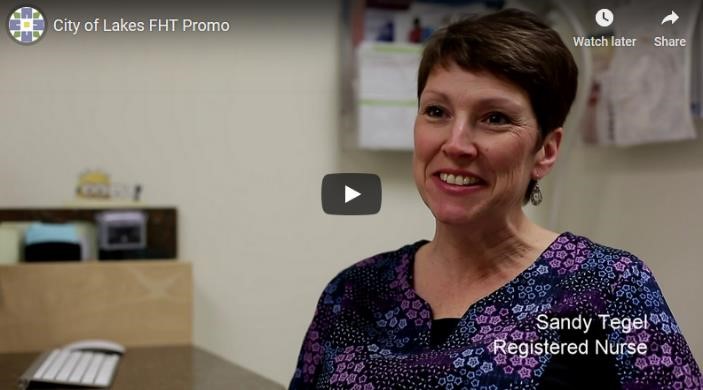
    City of Lakes FHT has shared a video that covers their mission, vision and introduces their interdisciplinary healthcare team and services. Watch it on our site.


    Youth Opportunities Fund registration deadline Oct. 9
    Ontario Trillium Foundation’s (OTF) Youth Opportunities Fund (YOF) announced the deadlines for three grant streams.

    AFHTO members may be eligible for the System Innovations Stream, which supports collaboratives that are strengthening the quality and responsiveness of systems so they work better for youth facing systemic barriers.

    Organization Registration Deadline: Oct. 9, 2019
    Grant Application Deadline: Nov. 6, 2019
    Up to $250,000 per year
    2 to 6 years


    Executive Director OHT Mentorship Program
    Many changes are happening across the health care sector, and teams are at varying levels of planning and participation in the development of an OHT.

    If you’re an executive director who’s part of a team that’s ‘in development’ or ‘in discovery,’ and would benefit from guidance or support from an ED who’s in full application, please complete this short survey by Friday, October 18. You’ll be connected with an ED who can offer insight on successes, challenges and lessons that they’ve been learning along the way!


    Members in the media

    Belleville NPLC: holding a “Pap Party” during Cervical Cancer Awareness week

    East Wellington and Guelph FHTs: feature on the Guelph and Area OHT

    Minto Mapleton, Mount Forest and Upper Grand FHTs: Minto council receives report on Rural Wellington Ontario Health Team

    North Durham FHT: Durham continues to push for an Ontario Health Team

    Windsor FHT: feature on their Bright Lights award-winning team care centre


    Collaborative governance workshop


    Collaborative Governance workshop slides

    The slides from this Sep. 17 preconference workshop, Collaborative Governance: Moving at the Speed of Trust, which explored different ways of approaching the initial governance structure of an OHT, are now available on our site.


    Ontario Health Team digital supports
    The eHealth Centre of Excellence (eCE) is committed to supporting the OHTs throughout the application and selection process. To understand exactly how the eCE can support OHTs with the digital health components outlined in the full application, read eCE’s Role in the Full OHT Application.  


    Call to create transition fund to support patient medical homes in primary care

    On Oct. 3 leaders from the Canadian Association of Social Workers, the Canadian Medical Association, the Canadian Nurses Association and the College of Family Physicians of Canada called on federal party leaders to commit to establishing a targeted $1.2 billion Primary Health Care Transition Fund. Read the news release here.


    Call for applications – TUTOR-PHC 2020
    Transdisciplinary Understandings and Training on Research – Primary Health Care, is a one-year, pan-Canadian interdisciplinary research capacity building program that has been training primary and integrated health care researchers and decision-makers from family medicine, nursing, psychology, epidemiology, social work, occupational therapy, education, policy and many other disciplines since 2003.

    The call for applications is open to graduate students, post-doctoral fellows, mid-career clinicians, and decision makers in primary health care. For more information, please go to the website. Please contact Project Coordinator, Rob Van Hoorn (tutor@uwo.ca) if you’re interested in applying. Deadline is Dec. 2, 2019.


    ECHO Concussion pilot
    Starting Nov. 13, ECHO at UHN will be launching a NEW 10-session pilot on Concussion. The series will focus on diagnosing and managing patients with concussions and applying the current guidelines.

    This is online interactive case-based learning fully funded by the Ministry, where you will connect with an inter-professional team of experts including physiatry, neurology, neuropsychiatry and family medicine. To register or find out more, visit their site.


    Essential Skills For Social Work With Groups, Oct. 14- Dec. 10, 2019
    A 4-part modular course to expand existing social work knowledge and refine group work skills, held by the OASW. Learn more here.


    Liver Disease in Primary Care: Approach to Fatty Liver, Oct. 17, 2019
    Part of ECHO Liver quarterly evening series. Find out more here.


    PHC Connect, Nov. 8, 2019
    Physiotherapists working in primary health care organizations across Ontario are invited for an interactive day of networking, professional development, and discussion hosted by the Ontario Physiotherapy Association at Burlington FHT. Attendees will hear from guest speakers about the changing health environment, the impact, and opportunities for primary health care and physiotherapists working in this sector. Click here for more information and to register. For any questions, please contact Maryam Ahmed at mahmed@opa.on.ca.


    Annual Toronto Geriatrics Update Course, November 1 & 2, 2019
    Learn about topics such as osteoporosis updates, capacity assessments, managing dementia and reducing falls among older patients. Hosted by the Sinai Health System and UHN. Coupon code available here.

  • Virtual Clinic coming to Elliot Lake Family Health Team

    Elliot Lake Today article published September 17, 2019

    By Brent Sleightholm, Elliot Lake Today


    Family Health Team responds to crush of patients without doctors in Elliot Lake

    Elliot Lake’s Family Health Team representing 10 family physicians along with two nurse practitioners and a cadre of other health care providers, allied staff who work with them, is looking for $72,000 from the City to set up a virtual health clinic at their downtown facilities, next year.

    The clinic, said health team Executive Director Nancy Ewen, would operate five days a week, weekdays, with Dr. Maria Celia Raquel Lopez interacting with Elliot Lake non-rostered patients on a video link.

    Ewen said Lopez has previously served as a locum (a person who stands in for an absent doctor) in their clinic. Non-rostered patients are patients who do not have a family doctor.

    The health team’s initial ask is $300 a day, two days a week, to fund the trial project which will run from the last week in September through the end of December, this year. As well, the health team wants City Council to approve spending $72,000 in 2020 which Ewen said it would cover their operating expenses for the five-day-a-week program next year.

    The virtual clinic concept was raised at Monday afternoon’s meeting of the Elliot Lake Finance and Administration Committee.

    The Committee voted unanimously in favour of a $3,900 trial for the rest of this year and a priority spot on the 2020 city budget roster for $72,000 for all of next year. Two members of the standing committee, Mayor Dan Marchisella and Councillor Chris Patrie, were absent from the meeting. The recommendation will go on to City Council. The City’s budget process is expected to get started in October.

    “They (virtual clinics) are temporary solutions to deliver care to non-rostered patients,” Ewen told the committee. “Virtual clinics are popping up all over Ontario.”

    “A couple of cases I have heard of, New Liskeard has had a successful virtual clinic,” she said.

    Once a doctor was recruited there the virtual patients were absorbed into the new practice and the New Liskeard virtual clinic was disbanded, Ewen added.

    “Peterborough still has a virtual clinic in place, looking after non-rostered patients and Kapuskasing has something called a locum clinic, where they actually bring in locums, so it’s not virtual,” she said.

    “At the Family Health Team, we were established in 2007. We have 10 family physicians on site right now. Three of these are over the age of 65. Three are between 55 and 65 so they are starting to wind down, starting to look at retirement.” She added that the health team has some 10,000 rostered patients who come through their doors every month.

    The elephant in the room, though, was the crush to the system from the estimated 1,300 non-rostered patients who live in Elliot Lake.

    Ewen provided that figure which she said was derived from the Ontario Ministry of Health and Long Term Care, “As well as conversations with our physicians.”

    The virtual clinic will be operated on the second floor of the health team’s downtown headquarters.

    Later in the meeting, during the public question period, Elliot Lake resident Mike Thomas told the committee he had been an advocate of the clinic idea for years. He said, “I think that would be great.” But at the same time, he wondered if the virtual clinic would be effective.

    He added that he has seen both sides of the Elliot Lake healthcare system, as a non-rostered patient and one who is rostered with a doctor. In Mr. Thomas’ words, “As you know, I was in an accident in 2017. Some of the forms, prescriptions, referrals, they’re pretty tough.” 

    Thomas went on, “I don’t see that changing, with the transfer to a rostered patient.” Regarding the virtual clinic platform from ELFHT, Mr. Thomas said, ” I wish we could bring more of their services forward. We need to know how much of their services they’re going to roll over.” He also said he believes the Health Ministry’s estimate of 1,300 non-rostered patients in Elliot Lake is low.

    “We have had a non-opioid policy as long as I’ve been here,” Thompson said.

    He wondered how family health team physicians would be able to carry out prescription requisitions for senior retirees, many of whom have been prescribed opioids elsewhere, in light of the family health team’s strictures.

    “So are you going to get into the details of that when it goes forward to Council?” he asked the committee.

    “For any of those people, those seniors, who come to Elliot Lake, are you going to have them write their prescriptions? Because most of their prescriptions are opioids,” said Thomas.

    Committee Chair Councillor Norman Mann responded. 

    “On an operational level, it is up to the Elliot Lake Family Health Team Directors to decide how to proceed,” Mann said. “So I would suggest their Board of Directors will decide on the clinic and what form of mandate it will have. That is not something I can discuss.”

    “But (The City) as a funder of the Elliot Lake Family Health Team, we would ask them for their consideration of your concerns.”

    Ewen said she needs an answer from the city on the Elliot Lake Family Health Team clinic funding proposal by November.

    To read the complete Elliot Lake Today article, click here.

  • Dorset Hub Featured on CBC Podcast, Addressing The Topic ‘Can’t Find A Family Doctor’

    CBC Ontario Today podcast shared on August 14, 2019

    Covered by Rita Celli, CBC Ontario Today

    The Topic: ‘Can’t Find A Family Doctor’

    Mark (patient) 

    11:43 

    I moved down from Nunavut almost 4 years ago where my medical services, for about eleven and a half years, were provided a couple hundred miles north of the Arctic Circle, primarily by registered nurses and nurse practitioners. So perhaps I was a bit more amenable to those services. In other words, I understood the fantastic services that they can provide. Then after about a year after I moved down to Ontario, on the list, with Health Care Connect… I discovered the Dorset Community Health Hub*. There are others in the province, and I would encourage everyone to support them and also for the government to continue to support them and to expand [them]. I receive services directed by a nurse practitioner. [It’s] an incredibly wholistic medical care. All a great team there in Dorset. It’s not an emergency room but you can book ahead for the small scrapes and so forth and maybe save some time instead of going to Huntsville Memorial District Hospital.

    …The two nurse practitioners there that I have had for the past 3 years have dealt with in individual appointments with physical health matters, mental health matters. Very wholistic healthcare and I think I am very fortunate not to have found a traditional medical doctor after moving here.

    Professor Bordeaux

    14:50

    I think that Mark identified a really, really important resource that we often don’t think about when we’re looking at primary care providers. So it’s not only family physicians, or general practitioners. Some medical specialists can provide primary care, but nurse practitioners are a form of primary care providers. We have a lot of data and evidence to show that you get high quality primary care from nurse practitioners. They have a relationship with a physician for whom they consult with on some more serious cases, but this is, again, looking at a whole of the healthforce approach to this. There are a variety of different providers who have different skills to enable coverage of services for clients like what Mark is getting in Lake of Bays.


    *The Dorset Community Health Hub is a partnership between the Algonquin Family Health Team, Lake of Bays Township, Dorset Canada & the Township of Algonquin Highlands

    Click here listen to the complete CBC Ontario Today podcast