Tag: members in the media

  • Bits & Pieces: ON state of emergency, COVID-19 updates & more

    Bits & Pieces: ON state of emergency, COVID-19 updates & more

    Your Weekly News & Updates


    In This Issue  
    • Ontario declares state of emergency
    • COVID-19 updates including memo
    • Selecting an IPAC representative
    • Virtual visit billing codes, PPE recommendations & steps to reduce spread
    • Members’ stories
    • Registration now open for Project ECHO Ontario Bariatric Network (OBN) series starting April 2, 2020
    • NPAO Patient Choice Award
    • Upcoming events including Leading in turbulent times

    Ontario declares state of emergency
    Today, the Government of Ontario announced that it is making an order declaring a state of emergency under s 7.0.1 (1) the Emergency Management and Civil Protection Act.

    Updates relevant to health care include:

    • $100 million for increased capacity in hospitals to assist with the effective treatment of COVID-19 patients both in critical care and medicine beds.
    • $50 million for more testing and screening through public health, including additional funding to support extraordinary costs incurred to monitor, detect and contain COVID-19 in the province. This includes contact tracing, increased laboratory testing capacity and home testing.
    • $50 million to further protect frontline workers, first responders and patients by increasing the supply of personal protective equipment and other critical supplies and equipment to protect them.
    • $25 million to support frontline workers working in COVID-19 assessment centres, including the creation of a new fund to provide respite care, child care services and other supports as they are needed.
    • $4 million for Indigenous communities to support transportation costs for health care professionals and the distribution of critical supplies.

    You can also read H+K’s insight note on the declaration here.


    COVID-19 updates including memo

    For EDs, Lead Clinicians and Board Chairs:
    At this time only 107 of 193 members have either completed this short survey to track provider preparedness, or otherwise contacted us. The Ministry of Health and Ontario Health (Shared Services) have emphasised the importance of filling this out. Please do so as soon as possible. This is a direct link to the spreadsheet, with no need to log in.

    Health care providers facing immediate challenges with their personal protective equipment supply levels can email the ministry at EOCLogistics.MOH@ontario.ca.We have also asked Ontario Health for an update on PPE supply and hope to get some information to you soon.

    We continue to update the relevant page on COVID-19, including the self-assessment tool and a memo from the provincial command table dated Mar. 16. If you have any questions, you can also email EOCOperations.moh@ontario.ca.

    You can also read H+K’s memo on yesterday’s press conference from the Ontario government here.
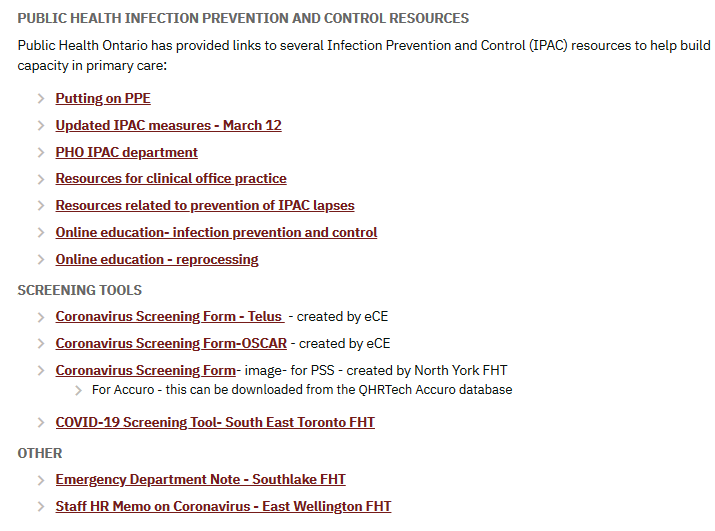

    Infection control resource page

    Selecting an IPAC representative

    During emergencies like the COVID-19 pandemic, clinical sites may start thinking about their own policies including infection control.  Per a regional IPAC Specialist at Public Health Ontario, selecting an IPAC representative may be very different from team to team. Hamilton FHT, for example, has designated Quality Improvement individuals who take on this role.

    Smaller teams may not have this option and may choose to find someone who is interested in the role, or whose current role most closely fits with the role (e.g., patient safety).  

    It may also be the case that they do not wish to have an overarching IPAC person but have an individual at each clinical site that is responsible for IPAC.

    If you are looking at training for your team you may want to consider:

    • IPAC Canada keeps a list of paid courses here. They cover a lot of ground and have a lot of information that may not be applicable to a team setting.
    • Free Public Health Ontario resources are shown on our infection control resource page.

    We’re working with PHO to develop tools, resources and webinars for our members once we’re able to focus more on everyday concerns and will be surveying our members shortly to get your thoughts on what is needed. But in the meantime, please share any resources you have developed by sending them to info@afhto.ca.


    Virtual visit billing codes, PPE recommendations & steps to reduce spread


    Members’ stories

    Bancroft Community FHTBancroft Community FHT Doctor presented with Council of the College of Physicians and Surgeons Award

    South East Toronto and North York FHTsYour next visit to a doctor may not be face to face. Ontario shifting to virtual-first model in bid to halt spread of COVID-19

    Project ECHO Ontario Bariatric Network

    Registration now open for Project ECHO Ontario Bariatric Network (OBN) series starting April 2, 2020

    Update your knowledge on post bariatric care and obesity management by joining the upcoming videoconferencing series hosted by Guelph General Hospital Bariatric Centre of Excellence. Discuss patient cases and learn about leading surgical and medical treatment options for patients with obesity and strategies to identify and prevent potential post – operative complications. Sessions are offered at no cost to all practitioners and allied health professionals working in primary care.

    Find out more and register here.


    NPAO Patient Choice Award
    Nominations for this award are submitted by patients, based on their description of their nurse practitioner’s professional qualities, approach to patient care and specific stories of dedication and how the nurse practitioner has made a difference in their lives or the lives of others. You can find a poster for your wait room and more information here. Deadline June 22, 2020.


    Leading in turbulent times – how to guide your teams through the Coronavirus pandemic, March 19, 2020
    Learn how to apply LEADs framework so you can lead to support and protect the community from widespread exposure.
    Learn more here.


    Electronic Asthma Management System (EAMS) – OSCAR Tool Demonstration, March 24, 2020
    Join this webinar for an hour-long demonstration to learn more about EAMS. Register here!


    Managing the Complex Patient: Diagnosis, Treatment and Follow-Up: CHEP+ Conference, April 4, 2020
    The second annual CHEP+ conference is accredited and now being offered online. Learn to cover C-CHANGE guidelines. Find out more here.


    Rainbow Health Ontario Conference, CANCELLED
    The RHO conference was cancelled, and paid conference registration fees will be fully refunded. Click here for more information.


    Understanding Bronchiectasis Webinar, April 21, 2020
    Learn more about this neglected pulmonary disease. By the end of this webinar, you will be able to help patients self-manage the disease and avoid the acquisition of nontuberculosis mycobacteria. Find out more here


    Together We Care: OTLCA & ORCA Conference, CANCELLED
    This convention has been cancelled, including the OLTCA’s general meeting and leadership dinner. The ORCA general meeting will proceed via webinar. Click here for more information.


    Insomnia Interventions: First-Line Treatment for Insomnia in Primary Care, POSTPONED
    This program has been postponed. Click here for more information.
  • Bits & Pieces: meeting the Minister, working together for change tools & resources & more

    Bits & Pieces: meeting the Minister, working together for change tools & resources & more

    Your Weekly News & Updates


    In This Issue  
    • Meeting the Minister to discuss pre budget recommendations
    • Working together for change
    • Members’ stories
    • Managing urinary incontinence in women: clinical tool
    • Novel coronavirus updates
    • Northern opioid learning community webinars, Mar. 5 & 26
    • Seeking volunteers for Early Chronic Kidney Disease priority panel
    • OASW call for proposals
    • Upcoming events including improving cancer screening and more

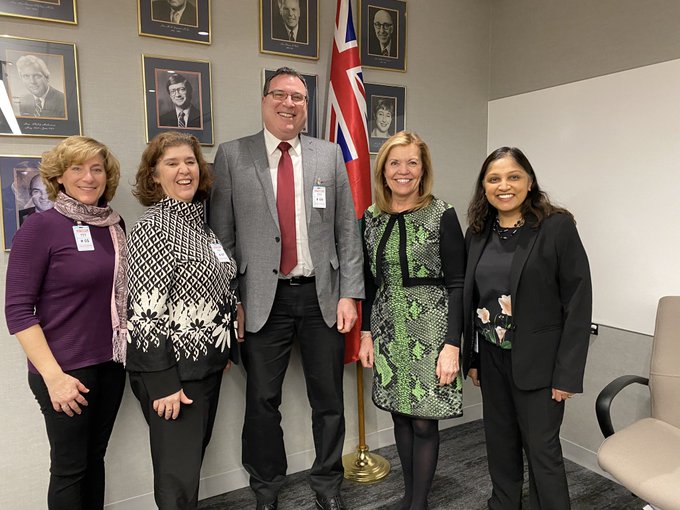
    AFHTO Board Executive Committee and CEO met with Minister Elliott on Feb. 13
    AFHTO Board Executive Committee and CEO met with Minister Elliott on Feb. 13


    Meeting the Minister to discuss pre budget recommendations

    On Feb. 13, our Board executive committee and CEO met with the Deputy Premier and Minister of Health, the Hon. Christine Elliott, to talk about our pre budget recommendations with a focus on integrated care foundationally based in team based primary care and the importance of clinical leadership.


    Working together for change
    Connecting physicians regionally is a powerful way to spark change, to improve the delivery of comprehensive patient services, and to influence health service decision making. For those who wish to consider how they might best work together to strengthen the primary care sector – or for those who have already started! – check out Primary Care Physicians: Working Together For Change, Primary Care: Local Change Ideas, and other tools and resources on our website. This repository will be updated regularly!


    Members’ stories
    Elliott Lake FHTbudget committee approves funding for video medical clinic which was set up on a trial basis last year


    Managing urinary incontinence in women: clinical tool

    The Centre for Effective Practice has launched a new clinical tool: Managing Urinary Incontinence in Women.

    Many women feel ashamed when they experience urinary incontinence, which may prevent them from speaking to their doctors about it. If left untreated, the condition can lead more needed care later. This tool is designed to help primary care providers manage care for adult women (18+) who experience involuntary loss of urine.


    Novel coronavirus (COVID-19) updates

    We continue to update the relevant page on the Novel Coronavirus. “Health care providers facing immediate challenges with their personal protective equipment supply levels can email the ministry at EOCLogistics.MOH@ontario.ca.”

    If you have any questions, you can also email EOCOperations.moh@ontario.ca.


    Northern opioid learning community webinars, Mar. 5 & 26
    Join the Ontario Pain Management Resources Partners as they explore how to optimize your EMR to support safer pain management and opioid prescribing. Including Sandeep Gill, AFHTO Clinical KTE Specialist and members, Drs. Sarah Newbery and Ryan Patchett-Marble, Marathon FHT, and Dr.Kevin Samson, East Wellington FHT.

    Target audience: Family physicians and nurse practitioners in northern Ontario who endeavour to access relevant data to support safer opioid prescribing and pain management, including primary care clinicians and support staff

    Register for:


    Seeking volunteers for Early Chronic Kidney Disease priority panel

    The Ontario Renal Network, part of Ontario Health, is recruiting primary care providers for the Early Chronic Kidney Disease (CKD) Priority Panel. Its purpose is to provide strategic direction for current and future initiatives related to early CKD, including supporting primary care providers in identifying and managing patients with CKD.

    The panel will meet on a regular basis about 6 times per year and will to have representation from various groups (e.g., administrators, allied health, physicians, patient advisors). If you’re interested in learning more or joining, please email daphne.sniekers@cancercare.on.ca by February 29, 2020.


    OASW call for proposals
    The Ontario Association of Social Workers has announced a Call for Proposals for the 2020 Social Work Provincial Conference, “Innovative Approaches to Complex Needs:  Social Workers Influencing the Future of Care”, on November 13 and 14, 2020.

    They encourage submissions from students, practitioners, policy makers, researchers and academics alike. The deadline for submissions is March 1, 2020. Find out more.


    Improving cancer screening rates and reducing related disparities, Feb. 20
    On Feb. 20 join Drs. Aisha Lofters and Tara Kiran as they share practical, evidence-based ways to improve cancer screening rates and reduce income-related disparities. Register here.


    Is your work making you wheeze? Feb. 25, 2020
    Attend this webinar suitable for healthcare providers and other employees, hosted by the Lung Association. View all Lung Associations’ upcoming events here.


    Black Physician Association Ontario Annual Health Symposium, Feb. 29, 2020
    Keynote speaker will be the inspiring Dr. Lisa Robinson, Associate Dean of Inclusion and Diversity at the University of Toronto. Learn more here.


    Primary Care Electronic Medical Record Tools for Advance Care Planning and Palliative Care, March 12, 2020
    In the third webinar in the HPCO Winter webinar series, our Board Director Dr. Kevin Samson, along with Justin Wolting from the eHealth Centre of Excellence, will be presenting to assist health care professionals and support staff.
    Learn more here.

  • Bits & Pieces: practising equity-focused health care, improving cancer screening rates & more

    Bits & Pieces: practising equity-focused health care, improving cancer screening rates & more

    Your Weekly News & Updates


    In This Issue  
    • Practising equity-focused health care
    • Novel coronavirus updates including OMA summary guidance
    • Improving cancer screening rates and reducing related disparities, Feb. 20
    • Reminder- shortening the diagnostic odyssey: rare disease in primary care, Feb. 12
    • Members’ stories
    • Spotlight on organizing primary care, Feb. 13
    • Two new quality standards – anxiety disorders and OCD
    • Call for participation-toxicity management models of care working group
    • Upcoming events on Advance Care Planning Lead Training and more

    St. Michael's Hospital Academic FHT SDOH booklet


    Practising equity-focused health care

    Over the years St. Michael’s Academic FHT has won a Bright Light Award for, and presented at the conference on, their work addressing the social determinants of health. They have a website focused on their continuing efforts, including tools, income security health promotion, and integrating SDOH into QI programs.

    They also have a comprehensive brochure. Feel free to review for ideas for your own team.


    Novel coronavirus updates including OMA summary guidance

    We continue to update the relevant page on the Novel Coronavirus, including with the latest situation reports. The Ministry of Health has updated guidelines for primary care, along with posters and a website for healthcare providers. The latest update is a summary guidance document from the OMA.

    The OCFP has also put together Tips for Screening for 2019-nCoV which includes clinic preparedness that you may find helpful. If you have any questions, you can also email EOCOperations.moh@ontario.ca.

    For EDs, Lead Clinicians and Board Chairs:
    The Ministry of Health and Ontario Health (Shared Services) are requesting you complete this short survey by end of day tomorrow, Wednesday, February 5, to assist in tracking provider preparedness. This will help them identify where support is needed, and they will work with suppliers to distribute resources accordingly.


    Improving cancer screening rates and reducing related disparities, Feb. 20
    Primary care plays a central role in cancer screening, but screening efforts don’t reach everyone.

    St. Michael’s Hospital Academic FHT worked with patients living with low income to understand barriers to screening and co-design solutions. On Feb. 20 join Drs. Aisha Lofters and Tara Kiran as they share practical, evidence-based ways to improve cancer screening rates and reduce income-related disparities. Register here.


    Reminder- Shortening the diagnostic odyssey: rare disease in primary care, Feb. 12

    On Feb. 12 Sanofi Genzyme’s rare disease education webinar will increase your awareness about two rare inherited disorders – Fabry disease and Pompe disease and will highlight why primary care is essential in reducing the long and cumbersome diagnostic delays these patients experience. You may also leave with the realization that these rare diseases are not as rare as you think. Register here.


    Members’ stories
    Akausivik Inuit FHT- Canada honours Qapik Attagutsiak, 99, wartime Inuit bone collector. As a midwife, she helped deliver hundreds of babies and helped set up Akausivik Inuit FHT.


    Spotlight on organizing primary care, Feb. 13

    Join us for our next Primary Care Virtual Community session on February 13th 8:00am-9:30am, Ontario’s innovative collaborative designed to unleash the power of primary care in health system change. More than 1,000 people have now connected through this virtual community, a collaboration developed by the OCFP and AFHTO and convened by The Change Foundation.

    As a community, we have co-defined a list of High Impact Actions that are felt to spark meaningful improvements in primary care. Building on the momentum from our most recent Primary Care Virtual Community held in November 2019, we will be continuing to shine a spotlight on the high impact action of organizing primary care.

    In our upcoming session, the community will engage with those in primary care from across Ontario on the emergent ways in which primary care is self-organizing and building meaningful connections locally.

    We will be hearing nine primary care clinicians as they share their experiences and learnings on how they, in partnership with others, have been able to enable and accelerate the local organization of primary care. Register today!


    Two new quality standards – anxiety disorders and OCD
    Ontario Health (Quality) has released two new quality standards:

    They come with patient conversation guides and recommendations for system adoption too. Questions? Contact QualityStandards@HQOntario.ca.


    Call for participation-toxicity management models of care working group

    Cancer Care Ontario is seeking GPO, GP and Nursing representation for a Models of Care Working Group to improve the delivery of toxicity management for adult cancer patients currently undergoing systemic and radiation treatment. If you’re interested in participating, please contact Ada Payne, Lead, Models of Care at ada.payne@cancercare.on.ca by February 15, 2020.


    Quality Rounds Ontario: The Promise of Virtual Care, Feb. 6, 2020
    With opening remarks by Bill Hatanaka, Board Chair, and Matthew Anderson and Incoming President and CEO, Ontario Health. Register today.


    Advance Care Planning Lead Trainer Program, Feb. 11 & 13, 2020 (and more)
    Are you a health service provider who has the support to build and sustain a team of volunteer facilitators? Hospice Palliative Care Ontario invites you to participate in this interactive training program that will guide you in training your volunteers to facilitate community Advance Care Planning presentations to the general public. Find out more here.


    Primary Care Virtual Community, Feb 13, 2020
    The Primary Care Virtual Community brings together leaders in primary care interested in enabling meaningful system change. The virtual community is a collaboration developed by the OCFP and AFHTO and convened by The Change Foundation.

    Register today!


    Shifting the feeding and eating conversation – An introduction to Satter Feeding Dynamics and Eating, Feb 28, 2020

    Hosted by Nutrition Connections, this workshop will provide a deeper understanding of the Satter Feeding Dynamics Model (fdSatter) and the Satter Eating Competence Model (ecSatter), along with strategies for application. Learn more here.

  • Bits & Pieces: novel coronavirus updates, pre-budget submission & more

    Bits & Pieces: novel coronavirus updates, pre-budget submission & more

    Your Weekly News & Updates


    In This Issue  
    • Novel coronavirus updates
    • AFHTO’s 2020 pre-budget submission
    • We’re on the move
    • Members’ stories
    • Shortening the diagnostic odyssey: rare disease in primary care, Feb. 12
    • Managing proton pump inhibitor use in older adults: tool
    • Eliminating red and white cards posters
    • Upcoming events on Advance Care Planning and more

    Novel coronavirus updates
    We have a page on our site that will provide updates on the Novel Coronavirus as they become available, including the latest situation reports. The Ministry of Health is currently working on guidelines for primary care, along with posters and a website for healthcare providers which we will share once we receive the information. At this point, you can also access information for the public on their site.

    We’ll email the primary care guidelines as soon as they become available.

    The OCFP has also put together Tips for Screening for 2019-nCoV which includes clinic preparedness that you may find helpful.  

    If you have any questions, you can also email EOCOperations.moh@ontario.ca.


    AFHTO’s 2020 pre-budget submission
    AFHTO submitted its recommendations to the Ministry of Finance as part of the 2020 Ontario Pre-Budget Consultations in early January. The submission, “It Takes a Team: Interprofessional Primary Care as the Foundation of Health System Transformation” included the following recommendations are:

    1. Increase access to interprofessional team-based primary care for Ontarians who need it.
    2. Invest in clinical leadership to ensure successful roll-out of Ontario Health Teams.
    3. Embed mental health and addictions support in primary care.
    4. Help end hallway health care by embedding home and community care coordination with primary care.
    5. Support digital health options in primary care

    woman with box

    AFHTO is on the move.

    As of tomorrow, Thursday, Jan. 23, AFHTO staff will be working offsite in preparation for a move to a new location.

    We will each be checking our voicemail periodically but if the matter is urgent, please email the relevant staff member directly.

    Further details including our new location will be announced by early February. We appreciate your patience as we transition to our new space. If you have any questions, please feel free to email info@afhto.ca.


    Members’ stories
    Belleville NPLC: Belleville NPLC requests funding for 2 more NPs & a second clinic in the Quinte-Hastings area

    Essex County NPLC: Essex County NPLC expands its services into Amherstburg


    Shortening the diagnostic odyssey: rare disease in primary care, Feb. 12
    You can easily recognize a patient with hypertension, but do you know how to recognize a rare disease? Roughly 1 in 12 Canadians, are affected by a rare disorder. As each disease affects only a small number of individuals, clinician understanding and expertise may be limited and fragmented. This results in unnecessary diagnostic delays, frequent misdiagnoses, and missed opportunities to treat these patients earlier.

    On Feb. 12 Sanofi Genzyme’s rare disease education webinar will increase your awareness about two rare inherited disorders – Fabry disease and Pompe disease and will highlight why primary care is essential in reducing the long and cumbersome diagnostic delays these patients experience. You may also leave with the realization that these rare diseases are not as rare as you think. Register here.


    Eliminating red and white cards posters

    The Ministry has provided English and French posters that can be placed in your clinics and offices on the elimination of red and white OHIP cards as of July 1, 2020.


    Managing proton pump inhibitor use in older adults: tool
    The Centre for Effective Practice has released their latest clinical tool: Managing Proton Pump Inhibitor Use in Older Adults.

    When the ongoing reason for using proton pump inhibitors (PPIs) is unclear, there may be more risks than benefits to the patient. This tool helps guide discussions and assessments with patients aged 65+ about the potential harms and benefits of PPIs. Download the tool here.


    Quality Rounds Ontario: The Promise of Virtual Care, Feb. 6, 2020
    With opening remarks by Bill Hatanaka, Board Chair, and Matthew Anderson and Incoming President and CEO, Ontario Health. Register today.


    Navigating the World of Advance Care Planning and Goals of Care Conversations, Feb. 18, 2020
    The second webinar in Hospice Palliative Care Ontario’s Winter 2020 Series, presented by Dr. Leah Steinberg. Register now.


    Primary Care Virtual Community, Feb 13, 2020
    The Primary Care Virtual Community brings together leaders in primary care interested in enabling meaningful system change. The virtual community is a collaboration developed by the OCFP and AFHTO and convened by The Change Foundation.

    Join the Community to access past webinar recordings and plan to attend the next webinar on February 13 from 8:00 a.m. to 9:30 a.m. Registration link coming soon!


    Your Patients Are Using Cannabis: Here’s What You Need To Know Conference, Feb 28, 2020
    NPAO’s conference held for primary care providers will help you gain a better understanding of medicinal cannabis. Learn more here.


    Capstone Summit, May 4-5, 2020
    Conference hosted by the Change Foundation to showcase their work with caregivers and formally introduce their new strategic focus. Find out more here.


    Meeting Social Needs in an Integrated Health System: A Role for Social Prescribing, March 25, 2020
    Hosted by the Alliance for Healthier Communities and the Dalla Lana School of Public Health, join James Sanderson, Interim CEO, UK National Academy for Social Prescribing and Director of Personalised Care, National Health Service England as he speaks about how the practice of social prescribing has spread and sustained in the UK. Click here to learn more and to register.

  • Essex County NPLC expands its services into Amherstburg

    Windsor Star article published Jan. 21, 2020

    By Mary Caton

    A long-awaited new nurse practitioner clinic opened its doors to patients in Amherstburg this week.

    The Essex County Nurse Practitioner-Led Clinic (ECNPLC) has expanded its services into Amherstburg under a 10-year agreement with the town.

    They also have clinics in Essex and Windsor

    The latest becomes the first tenant to operate in the renovated Amherstburg Community Hub which formerly served as St. Bernard’s elementary school on Richmond Street.

    The town purchased the school from the Windsor-Essex Catholic District School Board two years ago with the goal of creating a hub.

    Pauline Gemmell, ECNPLC’s executive director, wrote a business case for an Amherstburg location in the summer of 2018.

    Her expansion proposal was one of three across the province to receive funding approval from the Ministry of Health and Long-Term Care. Sudbury and North Bay were the other centres to receive financial support.

    Town council approved the necessary renovations to the school in January 2019 following the ministry approval of $650,000 in funding.

    Plans initially called for the clinic to open in the spring of 2019.

    “It was a busy year for construction in this area and it slowed everything down,” Gemmell said. “We weren’t exempt from that. The space is great though, we love it, the only negative was that it took a while to get finished. We’re excited and we know the community has really been waiting for it.”

    The clinic has three full-time nurse practitioners, one full-time registered practical nurse, one half-time social worker, one half-time health promoter and physical therapist. They are in the process of hiring a half-time registered dietician.

    The clinic has the potential to serve 2,400 patients and is now accepting applications.

    “We’re not anywhere close to being full so anyone interested in applying please do,” Gemmell said.

    Applications can be picked up at the clinic, which is open 8:30 a.m. to 4:30 p.m. Monday, Wednesday and Friday and from 10 a.m. to 6 p.m. Tuesday and Thursday.

    Another major hub tenant, Amherstburg Community Services, hopes to move in sometime in March.

    ACS executive director Kathy DiBartolomeo said the extra space in the new facility will allow the organization to offer new programming in addiction services, counselling and outreach.

    “We’ll be able to accommodate more of the demands for all these services because we have more space,” DiBartolomeo said. “We can do workshops and cooking classes and we’ll truly be expanding to all sectors of the community.”

    New services will include Al-Anon, grief support, adolescent counselling and addiction counselling.

    Staff will soon be doing an educational outreach to area elementary and secondary schools to inform guidance counsellors directly of available ACS services.

    “It’s something we’ve always wanted to do and I think the timing is right as our services are increasing,” DiBartolomeo said.

    ACS is currently located on Victoria Street.

    With 20,000 square feet of hub space still available, Mayor Aldo DiCarlo said administration is finalizing negotiations with other interested groups of which there’s been no shortage.

    “We’ve got more interested parties than we have space for,” DiCarlo said. “It’s a good problem to have but we’ll have to make some decisions on who we think fits best in there.”

    To view the full article, click here.

  • Bits & Pieces: member news, Ontario Not-for-Profit Corporations Act update & more

    Bits & Pieces: member news, Ontario Not-for-Profit Corporations Act update & more

    Your Weekly News & Updates


    In This Issue  
    • Member news
    • Reminder – we need your feedback for the 2020 conference
    • Ontario Not-for-Profit Corporations Act update
    • Ministry of Health and related news
    • Rainbow Health Ontario 2020 early bird ends Friday, Jan. 17
    • Upcoming events on Mental Health and Addiction QI and more

    Member news

    Couchiching FHT- A new decade and a new model of health care for Orillia area – per Dr. Kim McIntosh, “In 2020, the local team will focus on frail seniors before the program is expanded to include palliative patients in the second year.

    “I’m really hoping and anticipating mental health and addictions being our third-year population.”

    What is happening with the OHT in your community? Let us know!


    Zayna Khayat, AFHTO 2019 opening plenary speaker


    Reminder- we need your feedback for the 2020 conference

    The conference on Oct. 8-9, 2020 will be undergoing a major revamp, and now we’d like you to weigh in. What should the conference look like? How can we make sure it stays relevant to your needs? Tell us everything! The survey should take less than 5 minutes. Deadline Jan. 20, 2020.


    Ontario Not-for-Profit Corporations Act update
    Per the Ontario Nonprofit Network, there is continued delay for the Ontario Not-for-Profit Corporations Act (ONCA), which means there will be no proclamation in early 2020:
    “The Ontario government gave notice in 2018 that the proclamation … would occur “early 2020”. However, on December 31, 2019, the Ministry of Government and Consumer Services informed us and updated their website that ONCA will not be proclaimed in early 2020. No specific date or timeline was given.” Read more here.


    Ministry of Health and related news
    Phasing out red and white OHIP cardsGovernment to phase out red and white OHIP cards

    Connected Care Update – recruitment has begun for the next Patient Ombudsman as well as for members for the Minister’s Patient and Family Advisory Council.

    Ministry of Children, Community and Social Services memo health care provider billing for completion of ODSP application forms and introduction of the online medical invoice form

    Chief Medical Officer of Health Memo– update on the Novel Coronavirus in China


    Rainbow Health Ontario 2020

    Rainbow Health Ontario 2020 early bird ends Friday, Jan. 17

    The Rainbow Health Ontario (RHO) 2020 Canada’s forum for LGBT2SQ health is happening April 21-23 in Niagara Falls, Ontario. They’re expecting over 400 attendees and are delighted to present keynotes from Dr. James Makokis and author Zena Sharman, as well as 85 sessions featuring over 200 presenters.  

    More information is available on the conference website. Note that their early bird rate at a 15% discount is in effect until Friday, Jan. 17.


    Preparing for Audits, Jan. 15, 2020
    Register early for AFHTO’s upcoming Financial Webinar Series session. Learn how to prepare for audit season. Register now!


    Mental Health and Addiction QI Collaborative Webinar Series – Part 2, Jan. 14, 2020
    Join CMHA, AMHO, and AFHTO for a second of a 4-part webinar series on community and primary care QI projects and initiatives with a focus on mental health and addictions. Register now!


    Your Patients Are Using Cannabis: Here’s What You Need To Know Conference, Feb 28, 2020
    NPAO’s conference held for primary care providers will help you gain a better understanding of medicinal cannabis. Learn more here.


    Pain Management Program Neuropathic Pain Seminar, Feb 8, 2020
    Join St. Joseph’s Hospital in London for an all-day seminar to cover all things having to do with neuropathic pain. Learn more here.


    Together We Care Conference (OTLCA & ORCA), March 30 to April 1, 2020
    Together We Care 2020 is Canada’s largest gathering of long-term care and retirement home professionals, held in Toronto. Learn more here.

  • Why East Wellington FHT Joined the Guelph and Area Ontario Health Team

    Excerpt from The Wellington Advertiser article published December 5, 2019

    By Aryn Strickland, The Wellington Advertiser

    Joining the GAOHT made statistical sense for East Wellington Family Health Team (EWFHT), which  provides clinics in both Erin and Rockwood, according to executive director Kim Bell.

    “First and foremost, we looked at our patients access patterns. So we pulled data straight from our electronic medical record system that looked at information about the last few years of acute care access, so when people go to hospital, where do they typically go?” Bell said.

    “And it showed that the majority of our patients go west towards the Guelph area,” Bell told the Advertiser.

    “So we did look at other areas … in terms of what makes the most sense for our patients. And certainly, Guelph has a very strong team and again, at the end of the day, it’s our patients, that’s where they choose to get their care.”

    A primary focus for the health team’s first year is palliative care and mental health and addictions, which Elliott said were identified as “prevalent issues.”

    “That is why these local Ontario Health Teams are so important to be able to identify what’s important in the communities; it will be different issues for different local … teams. Those are the issues that have been identified as being significant here,” said Elliott.

    Bell said palliative care and mental health and addictions were identified as key issues by both the core organizations within the GAOHT and other health care providers across the province.

    The Guelph-area team is not yet operational and it remains unclear how issues will be prioritized.

    Bell said the team envisions greater access to resources for patients.

    “We hear a lot that people need a system navigator or they need an advocate. And we want to build a system where they don’t need either of those things because that care and those services come to them,” said Bell.

    “But what we do envision is that typically, when somebody goes to (an emergency room) with a mental health crisis, it’s because it might be … 11 o’clock on a Friday night; their doctor’s office is closed, they aren’t connected with a mental health provider, they may call one of the 24/7 lines, but again, how far off in terms of time sensitivity is the care and support that they need? It’s not readily available.”

    She added, “So what we envision is that more of that care is readily available.”

    Click here to read the full article

  • AFHTO members leading Ontario Health Teams

    Originally published Jul. 30, 2019. Last updated Dec. 4, 2019

    On July 18, 2019, the Minister of Health, Hon. Christine Elliott, hosted a town hall to provide an update on the next steps for becoming an Ontario Health Team (OHT) for those who completed a self-assessment. With more than 150 submissions received, OHTs are being positioned as a new way to deliver care by providing seamless transitions of care for patients and removing barriers for providers.

    Out of the readiness assessments received, 74 teams have demonstrated the core components necessary for the development of the OHT (inclusion of primary care, acute care and community care). Thirty-one (31) teams have been invited to proceed to full application phase (which need to be submitted by October) and then forty-three (43) teams are moving to in development.

    After the town hall, multiple announcements for individual applications went out and AFHTO members so far are either leading or actively involved in multiple OHTs who can now proceed to full application.

    Announced:

    Proceeding to full application:

    Congratulations to all our teams proceeding to the next phase and all those who have been invited to develop their application further.

    This page will be updated when relevant news is received.

    Relevant Links:

  • How Rapids FHT’s memory clinics can help Ontarians living with dementia

    The TVO article published November 29, 2019

    By Mary Baxtor, TVO

    The estimated 3,000 Sarnians who live with dementia often face long waits and travel times for treatment. But a new kind of clinic could change that.

    Fourteen years ago, Mary De Marco received a call from the rubber plant in Sarnia where her husband, Bob, worked as a lab technician. It was his group leader: Bob was being sent home — could Mary come pick him up?

    In the two years leading up to that January day, Bob’s behaviour had become increasingly erratic, Mary, now 68, recalls. There were angry outbursts. Always shy, he suddenly became outgoing. Although he was known as something of a science whiz at work, he began making mistakes. “I was a little bit more than angry with him,” Mary says of her immediate reaction to the latest incident. But she quickly came to suspect that there was more to the story. “I could tell that he wasn’t coping,” she says, “and that there was something seriously wrong that I was missing.”

    Mary booked a doctor’s appointment for the very next day. But it took three years — and visits to a local neurologist, as well as to a specialist in St. Thomas — before Bob, who had by then been put on long-term disability, was diagnosed with a form of frontotemporal dementia, a group of progressive disorders that can affect personality, behaviour, and language. Managing the relatively rare disease meant long drives to London to see more specialists.

    The De Marcos’ struggle is common for the 3,000 Sarnians living with dementia, says Melanie Bouck, executive director of Alzheimer Society Sarnia-Lambton, adding that, locally, “there’s no neurologist, no geriatrician, and no clear path for diagnosis” — but she’s hopeful that a new memory clinic set to open on December 4 will provide some relief.

    The memory clinic, which will be run out of the Rapids Family Health Team family practice once a month, will provide dementia diagnoses, treatment, and referrals to specialists.

    Like Bouck, Ian Campbell, a family doctor, welcomes the memory clinic’s arrival. While he can access the occupational therapist at Rapids for patient assessments if he suspects memory issues, he’s still responsible for providing or facilitating diagnoses and helping to connect patients and their families with resources. “It does become very difficult, I think, for families because a lot is [done] on their own, working through different agencies,” he says. “It’s nice to have a place to go that has — not the answers, but at least it’s directing them to where they can go for everything. It’s very, very helpful.”

    The new clinic will employ two doctors, a nurse-practitioner, two social workers, an occupational therapist, a pharmacist, and a registered practical nurse. A home- and community-care coordinator with the Erie St. Clair Local Health Integration Network will also be on hand. Dan Vouriot, one of the team’s two family doctors, expects that the clinic will treat four patients on the days that it is open, at least at the start. “Rapids Family Health Team has identified this as something that’s very important for our area, and I agree with them,” he says.

    The approach is based on the Multi-Specialty Interprofessional Team-Based model, developed in the mid-2000s by Linda Lee, a family practitioner in Kitchener-Waterloo, to address gaps in the care of people living with dementia. She had found that many were travelling outside their communities for care and, because of a chronic shortage in geriatricians, often experiencing long wait times for specialist appointments. Small, interdisciplinary teams operating in existing family practices offer clear benefits, she says: “Ninety per cent of persons living with dementia can have all of their needs met without having to travel — say from Red Lake to Thunder Bay or to Toronto — to access a timely diagnosis and the care.”

    Lee has since helped family doctors set up 114 such memory clinics, including the Rapids location, across Ontario — and she hopes that, eventually, each will be linked to a geriatrician, psychiatric geriatrician, and cognitive neurologist, who could provide doctor consultations and mentoring.  A $100,000 award from the Canadian Medical Association she received earlier this fall will be used to establish these links; she will also use the award to expand the clinic model to other provinces.

    An independent review commissioned in 2018 by Health Quality Ontario suggests that such clinics improve the quality of life for patients and caregivers by shortening assessment wait times, reducing emergency-room visits, shortening hospital stays, and delaying entry into long-term-care facilities. In Sarnia, says Rachel Lamb, Rapids’ occupational therapist, it can take up to a year to see a specialist for diagnosis; the memory clinic is expected to reduce the wait time for diagnosis to two months.

    But the memory-clinic model does have its limitations. A patient can access one only if their family doctor is affiliated with its host health-care provider (such as a family health team or a community-health centre), and not all family doctors are affiliated with such providers. Further, the Health Quality Ontario review found that just 30 per cent of the family health teams surveyed hosted one. But, in Sarnia, clinic proponents say that accessibility likely won’t be an issue: 44 of the city’s and nearby Corunna’s 45 family doctors are affiliated with the family health team.

    Funding can also be a challenge: the provincial stream that the clinics tap into does not cover some expenses, such as training. The Rapids Family Health Team obtained a $30,000 grant from United Way in October to finance the five-day training program for its clinic members, but Lee says that dedicated provincial funding would help “with sustainable infrastructure and [the] spread of the model throughout the province.”

    In an email to TVO.org, David Jensen, a spokesperson for the Ontario Ministry of Health, highlighted the existing funding model, writing that “funding for the resources for these programs are included as part of the base budgets of interprofessional primary care teams (for example, family health teams, community health centres and nurse practitioner led clinics) in exchange for delivering community-based programs and services based on the needs of the patient populations.”

    Bob DeMarco says that, if a resource such as the Rapids memory clinic been available to him more than a decade ago, it would have made a difference. The process would have been “easier, for sure,” says Bob, now 69. “[Mary] made so many phone calls and made contact with so many people in different areas [and] drove me here, there, and everywhere.”

    This is one in a series of stories about issues affecting southwestern Ontario. It’s brought to you with the assistance of faculty and students from Western University’s Faculty of Information and Media Studies.

    Ontario Hubs are made possible by the Barry and Laurie Green Family Charitable Trust & Goldie Feldman.

    To view the full TVO article, click here.

  • City of Kawartha Lakes FHT survey finds FHTs a positive change, although health care cuts a worry

    The Lindsay Advocate article published October 18, 2019

    By The Lindsay Advocate

    The results are in from the City of Kawartha Lakes Family Health Team’s most recent survey of patients across the local area. The data revealed some interesting findings on how local residents feel about their local care, the family health team approach, the health care system in general and the main challenges to be addressed.

    While the vast majority of respondents indicated they found their health care provider to be caring, friendly and easy-to-talk-to and reported overwhelmingly that their providers are caring, good listeners and thorough, the broader answers were also encouraging.

    A clear majority of patients survey ranked the fact that they feel their care is “patient-centred” as the best part of the care they receive.

    “We are very pleased with this positive feedback about the team from our patients”, said Dr. Eric Ready, Chair of the City of Kawartha Lakes Family Health Team’s Board of Directors. “We are always working to provide the highest quality care,” he added. “Reducing wait times is an ongoing effort and priority for the Board of Directors.”

    Of particular note, 87% of patients responded that family health teams have been a positive change to the health care system. More than 90% stated they were very concerned or somewhat concerned about possible cuts to health care funding.

    Interesting, while shorter wait times and more doctors were identified by the most patients as the keys to “what the perfect health care system would look like”, the close 4th place response was that the system is perfect as is.

    Also, more than half of patients who replied to the survey noted that they felt at least one of their visits to the family health team has prevented a visit to the emergency room (ER), thereby getting immediate care, saving the system money and reducing wait times at the ER.

    The team is also aware that patients identified office hours and appointment wait times as the main challenges of care local. This correlated within the survey where patients said that appointment availability and wait times were the top areas when asked what the health team could do better. Access to transportation was ranked third by patients when asked about the challenges they experience in obtaining care.

    “Our team’s health care professionals get all the credit,” noted Executive Director Mike Perry. “We continue to take steps to reduce time patients have to wait both for an appointment and once in the waiting room. We do have some same or next day appointment, certainly for urgent cases.” The family health team recently implemented a system of automated reminders for patients in order to help increase timely access by reducing the number of patients who do not show up for their appointment. Knowing in advance of patients who cannot attend helps open more appointments sooner.

    Julia Skinner of Bobcaygeon, a member of the team’s Patient Advisory Group, has also reviewed the results. “In addition to the survey, it is wonderful have a voice in local health care,” said explained. “I am very pleased, as a patient, to serve on the team’s Advisory group an provide input from a patient perspective.”

    The survey was replied to by 241 patients which was a response rate of almost 25%; a very high response rate for surveys generally. The survey applied to health care providers of the family health team (e.g. nurse practitioners, pharmacist, registered dietitian, mental health team), not including local physicians. Responses skewed female.

    The City of Kawartha Lakes Family Health team provides primary care to some 36,000 patients at 13 locations across the City. To obtain a family doctor, please contact Danielle at 705.328.9853 Ext. 243.

    To view the full The Lindsay Advocate article, click here.