Tag: members in the media

  • How STAR FHT doctor’s videos help navigate COVID-19 pandemic

    CBC article published June 24, 2020

    By Desmond Brown

    The COVID-19 pandemic has turned Stratford-based family physician Sean Blaine into an internet sensation of sorts — as a YouTube commentator offering tips to navigate the health emergency.

    Blaine says he has “a couple of ideas on how we can get through this thing together.” He has been sharing his views on why masks are an essential part of public health practice and why everyone should always have one at the ready.

    According to Blaine, the whole thing started because he was disappointed in the response to COVID-19.

    ‘Too late’

    “It began in April or so right in the heat of the pandemic. I was talking with a friend and … I was just frustrated because it felt like we were just kind of always behind it, always too late with everything we were doing,” Blaine told CBC News.

    At that time, he said the only reasonable exit strategy for dealing with the pandemic is to adopt widespread immunity testing to determine who among us possesses the required antibodies to keep the virus at bay.

    “I was feeling helpless and frustrated, and I remember one day I was on the phone chatting with a friend. I heard at the time that there were some Canadian companies that were developing some serological tests or immunity tests and I thought the government should just pour money into this.

    “I was ranting on the phone with my friend and he said … I want to film you doing this,” Blaine added.

    The rest, as they say, is history.

    With the help of documentary producer Craig Thompson, Blaine has been making short videos designed to help people protect themselves and others from COVID-19.

    The latest video, Matter of Masks, was posted on June 19. Within a week it amassed nearly 20,000 views.

    Positive reaction

    Based on the viewer comments, people appreciate what Blaine is doing.  

    “This is a clear message. Thank you Dr Blaine,” Dorothy Byrne-Jones wrote.

    “And yes carry a mask with you … Remember it is not about making a fashion statement. You don’t need to have one to match what you are wearing.”

    Meanwhile, Anne Anderson said the public should know, “my mask protects you, and your mask protects me,” and if everyone has a mask, we are all protected.

    “Thanks for this, but people who won’t wear one believe they don’t need to because they are not sick or they are young … People still have it in their head that a mask doesn’t protect them and that’s all they care about,” Anderson added.

    “We have the ability to know whether people are immune to this disease or not, and that’s our ticket to de-escalating the measures we’re in and getting our economy back on track,” Blaine said.

    “Let’s solve the problem here and then share it with the rest of the world.”

    Read the full article here.

  • Bits & Pieces: virtual visits webinar materials, members’ stories & more

    Bits & Pieces: virtual visits webinar materials, members’ stories & more

    Your Weekly News & Updates


    In This Issue  
    • Virtual Visits: Beginning to End webinar materials now available
    • Members’ stories
    • Operational requirements for health sector restart and more
    • Questions Are the Answer- patient tips and tools
    • Educational supports for IPAC -Toronto region
    • Research participant recruitment – concussion telerehabilitation study
    • Upcoming events regarding mental health and more

    Virtual Visits: Beginning to End webinar materials now available

    On Wednesday, May 20 we held a discussion around virtual visits (one on one & group) with our expert panel. Panelists went through multiple components of how to conduct a virtual visit and a Q&A portion.

    The recording, slide deck and Q&A document for the webinar are available here. Please log into your AFHTO account first and then click again to access these resources. There were a few questions that were not covered so please find the Q&A document as a follow up in this link. All the resources mentioned within the webinar and in the document can also be found on the AFHTO website here.


    Members’ stories

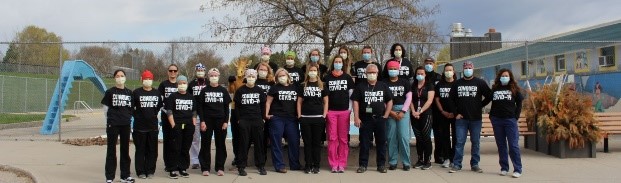
    Oakridge Assessment Centre team, Thames Valley FHT

    Guelph FHT: Guelph FHT urges residents to not let pandemic stop them from seeking medical attention

    North Huron FHT: North Huron Family Health Team lays out guidelines for visiting local doctors

    North Simcoe FHT: North Simcoe FHT’s virtual-care clinic for orphan patients set to expand

    St. Michael’s Hospital Academic FHT: “It’s time we leveled the playing field”, Dr. Tara Kiran

    Promote your team: we regularly post about members on Twitter and Facebook, such as with the above picture from Thames Valley FHT. If you’re on either, please tag us if you’re promoting any programs, activities or good news. Otherwise, feel free to email us at info@afhto.ca with a picture and details if possible. We’re here to highlight how well you’re taking care of your communities right now.


    Operational requirements for health sector restart and more

    Last week the government released the following:

    We continue to update several pages on our site with resources and news:

    We’ll update these on a regular basis as we receive relevant resources, while trying to reduce duplication with other sources. We will continue to update the news page daily.


    Questions Are the Answer- patient tips and tools

    Questions Are the Answer helps patients effectively prepare for making decisions about medical treatment options by asking the right questions. It considers topics for before, during, and after appointments, using past, present, and future medicines, medical tests, and surgeries. You can share these tips and tools from the Canadian Patient Safety Institute with your patients.


    Educational supports for IPAC -Toronto region

    The Toronto region has a mental health and addictions working group, co-chaired by Catherine Zahn, CEO of CAMH, and Heather McDonald, CEO of LOFT Community Services. They have collaborated to develop a resource hub for high-value materials related to infection prevention and control in community settings. It is available on a public-facing website, EENet, so anyone can access.

    They have also created a webinar series hosted by the CAMH IPAC specialist for those in community settings to ask any IPAC-related questions. The webinars are held weekly on Mondays from 12:00 -12:30 pm and anyone can sign up to receive invites. You can sign up here.


    Research participant recruitment – concussion telerehabilitation study

    Researchers in the Department of Occupational Therapy at the University of Toronto are currently recruiting youth with concussion to participate in a study exploring the use of telerehabilitation for concussion management.

    Youth will participate in a 6-week rehabilitation program consisting of education, support and low-intensity exercise delivered by a kinesiologist or occupational therapist through weekly videoconferencing appointments.

    Who can participate?
    •    Youth (ages 13-18 years) experiencing concussion symptoms
    •    At least 2 weeks post-concussion

    For more information or to help with participant recruitment, please contact the research team at oaktelerehab@utoronto.ca or 416-946-3273.


    Ask Me Anything about Health Privacy, June 3, 2020

    Still have questions around Health privacy? Join Kate Dewhirst Law for another AMA. Register here.


    Overview of Managing Common COVID-19 Respiratory Symptoms in Palliative Care and End of Life – A Primer for Front Line Staff, June 4, 2020
    Familiarize yourself with respiratory symptom management in palliative care and end of life. Hosted by the HPCO and CHPCA. Learn more here.


    Re-opening, Warily: Re-Thinking Clinical Practice in a Time of Physical Distancing, June 3, 2020

    Choosing Wisely weekly virtual gatherings during COVID-19. Register in advance.


    Mental Health in the COVID-19 Pandemic (Psychiatric Dimensions of Disasters III), June 6, 2020

    Disaster Psychiatry Canada and University of Toronto Psychiatry are holding a free event for all healthcare professionals. Look forward to mental health discussions in 7 different sessions from morning to afternoon.
    Learn more here.


    Integrated Mental and Physical Health – ECHO Ontario Mental Health, June 5, 2020
    Join this 12-week program beginning on June 5 and ending August 28 to strengthen your capacity in integrated Mental and Physical Health. Learn more and register here.

  • North Simcoe FHT’s virtual-care clinic set to expand

    Orillia Matters article published May 28, 2020

    By Mehreen Shahid

    The North Simcoe Family Health Team hopes to soon expand its virtual-care clinic program from two to five days a week.

    A local health team has a virtual solution for orphan patients in the area.

    Noticing the rising need of family physicians in the area and having five physicians retire in the last year or so, North Simcoe Family Health Team (NSFHT) thought it was time to bring technology in the mix. It wants to connect up to 3,000 local patients with family physicians virtually through a virtual care program it currently offers two days a week.

    “We have relied on telemedicine in the past to connect people with specialists who are in the GTA (Greater Toronto Area),” said NSFHT executive director Andrew Shantz, adding expansion is slated to happen as soon as possible. 

    The model is based on one used a few years ago by the Peterborough Family Health Team, according to Shantz.

    “They partnered with the virtual family physician network, an organization that helps connect physicians through telemedicine to communities,” he said. “We became aware of their situation and contacted (the virtual family physician network) earlier this year to see if they would interested in doing a similar program in North Simcoe.”

    This program doesn’t act as a walk-in clinic, he said, but it does help reduce pressure on the local hospital’s emergency room.

    “We supply the space and equipment and the nursing staff,” he said, adding physicians, who are typically based in larger urban centres, connect with client via telemedicine. “The program is unique because it connects a patient with a primary care provider long-term. This allows a relationship to be developed between the client and the nurse and the client and the physician.”

    Amber Kolsen, a registered nurse working with NSFHT, has been helping run the program, which is currently only offered two days a week.

    “I think it’s a great program,” she said. “We’ve had a lot of positive feedback from clients that have used it, just in terms of how easily accessible it is. It’s frustrating not to have a family doctor.”

    Kolsen said the health team encourages people to inquire about the program and even to try it out.

    “There is no obligation to stick with the program,” she said. “If they have one visit and don’t like the technological aspect, they don’t have to stick with it.”

    In her role, Kolsen said, before COVID-19 restrictions for in-person visits came in place, she had been helping up to 40 people each day, out of the 255 people currently enrolled in the program.

    “Anyone who reaches out will be offered a meet and greet,” she said, adding it’s all done virtually or over the phone these days. “The doctor will review their history and medications.”

    Kolsen said during an in-person visit, she would be the hands and eyes for the doctor to conduct a physical examination, if needed.

    The program has some limitations, she said, in that doctors are unable to see patients with narcotics prescriptions or for acute conditions, which might be best dealt at the ER.

    “The good thing is that the physician is able to provide referrals for specialists,” Kolsen said.

    Visit the NSFHT website for more information.

    To view the full article, click here.

  • Guelph FHT urges residents to not let pandemic stop them from seeking medical attention

    Guelph Today News article published May 23, 2020

    By Anam Khan

    Executive director Ross Kirkconnell of the Guelph Family Health Team said the health system has always been there for residents and the pandemic is no different

    The Guelph Family Health Team has a message for those holding themselves back from seeking medical attention during the pandemic. Don’t.

    “We want to remind people that family practice is available, has been available and always will be available. So don’t put things off that you shouldn’t be,” said Guelph Family Health Team’s executive director Ross Kirkconnell. 

    He said he’s recently been hearing stories of people not visiting their doctors while enduring pain because they believe the health system is busy. 

    “No. If you have symptoms you should be getting it checked like you normally would,” said Kirkconnell.

    Once the pandemic was declared mid-March, the clinics across the city immediately saw a decrease in the number of visits to their clinics across the city.

    “People were reluctant at first to sort of bother the health care system. Everyone was cautious about going anywhere,” said Kirkconnell.

    Now that it has been almost two months, he said the clinics are beginning to see more calls from patients who do not want to wait any longer but still are not at the number of visits they used to be before the pandemic. 

    “Some people can get by with their friends and family for support but at some point, you need care again and we shouldn’t feel bad about that,” said Kirkconnell.

    He said things like vaccines for new babies, chronic pain and necessary checkups should not be put off.  

    Kirkconnell said the system has always been open and now with the pandemic, the clinics are just operating differently.

    The team’s 100 medical professionals manage roughly 80 per cent of their 3,000 daily appointments through phone and video. People who need access to urgent care are seen in-person on an appointment basis. 

    Dr. Will Ruddock at the Guelph Family Health Team said switching to online methods is a two-sided effort as doctors have to make those services accessible and patients have to feel comfortable with the process. 

    “Anecdotally I would say that has really been increasing gradually over the last couple of weeks as everybody gets more comfortable with this,” said Ruddock. 

    He said he urges people to contact their family doctors regarding their concerns so they can be dealt with accordingly. 

    “In a year or five, having gotten started with this, everybody might have more interest in some of their care being done this way,” said Ruddock.

    With distancing measures, increased sanitation and use of masks already in place, Kirkconnell said many of their clinics are even allowing patients to wait in their car till they are called inside for their appointment to further enhance comfort and safety for the patient. 

    “If you need to see a physician or a member of the care team, they are available for you. If you need to go to emergency at the hospital, it’s there for you. Just because its a pandemic doesn’t mean other things stop,” said Kirkconnell. 

    To view the full article, click here.

  • Windsor FHT Launches Virtual Substance Program

    CTV News article published May 14, 2020

    By Ricardo Veneza

    WINDSOR, ONT. — The Windsor Team Care Centre’s substance abuse services are being forced online by COVID-19 – but the move may be a blessing in disguise.

    A new virtual substance abuse program, part of the One Team Recovery (OTR) initiative, will have its first session on Tuesday, through the online video call platform Go To Meeting. The service will allow up to 25 people to join the group session.

    “They’re really wanting the help,” says Beth Lalonde, an addiction counsellor with the program. “No one wakes up and says, ‘Hey guess what I want to be today? I want to be having a problem with this.’”

    The OTR is a five-week harm reduction program launched in October backed by a $40,880 grant from the Windsor-Essex Community Foundation and Green Shield Canada.

    Lalonde says counselling services have continued during the pandemic through one-on-one video calls and phone conversations, but the options are not good substitutes for in-person and group consultations.

    That led to the launch of the new virtual platform.

    “To reach the masses and to provide a group setting, we just found that this program could offer those extra services and extra supports this way and connect other people, so they don’t feel as alone,” says Lalonde.

    That loneliness may be creating further problems for those struggling with substance abuse.

    Lalonde says while opioid and crystal meth abuse is widespread in Windsor, half of her clients are struggling with alcohol.

    “Because of that isolation component with COVID, we’re seeing that clients are sometimes escalating their drinking or substance use because no one is there to support them,” says Lalonde.

    Yet, at the same time, Lalonde has seen a drastic dip in the number of physician referrals.

    Addiction counsellors at the centre usually have 25 clients at any one time.

    The OTR program has allowed self-referrals since March as a result of the COVID-induced dip.

    Derek Roberts, another addiction counsellor with the team, hopes the virtual platform will allow for more personal discussions with clients at a time when in-person visits are restricted or ill-advised.

    “Ideally we would like to provide the service in-person but, with what’s going on, we’re not able to do that so we’ve got to go on to the next best thing,” says Roberts.

    There are 10 people registered for the first virtual program cycle.

    Roberts and Lalonde will be connecting with the group on Friday to ensure a smooth launch next week.

    The program is already showing promise, according to Roberts, who sees the platform as more convenient for clients – helping to cut down on skipped meetings – and more efficient for the counsellors to potentially see more referrals.

    Roberts expects the program could become a mainstay even as group programs return, as pandemic restrictions are lifted, including those that bring families impacted by addiction together.

    “We know that statistics show for everyone individual’s addiction, that it directly affects five additional people,” says Roberts. “Which are their loved ones and friends.”

    Roberts adds the OTR program has no current wait list. Those seeking help can call 519-250-5524.

    To view the full article, click here.

  • Hamilton and McMaster FHTs provide drive-thru COVID-19 testing for 60 people per day

    Y108 News article published April 23, 2020

    By Lisa Polewski

    Hamiltonians can now book a COVID-19 test at the city’s drive-thru site, based inside the Dave Andreychuk Mountain Arena.
    It’s not quite the same as a fast-food drive-thru, but the COVID-19 testing centre at the Dave Andreychuk Mountain Arena is as efficient as it gets.

    Since Hamilton’s third testing site opened its doors a week ago, they’ve been testing about 60 people per day.

    “We book every five minutes, and it takes about three and a half minutes for a client to come through,” said Laurel Turnbull, manager of nursing, complex care and quality improvement at the Hamilton Family Health Team.

    The arena is functioning as a COVID-19 testing centre between 10 a.m. and 3 p.m., seven days a week. The Hamilton Family Health Team and the McMaster Family Health Team are operating the site, which is staffed by primary care clinicians.

    Jill Berridge, co-executive director of the McMaster Family Health Team, said the response to the unique method of testing has been overwhelmingly positive, especially from those who are being tested.

    “They love the fact that they can stay in the comfort of their own car, and go through this process, and how quick it is,” said Berridge.

    The mountain site is also testing those who don’t have a car. Elderly residents or those who rely on mobility devices are able to get a ride through DARTS, and anyone who may get to the arena by public transit can also simply walk around the track to the different stations.

    It’s not as simple as turning up and getting tested, however. Appointments at the Hester Street location still need to be booked through a family doctor or Hamilton public health.

    Berridge said most people understand that process, although a handful of people are still showing up on a daily basis without an appointment.

    “But they’ve been very reasonable when we’ve asked them to go ahead and call public health and get an appointment to come back.”

    Although testing has ramped up across Hamilton — specifically in long-term care and retirement homes — Berridge said they are following the provincial guidelines on who qualifies for testing, which means you cannot simply request a test.

    “It would be hard to test everybody. The capacity for that type of testing just isn’t available right now. I think we do a good job of prioritizing people that really need to be tested.”

    During an update from the city last week, Dr. Elizabeth Richardson, Hamilton’s medical officer of health, said they’ve been getting requests from people who have had their employers ask them for a “clearance note” to go back to work.

    “That is not recommended at all, and in fact, it’s taking up resources that could be used for those who are symptomatic,” said Dr. Richardson.

    “We want to really get the message out that that kind of testing, it’s not helpful. For somebody who’s well, the fact that they have a negative test today means nothing about tomorrow, or even five minutes after they’re tested.”

    There have been 3,238 tests administered at the city’s testing and assessment centres since the first two opened their doors on March 16.

    To view the full article, click here.

  • Bits & Pieces: update re PPE surveys, assessment centres, Zoom bombers & more

    Bits & Pieces: update re PPE surveys, assessment centres, Zoom bombers & more

    Your Weekly News & Updates


    In This Issue  
    • Update on daily PPE surveys
    • COVID-19 assessment centres and more
    • COVID-19 in Ontario- what do the models show for our future?
    • Members’ stories
    • How to keep uninvited guests out of Zoom meetings and webinars
    • Updated message from Ontario Health (Cancer Care Ontario)
    • Complimentary access to online workouts for GoodLife members
    • Upcoming events including CMHA Ontario and Mental Health Works Webinars – In response to COVID-19 pandemic

    Daily PPE surveys

    On Friday, April 3 the Ministry’s Emergency Operations Centre (MEOC) updated their request for daily PPE surveys. Our follow up email sent Mar. 30 remains accurate; however, in addition:

    This survey from the Ministry comes through a Minister’s Order and, as such, is mandatory.


    COVID-19 assessment centres and more
    As of last week, we have created a page with a list of COVID-19 assessment centres across Ontario. This list is sent to us daily by the Ministry and will only be found on the members only section of the website per their request to not make this public.

    We continue to update several pages on our site with resources and news:

    We’ll update these on a regular basis as we receive relevant resources, while trying to reduce duplication with other sources. We will continue to update the news page daily.


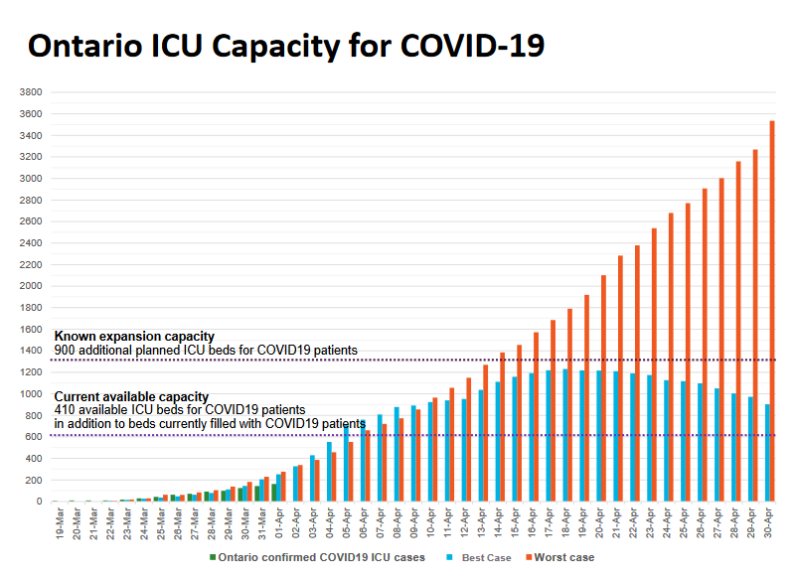
    ON ICU capacity for COVID-19


    COVID-19 in Ontario- what do the models show for our future?

    On Friday, April 3 the Ontario government released extensive COVID-19 modelling, revealing several scenarios that project the potential number of cases and deaths. Find out about possible scenarios.


    Members’ stories
    McMaster FHT“Dr. Cathy Risdon sent her staff a sombre email: Use this time to get your affairs in order”

    Ottawa Valley FHTNeilcorp donation buys protective equipment for Ottawa Valley Family Health Team

    Prince Edward FHTCounty’s COVID-19 assessment centre by appointment only

    Peterborough FHTPeterborough Family Health Team still providing needed services

    Rapids FHT“We’re still trying to keep people out of the emergency rooms unnecessarily.”


    How to keep uninvited guests out of Zoom meetings and webinars
    With the switch to virtual care many AFHTO teams have started to use Zoom for team meetings or patient care and in the past few days, you may have heard of or experienced “Zoom-bombing”. Given these recent concerns we have compiled a few tips and tricks suggested by Zoom on how you can keep uninvited guests out of your Zoom meetings and webinars.


    Updated message from Ontario Health (Cancer Care Ontario)
    Last week Ontario Health (Cancer Care Ontario) recommended that all routine cancer screening tests be delayed. This includes screening for colorectal cancer with the fecal immunochemical test (FIT).

    Ontario Health (Cancer Care Ontario) recommends follow-up procedures continue for people with abnormal cancer screening results that are highly suspicious for cancer, including abnormal FIT results; however, please be aware that the feasibility of follow-up procedures during the pandemic will depend on the resources available at each hospital or facility.

    If you have any questions about cancer screening during the pandemic, please contact screenforlife@cancercare.on.ca (updated).


    Complimentary access to online workouts for GoodLife members
    GoodLife informed us all memberships have been put on hold and all associated payments were stopped Tuesday, March 17th. Corporate members who have purchased a Paid-in-Full annual membership will receive an extension to their current expiry date reflective of the total time their clubs remain closed.

    In an effort to support their members during this challenging time, they offer complimentary access to online workouts. This includes over 100 at-home workouts that are available for FREE throughout the duration of their closure. All active GoodLife members would be required to log on to the GoodLife member website with their own credentials in order to access the workouts.


    CMHA Ontario and Mental Health Works Webinars – In response to COVID-19 pandemic, April 8-21, 2020
    For health care professionals and workers: with topics relevant to both hospitals and clinics, as well as telehealth professionals and those who work to support patient outcomes, such as custodial staff, security professionals, and administrators.

    1.    Mental Health for TelehealthApril 15, 6-7 pm
    2.    Mental Health for Support Staff: Taking Care of YourselfApril 17, 6-7 pm

    Essential Workplace Staff Webinars:
    3.    Mental health at work for frontline staff (Part 1) April 7, 6 – 7 pm; (Part 2) April 9, 7 – 8 pm

    General Workplace Supports:
    4.    Health and AnxietyApril 9, 12 – 1 pm
    5.    Being Mindful at Work (office and from home) April 10, 1 – 2 pm; April 17, 10 – 11 AM; (FR) April 22, 1 pm
    6.    Stress and Anxiety –(FR) April 8, 1 PM;  April 14, 3 – 4 pm
    7.    Isolation and LonelinessApril 21, 12 – 1 pm


    The COVID-19 Pivot: The Clinical Presentation of COVID-19 Infections and Course of Illness, April 9, 2020
    Join the CFPC’s webinar featuring Dr. Jared Bullard and Dr. Naheed Dosani. Click here for the YouTube livestream link.


    Fundamental Ethical and Practical Considerations in Video Counselling, April 9, 2020
    Hosted by OASW, members can access each training for $30 and non-members for $50. Register here.


    Understanding Bronchiectasis Webinar, April 21, 2020
    Learn more about this neglected pulmonary disease. By the end of this webinar, you will be able to help patients self-manage the disease and avoid the acquisition of nontuberculosis mycobacteria. Find out more here

  • Early Lessons: Tackling a Global Crisis with a Community Response

    Longwoods article published Mar. 23, 2020

    By Thuy-Nga (Tia) Pham, Jeff Powis, Mark Fam, Ian Fraser and Anne Wojtak

    In the 17 years since the SARS crisis, Ontario has invested in our public health system and improved connections across the healthcare system to better respond ‘as one.’ Although we are still a long way from having a fully integrated healthcare system, we at least understand the imperative to think and act like one system, and every day there are leaders and clinicians stepping-up to lead positive change.

    As the COVID-19 crisis escalates, we see similar critical success factors for developing integrated systems of care such as Ontario Health Teams, and the response to large-scale healthcare emergencies – both scenarios are complex and dynamic, requiring a shared sense of purpose, trusted personal and organizational relationships across different sectors, distributed leadership, and a strong role for organized primary care networks. However, large-scale emergencies further demand the system make changes quickly, within a precarious context, and with significantly higher stakes.

    For the East Toronto Health Partners (ETHP), the investment in building our core partnership over more than two decades helped accelerate our initial response to the novel coronavirus. The ETHP are a network of healthcare and social services organizations, recently named as one of the first Ontario Health Teams, that have partnered to better integrated care in our East Toronto community of more than 300,000 residents. The core leadership for the ETHP includes patients and caregivers, the East Toronto Family Practice Network, Michael Garron Hospital, Providence HealthCare (Unity Health Toronto), South Riverdale Community Health Centre, VHA Home HealthCare and WoodGreen Community Services. Our broader partnership includes more than 50 other health and social services organizations. The story of our planning for COVID-19 is not just about preparing our hospital to provide acute care for pandemic patients but about mobilizing our community and primary care providers as a whole. This includes management of pandemic patients outside of the hospital and provision of services which are essential to support a local pandemic response.

    Started planning early

    As in the rest of Ontario, our local infection control specialists have been monitoring the coronavirus situation in China since it started. As broad community transmission began in China in early January, and the first presumptive case of COVID-19 in Canada occurred, it had the effect of a shot from a starter pistol. Leaders from our East Toronto Family Practice Network-EasT-FPN (established in September 2019 as the voice of our 270 local family physicians at our Ontario Health Team leadership table), connected immediately with our infection control specialists at Michael Garron Hospital (MGH). Our historical fabric of solid partnerships meant a tacit agreement to take care of our community together.

    Our family physician leaders from EasT-FPN represent all family practice models that exist in East Toronto. This level of organized physician leadership and diversity of voices has proved invaluable in the current crisis. When the medical department chiefs and hospital leaders from MGH first came together for emergency pandemic planning, community family medicine and our Community Health Centre partners were at the table. This partnership between the hospital and our local family physicians enabled rapid, shared decisions on Personal Protective Equipment (PPE) stocks, supply distribution and mask-fit testing for all community clinicians in East Toronto. Through the EasT-FPN connections, and with winter flu surge funds made available by the hospital, arrangements for mask-fit testing and PPE distribution for local family practices happened quickly, starting with the family physician practices in Chinatown East given the initial higher risk for their population.

    As early as January, our emergency pandemic planning team started investigating best practice solutions to divert potentially infected, lower needs patients from the hospital, including opening a community-based testing and assessment centre properly equipped with PPE. The team at the South East Family Health Team (sic) (SETFHT) initially volunteered to host the assessment centre in their location – a building owned by MGH across the street from the main hospital, but after broad community consultation the assessment centre was eventually housed within the hospital itself. EasT-FPN sent out a call to all family physician practices to participate in rotational staffing for the centre.

    Dr. Jeff Powis, MGH’s infection control lead, set up weekly calls for all family physicians starting in February. Knowing the need for broader engagement across our Ontario Health Team (OHT) organizational partners, we subsequently established weekly calls for all leaders across ETHP, including home care, community services, mental health and addictions services, independent living, housing, homeless support services and others. These calls enable local problem-solving, sharing up-to-date best evidence, decision-making, common messaging, sharing human resources practices, and greater consistency in response across in our community, keeping us a few steps ahead of official provincial communications.

    Lessons Learned

    The COVID-19 efforts are pushing us well beyond our capacity – the overloading of our hospital phone system and long waits to access our assessment centre, one of the first to have opened in Toronto, are just the tip of the iceberg. However, we are still taking precious moments to flag the lessons we are learning.

    1. This is not the time to ‘pause’ our OHT work with community partners; in fact, it is becoming more critical. The speed at which a system can innovate and change is dependent on the strength of its relationships. Advancing our partnerships and our integrated leadership models allows us to respond at every level, from ensuring our community health and social care partners are ready, to prioritizing PPE and COVID-19 assessments for the health care workers who need them the most.
    2. Organized primary care leadership is essential. Our ability to quickly connect, communicate, and coordinate with local family physicians would be nearly impossible without our new Family Practice Network. Due to this network, the hospital was able to grant temporary hospital privileges within a 24-hour period to all members of EasT-FPN who did not already have them. This rapid credentialing, with information facilitated by EasT-FPN, enables all our community physicians to access IT systems and other resources to help stem the tide of COVID-19. Additionally, as the pandemic progresses, this will allow the hospital to plan physician human resource cross-training.
    3. In a crisis situation, ‘fires’ can quickly spread without quick acts of containment. Concerns from other tenants in SETFHT’s location forced a swift relocation of the assessment centre to an isolated ambulatory care clinic space at the main hospital, but the cooperation across multiple partners enabled the centre to still open within a week of its announcement. Within two hours of asking for physicians to staff the assessment centre, the East FPN filled 3-weeks of shifts, enabling 12-hour coverage, 7 days/week. This amazing contribution from primary care colleagues meant the community of East Toronto could get rapid access to COVID-19 assessments while enabling emergency physicians to focus on other critical volumes coming to the hospital.
    4. We have been struggling with digital health advancements and clinical updates, use of virtual care, and communication tools for a long time. Email and teleconferences are last century’s technology, so now our digital health strategy must shift in real-time. From collaborating with other hospital partners to establish online assessment screening and test results reporting, to exploring rapid deployment of virtual ICU capacity, we will build new models to deliver care to our community. With the onset of COVID-19, patients have been scared to visit their regular physicians’ offices, and rapid introduction and expansion of video consults has enabled clinicians to continue providing safe care to patients.
    5. Funding and access to PPE is an issue for the hospital, for primary care and our community partners. All of us across ETHP contribute to the fight, and all of us need the resources to do that. For example, when our partners at South Riverdale Community Health Centre needed urgent supplies of PPE to maintain critical Consumption and Treatment Services in the community, the hospital stepped-up.  The commitment and ability to share what limited resources we have is an important principle for how we work as partners.
    6. Although obvious, it deserves restating, we need ongoing recognition and support for our frontline healthcare workers. The viral video from Spain of community members cheering from their balconies for health care workers is an example of how a small gesture can go a long way to supporting the resilience of our teams.  We try to replicate that now at the hospital, perhaps not with songs sung across balconies, but with an amazing positive energy at our staff screening entrance that welcomes our teams every day.
    7. We need to think about how we will engage our patients and caregivers in our emergency plan to the same degree we have in other aspects of our integrated care work. Given that it will take months to deal with the pandemic, we will need patients, caregivers and our community involved in co-designing solutions to help all of us manage through this crisis.

    Knowing the pandemic one day will abate, we must capitalize on the platform COVID-19 provided to leapfrog our efforts in healthcare transformation. The months ahead will be arduous for all of us – patients, families and healthcare providers alike. While no one wants an emergency like this one, we can already see how challenges provide a spark for innovations when relationships and systems such as the OHT exist to facilitate them. The work we do together now will go a long way in determining our path to becoming ‘one’ coordinated system.

    About the Author

    Thuy-Nga (Tia) Pham MD, MSc, CCFP, FCFP is the Physician Lead for the South East Toronto Family Health Team and Associate Professor, Department of Family and Community Medicine, University of Toronto.

    Jeff Powis MD, FRCPC, MSc is the Medical Director, Infection Prevention and Control at Michael Garron Hospital, Toronto East Health Network and Assistant Professor, Department of Medicine, University of Toronto.

    Mark Fam, MHA is Vice-President Programs at Michael Garron Hospital, Toronto East Health Network and Adjunct Faculty, Institute for Health Policy, Management and Evaluation, Dalla Lana School of Public Health, University of Toronto.

    Ian Fraser MD, FRCPC is the Chief of Staff at Michael Garron Hospital, Toronto East Health Network and Director of the Provincial Weaning Centre of Excellence for prolonged ventilation and a lecturer in the Division of Respirology, Faculty of Medicine, University of Toronto.

    Anne Wojtak DrPH, MHSc is the Lead for Integrated Care for the East Toronto Health Partners and Adjunct Faculty, Institute for Health Policy, Management and Evaluation, Dalla Lana School of Public Health, University of Toronto.

    To view the full article click here.
     

  • Londoners and Thames Valley FHT organize to supply doctor’s offices, ‘love-bomb’ health-care workers

    The London Free Press article published Mar. 20, 2020

    By Randy Richmond

    A handful of Londoners have turned some casual conversations into a grassroots effort supplying thousands of gloves and masks to local medical clinics.

    And they want more people stuck at home, especially business leaders, to step up and help.

    “We all need to get out of this mindset of hurt. It’s really easy to focus on that, but I think the key right now is to band together and be a village,” said Diana House, a London real estate investor and developer.

    “Business people are sitting at home right now because their companies are closed. They are the people who need to rise up and say, ‘How can we help?’ “

    Help is needed to keep medical clinics and doctors’ offices in London operating, said Dr. Mario Elia, a family doctor and professor of family medicine at Western University.

    “If we do end up seeing big numbers over the next few weeks, we want to make sure that family docs can keep seeing patients, safely and timely, and that requires us to have adequate equipment,” he said.

    Besides masks and gloves, doctors need eye protection and gowns, he said.

    “Some docs are at kind of a critical time, if they do not get more, they may need to close in the near future. One of the issues that has come up in other countries is when health care workers start working in unsafe conditions, they start getting sick and the whole system just collapses.”

    Family doctors should be the first place people go when they suspect they have some symptoms of coronavirus, but are not at an urgent stage, Elia said.

    The assessment centres should be for those who don’t have a family doctor and whose symptoms aren’t severe, he said.

    Elia and House are part of a loose network of medical and non-medical people who began putting their minds to the needs of doctors and medical staff in the coming weeks.

    “They are starting to prepare for the coming weeks and potentially months. The question was, ‘Who’s preparing to support them?’ ” House said.

    The conversations touched on child care and pet care for doctors and nurses under siege, and where medical professionals might live between shifts to avoid infecting their families.

    All those matters remain part of the discussion, but it became clear that getting supplies to medical clinics is the first challenge, House said.

    The network found a local supplier and bought, at cost 15,000 pairs of surgical gloves and 700 masks, and began tapping other sources.

    There are other places besides doctors’ offices that have masks and gloves, such as nail salons, dental offices, podiatrists, tattoo parlours, spas and veterinarian clinics.

    So, they’ve been contacting those businesses, other suppliers, Western University and Fanshawe College for help, House said.

    The Thames Valley Family Health Team has taken on the job of coordinating and collecting supplies, and medical students have helped distribute the first supplies to clinics.

    “It’s been a really beautiful thing to see the community get together,” House said. “It’s very grassroots, very much evolving. The goal is to keep the medical clinics open for as long as possible to divert as many people away from the hospital as we can.”

    The effort has worked so well, the clinics have enough gloves for now, Elia said.

    But surgical masks, gowns and eye protection are still needed, he said.

    Doctors’ offices are out of swabs, in short supply at the moment in London, but that’s because swabs are being directed to public health officials who are organizing the testing for the virus at emergency departments, Elia said.

    House knows dental clinics and other services will need gloves and masks when they re-open, but says the focus now has to be on medical clinics and hospitals.

    “I really think we’re in a triage situation and I think the resources need to go to medical first. We are trying to pull as many strings as we can to try to make sure the resources go to the right place,” she said.

    “They’re the ones who are going to get us through this. How can we just love-bomb them and shower them with support any way we can to make what’s going to be a very difficult season for them maybe a little bit easier?”

    There are going to be dozens of ways ordinary people can help, House said.

    “It doesn’t have to be this. It could be finding a health care worker and adopting them and saying, ‘Every time I go to the grocery store, I’m going to buy them groceries.’ “

    To view the full article, click here.

  • Ontario shifting to virtual-first model in bid to halt spread of COVID-19

    The Star article published Mar. 16, 2020

    By Megan Ogilvie

    Family doctors across Ontario are rapidly transitioning to a “virtual-first” care model as a way to halt the spread of COVID-19 in their offices and waiting rooms.

    Starting this week, most doctors will talk to patients on the phone, by video conference or through email as a first-step to determine who needs to come to the office for an in-person appointment.

    Patients who require face-to-face care, including pregnant women, babies requiring scheduled vaccines and some seniors with chronic health conditions, will have in-person appointments. But many patients will receive virtual advice on how to care for their condition at home.

    As well, some patients will be told upcoming, non-urgent appointments will be postponed for weeks or months. For example, Cancer Care Ontario on Monday advised physicians to postpone cervical cancer screening for low-risk women.

    For the most part, these province-wide measures are in place to protect family doctors, nurse practitioners, office staff and patients from getting infected with COVID-19.

    “We don’t want to bring healthy patients into an office where they could be potentially exposed to COVID-19 by mistake,” said Dr. David Kaplan, a family physician at North York General Hospital and the North York Family Health Team. “It’s part of social distancing. If you want to keep people out of communal spaces, it’s the same for keeping people out of waiting rooms. This is just another way that family doctors can help.”

    Dr. Thuy-Nga (Tia) Pham, physician lead for the South East Toronto Family Health Team, said her patients are welcoming virtual care, especially with so many having questions about COVID-19.

    Last week, the province’s Ministry of Health, after discussions with the Ontario Medical Association, announced new billing codes to allow family physicians and nurse practitioners to move to virtual care.

    Pushing more routine appointments to virtual visits will help family physicians more effectively deal with the surge in patients needing treatment or advice on COVID-19. And seeing more patients virtually will help preserve face masks, disposable gowns and other protective equipment which could be in short supply as the COVID-19 pandemic progresses.

    To view the full article, click here.