Tag: Measurement and Quality Improvement

  • QI in Action eBulletin #113: Diabetes Care in Primary Care

    QI in Action eBulletin #113: Diabetes Care in Primary Care

    In this Issue:

    • AFHTO 2021 Conference Poster Highlights
    • Your Role In Improving The Population Health Of People At Risk Or Living With Diabetic Foot Complications
    • Query Supports: Identify your Target Population
    • Ontario Health Updates
    • Quality Standards
    • Upcoming Webinars

    AFHTO 2021 Conference Poster Highlights

    At the AFHTO 2021 Conference, we hosted an exhibit of numerous posters highlighting evidence-based, impactful innovations by your colleagues. We encourage you to take a moment to check out these posters and reach out to teams to see how you can implement these innovations too!

    Given November is Diabetes Awareness Month we would like to highlight a few innovations you can implement in your teams to improve diabetes care, all poster innovations presented at the AFHTO 2021 conference.

    1) Proactive Diabetes Care
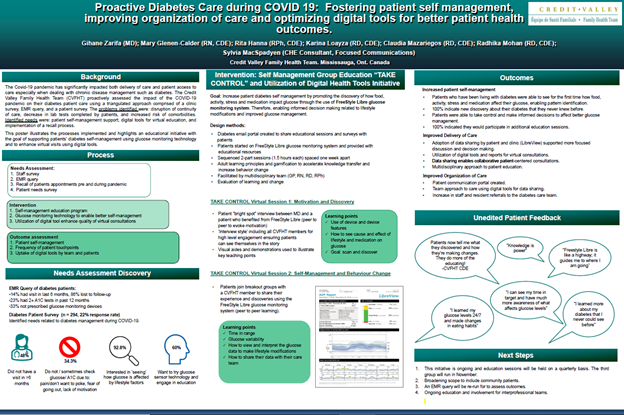
    Proactive Diabetes Care poster

    COVID-19 disrupted the continuity of care for patients and propagated deterioration of chronic conditions such as diabetes. Credit Valley Family Health Team (CVFHT) proactively assessed the impact of the pandemic on their diabetes patient care using a triangulated approach comprised of a clinic survey, EMR query, and a patient survey. CVFHT prioritized the needs, creating a Just in Time intervention which was a proactive virtual educational strategy designed to reduce deterioration of diabetes outcomes, foster patient engagement and improve patient self-management. The 2-part education intervention utilized a team-based approach and was grounded in principles of learning and behavioural psychology with the goal of promoting behaviour change. For more information, please contact: Dr. Zarifa, gihane.zarifa@thp.ca

    2) Implement Self Management Tools for Patients
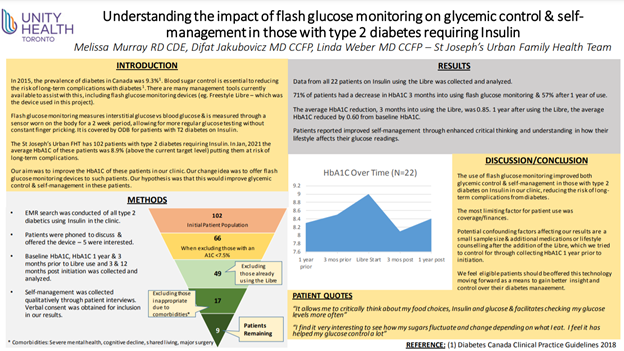
    Implement Self Management Tools for Patients poster

    St. Joseph’s Urban Family Health Team’s initiative aims to improve the glycemic control of those with type 2 diabetes, reducing the risk of long-term complications. Their aim is to ensure all patients eligible, are offered flash glucose monitoring to monitor their glucose and provide them with more insight over lifestyle factors impacting their glycemic control. Their aim is that if this monitoring system does improve indices, that all patients requiring insulin therapy are offered this as an option, to improve their quality of life and reduce the risk of long-term complications. For more information, please contact: improve@afhto.ca

    3) Dynamic Digital Engagement
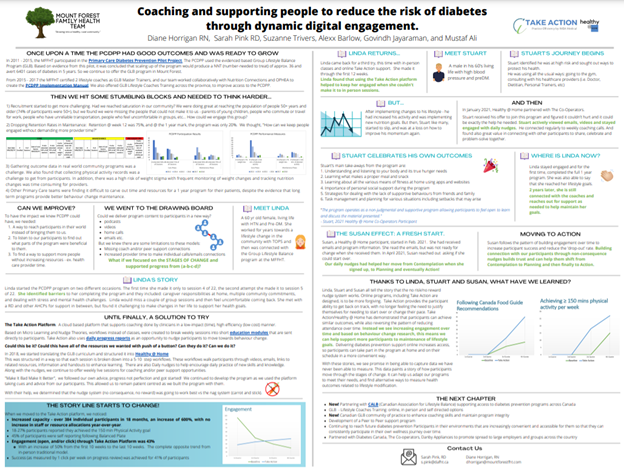
    Dynamic Digital Engagement poster

    Mount Forest Family Health Team, in partnership with IMA Medical Group, demonstrated how Engagement and Success can be tracked differently within a virtual care model. They also included how engagement over time can be leveraged to build more personalized success experiences that enhance their ability to guide themselves from pre-contemplation to action. For more information, please contact: Sarah Pink, s.pink@dafht.ca and Diane Horrigan, dhorrigan@mountforestfht.com

    4) Updating EMR tools for Accessible and Trackable Data
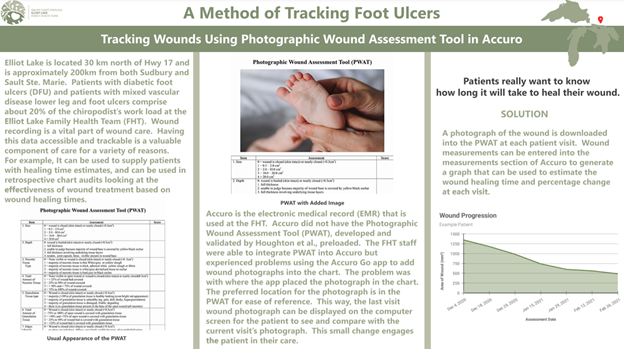
    Updating EMR tools for Accessible and Trackable Data poster

    Wound documentation using a validated tracking tool in combination with proper wound care product selection is a best practice. When Elliot Lake Family Health Team heard from their patients, “Patients really want to know how long it will take to heal their wound” they implemented a tool within their electronic medical record (EMR) to give patients accessible and trackable data. Elliot Lake Family Health Team was able to track wounds and able to predict which wounds will heal and which wounds will be hard to heal. For more information, please contact: Mary Ellen Mitchell, M.Mitchell@elfht.ca

    Wounds Canada- a pair of hands holding another, older hand


    Your Role In Improving The Population Health Of People At Risk Or Living With Diabetic Foot Complications

    Earlier this year, AFHTO, in collaboration with Wounds Canada hosted a webinar to provide an overview of your role to improve the population health of people at risk or living with diabetic foot complications across the full continuum of care settings to improve patient experience, outcomes and costs.
    Click here for the recording and slides.

    Query Supports: Identify your Target Population
    MyPractice: Primary Care Report provides an update on the HbA1c Indicator: % of patients with diabetes who had 2 or more HbA1c tests within the past 12 months, approximately every 6 months. In order to assist you with retrieving data in real time from your EMR, the QI in PC Council has created a number of queries which can be found here. Please note, these queries will have to be adjusted per team, but they provide a reference point. In addition, eCE has created a Diabetes Manager.

    On November 18th the QIPC council shared a process that worked well for London FHT that collaborated with ‘Partnering for Quality’ to develop and create comprehensive searches for guiding data supporting quality improvement initiatives on Diabetes, Congestive Heart Failure, and Chronic Obstructive Pulmonary Disease. Using the foundational approach of identifying suspects for coding patients, to then selecting targets to improve the patient level of care, and displaying the data in PowerBI analytical software, made quarterly reporting easier and initiated further discussion around what targets to select next.

     
    If there is interest in learning more details about how this may work for you contact the Partnering for Quality team about the PFQ-ID Dashboard toolkit. A simple no cost solution for obtaining your EMR data and presenting it back in an efficient usable way for the team.

    Ontario Health Updates: Upcoming events and programs in support of Diabetes Awareness month
    Content below developed by Ontario Health (Health Quality Ontario)

    November is Diabetes Awareness Month around the world. Did you know that this year also marks the 100th anniversary of the discovery of insulin? In Ontario, about one in ten people have some form of diabetes. See below for some upcoming events and resources that can support you in your practice related to care for diabetes:

    MyPractice Primary Care A tailored report for quality care

    Webinar | MyPractice: Primary Care Report: Using Data for Improvement | Monday November 22, 2021 • 12–1 p.m. Ontario Health is hosting a webinar for primary care providers on using the diabetes management indicators in the MyPractice: Primary Care report to drive improvements in patient care. Please register here to join the session. This is the first of an ongoing series that will focus on using data from the MyPractice: Primary Care report for quality improvement.
    This program is part of a series that has been certified for up to 4 Mainpro+ credits.
     
    Quality Standards
    To address gaps in the health care that people with diabetes receive across Ontario, and improve their health outcomes, Ontario Health developed three quality standards:

    • The Type 1 Diabetes quality standard addresses care for people of any age with a diagnosis of type 1 diabetes.
    • The Prediabetes and Type 2 Diabetes quality standard addresses care for children and adults who are at risk of developing prediabetes or type 2 diabetes or who already have a diagnosis of either. It includes the assessment, diagnosis, and management of prediabetes and type 2 diabetes.
    • The Diabetes in Pregnancy quality standard addresses care for people with type 1 and type 2 diabetes who become pregnant and people diagnosed with gestational diabetes. It includes preconception care as well as management of diabetes during pregnancy.

    Included with each quality standard is a patient guide you can use to support your conversations when discussing diabetes care with your patients. Stay tuned for information on upcoming webinars related to diabetes.

    Family physicians can now earn up to 5.5 Mainpro+® credits for reading the diabetes quality standards through the Understanding Quality Standards in Primary Care program. To enroll or to learn more, please contact UnderstandQS@ontariohealth.ca.

    Upcoming Webinars:

    Practical Approaches to Polypharmacy: The Gentle Art of Deprescribing
    Dec 1, 2021 (12-1 pm EST) |
    Register here.

    In this webinar we will explore approaches to the issues and problems around polypharmacy and deprescribing in primary care patients. We will discuss approaches to the integration of patients’ goals and priorities with evidence. In the second part of the webinar, we will demonstrate the TAPER tool (Team Approach to Polypharmacy Evaluation and Reduction), an integrated pathway designed for use in a primary care team-based approach as routine “prevention” in primary care patients with polypharmacy.

    Using Electronic Medical Records to Choose Wisely: Push, Pull, Nudge
    Dec 1, 2021 (12-1 pm EST) | Register here

    Reducing inappropriate antibiotic prescriptions has been a long-standing challenge in primary care. With the increasing adoption of digital tools in primary care practices, how might we take advantage of features within EMRs to help improve antibiotic prescribing?

    Choosing Wisely Talks on December 1 at 12 p.m. ET will explore efforts to work with EMR vendors to embed antibiotic stewardship tools into their digital workflows. Dr. Darren Larsen, family physician and expert in digital health, will share how leveraging EMRs can not only help improve patient care, but also help change clinician behaviour.

    In Case You Missed It: Check out eBulletin #112 or other back issues here!
    Questions? Comments? Contact us at improve@afhto.ca.
     

  • QI in Action eBulletin #112: Ontario Structured Psychotherapy for Alcohol Use Disorder Survey, COVID-19 Guidance Updated, & more

    QI in Action eBulletin #112: Ontario Structured Psychotherapy for Alcohol Use Disorder Survey, COVID-19 Guidance Updated, & more

    In this Issue:

    • Ontario Structured Psychotherapy for Alcohol Use Disorder Survey
    • COVID-19 Guidance: Primary Care Providers in a Community Setting – UPDATED
    • Ontario Health Updates: Upcoming events and programs related to quality standards (QS)
    • Participate in Research
    • Upcoming Webinars

    Ontario Structured Psychotherapy for Alcohol Use Disorder Survey

    The Ontario Structured Psychotherapy program (OSP) has been designed and implemented for people with mild to moderate anxiety and depression. Screening for substance use including Alcohol Use Disorder (AUD) does occur, however people are not disclosing concerns around their alcohol consumption in initial screenings. Clients often disclose concerns related to alcohol consumption after a few sessions which leaves some clinicians unable to adequately meet their clients needs.

    Addictions and Mental Health Ontario (AMHO), along with the Ministry of Health (MOH) and the Mental Health and Addictions Centre of Excellence (MHA CoE), has convened an advisory committee to recommend next steps for an OSP program for clients with mild to moderate AUD. This survey is intended to gather information that would support the committee in making recommendations to support the development of the program.
     
    The survey will take approximately 10-15 minutes to complete and will be open until November 12, 2021. Please note, this survey was initially designed for people working in the mental health and addiction sector. Not all question will be relevant to all providers, so feel free to only complete sections that are relevant to your care setting.

    If you have any questions or further comments, please contact karen.cook@amho.ca.

    COVID-19 Guidance: Primary Care Providers in a Community Setting

    Ministry of Health has released a version 9.0 for the COVID-19 guidance for primary care providers in a community setting on October 19, 2021. Sections that are updated are on In-Person, Screening, Testing, and Occupational Health and Safety. Please keep an eye on the Ministry of Health (MOH) COVID-19 website for regularly updated versions.

    Ontario Health Updates: Upcoming events and programs related to quality standards (QS)
    Content below developed by Ontario Health (Health Quality Ontario)

    RGP Toronto Implementation Coaching Series for Delirium Care

    Delirium quality standard

    Join us this fall for a practical coaching series on how you can use the implementation guide for the Delirium quality standard to change care in your workplace! Come on your own or bring a team.

    This will be a dynamic, interactive coaching series where all levels of implementers are welcome—no preparation required. Whether you are just getting started, are started but stalled, or on a roll, this series is for you!

    Part 1: Assemble a Team | October 28, 2021 • 12:00–1:00 p.m. ET
    In this session you will learn how to create an elevator pitch, provide a case for change, and decide how you will engage various stakeholders. REGISTER HERE

    Part 2: Prioritize a Change Idea | November 25, 2021 • 12:00-1:00 p.m. ET
    In this session you will learn practical methods to set priorities in diverse groups and how to set up two-way communication mechanisms. REGISTER

     Part 3: Create a Plan | December 16, 2021 • 12:00-1:00 p.m. ET
    In this session you will learn how to create a practical action plan, address barriers, and leverage facilitators so that your change sticks. REGISTER

    Mainpro+® Self-Study Program | Understanding Quality Standards in Primary Care | Coming October 2021
    Ontario Health is excited to announce a new opportunity for family physicians to earn Mainpro+® credits by reading the quality standards relevant to primary care. This one-credit-per-hour Self-Learning program has been certified by the College of Family Physicians of Canada and the Ontario Chapter for up to 48.75 credits. To learn more, or to enroll in the program, contact: UnderstandQS@ontariohealth.ca.

    Participate in Research!

    Your opinion matters: Help us develop educational materials for lipid management.

    Researchers at The Knowledge Translation (KT) Program at St. Michael’s Hospital and Women’s College Hospital are collaborating on a study called the “CANHEART Improving Cholesterol Management Study” to improve lipid management and cardiovascular health in Ontario.

    The Community Heart Outcomes Improvement and Cholesterol Education Study (CHOICES) is an Ontario research study being conducted in certain health regions in Ontario with higher than average rates of cardiovascular disease. The study is being funded as part of Canada’s Strategy for Patient-Oriented Research (SPOR) and by the Canadian Institutes of Health Research (CIHR). CHOICES will involve implementing a ‘toolbox’ for cholesterol management to inform and empower people when it comes to the appropriate management of their cholesterol and cardiovascular health. The tools within this ‘toolbox’, such as cholesterol tip sheets, educational videos, and online decision aids, will be widely distributed in the high-risk health regions, to allow people to work with their primary care physician and share in the decision-making process together.

    Currently, we are looking to recruit primary care physicians Ontario wide to review and provide feedback on an online decision aid tool aimed to improve cholesterol management among patients. Participants will be compensated with a $100.00 honorarium for their time.  If you are interested in reviewing the tool and participating in a 30 – 45-minute confidential telephone interview, please contact Research Assistant, Suvabna Theivendrampillai at Suvabna.Theivendrampillai@unityhealth.to

    Are you a Family Physician delivering virtual care?

    A study on digital health and compassionate care led by Dr. Laura Desveaux from Women’s College Hospital is exploring how technology influences interactions in primary care. Family physicians who have experience delivering virtual care (e.g., video visits, asynchronous messaging, and remote monitoring) with their patients are being invited to participate in a 30–45-minute interview over Zoom. The interview will explore your experiences with technology, how you have adapted your practice, and what is needed moving forward. A $75 e-gift card will be provided in recognition of your time. To participate or discuss further, please contact the project lead, Kelly Wu (kelly.wu@wchospital.ca).

    Upcoming Webinars:

    • Delirium Awareness: Untapped Potential for Patient Care and System Transformation, Oct. 27, 2021
      • Provincial Geriatrics Leadership Ontario hosts a webinar with clinical experts to share perspectives in the identification and response to delirium. The session will discuss how care can be transformed by utilizing the delirium quality standard to implement institutional delirium awareness, screening, and monitoring. Register here.
    • Practical Approaches To Polypharmacy: The Gentle Art Of Deprescribing, Nov 3, 2021
      • In this webinar we will explore approaches to the issues and problems around polypharmacy and deprescribing in primary care patients. We will discuss approaches to the integration of patients’ goals and priorities with evidence. In the second part of the webinar, we will demonstrate the TAPER tool (Team Approach to Polypharmacy Evaluation and Reduction), an integrated pathway designed for use in a primary care team-based approach as routine “prevention” in primary care patients with polypharmacy. Register here.
    • Parenting Resilient Children, Nov. 4, 2021
    • CFI@PRI’s first “Rooted in Change: The Centre for Family Initiatives at Pine River Institute Masterclass.” Dr. Brad Reedy of Evoke Therapy Programs will present a formula for increasing resiliency in our children. Topics will include parental anxiety, definitions of Self for parents and children, and how common myths in parenting need to be reconsidered. Register here.

    In Case You Missed It: Check out eBulletin #111 or other back issues here!
    Questions? Comments? Contact us at improve@afhto.ca.

  • QI in Action eBulletin #111: Webinars Repository, COVID-19 third dose, Provider Experience Research & Quality Standard Placemat

    QI in Action eBulletin #111: Webinars Repository, COVID-19 third dose, Provider Experience Research & Quality Standard Placemat

    In this Issue:

    • AFHTO Knowledge Translation & Exchange Webinars Repository Now Available
    • New COVID-19 third dose vaccine eligibility search
    • Seeking pharmacists’ input on experiences and contributions to mental health care during COVID-19
    • Quality Standard Placemat
    • Upcoming Webinars

    AFHTO Knowledge Translation & Exchange Webinars Repository Now Available

    Throughout the year, AFHTO and our partners have continuously provided knowledge translation & exchange webinars on various topics. We continue to support this work on timely and requested topics. To help streamline the process of signing up for upcoming webinars and accessing previous webinars, please refer to this page for a complete list.

    Here is a list of webinars hosted throughout the year – please click the topic area to be taken directly to the webinar recording and if available, supplementary materials:

    Now Available: New COVID-19 third dose vaccine eligibility search

    COVID-19 vaccine eligibility search

    Although two doses of the COVID-19 vaccine provide strong protection against the virus, a third dose may be required for those patients with an increased risk of infection. On August 17, the province released a list of vulnerable populations who are eligible for a third dose, which include transplant recipients, patients with hematological cancers, recipients of an anti-CD20 agent and more. Please note, as eligibility broadens such as the new guidance on September 14th, 2021 eCE is working on assessing changes and aligning efforts. Thus, this query is only up to date to the August 17th eligibility criteria.

    The eHealth Centre of Excellence’s newest EMR vaccine eligibility search will help primary care providers to quickly identify patients from their ambulatory roster who may be eligible.

    You can access the search (for TELUS PS Suite) by downloading it directly from the eHealth Centre of Excellence community portal. More information about COVID-19 Vaccination Support tools offered by the eHealth Centre of Excellence can be found here.

    Note: This search will also be available for OSCAR and Accuro EMRs soon.

    Seeking pharmacists’ input on experiences and contributions to mental health care during COVID-19
    If you are a primary care pharmacist, University of Toronto researchers want to hear from you! Their study seeks to examine primary care team pharmacist contributions to patient mental health care and understand pharmacists’ experiences with collaboration during the COVID-19 pandemic. The 15 to 20 min survey includes a mix of multiple choice and open response questions.

    This study from the University of Toronto is co-led by Dr. Rachelle Ashcroft, Assistant Professor at the Factor-Inwentash Faculty of Social Work, and Dr. Lisa Dolovich, Professor & Dean at the Leslie Dan Faculty of Pharmacy.

    To take the survey, please click on this link: https://bit.ly/SplPharm.

    Quality Standard Placemat
    Content below developed by Ontario Health (Health Quality Ontario)

    Reminder: We want your input on the quality standard placemats!

    Ontario Health has recently developed a tool called the Quality Standard (QS) Placemat that is a resource for primary care providers. The placemat highlights key elements of care for a condition and is an evidence-based, quick-reference tool that concisely summarizes key information from the quality standard and includes links to resources and tools.

    OH is  looking for clinicians willing to review and use any of the QS Placemats for approximately 2 weeks. After that they would then like you to complete a short survey (link below) that will give you the opportunity to provide feedback on the usefulness of the tool.

    If you or one of your colleagues be willing to help us test and provide feedback on the Quality Standard placemats, please complete the following survey by clicking on the link below. OH would appreciate it if you can complete the survey by September 30th, 2021.

    Currently, there are seven quality standard placemats available:

    Survey Link: https://survey.alchemer.com/s3/6387602/Quality-Standards-Placemat-Evaluation

    If you are interested in participating or have any questions, please email Jorge Ginieniewicz at: jorge.ginieniewicz@ontariohealth.ca

    Upcoming Webinars:

    In Case You Missed It: Check out eBulletin #110 or other back issues here!
    Questions? Comments? Contact us at improve@afhto.ca.

  • QI in Action eBulletin #107: COVID-19 Vaccination Clinic Workflow and Mass Upload Tips & Tricks

    QI in Action eBulletin #107: COVID-19 Vaccination Clinic Workflow and Mass Upload Tips & Tricks

    In this Issue:

    • COVID-19 Vaccination Clinic Workflow and Mass Upload Tips & Tricks
    • Ontario Health Updates: Quality Standards (QS)
    • Recent Research Publications
    • Upcoming Webinars


    COVID-19 Vaccination Clinic Workflow and Mass Upload Tips & Tricks

    COVID-19 vaccination clinic workflow cover data & emr edition tips & tricks


    As teams move from pilot COVID-19 vaccination clinics to mass vaccination clinics, drive-thru vaccination clinics and in-clinic vaccinations, we have put together a document geared towards the Super User, with some tips and tricks. Learning from the experience of Windsor FHT, Hamilton FHT, Upper Grand FHT, London FHT and many more we have summarized the key learnings for you!

    OntarioMD continues to provide live and recorded series of webinars for the COVaxON system. In addition, it’s recommended to keep an eye on their website for any updates on End to End sessions, EMR Tools and Queries, Job Aids and much more!


    COVID-19 vaccination mass client upload workflow


    In collaboration with the QI in PC Council, we have put together a Mass Client Upload Workflow document with tips and tricks for data extraction, manipulation, and upload.

    In addition, to these tips and tricks it is highly recommended to keep an eye on the OntarioMD and eHealth Centre of Excellence Community Portal for up-to-date queries to help identify patient lists for vaccinations.


    Ontario Health Updates: Quality Standards (QS)

    Recognizing World Asthma Day (May 5th)

    Asthma is one of the most common chronic conditions in Canada. Two million Ontarians have asthma and an estimated 90% of them have uncontrolled asthma that could be improved by optimizing medication. It’s more important than ever for people with asthma to get the best treatments to prevent emergency room visits for asthma flare-up during the pandemic.

    Ontario Health has also developed placemats based on the Asthma quality standards to support you and your patients living with asthma. The placemat is a quick-reference tool that concisely summarizes key information from the quality standard and can be used by primary care providers to facilitate patient-centered discussions. See the links below to access the asthma placemats:

    EMR Resources for primary care providers
    Ontario Health is making the QS placemats more accessible by supporting their use within electronic medical record (EMR) systems. They have developed EMR user guides to help you access the QS placemats in Accuro and Practice Solutions Suite EMR systems. A step-by-step guide to support OSCAR EMR users will be available soon.

    OH encourages you to share these resources with your colleagues and networks. Please let them know how these resources are being used in the field and in your EMR systems. To share your feedback, please email qualitystandards@hqontario.ca.  

    Research Publications

    Upcoming Webinars:

    In Case You Missed It: Check out eBulletin #106 or other back issues here!
    Questions? Comments? Contact us at improve@afhto.ca.

  • QI in Action eBulletin # 106: COVID-19 Vaccination Eligibility – EMR Searches for Primary Care

    QI in Action eBulletin # 106: COVID-19 Vaccination Eligibility – EMR Searches for Primary Care

    In this Issue:

    • EMR Searches for Primary Care
    • eConsult Specialty Groups
    • Share your COVID-19 Initiatives
    • Upcoming Webinars

    EMR Searches for Primary Care
    To support primary care with COVID-19 vaccination during Phase Two of Ontario’s roll out strategy, the team at the eHealth Centre of Excellence can provide EMR searches that enable clinicians to more efficiently identify and prioritize ambulatory patients from their roster who are in greatest need of the COVID-19 vaccination.

    Searches are now available for Telus PS Suite, Oscar and Accuro EMRs. Searches prioritize patients according to the eligibility criteria outlined in the Ministry of Health’s provincial Phase Two vaccination roll-out plan.

    The three searches created prioritise patients according to highest risk, high risk and at-risk populations.

    highest, high and at risk population search

    To download these searches, please join the community portal.

    eConsult Specialty Groups

    As a result of the current COVID-19 pandemic, OTN and the eConsult Centre of Excellence in partnership with Public Health, OMA, OntarioMD, Ontario Health and the MOH have created new specialty groups;

    • a COVID-19 BASETM managed eConsult specialty group. This group enables physicians and nurse practitioners to ask general clinical questions to infectious disease specialist electronically and receive a response within days. The COVID-19 BASE™ Managed Specialty Group is now available province-wide.
    • a COVID-19 – Allergy/Immunology BASE™ Managed Specialty Group. This group enables physicians and nurse practitioners to ask COVID-19 vaccine allergy related clinical questions to Allergy and Clinical Immunology specialists electronically and receive a response within days.
    • a COVID-19 and Pregnancy BASE™ Managed Specialty Group. This group enables physicians and nurse practitioners to ask COVID-19 and Pregnancy related clinical questions to Obstetrics specialists electronically and receive a response within days.
    • a COVID-19 and Autoimmune Disorders BASE™ Managed Specialty Group. This group enables physicians and nurse practitioners to ask COVID-19 and Autoimmune Disorders related clinical questions to Rheumatology specialists electronically and receive a response within days.

    These are the only group that allows for population-based, non-patient specific clinical questions. Specialists can answer both patient-specific and general questions about COVID-19.


    • For non-patient specific questions please enter the patient information as follows:
      • First Name: COVID19
      • Last Name: COVID19
      • Date of Birth: 1900-01-01
      • Select OHIP number not available
    • Please note: Patient screening for COVID-19 must still be done through Public Health Services. For more information on the COVID-19 vaccine in Ontario, visit Getting a COVID-19 vaccine in Ontario.
    • If you would like to sign up for eConsult, visit www.otnhub.ca or complete the Intake Form and someone can assist you.
    • If you need a refresher on how to submit an eConsult, you can watch the training video here.

    Tell us what COVID-19 initiatives you’re proud of!
    News is that COVID-19 has been rapidly evolving- and so are your teams!
    AFHTO is committed to advocating for your teams by amplifying stories of your team’s efforts, pandemic or not. Tell us what your team is doing to continue providing care to your patients, whether it’s:

    –    COVID-19 vaccination efforts
    –    Adaptations to your programs or clinic
    –    New programs emerging from newly recognized demands
    –    Stories of collaboration with other organizations or the community
    … or any other initiatives your team is proud of- we want to hear from you.

    Submit your COVID-19 stories & photos here, OR tag us on Facebook or Twitter
    … and we could be celebrating your team’s work next!

    Picture of first tweet in vaccine tweet thread


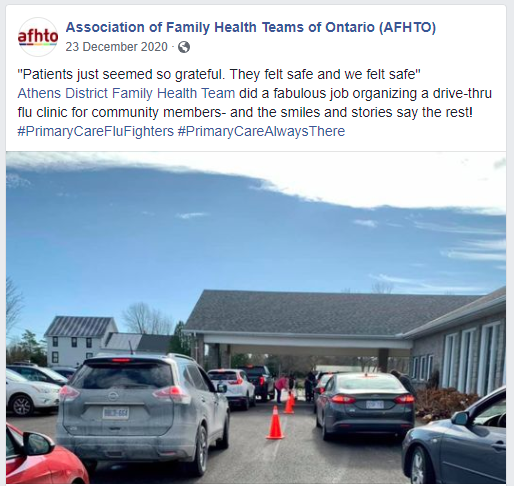
    Facebook post of Athens District vaccine drive through


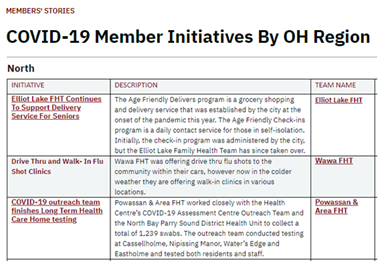
    COVID member initiatives table

    Upcoming Webinars:

    Respiratory Care During COVID-19: What Have We Learned One Year Later
    Wednesday, April 21, 2021, 12:00 PM – 1:00 PM | In collaboration with the LUNG HEALTH FOUNDATION

    This webinar will highlight practice changes and considerations for the diagnosis and management of chronic lung diseases such as COPD. This includes highlighting the challenges of respiratory diagnostics such as spirometry testing and policies and changes that were needed to provide a safe testing environment. Additionally, the webinar will highlight clinical resources and community support programs provided by the Lung Health Foundation to support primary care practices and their patients.
    For more info and to register, click here.


    In Case You Missed It: Check out eBulletin #105 or other back issues here!
    Questions? Comments? Contact us at improve@afhto.ca.

  • Bits & Pieces: respiratory care during COVID-19, Stay-at-Home order and more

    Bits & Pieces: respiratory care during COVID-19, Stay-at-Home order and more

    Your Weekly News & Updates


    In This Issue  
    • Respiratory care during COVID-19: what have we learned one year later, Apr. 21
    • Ontario needs a Stay-at-Home order
    • Member stories
    • Lessons learned from KFLA Moderna community vaccination clinics and more
    • UpToDate discount reminder
    • Evaluation and performance improvement for OHTs CoP and webinar
    • Upcoming events including improving the population health of people at risk or living with diabetic foot complications and more


    Respiratory care during COVID-19: what have we learned one year later, Apr. 21

    The COVID-19 pandemic has required healthcare professionals to change the way care is delivered and has allowed for the development of innovative practices and partnerships for the continued provision of quality care.

    On April 21 this webinar, co-hosted with the Lung Health Foundation, will highlight practice changes and considerations for the diagnosis and management of chronic lung diseases such as COPD. This includes highlighting the challenges of respiratory diagnostics such as spirometry testing and policies and changes that were needed to provide a safe testing environment.

    Find out more and register here.


    Ontario needs a Stay-at-Home order

    Ontario needs a Stay-at-Home order, community vaccination plans, and paid sick leave for ALL workers to stop spread of COVID-19 variants, reduce the burden on health care.

    Today the Primary Care Collaborative (PCC) issued a statement urging the government to do more to suppress the transmission of COVID-19, including these 5 vital actions:

    1. Move the province from a shutdown to a stay-at-home order
    2. Ensure vaccines are reaching those who are most at risk for infection and who need them the most
    3. Prioritize vaccination of teachers, educators and school staff
    4. Create a broad education and communications campaign to address vaccine hesitancy
    5. Implement paid sick leave for all essential workers now.

    Read the full statement here.


    Member stories

    Dr. Allan Grill on CTV

    Markham FHTour president and chair Dr. Allan Grill on CTV on protecting schools from outbreaks and more

    Multiple members- our Twitter thread highlighting members’ vaccine efforts. One tweet already has nearly 20,000 views!


    Lessons learned from KFLA Moderna community vaccination clinics and more

    Recent updates include:

    We continue to update several pages on our site with resources and news:


    UpToDate discount reminder

    Thanks to our partnership with Wolters Kluwer, AFHTO members have access to special benefits on UpToDate®. Physicians, residents, NPs, pharmacists, and PAs are all eligible.  For more details, please contact your ED or Admin Lead.

    EDs and Admin Leads, if you have any questions, please email us at info@afhto.ca.


    Evaluation and performance improvement for OHTs CoP and webinar

    HSPN is hosting a new community for those working on evaluation and performance improvement in OHTs. You can join here.

    The next OHT Evaluation Webinar will be OHT Improvement Measures for Focus Populations on April 27. Register here


    Your role in improving the population health of people at risk or living with diabetic foot complications, April 15, 2021
    Co-hosted with Wounds Canada, this interactive webinar will provide an overview of your role to improve the population health of people at risk or living with diabetic foot complications across the full continuum of care settings to improve patient experience, outcomes and costs. Register here.


    Together We Care Virtual Conference, April 20-22, 2021
    Join the OLTCA & ORCA as they connect the LTC and retirement community sector to help shape the future of senior’s care.
    Find out more here.


    Building vaccine confidence in the Black community, evolving guidance, and more, Apr. 9, 2021

    The OCFP’s COVID-19 COP will focus on building vaccine confidence in the Black community.
    Find out more here.


    A Deep Dive into Co-Designing Care Models for your Priority Populations, May 6, 2021
    The RISE OHT webcasts will show how your OHT can re-design care for patients in your priority populations, and help every patient in those populations experience coordinated transitions between providers.
    Learn more here.

  • April 5th Update on COVID-19 Vaccination Roll Out

    In This Issue:

    • Vaccinating in Primary Care
    • COVaxON
    • Primary Care Community of Practice
    • COVID@Home Monitoring for Primary Care
    • Provincial Antigen Screening Program
    • COVID-19 Vaccine Eligibility EMR Searches
    • COVID-19 Learning Opportunities
    • New Resources
    • Relevant Ministry Guidance Documents for Primary Care

    Dear Members,
    We are writing to provide you with an update from our united Primary Care COVID-19 Vaccination Collaborative (PC-VAC*). March 26th key messages we shared with vaccine decision-makers can be found here.  

    The April 1st Update on COVID-19 Projections from the Science Table paints a very grim picture for the upcoming month. The third wave is here, and it is being driven by the Variants of Concern (VOC) where we are seeing younger Ontarians ending up in hospitals, with ICU beds at full capacity. The update also highlights that the vaccine rollout has not reached the highest risk communities where there are high rates of COVID-19.

    The Primary Care Collaborative had an opportunity to speak about the rollout challenges at the Associate Minister’s Collaboration Table with a deliberate ask – please employ an equity lens NOW and make sure vaccines are going to those who need it the most, in the communities where they live. Ensure primary care is front and center in that rollout to get more #NeedlesInArms.

    Vaccinating in Primary Care
    Ontario is expanding pharmacy and primary care locations for COVID-19 vaccinations. Approximately 120,000 doses of the AstraZeneca vaccine have been allocated to public health and primary care practices in the 34 regions. The clinics have already heard or will hear directly from their public health units about when to expect the vaccines in their practices.

    We are currently working with government to ensure that all thirty-four public health units also allocate Moderna and other vaccines to primary care settings soon, learning from regions like Kingston, Frontenac, Lenox & Addington (KFLA) and Lambton where utilization of Moderna is part of the norm.

    COVaxON
    If you will be vaccinating in your clinic or are involved in future rollouts, please sign up for COVaxON training on the OntarioMD website. Training will be scheduled on an ongoing basis. OntarioMD is suggesting that each practice have one or more (depending on the size of practice) member of their staff trained on the ‘End to End Training’ module.

    Primary Care Community of Practice
    Ontario Health (OH) and your primary care associations have collected resources and lessons learned through a series of Community of Practice meetings with the primary care pilot participants. Please join the Primary Care Vaccination Pilot CoP online forum for resources. If you have trouble signing up for Quorum, please message janine.theben@ontarioehealth.ca for assistance.

    COVID@Home Monitoring for Primary Care
    Ontario Health is providing tools and resources for COVID@Home to help primary care providers who wish to remotely monitor people who have mild to moderate COVID-19 in the community. For further guidance on the implementation of this initiative at a site level, please refer to the Ontario Health resource toolkit COVID@Home Monitoring for Primary Care, which includes clinical pathways as well as instructions for the use and proper handling in collecting and disinfecting the monitors for use by the next patient.

    To request oxygen saturation monitors for the COVID@Home initiative, please complete the Oxygen Saturation Monitor Eligibility and Intake Form. Requests will then be reviewed for eligibility purposes by Ontario Health, prior to fulfilling requests. Please note that the Ministry of Health reserves the right to limit quantities as needed.

    Provincial Antigen Screening Program
    The Provincial Antigen Screening Program allows employers in priority settings to add an additional safety measure in high-risk and essential workplaces, to help reduce the spread of COVID-19. Through the program, rapid antigen point-of-care tests (POCTs) can be distributed to primary care settings to enhance existing routine screening measures for asymptomatic employees and other identified groups.

    Rapid antigen POCTs may allow for workplaces to proactively identify cases of COVID-19 that may have otherwise been missed, supporting employee safety and business continuity in a variety of workplaces. In addition, primary care practices are also eligible to access the diagnostic point-of-care rapid testing with ID Now that can be used to diagnose COVID-19 in symptomatic patients. Please click here for more information or contact Heather Nichol if you have any questions.

    COVID-19 Vaccine Eligibility EMR Searches
    The eHealth Centre of Excellence has updated the COVID-19 Vaccine Eligibility EMR Searches for Telus PSS EMR. The COVID-19 Vaccine Eligibility EMR Searches version 2.0 was built to service Phase 2 in the Ontario COVID-19 vaccination plan. You can find more information on this phase here, and can download the latest tool version here.

    If you are interested in further training or a review of the upgraded version, you can schedule a Coaching Session to answer any questions. All Coaching Sessions are free of charge and are accredited by CFPC for Mainpro+ CPD credits.
    COVID-19 Learning Opportunities

    Updated COVID-19 vaccination e-learning series

    • The COVID-19 vaccination e-learning series has been updated with a new module called “Emerging Topics”. The new module includes information on the impact of variants on vaccination, transmission post-vaccination, the four-month dosing interval, and the latest information about AstraZeneca and VIPIT. It is free to access following a short registration here.

    The COVID-19 Vaccine: Building vaccine confidence in the Black community, evolving guidance, and more
    The next Ontario College of Family Physicians (OCFP) Community of Practice will be on Friday, April 9, 2021 at 8:00-9:00am (ET). They will be continuing our discussion on COVID-19 vaccines, this time focusing on building vaccine confidence in the Black community. As usual, the panelists will also be speaking about the latest changes in guidance and policy and answering the questions you have. Register here.

    New Resources:

    Relevant Ministry Guidance Documents for Primary Care:
    Below are the reference and guidance documents developed by the Ministry of Health that are relevant to primary care for your reference.

    Vaccine Prioritization Resources:

    1. Guidance for Prioritizing Health Care Workers for COVID-19 Vaccination
    2. Phase 2 Prioritization for COVID-19 Vaccination

     Health Care Provider Education Documents:

    1. COVID-19 Vaccine Approval Process and Safety
    2. About COVID-19 Vaccines
    3. COVID-19 Vaccine Availability and Rollout
    4. COVID-19 Vaccine Information Sheet
    5. Extension of the Second Dose Interval Memo

     General Immunization Documents for Patients:

    1. What you need to know about your COVID-19 vaccine appointment
    2. After Your COVID-19 Vaccine
    3. COVID-19 What you need to know V2.0

    General Immunization Documents for Immunizers and Vaccine Clinics:

    1. COVID-19 Vaccine Clinic Operations Planning Checklist
    2. Vaccine Storage and Handling Guidance- Pfizer-BioNTech and Moderna COVID-19 Vaccines
    3. Administration of Pfizer-BioNTech COVID-19 Vaccine
    4. Administration of Moderna COVID-19 Vaccine
    5. Administration of AstraZeneca COVID-19/COVISHIELD Vaccine
    6. COVID-19 Vaccination Recommendations for Special Populations
    7. COVID-19 Vaccination: Allergy Form

    Consent for COVID-19 Vaccination Documents:

    1. Pre-Screening Assessment Tool for Health Care Providers
    2. COVID-19 Vaccine Consent Form

    Find resources from previous weeks here.

    We look forward to continually updating you on the provincial vaccination strategy. Please do not hesitate to contact us if you have any questions or ideas.

    Yours in good health,

    The AFHTO Team

    *Ontario Primary Care COVID-19 Vaccination Collaborative Partners 

    • Alliance for Healthier Communities
    • Association of Family Health Teams of Ontario
    • Indigenous Primary Health Care Council
    • Nurse Practitioner-Led Clinic Association/Nurse Practitioners’ Association of Ontario
    • Ontario College of Family Physicians
    • Ontario Medical Association Section on General and Family Practice
    • Ontario’s Academic Chairs of Family Medicine
  • March 19th Update on COVID-19 Vaccination Roll Out

    Dear Members,
    We are writing to provide you with an update from our united Primary Care COVID-19 Vaccination Collaborative (PC-VAC*). This week’s key messages that we shared with vaccine decision-makers can be found here.  

    The projections from the Ontario COVID-19 Science Advisory Table and Modelling Consensus update on COVID-19 Table on March 11 suggests that vaccination in long-term care has paid off but progress has otherwise stalled. There are increasing concerns about variants of concern (VOC) that are spreading across Ontario and our behaviour over the next few weeks will determine what our summer will look like.

    However, given that VOCs make up nearly half of the confirmed cases being reported and there has been an increase in ICU numbers trending up, the Ontario Hospital Association and the Science Advisory Table have indicated that Ontario has entered a third wave of the COVID-19 pandemic.     

    Key Updates:

    Primary Care Vaccination Pilot Community of Practice:
    Together with Ontario Health (OH), the primary care associations have formed a Community of Practice to support those involved in vaccinations in these regions. Initially the CoP will include those participating in the pilot and will scale as other PHUs are included. If you are currently participating in the pilot and would like to join the CoP, you can register for the upcoming series of connecting calls here weekly Thursdays from 8 am to 9 am.

    Resources are available on the Quorum Community Space Primary Care Vaccination Pilot CoP. If you have trouble signing up for Quorum, please message janine.theben@ontariohealth.ca for assistance.

    COVaxON:
    OntarioMD will be providing additional training and onboarding on COVaxON (the vaccine registration system) for clinical providers, initially focused on those who are directly involved in vaccine pilots, including support for technical questions that arise throughout the process. You can register for training directly. A Clinical Workflow Training recording is also available.

    If you are beginning to participate in vaccine administration with your PHU and are not yet connected, below are OMD contacts by existing pilot site:

    COVID-19 Vaccine Eligibility EMR Searches
    Version 1.0 of COVID-19 Vaccine Eligibility EMR Searches are now available, created by the eHealth Centre of Excellence. This work is based on the Vulnerable populations and COVID-19 resource published by the Public Health Agency of Canada (PHAC) and informed by the COVID-19: Vaccines Resource developed by the Centre for Effective Practice (CEP).

    It aims to equip Primary Care with resources for your EMR which will enable you to identify and prioritize ambulatory patients from within your roster who are in greatest need of the COVID-19 Vaccination to avoid negative healthcare outcomes. Version 1.0 of the searches are all available to download right now from our Community site for all three EMRs.

    IMPORTANT: The Province of Ontario has announced the focus for Phase Two of Ontario’s vaccination distribution plan. The list of eligible health conditions provided in this announcement does not align with the Version 1.0 searches currently released by the eHealth Centre of Excellence. Their team is hard at work putting together Version 2.0 of our COVID-19 Vaccine Eligibility EMR Searches which will align with the health conditions listed in the Province’s announcement.

    COVID-19 Vaccination in Canada: an educational series for primary care professionals
    “COVID-19 vaccination in Canada” is now certified for up to 1 Mainpro+® credits.  This self-learning series from DFCM and the Ontario College of Family Physicians is designed to provide primary care professionals with the knowledge and skills to support Canada’s COVID-19 vaccination effort. Added is a new module on viral vector vaccines that includes extensive information on the AstraZeneca vaccine and available information on the Janssen vaccine. There is also updated content throughout the series including on the vaccine rollout, dosing interval and more. To learn more and to register please click here.

    The next COVID-19 Community of Practice for Ontario Family Physicians is on Friday, March 26th from 8:00 a.m. to 9:00 a.m. and will include dialogue with some of the family physicians involved in the AZ pilot sites. Click here to register.  Previous COVID-19 Community of Practice sessions can be found here.

    New Resources:

    Find resources from previous weeks here.

    Finally, the OMA has relaunched its burnout survey to understand the impact of COVID-19 on physician burnout. Physicians are invited to complete this 5-7 minute survey.

    We look forward to continually updating you on the provincial vaccination strategy. Please do not hesitate to contact us if you have any questions or ideas.

    Yours in good health,

    The AFHTO Team

    *Ontario Primary Care COVID-19 Vaccination Collaborative:

    • Alliance for Healthier Communities
    • Association of Family Health Teams of Ontario
    • Indigenous Primary Health Care Council
    • Nurse Practitioner-Led Clinic Association/Nurse Practitioners’ Association of Ontario
    • Ontario College of Family Physicians
    • Ontario Medical Association Section on General and Family Practice
    • Ontario’s Academic Chairs of Family Medicine
  • QI in Action eBulletin # 105: Ontario Health Submission March 2021

    QI in Action eBulletin # 105: Ontario Health Submission March 2021

    In this Issue:

    • A new tool for primary care providers: Quality Standard Placemats
    • Quality Improvement Plans – Update
    • A Peoples’ Panel on how race and ethnicity data should be used for health data research in Ontario
    • Upcoming Webinars

    Content below developed by Ontario Health

    A new tool for primary care providers: Quality Standard Placemats

    Quality standards outline what high-quality care looks like for conditions or processes where there are large variations in how care is delivered in Ontario. They are based on the best evidence and designed to help you know what to do to reduce gaps and variations in care – there are over 25 quality standards developed by Ontario Health, in collaboration with health care professionals, patients, and caregivers across Ontario.

    Ontario Health is pleased to share a newly developed tool called the Quality Standard (QS) Placemat that is a resource for primary care practitioners. The placemat highlights key elements of care for a condition and:

    • is an evidence-based, quick-reference tool that concisely summarizes key information from the quality standard
    • includes links to helpful resources and tools
    • can be used to facilitate patient-centered discussions

    Three quality standard placemats have been developed to date:

    Illustration of someone touching their lower back with pain radiating from it

    Low Back Pain QS Placemat – summarizes content from the Low Back Pain Quality Standard, focusing on care for people 16 years of age and older with persistent or recurrent episodes of acute lower back pain. French version.


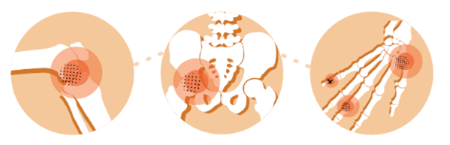
    3 pics of parts of the skeleton- knee, hip, hand- with pain radiating


    Osteoarthritis QS Placemat – summarizes content from the Osteoarthritis Quality Standard, focusing on care for adults with osteoarthritis of the knee, hip, or hand (i.e., thumb or fingers). French version.


    Acute low back pain and osteoarthritis represent two of the most common clinical conditions encountered on a daily basis in the primary care setting. We have received feedback from primary care providers that concise, evidence-based materials help to not only support dialogue between patients and providers, but also support clinical decision-making regarding patients presenting with acute low back pain and osteoarthritis.
     

    • Dr Colin Wilson, Primary Care Clinical Lead, Ontario Health

    Hear more from Colin here

    2 men seated facing each other, one with hand raised with pen and notepad in the other hand


    Anxiety Disorders Quality Standard (QS) Placemat – summarizes the Anxiety Disorders Quality Standard, highlighting the key elements of diagnosis, assessment, and treatment, as well as includes links to helpful resources and tools. French version.


    The placemats can also be uploaded and used within EMRs for easy access. Resources to support adding these tools into your EMR system will be added on Quorum soon, so please stay tuned for more information!

    In the context of the ongoing COVID-19 pandemic, we are observing an increasing unease among individuals in the communities and families. As health care providers, it is critical for us to appropriately diagnose anxiety disorders and differentiate them from other conditions that may arise in these uncertain times.

    • Dr. David Kaplan, Chief, Clinical Quality, Ontario Health

    Hear more from David here

    Access the quality standard and related resources at the links below:

    We would like to hear from you about how we can support you and if there are other topics you would find helpful for future QS placemats. Please email qualitystandards@ontariohealth.ca  

    Upcoming Events: Webinar
    As part of the release and dissemination of the quality standard, Ontario Health and Provincial Geriatrics Leadership Ontario will be co-hosting a webinar for health care providers about delirium, in alignment with World Delirium Awareness Day on March 17, 2021.

    Webinar | Delirium – A New Quality Standard for an Important Health Concern| Wednesday March 17, 12–1 p.m.  
    Provincial Geriatrics Leadership Ontario and Ontario Health co-host a webinar with clinical experts to share information and resources to support patients who are at risk for delirium or who are experiencing symptoms of delirium. The session will review delirium and its significance to COVID-19 infection, introduce key statements from the quality standard, and showcase related resources available to support people who are at risk for delirium or who are experiencing symptoms of delirium. Please register here to join the session.

    Quality Improvement Plans – Update from OH(Q)
    Last April, QIP submissions for 2020/21 were paused to allow organizations to focus on supporting their staff, health care providers, and communities during the COVID-19 pandemic. The QIP Navigator remained open so that organizations that had the capacity to continue working on their submissions were able to do so. We will be closing the 2020/21 cycle in Navigator on March 24, 2021.

    As we look ahead to the 2021/22 QIPs, we understand that organizations continue to be under unprecedented pressure related to the COVID-19 pandemic and that this will likely continue for the next several months. As such, we are making adjustments to the 2021/22 QIP to help ensure that organizations are able to focus their efforts on responding to urgent needs related to COVID-19. While quality improvement is of critical importance in our collective response to COVID-19, for now, the pause on the program will continue.

    We will monitor the situation and will share a revised approach in the coming months, ensuring that it is responsive to circumstances in the health system and that you have sufficient time to prepare. The approach to 2021/22 will be designed to provide organizations with flexibility to reflect where they are with their quality improvement efforts given the pandemic, local needs, pressures, and goals for the recovery period. We encourage organizations to continue with their local quality improvement initiatives and we will be in touch soon.  

    As always, please do not hesitate to contact us at QIP@OntarioHealth.ca if you have any questions.

    A Peoples’ Panel on how race and ethnicity data should be used for health data research in Ontario
    ICES is working together with the Tamarack Institute and Digital Justice Lab to lead a Peoples’ Panel on how race and ethnicity data should be used for health data research in Ontario. Through this Peoples’ Panel, ICES seeks to recognize the ways that science has perpetuated racism and understand the complexities in the use of race, ethnicity, and immigration data.

    The Peoples’ Panel will involve 30-60 diverse and representative individuals who will meet weekly for 5 weeks starting on March 17, 2021. ICES is seeking regular people—no experience in health, science or policy needed. If you live in Ontario and have an interest in how race data is used, and especially if you identify as racialized individual, they invite you to express your interest in being part of the Peoples’ Panel. Participants will be compensated.

    Learn more and apply

    Upcoming Webinars:
    OHT Improvement Measures from Health Administrative Data: Where are OHTs Starting From?
    March 23, 2021 (12:00 – 1:30 pm EST)
    Click here for more information and to register.

    Supporting Older Persons At Home – Learning And Collaboration During The COVID-19 Pandemic And Beyond
    March 25, 2021 (12-1 pm EST)
    COVID-19 highlighted numerous barriers and challenges to providing integrated care for older persons living in the community. Join Provincial Geriatrics Leadership Ontario in a discussion on how to better support older persons in the community using lessons learned during the first year of the COVID-19 pandemic. We will discuss needs in primary care – focusing on the role of interprofessional teams – and offer some resources and tools to better support team-based care for older persons. We will also discuss how specialized geriatric service programs in your area can provide support to primary care clinicians. Click here to learn more and register.

    Interested in sharing your teams’ initiatives in a future webinar? Email Sandeep Gill – Sandeep.gill@afhto.ca to learn more about the AFHTO KTE Webinar Schedule!

    In Case You Missed It: Check out eBulletin #104 or other back issues here!
    Questions? Comments? Contact us at improve@afhto.ca.

  • QI in Action eBulletin # 104 – Identifying Priority Populations for COVID-19 Vaccination from EMRs

    QI in Action eBulletin # 104 – Identifying Priority Populations for COVID-19 Vaccination from EMRs

    In this Issue:

    • What is POPLAR?
    • POPLAR and COVID-19 Vaccine Prioritization
    • Data Security & Privacy
    • How to Register?
    • COVID-19 Cancer Screening Tip Sheet for Primary Care Providers
    • Primary Care Patient/Client Virtual Care Experience Survey
    • Upcoming Webinars

    What is POPLAR?

    The Primary Care Ontario Practice-based Learning and Research Network (POPLAR) is an initiative of Ontario’s six University Departments/Sections of Family Medicine and the Alliance for Healthier Communities. POPLAR securely collects and de-identifies electronic medical record (EMR) data to support practices in delivering optimal care across Ontario and strengthen practice-based clinical research and quality improvement processes.

    POPLAR works with clinicians, researchers, and policy makers, providing information on the vital work primary care does, while supporting practices in delivering optimal care across Ontario. Currently, over 1,000 family physicians are contributing EMR data for over 1.8 million patients to the POPLAR database.

    POPLAR and COVID-19 Vaccine Prioritization

    Building on the work POPLAR has done in the past 10+ years, POPLAR can assist practices wishing to identify patients that should be prioritized for COVID-19 vaccinations. This relies on EMR data that have been extracted from primary care practices, cleaned, and standardized. The data can accurately identify groups of patients meeting various criteria.
    Complex queries can sometimes be difficult to run in EMRs. POPLAR can readily flag patients to be prioritized when the identification parameters rely on multiple criteria (e.g., age range + uncontrolled diabetes + obesity).

    POPLAR data is also linkable to census data, which means that differences in neighborhood socio-economic levels can be added to health data in EMRs; this allows a more comprehensive assessment of risks. This is especially relevant for vaccination prioritization: we know that social challenges our patients live with, such as poverty, can be associated with a greater risk of contracting COVID-19 and greater risk of serious complications once infected.

    POPLAR can obtain aggregate measures from census data at the neighbourhood level, including type of residence, immigration status, average household income, unemployment, education.

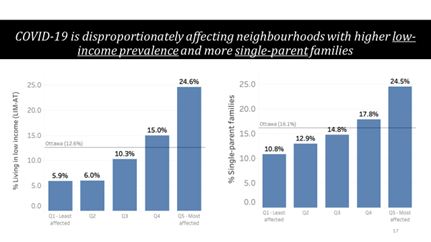
    There is strong evidence in Ontario that the risk of infection varies by neighbourhood and is associated with each neighborhood’s socio-demographic profile. For example, in Ottawa, neighbourhoods with more Black, Middle Eastern, low income, and single-family residents have higher rates of COVID-19 infections.

    COVID an neighbourhood chart- ebulletin #104

    We can only understand the impact of COVID-19 on our practices and our patients through collecting and analyzing accurate and representative health data. The pandemic has exposed many data gaps in Ontario. Our teams are vitally important to ensure that those we serve are included, as our information reflects our settings, patients, and communities. Collectively, primary care’s voice can be heard by providing safe and secure access to real-world data; this is possible with your help!  Register with the POPLAR network member closest to you today to start contributing your EMR data.

    Data Security & Privacy

    POPLAR only studies de-identified patient and practice data. POPLAR complies with robust ethics, governance and security measures. Individual patients have the right to opt out of their data being collected through POPLAR’s networks for research.

    Data for QI in Your practice

    Generation of de-identified EMR dataset


    How to Register?

    Help POPLAR build practical evidence in family medicine, by supporting the collective Culture of Curiosity and by contributing data. The time and effort it takes to safely and securely contribute is minimal. All you need do is fill out a consent form and a brief survey; POPLAR staff will coordinate data extraction at your practice, with all safeguards in place.

    If you are interested in registering, or if you would like to find out more information about POPLAR, please contact Sandeep Gill at Sandeep.gill@afhto.ca, who will then direct your query to your local network contact. More information can also be found on the AFHTO website here.

    COVID-19 Cancer Screening Tip Sheet for Primary Care Providers

    In June 2020, Ontario Health (Cancer Care Ontario) released COVID-19 Tip Sheet #15: Guidance for primary care providers resuming breast, cervical and colorectal cancer screening to support primary care providers as they resumed cancer screening. This updated streamlined tip sheet was developed to continue to support primary care providers with cancer screening based on ongoing fluctuations in COVID-19 cases and local variation in COVID-19 trends.

    Primary Care Patient/Client Virtual Care Experience Survey

    Primary Care Patient/Client Virtual Care Experience Survey

    Last year, we launched the Primary Care Patient/Client Virtual Care Experience Survey for teams to implement in order to capture the patient experience with virtual care. Moving ahead we are collecting teams’ aggregate responses as we create a narrative of how virtual care could be permanently included in the patient care journey – submit your data here!


    Upcoming Webinars:

    Primary Care Virtual Groups – Transitioning A CBT Program & Cardio-Pulmonary Rehab Program To Virtual
    February 17, 2021 (12-1 pm EST)
    This webinar is in collaboration with two Family Health Teams transitioning in person programs to virtual. Scarborough Academic FHT will share how they transferred their CBT skills group for depression and anxiety to online along with the benefits and challenges. Arnprior FHT is presenting on how they modified an in-person Cardio-Pulmonary Rehab to Virtual in the rural community of Arnprior, ON. Learn more and register here.

    Engaging and Supporting Caregivers In Primary Care Teams: Working Together To Improve Outcomes And Enhance The Patient, Caregiver, And Family Experience
    February 25, 2021 (12-1 pm EST)
    In this webinar, learn about the Ontario Caregiver Organization and the key programs, services, and resources they offer. Learn about three key caregiver-related strategies that can positively impact health outcomes and the patient/family/caregiver experience. Find out about resources, programs, and actions that primary care teams can take to help advance these strategies. Learn more and register here.


    Interested in sharing your teams’ initiatives in a future webinar? Email Sandeep Gill – Sandeep.gill@afhto.ca to learn more about the AFHTO KTE Webinar Schedule!

    In Case You Missed It: Check out eBulletin #103 or other back issues here!
    Questions? Comments? Contact us at improve@afhto.ca.