Tag: Management/Operations

  • Bits & Pieces: The experience of primary care teams during the early phase of COVID-19 and more

    Bits & Pieces: The experience of primary care teams during the early phase of COVID-19 and more

    Your Weekly News & Updates


    In This Issue  
    • The experience of primary care teams during the early phase of COVID-19
    • Member stories
    • Evidence of value- Enhanced Primary Care Diabetes (EPCD) team model
    • Corrected link – Healthcare Excellence Canada Opportunity: Partnering on Appropriate Virtual Care
    • Ontario Caregiver Organization 2022 Spotlight Report
    • Updated Post-Covid-19 Condition guidance, vaccination deserts and more
    • Help shape the future of virtual health care in Ontario
    • Comparison of bleeding risk between Rivaroxaban and Apixaban in patients with atrial fibrillation
    • Upcoming events including COVID Therapeutics and more


    The experience of primary care teams during the early phase of COVID-19

    Now published in BMC Primary Care are the results of “The experience of primary care teams during the early phase of COVID-19: A qualitative study of primary care practice leaders in Ontario, Canada”.

    Seventy-one Executive Directors from across all regions of Ontario were interviewed for the study, representing 37% of the AFHTO member clinics. Four themes were identified in the data: i) Complexities of Virtual Care, ii) Continuation of In-person Care, iii) Supporting Patients at Risk, and iv) Stepping up and into New Roles.

    Thank you to all the EDs and Admin Leads who provided your insights. Read more here.


    Member stories

    Espanola FHT – nurse wins prestigious award

    North Simcoe FHT- New clinic offers help for those with COVID-19, flu symptoms

    St. Michael’s Hospital Academic FHT – What the rest of the country can learn from Ontario’s family doctor payment model


    Evidence of value- Enhanced Primary Care Diabetes (EPCD) team model

    Staff clinician group with access to the model found to improve their diabetes care quality, but more research needed- “Evaluation of an Enhanced Primary Care Team Model to Improve Diabetes Care”, The Annals of Family Medicine, November 2022


    Corrected link – Healthcare Excellence Canada Opportunity: Partnering on Appropriate Virtual Care

    The Partnering on Appropriate Virtual Care collaborative will support primary care practices, organizations, and multidisciplinary teams from across Canada to determine when and how virtual care should be used in their respective healthcare settings. Participants will receive up to $20,000 in seed funding to develop a framework that supports shared decision-making with patients, ensuring choices around virtual care are based on patient needs and capabilities, their care requirements and clinician capacity. This program runs between January and November 2023 and involves a range of online learning and design activities. Learn more about the program and how to apply here.
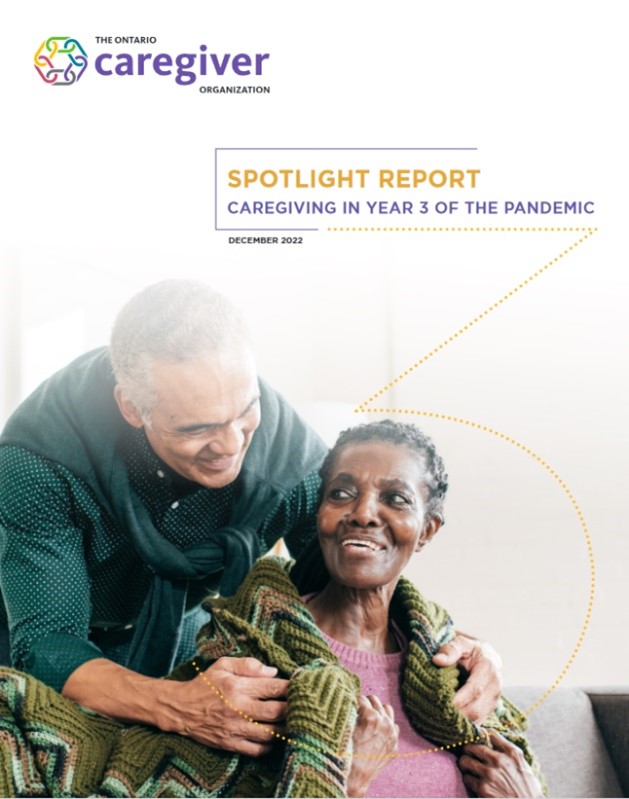

    a black man with greying hair places a throw blanket on the shoulders of an older black woman sitting in front of him as they smile at each other


    Ontario Caregiver Organization 2022 Spotlight Report

    One in four caregivers say their caregiving responsibilities have become more difficult since the easing of Covid-19 restrictions.

    Each year, the Ontario Caregiver Organization looks at the caregiving experience in Ontario and how family caregivers are coping in their role. Although much has changed since 2021’s report, what hasn’t changed is the impact caregiving is having on caregivers. Read the full report here.


    Updated Post-Covid-19 Condition guidance, vaccination deserts and more

    Recent updates include:

    We continue to update multiple pages on our site with resources and news:

    Novel Coronavirus (COVID-19) Updates– the original page, with news and updates. You can find links to related pages here as well.


    Help shape the future of virtual health care in Ontario

    Help shape the future of virtual health care in Ontario! We are looking for patients and caregivers in Ontario to take a 15 to 20-minutes survey on the experiences and expectations with virtual care appointments as a patient or caregiver with a doctor, nurse, or another healthcare professional in a family practice. This study from the University of Toronto and the Bruyére Research Institute is led by Dr. Rachelle Ashcroft and Dr. Simone Dahrouge.

    To take the survey, please click one of the links below:

    As part of our recruitment efforts, we are offering primary care clinics the opportunity to receive a personalized survey link and provide a custom report on the experiences of your patients. If this opportunity interests you, please contact Simon Lam, research coordinator, at sck.lam@utoronto.ca.


    Comparison of bleeding risk between Rivaroxaban and Apixaban in patients with atrial fibrillation

    Dr. Lana Castellucci, Thrombosis Physician and General Internist at The Ottawa Hospital, is leading the COBRRA AF trial (COmparison of Bleeding Risk between Rivaroxaban and Apixaban in patients with Atrial Fibrillation). The aim is to evaluate the safety and bleeding risks of apixaban compared to rivaroxaban for stroke prevention in atrial fibrillation (AF) and atrial flutter (AFL). Current guidelines do not support using one agent over another, but data suggests apixaban has lower bleeding risks. This trial will be the first to directly compare these anticoagulants for bleeding events in AF and to determine the safest treatment.
    We invite you to refer your patients with newly diagnosed AF/AFL to The Ottawa Hospital Thrombosis Unit to be considered for participation. Materials:

    Please note, these documents are meant for staff only, and not for the patients. Please let us know if you have any questions. 


    Primary Care and COVID-19 Support CoP Monthly Call, Jan. to Jul. 2023
    The Community of Practice hosted by Ontario Health to support Primary Care and Covid-19, holds monthly calls, and the new registration link for the first 7 months in 2023 is available. Register here.


    ECHO Programs at UHN, starting Jan 12, 2023

    • Liver Starting Jan. 16
    • Concussion Resumes Jan. 18
    • Chronic Pain/Opioids Starting Jan.12
    • Rheumatology Starting Jan. 14

    Register here.


    COVID Therapeutics, Jan. 20, 2023
    55th in OCFP and UofT’s series “Changing the way we work” on Friday, January 20, 2023, at 7:55-9:15 am. Register here.


    Introduction to CARF Network Standards for OHTs, Jan. 24, 2023
    CARF Canada is hosting a complimentary webinar to describe the relevance of their Network standards for organizations working in partnership for service delivery. Register here.


    OCFP 2023 Family Medicine Summit, Jan. 27-28, 2023
    Features two livestream days on Jan 27 & 28, plus additional pre-recorded sessions. Find out more here.


    ECHO Ontario Conference 2023, Jan. 27, 2023
    Virtual event, titled Integrated Health Systems and the ECHO Model: Lessons Learned in Ontario. Register here.
  • The experience of primary care teams during the early phase of COVID-19

    Research article published in BMC Primary Care 23, 294 (2022)

    The experience of primary care teams during the early phase of COVID-19: A qualitative study of primary care practice leaders in Ontario, Canada

    Abstract

    Background

    The COVID-19 pandemic has caused a rapid shift to virtual care in primary care practices around the globe. There has been little focus on the experiences of interprofessional teams through the lens of primary care practice leaders. The objective of this study was to examine the experience of primary care teams during the first wave of the COVID-19 pandemic from the perspective of primary care leadership.

    Methods

    Qualitative study using qualitative description methods. Executive Directors of interprofessional primary care teams belonging to the Association of Family Health Teams of Ontario (AFHTO) were invited to participate. Executive Directors were interviewed and the interview transcripts were analyzed using thematic analysis.

    Results

    Seventy-one Executive Directors from across all regions of Ontario were interviewed for the study, representing 37% of the AFHTO member clinics. Four themes were identified in the data: i) Complexities of Virtual Care, ii) Continuation of In-person Care, iii) Supporting Patients at Risk, and iv) Stepping up and into New Roles.

    Conclusions

    Primary care teams rapidly mobilized to deliver the majority of their care virtually, while continuing to provide in-person and home care as required. Major challenges to virtual care included technological infrastructure and unfamiliarity with virtual platforms. Advantages to virtual care included convenience and time savings. Virtual care will likely continue to be an important mode of primary care delivery moving forward.

    Authors:

    • Dr. Catherine Donnelly, Queen’s University
    • Christine Mills, Queen’s University
    •  Sandeep Gill, Association of Family Health Teams of Ontario
    • Kavita Mehta, Association of Family Health Teams of Ontario
    •  Dr. Rachelle Ashcroft, University of Toronto
  • COVID-19 Vaccination Information

    Originally posted January 4, 2021. Last updated December 20, 2022 *NEW*

    Resources related to COVID-19 vaccinations based on most recent information shared with AFHTO.


    Government Resources (Provincial and Federal)

    General Resources 
    *NEW*
     
    Guidance documents and clinical resources 
    Planning Immunization for Specific Groups


    NGO and Non-Profit Resources 

    Guidance documents and clinical resources
    Supporting Patients: Shareables
    Information

    Human Resources

    Recommendations
    Policies and Papers

    Webinars

    Some resources have restricted access: * Members-only resources** Triad-only resources

    Return to: Novel Coronavirus (COVID-19) Updates

    Disclaimer: The information in this resource centre represents general guidance developed by AFHTO and their partners, gathered through a rapid, non-systematic scan of relevant and valuable guidelines with an intent to support you in a timely fashion. The information reflects best knowledge at the time of writing and is subject to revision based on rapidly changing circumstances and conditions. As new best practice evidence emerges, recommendations may evolve. The resources above should be considered supplementary guidance and are not meant to replace clinical judgement or organizational directives.

  • Year-End Update to Executive Directors/Administrative Leads – December 2022

    Dear Executive Directors/Administrative Leads,

    With December now here, we would like to share updates on a few issues that are front of mind for many. We also met with the Primary Health Care Branch on December 1, and they provided some insight that we would like to share.

    Bill 124
    Bill 124, Protecting a Sustainable Public Sector for Future Generations Act, 2019 was declared “to be void and of no effect” by Justice Koehnen of the Ontario Superior Court on November 29. The court declared Bill 124 was unconstitutional and a violation of the Canadian Charter of Rights and Freedoms.

    AFHTO, along with our health system partners, have been advocating to government to repeal this law since it was proclaimed in 2019, so we welcome this news. We hope it will start the pathway toward fair and equitable compensation for healthcare workers.

    The government plans to appeal the decision, but they have stated that they will not use the notwithstanding clause, so this appeal could take years to settle.

    What does this mean for primary care teams?
    Maria McDonald of McDonald HR Law sent a communique on November 30 that noted:
    As of November 29, 2022, Bill 124 is not an enforceable law. It is unknown what the government will do but an appeal could take years. It is highly unlikely government will make any revised law retroactive. As such, right now, Bill 124 (which does not exist because it is void and unenforceable) does not prevent granting bonuses.

    However, it’s important to note that there are clauses in your agreement that will direct how you can interpret this for your team. For FHTs, this is referenced in Clause 7.3:
    “All Funding shall be applied directly to the payment of Schedule “B” expenditures, and for no other purpose. The Recipient shall expend the Funding in each Funding Year only in accordance with the Annual Budget for each Funding Year. No changes to the approved items in Schedule “B” are permitted without the prior written consent of the Ministry, unless otherwise specified in this Agreement.”

    For NPLCs, refer to Clause 3.03:
    “All funding shall be applied directly to the payment of Schedule “A” and “A-Appendix 1” expenditures, and for no other purpose. No changes to any Schedules are permitted without the prior written consent of the Ministry as set out in section 2.09. Continued Funding under this Agreement is subject to Ministry review and approval of Approved Annual Operating Budgets and Banking and Payment Schedules and Service Requirements.”

    All other models, please reference your agreements for relevant clauses.

    In 2019, the Ministry provided some guidance on how best to interpret increases with staff. This guidance still applies:

    • If you increase salaries, ensure you have sustainable funding to maintain the increase as the Ministry will not be providing additional funding.
    • You cannot eliminate a position to accommodate for increases. During reconciliation, your budget will be ‘right-sized’ if you no longer need that position, and the funding will be taken back.
    • If performance-based merit pay is part of the organization’s compensation plan and fits within the HR budget, this would be allowable.
    • Vacant positions or underfilled FTE positions cannot be used to fund additional compensation for other positions. Funding needs to be allocated for all funded positions within the framework of the board’s compensation plan and policies.

    As we learn more about what is now allowable with the repealing of the Bill, we’ll share this information with you.

    A reminder that we are working on a compensation market refresh with our partners in interprofessional primary care, mental health and addiction, community care, and not-for-profit long-term care: Addiction and Mental Health Ontario, AdvantAge Ontario, Alliance for Healthier Communities, Canadian Mental Health Association (Ontario), Children’s Mental Health Ontario, Family Service Ontario, Indigenous Primary Health Care Council, Nurse Practitioner-Led Clinic Association, and Ontario Community Support Association.

    This work will be the grounding for advocacy for sustainable increases in salaries. We’ll share more once the work is underway with our recently approved vendor.

    If teams have questions, please contact us any time.

    Mental Health and Addiction Funding

    Funding packages for the MHA one-time funding are still in approvals. Funding is expected to flow in January, and it will cover expenses from October 1, 2022, to March 31, 2023.
    We know that this isn’t enough time to spend the funds. Planning is very important, so we encourage you consider the following given the tight time frame you will be working in:

    • Work with your fellow primary care teams to discuss pooling the funding to purchase MHA supports for teams, OHT, and/or unaffiliated physicians. We encourage you also work with other mental health organizations and providers, such as CMHA, AMHO organizations, and private psychologists regarding pooling or transferring funding.
    • Increase the FTE of your MHA staff or hire temporary staff to support the backlog of MHA in your team or in your community.

    We appreciate this is difficult without knowing the funding amount you’ll be receiving. However, we hope you can get a general plan in place with or without your partners as you await confirmation of the amount and flow of the funding.

    We’ll be in touch next year to ask about how funding was used as this will help the Ministry build a case for sustainable funding to embed much-needed MHA supports in primary care.

    Approval Process for Extra Costs Incurred During this Respiratory Season
    The Ministry memo from November 21 is still front of mind for many teams. A reminder that the memo, though not well communicated, was about communications to your patients and doing your best to support this respiratory illness surge.

    If your team is planning to increase capacity, we encourage you do your projections to year-end and assess your existing funding. If you still feel unable to fund the increased work you wish to do, please reach out to your program consultant to demonstrate this, and then begin discussion for funding support. If you have any issues, please outreach to us at any time.

    FHT Contract Recommendations
    Thank you to everyone who participated in AFHTO’s FHT contract recommendations. Your advice and suggestions were critical for us to develop a thoughtful set of recommendations for the Ministry.  
    The recommendations for modernizing the FHT contract, Schedule A, the governance attestation document, and the annual operating plan have been submitted. You can read more here. We expect to hear back soon on next steps.

    Budget Planning for FY 2023/2024
    Many of you have heard that CHCs were asked by Ontario Health to plan for a 2% increase in their base funding as part of their planning assumptions for the next year. OH has said that planning assumptions are not a confirmation of funding and should be used for planning purposes only.

    Funding comes from the Ministry, so there is no guarantee of an increase; however, AFHTO has strongly advocated that any increases to CHCs are given to all interprofessional team-based primary care models. We hope to hear soon about the budget approvals.

    TRIN funding
    FHTs and CHCs should have received their temporary retention incentive for nursing (TRIN) funding, and NPLCs were sent their approval letters on November 30 with anticipation of flow-through of funding in January.

    Nurses paid directly by physicians and specialists are still waiting on their incentive funding. These funds will start making their way to the privately funded nurses in the next few months. Any questions should be directed to pcoinquiries@ontario.ca.

    Procurement Activity Reporting
    The Ministry of Public and Business Service Delivery has added large primary care teams to the list of funded organizations responsible for procurement activity reporting. This applies to teams that receive $10M or more in funding. These teams received an email from their senior program consultant notifying them that they now need to submit their procurement activities as a Broader Public Sector (BPS) accountability measure.

    If these teams have any questions about the initiative, please contact SCO.Reporting@ontario.ca who can provide you with access to your portal and answer your questions.

    We know 2022 has been another exhausting year and that you’re juggling so many priorities. As administrators, you are at the front lines, working to increase morale of your team members while ensuring exceptional care is being provided to your patients and communities. We hope you do not forget to take care of yourself and that you enjoy some much-deserved rest and time with your loved ones soon.

    We wish you a safe, happy, and healthy holiday season. Thank you for everything you do.

    Yours in good health,

    Your AFHTO Team

  • FHT Contract Recommendations

    Team-based primary care must be the foundation of an integrated care system, and the FHT contract can provide the best direction for strong primary care teams that are the fundamental base of a strong healthcare system.

    In 2021, AFHTO began member and stakeholder consultations to develop recommendations for the next FHT contract. The current one is scheduled to expire on March 31, 2023.

    AFHTO began work with McMurchy Consulting and formed a contract working group of eight team executive directors in 2021. These EDs brought a strong variety of voices to the table. After extensive internal and stakeholder consultations, discussion groups were established in 2022 for what were determined as the three major areas of consultation: governance, accountability and performance, and FHT/physician affiliation. 

    Through this work, we developed our recommendations for modernizing the FHT contract, Schedule A, the governance attestation, and the annual operating plan. This was submitted to the ministry in November 2022. We will keep members apprised of progress on contract reform.

    Thank you to everyone who participated in AFHTO’s FHT contract work – our initial working group, the subsequent discussion groups, the AFHTO Leadership Council, physicians who joined physician consultations, and many stakeholders. Your advice and suggestions were critical for us to develop a thoughtful set of recommendations for the ministry.  

    The documents that the ministry has received are below. Please note these are all draft.


    FHT Contract Submission (all are draft):

    • Aspirations and Recommendations for the Contract Renewal Process
    • FHT Governance and Compliance Attestation
    • Governance Experience Matrix – Skills-based and Diverse Boards
    • FHT-Physician MOU 
    • Performance and Accountability – Framework
    • Performance and Accountability – Revised Schedule A and AOP


    These documents can be read here. 

  • Bits & Pieces: update on the Ministry request memo and more

    Bits & Pieces: update on the Ministry request memo and more

    Your Weekly News & Updates


    In This Issue  
    • Update on the Ministry request memo and more
    • Refer frontline health workers to psychological practitioners for MOH-covered treatment
    • Reminder- Supporting Caregivers Supports Patients- The Critical Role of Primary Care in Preventing Caregiver Burnout, Nov. 24
    • Recruiting for study on healthcare providers and sex trafficking
    • Strategies to improve antibiotic use in primary care
    • TechSoup courses- disaster planning and cybersecurity
    • Have thoughts on how social work practice is organized and supported in primary care?
    • Exceptions to the Prescription Drug List- deadline Nov. 29
    • Upcoming events including Routine childhood vaccination: How to address lapses during COVID-19 and more


    Update on the Ministry request memo and more

    Recent updates include:

    We continue to update multiple pages on our site with resources and news:

    Novel Coronavirus (COVID-19) Updates– the original page, with news and updates. You can find links to related pages here as well.


    Refer frontline health workers to psychological practitioners for MOH-covered treatment

    Primary care providers can now refer patients directly to psychologists from their EMR enabling increased access to timely specialized mental health services. This is possible through a partnership between the Ontario Psychological Association and Ontario’s eServices Program, which saw the integration of the Ocean and Strata Health e-referral platforms thereby allowing family physicians, nurse practitioners, and other primary care providers to connect with psychologists.
     
    The Covid-19 Psychological Support Program, funded by the Ministry of Health, ensures that frontline health workers can receive up to 12 psychotherapy sessions with a registered psychologist or psychological associate at no cost. To learn more email opa@psych.on.ca or read their e-referral guidelines for more details.
     
    This builds on a prior collaboration between AFHTO, NPAO, OCFP, NPLCA, OMA’s section of General & Family Practice, and the Alliance for Healthier Communities.


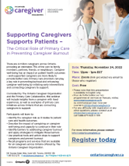
    Reminder- Supporting Caregivers Supports Patients- The Critical Role of Primary Care in Preventing Caregiver Burnout, Nov. 24

    Co-hosted by The Ontario Caregiver Organization and the Primary Care Collaborative, this webinar will include insights from a caregiver with lived experience, as well as examples of primary care initiatives across Ontario that are connecting caregivers to support. Register here.


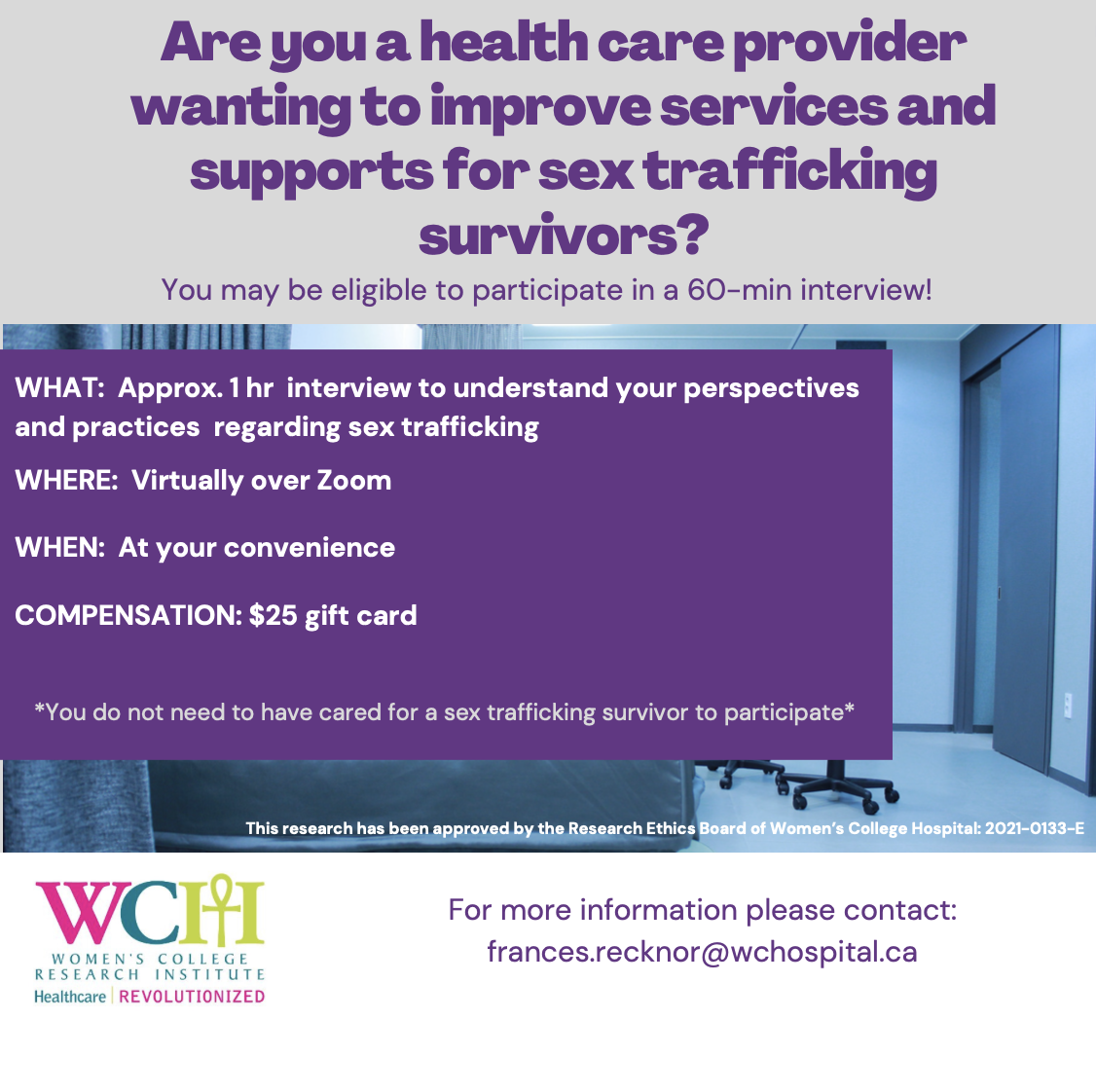
    Are you a healthcare provider wanting to improve services and supports for sex trafficking survivors?

    Recruiting for study on healthcare providers and sex trafficking
    Women’s College Research Institute seeks social workers, nurses and physicians who live and work in Ontario to discuss their thoughts and experiences regarding the domestic sex trafficking of adolescents and adults in Canada.   
     
    “In Canada, there has been limited research on sex trafficking, especially in adult populations and from a healthcare perspective. By attending to healthcare providers’ thoughts and experiences as professionals regarding domestic sex trafficking of adolescents and adults in Ontario, Canada, we can build an understanding of the gaps in care for this population and areas in which care can be improved.”   

    For further information please contact frances.recknor@wchospital.ca.


    Strategies to improve antibiotic use in primary care
    Nov. 18-24 is World Antimicrobial Awareness Week. To help promote this year’s campaign and to reinforce their commitment to the fight against antimicrobial resistance (AMR), PHO has published new fact sheets, Strategies to Improve Antibiotic Use in Primary Care.


    TechSoup courses- disaster planning and cybersecurity


    Have thoughts on how social work practice is organized and supported in primary care?

    This study from the University of Toronto is looking to host one more focus group for social workers who haven’t had the chance to share their experience and perspectives on how social work practice has shifted during the pandemic. Participants will take part in a 60-minute focus group with other social workers in primary care.
     
    Led by Dr. Rachelle Ashcroft, Associate Professor at the Factor-Inwentash Faculty of Social Work, it’s supported by AFHTO and OASW.
     
    If you’re interested in participating, please send an email to Simon at sck.lam@utoronto.ca and include the clinic you work in.


    Exceptions to the Prescription Drug List- deadline Nov. 29

    Health Canada’s initial consultation on exceptions to the Prescription Drug List will close on Tuesday, November 29.
    You can participate in this consultation and provide feedback about which existing exceptions are still needed and why on their site. For more information, you can watch this recorded webinar.


    Routine childhood vaccination: How to address lapses during COVID-19, Nov. 24, 2022

    Accredited webinar offered by the Canadian pediatric Society and co-developed with Public Health Agency of Canada. Register here.


    Trauma Informed Care for Primary Care Providers: A Four-Part Series, Nov. 24- Dec. 15, 2022

    Free special series by ECHO Ontario Child and Youth Mental Health. Register here.


    Collaborative Health Governance in a Time of Deep Uncertainty, Nov. 25, 2022

    In this View From the Top session, held by McMaster University, guest speakers, Helen Bevan, Jodeme Goldhar and Stacey Daub will discuss why radical collaboration and collaborative governance make a difference for population health, healthcare, and wellbeing. Register here.


    Highlights and implications of the Ontario Science Table’s brief on primary care, Nov. 30, 2022

    On October 3, 2022, the Ontario COVID-19 Science Advisory Table (OST) released its final brief, a 3-part exploration of how primary care responded to and was affected by the pandemic, and implications for ongoing health system planning and policy. In this webinar, you will hear from a panel of primary healthcare experts who contributed to that brief, as they share some of the most significant findings and implications. Register here.


    NEW Patient Safety Learning Community of Practice, Dec. 6, 2022

    The Quality and Patient Safety Team at Ontario Health kicks off the new community of practice focused on developing robust processes to track, prevent and learn from patient safety incidents. Register here.


    Climate Conscious Inhaler Prescribing, Dec. 8

    Metered dose inhalers produce significant carbon emissions. Ironically, these contribute to changes to the climate that can exacerbate respiratory conditions. Simple practice changes can help disrupt this cycle and lessen the health sector’s contributions to climate change.

    Register here.

  • Update on the Ministry Request Memo – Respiratory Illness Season

    Dear Members,

    This fall, we have encountered an uptick in infections leading to hospital capacity becoming strained, especially at paediatric hospitals where cases of respiratory syncytial virus (RSV) have coincided with an increase in COVID transmission and an earlier-than-normal flu season. It is expected that these pressures will continue until mid-January. Additionally, pharmacies across Canada are dealing with a shortage of cough syrup and cold medicine, particularly medication for children. Health Canada expects a shipment of ibuprofen from the U.S. and acetaminophen from Australia to arrive imminently and will be available for distribution to pharmacies soon. Please click here for an update on the Children’s Cold and Flu Medications and Amoxicillin Shortage from the Ministry of Health and Ontario Health.

    Memo on an Important Ministry Request – Respiratory Illness Season

    Yesterday you would have received a memo from the Primary Health Care Branch at the Ministry of Health EN FR in response to the rising respiratory illness and system capacity constraints. We know many of you have a lot of questions on how to interpret the memo, especially the line:

    … I am writing to call on your support and requesting your organizations to offer clinical services 7 days a week, including evening availability, until further notice, to meet the needs of your patients. Please advise your patients of this availability so they may seek care in the appropriate place for their health concerns.

    In discussions with the Ministry, this memo was not intended to be directive nor prescriptive but was a request to communicate to your patients about how to access care, especially for sick children, with a focus on receiving care through their primary care teams first so that your patients do not seek care in the hospital if not needed.

    For many of you this likely does not change the expanded services you already provide; however, this is an opportunity to remind your patients of these services including virtual care supports, after-hours clinics and promotion of Health Connect Ontario (formerly THAS). And if you’re not open or accessible 7 days a week, please let your patients know where else they can seek care first before going to the hospital.  

    There are some great resources that you can also post on your website, send proactively to your patients, share via social media, and encourage your patients to use:

    IF you can deploy your FHT resources (e.g., NPs/RNs/PAs and front-line staff) to support additional after-hours care (this could be in person or could be virtually, whatever works best for your team), funding support for teams that anticipate extraordinary costs associated with the expansion of availability is available.

    If you have unspent funds in your budget, you can also reallocate funds to help support additional staff hours with the usual in-year reallocation approvals process. As well, pooling of resources among FHTs and other primary care teams is also an option and is highly encouraged, especially for weekend coverage.  Please speak to your Senior Program Consultant about options available to you.

    Note that overtime pay is at the discretion of the employer, however teams are required to follow the Employment Standards Act where the team is non-unionized. Where unionized, teams are required to comply with the Collective Agreement.

    We know you may have more questions about the memo and the ask to alleviate the pressures currently being faced in the health care system, especially in paediatric hospitals. We are in constant communication with the Ministry, the CMoH’s office and Ontario Health so please outreach and we’ll do our best to address your questions and concerns.

    Clinical Assessment Centres
    Another resource that can be promoted to patients are the Ontario Health Clinical Assessment Centres which will be expanding access and supporting primary care providers in diverting COVID, Flu and ILI assessments from the ED (ready for beginning of December). Ontario Health Regions and CACs have been encouraged to form partnerships with interprofessional primary care teams where feasible to enhance capacity and ensure broader access (i.e., evenings and weekends) to meet the increased needs of patients.

    There are currently 107 assessment centres across the province—some of you may already be affiliated with your local CAC, or you may receive partnership opportunities in the coming weeks to support this request. Revised Clinical Guidance for CACs will be released shortly, encompassing the broader scope of work required of CACs during this time. This guidance will be shared with all primary care providers and organizations to support collaborations with CACs in managing ILIs.

    Upcoming Changes to Process for Ordering Provincial PPE/Testing Supplies

    • Effective April 2023, Ontario Health will transfer the management of provincial PPE/ testing supplies stockpile to the Ontario Ministry of Health. As a result, the Ministry of Health is launching a platform that will enable providers to continue orders online. All primary care organizations/practices can register for a free account (1 per organization).  In the meantime, you can still access PPE through the provincial stockpile if you need it.
    • Members can expect a communique from Ontario Health with additional details (e.g., how to sign up for the new platform, Ministry contact information, etc.) closer to April 2023.

    Resources and Supports

    • Resources to support your patients (COVID-19 vaccines and Flu Vaccines):
      • Access the Ministry’s booster eligibility calculator here. This ensures your patients have a clear understanding of the COVID-19 booster dose recommendations and the importance of why and when they should receive a booster dose.
      • The OMA has developed Template letter: COVID-19 Fall booster doses for individuals aged 5+ that can be accessed. A reminder that the OMA has updated COVID resources that can be found behind their paywall here.
      • Access the COVID-19 Vaccines Information Sheet. This document reflects updates to high-risk groups and availability of the Pfizer bivalent vaccine EN FR
      • COVID-19, RSV and Flu Vaccine Posters (please continue to encourage COVID boosters and flu shots with every patient visit if possible):
        • Boost Your Protection Against COVID-19 poster EN FR
        • Respiratory Syncytial Virus (RSV) EN FR
        • Anyone can catch the flu. Protect yourself and others. EN FR
      • Flu shot social media graphics

    Updated COVID-19 Guidance:

    • As you may be aware, the Ontario Ministry of Health has updated its COVID-19 Vaccine Guidance (November 7, 2022 – English only) which reflects the following changes (remember to clear your cache to see the updated guidance):
      • Addition of NACI guidelines for monovalent Pfizer-BioNTech 6 months – 4 years.
      • Revision of high-risk populations.
      • Addition of out-of-Province vaccination chart.
      • Reference table for mRNA vaccines: caps and labels.

    We know how much teams have stepped up during these grueling almost three years of the pandemic without any additional supports or recognition and you are exhausted. We have expressed to the CMoH and others in the Ministry and Ontario Health that members are already working at capacity, dealing with vacancies and staff being off sick, working with partners in their OHTs, all while still facing greater and greater operating pressures and mounting wait lists on regular care, in addition to surge issues. We remain in continual awe when our teams respond to these calls to action as you continue to shine a light on how critical primary care is to the health care system – it is truly the foundation.  A sincere thank you for everything that you do for your patients and your communities.

    Yours in good health,

    The AFHTO Team

  • Bits & Pieces: memo to primary care from OH and more

    Bits & Pieces: memo to primary care from OH and more

    Your Weekly News & Updates


    In This Issue  
    • Memos to primary care, on operational direction and more
    • Health ministers’ meeting in Vancouver
    • Reminder- Supporting Caregivers Supports Patients- The Critical Role of Primary Care in Preventing Caregiver Burnout, Nov. 24
    • Virtual concussion occupational therapy services for teams
    • Moving towards an integrated health data ecosystem & QIP update
    • OLTCA convention call for content
    • Nominate high performing early career family physicians
    • IPHCC & PHAC seeking participants for short videos
    • Upcoming events including Evaluating program planning using an equity framework and more


    Memos to primary care, on operational direction and more

    Recent updates include:

    We continue to update multiple pages on our site with resources and news:

    Novel Coronavirus (COVID-19) Updates– the original page, with news and updates. You can find links to related pages here as well.


    Health ministers’ meeting in Vancouver

    screenshot of AFHTO news release

    “Mr. Duclos … added the federal government is also prepared to make bilateral agreements with provinces and territories on issues of shared priorities, such as increased access to family health teams and mental-health services.” Full article here.

    As the provincial and territorial health ministers gather in Vancouver to meet with the federal Minister of Health, the Hon. Jean-Yves Duclos, AFHTO remains hopeful that all parties share his priority of increasing access to primary care teams and that we will see much needed funding flow to the province through the Canada Health Transfer.

    Please read AFHTO’s statement here


    OCO webinar flyer


    Reminder – Supporting Caregivers Supports Patients- The Critical Role of Primary Care in Preventing Caregiver Burnout, Nov. 24

    Primary care providers can play a key role in preventing burnout and enhancing caregiver well-being by initiating early interventions and connecting caregivers to support.

    Co-hosted by The Ontario Caregiver Organization and the Primary Care Collaborative, this webinar will include insights from a caregiver with lived experience, as well as examples of primary care initiatives across Ontario that are connecting caregivers to support. Register here.


    Virtual concussion occupational therapy services for teams

    The Neurology Centre of Toronto (NCT) has developed a concussion rehabilitation program that has been implemented and proven successful with an existing FHT in Ontario. The program provides patients with access to virtual concussion occupational therapy services and has been running successfully since March 2022.

    The patients in this program wouldn’t have access to this care otherwise, and the program has generated very positive feedback and results. Specifically, when surveyed after completing this program:

    • 33% of patients demonstrated an improvement in daily activity tolerance
    • 67% of patients demonstrated an improvement in their symptom scores, and
    • 83% reported satisfaction with the program.

    NCT would like to extend this service to other teams (including NPLCs and CHCs) in need of concussion rehabilitation services to support their patients. Please contact Jenni Diamond, Occupational Therapist and Program Director, to discuss the details and how it may fit within your team: jenni.diamond@numinus.com.


    Moving towards an integrated health data ecosystem & QIP update


    OLTCA convention call for content

    Taking place March 27-29, the Ontario Long Term Care Association (OLTCA) in partnership with the Ontario Retirement Communities Association (ORCA) are hosting the Together We Care 2023 Convention in person. The TWC Call for Content is now accepting abstracts. For a full list of program streams and to submit an abstract, please visit their site. Deadline November 21, 2022, at 4:00 pm EST.


    Nominate high performing early career family physicians

    Dr. Monica Aggarwal at the University of Toronto is conducting a study that will identify the key capabilities and competencies of high-performing family medicine graduates. This will help inform how learning, teaching and assessment can be improved in family medicine residency programs in Canada.

    She’s looking for nominations for high-performing early-career family physicians (based on the criteria identified here). If you have a nominee, please contact monica.aggarwal@utoronto.ca.


    IPHCC & PHAC seeking participants for short videos

    The Indigenous Primary Health Care Council is looking for both health care staff as well as general population participants for the creation of short videos.

    Created in collaboration with the Public Health Agency of Canada, the videos aim to increase knowledge about the importance of vaccination, build vaccine confidence, and address barriers to accessing vaccination services. An honorarium will be provided. Please see the flyer for more information.


    ONCA A Year Later: the 100 Most Asked Questions, Nov. 10, 2022
    Hosted by Community Legal Education Ontario, who have compiled the most frequently asked questions into a database and want to share what they have learned. Register here.


    Infection Prevention & Control in Primary Care, Nov. 23, 2022
    Hosted by Hamilton FHT and Public Health Ontario. Find out more here.


    Evaluating program planning using an equity framework, Nov. 23, 2022
    To plan for an expansion of healthcare services in newly developed neighbourhoods, a planning initiative was conducted to better understand the needs of the population. Ensuring equity of care was identified as a priority for this initiative.

    CCHL Forum webinar featuring speakers from Ontario Health, North York FHT and Queen Square FHT. Register here.


    Highlights and implications of the Ontario Science Table’s brief on primary care, Nov. 30

    On October 3, 2022, the Ontario COVID-19 Science Advisory Table (OST) released its final brief, a 3-part exploration of how primary care responded to and was affected by the pandemic, and implications for ongoing health system planning and policy. In this webinar, you will hear from a panel of primary healthcare experts who contributed to that brief, as they share some of the most significant findings and implications. Register here.


    Climate Conscious Inhaler Prescribing, Dec. 8

    Metered dose inhalers produce significant carbon emissions. Ironically, these contribute to changes to the climate that can exacerbate respiratory conditions. Simple practice changes can help disrupt this cycle and lessen the health sector’s contributions to climate change.

    Register here.

  • AFHTO fall update for triad

    This email was sent to executive directors/admin leads, board chairs, and lead clinicians

    Hello triad members,

    As there isn’t a scheduled leadership council meeting before the end of the year – and the follow-up communique that comes with it – we’d like to provide a summary for you of some work that’s underway at AFHTO.

    Compensation Market Review Update
    As you may recall, the Community Health Compensation Working Group (CWG) invited consultants to submit a proposal for a community health market salary review for Ontario. Consensus has been reached on the preferred candidate for this role, and we’re in the final stages of securing the contract. We have received contributions from all ten members of the CWG and anticipate this project to be completed within the next few months.

    This project will allow us to have greater insight into wage disparities for 78 positions across the primary and community care sectors. The final report will serve as an important tool to support discussions with government on reasonable, fair compensation. Stay tuned for further updates.

    Mental Health and Addiction Funding Update
    The Hon. Jean-Yves Duclos, federal health minister, is meeting with the provincial and territorial health ministers in Vancouver in mid-November. One topic of discussion is the mental health funding transfer. The provinces say that health cost share is currently 78% provincial and 22% federal, and they are jointly advocating for more from the federal government, including targeted funding for mental health and addiction. Duclos has said that the government is currently negotiating $3B in transfer for MHA with provinces and territories. We hope to have an update following their November meeting, with the hope that some of the funding is embedded sustainably in primary care.

    As we noted in our September 27th communique, the Ontario Ministry of Health is providing one-time funding to support teams with innovations in improving mental health and addiction challenges within the communities served. We know that the timing for the funding isn’t ideal or sustainable and that teams will likely have a short amount of time to utilize it. But to  support knowledge sharing and to build a business case around sustainable funding, AFHTO will reach out to EDs in mid-November to glean plans underway and share ideas and strategies across regions. If you would like to share your ideas now, please email Abisola at abisola.otepola@afhto.ca.

    Progress Towards Development of Primary Care Networks
    AFHTO continues to work with other associations and providers about ensuring that a strong primary care sector is the foundation of an integrated system. For this to happen, primary care needs to be organized. Primary care networks (PCNs) are an opportunity to strengthen the sector and see improved health outcomes.
    AFHTO and partners developed a concept paper blueprint with recommendations for the establishment of PCNs within the Ontario Health Teams based on best practices and lessons learned from other jurisdictions. This was submitted to the ministry in mid October for consideration, and discussion is now underway. If there is agreement that this is something that the ministry (and possibly Ontario Health) wants to pursue, there will be consultations with stakeholders and our collective members to refine the recommendations in the coming months. We will keep members apprised of this work as it continues.

    Status of FHT/MOH Contract Recommendations
    After over a year of consultations with members and stakeholders, AFHTO is in the process of submitting the final recommendations for the next FHT contract to the ministry. Along with our consultant, Dale McMurchy, we met with ministry officials on October 19th where we outlined the recommendations focused on the three key areas: governance, accountability/performance, and FHT/physician affiliations with recommended MOUs.
    As the current contract expires on March 31, 2023, we look forward to working with MOH on this in the next few months and will consult further as needed. MOH will make the final decision, and we will keep members apprised of this work. Thank you to all the working group members who contributed to the development of the recommendations and for providing insights.

    Mandatory Vaccine Policies
    Maria McDonald, McDonald HR Law, has provided more thoughts for employers on mandatory vaccine policies in the workplace. Members can see her comments here.

    Reminder: Governance Training with Charity Village
    We’d like to remind teams that AFHTO has undertaken a partnership with Charity Village to offer three different governance training programs that align with the expectations in teams’ governance attestation. Over 20 teams have already participated!  

    We encourage teams check out these programs if they feel they might benefit. Any questions can be directed to Bryn Hamilton.

    Improving Communication with and Between IHPs
    IHPs may have seen the QR code that was set up around the conference to sign up for IHP communication. This is where IHPs can share their name, profession, and work email to improve AFHTO’s outreach to IHPs, especially for participation in research, in showing the value of the work you do, and upcoming work around compensation advocacy.
     
    It has also been set up as a way for professions to communicate with one another and to create their own communities of practice to network and share best practices.
     
    We encourage all IHPs to provide their work email addresses so we can include you in relevant communications and so you can network with your colleagues across AFHTO’s member teams. If you can please share this information with the IHPs on your team and encourage them to sign up, we would greatly appreciate it.


    Finally, it was a pleasure seeing so many of you at the conference last month! The resources and recordings were emailed to attendees on October 19 and the Bright Lights Awards winners are posted. We also saw a great attendance of EDs at the session with Fernando Tavares from the Ministry of Health the day before the conference. If anyone was unable to attend and would like to listen to the recording, you can find it here.

    Enjoy the rest of the fall, and if you have any questions or comments, please contact us any time at info@afhto.ca.

    Yours in good health,
    AFHTO

  • Governance Training with Charity Village

    We are pleased to have a partnership with Charity Village to offer our teams three different governance training program options aligned with the expectations in the governance attestations. The three training options available are as follows:
     
    Better Board Kit
    This is a three-part series which includes a 1.5 hr online, on-demand Boards that Work course + a Board Self EvaluationSurvey + a Facilitation Guide that will walk your board through a planning session based on the survey results.
     
    The Boards that Work course is available for up to 10 board members and focuses on:
    •    Part One: Introduction to Boards
    •    Part Two: Board Duties, Roles, and Responsibilities
    •    Part Three: The Board/Staff Partnership
    •    Part Four: Board Building & Structures
    •    Part Five: Board’s Role in Fund Development
    •    Part Six: Effective Board Practices
     
    For more information, please visit this page. This is a great refresher for all board members and a good way to complete the board evaluation that’s required as part of your governance attestation!
     
     
    Governing your Organization: A Deeper Dive
    This is a 2 hour on-demand course that the covers the following:
    •    Part One: To Whom Does the Board Owe a Duty?
    •    Part Two: Building a Great Board
    •    Part Three: The Board’s Role in Strategy
    •    Part Four: Effective Time Allocation
    •    Part Five: Different Organizations Need Different Governance Approaches
     
    For more information, please visit this page.
     
    Diversity, Sensitivity, and Inclusion Training: Promoting Anti-Discrimination and Equity in the Workplace
    This is an on-demand course that will take approximately 1-2 hours to complete. In this course you will learn to:
    •    Understand basic human rights of people in the workplace
    •    Build knowledge of and demonstrate tolerance and respect for diversity at work
    •    Become self aware about your perceptions and behaviour toward others
    •    Use language that is non-discriminatory, inclusive, sensitive, and respectful to everyone
     
    For more information, please visit this page.
      
    If you have any questions or wish to share interest, please contact info@afhto.ca