Tag: infection prevention and control

  • Update from the Primary Health Care Branch, transitions to a new normal, PPE, virtual care, and HR updates

    This email was sent to EDs/Administrative Leads, Board Chairs and Lead Clinicians of AFHTO member organizations.

    Dear triad members,

    To help us keep in touch this summer, we had a province-wide ED check-in call with ministry officials on July 22. Here is the follow-up information promised on the call. There were many questions and much discussion, so if you weren’t on the call, you can listen to the recording here.

    AFHTO maintains a strong relationship and works regularly with officials to ensure our members’ voices are heard, and we appreciate the time they give us to speak with you directly. Thank you to Allison Costello (Director, OHT Implementation and Supports Branch), Darlene Wong (A/Senior Manager, Interprofessional Programs Unit, PHCB), and Fernando Tavares (A/Program Manager, Interprofessional Programs Unit, PHCB) for being on the call.

    Update from the from the Ministry

    • The OHT Implementation and Supports Branch provided an update and said there would soon be more information on OHTs. The following day, on July 23, five new OHTs were announced and 17 were invited to full application. Congratulations to teams who are now an OHT candidate!
    • On July 23, the government also announced that they will be providing financial support to the 29 OHTs of up to $25.25 million. Of this funding, $9.5 million will be dedicated to virtual care; with the remaining $15.75 million, each OHT will receive up to $375,000. More information is here.
    • The Primary Health Care Branch (PHCB) confirmed there will be no additional operational funding available for FHT and NPLC budgets. However, it will be crucial for teams to report Q1 and Q2 accurately and to forecast for year-end to capture any COVID-related costs. The ministry will be using this data to understand the additional cost pressures facing teams, which will then be the basis used for additional funding requests. To help with forecasting the impact of the pandemic on your year-end budget, you can adapt and use the COVID-19 Expense Forecast Checklist.
    • A reminder that the 2020-21 Annual Operating Plan Submission package, released July 2, is due mid-September, although this due date is not firm. There is a webinar with the ministry on our site on how to complete AOP and Schedule A that may be helpful – please click here for the recording.

    Transitioning to a new normal

    PPE

      Virtual care

    Human Resources

    • AFHTO is arranging a webcast for late August that will provide guidance to boards on governance through COVID-19 and beyond. Stay tuned for registration details!
    • The ministry has rolled out pandemic pay to hospitals, long-term care homes, and retirements homes, and they are working on Ontario Health and municipalities. Teams that are leading FHT-run assessment centres should connect with their OH contact  at MOH.PPInquiries@ontario.ca to seek clarity on receiving their pandemic pay.
    • R&R funding was disbursed in April, and teams should be working on reallocating the increases. For guidance, please see the Recruitment and Retention Planning Document and the Compensation Guidance Document for more information. This is the last of the four-year commitment to R&R increases, and we will be looking at future compensation advocacy when the timing is right.

    Reminders!

    • HR webinar: The third webinar for executive directors on Managing HR through COVID-19 with Maria McDonald of McDonald HR Law is this Wednesday, July 29, at 11 AM. Registration will close end-of-day tomorrow, so please register now if you haven’t yet! This webinar’s for EDs only unless an ED requests otherwise.
    • Membership: The deadline for renewing AFHTO memberships is this Friday, July 31. Please contact Paula Myers with any questions. We hope we have proven of value to you this past year, and we will strive to continue to do so throughout the changes we are all experiencing.
    • ED interviews: AFHTO is working with our research partners to showcase how primary care has stepped up – and will continue to step up – to support Ontarians and to ensure a sustainable and equitable healthcare system. Thank you to all the EDs who have already had interviews with our researchers, and a reminder to other EDs to please schedule your interview


    As discussed on the call, here is a link to Shared Service Agreements that teams can use between organizations and with unaffiliated physicians. These are templates provided by Cottage Country FHT and would require legal review before finalisation for any teams.

    Keep checking out our COVID-19 section that we regularly update with news, tools, and resources, including the daily situation reports and regular memos from the ministry’s command table.

    We will be in touch late August or early September about resuming monthly regional ED calls in the fall if teams feel they would still be of value.

    Please contact us any time. We’re here to support you.

    Sincerely,

    Your AFHTO Team
  • Update from the Primary Health Care Branch, transitions to a new normal, PPE, virtual care, and HR updates

    This email was sent to EDs/Administrative Leads, Board Chairs and Lead Clinicians of AFHTO member organizations.

    Dear triad members,

    We held our fifth round of regional ED calls on June 29 and 30. We’ve been holding these calls since March, and we will be pausing them for the summer as people break and prepare for the fall. We will look at resuming regular calls in September. To ensure we keep in touch, we will be arranging a province-wide ED call with ministry officials for the end of July or early August. Stay tuned for details!

    A third webinar for executive directors on Managing HR through COVID-19 with Maria McDonald of McDonald HR Law has been confirmed for July 29. Please see the HR section of this communique for registration details.

    Below is information on the topics discussed on the recent calls and on supports that we heard would be helpful.

    Update from the Primary Health Care Branch

    • The 2020-21 Annual Operating Plan Submission package was released on July 2 with a due date of mid-September. In recognition of the challenges posed by the COVID-19 pandemic, the ministry is being flexible with the timeline and is not imposing a specific due date. A few years ago, AFHTO held a webinar with the ministry on how to complete AOP and Schedule A that newer EDs may find helpful – please click here for this archived recording.
    • It is going to be crucial for teams to report Q1 and Q2 accurately and to forecast for year-end as best they can to capture any COVID-related costs, such as PPE and IT. The ministry will be using this data to understand the additional cost pressures facing teams. This will be the basis used for additional funding requests. To help with forecasting the impact of the pandemic on your budget, you can adapt and use the COVID-19 Expense Forecast Checklist.
    • The FHT contract is set to expire in 2022. We hope to start work in the fall with the ministry to scope out opportunity for change and improvement through modifications to the contract.
    • AFHTO is also hoping to meet with the anti-racism directorate at the ministry to explore ways AFHTO and teams can help further address anti-racism and social determinants of health.

    Transitioning to a new normal

    PPE

    • PPE supply remains a concern. Many teams indicated they have a 1- to 3-month supply, but many others also indicated only a 1- to 3-week supply. Most teams expressed concern about PPE quantity for increasing in-person visits and a possible second wave in the fall.
    • Primary care is now included and recognized as a priority sector in the in OH’s ethical framework document used to guide distribution of the provincial PPE supply. However, the process for acquiring PPE through the regional tables appears to be inconsistent across the province, and even within regions. OH North has initiated a primary care PPE start-up allocation, and primary care entities in OH West have been successfully receiving PPE supplies regionally; however, access seems to vary across sub-regions.
    • Teams are encouraged to connect with their Regional Table Leads for PPE and Critical Supplies to access this inventory if regular supply chains are unavailable.  
    • AFHTO will continue to advocate for a consistent and sustainable long-term approach based on regional coordination.
    • We encourage teams to check out the resources posted on our site.

      Virtual care

    Human Resources

    • On June 24, AFHTO circulated a Temporary Pandemic Pay update and confirmed that eligibility of workers does include primary care team members who are redeployed to the COVID-19 assessment centres and other eligible workplaces (i.e. hospitals, long-term care homes, retirement homes).
    • The ministry will be rolling out pandemic pay funds through existing TPAs shortly. Teams that are leading FHT-run assessment centres should connect with their OH contact  at MOH.PPInquiries@ontario.ca to seek clarity on receiving their pandemic pay.
    • There will be two webcasts this summer:
      • There will be a webinar for EDs on Wednesday, July 29, at 11 AM with Maria McDonald, McDonald HR Law, to discuss ongoing topics of concern around employer obligations, including matters related to staff challenges with childcare and mental health. A portion of the webinar will be to address pre-submitted questions. You can register for the webinar and submit your questions here. Webinar registration will require approval, which EDs will receive from AFHTO within 24-48 hours of registration. Registration will close end of day Tuesday, July 28.
      • AFHTO is organising a webinar that will provide guidance to boards on governance throughout COVID-19 and beyond. This will include guidance on the role of the board in resumption of services, what governors should know about the direction of OHTs, and where to go from here. Stay tuned for details!
    • A reminder that R&R funding was disbursed in April, and teams should be working on reallocating the increases. For guidance, please see the Recruitment and Retention Planning Document and the Compensation Guidance Document.

    AFHTO is working with partners to showcase how primary care has stepped up – and will continue to step up – to support Ontarians and to ensure a sustainable and equitable healthcare system. We have received ethics approval from the Office of Research and Innovation at the University of Toronto to proceed with our research project entitled COVID-19: Understanding how primary care teams stepped up to help support their communities and patients.

    We ask all EDs to spare up to 30 minutes for an interview with one of the researchers who is working with us on this project. We will send a poll out shortly to schedule a time for a call. The calls will happen throughout July and August.

    Keep checking out our COVID-19 section that we regularly update with news, tools, and resources, including the daily situation reports and regular memos from the ministry’s command table.

    Please contact us any time. We’re here to support you.

    Sincerely,

    Your AFHTO Team

  • Bits & Pieces: partnership to improve access to psychological services for the front line & more

    Bits & Pieces: partnership to improve access to psychological services for the front line & more

    Your Weekly News & Updates


    In This Issue  
    • Partnership to improve access to psychological services for front line workers
    • Letter from AFHTO’s President
    • Pandemic Pay
    • Update to critical supplies & equipment survey portal- training sessions
    • Mental Health Week
    • Updated screening and testing guidance and more
    • Infection prevention and control CoP in Ontario Central West Region
    • Ontario Community Support Association meals/essentials delivery
    • Seeking participants to examine practice patterns during COVID-19
    • Financial management webinar series
    • Upcoming events regarding Advance Care Planning and more

    Partnership to improve access to psychological services for front line workers

    AFHTO, OCFP, NPAO, and the Ontario Psychological Association partner to improve access to psychological services for front line workers- We would like to announce two pathways of care for mental health services from a Psychologist through the Ontario Psychological Association (OPA).

    One stream is for your patients who are experiencing mental health issues such as anxiety and depression related to the COVID 19 pandemic. The OPA has set up a network of psychologists who can provide no-cost short term mental health support for COVID related mental health issues.

    The second stream provides access to mental health support to you as primary care providers. As professionals providing front line care, we recognize the stresses to which you are exposed. Find out more regarding these two opportunities for mental health support (please do not forward this letter).


    Letter from AFHTO’s President

    On Friday we emailed a letter from AFHTO’s President and Chair Dr. Tom Richard:

    “As we approach a new month contending with this pandemic, I thought it would be a good time to touch base.

    The continued disruptions, frustrations and adjustments of how we provide our services has been a tremendous source of anxiety to ourselves, our families and those we look after.

    Yet, despite all this, primary care continues to step up and ensure our patients get the care they need.” Read the full letter here.


    Pandemic Pay

    The Ministry is working on its policy and implementation related to the release of pandemic pay and who is eligible. As we wait for further details, we will be working with our primary care partners to reinforce the important role primary care providers play in the COVID response and continue to advocate on behalf of team-based primary care. More details will be made available as information starts to roll out.

    And as a reminder, if you’re an interprofessional health provider at a FHT, A team of researchers wants to learn more about your experience as a provider during the COVID-19 pandemic. Over 350 IHPs have filled it out to date and the deadline is this Thursday, May 7. Find out more here.


    Update to critical supplies & equipment survey portal- training sessions

    On Friday, the Ministry announced the health sector PPE survey would transition to an enhanced submission portal as of yesterday, May 4. To support the transition, they are hosting several webinars as well as providing respondents with detailed support material that they can access and reference as they input their inventory data. Training sessions include:


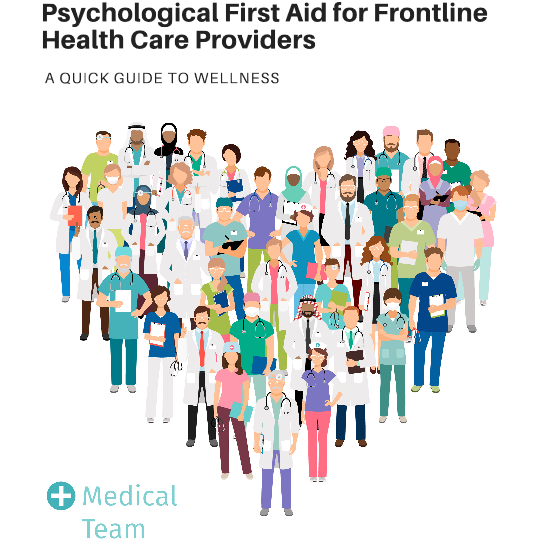
    Psychological First Aid for Frontline Health Care Providers: A Quick Guide to Wellness


    Mental Health Week

    It’s Canadian Mental Health Association Mental Health Week. This year’s theme is social connection. You can get their toolkit here and find relevant articles here. They may help you help your community not just get loud, but #GetReal.

    On a related note, there is a free resource, the Psychological First Aid for Frontline Health Care Providers: A Quick Guide to Wellness, a workbook recommended by the Ontario Psychological Association.


    Updated screening and testing guidance and more

    On May 2, the government released updates to

    We continue to update several pages on our site with resources and news:

    We’ll update these on a regular basis as we receive relevant resources, while trying to reduce duplication with other sources. We will continue to update the news page daily.


    Infection prevention and control CoP in Ontario Central West Region

    Public Health Ontario would like to invite Primary Care workers responsible for Infection Prevention and Control in the Ontario Central West Region (those located within Halton, Hamilton, WDG, WW, Brant, Niagara, and HN public health units) to their virtual Community of Practice meeting on May 14, 2020 from 9:00 to 10:00 a.m.

    The meeting will focus on the latest COVID-19 updates and provide an opportunity for primary care colleagues to discuss their questions. If you are interested in attending, please email ipaccentralwest@oahpp.ca.

    Access information:
    1. Please dial in to the teleconference at 1-866-261-6767 and enter code: 4889444#
    2. Join the webinar and enter your full name


    Ontario Community Support Association meals/essentials delivery

    Ontario Community Support Association has established a link on their website to connect individuals/community providers to meals services/essentials delivery.

    In this portal, you can search Meals providers or Essential Service providers by searching based on address. If service providers exist in the area, a referral can be made directly through the portal to the provider. If nothing can be found there, a link will pop up asking to “Sign Me Up” to receive a phone call from a Canadian Red Cross (CRC) Coordinator to make connection to services.


    Seeking participants to examine practice patterns during COVID-19

    Two primary care researchers, Rachelle Ashcroft, and Catherine Donnelly are submitting a CIHR Rapid COVID-19 response grant to examine practice patterns of interprofessional primary care teams during COVID-19. The grant is due Monday May 11. If your team would be interested in participating in the study please contact Catherine by email Catherine.donnelly@queensu.ca for further study details. 


    Financial management webinar series

    The Ontario Nonprofit Network has launched a free four-part financial management webinar series to help nonprofits adapt and recover from the COVID-19 pandemic, starting May 7:


    Ask Me Anything about Health Privacy, May 6, 2020
    These monthly webinars give you the chance to ask Kate Dewhirst about your Health Privacy concerns. Register here.


    Advance Care Planning and Goals of Care In The COVID-19 Pandemic, May 6, 2020
    Choosing Wisely Canada hosts weekly webinars to discuss pressing topics around COVID-19. Join to learn and connect around freeing up these limited healthcare resources. Learn more here.


    Complicated Grief and Trauma – Skills Building Education, May 6 – July 15, 2020
    This ten-session webinar series will focus on COVID-19 related complicated and traumatic grief. Provided by the HPCO and CHPCA. Learn more here.


    PEER’s review of the evidence for COVID-19, May 7, 2020
    Join this CFPC webinar as part of the COVID-19 Pivots. Find the webinar link posted here.


    Congestive Heart Failure (CHF) and COVID-19, May 7, 2020
    Join the Family Physician Airways Group for a discussion around CHF and COVID-19. To register, click here.

  • Hamilton and McMaster FHTs provide drive-thru COVID-19 testing for 60 people per day

    Y108 News article published April 23, 2020

    By Lisa Polewski

    Hamiltonians can now book a COVID-19 test at the city’s drive-thru site, based inside the Dave Andreychuk Mountain Arena.
    It’s not quite the same as a fast-food drive-thru, but the COVID-19 testing centre at the Dave Andreychuk Mountain Arena is as efficient as it gets.

    Since Hamilton’s third testing site opened its doors a week ago, they’ve been testing about 60 people per day.

    “We book every five minutes, and it takes about three and a half minutes for a client to come through,” said Laurel Turnbull, manager of nursing, complex care and quality improvement at the Hamilton Family Health Team.

    The arena is functioning as a COVID-19 testing centre between 10 a.m. and 3 p.m., seven days a week. The Hamilton Family Health Team and the McMaster Family Health Team are operating the site, which is staffed by primary care clinicians.

    Jill Berridge, co-executive director of the McMaster Family Health Team, said the response to the unique method of testing has been overwhelmingly positive, especially from those who are being tested.

    “They love the fact that they can stay in the comfort of their own car, and go through this process, and how quick it is,” said Berridge.

    The mountain site is also testing those who don’t have a car. Elderly residents or those who rely on mobility devices are able to get a ride through DARTS, and anyone who may get to the arena by public transit can also simply walk around the track to the different stations.

    It’s not as simple as turning up and getting tested, however. Appointments at the Hester Street location still need to be booked through a family doctor or Hamilton public health.

    Berridge said most people understand that process, although a handful of people are still showing up on a daily basis without an appointment.

    “But they’ve been very reasonable when we’ve asked them to go ahead and call public health and get an appointment to come back.”

    Although testing has ramped up across Hamilton — specifically in long-term care and retirement homes — Berridge said they are following the provincial guidelines on who qualifies for testing, which means you cannot simply request a test.

    “It would be hard to test everybody. The capacity for that type of testing just isn’t available right now. I think we do a good job of prioritizing people that really need to be tested.”

    During an update from the city last week, Dr. Elizabeth Richardson, Hamilton’s medical officer of health, said they’ve been getting requests from people who have had their employers ask them for a “clearance note” to go back to work.

    “That is not recommended at all, and in fact, it’s taking up resources that could be used for those who are symptomatic,” said Dr. Richardson.

    “We want to really get the message out that that kind of testing, it’s not helpful. For somebody who’s well, the fact that they have a negative test today means nothing about tomorrow, or even five minutes after they’re tested.”

    There have been 3,238 tests administered at the city’s testing and assessment centres since the first two opened their doors on March 16.

    To view the full article, click here.

  • An Open Letter from AFHTO, NPAO and the OCFP on PPE in Primary Care During COVID-19

    An Open Letter from AFHTO, NPAO and the OCFP on PPE in Primary Care During COVID-19

    April 15, 2020

    An open letter regarding PPE in Primary Care during COVID-19 was released today from the Association of Family Health Teams of Ontario (AFHTO), Nurse Practitioners’ Association of Ontario (NPAO) and the Ontario College of Family Physicians (OCFP). On behalf of our members – who are caring for patients in communities across Ontario in the midst of COVID-19 – we are seeking urgent assistance from Ontario’s Ministry of Health in ensuring access to appropriate PPE in order to safeguard patient access to primary care.

    Ontarians should not feel reluctant to visit their clinicians who can take the precautions necessary for that visit, and our members are working tirelessly to keep primary care open and operating – despite PPE shortages.

    However, we are quickly reaching a breaking point in primary care. Without the needed PPE to keep everyone in our medical offices and clinics safe, some will be forced to close their doors to in-person care. This may prompt some patients to go to the ER for in-person care, or worse, not seek care at all.

    We are recommending that the Ontario Ministry of Health immediately streamline the procurement of PPE through one central source for distribution to primary care through Ontario Health/regions and not leave primary care clinics to have to find PPE on their own.

    Read the full letter here.

  • Follow-Up from March 27th webinar, Qs and As from the Ministry and Clarity on PPE Questions from MEOC

    This email was sent to EDs/Administrative Leads, Board Chairs and Lead Clinicians of AFHTO member organizations.  

    Dear triad members,

    Thank you to all the executive directors who were able to join our regional calls earlier this week. We were pleased to hear how well many of you are doing, and to hear how we can continue to support you.

    This email is a follow-up to provide the information promised during the calls.

    • It sounds like teams are providing over 90% of care virtually with approximately 80% to 85% of their staff working remotely, so teams are exploring different tools for providing this care. We’ve now posted more information about virtual care that may help. This includes apps and programs that can be used, as well as how to set up call display when calling patients.
    • We’ve also put together information we’ve received from the ministry’s Emergency Operations Centre to help with PPE questions regarding asymptomatic patients and providers, the use of homemade masks, and the PPE survey. You can see it here.
    • We hosted a webinar on March 27 with Maria McDonald (McDonald HR Law) and Kate Dewhirst (Kate Dewhirst Health Law) called “Human resources, privacy, and risk management during the COVID-19 pandemic: What do you need to know?” There were several questions we committed to follow-up on. The answers to those questions and the webinar recording are here.
    • From the March 27 webinar and the ED regional calls this week, there were also questions for the ministry. The answers can be found here. If you have additional questions, please let us know or connect with your ministry consultant.

    Just a reminder that we have a COVID-19 section that hosts tools and resources you may need, including policies and procedures from your colleagues that you may find helpful in adapting for your site. We’ll continue to keep you updated, and we’ll reach out soon to arrange another round of check-in calls to happen in about 2-3 weeks’ time.

    Stay well, and please contact us any time. We’re here to support you through this.

    Sincerely,
    Your AFHTO Team

  • IMPORTANT ACTION REQUIRED – Personal Protective Equipment Survey (Due March 30)

    This email was sent to EDs/Administrative Leads, Board Chairs and Lead Clinicians of AFHTO member organizations.  
     
    Some of you may have already received this email from your Ontario Health regional planning table so please disregard. For those who have not received it, please see below. Please note that there is a password for the survey:
     
    PPEsurvey2020  (note – password is case sensitive, please enter exactly as it appears here).
     
    Please ensure that the person in your organization who will be completing the survey has this password.

     
    If you have any questions pertaining to the completion of this survey, we will be offering 1:1 support over the phone. Please call the PPE Survey help-desk (available 24/7) at 416-687-8445.
     
    From: EOC Operations (MOH) <EOCOperations.MOH@ontario.ca>
    To: EOC Operations (MOH) <EOCOperations.MOH@ontario.ca>
    Subject: IMPORTANT ACTION REQUIRED – Personal Protective Equipment Survey (Due March 30)
     
    Hello,
     
    Acknowledging your feedback on the Minister’s Order on Personal Protective Equipment Data Collection, we are moving all non-acute sectors to the online survey for ease of use. Please pause on reporting via the email template and follow the instructions below. Thank you to those that have already submitted reports by email.
     
    This survey is intended only for organizations identified in the Minister’s Order, excluding hospitals. Hospitals should continue to report through the Daily Bed Census tool. As a reminder, these organizations include:
     

    1. Public hospitals within the meaning of the Public Hospitals Act;
    2. Private hospitals within the meaning of the Private Hospitals Act;
    3. Psychiatric facilities within the meaning of the Mental Health Act;
    4. Independent health facilities within the meaning of the Independent Health Facilities Act;
    5. All ambulance services operating under the Ambulance Act;
    6. Long-term care homes under the Long-Term Care Homes Act, 2007;
    7. Service providers within the meaning of the Home Care and Community Services Act, 1994;
    8. Local Health Integration Networks within the meaning of the Local Health System Integration Act, 2006 in respect of the home and community care services they provide;
    9. Homes for special care within the meaning of the Homes for Special Care Act;
    10. All centres, programs or services for community health or mental health whose primary purpose is the provision of health care

    If your organization has previously received this request and is already completing the survey, please note the updated due date for the initial response: Monday, March 30, 2020.
     
    Per the Minister’s Order, Ontario Health will begin collecting this data daily.

    As the outbreak of COVID-19 continues to evolve locally and globally, a key challenge identified across the health care sector has been the availability of and access to personal protective equipment (PPE).
     
    To support the provincial response to the outbreak, Ontario Health is collecting data on PPE inventories across the health sector. Understanding your current status and anticipated needs is essential to our shared success in protecting your health and the health of all Ontarians.
     
    Initial provincial data will be collected through the PPE Survey described below. In addition, we continue to evaluate appropriate tools for ongoing reporting in each sector, and will provide more information when available.
     
    Time is of the essence, and we appreciate your efforts to share information as best you can.
     
    The following sections of this email provide you with the information you will need to access the survey, support completion, and the deadline for submission.
     
    Provincial PPE Survey
     
    Survey link and password
    Here is a link to the survey we are asking you to complete: survey link – click here. You will receive a password to access the survey in a separate email.
     
    Who should complete the survey?
    Please identify the individual within your organization that would be most appropriate to complete the survey (e.g., individual responsible for procurement of PPE).
     
    When should the survey be submitted?
    Please submit the initial completed survey by 5 pm, Monday, March 30, 2020. Please continue to submit completed daily surveys by 5 pm.
     
    Instructions
    The following resources are available to support survey completion:
     
    PPE Survey How-To Guide (updated April 2, 2020):
    Attached to this email is a PDF document. This document includes step-by-step instructions and tips for how to fill out the survey. (Please note – non-health sectors were asked to complete this survey on a weekly basis. We are still evaluating solutions for health sectors, so please disregard all references to a weekly cadence).
     
    Webex Training Sessions:
    A training session has been scheduled for those sectors onboarding now. Additional sessions will be scheduled if required. If you would like to attend, please add the session to your calendar, and access using the link below:

    1.    March 31: 9:30-10:30am: Click here to join  

    Help Desk Phone Number:
     
    If you have any questions pertaining to the completion of this survey, we will be offering 1:1 support over the phone. Please call our PPE Survey help-desk (available 24/7) at 416-687-8445.

    Next Steps

    • Share this email and accompanying password email with all your health service providers
    • Review the How-To Guide and attend either of the optional Webinars for instructions on completing the survey
    • Complete the survey no later than 5 pm, Monday, March 30, 2020
    • Continue to monitor your local supply and daily demand of PPE and other critical supplies and escalate any issues through your local partners and Ontario Health Region if needed

    We appreciate how responsive you have been to the many other requests you have received. Our goal is to centralize this collection to better support you in your critical work caring for the people of Ontario.
     
    Attachments:

     
    EOC Operations
    Ministry of Health and Long-Term Care Emergency Operations Centre
    Eocoperations.moh@ontario.ca
    Health Care Provider Hotline: 1-866-212-2272
     
    This communication is confidential and is intended only for the person(s) to whom it is addressed. Any unauthorized disclosure, copying, other distribution of this communication or taking any action on its contents is strictly prohibited. If you have received this message in error, please notify me immediately and delete this message without reading, copying or forwarding it to anyone.

  • HR, privacy and risk management during the COVID-19 pandemic- webinar


    This email was sent to EDs/Administrative Leads, Board Chairs and Lead Clinicians of AFHTO member organizations. 

    HR, privacy and risk management during the COVID-19 pandemic –Mar. 27 webinar
    These are uncertain times and the way we are now practicing primary care has changed dramatically in the last few weeks. As we move towards more virtual care and accommodating more work from home, there are a lot of questions around how to support our staff and ensure that patient and provider safety be paramount in this ‘new normal’.  Things are evolving every day and new announcements of support are continuing to be announced.

    Making sense of it all can be a challenge with the ongoing flow of information so join us for a Q and A with Maria McDonald of McDonald HR Law and Kate Dewhirst of Kate Dewhirst Health Law to learn more about what you need to know during this challenging time.

    If you would like to submit your questions in advance to ensure they are addressed during the webinar, please feel free to send them to info@afhto.ca and we will make sure that Maria and Kate are aware of them prior to the presentation. We will add the slides and recording to our site within a business day or so of the webinar.

    A few additional items of interest:
    1. The Ontario Government released Ontario’s Action Plan 2020: Responding to COVID-19 which includes $17-billion action plan in response to the COVID-19 pandemic. Funding announced can be divided into the following three categories:

    • Direct support for health care;
    • Direct support for people and jobs;
    • Deferrals to help people and businesses increase cash flow.

     As expected, this Action Plan is noted as the first step in its response to COVID-19, with a focus on ensuring front-line health care providers get the resources they need to fight the outbreak. For details of the Action plan please visit the government website or read the H+K Insights Note that provides a summary of the investments announced.  

    2. Ontario Health is evolving its COVID-19 regional response table into a revised Health System Response structure – as details emerge we will let our members know but please take a moment to read this memo from H+K on the New Health System COVID-19 Response Structure.

    3. Ontario College of Familly Physicians has just released their In-Office Assessment Guidance to manage in-person visits.

    4. A reminder that we continue to post the Ministry situation reports daily and other relevant COVID-19 information on our website. If you have any tools/resources that you have developed and want to share, please email info@afhto.ca.

  • Londoners and Thames Valley FHT organize to supply doctor’s offices, ‘love-bomb’ health-care workers

    The London Free Press article published Mar. 20, 2020

    By Randy Richmond

    A handful of Londoners have turned some casual conversations into a grassroots effort supplying thousands of gloves and masks to local medical clinics.

    And they want more people stuck at home, especially business leaders, to step up and help.

    “We all need to get out of this mindset of hurt. It’s really easy to focus on that, but I think the key right now is to band together and be a village,” said Diana House, a London real estate investor and developer.

    “Business people are sitting at home right now because their companies are closed. They are the people who need to rise up and say, ‘How can we help?’ “

    Help is needed to keep medical clinics and doctors’ offices in London operating, said Dr. Mario Elia, a family doctor and professor of family medicine at Western University.

    “If we do end up seeing big numbers over the next few weeks, we want to make sure that family docs can keep seeing patients, safely and timely, and that requires us to have adequate equipment,” he said.

    Besides masks and gloves, doctors need eye protection and gowns, he said.

    “Some docs are at kind of a critical time, if they do not get more, they may need to close in the near future. One of the issues that has come up in other countries is when health care workers start working in unsafe conditions, they start getting sick and the whole system just collapses.”

    Family doctors should be the first place people go when they suspect they have some symptoms of coronavirus, but are not at an urgent stage, Elia said.

    The assessment centres should be for those who don’t have a family doctor and whose symptoms aren’t severe, he said.

    Elia and House are part of a loose network of medical and non-medical people who began putting their minds to the needs of doctors and medical staff in the coming weeks.

    “They are starting to prepare for the coming weeks and potentially months. The question was, ‘Who’s preparing to support them?’ ” House said.

    The conversations touched on child care and pet care for doctors and nurses under siege, and where medical professionals might live between shifts to avoid infecting their families.

    All those matters remain part of the discussion, but it became clear that getting supplies to medical clinics is the first challenge, House said.

    The network found a local supplier and bought, at cost 15,000 pairs of surgical gloves and 700 masks, and began tapping other sources.

    There are other places besides doctors’ offices that have masks and gloves, such as nail salons, dental offices, podiatrists, tattoo parlours, spas and veterinarian clinics.

    So, they’ve been contacting those businesses, other suppliers, Western University and Fanshawe College for help, House said.

    The Thames Valley Family Health Team has taken on the job of coordinating and collecting supplies, and medical students have helped distribute the first supplies to clinics.

    “It’s been a really beautiful thing to see the community get together,” House said. “It’s very grassroots, very much evolving. The goal is to keep the medical clinics open for as long as possible to divert as many people away from the hospital as we can.”

    The effort has worked so well, the clinics have enough gloves for now, Elia said.

    But surgical masks, gowns and eye protection are still needed, he said.

    Doctors’ offices are out of swabs, in short supply at the moment in London, but that’s because swabs are being directed to public health officials who are organizing the testing for the virus at emergency departments, Elia said.

    House knows dental clinics and other services will need gloves and masks when they re-open, but says the focus now has to be on medical clinics and hospitals.

    “I really think we’re in a triage situation and I think the resources need to go to medical first. We are trying to pull as many strings as we can to try to make sure the resources go to the right place,” she said.

    “They’re the ones who are going to get us through this. How can we just love-bomb them and shower them with support any way we can to make what’s going to be a very difficult season for them maybe a little bit easier?”

    There are going to be dozens of ways ordinary people can help, House said.

    “It doesn’t have to be this. It could be finding a health care worker and adopting them and saying, ‘Every time I go to the grocery store, I’m going to buy them groceries.’ “

    To view the full article, click here.

  • Ontario shifting to virtual-first model in bid to halt spread of COVID-19

    The Star article published Mar. 16, 2020

    By Megan Ogilvie

    Family doctors across Ontario are rapidly transitioning to a “virtual-first” care model as a way to halt the spread of COVID-19 in their offices and waiting rooms.

    Starting this week, most doctors will talk to patients on the phone, by video conference or through email as a first-step to determine who needs to come to the office for an in-person appointment.

    Patients who require face-to-face care, including pregnant women, babies requiring scheduled vaccines and some seniors with chronic health conditions, will have in-person appointments. But many patients will receive virtual advice on how to care for their condition at home.

    As well, some patients will be told upcoming, non-urgent appointments will be postponed for weeks or months. For example, Cancer Care Ontario on Monday advised physicians to postpone cervical cancer screening for low-risk women.

    For the most part, these province-wide measures are in place to protect family doctors, nurse practitioners, office staff and patients from getting infected with COVID-19.

    “We don’t want to bring healthy patients into an office where they could be potentially exposed to COVID-19 by mistake,” said Dr. David Kaplan, a family physician at North York General Hospital and the North York Family Health Team. “It’s part of social distancing. If you want to keep people out of communal spaces, it’s the same for keeping people out of waiting rooms. This is just another way that family doctors can help.”

    Dr. Thuy-Nga (Tia) Pham, physician lead for the South East Toronto Family Health Team, said her patients are welcoming virtual care, especially with so many having questions about COVID-19.

    Last week, the province’s Ministry of Health, after discussions with the Ontario Medical Association, announced new billing codes to allow family physicians and nurse practitioners to move to virtual care.

    Pushing more routine appointments to virtual visits will help family physicians more effectively deal with the surge in patients needing treatment or advice on COVID-19. And seeing more patients virtually will help preserve face masks, disposable gowns and other protective equipment which could be in short supply as the COVID-19 pandemic progresses.

    To view the full article, click here.