Tag: Highlights

  • 2017 Annual Report – Improving Primary Health Care Together

    This year, AFHTO engaged in a strategic planning exercise that led to the development of a new strategic plan with a new shared vision – High quality, sustainable, team-based primary health care. In the last few years AFHTO and its members have worked hard in supporting, measuring, and promoting the value of well-integrated interprofessional primary care, and advocating for its expansion so that more Ontarians can access high-quality comprehensive care. Our 2017 Annual Report details the work being done by AFHTO and its members in moving closer to our new vision with a focus on three new strategic directions:

    • Be a Leader in Primary Health Care Transformation,
    • Demonstrate the Value of Team-Based Care and
    • Advocate for the Tools, Resources, and Conditions to Support an Effective Primary Health Care System.

    In this report you will read the many activities, initiatives and innovations that highlight that AFHTO members are at the forefront of system transformation. We hope you enjoy reading and reflecting on what the collective work of AFHTO members is achieving and we look forward to continuing this work with you.

  • Pharmacists Managing People with Diabetes in Primary Care: 10 Years of Experience at the Hamilton Family Health Team

    Article published in the Canadian Journal of Diabetes (in press September 2017). Abstract Currently known: Pharmacist interventions can have a positive impact on the clinical outcomes of patients who have diabetes. New information: Primary Care Family Health Teams can be an excellent setting for pharmacists interested in providing collaborative diabetes care and to practice to their full scope. This article describes the integration and experience of pharmacists, over a 10-year period, working alongside family physicians and their team. Authors:

    Click here for the full article.

  • Algonquin FHT Physician-Pharmacist Team the First to Use E-Prescription Software

    Muskoka Region article published October 2, 2017. Article in full pasted below. Alison Brownlee, Huntsville Forester MUSKOKA — Muskoka has kick-started the end of the paper-based medical prescription era across Canada. Dr. David Mathies and Dr. Caroline Correia, who are Algonquin Family Health Team members, and Bill Coon, owner and pharmacist at Muskoka Medical Centre Pharmacy, were the first physician-pharmacist team to electronically send and receive a patient medicine e-prescription through a soon-to-be national software system called PrescribeIT. “In the short term for us, I think the benefits are all patient care,” Coon told muskokaregion.com. Canada Health Infoway launched the physician-designed and federally funded e-prescribing initiative in Huntsville in August. Rollout to other provinces and territories will start in 2018. The software allows for digital transfers of prescriptions between the physician and pharmacist electronic patient medical record systems — eliminating paper prescriptions and print outs while enabling direct messaging between pharmacists and physicians. “The big thing for us is being able to real-time send a question back to the doctor immediately,” said Coon. “And you get and answer right away through the system without transferring it through a secretary and dispensary assistant.” The software, he said, would give pharmacists more access to patient information, resulting in more integrated patient care, especially since patient prescriptions can come not only from family doctors, but also specialists and emergency rooms, as examples. Dr. Correia had applied to host the software launch, following a general call for applications, while she was on maternity leave, but as the launch was scheduled earlier than expected, her colleague Dr. David Mathies stepped in to assist. “They were looking for a small community where the physicians and pharmacists worked well together,” said Dr. Mathies. “And where they were using the electronic medical records that coincided with their first steps.” Plus, he said, the office and the pharmacy were steps away from each other in the same building, which made manually double-checking the digital information easier. He said the e-prescribing system was more efficient because it offered direct communication between doctors and pharmacists without involving front office staff in transferring calls or handling paper. And, he said, the prescription information, including drug and dose, got mapped immediately into his electronic medical record, as well as the pharmacist’s, for the patient. “The other side benefits? We can hopefully manage opiate prescriptions better (and) we can manage compliance with prescriptions better,” he said. Dr. Mathies added, though, the new software cannot be used for every patient as not all physicians and pharmacies have access to it yet. “It’s still in a limited production run,” he said. Tania Ensor, a director with Canada Health Infoway, said the independent, not-for-profit organization funded by the federal government had a health-care mandate that included protecting patient data from commercial use and preventing brand-influenced prescribing and dispensing. E-prescriptions, said Ensor, sidestep handwritten and autofax prescription loss, transcription error and miscommunication. “It’s actually a much safer system for patients, as well as easier for doctors and pharmacists,” she said. The new secure system would also cut down on fraud and misuse caused by stolen prescription pads or duplicated prescriptions, she noted. “And that is safer for everybody,” she said. “(And) because (physicians and pharmacists) are getting rid of wasteful time — they’re not spending time on faxes and phone calls and rekeying in information — they have more time for patient care.” Click here to access the Muskoka Region article.

  • D2D 5.0: Demonstrating the value of primary care teams – AGAIN!

    D2D 5.0: Demonstrating the value of primary care teams – AGAIN!

    The results are in for D2D 5.0. As usual, AFHTO members have full access to all the data through the interactive report. A summary of performance at the province and LHIN levels is available on AFHTO’s public web page. Some of the highlights from this most recent release of D2D are listed below.

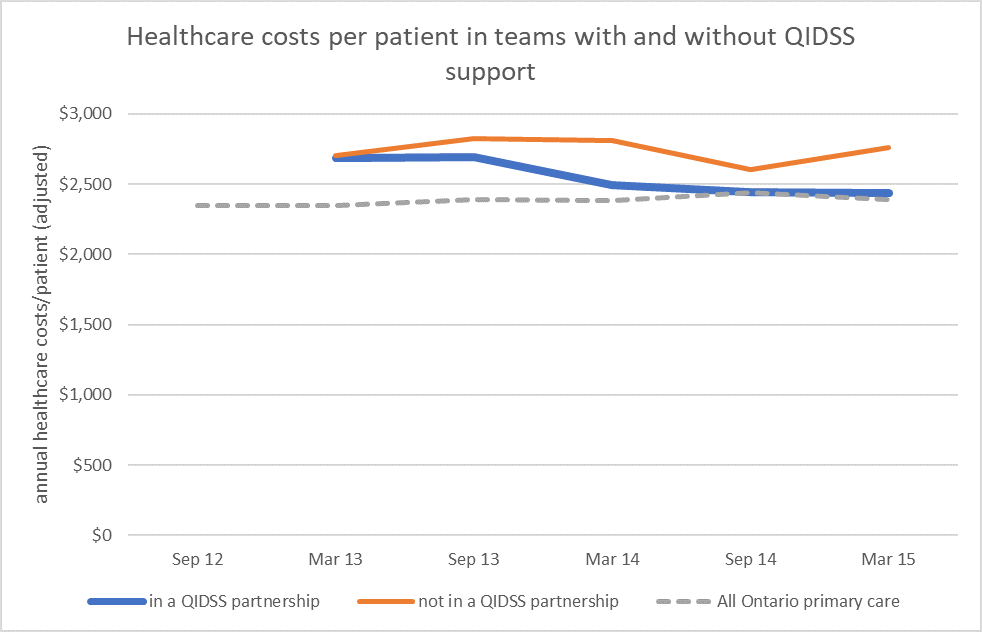
    • The good news about cost continues! D2D 5.0 shows a continuing downward trend in healthcare costs among patients of teams, particularly those supported by QIDSS.
    • High quality STILL is related to lower cost: AFHTO members keep showing that measuring quality in a way that reflects what matters to patients helps demonstrate the value of team-based primary care.
    • Participation in measurement remains high and growing: A few new teams joined two-thirds of their peers to contribute even more data for more indicators, compared to previous iterations.
    • Quality improvement activity remains high too: Performance is holding. Conversations are continuing and integration between EMRs and hospitals is growing. Stay tuned for more analysis coming soon from the new “team characteristics” aspect of D2D.
    • Sub-region reporting is here: AFHTO members can now compare performance to peers within their own sub-region. External partners can connect with teams in the sub-regions for more information.
    • Opening up to learning: 36 teams have taken the big step to completely open reporting. They and their peers can now easily contact each other to compare notes on performance.
    • Coming soon – FINALLY! What makes a high performing team? Thanks to nearly 90 teams who shared data about their team’s characteristics, AFHTO members can now start to unravel the mystery of what makes a high performing team.

    What’s Next?

    After Data, then Decisions! The next steps with D2D are about using the data. AFHTO members are invited to a post-launch webinar on October 12th to share stories about using D2D to move beyond measurement to improvement. In the meantime, members can check out change ideas and other resources to support improvement through AFHTO’s Information to Action initiative.

    Good news re: cost

    The average healthcare cost per person (adjusted for patient complexity) is on a downward trend, especially for teams supported by QIDSS.  The average healthcare costs for each patient served by teams with QIDSS support is just under $2500 per year as of March 2015, the most recent year for which data are available.  D2D 5.0 is showing that these costs are starting to drop, even while costs across the province are relatively stable.  This is consistent with other analyses which illustrate that the introduction of team-based care in Ontario was associated with moderate improvements in processes related to some aspects of chronic disease management (Kiran et al., 2015)

    D2D 5.0 healthcare cost graph


    High quality is related to lower costs

    The relationship between higher quality and lower healthcare system cost persists in D2D 5.0. The relationship remains stronger among non-rural teams, for whom just under half of the variation in total cost (not including LTC institutionalization costs) is explained by variation in the composite quality score, once patient complexity is considered. (The Quality Roll Up Indicator is a composite score based on 14 measures covering as many of Starfield’s 4Cs (first Contact accessibility, Coordination, Comprehensiveness, and Continuity) and weighted according to what’s important to patients). The strength and robustness of the analysis continues to grow slowly with the addition of new teams to the data set each iteration and the increasing amount of data available for each contributing team. Work continues to validate the structure of the QRU to further reduce the data capture burden associated with the generation of the composite measure.

    Participation remains high and growing

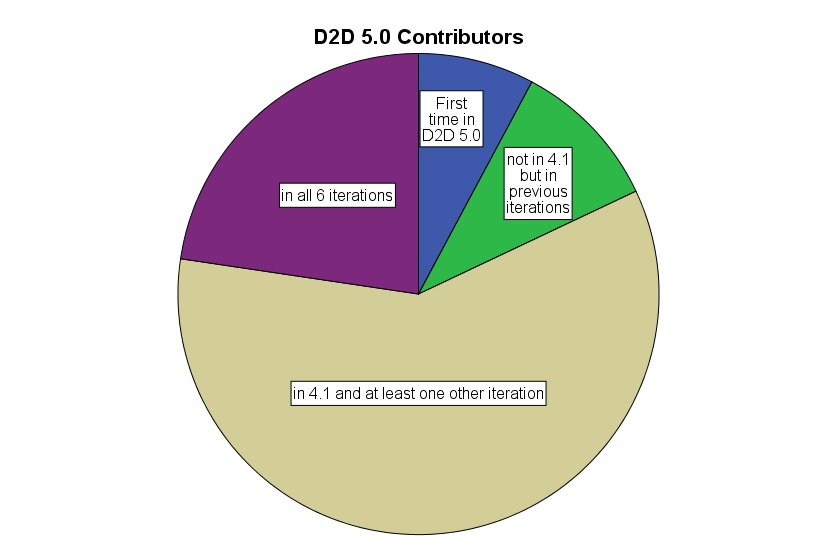
    • 122 (66%) teams contributed to D2D 5.0, slightly up from 117 teams in D2D 4.1. The history of contribution among D2D 5.0 teams is shown in figure 1. Overall, 172 (or 93% of 184 teams) have contributed to at least one iteration, with 22% of members contributing to only one iteration and 64% contributing to 3 or more (data not shown).

    D2D 5.0 contributors

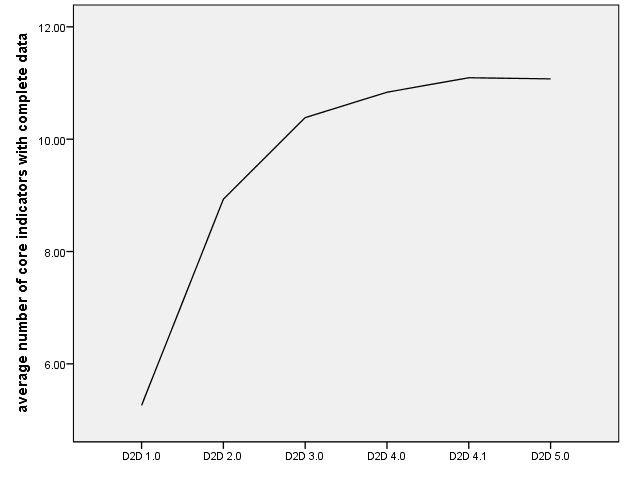
    • More data being contributed for each team: The average number of indicators for which teams had complete data has gone up steadily, plateauing at an average of about 11 out of 15. Work is underway to validate the Quality Roll-Up indicator’s structure with the hope of reducing the number of indicators required to generate it. This might reduce and focus data capture burden for teams.

    D2D 5.0 more data contributed


  • AFHTO 2017 Conference: Last day for early-bird registration & only day to get free André Picard book with reception ticket

    AFHTO 2017 Conference “Improving Primary Care Together

    Early-bird registration closes tonight! Join over 850 of your colleagues from as we learn how to improve health, health care, and value for the people of Ontario.


    TODAY ONLY – the next 25 people who register for the Bright Lights Reception get a free copy of André Picard’s latest book,

    MATTERS OF LIFE AND DEATH: Public Health Issues in Canada.

    •  Our closing plenary speaker, Mr. Picard will also be signing his books at the Bright Lights Reception.
    • Early bird prices are only $25 (members) & $40 (non-members)
    • Bright Lights nominees are also eligible.
    • Register now
    Attendance entitles certified Canadian College of Health Leaders members (CHE / Fellow) to 1.75 Category II credits for Oct 24th and 6 Category II credits for the Conference toward their maintenance of certification requirement. Other accreditation details will be updated as they are confirmed.


  • Guelph FHT and Partners Open New Rapid Access Addiction Clinic

    The Record article published September 20, 2017. Article in full pasted below. Johanna Weidner, Waterloo Region Record Guelph has a new rapid access addiction clinic, the first of its kind in the area. While it officially opens Friday, the clinic has been providing treatment and support to people struggling with addiction since June. “Regularly, the clinic exceeds capacity,” said Kristin Eidse of Stonehenge Therapeutic Community. “It just really speaks to the demand and need for this type of service in our community.” The new clinic is a collaboration of five local agencies whose officials started talking a year ago about how to offer specialized addiction medicine to serve a vulnerable population that struggles to get the help it needs due to the stigma around addictions and the wait for care. “It’s not something that exists in our region,” Eidse said. Along with Stonehenge, which provides residential and community addictions treatment, the initiative was headed by the Canadian Mental Health Association, Guelph Family Health Team, Guelph Community Health Centre and Sanguen Health Centre. The clinic is currently running without additional funding, using resources from all the agencies. They are hoping for funding, considering that the province announced $222 million last month to fight the opioid crisis, including expanding rapid access clinics across the province. In Waterloo Region, work continues on opening two rapid access centres in Cambridge and Kitchener-Waterloo. Rapid access clinics are unique in providing immediate help without a referral. “People just need to walk in,” Eidse said. “It maximizes their motivation.” The Guelph clinic is open one day a week, and services are covered by OHIP. Patients are seen by an addiction counsellor, addiction medicine physician and peer support worker — unique among the rapid access centres. “That really increases the welcoming atmosphere of our clinic,” Eidse said. The work of the clinic is intended to be a short-term intervention, with the average person coming back for three to four followup visits. People are connected with an addictions counsellor and other programs and resources in the community to continue toward recovery. “It’s a place to get started on that road,” Eidse said. People of any age and any type of substance use can come to the clinic. Alcohol use has been most common, followed closely by opioid use. The majority are struggling with more than one substance. During the three-month pilot, which saw 61 patients come in, the average age was 43. The youngest was 19 and the oldest was 76. “It’s really showing substance use doesn’t discriminate. It affects everyone,” Eidse said. Waterloo Region residents are welcome, but the clinic is primarily focused on providing care to Guelph and Wellington County residents. “We’ve had incredible feedback from the patients so far,” said Eidse, adding that the average rating is 4.7 out of five. Patients say they appreciate the welcoming atmosphere, easy and quick access, and withdrawal support. For many who have walked through the door, it’s helped to make significant changes. “I’ve been able to see what an amazing difference this type of clinic can make.” Find out more at raacguelph.ca. Click here to access The Record article

  • AFHTO 2017 Conference: join Dr. Jeremy Petch & André Picard at Bright Lights Reception; early bird closes Oct. 2!

    Don’t miss out! Early-bird registration closes on October 2, 2017.

    Join Dr. Jeremy Petch at the Bright Lights Awards Reception as he speaks on the importance of storytelling. Then take a deeper dive into our own stories, great initiatives and programs delivered by your peers across Ontario, including updates on the accomplishments of past Bright Lights winners. Learn how these could apply to your team, all in a relaxing environment at the end of the day.

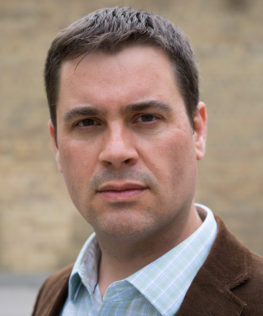
      Dr. Jeremy Petch is the Manager of the Li Ka Shing Centre for Healthcare Analytics Research and Training of St. Michael’s Hospital, and an Assistant Professor at the Institute of Health Policy, Management and Evaluation at the University of Toronto. He is an editor of Healthy Debate and the co-creator of Faces of Health care. He is an avid photographer who uses images and storytelling to illuminate the human side of the healthcare system.
      Also at the reception: Come see our closing plenary speaker André Picard who will be signing copies of his latest book, MATTERS OF LIFE AND DEATH: Public Health Issues in Canada.

      Additionally, attendance entitles certified Canadian College of Health Leaders members (CHE / Fellow) to 1.75 Category II credits for Oct 24th and 6 Category II credits for the Conference toward their maintenance of certification requirement. Other accreditation details will be updated as they are confirmed.

  • Three Draft Quality Standards Related to Opioids Available for Feedback

    To help tackle the growing opioid problem, Health Quality Ontario is developing three sets of quality standards. The first one outlines for patients and clinicians what quality care looks like for adults and adolescents with opioid use disorder and the other two provide guidance on prescribing opioids for the management of chronic and acute pain. Health Quality Ontario wants to hear from you. Click below to read the draft patient and clinician guides and let them know what you think. The deadline is September 28, 2017.

  • Inner City FHT Mix Cooking and Community in Life Skills Program

    Toronto Star article published September 14, 2017. Article in full pasted below. Emily Mathieu, Housing Reporter It is mid-morning in a packed upstairs kitchen at The 519 community centre and Kristen Ireland is brandishing an eggplant and making upbeat and practiced demands. “Somebody has got to cut the eggplant,” she declares, before flipping the tubular purple fruit into a set of ready hands, followed by an extremely large knife. “Knife skills, remember,” she said, offering it out handle first. “Pass it so you don’t kill somebody.” Ireland is a health promoter with the Inner City Family Health Team, a group of health professionals dedicated to caring for former or current residents of Seaton House and people who are experiencing homelessness. Brandon, who took and is diligently cutting the eggplant into cubes, is a health team client and has stayed for two years at Seaton House, Toronto’s largest shelter. At The 519 he is part of a team of chefs, working to learn how to prepare healthy and affordable meals, as part of a life skills program called Street Eats. “The most important thing is we learn from each other and master some skills,” said Brandon. People who don’t have housing, he felt it was important to say, are often isolated and lonely and benefit from group programs. The cooking program “warms my heart,” he said. Arnoldo Alcayaga, who at one time lived in an emergency shelter, was part of a group who came up with the workshop, with health team registered nurse Roxie Danielson and his own doctor. He was a health team client and wanted to find a way to give back because of the support he received. “Emotionally and spiritually you have to nourish your body and the best way to do that is to be aware of what you put in your body,” said Alcayaga, who is a chef. To do that properly, he said, you need to be instructed on how to pick, cook and find foods within your budget. Each session one of the men, all health team clients, picks out a recipe to make. Brandon chose pesto and pasta salad, topped with shredded cheese and tiny tomatoes from the health team’s garden. With Ireland’s help he coaches eight men through the hour and a bit it takes to turn out a pasta dish in a tiny and somewhat chaotic kitchen. The room is packed with jostling and laughing men, trying to communicate over the general din and a sputtering and roaring blender. The program runs every three weeks and is a partnership between the health team and The 519, a multi-service, city agency serving the LGBTQ community and other marginalized groups. The 519 donates the kitchen and the money for the food. “We have done everything from tamales to Chinese food,” as well as indigenous recipes, said Curran Stikuts, community organizer, who also does a fair bit of the grocery shopping. Stikuts said programs like Street Eats help provide a bit of additional food security for people struggling to get by in Toronto. He said in the last year The 519 provided more than 12,000 meals, just through their drop-in program and demand continues to rise. The men of Seaton House are facing an uncertain future. The shelter is scheduled for demolition in 2019, according to the city’s website. Construction is expected to take place from 2020 to 2023, provided council approves funding in 2018. There is a relocation plan in the works, but regardless of where they live many will continue to face the challenge of trying to live in Toronto on Ontario Works or the Ontario Disability Support Program. Most single men on ODSP who are living in social housing would be left with about $649 each month after paying rent. Those paying market rents would have far less. “ODSP just doesn’t cover the cost of living and eating well. It just doesn’t match what people need anymore,” said Danielson. Danielson, who helps run the class, said healthy food is a vital part of preserving health and preventing cardiovascular issues or conditions like diabetes from getting worse. Michael, a class participant and former Seaton House resident, now lives in supportive housing. In addition to ODSP, he receives what is known as a special food allowance, of $250 each month. “Seaton House was good to me in many ways,” particularly because of programs he was connected to, he said. He still relies on food banks for staple items, like pasta and rice and canned goods. The bulk of the allowance is spent on fresh produce and protein. One of the biggest appeals of the program, he said, is they are taught how to transform donated food items into decent meals, without a huge extra cost. “You get to meet people with a common purpose,” he said. Click here to access the Toronto Star article.
  • AFHTO 2017 Conference: come spend time with your peers. Early-bird registration closes Oct. 2

    Register for “Improving Primary Care Together” before Oct. 2! 

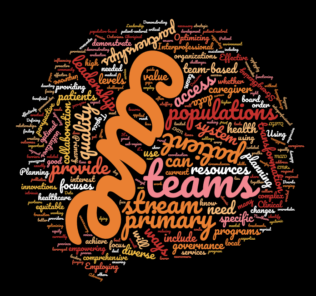
    Why should kids have all the back to school fun? Come see over 850 of your colleagues from across the province as they learn and network over two incredibly productive and rewarding days, exploring topics in these seven concurrent streams:

    1. Effective leadership and governance for system transformation
    2. Planning programs for equitable access to care
    3. Employing and empowering the patient and caregiver perspective
    4. Strengthening partnerships
    5. Optimizing use of resources
    6. Using data to demonstrate value and improve quality of care
    7. Clinical innovations for specific populations

      With only three weeks left to the early bird deadline, don’t miss out on the opportunity to meet and discuss topics relevant to your roles, teams and patients in sessions like:

    For general information, you can visit our conference page.