Tag: Highlights

  • How STAR FHT doctor’s videos help navigate COVID-19 pandemic

    CBC article published June 24, 2020

    By Desmond Brown

    The COVID-19 pandemic has turned Stratford-based family physician Sean Blaine into an internet sensation of sorts — as a YouTube commentator offering tips to navigate the health emergency.

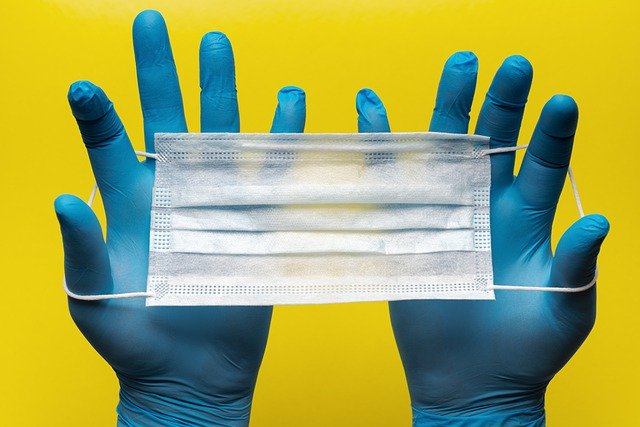
    Blaine says he has “a couple of ideas on how we can get through this thing together.” He has been sharing his views on why masks are an essential part of public health practice and why everyone should always have one at the ready.

    According to Blaine, the whole thing started because he was disappointed in the response to COVID-19.

    ‘Too late’

    “It began in April or so right in the heat of the pandemic. I was talking with a friend and … I was just frustrated because it felt like we were just kind of always behind it, always too late with everything we were doing,” Blaine told CBC News.

    At that time, he said the only reasonable exit strategy for dealing with the pandemic is to adopt widespread immunity testing to determine who among us possesses the required antibodies to keep the virus at bay.

    “I was feeling helpless and frustrated, and I remember one day I was on the phone chatting with a friend. I heard at the time that there were some Canadian companies that were developing some serological tests or immunity tests and I thought the government should just pour money into this.

    “I was ranting on the phone with my friend and he said … I want to film you doing this,” Blaine added.

    The rest, as they say, is history.

    With the help of documentary producer Craig Thompson, Blaine has been making short videos designed to help people protect themselves and others from COVID-19.

    The latest video, Matter of Masks, was posted on June 19. Within a week it amassed nearly 20,000 views.

    Positive reaction

    Based on the viewer comments, people appreciate what Blaine is doing.  

    “This is a clear message. Thank you Dr Blaine,” Dorothy Byrne-Jones wrote.

    “And yes carry a mask with you … Remember it is not about making a fashion statement. You don’t need to have one to match what you are wearing.”

    Meanwhile, Anne Anderson said the public should know, “my mask protects you, and your mask protects me,” and if everyone has a mask, we are all protected.

    “Thanks for this, but people who won’t wear one believe they don’t need to because they are not sick or they are young … People still have it in their head that a mask doesn’t protect them and that’s all they care about,” Anderson added.

    “We have the ability to know whether people are immune to this disease or not, and that’s our ticket to de-escalating the measures we’re in and getting our economy back on track,” Blaine said.

    “Let’s solve the problem here and then share it with the rest of the world.”

    Read the full article here.

  • AFHTO Members win Future Innovator Awards

    AFHTO Members win Future Innovator Awards

    The Change Foundation’s Future Innovator Awards


    The Change Foundation’s Future Innovator Awards recognizes six people, teams and/or organizations who have a strong vision for positive change for patients and caregivers and have the potential to make notable impact going forward. Members and member-affiliated organizations and individuals were recipients, including:

    Find out more about the awards here.

  • Patient and Family Engagement in Primary Care: Case Study Report

    On Thursday, June 11, The Change Foundation released Patient and Family Engagement in Primary Care: Building effective patient and family advisory councils in three Ontario communities,a case study report featuring 3 Family Health Teams. The report finds twenty key lessons in 5 categories- launching, recruiting, operating, relationships and sustaining.

    Teams featured:

    • Peterborough Family Health Team– one of the pioneers of advisory councils. Peterborough is a city of just more than 80,000 people about 125 kilometres northeast of Toronto. Because the FHT also serves surrounding Peterborough County, the team has a total of 111,000 patients on its roster and a budget of $11.2 million. There is an estimated 8,000 residents who don’t have a primary care provider locally; the team has opened two nurse-led clinics to serve them and summer residents from nearby cottage country, with one of the clinics providing virtual care. Efforts to create its patient council have been carefully thought out and focused on balanced representation.
    • St. Michael’s Academic Family Health Team– The team serves 46,000 people in a catchment area that encompasses both the city’s poorest neighbourhoods and some of its wealthiest. Forty per cent of its patients were born outside of Canada and 8% have immigrated in the past 10 years. Just over a third of patients own their homes, 5% are “marginally housed” and 30% live below the low-income cut off. Involving members of vulnerable communities and trying to ensure an equal voice to all have been among the challenges it has worked on.
    • Dufferin Area Family Health Team– just northwest of the Greater Toronto Area. It serves some 48,000 patients, who are spread over several communities including former small towns that are transforming into suburbs — some with a high percentage of visible minorities, others not — as well as rural residents who may struggle to make ends meet. As a result, accurate representation of the population has been a concern.

    Read the full report here.

  • COVID-19 in Ontario – A Focus on Diversity: Public Health Ontario Report

    On June 1, Public Health Ontario released Enhanced Epidemiological Summary COVID-19 in Ontario – A Focus on Diversity .

    Purpose

    This report aims to explore neighbourhood-level trends among laboratory-confirmed COVID-19 cases reported in Ontario who do not reside in long term care (LTC) from a health equity perspective. It combines individual case data with neighbourhood-level data on race and immigration as measured by the “ethnic concentration” dimension of the Ontario Marginalization Index (ON-Marg).

    The report findings improve our understanding of how COVID-19 impacts neighbourhoods differently in Ontario, particularly those with greater diversity that may already experience marginalization related to racism and discrimination. This information could be used to inform planning and equitable prioritization of public health and health system resources and interventions.

    Highlights

    • The most ethno-culturally diverse neighbourhoods in Ontario, primarily those concentrated in large urban areas, are experiencing disproportionately higher rates of COVID-19 and related deaths compared to neighbourhoods that are the less diverse.
    • After adjusting for differences in the age structure between neighbourhoods, the rate of COVID-19 infections in the most diverse neighbourhoods was three times higher than the rate in the least diverse neighbourhoods.
    • People living in the most diverse neighbourhoods were also more likely to experience severe outcomes (hospitalizations, ICU admissions and deaths) than people living in the least diverse neighbourhoods:
      • hospitalization rates were four times higher;
      • ICU admission rates were four times higher; and
      • death rates were twice as high.

    Read the full report here.

  • A Joint Open Letter on Pandemic Pay

    May 25, 2020

    Premier Doug Ford
    Queen’s Park
    Toronto, ON
    M7A 1A1

    OPEN LETTER

    Dear Premier Ford,

    As a broad group of healthcare stakeholders whose members employ tens of thousands of front line workers in the fight against COVID 19, we write to you today to seek immediate clarity on the implementation details and timing of the release of pandemic pay to support frontline workers employed by organizations funded by the Ministry of Health and the LHINs.

    On April 25th, we each applauded the Government of Ontario’s announcement that frontline workers would be recognized with temporary pandemic pay for the current challenges they face keeping Ontarians healthy, safe and informed during the pandemic.  

    A month later, it is still not clear whether the efforts of all of our healthcare workers will be recognized or if pandemic pay is restricted to a subset of employees. Also, funding has yet to flow to the front line and in fact for those front-line workers whose organizations are funded by the Ministry of Health and/or LHINs have yet to receive clarity on whether or not they will be considered front line workers eligible for pandemic pay.  This is contributing to extreme morale issues at the front line at a time when staff need to be supported most.  It is also creating unnecessary conflict for employers who are left trying to explain to their employees why they cannot provide neither clarity nor the pay itself.

    Together, we are urging the Provincial Government to immediately communicate the implementation details, including confirmation that the funding is for all workers on the frontline, and release funding so that frontline workers can start to see the benefit now while the economy is opening up and they are still hard at work to contain the pandemic.

    Additionally, to recognize the critical services provided and the team effort required in fighting COVID-19, we continue to urge that pandemic pay be applied to all non-management front line providers, including regulated frontline staff.

    Every day, it becomes increasingly difficult to see this great initiative, that has such great promise for health care worker recognition, be undermined by delay.

    We thank you for your attentiveness to our request and look forward to your reply.

    Yours truly,

    (Original Signed By)

    Justin J. Bates, CEO, Ontario Pharmacists Association
    Anthony Dale, CEO, Ontario Hospital Association
    Lisa Levin, CEO, AdvantAge Ontario
    Kavita Mehta, CEO, Association of Family Health Teams of Ontario
    Kimberly Moran, CEO, Children’s Mental Health Ontario
    Camille Quenneville, CEO, Canadian Mental Health Association, Ontario
    Deborah Simon, CEO, Ontario Community Support Association
    Adrienne Spafford, CEO, Addictions and Mental Health Ontario
    Adrianna Tetley, CEO, Alliance for Healthier Communities
    Alisha Tharani, Executive Director, Mental Health Partners
    Samantha Yau, President, Canadian Society of Hospital Pharmacists Ontario Branch

    Cc:
    Hon. Peter Bethlanfalvy, President of the Treasury Board
    Hon. Christine Elliott, Deputy Premier and Minister of Health
    James Wallace, Chief of Staff to the Premier
    Mark Lawson, Deputy Chief of Staff to the Premier
    Karl Baldauf, Chief of Staff to the President of the Treasury Board
    Leif Malling, Chief of Staff to the Deputy Premier and Minister of Health

    See the pdf version here.

  • AFHTO 2020 Conference: switching things up

    In February AFHTO’s Membership Committee and Board approved our 2020 conference themes and program. In March we prepared to announce them and send a call for volunteers but as with everything else, the COVID-19 pandemic overtook our plans. Thank you for your patience as we monitored the situation and made decisions about how it might affect the 2020 Conference, set to take place this October in Toronto.

    Based on information from the World Health Organization (WHO), Public Health Canada, Public Health Ontario, and others, we find we cannot hold the conference in-person as originally planned. Our focus and priority are member and stakeholder safety and well-being.

    Something new

    Last year attendees said they wanted a change so we’re exploring virtual options. Without an in-person component, we can create something new and envision the conference differently. What can it look like without those familiar constraints?

    We want to hear from you

    We’re working on this right now and we need your help. What do you want to hear more about and how would you like it?

    Tell us in this quick survey

    Primary care remains vital as the foundation for the health care system. As you work to keep your patients healthy and out of the emergency department, we know many of you are seeking connection, support, and resources more than ever before. You’ve been checking our COVID-19 resource section, reading our emails and attending our webinars.

    With all of this in mind, we feel the AFHTO Conference, with its focus on team-based primary care, is needed now more than ever, in whatever format best serves your needs. So, tell us what you’d like to see.

    For our Leadership Triad, AFHTO’s Annual General Meeting will proceed on October 8th, 2020 from 9:00 a.m. to 10:00 a.m. More information about that, as well as Board recruitment, will be shared shortly.

    Please stay tuned to your email, our website, Facebook and Twitter for further details as we work to make this event something you can look forward to this year.

  • AFHTO partners with Ontario Psychological Association and others to improve access to psychological services for front lines during COVID-19

    Ontario Psychological Association Partners with the Ontario College of Family Physicians, Nurse Practitioners’ Association of Ontario and the Association of Family Health Teams of Ontario to improve access to psychological services for front lines during COVID-19

    Ontario Psychological Association News release

    (Toronto, ON) May 12th, 2020 – In response to Ontario’s growing mental health crisis, hundreds of licensed psychologists have been mobilized to assist our province’s front-line workers in any industry as they battle the COVID-19 pandemic.

    The Ontario Psychological Association continues to monitor the mental health needs emerging in Ontario with regards to COVID-19. Our partnership with leading digital health companies including Strata Health and Think Research will enable us to improve navigation, resource matching, and access to virtual care. We are hopeful that with future investments, we will be able to scale up supports to vulnerable populations such as those experiencing homelessness and seniors who have been forced to isolate.

    “This has been a trying time for everyone, especially our front-line workers. We are in this together and stand united with those who are under immense stress and pressure. As psychologists, we understand the biological, cognitive, emotional, and social impacts that this global crisis has caused. We are working with our partners to provide assistance to our communities,”
    Dr. Diana Velikonja, President of the Ontario Psychological Association.
     
    “We are so pleased to be part of such a great initiative. The Disaster Response Network ensures accessibility of essential mental health services for our frontline workers, vulnerable populations, and provides assistance in communities during this pandemic’.
        Dawn Tymianski, CEO, Nurse Practitioners’ Association of Ontario

    “COVID-19 has created a lot of anxiety and stress for everyone and our teams are seeing an increased need for mental health support for not only their patients but for themselves as well.  The support being provided by the OPA is critical and the importance of having this support, especially for those who are vulnerable and at risk, is essential in ensuring we have a healthy and resilient population who feel connected and supported during the pandemic. We thank the OPA for this very important initiative and are appreciative of our partnership.”
        Kavita Mehta, CEO, Association of Family Health Teams of Ontario
     
    “The OCFP welcomes this collaboration with OPA, AFHTO and NPAO to provide needed mental health support for frontline workers. We know that the health impact of COVID-19 goes beyond the virus itself. It has meant interruptions in care for other chronic conditions and increased mental health struggles — especially among those working on the frontlines of this pandemic. The OPA’s program is meeting an important need for those who are providing care and we are proud to help support them through this program”.
        Leanne Clarke, CEO, Ontario College of Family Physicians

    To learn more, contact Mr. Richard Morrison, CEO of OPA at Richard@psych.on.ca.

    Read the full release here.

  • Letter from AFHTO’s President and Board Chair-May 2020

    Letter from AFHTO’s President and Board Chair-May 2020

    Tom Richard

    Dear Team Members,

    As we approach a new month contending with this pandemic, I thought it would be a good time to touch base. The continued disruptions, frustrations and adjustments of how we provide our services has been a tremendous source of anxiety to ourselves, our families and those we look after. Yet, despite all this, primary care continues to step up and ensure our patients get the care they need.

    Though we are forced to work differently now, we still ensure those that need help get it in the most appropriate way. We battle through, despite fears of a dwindling supply of PPE, and plan for how care can be provided under all contingencies. As we still confront this infection, we are left to wonder what the “new normal” will be like. We plan for how we will contend with future “waves” and ask questions about how long certain “elective” conditions can be deferred.

    The unknowns are certainly a challenge but what I do know is that each and every one of you have stepped up to ensure that our patients are protected and supported and that they will continue to get the excellent care they deserve.

    This only happens when dedicated and caring professionals understand the difference they make in the lives of those they commit to care for. You are all to be congratulated and I thank you from the bottom of my heart. It makes me proud to see how teams across this province have stood up to fear and uncertainty and continue to support the most vulnerable in our society.

    Many of you who serve on the frontlines of this battle do so at great personal risk. Yet, you continue to show the bravery, compassion and commitment that has been documented numerous times in the media over the last several weeks. Be proud of what you continue to do.

    I want to mention that it would be my expectation that your own contributions should be recognized by the province with the “pandemic pay” that has been promised to other frontline workers. This would be a much-appreciated gesture to acknowledge the risk and hard work you continue to undertake.

    Primary care is certainly the foundation of our healthcare system. The encompassing support of a team is how we most effectively manage the trials of this time. We know our patients look to us first for knowledge and guidance. They trust us to look after their best interest. We have not and will not let them down.

    We are learning some things as we progress through this pandemic. About the disease, about the system and what we can improve on and about ourselves.  Rest assured; this will only make us stronger in the long run.

    Thank you again and keep up the incredible work you do every day.

    Dr. Tom Richard
    President and Board Chair
    Association of Family Health Teams of Ontario

    P.S. To all Executive Directors and Administrative Leads, please feel free to forward this to anyone on your team who may not get our emails.

  • An Open Letter from AFHTO, NPAO and the OCFP on PPE in Primary Care During COVID-19

    An Open Letter from AFHTO, NPAO and the OCFP on PPE in Primary Care During COVID-19

    April 15, 2020

    An open letter regarding PPE in Primary Care during COVID-19 was released today from the Association of Family Health Teams of Ontario (AFHTO), Nurse Practitioners’ Association of Ontario (NPAO) and the Ontario College of Family Physicians (OCFP). On behalf of our members – who are caring for patients in communities across Ontario in the midst of COVID-19 – we are seeking urgent assistance from Ontario’s Ministry of Health in ensuring access to appropriate PPE in order to safeguard patient access to primary care.

    Ontarians should not feel reluctant to visit their clinicians who can take the precautions necessary for that visit, and our members are working tirelessly to keep primary care open and operating – despite PPE shortages.

    However, we are quickly reaching a breaking point in primary care. Without the needed PPE to keep everyone in our medical offices and clinics safe, some will be forced to close their doors to in-person care. This may prompt some patients to go to the ER for in-person care, or worse, not seek care at all.

    We are recommending that the Ontario Ministry of Health immediately streamline the procurement of PPE through one central source for distribution to primary care through Ontario Health/regions and not leave primary care clinics to have to find PPE on their own.

    Read the full letter here.

  • How Lakelands FHT Handled a Positive COVID-19 Result At Their Clinic

    As told by Dr. Matt Dumas, Lead Physician, Lakelands FHT*

    In late March, Lakelands FHT discovered that there was a positive case at our Northbrook site. That resulted in the immediate closure of our building. We all had to go home and finish 14 day periods of self-isolation. To our surprise, this meant having to distance ourselves from our own families, which was very difficult.

    The day that we realized we would have to close our building, we decided to build a clinic without walls. We accomplished this by creating an email account for patients to contact us and posted this on our website and Facebook pages. Our 3 physicians and 2 NPs were able to remotely access the PSS EMR and fax prescriptions from our own homes. Our super RN/IT expert also had remote access and provided critical support. We were able to create schedules for ourselves and call patients from our homes by turning off the Caller ID’s on our phones. Our Mental Health Social Worker was able to call the patients in her schedule as well.

    The Lead Physician monitored the email daily and transferred the emails to the appropriate provider for action. Once the emails were completed, they were moved to a separate folder and our RN copy/pasted the emails into the patient’s chart before deleting them from the email entirely, limiting the amount of time that personal information was kept in cyberspace. With this system, we were able to respond to over 20 patient emails per day, as well as call the patients that were scheduled previously. This made for busy days, and it was a relief to sign out of the email every day at 4:30!

    We were discouraged that we couldn’t answer the phones at our clinic while we were shutdown, but we were able to respond to patient requests in ways that we had not done before: by answering emails to patients or calling them directly from our homes. This was an evolution from the days of paper charting.

    We also created call lists of all of our patients who are above the age of 70 and had our NPs call them to ask how they were doing, find out if they had any needs, and to remind them of the importance of physical distancing, which the vast majority of our patients were already following.

    With the advice of KFLA Public Health we have reopened the clinic. We have separated our staff at the Denbigh and Northbrook sites so that if there is another shutdown, the phone can be forwarded to the site that is still open, and the providers can work from home as before.

    *In the first version of this post, Janice Powell, Executive Director, was listed as the source. It has now been updated to reflect Dr. Matt Dumas’s contribution.