Tag: Health Links & Partnerships

  • Bits & Pieces: Indigenous Midwifery Programs, Expanded Midwifery Care Models and more

    Bits & Pieces: Indigenous Midwifery Programs, Expanded Midwifery Care Models and more

    Your Weekly News & Updates


    In This Issue  
    • Applications open for Indigenous Midwifery Programs, Expanded Midwifery Care Models
    • Climate Conscious Inhaler Prescribing Collaborative
    • Updates to GoodLife member benefits
    • Guidance on testing and management of monkeypox for primary care, and more


    • Colorectal Cancer Resource & Action Network seeking speaker
    • Reminder- nominate a partner or healthcare inspiration for an AFHTO Board award
    • Upcoming events including Moving Beyond Technology: Exploring the Clinician Change Virtual Care Toolkit and more


    Applications open for Indigenous Midwifery Programs, Expanded Midwifery Care Models

    The Ministry of Health is inviting applications for two programs:

    • Indigenous Midwifery Programs (IMP). This includes an Indigenous Midwifery Program working within Interprofessional Primary Health Care Teams
    • Expanded Midwifery Care Models (EMCM). This includes full spectrum midwife in primary care team-based setting and primary care team-based prenatal and postpartum midwife

    Get more information here.

    The Primary Health Care Branch is hosting a webinar on August 23, 2022. To participate, please email midwifery@ontario.ca by Thursday, August 19, 2022, noting contact information for interested participants and the ministry will reach out to them with the
    webinar details.
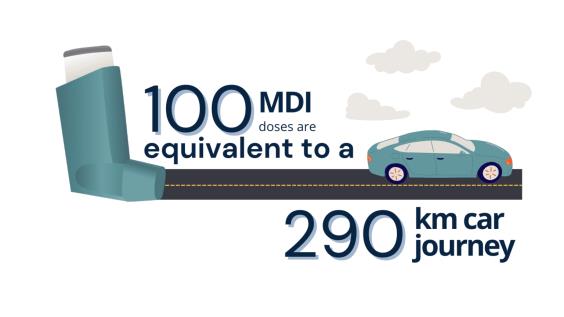

    Picture of inhaler connected to a road with a car driving away. Text says 100 MDI doses are equivalent to a 290 km car journey.

    Climate Conscious Inhaler Prescribing Collaborative

    This fall, CASCADES (Creating a Sustainable Canadian Health System in a Climate Crisis) will be running the Climate Conscious Inhaler Prescribing Collaborative.

    Through three learning sessions (between September 2022 and March 2023) and regular check-ins, participating teams from primary care settings across Canada will receive access to and training on a few tools that can be used to facilitate appropriate prescribing, switching, teaching technique, and proper disposal. Read for further details (EN and FR).


    Updates to GoodLife member benefits

    As of May 30, 2022, AFHTO members have been eligible for a 25% discount on membership types. To take advantage of discounted rates, you need a membership ID assigned by AFHTO. Right now, IDs are automatically assigned to those on the ‘Bits & Pieces’ mailing list.

    As of Sep. 1, 2022, member IDs will only be generated upon request. These will still be sent to GoodLife monthly near the end of the month. To get your ID or be put on the list for one, staff need to email info@afhto.ca.


    Guidance on testing and management of monkeypox for primary care, and more

    Recent updates include:

    We continue to update several pages on our site with resources and news:


    Colorectal Cancer Resource & Action Network seeking speaker
    The Colorectal Cancer Resource & Action Network (CCRAN) is seeking a primary care clinician for a panel session at their virtual Early Age Onset Colorectal Cancer (EAOCRC) Symposium, October 27 & 28, 2022. The session will address barriers and opportunities for improving patient care pathways and outcomes for people with colorectal cancer (CRC).

    Given CRC is preventable and treatable if detected early on, an understanding of facilitators and enablers of timely diagnosis from a collaborative primary care perspective is integral to the optimization of the CRC service and care trajectory. Please contact info@afhto.ca if interested.


    Reminder- nominate a partner or healthcare inspiration for an AFHTO Board award

    The AFHTO board invites all members to help them select the recipient of a Board award.

    Submit a nomination online for the Board Award category by August 19, 2022.

    Find out more about the criteria here. You can find the nomination template here.


    Moving Beyond Technology: Exploring the Clinician Change Virtual Care Toolkit, Aug. 16, 2022
    Developed by a collaborative of 25 primary care teams and dedicated coaches, the Clinician Change Virtual Care Toolkit can help organizations choose and implement approaches to virtual care that lead to good outcomes and experiences for both clients and providers. Hosted by Healthcare Excellence Canada, this webinar features Dr. Kevin Samson, AFHTO board director. Register for free here.


    ECHO Ontario Bariatric Network, starting Aug. 19, 2022
    New sessions in this learning series hosted Ontario’s Bariatric Centres of Excellence starting August 19th and various dates in September. Find out more here.


    NPAO 2022 Annual Conference, Sep. 22-23, 2022

    This years’ Conference theme is The NP Experience: Pushing Boundaries Towards Common Goals. Find out more here.


    Data To Action: Making Your Data Visible and Useful, Sep. 28, 2022
    Hosted by TechSoup Connect’s Ontario chapter. Register here.


    OMD Digital Health and Virtual Care Conference, Sep. 29-30, 2022
    Virtual conference hosted by OntarioMD. Find out more here.


    AFHTO 2022 Conference, Oct. 12, 2022

    Join your peers from across Ontario and beyond as we reconnect and reimagine, moving forward together.

    Members get more than 50% off registration. Register with your verification code here.
  • Bits & Pieces: partnership to improve access to psychological services for the front line & more

    Bits & Pieces: partnership to improve access to psychological services for the front line & more

    Your Weekly News & Updates


    In This Issue  
    • Partnership to improve access to psychological services for front line workers
    • Letter from AFHTO’s President
    • Pandemic Pay
    • Update to critical supplies & equipment survey portal- training sessions
    • Mental Health Week
    • Updated screening and testing guidance and more
    • Infection prevention and control CoP in Ontario Central West Region
    • Ontario Community Support Association meals/essentials delivery
    • Seeking participants to examine practice patterns during COVID-19
    • Financial management webinar series
    • Upcoming events regarding Advance Care Planning and more

    Partnership to improve access to psychological services for front line workers

    AFHTO, OCFP, NPAO, and the Ontario Psychological Association partner to improve access to psychological services for front line workers- We would like to announce two pathways of care for mental health services from a Psychologist through the Ontario Psychological Association (OPA).

    One stream is for your patients who are experiencing mental health issues such as anxiety and depression related to the COVID 19 pandemic. The OPA has set up a network of psychologists who can provide no-cost short term mental health support for COVID related mental health issues.

    The second stream provides access to mental health support to you as primary care providers. As professionals providing front line care, we recognize the stresses to which you are exposed. Find out more regarding these two opportunities for mental health support (please do not forward this letter).


    Letter from AFHTO’s President

    On Friday we emailed a letter from AFHTO’s President and Chair Dr. Tom Richard:

    “As we approach a new month contending with this pandemic, I thought it would be a good time to touch base.

    The continued disruptions, frustrations and adjustments of how we provide our services has been a tremendous source of anxiety to ourselves, our families and those we look after.

    Yet, despite all this, primary care continues to step up and ensure our patients get the care they need.” Read the full letter here.


    Pandemic Pay

    The Ministry is working on its policy and implementation related to the release of pandemic pay and who is eligible. As we wait for further details, we will be working with our primary care partners to reinforce the important role primary care providers play in the COVID response and continue to advocate on behalf of team-based primary care. More details will be made available as information starts to roll out.

    And as a reminder, if you’re an interprofessional health provider at a FHT, A team of researchers wants to learn more about your experience as a provider during the COVID-19 pandemic. Over 350 IHPs have filled it out to date and the deadline is this Thursday, May 7. Find out more here.


    Update to critical supplies & equipment survey portal- training sessions

    On Friday, the Ministry announced the health sector PPE survey would transition to an enhanced submission portal as of yesterday, May 4. To support the transition, they are hosting several webinars as well as providing respondents with detailed support material that they can access and reference as they input their inventory data. Training sessions include:


    Psychological First Aid for Frontline Health Care Providers: A Quick Guide to Wellness


    Mental Health Week

    It’s Canadian Mental Health Association Mental Health Week. This year’s theme is social connection. You can get their toolkit here and find relevant articles here. They may help you help your community not just get loud, but #GetReal.

    On a related note, there is a free resource, the Psychological First Aid for Frontline Health Care Providers: A Quick Guide to Wellness, a workbook recommended by the Ontario Psychological Association.


    Updated screening and testing guidance and more

    On May 2, the government released updates to

    We continue to update several pages on our site with resources and news:

    We’ll update these on a regular basis as we receive relevant resources, while trying to reduce duplication with other sources. We will continue to update the news page daily.


    Infection prevention and control CoP in Ontario Central West Region

    Public Health Ontario would like to invite Primary Care workers responsible for Infection Prevention and Control in the Ontario Central West Region (those located within Halton, Hamilton, WDG, WW, Brant, Niagara, and HN public health units) to their virtual Community of Practice meeting on May 14, 2020 from 9:00 to 10:00 a.m.

    The meeting will focus on the latest COVID-19 updates and provide an opportunity for primary care colleagues to discuss their questions. If you are interested in attending, please email ipaccentralwest@oahpp.ca.

    Access information:
    1. Please dial in to the teleconference at 1-866-261-6767 and enter code: 4889444#
    2. Join the webinar and enter your full name


    Ontario Community Support Association meals/essentials delivery

    Ontario Community Support Association has established a link on their website to connect individuals/community providers to meals services/essentials delivery.

    In this portal, you can search Meals providers or Essential Service providers by searching based on address. If service providers exist in the area, a referral can be made directly through the portal to the provider. If nothing can be found there, a link will pop up asking to “Sign Me Up” to receive a phone call from a Canadian Red Cross (CRC) Coordinator to make connection to services.


    Seeking participants to examine practice patterns during COVID-19

    Two primary care researchers, Rachelle Ashcroft, and Catherine Donnelly are submitting a CIHR Rapid COVID-19 response grant to examine practice patterns of interprofessional primary care teams during COVID-19. The grant is due Monday May 11. If your team would be interested in participating in the study please contact Catherine by email Catherine.donnelly@queensu.ca for further study details. 


    Financial management webinar series

    The Ontario Nonprofit Network has launched a free four-part financial management webinar series to help nonprofits adapt and recover from the COVID-19 pandemic, starting May 7:


    Ask Me Anything about Health Privacy, May 6, 2020
    These monthly webinars give you the chance to ask Kate Dewhirst about your Health Privacy concerns. Register here.


    Advance Care Planning and Goals of Care In The COVID-19 Pandemic, May 6, 2020
    Choosing Wisely Canada hosts weekly webinars to discuss pressing topics around COVID-19. Join to learn and connect around freeing up these limited healthcare resources. Learn more here.


    Complicated Grief and Trauma – Skills Building Education, May 6 – July 15, 2020
    This ten-session webinar series will focus on COVID-19 related complicated and traumatic grief. Provided by the HPCO and CHPCA. Learn more here.


    PEER’s review of the evidence for COVID-19, May 7, 2020
    Join this CFPC webinar as part of the COVID-19 Pivots. Find the webinar link posted here.


    Congestive Heart Failure (CHF) and COVID-19, May 7, 2020
    Join the Family Physician Airways Group for a discussion around CHF and COVID-19. To register, click here.

  • Health Link Leaders: Forming a Link (Sept 27)

    AFHTO’s Health Link Community of Practice met on September 21st. This communique provides an overview and highlights key items discussed:

    • Shaping the Future: Advanced Health Links Mode
    • Health Link CoP: Building a Partnership with the Ministry
    • NSM Integrate Project
    • Care Coordination Tool
    • Primary Care Update: what we know & what we’re doing about it

    Shaping the Future: Advanced Health Links Model

    In June 2015, the Ministry of Health and Long-Term Care announced the introduction of the Advanced Health Link Model , to be introduced over the course of the 2015-16 fiscal year. Based on the learnings from 69 established Health Links, the Advanced Health Link model identifies four areas of focus that include enhanced performance management and oversight, elements of standardization, funding model redesign (including sustainability planning)  and wider system integration. The Advanced Health Link model also illustrates the accountability of LHINs for their respective local Health Links. Through this renewed commitment to advance Health Links, the Ministry has acknowledged the need for stable, operational base funding and for better alignment between primary care and strengthened integration/collaboration, specifically with primary care teams. The evolution from the ‘pilot phase’ to a more mature state will also put in place formal processes to identify and disseminate emerging/best practices as a way to build on the successes achieved  to date. A health links guide will be released end of September or early October that will set out the new expectations of the model, including key functions of lead organizations.

    Health Link CoP: Building a Partnership with the Ministry

    The Health Link CoP was pleased to have Ministry representation at the September 21st meeting, including the acting Director (Michael Robertson) and his colleagues from the Capacity Planning and Priorities Branch as well as representation from the Primary Care Branch. Through open and transparent discussions, members highlighted a number of ongoing challenges for FHT led Health Links, including:

    • Timing of funding: it is widely recognized that the absence of stable base funding creates significant challenges in terms of sustainability, planning, HR retention, and maintaining the ongoing momentum of health links. Many FHTs are faced with the risk of using reserves to bridge the funding gap or obtaining loans from health service partners, such as hospitals or CCACs.
    • Reporting burdens: Streamlining and/or minimizing the numerous reporting obligations (for some FHTs this includes reports to: HQO, LHIN, Ministry, CCAC and/or hospital) could minimize the associated work load and promote more consistent, standardized reporting. The movement to reporting through the Self Reporting Initiative (SRI) could also help to enhance consistency.
    • Inconsistent direction: there has been some concern with inconsistent direction being received across the FHT led health links between the Ministry and the LHIN. For example, the Ministry contract identifies physician engagement as an eligible expense, however many LHINs have been providing conflicting advice. There is a desire to improve standardized messaging, materials and expectations, and develop a more common approach across the LHINs.

    Member leadership from the CoP, with the support of AFHTO, will continue to work closely with the Ministry in finding possible solutions to the challenges identified. There is a strong commitment from the Ministry to maintain ongoing communication and participation with the Health Link CoP!

    NSM Integrate Project

    The Health Link CoP continues to be a platform to share achievements and spread success stories! The Integrate Project was launched by Cancer Care Ontario and the approach is being piloted in select regions of Ontario (from 2014-2017). Members received an overview of INTEGRATE project piloted in the North Simcoe Muskoka LHIN. This project is enabling early identification and management of patients who could benefit from a palliative care approach across settings.  The collaborative method is transforming the palliative care system from one with a lack of service integration and fragmentation to a system with integrated care across care sites and improved patient related outcomes.

    Care Coordination Tool (CCT)

    East Toronto Health Link (ETHeL) is going live with its first published CCT on Wednesday, September 23rd – despite the very tight timelines and delay in funds, they are on track to meet this deliverable for the Ministry and Orion! The administrative burden/challenges that arose from the management of this initiative have been highlighted to the Ministry with the intent to inform subsequent roll-outs of the Care Coordination Tool, including the need to provide input to the Ministry on non-clinician feedback as it pertains to implementation. Further conversations with the Ministry are planned to occur before the end of the CCT proof of concept in March. Just a reminder that ETHeL has already done a legal review on all three agreements (DSA, ESPA and EULA) and comments from the lawyers are available for use by any Health Link that will be participating in the CCT proof of concept.  In addition, ETHeL has its agent agreement (for authoring model #3) that they are happy to share for any Health Links using that model. If you would like any of this information please contact Kavita at kavita.mehta@setfht.on.ca.

    Primary Care Update: what we know & what we’re doing about it

    Over forty AFHTO members from around the province – the combination of AFHTO’s Physician Leadership Council (PLC) and ED Advisory Council (EDAC) – came together on September 17th  to dialogue with the Ministry to gain further clarity on what is known (and not known) as it plans for primary care.  One of the key messages is that work to develop policy and strategy is underway and that there will be further discussion and consultation as this progresses. For further details from this meeting please see the meeting summary  and/or full report [PDF].

    Members expressed interest in conducting a face to face meeting in early 2016. Further details will be provided over the coming months. For any further questions, or if you are interested in participating on the Health Link CoP, please contact:
    Marg Alfieri (Chair, Health Link CoP) Health Link Manager, KW4 Health Link Centre for Family Medicine FHT margalfieri@icloud.com Bryn Hamilton Provincial Lead, Governance & Leadership Program 647-234-8601 Bryn.Hamilton@afhto.ca


  • Health Links: Current status and update on resources

    Whether you are in one of the 47 Health Links have been approved to date, or will be participating in a future Health Link, the presentations listed below will give you an update on the progress of Health Link implementation to date. These presentations were made at a meeting last week for all the associations whose members are involved in Health Links. Points to note:

    • AFHTO continues to hold monthly teleconferences for FHTs leading Health Links to raise and resolve common issues.  Please contact Clarys.Tirel@afhto.ca for further information.
    • The 47 Health Links currently approved cover a geography that encompasses just over half of Ontario’s population.
    • Expectation is that there will be 90+ Health Links covering the full province by some point in 2015.
    • Initial “rapid cycle evaluation” is tracking four domains to understand how Health Links are evolving:
      • Identification of Complex Patients
      • Care Coordination
      • Patient Care
      • Patient Experience
    • Future evaluation will address impact of Health Link model on system performance.
    • A “Care Coordination Tool” is being developed for roll-out across the province.

    Please click on the links below to access the following presentations:

  • AFHTO 2013 Conference – Integration: Building the team beyond the FHT

    Theme description: While Health Links are focused on high users of health services, all Ontarians stand to benefit – as patients and citizens – from greater collaboration among healthcare providers, other agencies, community stakeholders and governments. Presentations in this stream will focus on building collaborative relationships and working with community partners towards providing the right care, at the right time, in the right place.  This includes improving  the patient’s experience during their journey through the health care system, and identifying and addressing gaps in the quality of care and service delivery for individuals with complex chronic illnesses and other needs that compromise health. A4 – CVFHT Lung League – Our journey to decreasing ER visits by 50% This team presentation will describe both internal and external process improvement and outcomes through a variety of measurements and patient/stakeholder case studies including process improvements made to CDM, prevention and business case. B4-A – PATH – Partners Advancing Transitions In Healthcare PATH – “Partners Advancing Transitions in Healthcare” is a community-based partnership between patients, caregivers and providers working together to understand people’s experiences at key transitions between healthcare settings and services. The PATH Partners will work together in teams, using experience based co-design, to re-design transition processes and measure the impact of the improved processes. B4-B – Strategies to address the social determinants of health and health equity in clinical practice The presentation will begin with a brief overview of the impact of the social determinants of health on overall population health followed by an overview of the study design and methodology. C4 – “Mind the Gap” – Addressing Phlebotomy in Rural Ontario: A Case Study in Partnership, Community Engagement and Grass Roots Initiative-Taking During this presentation, first hand experiences of mobilizing local community stakeholders, advocating with the Ministry of Health, collaborating with partner health service providers, and engaging the private sector will be shared. D4 – Adopting a Network Approach – promoting skills and preventing duplication in multi-provider areas via networks that work (presentation to follow) Participants will see concrete examples of a network approach to successful stakeholder partnerships and its impact on access to care as well as benefits for providers.  Successes, challenges and lessons learned will be shared, as will specific information on best practices in smoking cessation and falls prevention program delivery. E4 – Integrated Hospice Palliative Care: Bringing Family Physicians Back into the Team Recognizing the critical role played by Family Physicians in caring for patients at the end-of-life, local stakeholders collaborated to re-integrate primary care in the provision of HPC care in Guelph.  This integrated approach being implemented in Guelph respects patients’ end-of-life care wishes while supporting families into bereavement all while maintaining the trusted patient – family physician relationship. F4 – Innovative Partnerships to improve patient care and address social determinants of health This presentation discussed two key points: to help reduce ER visits and support complex patients; and to support patients with social determinants of health barriers.

  • Family Health Teams play a prominent role in Ontario’s Health Links

    The first 19 Health Links were announced today by Minister of Health and Long-Term Care, Deb Matthews. Health Links bring together health care providers in a community to better and more quickly coordinate care for high-need patients. Seven of the 19 Health Links announced today will be coordinated by family health teams:

    This is a natural progression in the evolution of FHTs.  FHTs were created to join family doctors, nurse practitioners, pharmacists, dietitians, nurses, social workers and others to strengthen primary care – the first level of care over a person’s lifetime. Health Links promise to extend the care team – they will strengthen links between primary care providers and specialists, hospitals, and other community support agencies, to give high needs patients the wrap-around care they need. Health Links start by looking at the people who have complex care needs, and build on primary care as the foundation for a person’s health care. In choosing the Taddle Creek Family Health Team as the site for her announcement, the Minister underlined the central role that primary care plays for patients, and for the health system.  In addition to the seven Health Links to be coordinated by FHTs, four will be coordinated by community health centres, one by a family health organization and one by a community service agency. The remaining six will be coordinated by a mix of hospitals and community care access centres.  Click here for the list of the first 19 Health Links. Many details about Health Links are being worked through. AFHTO expects there will be additional information forthcoming from the Ministry in the weeks and months ahead.  The following paragraphs summarize what AFHTO has learned to date from Ministry sources. Health Links are designed around, and will be accountable for, system-level metrics established by the province. Click here to see DRAFT areas to be measured. We understand the Ministry will set up an advisory table to define the indicators. The next phase for these early adopters is to prepare a business plan over the next 3 months. A guidance document is to go out early next week. The early focus is on relationship building among providers. The Ministry will encourage more applications for Health Links beginning in January. The Minister stated, “I envision that every doctor will be involved in a Health Link.”  They anticipate seeing about 75 across the province – to be rolled out as communities are ready. Health Links are accountable to their LHIN for progress in the outcome measures.  Health Links include providers who are accountable to their LHIN, and others who are accountable to the Ministry (such as FHTs). The coordinating body for each Health Link commits to plan to improve indicators, and each member is to include their role in achieving these improvements in their respective business plans.  Providers who do not have direct accountability to the LHIN will have a joint Memorandum of Understanding with the Ministry and the LHIN. LHIN Primary Care Councils will continue as well.  Both are important – PCCs focus on coordination and planning of primary care, and Health Links focus on coordination and planning of multiple types of care for high-needs patients. Health Links will be supported by Health Quality Ontario’s bestPATH initiative – quality improvement tools, a framework to collect and report on outcomes, and other supports that will help them deliver more integrated care. As Health Links identify issues that get in the way of delivering more seamless care, the Ministry has committed to work with them to lower these policy barriers. Throughout this journey, AFHTO’s role is to:

    • Facilitate idea and information exchange among members;
    • Work with FHTs to identify the support they need to succeed as coordinators and members of Health Links and, where needed, to advocate for that support.

    Click here for the Ministry’s press release and backgrounders, including the list of the first 19 Health Links. Click here for a Ministry presentation to key stakeholders, prior to the public announcement. Click here for presentations that describe the population of high users that is the focus of the Health Links initiative.

  • Looking to the Future: Collaboration & Engagement Through Social Media

    In early 2010 500,000 Facebook users rallied together to get Betty White to host the season finally of Saturday Night Live, which was SNL’s highest rated episode in 2 years.  In 2007 Justin Bieber, teen pop sensation from Stratford Ontario, was discovered after his mom posted videos of him singing on YouTube.  Since its creation in 2001, Wikipedia has grown rapidly into one of the largest reference websites, attracting nearly 78 million visitors monthly. The content is created and maintained by over 90,000 contributors.  And they do it all for free. These three examples illustrate how social media is changing everything. The way work is done, the way business operates, the way consumers consume, the way society communicates.  So what can it do for primary health care?  Can it help Family Health Teams improve patient care?  Through the lens of the LinkedIn platform this slide presentation from the AFHTO 2010 conference will help you see collaboration in a new light, and help you learn how FHT’s can engage with each other like never before. PRESENTER: Kevin MacLeod FHT: Barrie & Community Family Health Team Click here to view.

  • Kenora Wound Care Pilot Project

    In September 2008, Sunset Country FHT received funding from Health Force Ontario for a Collaborative Wound Care Pilot Project that involved several community agencies in developing and implementing a comprehensive wound assessment and wound care treatment program based on best practice guidelines.  This slide presentation from the AFHTO 2010 conference provides a study of an interprofessional team collaborating in developing  a best practice based collaborative care model for wound care in a community setting.  It presents a general overview of this innovative project, how the community was able to collaborate and develop a comprehensive wound care program and, demonstrate that the model is transferable to other communities and FHTs. PRESENTER: Randy Belair FHT: Sunset Country FHT Click here to view.