Ontario is launching Roadmap to Wellness: A Plan to Build Ontario’s Mental Health and Addictions System.
Today, Christine Elliott, Deputy Premier and Minister of Health, and Michael Tibollo, Associate Minister of Mental Health and Addictions, were at Ontario Shores Centre for Mental Health Sciences to unveil the new roadmap, which provides a clear path forward toward offering Ontarians easier access to higher-quality care and supports in communities across the province.
The new Mental Health and Addictions Centre of Excellence within Ontario Health will serve as the foundation on which Roadmap to Wellness is built. Historically, Ontario has had great success in building a world-class system of care, such as cancer care. The centre will be the coordinating, central provincial body that will leverage this experience to enable and drive the effective implementation of the plan’s four pillars:
Ministry of Health news release background- Feb. 25, 2020
Ontario is modernizing home and community care services to enable the introduction of integrated and innovative models of care. Since its initial introduction, the Home Care and Community Services Act, 1994 and the delivery model it supports have not kept pace with a number of changing dynamics, including:
An aging population;
Changing client expectations on the different types of care;
Increasing opportunities for care at home; and
Innovation in technology and delivery options.
At the same time, the act has created long-standing barriers that have restricted innovation in the delivery of home and community care, including:
Rigid care coordination: Decisions about patient care are often made away from frontline care.
Siloed care: Patients often interact with home care separately from primary and hospital care, which often includes multiple assessments leading to delays in care.
Restrictive care plans: Patients have care plans with a set number of hours or visits with service maximums that can curtail care.
In response, Ontario is introducing the Connecting People to Home and Community Care Act and posting proposed new regulations under the Connecting Care Act, 2019 to bring an outdated system into the 21st century. Read the entire post here.
New PPE survey deadline and other novel coronavirus (COVID-19) updates
Ontario Chronic Disease Prevention Alliance Queen’s Park Day
Minister announces changes to home and community care
Members’ stories
Improving cancer screening rates slides and video
Psychology Month
Public Health Infection Prevention and Control resources
Hypertension focus groups invitation
Upcoming events including The Art of Doing More with Less
New PPE survey deadline and other novel coronavirus (COVID-19) updates
For EDs, Lead Clinicians and Board Chairs: The Ministry of Health and Ontario Health (Shared Services) have extended the deadline to complete this short survey to end of day Thursday, February 27, to assist in tracking provider preparedness. Only 34% have responded and they have emphasized the importance of filling this out.
While we have few cases in Canada, it may be declared a worldwide pandemic soon and this will help them identify where support is needed. They will work with suppliers to distribute resources accordingly.
Ontario Chronic Disease Prevention Alliance Queen’s Park Day
On Feb. 24, the Ontario Chronic Disease Prevention Alliance held an Advocacy Day at Queen’s Park to call on the province to prevent hospitalizations and reduce health care costs through initiatives to prevent chronic conditions. Priorities include:
Setting measurable goals for prevention to increase Ontario’s access to data on this health care issue
Introducing prevention into primary care such as access to professional services, screening and tools for healthy lifestyles
Incorporate prevention into Mental Health Strategy
Take measure to restrict youth access to vaping products.
Minister announces changes to home and community care
Today the Minister announced changes to the delivery of home and community care. AFHTO will be working with our partners to better understand how this affects our members.
Members’ stories North Simcoe FHT – North Simcoe FHT to anchor new medical centre in Midland – “We are expanding the family health team programming, which is why we needed more space,” said executive director Andrew Shantz. “There are quite a few health-care partners coming along with us. We are creating a medical centre that will provide a variety of different services.”
Public Health Infection Prevention and Control resources
Public Health Ontario has provided links to several Infection Prevention and Control (IPAC) resources to help build capacity in primary care:
Hypertension focus groups invitation
Participate in a virtual focus group about system-level challenges and enablers to adopting the care outlined the Hypertension Quality Standard being developed by the Quality business unit at Ontario Health, formerly Health Quality Ontario. Your feedback will inform the recommendations for adoption to support the uptake of this quality standard.
The Hypertension Quality Standard focus groups will be held on the following dates:
Tuesday March 3, 2020 (4:00 – 5:00PM EST)- Follow this link to register via Eventbrite.
Thursday March 5, 2020 (12:00 – 1:00PM EST) – Follow this link to register via Eventbrite.
Optimizing Your EMR For Safer Opioid Prescribing and Pain Management (Part 1), March 5, 2020
This webinar is targeted towards family physicians and nurse practitioners in northern Ontario. Hosted by Ontario Health Quality and Ontario Pain Management Resource Partners. Learn more here.
The Art of Doing More with Less, March 18, 2020
This is the final webinar in AFHTO and Grant Thorton’s Financial webinar series! Join Danzel Pinto as we explore how non-profits can improve performance with financial sensibility. Register today!
Rainbow Health Ontario Conference, April 21-23, 2020
Register for Canada’s forum for LGBT2SQ health, being held in Niagara Falls this year. For more information, click here.
ECHO Liver, March 12, 2020
For 2020, ECHO Liver will be offering a quarterly evening series. The first is Liver Disease in Primary Care: Approach to Liver Enzymes. Find out more here.
Meeting the Minister to discuss pre budget recommendations
Working together for change
Members’ stories
Managing urinary incontinence in women: clinical tool
Novel coronavirus updates
Northern opioid learning community webinars, Mar. 5 & 26
Seeking volunteers for Early Chronic Kidney Disease priority panel
OASW call for proposals
Upcoming events including improving cancer screening and more
AFHTO Board Executive Committee and CEO met with Minister Elliott on Feb. 13
Meeting the Minister to discuss pre budget recommendations
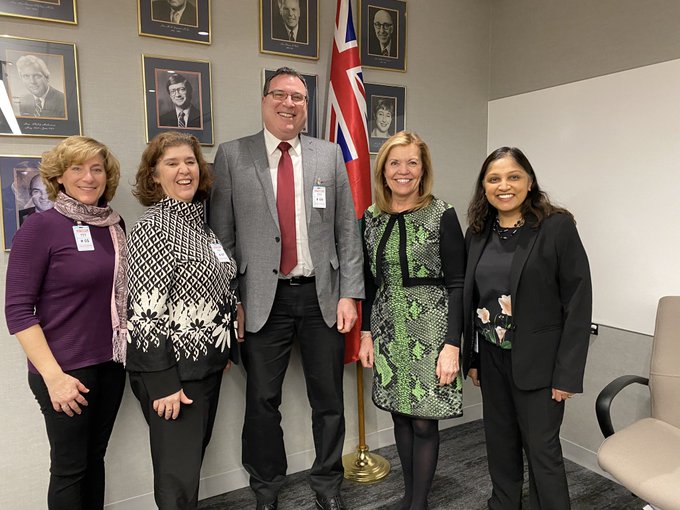
On Feb. 13, our Board executive committee and CEO met with the Deputy Premier and Minister of Health, the Hon. Christine Elliott, to talk about our pre budget recommendations with a focus on integrated care foundationally based in team based primary care and the importance of clinical leadership.
Working together for change
Connecting physicians regionally is a powerful way to spark change, to improve the delivery of comprehensive patient services, and to influence health service decision making. For those who wish to consider how they might best work together to strengthen the primary care sector – or for those who have already started! – check out Primary Care Physicians: Working Together For Change, Primary Care: Local Change Ideas, and other tools and resources on our website. This repository will be updated regularly!
Many women feel ashamed when they experience urinary incontinence, which may prevent them from speaking to their doctors about it. If left untreated, the condition can lead more needed care later. This tool is designed to help primary care providers manage care for adult women (18+) who experience involuntary loss of urine.
Northern opioid learning community webinars, Mar. 5 & 26
Join the Ontario Pain Management Resources Partners as they explore how to optimize your EMR to support safer pain management and opioid prescribing. Including Sandeep Gill, AFHTO Clinical KTE Specialist and members, Drs. Sarah Newbery and Ryan Patchett-Marble, Marathon FHT, and Dr.Kevin Samson, East Wellington FHT.
Target audience: Family physicians and nurse practitioners in northern Ontario who endeavour to access relevant data to support safer opioid prescribing and pain management, including primary care clinicians and support staff
Seeking volunteers for Early Chronic Kidney Disease priority panel
The Ontario Renal Network, part of Ontario Health, is recruiting primary care providers for the Early Chronic Kidney Disease (CKD) Priority Panel. Its purpose is to provide strategic direction for current and future initiatives related to early CKD, including supporting primary care providers in identifying and managing patients with CKD.
The panel will meet on a regular basis about 6 times per year and will to have representation from various groups (e.g., administrators, allied health, physicians, patient advisors). If you’re interested in learning more or joining, please email daphne.sniekers@cancercare.on.ca by February 29, 2020.
OASW call for proposals
The Ontario Association of Social Workers has announced a Call for Proposals for the 2020 Social Work Provincial Conference, “Innovative Approaches to Complex Needs: Social Workers Influencing the Future of Care”, on November 13 and 14, 2020.
They encourage submissions from students, practitioners, policy makers, researchers and academics alike. The deadline for submissions is March 1, 2020.Find out more.
Improving cancer screening rates and reducing related disparities, Feb. 20
On Feb. 20 join Drs. Aisha Lofters and Tara Kiran as they share practical, evidence-based ways to improve cancer screening rates and reduce income-related disparities. Register here.
Is your work making you wheeze? Feb. 25, 2020
Attend this webinar suitable for healthcare providers and other employees, hosted by the Lung Association. View all Lung Associations’ upcoming events here.
Black Physician Association Ontario Annual Health Symposium, Feb. 29, 2020
Keynote speaker will be the inspiring Dr. Lisa Robinson, Associate Dean of Inclusion and Diversity at the University of Toronto. Learn more here.
Primary Care Electronic Medical Record Tools for Advance Care Planning and Palliative Care, March 12, 2020
In the third webinar in the HPCO Winter webinar series, our Board Director Dr. Kevin Samson, along with Justin Wolting from the eHealth Centre of Excellence, will be presenting to assist health care professionals and support staff. Learn more here.
The Leadership Council Members met on February 5, 2020. Below are the highlights from the winter 2020 Leadership Council Meeting.
Supporting AFHTO through reallocation funding
Members are asked to consider supporting AFHTO’s governance and leadership program through in-year reallocation funding if year-end surpluses are available.
The ministry recently clarified the additional information needed for reallocation requests to support OHT implementation and/or AFHTO projects. The requirements are posted here.
Organizing primary care and supporting OHT development
In partnership with OCFP and SGFP, AFHTO has been facilitating regional physician information sessions in communities. Sessions focus on providing clinicians with information on OHTs and supporting the development of regional physician networks.
Physician engagement sessions are encouraged to help ensure OHTs are anchored in primary care and to identify local opportunities for change. If interested, please contact Bryn Hamilton.
AFHTO will be releasing two documents – “Primary Care Physicians: Working Together for Change” and “Primary Care: Local Change Ideas” shortly!
Tools and webcasts continue to be developed with our partners on collaborative governance strategies and OHT governance structures.
The Primary Care Virtual Community continues to bring together leaders in health system integration, with a focus on 10 high-impact action items to strengthen primary care. Register now!
Advocating for team-based primary care in health system transformation
The 2020 pre-budget submission was submitted in January to the Ministry of Finance. AFHTO will be meeting with Minister Elliott, MPP France Gelinas (NDP health critic), and Minister Tibollo’s staff in February to discuss the recommendations. A meeting already occurred earlier this year with staff in the premier’s office to provide them with an introduction to AFHTO and team-based primary care.
AFHTO is working with associations who represent health care providers in team-based care to develop an advocacy platform on what we agree is needed from a primary care perspective for OHTs to be successful. We are still looking for patient quotes or short success stories about the impact of team-based care. Please contact Beth MacKinnon if you have one to share.
Quality improvement work continues
The Quality Improvement in Primary Care Council has partnered with the eHealth Centre for Excellence to work on an environmental scan on post-hospital discharge.
AFHTO is collaborating with partners through the Primary Care and Mental Health and Addiction Table on two projects: an OHT guidebook with innovative mental health and addiction models highlighted, as well as digital health and streamlining referral forms.
Knowledge translation webinars continue, focusing on virtual care and online booking, as well as QI success in mental health and addiction. Please contact Sandeep Gill if there are any KTE webinars you would recommend.
An update on OHT development was provided by Allison Costello (Director, Integrated Care Branch) and Phil Graham (Executive Lead, Ontario Health Teams) from the Ministry of Health.
There is a focus on setting a policy framework on large items like funding, accountability, and performance indicators, so it can be clear to teams on what to expect. However, this framework is still in development and not ready to be shared.
OHT candidates that have been approved are being brought together on February 19 and 20 to discuss policy barriers and to work with support partners through RISE. OHTs are asking for some rules and parameters, and ones that teams would consider helpful will be discussed during this two-day session. This will include those for shared decision-making and home care.
The budget setting process for the next fiscal is underway, and officials are looking at what can be done regarding supports. Clinical engagement is a priority and resources to support this are being considered. However, no commitments can be made at this time.
Calling all members!
Would two EDs, two board chairs, and two physicians or nurse practitioners consider serving on a committee for external requests? Requests are frequent from stakeholders, and AFHTO is looking for feedback on suggested webinar topics, training tools, etc. regarding what would be of most value.
Input would be requested once a month. It’s not expected to take much time.
We’re still looking for one board chair and one physician or nurse practitioner for this committee. If you’re interested, please contact Bryn Hamilton.
Government of Ontario Protecting the Health Care System from Fraud
Switching to Secure Photo Health Card is Easy and Free
Ontario is protecting the health care system against fraud by ensuring the final transition to a more secure photo health card. As of July 1, 2020, red and white health cards will no longer be accepted for Ontario Health Insurance Plan (OHIP) services.
“The advanced security features of the photo health card help protect our public health system and is another measure to improve value for taxpayers’ dollars,” said Christine Elliott, Deputy Premier and Minister of Health. “While there is no cost to convert or renew an Ontario photo health card, there could be significant costs by allowing red and white health cards, which could be used fraudulently, to remain in circulation. Each month, individuals using these outdated cards access up to $108 million in health services.”
Starting this month, individuals with red and white health cards will begin to receive letters letting them know that they will need to get a photo health card at a ServiceOntario centre before the July 1, 2020 deadline.
Photo health cards can easily be obtained for free at ServiceOntario by:
Bringing the right original documents (proof of Canadian citizenship or OHIP-eligible
immigration status; proof of residency in Ontario and proof of identity);
Completing a Health Card Re-Registration form ahead of time or by getting one at
As Susan Fitzpatrick ends her tenure this week as Interim CEO for Ontario Health, I’d like to take a moment to thank her and recognize some of her many achievements.
Susan joined the organization in April 2019 with a focused goal – to work with the Ontario Health Board of Directors and the Ministry of Health to begin to build the foundation for Ontario Health. In her role as Ontario Health’s Interim CEO she faced a challenging assignment and she achieved significant results. To name just a few, her work was instructive in creating our foundational capabilities in governance, human resources, finance and administration, digital, strategy, engagement, communications and transformation.
Additionally, under her leadership and working closely with the Ministry of Health, we transferred five provincial agencies and the non-home and community care LHIN Vice Presidents and Directors into Ontario Health to form the basis for an integrated agency. We also established five interim Ontario Health regions and appointed five transitional regional leads to support transition planning while overseeing the ongoing management of LHIN operations. Throughout, Susan continually kept staff abreast of Ontario Health operations and achievements through ongoing bulletins, materials and multiple town halls. Her dedication giving people as much information as she had available, and in as timely a way as she could, was appreciated by us all.
With this and other important foundational work completed, Susan will now transition to an advisory role to support Matthew Anderson, Ontario Health’s new President and CEO.
Please join our Board of Directors and me in extending a heartfelt thank you to Susan for her hard work and dedication in navigating Ontario Health over this past year.
Shortening the diagnostic odyssey: rare disease in primary care, Feb. 12
Managing proton pump inhibitor use in older adults: tool
Eliminating red and white cards posters
Upcoming events on Advance Care Planning and more
Novel coronavirus updates We have a page on our site that will provide updates on the Novel Coronavirus as they become available, including the latest situation reports. The Ministry of Health is currently working on guidelines for primary care, along with posters and a website for healthcare providers which we will share once we receive the information. At this point, you can also access information for the public on their site.
We’ll email the primary care guidelines as soon as they become available.
AFHTO’s 2020 pre-budget submission
AFHTO submitted its recommendations to the Ministry of Finance as part of the 2020 Ontario Pre-Budget Consultations in early January. The submission, “It Takes a Team: Interprofessional Primary Care as the Foundation of Health System Transformation” included the following recommendations are:
Increase access to interprofessional team-based primary care for Ontarians who need it.
Invest in clinical leadership to ensure successful roll-out of Ontario Health Teams.
Embed mental health and addictions support in primary care.
Help end hallway health care by embedding home and community care coordination with primary care.
Support digital health options in primary care
AFHTO is on the move.
As of tomorrow, Thursday, Jan. 23, AFHTO staff will be working offsite in preparation for a move to a new location.
We will each be checking our voicemail periodically but if the matter is urgent, please email the relevant staff member directly.
Further details including our new location will be announced by early February. We appreciate your patience as we transition to our new space. If you have any questions, please feel free to email info@afhto.ca.
Shortening the diagnostic odyssey: rare disease in primary care, Feb. 12
You can easily recognize a patient with hypertension, but do you know how to recognize a rare disease? Roughly 1 in 12 Canadians, are affected by a rare disorder. As each disease affects only a small number of individuals, clinician understanding and expertise may be limited and fragmented. This results in unnecessary diagnostic delays, frequent misdiagnoses, and missed opportunities to treat these patients earlier.
On Feb. 12 Sanofi Genzyme’s rare disease education webinar will increase your awareness about two rare inherited disorders – Fabry disease and Pompe disease and will highlight why primary care is essential in reducing the long and cumbersome diagnostic delays these patients experience. You may also leave with the realization that these rare diseases are not as rare as you think. Register here.
Eliminating red and white cards posters
The Ministry has provided English and French posters that can be placed in your clinics and offices on the elimination of red and white OHIP cards as of July 1, 2020.
When the ongoing reason for using proton pump inhibitors (PPIs) is unclear, there may be more risks than benefits to the patient. This tool helps guide discussions and assessments with patients aged 65+ about the potential harms and benefits of PPIs. Download the tool here.
Quality Rounds Ontario: The Promise of Virtual Care, Feb. 6, 2020
With opening remarks by Bill Hatanaka, Board Chair, and Matthew Anderson and Incoming President and CEO, Ontario Health. Register today.
Navigating the World of Advance Care Planning and Goals of Care Conversations, Feb. 18, 2020
The second webinar in Hospice Palliative Care Ontario’s Winter 2020 Series, presented by Dr. Leah Steinberg. Register now.
Primary Care Virtual Community, Feb 13, 2020
The Primary Care Virtual Community brings together leaders in primary care interested in enabling meaningful system change. The virtual community is a collaboration developed by the OCFP and AFHTO and convened by The Change Foundation.
Join the Community to access past webinar recordings and plan to attend the next webinar on February 13 from 8:00 a.m. to 9:30 a.m. Registration link coming soon!
Your Patients Are Using Cannabis: Here’s What You Need To Know Conference, Feb 28, 2020
NPAO’s conference held for primary care providers will help you gain a better understanding of medicinal cannabis. Learn more here.
Capstone Summit, May 4-5, 2020
Conference hosted by the Change Foundation to showcase their work with caregivers and formally introduce their new strategic focus. Find out more here.
Meeting Social Needs in an Integrated Health System: A Role for Social Prescribing, March 25, 2020
Hosted by the Alliance for Healthier Communities and the Dalla Lana School of Public Health, join James Sanderson, Interim CEO, UK National Academy for Social Prescribing and Director of Personalised Care, National Health Service England as he speaks about how the practice of social prescribing has spread and sustained in the UK. Click here to learn more and to register.
AFHTO submitted its recommendations to the Ministry of Finance as part of the 2020 Ontario Pre-Budget Consultations in early January. The submission is entitled “It Takes a Team: Interprofessional Primary Care as the Foundation of Health System Transformation.”
Our recommendations are the following:
1. Increase access to interprofessional team-based primary care for Ontarians who need it. As the population ages, more people will spend more years living with multiple chronic conditions, significantly increasing strain on health services. Interprofessional primary care teams are integrated around patients and their caregivers to promote, maintain or improve health and wellbeing. As Ontario Health Teams start rolling out, ensure comprehensive primary care is at the heart of the health system, so patients get care from the right provider when and where they need it.
2. Invest in clinical leadership to ensure successful roll-out of Ontario Health Teams. Primary care providers know patients and their families best. They are the best resource government has for shifting the profession and the health system towards a shared vision and purpose. It is critical that they all be empowered to lead OHT development. Successfully building integrated care in OHTs, led by primary care, will require investing in and supporting clinical leadership.
3. Embed mental health and addictions support in primary care. Ontario is on the verge of a mental health and addictions crisis. We need to provide continuity of care and can’t wait for the full roll-out of OHTs to achieve this. These resources need to be in the community where the person lives and receives comprehensive care, and not in an expensive acute care centre.
4. Help end hallway health care by embedding home and community care coordination with primary care.
The function and associated resources of community care coordination should be transitioned to primary care. This will bring greater efficiency and patient-centredness to care. Care will be integrated, allowing for seamless transitions for patients. This will allow for greater continuity of care.
5. Support digital health options in primary care. Patients want convenient access to their health care team and to know their health information is all in one place, so stories don’t have to be repeated over and over again. We recommend government adopt a digital health strategy that is co-designed by providers and patients, and provide billing codes to recognize that care delivered digitally is valued as much as an in-person visit. This cannot happen without modernizing our current model and thinking about how care is delivered.
I am writing to continue sharing information about the novel coronavirus (2019-nCoV). This outbreak of 2019-nCoV continues to evolve, and there have been some significant developments that I want to bring to your attention.
Case Counts:
Firstly, the case counts in China (Wuhan, Beijing, Shanghai plus several other provinces) and the surrounding region (Thailand, Japan, South Korea, Hong Kong, Macau) have dramatically increased, from 44 on January 17th, 2020, to more than 500 reported today. The United States Centers for Disease Control and Prevention announced earlier this week (January 21) the first confirmed case of the novel coronavirus in a patient in Seattle who had recently travelled to Wuhan. Among the cases reported to-date, we continue to see a spectrum of illness, with the majority of cases reported as having mild illness. We have seen some individuals listed as in severe or critical condition and, sadly, there have been 17 deaths, all in Hubei Province (Wuhan).
2. Infections in Health Workers:
We have learned that several health workers in China have contracted 2019-nCoV. To date, we lack key information needed to interpret this report. For example, we do not know when these health workers first became ill or the Infection Prevention and Control/ Occupational Health and Safety precautions and practices they were using at the time of infection.
3. Human-to-human transmission:
There is now evidence of human-to-human transmission of this virus, and the World Health Organization has said that there may now be sustained human-to-human transmission. More information and analysis are needed on this new virus to understand the full extent of the human-to-human transmission and other important details.
4. Reportable to Public Health:
Yesterday, the Minister of Health announced an update to the Health Protection and Promotion Act (HPPA) that adds “diseases caused by novel coronaviruses, including SARS and MERS” to the list of Diseases of Public Health Significance under the Designation of Diseases regulation (O. Reg. 135/18) in Ontario. As of yesterday, novel coronaviruses, including Severe Acute Respiratory Syndrome (SARS) and Middle East Respiratory Syndrome (MERS-CoV) and 2019-nCoV, must be reported to local public health officials by those who have a Duty to Report under the HPPA (including physicians, hospitals, laboratories). This new Disease of Public Health Significance has also been designated as communicable, providing Medical Officers of Health with powers under the HPPA to ensure appropriate case and contact management.
5. Infection Prevention and Control/ Occupational Health and Safety:
At this time, consistent with the guidance in place for MERS-CoV, the ministry is recommending the following for acute care settings. Please note that the ministry is reviewing guidance for other settings and will provide further updates in the coming days:
Routine Practices and Additional Precautions (Contact, Droplet, Airborne) by health care workers at risk of exposure to a confirmed case, presumptive confirmed case, probable case or person under investigation (or PUI) and/or the patient’s environment. These precautions include:
hand hygiene
use of airborne infection isolation rooms when possible
masking the patient with a surgical mask when outside of an airborne infection isolation room
use of gloves, gowns, fit-tested, seal-checked N95 respirators and eye protection by healthcare workers when entering the same room as the patient or when transporting or caring for the patient