Tag: evidence of value

  • Examining Interprofessional Teams Structures and Processes in the Implementation of Primary Care Intervention (Health TAPESTRY) for Older Adults using Normalization Process Theory

    Available in BMC Family Practice, published April 15, 2020

    Authors:

    Background

    Many countries are engaged in primary care reforms to support older adults who are living longer in the community. Health Teams Advancing Patient Experience: Strengthening Quality [Health TAPESTRY] is a primary care intervention aimed at supporting older adults that involves trained volunteers, interprofessional teams, technology, and system navigation. This paper examines implementation of Health TAPESTRY in relation to interprofessional teamwork including volunteers.

    Methods

    This study applied Normalization Process Theory (NPT) and used a descriptive qualitative approach [1] embedded in a mixed-methods, pragmatic randomized controlled trial. It was situated in two primary care practice sites in a large urban setting in Ontario, Canada. Focus groups and interviews were conducted with primary care providers, clinical managers, administrative assistants, volunteers, and a volunteer coordinator. Data was collected at 4 months (June–July 2015) and 12 months (February–March 2016) after intervention start-up. Patients were interviewed at the end of the six-month intervention. Field notes were taken at weekly huddle meetings.

    Results

    Overall, 84 participants were included in 17 focus groups and 13 interviews; 24 field notes were collected. Themes were organized under four NPT constructs of implementation: 1) Coherence- (making sense/understanding of the program’s purpose/value) generating comprehensive assessments of older adults; strengthening health promotion, disease prevention, and self-management; enhancing patient-focused care; strengthening interprofessional care delivery; improving coordination of health and community services. 2) Cognitive Participation- (enrolment/buy-in) tackling new ways of working; attaining role clarity. 3) Collective Action- (enactment/operationalizing) changing team processes; reconfiguring resources. 4) Reflective Monitoring- (appraisal) improving teamwork and collaboration; reconfiguring roles and processes.

    Click here to read the full article.

  • Alternate payment model is saving province millions at two Alberta clinics

    Excerpt from CBC News, published December 10, 2019

    By Jennifer Lee


    A new report by the Health Quality Council of Alberta reveals two Alberta primary care clinics — using an alternative funding model for doctors — are saving the health-care system millions of dollars a year.

    HQCA studied 10 years’ worth of data from Calgary’s  Crowfoot Village Family Practice and The Taber Clinic, both of which offer a team-based model of care.

    Instead of a fee-for-service payment system used by most Alberta physicians — where doctors bill the province for every patient visit — the two clinics receive yearly block funding from Alberta Health to care for a patient regardless of how often that person is seen.

    “We can say very clearly that the experience at both of those clinics has led to better outcomes for their patients and at a lower cost for the system,” said Andrew Neuner, CEO of  the Health Quality Council of Alberta.

    HQCA found that while these clinics cost the province more upfront, they saved the health care system a combined total of nearly $120 million over 10 years. According to the report, one of the main drivers of the savings is fewer hospital trips.

    “We know that our patients present to the emergency department less than other clinics. We know that our patients get admitted to hospitals less than other clinic patients. And when they do become admitted their length of stay is shorter,” said Dr. Rick Ward, a physician at Crowfoot Village Family Practice, a multi-disciplinary clinic operating under an alternative funding model since 1999.

    The clinic receives a block amount for each of its 24,000 patients — which averages out to $315 per patient/per year, depending on age and gender.

    That basket of funding is used to cover overhead costs, hire other health care providers and pay its physicians.Beyond family doctors, patients have access to health-care professionals ranging from pharmacists and diabetic educators to nurse practitioners and dieticians.

    Because funding doesn’t hinge on the fee for service model — where doctors have to physically see a patient to get paid — Ward said patients may see a different provider depending on their needs.

    “You end up having the right patient problem being seen by the right provider,” he said, adding that there are times when patients’ concerns can also be addressed with a phone call or email.

    Another benefit, according to Ward, is that patients with chronic diseases tend to be healthier because they have access to health-care providers such as dieticians who work on preventative care.

    “What we’ve shown is that despite the fact that we may be a bit more expensive in the front end, the amount of money that we save downstream in medical costs is huge, to the tune of about $4.3 million a year.”

    The cost savings at The Taber Clinic have been even more dramatic. According to the HQCA report, the alternative payment model there saved the healthcare system $7.2 million in 2016-17.

    “As primary health-care providers, we see tremendous benefit to practicing in an alternate funding model, for our patients, ourselves and the health system in Taber,” said Dr. Andrea Hargrove, partner at The Taber Clinic.

    “Our patients benefit from fewer hospital admissions and fewer, more comprehensive, timely clinic visits, from a full functioning multi-disciplinary team. We are hopeful that our model of care can be successfully translated to other communities across the province.”

    Click here to read the full article.

  • Bits & Pieces: offering patients a medical home, 2020 conference feedback & more

    Bits & Pieces: offering patients a medical home, 2020 conference feedback & more

    Your Weekly News & Updates


    In This Issue  
    • Offering patients a medical home – not a hallway
    • We need your feedback for the 2020 conference
    • Governance and leadership tools, resources and supports
    • Members’ stories
    • Reminder – Mental health and addiction QI collaborative webinar
    • The Change Foundation launches Future Innovator Awards
    • Ontario Health CEO starts Feb. 1
    • Seeking volunteers for lower-limb preservation advisory committee
    • Upcoming events on preparing for audits and more

    Offering patients a medical home – not a hallway

    “Not incidentally, a fully implemented PMH vision is also the linchpin of a high-performing, integrated, sustainable health system, a system without a need, or sign, of hallway medicine (Aggarwal and Hutchison 2012)”.

    Read “Offering Patients a Medical Home – Not a Hallway – and a Stronger Health System” featuring Peterborough FHT, Markham FHT and Marathon FHT as examples of high performing teams implementing the features of the patient medical home.

    Included in the December Healthcare Quarterly, this article was a collaborative effort between AFHTO and the Ontario College of Family Physicians.


    We need your feedback for the 2020 conference
    The conference on Oct. 8-9, 2020 will be undergoing a major revamp, and now we’d like you to weigh in. What should the conference look like? How can we make sure it stays relevant to your needs? Tell us everything! It should take less than 5 minutes. Deadline Jan. 20, 2020.


    Governance and leadership tools, resources and supports

    Library

    We have so many tools and resources available for members, but since they have been announced throughout the years, we thought a refresher would be welcome, especially since we know you’re exposed to so much information every day. In this Dec. 17 communique is a comprehensive list of Governance and Leadership tools, resources and training. These include manuals and guides; libraries; toolkits; case studies; additional tools and resources; and webinar and workshop slides and videos.

    More emails with resources related to measurement, quality and member benefits are coming.

    You can flag these emails or bookmark the related posts, so they’ll be easy to find for future reference. And if you know any of your staff, board or physicians would appreciate getting these sorts of notifications, please remind them they can sign up for this weekly newsletter, where we announce the latest relevant news and updates. They can just email info@afhto.ca and we’ll be happy to add them!
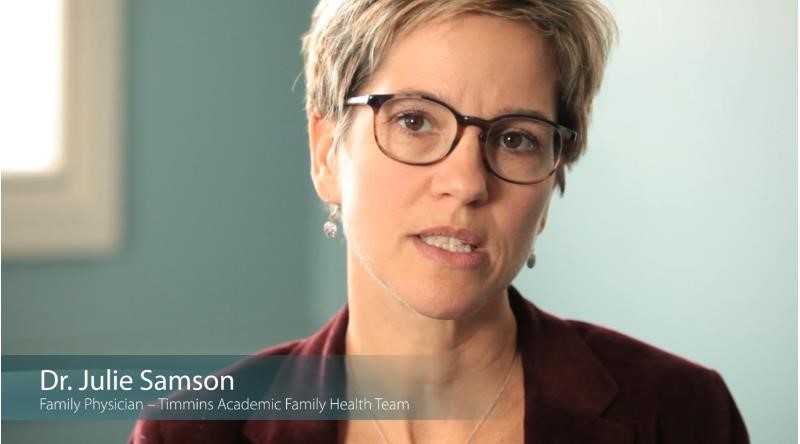

    Julie Samson Timmins academic dec 2019 video

    Members’ stories
    Timmins Academic FHTTimmins FHT becomes Timmins Academic FHT


    Women’s College Academic FHTHow should family physicians provide physical activity advice? Qualitative study to inform the design of an e-health intervention


    Reminder-Mental health and addiction QI collaborative webinar

    Join CMHA, AMHO, and AFHTO on Jan. 14 for a second of a 4-part webinar series on community and primary care QI projects and initiatives with a focus on mental health and addictions.

    In preparation for Ontario Health Teams, learn about opportunities for collaboration with your local mental health and addiction agencies and how to implement quality improvement initiatives. You can also see the recording and slides from the first webinar in June.


    The Change Foundation launches Future Innovator Awards
    The Change Foundation is celebrating their 25th anniversary in 2020. To mark this important milestone, they want to recognize innovators and put a spotlight on people, organizations and partnerships that are trail blazers and will likely make important and meaningful change in the next 25 years. To do this, they created the Future Innovator Awards.

    The Future Innovator Awards will recognize people, teams and/or organizations that have a strong vision for positive change for patients and caregivers and have the potential to make notable impact going forward. Deadline Feb. 5, 2020.


    Ontario Health CEO starts Feb. 1
    Per a memo from Bill Hatanaka, Ontario Health Board Chair, the Board of Directors of Ontario Health has appointed Matthew Anderson as Ontario Health’s President and CEO effective February 1, 2020.

    Since 2016 Matthew has been serving as the President and CEO of Lakeridge Health, the health system and hospital network that serves Durham Region, Ontario.

    Visit our site to learn more.


    Seeking volunteers for lower-limb preservation advisory committee
    CorHealth Ontario is developing a lower-limb preservation strategy for Ontario with practical ideas that could be implemented locally/ regionally.  The goal is to reduce the rates of non-traumatic lower-limb amputation in high-risk patient populations.  An advisory committee is being established to advise on development the project and its deliverables.  They believe that family medicine plays a vital role in identification and management of at-risk patients and would like to include the family medicine voice on the committee.  

    If you’re interested in participating or learning more, please contact Mike Setterfield, Clinical Strategist at CorHealth Mike.Setterfield@corhealthontario.ca.   


    Preparing for Audits, Jan. 15, 2020
    Register early for AFHTO’s upcoming Financial Webinar Series session. Learn how to prepare for audit season. Register now!


    Mental Health and Addiction QI Collaborative Webinar Series – Part 2, Jan. 14, 2020
    Join CMHA, AMHO, and AFHTO for a second of a 4-part webinar series on community and primary care QI projects and initiatives with a focus on mental health and addictions. Register now!


    Traumatic Brain Injury Conference, Feb 7, 2020
    Learn about innovative and evidence driven strategies and recommendations to enhance wellbeing following TBI. Learn more here.


    Shifting the Feeding and Eating Conversation- An Introduction to Satter Feeding Dynamics and Eating, March 5, 2020
    Interprofessional Healthcare Providers are invited to join this 1-day workshop held in Toronto by Nutrition Connections. Learn more here.


  • Care plans reduce risk of ending up in hospital for patients with severe mental illness: study

    The chances of a patient with a serious mental illness ending up in hospital because of their condition are reduced by almost 40 per cent if they have a care plan, according to the research.

    The study, which tracked 20,000 patients with a severe mental illness through the healthcare system, also found that seeing the same GP reduced the risk of an unplanned hospital admission by around 25 per cent.

    The findings demonstrate the importance of continuity of care at the GP’s for improving health outcomes for patients with a severe mental illness, the authors of the study say.

    Abstract

    Objective: To  investigate  whether  continuity  of  care  in  family  practice  reduces  un-planned hospital use for people with serious mental illness (SMI).Data Sources: Linked administrative data on family practice and hospital utilization by people with SMI in England, 2007-2014.

    Study  Design:  This  observational  cohort  study  used  discrete-time  survival  analy-sis  to  investigate  the  relationship  between  continuity  of  care  in  family  practice  and  unplanned  hospital  use:  emergency  department  (ED)  presentations,  and  unplanned  admissions  for  SMI  and  ambulatory  care-sensitive  conditions  (ACSC).  The  analysis  distinguishes between relational continuity and management/ informational continu-ity (as captured by care plans) and accounts for unobserved confounding by examin-ing deviation from long-term averages.Data Collection/Extraction Methods: Individual-level family practice administrative data linked to hospital administrative data.

    Principal  Findings:  Higher  relational  continuity  was  associated  with  8-11  percent  lower risk of ED presentation and 23-27 percent lower risk of ACSC admissions. Care plans  were  associated  with  29  percent  lower  risk  of  ED  presentation,  39  percent  lower risk of SMI admissions, and 32 percent lower risk of ACSC admissions.

    Conclusions: Family practice continuity of care can reduce unplanned hospital use for physical and mental health of people with SMI.

    Relevant Links:

  • Bits & Pieces: NP-led opioid prescribing, alcohol use disorder tool & more

    Bits & Pieces: NP-led opioid prescribing, alcohol use disorder tool & more

    Your Weekly News & Updates


    In this Issue:  
    • NP-led opioid prescribing

    • Alcohol use disorder tool

    • Opioids clinical primer update

    • Reminder- ED OHT mentorship program

    • Free online course on radon

    • Quality care for diabetic foot ulcers

    • Upcoming events on psychosis, sustainable eating and more


    NP-led opioid prescribing
    Mount Sinai Academic FHT has published “Improving Family Medicine Residents’ Opioid Prescribing: A Nurse Practitioner-Led Model” in the Journal for Nurse Practitioners.

    “After implementation of the model, we found a reduction in the average dose of opioids prescribed, increased use of urine drug tests and opioid treatment agreements, and fewer prescribers per patient. The nurse practitioner-led model was successfully implemented in an academic family practice with improvements in opioid prescribing and monitoring practices.”

    You can read the article here. Full access is valid until Nov. 27.


    Alcohol use disorder tool
    The Centre for Effective Practice has released the Alcohol Use Disorder (AUD) Tool, developed to walk primary care providers through screening, diagnosing, treating and communicating with patients who have, or are at risk of, developing AUD.

    The AUD Tool is one of several clinical tools developed as part of the multi-year Knowledge Translation in Primary Care Initiative.


    Opioids clinical primer update
    ‘Treating Opioid Use Disorder: Initiating Buprenorphine in Primary Care, ED and Inpatient Setting’ is the sixth and final course in the Opioids Clinical Primer program from Machealth.

    It helps clinicians address Opioid Use Disorder by providing background information and practical strategies that apply to any practice setting, including common considerations and contraindications to treatment, assessing withdrawal, and dose titration. This free course can be accessed at opioids.machealth.ca.


    Reminder- ED OHT mentorship program
    If you’re an executive director who’s part of a team that’s ‘in development’ or ‘in discovery,’ and would benefit from guidance or support from an ED who’s in full application, please complete this short survey by Friday, October 18. You’ll be connected with an ED who can offer insight on successes, challenges and lessons that they’ve been learning along the way.


    Radon machealth


    Free online course on radon
    For non-smokers, radon is the leading cause of lung cancer in Canada. Talking to your patients about the need to test their homes is an important part of preventing radon-related cancer. McMaster University has designed a free, certified program to provide you and your colleagues with reliable, evidence-based information on radon.

    Get started here.


    Quality care for diabetic foot ulcers
    Health Quality Ontario has released their finalized quality standard and patient guide on quality care for diabetic foot ulcers. Visit their website to learn more.


    ECHO Chronic Pain/Opioids evening series, Oct. 7- Nov. 4, 2019
    A 4-part evening ECHO series on Buprenorphine/Naloxone prescribing in primary care. Register here.


    RNAO events digest, Oct – Nov 2019
    In-person workshops and webinars are now listed on the AFHTO website. Topics range from best practice guidelines, substance use, pressure injury prevention and more. Find out more here.


    CBT for Psychosis Informed Workshop, Nov 2-3, 2019
    Join this 2-day workshop held by SSO in St. Catharines. Find out more here.


    Nutrition Connections Forum: Healthy and Sustainable Eating: Leading the Shift, Nov. 14, 2019
    Learn in this cross sectoral conversation on how we can shift to a healthier and more sustainable diet. Learn more here.

  • Balancing patient priorities for technical and interactional aspects of care in a measure of primary care quality

    Balancing patient priorities for technical and interactional aspects of care in a measure of primary care quality


    Cambridge University Press article published on January 1, 2019

    Authors:

    • Carol Mulder, Association of Family Health Teams of Ontario, Queen’s University
    • Nadiya Sunderji, Waypoint Center for Mental Health Care, University of Toronto


    Abstract
    Aim:
    This study attempts to strike a balance to measure primary care quality in a way that considers what is important to patients, providers and the healthcare system, all at the same time.

    Background:
    The interest in delivering patient-centered primary care implies a need for patient-centered performance measurement. However, the distinction between measures of patient experience and technical aspects of care raises an unanswerable question: if a provider has good performance on technical measures but not on patient experience measures (or vice versa), what can be said about the quality of care?

    Methods:
    We surveyed patients to determine the relative priorities of each of a series of primary care measures in the patients’ relationship with their primary care provider. The on-line survey was co-designed with patient co-investigators. The items consisted of 14 primary care quality measures used in pre-existing performance report, 41 additional indicators including a novel set of patient-generated Key Performance Indicators and 17 questions about patients’ demographics, health and socioeconomic status as well as open-ended questions.

    Findings:
    Despite challenges, the study suggests that this is feasible. We argue that it is necessary to get better at measuring and finding ever-better ways to put patients at the center of primary care

    Click here for the full article on Cambridge University Press

  • Bits & Pieces: member news, aging at home, palliative care & more

    Bits & Pieces: member news, aging at home, palliative care & more

    Your Weekly News & Updates


    In this Issue:  
    • Member news
    • Evidence of value- Healthcare Quarterly articles
    • Bright Lights confirmations sent
    • Primary care virtual community – 10 high impact actions
    • Strategies for managing chronic pain: moving beyond opioids
    • Call for Abstracts – Traumatic Brain Injury Conference, Feb. 7, 2020
    • Upcoming events including Considerations for Primary Care Teams as a Not-for-Profit Corporation and more

    Member news
    Marathon FHT: Marathon FHT celebrates community’s win on Ontario’s most-active list

    Windsor FHT: featured in the second report from the Premier’s Council on Improving Healthcare and Ending Hallway Medicine and awarded grant to increase access to outpatient services for individual families affected by substance use.


    Evidence of value
    Two articles published by AFHTO members in Healthcare Quarterly’s April 2019 issue (full articles available to subscribers only):


    Lake cottage at sunset

    Bright Lights confirmations sent
    We hope you enjoyed the long weekend and the deadline extension. We sent confirmation to nomination contacts earlier today titled “AFHTO 2019 Conference: We Have Received Your Bright Lights Nomination”. Please check with your contact to ensure they received this email. If they haven’t received it in their inbox or junk mail, please email info@afhto.ca.

    Photos and/or videos are due Thursday, July 11 with the release form.

    And don’t forget to register for the AFHTO 2019 Conference since we announce the winners at the ceremony and not before!


    Primary care virtual community – 10 high impact actions
    Thank you to the attendees at the June 26 Primary Care Virtual Community Webinar on the U.K.’s 10 High Impact Actions. Dr. Robert Varnam, GP and Head of General Practice Development at the NHS England, delved into lessons learned in the UK to free up time to care, and create better joined-up care.

    If you missed the event, you can join now and receive updates and registration details for the next session, taking place on September 25, 2019.


    Strategies for managing chronic pain: moving beyond opioids
    The Opioid Clinical Primer’s fifth course, Strategies for Managing Chronic Pain: Moving beyond Opioids, has launched.  It’s a new certified continued professional development course on Machealth that helps health professionals in Ontario to best encourage collaboration with patients to use non-pharmacologic strategies to manage chronic non-cancer pain.
    This free course can be accessed online, anytime, at opioids.machealth.ca.


    Guelph FHT annual report
    guelph fht annual report


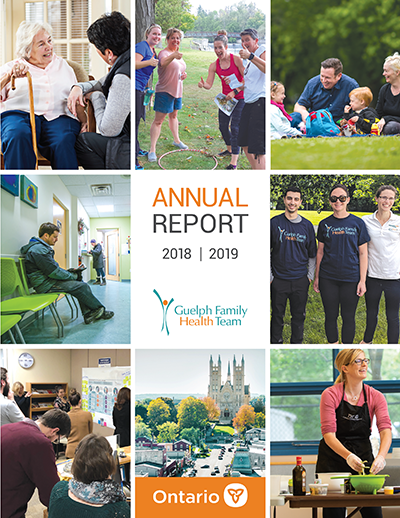
    The Guelph Family Health Team 2018-2019 Annual Report is available to read online. Learn about the work they do to provide patient-guided quality focused care. Click here to view the full report.


    Call for Abstracts – Traumatic Brain Injury Conference, Feb. 7, 2020
    Submit your abstract to the TBI Conference held in February. Deadline for submissions are on September 20th. Learn more here.


    ECHO Liver: Liver Disease in Primary Care: Approach To Hepatitis C, July 11, 2019
    Join the ECHO Liver evening series as they hold a lecture based on real team and patient cases on Hepatitis C. Learn more here.


    Considerations for Primary Care Teams as a Not-for-Profit Corporation, July 17, 2019
    Join AFHTO & Grant Thornton LLP for their second webinar in the Financial Webinar Series. Register here.


    Save the Date – ECHO Ontario Conference, Jan. 31, 2020
    Stay tuned for the conference agenda and registration to open this Fall 2019. Learn more here.


    AFHTO 2019 Conference, September 19- 20, 2019
    Members get 50% off registration; plus early bird rates are in effect! Get your member access code from your administrator and come explore Health System Integration Built on The Foundation of Team-Based Primary Health Care. Register now!

  • Innovation in Ontario’s Family Health Teams: How Palliative and Coordinated Care Programs are Filling Service Gaps and Keeping Patients at Home

    Innovation in Ontario’s Family Health Teams: How Palliative and Coordinated Care Programs are Filling Service Gaps and Keeping Patients at Home 

    Article published in Healthcare Quarterly Today on June 25, 2019

    Authors:

    • Monica Aggarwal, University of Toronto; 
    • Helen Cluett, Prince Edward FHT;
    • Heather Campbell, Prince Edward FHT; 
    • Debbie Korzeniowski, Prince Edward FHT
    • Cindy Jones, Prince Edward FHT;
    • Lindsey O’Donnell, Couchiching FHT;
    • Kavita Mehta, AFHTO


    Abstract:

    Collaborative interprofessional primary care (PC) teams are widely seen as an essential attribute of high-performing PC systems (Aggarwal and Hutchinson 2012). Effective PC teams play a key role in the mobilization of healthcare resources and navigation of the health and social care system for their patients. In Ontario, the establishment of Family Health Teams has resulted in the implementation of unique programs that deliver services to palliative and elderly patients with a focus on keeping them at home and out of hospital. Case studies cited in this article highlight two innovative programs in Family Health Teams and provide perspectives on lessons for successful implementation.


    Click here for the full article on Longwoods.com (available to subscribers only) 


  • Aging at Home: A Portrait of Home-Based Primary Care across Canada

    Aging at Home: A Portrait of Home-Based Primary Care across Canada

    Article published in Healthcare Quarterly  in April 2019

    Authors:

    • Sabrina Akhtar, University of Toronto
    • Mayura Loganathan, Mount Sinai FHT
    • Mark Nowaczynski,University of Toronto
    • Samir Sinha,University of Toronto, UHN
    • Amanda Condon, ACCESS River East
    • Vivian Ewa, University of Calgary
    • John C. Kirk, Southlake Academic FHT
    • Thuy-Nga Pham, South East Toronto FHT


    Abstract:

    Older adults and their families often struggle in navigating an increasingly fragmented healthcare system when it becomes increasingly difficult to receive care beyond their homes in the face of advanced illness, frailty and complex care needs. The provision of integrated home-based primary care has demonstrated improved patient and caregiver experiences and reduced healthcare costs when primary care providers collaborate in delivering care as part of larger interprofessional teams. In this trans-Canada portrait of five urban home-based primary care programs, their core features are highlighted to provide a roadmap on how to integrate this form of care into a Patient’s Medical Home in partnership with acute and home-care providers.


    Click here for the full article on Longwoods.com (available to subscribers only)