Tag: eBulletin

  • QI in Action eBulletin #90: Dementia

    QI in Action eBulletin #90: Dementia

    In this issue

    •  What is dementia?
    • What’s the difference between Alzheimer’s Disease and Dementia?
    • Programs and Initiatives supporting Primary Care Health
    • Support Services for Patients and Caregivers
    • Upcoming QI Events

    What is dementia?
    Dementia isn’t a natural part of aging, as it’s an abnormal degeneration of the brain which causes changes in an individual’s ability to think, speak, socialize and participate in daily activities1. Dementia is a medical term used to describe a set of symptoms affecting brain function that are caused by neurodegenerative and vascular diseases or injuries such as Alzheimer’s disease, vascular dementia, Lewy Body disease, head trauma and more2,3.

    Symptoms of dementia can include1,2,3:

    • Memory loss
    • Difficulty with thinking, problem-solving or language
    • Awareness of person, place and time can be impacted
    • Loss of understanding and judgement
    • Changes in how the individual expresses their emotions
    • Changes in personality
    • Problems coping with day to day activities
    • Problems with socializing

    419,000 Canadians of the age 65 years and older are living with a diagnosis of dementia of which almost two thirds are women2. Within Ontario, 111,000 individuals live with dementia of which many reside in the community with complex care needs; this number has increased by 46% between 2009/10 and 2015/164.

    What’s the difference between Alzheimer’s Disease and Dementia?
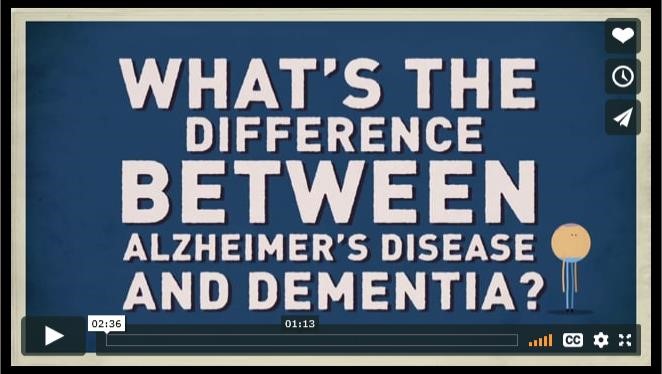
    http://trinitybrainhealth.com/#/lightbox&slide=15

    The material was created by Dr. Sabina Brennan of Trinity College Dublin and Trinity Brain Health with financial support from GENIO. © 2017 Trinity Brain Health. Permission to use this material was granted by Trinity Brain Health (trinitybrainhealth.com) which reserves all rights in the material.

    Programs and Initiatives supporting Primary Care Health

    2 out of 5 Canadian doctors feel well-prepared to manage community dementia care; however, with the growing number of individuals being diagnosed with dementia it’s crucial to be aware of the supports available5.

    • A physician, Nurse Practitioner or any IHP can make a referral to First Link, a program designed to help connect individuals newly diagnosed with dementia and their families/caregivers to Alzheimer Society for services and support
    • Multispecialty Interprofessional Team (MINT) Memory Clinics offer clinicians training through a standardized nationally accredited training program. There are over 100 MINT Memory Clinics across Ontario – a special congratulations to AFHTO member Centre for Family Medicine FHT’s Dr. Linda Lee who recently received a 2019 Joule Innovation Grant Award that will allow for the MINT clinics to continue to scale up
    • The Rural Dementia and Action Research (RaDAR) Team is a research team from three provinces (Saskatchewan, Alberta and Ontario) and the United Kingdom with a goal to improve healthcare delivery to people with people with mild cognitive and dementia and their caregivers in rural and remote communities
    • Mount Sinai Hospital has also designed a Dementia Toolkit for Primary Care which includes resources specific to primary care such as assessment and screening tools, medication management, driving safety and much more
    • Centre of Effective Practice has created the Use of Antipsychotics in Behavioural and Psychological Symptoms of Dementia (BPSD) Tool
    • HQO has previously created Dementia Quality Standard which addresses care for community-dwelling people living with dementia
    • A list has been put together by the Alzheimer Society with multiple avenues of professional development in terms of caring for individuals with dementia
    • A list of tools to assess pain levels for healthcare professionals have been put together by the Alzheimer society
    • eConsult is a secure web-based tool that allows a physician or nurse practitioner timely access to specialist advice, including psychologists, and often eliminates the need for an in-person specialist visit
    • SwitchRx is a website that aims to provide healthcare professionals with the most current and useful information to guide their clinical practice when adjusting their patient’s psychotropic treatment regimens
    • eHealth centre of excellence community portal always has some tools being released that can be translated into your EMR!

    Support Services for Patients and Caregivers

    • HQO has developed a Patient Reference Guide with questions patients can ask their caregivers
    • Dementia Advocacy and Support Network (DASN) is a worldwide online organization for those diagnosed with dementia working together to improve their quality of life  
    • There are support groups for families and friends of individuals diagnosed with dementia offered by the Alzheimer Society  
    • Mount Sinai Hospital has put together a list of caregiver support services available within Ontario
    • A range of brochures and publications can be found for both patients and caregivers on the Alzheimer Society website

    Upcoming QI Events:

    References:

    1. Dementia in Older Adults. https://camh.ca/en/health-info/guides-and-publications/dementia-in-older-adults.
    2. “What Is Dementia?” Alzheimer Society of Canada, https://alzheimer.ca/en/Home/About-dementia/What-is-dementia.
    3. Let’s make our health system healthier. “Evidence to Improve Care.” Behavioural Symptoms of Dementia – Health Quality Ontario (HQO), https://www.hqontario.ca/Evidence-to-Improve-Care/Quality-Standards/View-all-Quality-Standards/Behavioural-Symptoms-of-Dementia.
    4. Spotlight on Dementia Issues | CIHI. https://www.cihi.ca/en/dementia-in-canada/spotlight-on-dementia-issues.

    In Case You Missed It: Check out eBulletin #89 or other back issues here!
    Questions? Comments? Contact us at improve@afhto.ca.

  • QI in Action eBulletin #89: Mental Health and Addiction Initiatives in Primary Care

    In this issue


    • Mental Health and Addiction Initiatives in Primary Care
    • AFHTO 2019 conference


    Mental Health and Addiction and Primary Care
    In any given year, one in five Canadians, including over one million children and youth, experiences a mental health problem or illness1. Mental illness is a leading cause of disability in Canada, and one-third of Canadians in need of mental health care report that their needs are not fully met1. Every Ontarian should have equitable access to mental health and addictions services and supports across the province.

    In order to reach this goal, patients must have access to mental health and addictions resources in all health care settings, including primary care. Integrating mental health services in primary care has been shown to decrease rates of emergency room visits and hospitalizations, increase patient satisfaction and outcomes, decrease stigma, and increases access to services.

    AFHTO members have developed, implemented and evaluated a variety of mental health & addiction programs and initiatives focusing on improving access, quality of care, transitions, and integrations. Listed within the document below are some of these programs and initiatives that have been shared at previous AFHTO conferences. The presentations are categorized into three areas: access, quality of care, and transitions, integrations and partnerships.  

    Click here for a listing of AFHTO member mental health and addiction initiatives.

    The mental health and addiction sector is also working to improve access and services through the E-QIP (Excellence through Quality Improvement Project) initiative. E-QIP is a collaborative initiative of Additions Mental Health Ontario (AMHO), Canadian Mental Health Association (CMHA) and Health Quality Ontario. E-QIP is working with organizations (including primary care teams) across the province to identify and address quality issues that are relevant to specific regions and organizations. Click here to learn more about the E-QIP initiative and how you can get involved.

    AFHTO, CMHA and AMHO have recently partnered to complete a 4-part webinar series focusing on community and primary care QI projects and initiatives in the area of mental health and addiction. Click here to access the slides and recording of the first webinar. Keep an eye out for dates of the rest of the webinar series in AFHTO’s Bits & Pieces newsletter and QI in Action e-Bulletin.

    Email improve@afhto.ca if you would like to get in contact with any of the teams listed above to learn more about their programs or initiatives. Or let us know if you have developed a program or service that should be shared with our teams!

    AFHTO 2019 Conference

    Here are some important dates relating to this year’s AFHTO conference taking place September 19 & 20.

    • June 2019: Conference registration opens
    • August 19, 2019: Hotel group rate deadline
    • September 4, 2019: Early-bird registration ends
    • Sep 19 & 20, 2019: AFHTO 2019 Conference

    References:

    1. Mental Health and Primary Care Policy Framework. (2016). Centre for Addition and Mental Health. https://www.camh.ca/-/media/files/pdfs—public-policy-submissions/primarycarepolicyframework_march2016-pdf.pdf  
    2. Addressing Mental Health and Addictions Needs in Primary Care – Canadian Mental Health Association. https://ontario.cmha.ca/documents/addressing-mental-health-and-addictions-needs-in-primary-care/
    3. Michelle Funk, Benedetto Saraceno, Natalie Drew, Edwige Faydi. Integrating mental health into primary healthcare. Ment Health Fam Med. 2008 Mar; 5(1): 5–8.

    In Case You Missed It: Check out eBulletin #88 or other back issues here!
    Questions? Comments? Contact us at improve@afhto.ca.

  • QI in Action eBulletin #88: Palliative Care Matters

    In this issue


    • Resources to support your team’s palliative care services
    • AFHTO 2019 conference
    • Stay tuned for resources to support your team’s QIP!

    Palliative care, why does it matter?
    Palliative Care is the broad approach to providing comfort and dignity for patients and families who are living with or are at risk of developing a life-threatening illness2. Earlier integration of palliative care may provide benefits for both the patients and the health system. Some evidence shows those who receive palliative care earlier on are less likely to visit emergency room departments frequently or receive aggressive treatment at the end of life4. Palliative care can also lead to better quality of life throughout the entire process from the time of being diagnosed with a life-threatening illness1.

    Why do we need to improve? Less than 60% of Ontarians in their last year of life receive palliative care and about half of patients in their last 30 days of life receive home care services. Despite patients’ preference to die at home with appropriate support, more than half of the deaths in Ontario occur in hospitals3.

    Providers can be better prepared by knowing patient preferences and wishes through advance care planning. Advance care planning can have many benefits for both palliative and non-palliative patients7. Earlier research indicates that patients who have end-of-life conversations are much more likely to be satisfied with their care, will require fewer aggressive interventions at the end of life, and reduce anxiety and strain on caregivers6. Advance care planning can start early on and be apart of normal care delivery in primary care.  

    Resources to support your teams palliative care services:

    Teams will receive evidence, tools and supports to integrate knowledge into practice, access to staff facilitators to support team coordination and collaboration, and coaching to provide customized strategies to local barriers. To receive these supports, contact your Regional Palliative Care Network. If you’re not sure who the contacts are, please email info@ontariopalliativecarenetwork.ca.

    Learn more about palliative care initiatives in AFHTO member teams:

    Email improve@afhto.ca if you would like to get in contact with any of the teams above to learn more about their programs.

    AFHTO 2019 Conference

    Here are some important dates relating to this year’s AFHTO conference taking place September 19 & 20.

    • May 30, 2019: Call for Bright Lights nominations
    • June 2019: Conference registration opens
    • August 19, 2019: Hotel group rate deadline
    • September 4, 2019: Early-bird registration ends
    • Sep 19 & 20, 2019: AFHTO 2019 Conference

    Stay Tuned for Resources to Support your Team’s QIP!

    The 2019/20 QIPs have been submitted and are available on the QIP navigator for review. You can search the 2019/20 QIPs using QIP Query or download any organization’s QIP using Download QIPs.

    Stay tuned for resources and tools AFHTO will be providing to help teams once emerging themes are identified.

    References:

    1. Zimmermann C, Swami N, Krzyzanowska M, Hannon B, Leighl N, Oza A, et al. Early palliative care for patients with advanced cancer: a cluster-randomised controlled trial. The Lancet. 2014; 383:1721-30.
    2. Palliative Care at the End of Life. Health Quality Ontario. (2016). https://www.hqontario.ca/Portals/0/documents/system-performance/palliative-care-report-en.pdf
    3. Ontario Palliative Care Network. Regional profiles tool: describing Ontario decedents’ service use in their last year of life. Version 2.0. Toronto: The Network; 2018.
    4. More Canadians could benefit from palliative care. Canadian Institute for Health Information. https://www.cihi.ca/en/more-canadians-could-benefit-from-palliative-care
    5. Cancer Care Ontario. (2016) Advance Care Planning Toolkit. https://www.cancercareontario.ca/sites/ccocancercare/files/assets/CCOAdvancedCareToolkit.pdf
    6. Speak Up. (2014). HAVE YOU HAD THE TALK? 55% OF CANADIANS HAVE NOT. http://www.advancecareplanning.ca/acp-news/2014-acp-news-release/
    7. CFPC. Guide to Advance Care Planning Discussions Developed by Residents for Residents. (https://www.cfpc.ca/uploadedFiles/Directories/Sections/Section_of_Residents/ACP-GIFT-1pager.pdf


    In Case You Missed It: Check out eBulletin #87 or other back issues here!
    Questions? Comments? Contact us at improve@afhto.ca.

  • D2D eBulletin #87- Sometimes Less is More: Deprescribing initiatives in Primary Care

    In this issue

    • Deprescribing initiatives in interprofessional primary care teams
    • AFHTO 2019 conference
    • Stay tuned for resources to support your team’s QIP!

    Deprescribing Initiatives in Interprofessional Primary Care Teams

    What is deprescribing?
    Deprescribing is the planned and supervised process of dose reduction or stopping of medication that might be causing harm, or no longer be of benefit. The ultimate goal of deprescribing is to reduce medication burden and improve quality of life1.

    Why is it important?
    Deprescribing can improve patient health outcomes. It’s a method to address polypharmacy, which can be defined by the concurrent use of 5 or more medications (including both prescription and non-prescription products) by a single individual1,2. Polypharmacy is common among seniors and individuals with mental health disorders3. This increases the risk of these populations experiencing an adverse drug effect and interactions that can contribute to negative outcomes2.

    How can it contribute to cost savings?
    Inappropriate use of medication costs the Canadian healthcare system an estimated $419 million annually and the cost of treating the harmful effects of these medications is estimated to be $1.4 billion every year4. Deprescribing can help to reduce some of these unnecessary costs.

    How can I get started?

    Learn how AFHTO members are implementing interdisciplinary deprescribing initiatives in their teams:

    Email improve@afhto.ca if you would like to get in contact with any of the teams above to learn more about their programs.

    AFHTO 2019 Conference

    Here are some important dates relating to this year’s AFHTO conference taking place September 19 & 20.

    • Late May 2019: Concurrent sessions + posters selected + scheduled
    • End of May to early June: Call for Bright Lights nominations
    • June 2019: Conference registration opens
    • September 4, 2019: Early-bird registration ends
    • Sep 19 & 20, 2019: AFHTO 2019 Conference

    Stay Tuned for Resources to Support your Team’s QIP!

    The 2019/20 QIPs have been submitted and are available on the QIP navigator for review. You can search the 2019/20 QIPs using QIP Query or download any organization’s QIP using Download QIPs.

    Stay tuned for resources and tools AFHTO will be providing to help teams once emerging themes are identified.

    References:

    1. Canadian Deprescribing Network: https://www.deprescribingnetwork.ca/deprescribing
    2. ISMP Canada Safety Bulletin: https://www.ismp-canada.org/download/safetyBulletins/2018/ISMPCSB2018-03-Deprescribing.pdf
    3. Sivagnanam G. Deprescription: the prescription metabolism. J Pharmacol Pharmacother. 2016;7(3):133-137.
    4. Medication without harm. WHO global patient safety challenge. Geneva (Switzerland): World Health Organization; 2017 [cited 2018 Jan 31]. Available from: http://apps.who.int/iris/bitstream/10665/255263/1/WHO-HIS-SDS-2017.6-eng.pdf?ua=1&ua=1

    In Case You Missed It: Check out eBulletin #86 or other news here!
    Questions? Comments? Contact us at improve@afhto.ca.


  • Data to Decisions eBulletin #86: Moving Forward with Quality

    In this issue

    • Upcoming changes to the D2D eBulletin
    • Moving forward with AFHTO’s quality agenda
    • Introducing the Quality Improvement in Primary Care (QI in PC) Council and the IHP Advisory Council, and their vision for improvement
    • AFHTO 2019 Conference call for abstracts

    Refreshed eBulletin

    The D2D eBulletin will be undergoing changes and refocusing to highlight efforts of teams in the field. As quality continues to remain a priority in AFHTO’s mandate, the eBulletin will act as a resource to share and spread innovations, tools and stories from primary care teams across the province. Each eBulletin will focus on a specific topic and help guide your team on how to improve in these areas of quality in concrete ways.

    If you would like to share a tool, resource or highlight a successful program or service in your team, we would love to hear from you! Please contact us at improve@afhto.ca.

    Moving Forward with AFHTO’s Quality Agenda

    Although we’re looking to sunset the work of D2D given the current environment and uncertainty around funding, AFHTO will continue its efforts to support teams in the field of quality and demonstrate the value of team-based primary care. AFHTO’s priorities have shifted from measurement to driving improvement across the sector. AFHTO’s Quality Steering Committee (QSC) will work closely with the QI in PC Council, the IHP Advisory Council, AFHTO members, and partners to set priorities for improvement in areas of transitions, access, integration, mental health and addictions, and patient engagement.

    Quality Improvement in Primary Care Council

    In January of 2019, the Quality Improvement in Primary Care (QI in PC) Council was formed. The QI in PC council consists of 5 appointed QIDSS and QIDSS-like individuals with the goal to support the QIDSS Community of Practice (CoP) and strengthen collective QI capacity across the sector. The QI in PC Council surveyed members of the QIDSS CoP to determine where to focus their efforts and supports for teams in the field. The priority areas are listed below.

    Priority tasks:

    • Provide a voice in Ontario’s primary care data collection and QI priorities
    • Strengthen existing communication formats in the QIDSS CoP
    • Make it easy to share EMR queries
    • Share HQO’s QIP to members and develop a collective QI project

    Click here to view the council’s framework.

    The members of the council include:

    • Charles Bruntz, QIDSS, Timmins FHT
    • Cameron Berry, QIDSS, Kawartha North FHT
    • Sandeep Gill, QIDSS, Queen Square FHT
    • Abigail Scott, Data and Quality Improvement Analyst, Queen’s FHT
    • Brice Wong, QIDSS, Windsor FHT

    Contact the council by emailing: qiprimarycouncil@emaildodo.com  

    IHP Advisory Council

    The Interprofessional Health Care Providers (IHP) Advisory Council fosters leadership across the IHP community within FHTs and NPLCs; provides input on FHT and NPLC matters related to IHP issues; and gives advice and input to the AFHTO board, staff, and other leadership councils.

    The council provides a mechanism to advance best-practice knowledge transfer and exchange, to enhance collaboration, and to give IHPs the opportunity to communicate operational, governance, and other FHT- or NPLC-related items. The council’s vision includes acting as a resource to teams, providing advocacy on behalf of IHPs, and demonstrating the value of interprofessional primary care teams. Click here to view details of the IHP Advisory Council’s vision.

    For more information about the IHP Advisory Council including the terms of reference and contact list, click here.

    AFHTO 2019 Conference Call for Abstracts

    Share your team’s ideas by submitting an abstract to present a concurrent session or poster at the AFHTO 2019 Conference on September 19 & 20, 2019. Find out more here. Deadline is April 24, 2019.

    In Case You Missed It: Check out eBulletin #85 or other news here!

    Questions? Comments? Connect with the QIDS team at improve@afhto.ca.

  • Data to Decisions eBulletin #85: Building Together Synopsis

    Data to Decisions eBulletin #85: Building Together Synopsis

    In this issue

    • Building Together: How to become a high-performing team Workshop Synopsis

    Building Together: How to become a high-performing team Workshop Synopsis

    On March 6th and 8th, 2019, 51 healthcare professionals working in primary care teams across Ontario came together in Ottawa and Toronto for the Building Together: How to become a high performing team workshop.

    Dr. Judith Belle Brown led the plenary session through an exploration of the foundational elements that teams are built on. These elements include having a common philosophy toward teamwork, strong relationships, open communication, and a shared commitment to good patient care. Dr. Brown also discussed the evolution of primary care teams throughout her research journey, as well as the preliminary results from the QI Enablers Study.

    Wisdom from the Field: Participants share ideas they plan on trying with their team.

    Throughout the day, participants learned about three pillars of teamwork identified from the QI Enablers Study that contribute to interdisciplinary collaborative teamwork in primary care. These pillars include leadership, team building and optimizing physical space. During these small group sessions, participants were able to brainstorm ideas on how they can strengthen these pillars within their teams. At the end of the day, individuals were able to vote on their favourite ideas they plan on bringing back to their teams.

    Leadership

    In small groups, participants were asked to answer the following questions:

    • What opportunities are there in your team to take part in leadership activities?
    • How can your team create opportunities for leadership?
    • How can your team share leadership within your team?
    • How can your team support leadership?

    Click here for the list of top ideas participants voted on to take back to their own teams.


    Team Building

    In small groups, participants were asked to answer the following questions:

    • What informal activities happen in your team?
    • Who leads them?
    • How do they make it happen?
    • What would it take for your team to have regular team meetings (e.g., time, location, who is involved)?
    • How can your team increase awareness of your team members’ scope of practices (through formal and informal activities)?

    Click here for the list of top ideas participants voted on to take back to their own teams.


    Optimizing physical space

    In small groups, participants were asked to answer the following questions:

    • What are the innovative strategies you have used to address issues with physical space?
    • Successful
    • Unsuccessful
    • What effective relationship building activities have you used to optimize your physical space?

    Click here for the list of top ideas participants voted on to take back to their own teams.

    More ideas from the small group sessions

    More ideas for Leadership

    More ideas for Team Building

    More ideas for Optimizing Physical Space

    We would like to thank everyone who came out to the sessions. If you have any questions or comments regarding the session or its content, please contact improve@afhto.ca.

    Thank you to our supporting partner
    We are grateful to our research partners at the Centre for Studies in Family Medicine, Western University, through the INSPIRE2-PHC program funded by the Ontario Ministry of Health and Long-Term Care. Our partners have provided practical support for the research and funding for the workshops.

    shulich logo


    In Case You Missed It: Check out eBulletin #84 or other back issues here!

    Questions? Comments? Connect with the QIDS team at improve@afhto.ca.

  • Data to Decisions eBulletin #84: Building Together

    In this issue

    • Register now for Building Together
    • Team-Based Approaches to Chronic Pain Management: Opioid Stewardship
    • Resources to Support Follow-Up after Hospitalization
    • The “Q” Council – Towards a More Self-Sustaining Community of Practice
    • QIPS, Program Planning and Schedule A

    Register now for Building Together

    What makes a good team great? To find out, join us on March 6 and 8 for Building Together: How to become a high-performing team. We’ll take a deep dive into what makes teams – your teams – work!  

    This FREE workshop, developed and presented with our research partners at Western University, originated with last year’s QI Enablers Study. Dr. Judith Belle Brown will lead us through an exploration of the foundational elements that teams are built on. In small-group sessions throughout the day, we’ll examine three of the pillars that are built on this foundation and elevate a team’s performance.

    This workshop is for every member of a primary care team. Everyone is welcome, from the official and unofficial leaders to the clinicians and the clerical staff. Team-building happens from the bottom up and the top down, and from all other directions as well.

    When and where?

    • Ottawa: Wednesday, March 6, 2019 at the Holiday Inn Express Ottawa-Nepean, 2055 Robertson Road
    • Toronto: Friday, March 8, 2019 at St. Paul’s on Bloor, 227 Bloor Street East

    For more information, check out our FAQ or the web post. When you’re ready, register at the links below:

    We look forward to seeing you – and your team – there!

    Team-Based Approaches to Chronic Pain Management: Opioid Stewardship

    Nearly 20% of Canadian adults experience chronic pain. This webinar will provide insights to help your patients manage their pain safely and effectively.

    Join us on Thursday, February 28 from 12:00-1:00pm for Team-Based Approaches to Chronic Pain Management: Opioid Stewardship, presented by Dr. Jennifer Wyman. Topics to be covered include:

    • The role of the team in supporting patients who use opioids to manage chronic non-cancer pain.
    • When is the dose too high? Assessing opioid benefits and risks.
    • Supporting patients on their journey with chronic pain.
    • Recognizing opioid use disorder in the primary care setting.

    This webinar will also introduce you to the Opioids Clinical Primer. Led by Dr. Wyman from the University of Toronto, in collaboration with experts and community practitioners from across the province, this free, accredited online course is intended to help clinicians address opioid use disorder and implement safer opioid prescribing strategies in the management of chronic pain. Please consider reviewing Course 3: Safer Opioid Prescribing Strategies prior to the session.

    Please use this link to register for the webinar.  Can’t make it on the 28th? We’ll post the recording here along with the slide deck and other materials.

    Resources to Support Follow-Up after Hospitalization

    Meaningful follow-up for patients who have been hospitalized is an essential element of high-quality, comprehensive care. Not only does it reduce the likelihood of readmission, it saves lives. It has also been identified as a priority by AFHTO’s members and board. Transitions in care, including follow-up, are also a priority area for the 2019-20 QIPs. And it’s not as hard as you think!

    Need help? Here it is! We’ve pulled together resources from AFHTO and beyond, and we’ve turned them into a step-by-step process that can help whether you’re just getting started or fine-tuning a program that’s been in place for a while. If you think we’ve missed something, let us know.

    The “Q” Council – Towards a More Self-Sustaining Community of Practice

    The “Q” – that’s what we call the community of practice made up of QIDS Specialists, QIDSS-like folks, QIIMS, and E-QIP coaches – is five years old! And as you’ve probably heard by now, they’re embarking on a transition towards greater self-direction, peer support, and collective advocacy.

    A big, important step has been the selection of a council. This small but mighty group of peer leaders will advocate for the Q and for quality improvement; coordinate resource-sharing and collaboration; and help build an even stronger community of practice.

    Here are the members of the first-ever Q Council:

    • Brice Wong, QIDSS, Windsor FHT partnership
    • Cameron Berry, QIDSS, Kawartha North FHT partnership
    • Sandeep Gill, QIDSS, Queen Square FHT partnership
    • Abigail Scott, QIDSS-like, Queens FHT
    • Charles Bruntz, QIDSS, Timmins FHT

    Please join us in thanking Brice, Cam, Sandeep, and Abi for stepping forward as volunteer leaders. They’re taking on a big and important job.

    QIPs, Program Planning and Schedule A

    It’s that time again! QIP and Schedule A submission are right around the corner. We have tools to make these processes a little easier. Check them out!

    Help for your 2019-20 QIPs brings together resources from AFHTO, Health Quality Ontario, and others. These include webinars and documents to support you through the QIP process and orient you to this year’s priority themes and indicators, as well as tools to help you start making improvements in these areas.

    Program planning & evaluation tools will help you complete your Schedule A submissions. To help you choose measures for the evaluation portion of Schedule A, we’ve made some updates to the Program Performance Measures Catalogue (PPMC). As teams use it, the PPMC will help build consensus and consistency in program planning measures across the province, and this will make it easier for teams to learn from each other about how best to measure and improve program effectiveness. To make the most of the PPMC, check out the Quick Reference Guide to the Catalogue; Choosing Better Indicators: How teams are using the PPMC; and the PPMC Video Walkthrough.


    In Case You Missed It: Check out eBulletin #83 or other back issues here!

    Questions? Comments? Connect with the QIDS team at improve@afhto.ca.

  • Data to Decisions eBulletin #83: More tools for continuous improvement

    In this issue

    • Transitions in Tilbury
    • Help with patient surveys and QIPs
    • Developing a tool to help manage patients with dementia
    • More tools to help you keep getting better

    Transitions in Tilbury

    Last month, we shared the resources from Focus on Follow-Up, which included lots of innovative projects from our teams in the North East. But great things are happening all over! In case you missed Tilbury’s conference presentation, you can check out the slide deck here. In a hurry? Watch the trailer below. Want evidence that timely follow-up saves lives and makes our health system more sustainable?

    Help with patient surveys and QIPs

    Just in time for QIP season: A new tool that can automate your patient surveys and help you build your 2019-20 Quality Improvement Plan. We know that patient experience surveys are a great source of data, but we also know that distributing them and gathering the data can be time-consuming and difficult. HQI is a brand-new patient engagement & quality improvement tool from Cliniconex that uses your EMR to automate the process. It sends out patient experience surveys after they visit your team, then gathers and analyzes the data for you. Its dashboard function lets you track your performance over time and compare your aggregate results with your peers. HQI can also help you move from measurement to improvement. It allows you to spend less time gathering and formatting your survey data and more time developing QI initiatives. As you look at your data, it takes you step-by-step through the process of recording your insights, goals, and change ideas, and it turns these into a quality improvement plan (QIP) using Health Quality Ontario’s QIP template.

    • Want to know more? Check out this sneak peek of HQI that was shared with “the Q” – QIDSS, QIIMS, Data & Quality Coaches, and QIDSS-like folks – on a webinar back in December.
    • Want to see if your team fits the profile? Schedule a follow-up session for your team. Email sales@cliniconex.com or call 1-844-891-8492.

    Developing a tool to help manage patients with dementia

    Are you a family physician who assesses patients with dementia? Maybe you wish you had better tools to support you in this work, or you have ideas about what would make such a tool great. Here’s a chance for you to share these ideas and help create some tools that will make it easier for clinicians like you to make good assessments! Researchers at Queen’s and Ryerson Universities and Bridgepoint Active Healthcare are developing an eLearning platform for dementia assessment and management. To help them get it right, they’re conducting focus group sessions with clinicians from January through March. You’ll only need to attend one session, no longer than two hours, and you’ll receive an honorarium to offset the costs of travel and taking time away from work. There’s also an opportunity to participate remotely if travelling to Toronto or Kingston would present a barrier. Want to learn more? Ready to sign up? Email Lorraine Pirrie or Carolyn Steele-Gray. Or call Carolyn at 416-461-8252 x 2908.

    More tools to help you keep getting better

    Our partners at the Excellence through Quality Improvement Project (E-QIP) are presenting a series of webinars to support your team’s QI efforts. See below for times, dates, and links to register.

    In Case You Missed It: Check out eBulletin #82 or other back issues here!

    Questions? Comments? Connect with the QIDS team at improve@afhto.ca.

  • Data to Decisions eBulletin #82: Following Up on Follow-Up

    In this issue

    • Following up on follow-up
    •  Introducing a council for the community of “Q”
    • Building together: How to become a high-performing team
    • Deferring the next D2D report

    Following-up on follow-up

    First, thank you to the over 50 people who braved the snow and shared their stories about follow-up in Sudbury at the end of November for Focus on Follow-Up. Second, thanks to our generous sponsors, OpenLabs (who developed Patient Oriented Discharge Summaries), LifeLabs, and CognisantMD, for making the event possible. Thanks also to our partners at the North East LHIN, the North East Ontario Hospital Network (NEON), Health Quality Ontario, and OntarioMD for participating and learning along with us. Finally, thanks in advance to you, for doing your part to pick up and spread what we learned together there:

    To get more details on these and other helpful tips for improving follow-up, check out all the slide decks and resources here. Or maybe these stories will inspire you to tell your peers how you are doing follow-up to keep your patients from falling through the cracks after they leave hospital. AFHTO’s board has identified follow-up after hospitalization as a priority for 2019. It’s also an important way for primary care to respond the issues of hospital overcrowding and “hallway medicine” and finally, it will be a focus of the 2019-20 QIPs. So, let’s work together to show what we’re already doing for follow-up and maybe even make it a little bit better!

    Introducing a council for the community of “Q”

    It started with seven QIDS Specialists who first came together at the AFHTO conference in 2013. Five year later, the distribution list for the QIDSS community of practice is 60 strong. The QIDSS were joined first by QIDSS-like folks, then Quality Improvement and Information Management Support (QIIMS) staff from the NPLCs, and most recently E-QIP data and information coaches. They’re now a robust, mature community of QI workers and leaders, collectively known as “The Q.” They have built a large collective body of knowledge and a strong network for resource-sharing and peer support. AFHTO’s emerging culture of measurement is thanks in large part to them. Now, they’re taking a big step together on their own: Over the next few months, they’ll be electing a council of peers to serve as leaders and advocates for their own community of quality. Nominations are now open. If you think your Q is the B’s knees, encourage them to put their name forward!

    Building together: How to become a high-performing team

    Join us in March for a deep dive into what makes teams, your teams, work, and learn how to make your team even better. This workshop will explore the nine dimensions of high functioning teams identified by Dr. Judith Belle Brown, Professor in the Department of Family Medicine at Western University. It will focus on the dimensions that your fellow teams told us they find most important in achieving high performance. You’ll leave the workshop with concrete ideas that you can use to make your team even better. This workshop is for every member of a primary care team. Everyone is welcome, from the official to the unofficial leaders, the clinicians and the clerical staff and everyone in between. Team-building happens from the bottom up and the top down and from every other direction as well. The workshop will be held twice – in Ottawa on Wednesday, March 6, 2019 and in Toronto on Friday, March 8, 2019. We’ll share more details soon but mark your calendars now! Practical support for the research and funding for the workshops has been provided by our research partners at the Centre for Studies in Family Medicine, Western University, through the INSPIRE2-PHC program funded by the Ontario Ministry of Health and Long-Term Care. We look forward to seeing you – and your team – there!

    Deferring the next D2D report

    In light of changes to QIDS program funding, AFHTO’s board has decided not to produce D2D 6.1 this winter as originally planned. Instead, AFHTO’s QIDS program staff will be focussing on getting even more value from the measurement work AFHTO members have done. They will be doing deeper analysis of the existing D2D data (including the qualitative data from the QI enablers study), expanding team characteristics data and finalizing research partnerships to ensure ongoing analytic support for D2D, regardless of how QIDS program funding unfolds.

    In Case You Missed It: Check out eBulletin #81 or other back issues here!

    Questions? Comments? Connect with the QIDS team at improve@afhto.ca.

  • Data to Decisions eBulletin #81: Sharpening our focus

    Halloween is done.  Conference 2018 is done.  It’s time to get back to demonstrating the value of the work primary care teams do every day! Based on member input, AFHTO’s board chose ‘follow-up after hospitalization” as a priority for improvement across the membership for the coming year. This bulletin highlights activities that might help in that regard. Focus on Follow-Up in the North East: Scared of having your patients fall through the cracks? Join us in Sudbury on November 27th for a full-day, interprofessional workshop for teams (and hospital partners) in the North East LHIN.

    • Focus on Follow-Up will help your team make concrete progress in three areas: getting hospitalization information, tracking follow-up in EMRs, and doing the follow-up in a patient-centered way.
    • As always, we’ll be highlighting the wisdom of the field, so you’ll hear what’s already working for your peers in the North East, and how you can do it in your team.
    • Learn more, or go straight to registration!

    Patient Oriented Discharge Summaries (PODS): It’s been a year! It’s time to check in about how well they’re working and why. The PODS research team is sponsoring the upcoming Focus on Follow-up session for AFHTO members (see above). Please help thank them by giving them 3 minutes of your time to complete a post-implementation survey of primary care teams. Sound familiar, but you’re not quite sure?  Read on …

    • The questionnaire asks whether you’re sharing PODS with patients who go into hospital and/or getting them from patients when they come out of hospital. It also asks whether your team finds PODS helpful when it comes to doing follow-up.
    • PODS, introduced in 2017, are a tool that can help your patients get the information they need when they leave hospital. Twenty-seven hospitals across Ontario are giving PODS to patients at discharge.
    • Think you’ve seen this survey before? You may have done the original, baseline survey when PODS were first implemented. That survey helped the research team understand the potential value of PODS for primary care. This follow-up survey (see what we did there?) will help the measure the outcome of the intervention.

    Use your Schedule A to help track progress with follow-up (among other things):  Follow the North Star to make your Schedule A more useful tool. Or consider reviewing the Program Performance Measures Catalogue (PPMC) to find more meaningful and consistent measures for your Schedule A.  More consistency shows measurement maturity, further demonstrating the value of teams to the MOHLTC.  If you’re not ready to redesign your Schedule A yet, maybe you would consider at least sharing the current version of your Schedule A.  This will help us update the catalogue and make it more useful.

    Congratulations to everyone who presented at the AFHTO 2018 conference! We’re especially proud to toot the horn of our QI professionals – QIDS Specialists, QIIMS, and other QIDSS-like folks, now collectively known as the Q. Missed their presentations? Check out the links below. You may want to borrow some of their ideas for your own measurement and quality improvement work.

    For these slides and more, visit our website here.

    In Case You Missed It: Check out eBulletin #80 or other back issues here!

    Questions? Comments? Connect with the QIDS team at improve@afhto.ca.