Tag: eBulletin

  • QI in Action eBulletin #119: Stress Management in the Healthcare Workplace

    In this Issue:

    • Supporting Stress Management in the Health Care Workplace
    • BounceBack Webinar: Back-to-the-Office Guide and Tips to Manage Stress and Anxiety
    • Returning to a Shared Workplace Toolkit for Transitioning to a New Normal
    • Other Supports for Health Care Workers
    • Featured Team Initiative
    • Upcoming Events


    Supporting Stress Management in the Health Care Workplace
    Content below developed by Canadian Mental Health Association, Ontario

    Stress and stress management in the workplace have long been topics of interest for both employers and employees. We often hear that stress is unavoidable and expected when it comes to employment, but for health care professionals the degree of chronic stress endured throughout the COVID-19 pandemic is an issue that deserves concentrated attention and thoughtful response.

    As a Health Care Worker- what can I do to support my own mental health?
    An effective strategy to manage stress on the spot is to first recognize and acknowledge stress. It is beneficial to recognize what one’s stress response might look or feel like, and subsequently identify the stressor or trigger that is causing the stress response. This level of self-awareness will enable individuals to recognize stressors and utilize coping mechanisms in future exposures.

    By acknowledging the stress experience, individuals can switch from the reactive part of their brain to the conscious logical part of the brain. This makes it easier to calm down and problem solve. Reframing, reorganizing, and using positive psychology are other tools to help manage stressful situations at work. By effectively taking care of one’s mental health at work, individuals can build better resilience and adaptability, increase mental well-being, and respond better to future stressors.  

    One of the many resources available for workplace mental health support is Your Health Space (YHS), a free workplace mental health program developed by the Canadian Mental Health Association (CMHA), Ontario. YHS offers psychoeducation opportunities to professionals working in health care organizations. From Leaders to Health Care Workers, as well as Support Staff, YHS’ evidence-based program seeks to provide participants with practical tools that they can start using to support well-being in the workplace.

    Trainers who lead YHS’ interactive workshops each have a background in health care and are skilled at delivering training workshops in person, virtually or via eLearning modules. Through creating safe spaces for learning, practical application, and connection, YHS is here to support you and your organization with challenges such as workplace stress. Health care organizations can find out more information and register on the Your Health Space website.

    For the full article, click here.

    BounceBack Webinar: Back-to-the-Office Guide and Tips to Manage Stress and Anxiety
    This webinar in June covered new coping strategies to help you better manage life’s stresses. You can watch the recording here.
    Timestamps:

    • 07:24 How to change your thought process
    • 36:00 Practice self-compassion
    • 38:55 Basic coping strategies
    • 42:20 Additional tips to reduce anxiety, stress, and worry
    • 47:28 A quick overview of the BounceBack program

     
    To help you remember the benefits of the BounceBack program, we have digital handouts like the general client factsheet. As well as handouts for yourself or anyone you know who is a: new parent, youth 15-17, caregiver, experiencing chronic pain or chronic conditions.

    Returning to a Shared Workplace: A Psychological Toolkit for Transitioning to a New Normal
    CMHA Ontario has revised its toolkit to reflect the changing needs of Ontarians and has been revised and informed by diverse perspectives, including clinical leaders from the mental health and addictions community across Ontario. The toolkit provides guidance on how to support the mental health of individuals as they plan safe transitions back to shared workspaces and to help employers as they develop policies and procedures for supporting staff returning to the work environment. See here for the toolkit.

    Other Supports for Health Care Workers
    Digital Toolkit of Mental Wellness Supports for Health Care Workers from Ontario Health
    Ontario Health has communications materials to help raise awareness about supports available for health care workers whose mental health has been impacted due to the pandemic. The toolkit with posters, one-pagers, key messages, newsletter content, and social posts can be viewed here.

    Self-Referral for Psychotherapy and Psychiatric Services from CAMH
    The Ministry of Health and Ontario Health partnered with five hospitals to provide mental health services to frontline health care workers. If you are a health care worker in Ontario and require mental health and/or addictions support, you can self-refer for psychotherapy and psychiatric services here.

    Mental Health and Wellness Resources from the Ontario College of Family Physicians
    If you are looking for mental health and wellness resources and peer support for patients and physicians, click here.

    ECHO Coping with COVID-19 Online Sessions
    These virtual sessions take place two times a month on Friday afternoons from 2-3 pm and are designed for health care providers and health professions students responding to the COVID-19 pandemic. Click here to register.

    Please see AFHTO’s Mental Health and Wellness webpage for additional resources.

    Featured Team Initiative
    Mental Health and Addictions Community Response Working Group

    Hills of Headwaters Ontario Health Team brought together a working group to respond to the need to support the community’s mental health, especially that of frontline workers. The initiatives they supported include an online portal for frontline/essential workers to access timely counselling support, workshop webinars on managing empathic strain, a virtual remembrance/memorial event, sponsoring memberships to an online psychological PPE resource and developing posters with mental health tips and contact information. See here for more information.

    Click here for a listing of AFHTO member mental health and addiction initiatives.

    Email improve@afhto.ca if you have a program or initiative that we can share with our teams.

    Upcoming Events
    COVID-19 Community of Practice for Ontario Family Physicians
    July 8 from 8:00-9:15 am
    The 47th session in the series “Changing the way we work” will focus on where we are with COVID-19 and what we might expect come the fall. We will discuss the available evidence on the COVID-19 vaccine for kids under 5 years old and reflect on the steps we can take to support an equitable COVID-19 recovery, particularly for our Indigenous population. Register here.

    CMHA Your Health Space Information Session
    July 12 from 2:00-3:00 pm or July 14 from 10:00-11:00 am
    Join us for an information session on CMHA Ontario’s new program, Your Health Space. We also invite organizational leaders (including HR Managers, Wellness Coordinators, Presidents, and CEOs) interested in registering for Your Health Space to participate in a Q&A discussion following the presentation. Register for July 12 or July 14.

    ECHO Ontario Mental Health Summer Applications
    Project ECHO at CAMH and U of T aims to strengthen primary care and allied health capacity in key priority areas for mental health and addictions through weekly videoconferencing sessions and a case-based learning model. Sessions are engaging, interactive, practical and evidence based. The application for ECHO Ontario Mental Health Summer Programming is open and can be accessed here. For more information, please visit the website.  


    In Case You Missed It: Check out eBulletin #118 or other back issues here!
    Questions? Comments? Contact us at improve@afhto.ca.
  • QI in Action eBulletin #118: Cancer Screening Program Updates and Team Initiatives

    In this Issue:

    • Nurse Practitioner Scope of Practice Changes
    • Ontario Cervical Screening Program Recommendations
    • Screening Activity Report
    • Continuing Professional Development Modules
    • Cancer Screening Initiatives in Teams
    • Upcoming Webinar


    Nurse Practitioner Scope of Practice Changes
    Content below developed by Ontario Health

    The Ontario Breast Screening Program (OBSP) and the Ontario Lung Screening Program (OLSP) are pleased about amendments to Regulation 543 under the Healing Arts Radiation and Protection Act and Regulation 107/96 under the Regulated Health Professions Act, 1991, which will allow nurse practitioners (NPs) to order computed tomography and magnetic resonance imaging scans as of July 1, 2022.
     
    As of July 1, 2022, NPs will be able to:

    • Refer individuals to the High Risk OBSP. The updated referral form will be available on July 1st and can be found here.
    • Manage unattached OBSP participants with abnormal results.
    • Authorize OBSP sites to arrange all assessment tests required for OBSP participants.  
    • Refer individuals to the OLSP. The updated referral form can be found here.

     
    NPs are still able to provide colonoscopy referrals for the ColonCancerCheck program. Ontario Health helps people with an abnormal fecal immunochemical test (FIT) result who don’t have a primary care provider find a provider to refer them for a follow up colonoscopy. If an NP would like to put their name on the Ontario Health list to support unattached patients with abnormal FIT results, they can complete the CCC Attachment form found here.  
     
    Further information about the OBSP can be found here in English and French.
    Further information about the OLSP can be found here in English and French.

    Ontario Cervical Screening Program (OCSP) Recommendations
    Content below developed by Ontario Health

    The OCSP now formally recommends that people with the following cervical screening results repeat their cytology test in 12 months instead of in 6 months:

    • A first time low-grade squamous intraepithelial lesion (LSIL) or atypical squamous cells of undetermined significance (ASCUS) result
    • An LSIL or ASCUS result followed by a normal result

     
    The OCSP originally released these evidence-based recommendations to support the gradual resumption of cervical screening services during COVID-19. We are now formalizing the change to our screening recommendations. Please see the fulsome screening recommendation summary that can be found here. For evidence to support this recommendation, please see: www.cancercareontario.ca/repeatcytologyinterval
     
    Ontario Health is working with Ontario labs that provide cervical screening testing to update the relevant cytology result reports, so they reflect this recommendation change. Please reach out to cancerinfo@ontariohealth.ca if you have any questions.

    Screening Activity Report
    Content below developed by Ontario Health

    The Screening Activity Report (SAR) is an electronic audit and feedback tool for patient enrolment model (PEM) physicians. The SAR supports PEM physicians with improving screening participation and follow-up rates for Ontario’s three organized screening programs:

    • Ontario Breast Screening Program (OBSP)
    • Ontario Cervical Screening Program (OCSP)
    • ColonCancerCheck (CCC)

    Information and tools to support using the SAR can be found on: cancercareontario.ca/SAR

    Continuing Professional Development (CPD) Modules
    Content below developed by Ontario Health

    The following cancer screening Continuing Professional Development (CPD) modules are available for providers:

    • Fecal Immunochemical Test (FIT): A Non-Invasive Test for Colorectal Cancer (CRC) Screening
    • Abnormal Fecal Immunochemical Test (FIT) Follow-Up and Surveillance
    • Lung Cancer Screening for People at High Risk (for applicable providers)

     
    Each module has been certified by the College of Family Physicians of Canada for 1 Mainpro+ Group Learning credit. If you are interested in a presentation of these new modules, please contact your Regional Cancer Program or your Regional Primary Care Lead.  Information about the Regional Cancer Programs can be found here.

    Cancer Screening Initiatives in Teams

    Preventative Care Text Reminders at Marathon Family Health Team
    Content below developed by Marathon Family Health Team

    Text reminders have been used for over 2 years at Marathon FHT to remind consenting patients the day before a scheduled clinic appointment. Aside from a small percentage of cell phone numbers being no longer valid when reminders are sent, the process has been going smoothly and reduced the administrative time needed to make reminder calls.  

    Given the success with general appointment reminders, in 2021 the team looked to expand the text reminder system to preventative care recall. In the fall of 2021, it was used first to notify patients aged 65+ of flu shot clinics.  Then in December 2021, the first set of text reminders was sent out to 31 patients due or overdue for Pap testing.  While the uptake from flu shot reminders has not been tracked, 7 (22.6%) of the patients receiving Pap reminders contacted the clinic within 2 weeks to book a Pap. Text reminders have also been successful in encouraging patients due for mammograms to book appointments with the Screen for Life Coach; last spring the booking staff for the coach confirmed that several patients called for appointments following the text reminder notifications of upcoming visits of the coach to our rural northern community.

    In all cases, the reminders are short and offer the option to opt out of preventative care reminders while retaining the usual clinic appointment reminders. Staff ensure that patient cell phone numbers are recorded in the cell phone field in the EMR (OSCAR) and consent for reminders is recorded in a previously unused demographic field now named “SMS consent”.  Patients opting out of specific preventative care reminders have that recorded under the specific prevention as “never remind”.

    Sample messages are as follows:
    MFHT Pap reminder: Email appointments@mfht.org or call 807-229-3243 to book a Pap. To opt out of Pap reminders CALL the clinic 807-229-3243
    MFHT reminder: Screen for Life Coach in Marathon June/Sep call 1-800-461-7031 to book a mammogram.  To opt out of mammogram reminders CALL the clinic 807-229-3243

    To learn more about this initiative please contact Margaret Cousins at mcousins@mfht.ca.

    Portal Messages at West Carleton Family Health Team
    Content below developed by West Carleton Family Health Team

    West Carleton FHT utilizes population health methods, namely EMR reminders, the newsletter and portal messages (note that 72% of patients at this FHT are registered on the portal) to inform patients that they are (or may be) (over)due and how to book/request the test. For the portal specifically, the health promoter runs a search to pull the list of eligible patients that are due then sends a mass portal message. Here is the response rate by cancer screening program:

    • For the FIT, over the last 2 times the portal messages were sent, 20.7% of the patients receiving those messages requested the test (370 requests out of 1,791 messages).
    • For Paps, the portal messages are staggered until the pap clinic slots are filled. During the latest pap clinic, 20.8% of the patients that received a message booked an appointment on the portal (49 appointments booked online out of 236 messages).
    • For mammography, over the last 2 times the portal messages were sent, the rate of messages read was 78.7% after 3 weeks and 52.4% after 2 weeks respectively (708 and 418 messages sent respectively).

    To learn more about this initiative please contact Charles Bruntz at charles.bruntz@esfam.ca.

    Email Communications to Engage Patients
    Content below developed by Southlake Academic Family Health Team

    Southlake Academic Family Health Team has made tremendous strides in the digital era produced by COVID-19. They have seen that email communication has been a very effective strategy to engage patients and provide them with important updates related to their health. Adapting successes from their vaccination clinics, the team is emailing education materials and newsletters to patients who are overdue for cervical cancer screening using resources from CognisantMD Ocean portal, AFHTO, Cancer Care Ontario, clinicians, and peers. These emails include a direct link to book appointments online with their providers for a Pap test. Based on past experiences, the team expects about 50% engagement from the email campaign, with 10-30% of these patients self-initiating an appointment with the team.

    To learn more about this initiative please contact Peter Nguyen at pnguyen@southlakeregional.org.  

    Content below developed by New Vision Family Health Team

    New Vision Family Health Team is actively emailing patients who have email addresses that they are due and providing them a link to book online with the NP during NP clinics. During Pap visits the team ensures that patients due for mammograms or FIT/colonoscopies are being provided requisitions or requisitions are being sent at that time. The team is actively tracking these conversations within the Pap stamp and utilizing the patient newsletter to remind patients of these screenings, letting them know they will receive a letter in the mail and need to contact the clinic to set up their appointment.

    To learn more about this initiative please contact Desirée DeMelo at desiree@newvisionhealth.ca.  

    Cancer Screening Queries
    To assist teams in pulling a list of up-to-date screening-eligible patients, the QI in PC Council members have put together a few queries. Please note, these queries are designed as a starter point to be customized according to your team’s EMR and needs. They can be found here.

    Upcoming Webinar

    Advancing Equity in Cancer Screening for Gender-Diverse Clients
    June 17 from 12:30-1:30 pm
    New, gender-affirming cancer screening guidelines have been developed to support the health and wellbeing of Transgender and Non-Binary clients. Research shows that these populations have lower than average screening rates because outreach efforts often miss eligible clients; screening practices that can trigger gender dysphoria; and many clinicians experience confusion about who is eligible for cervical and breast screening. Join us on Friday, June 17, from 12:30-1:30pm for a special lunch ‘n’ learn webinar with guests from Ontario Health and Alliance member organizations to learn about the new guidelines and how the Alliance is helping to update data standards. Register here.


    In Case You Missed It: Check out eBulletin #117 or other back issues here!
    Questions? Comments? Contact us at improve@afhto.ca.
  • QI in Action eBulletin #117: Caregiver Well-Being and Supporting Older Adults

    QI in Action eBulletin #117: Caregiver Well-Being and Supporting Older Adults

    In this Issue:

    • Caregiver Well-Being and Achieving Better Health Outcomes
    • Engaging and Supporting Caregivers in Primary Care Teams
    • Transforming Primary Care for Older Canadians Living with Frailty
    • Ontario Fall Prevention Collaborative
    • Upcoming Events


    Caregiver Well-Being and Achieving Better Health Outcomes

    Content below developed by the Ontario Caregiver Organization

    Four million caregivers across Ontario provide an estimated 75% of the care in the system, caring for family, friends, and neighbours. Caregivers are critical to our healthcare system. Reducing the risk of caregiver burn-out and supporting caregiver well-being is crucial now, more than ever. In Ontario, Covid-19 has increased caregiver burn-out, and 61% of caregivers find caregiving stressful overall, up from 49% the year before1.

    As Ontario Health Teams strive to transform health care in the province, it is critical that plans for enhanced care delivery include strategies to ensure that caregivers are recognized, included and supported in care delivery.

    There is growing evidence that caregiver well-being is an important factor in achieving the Quadruple Aim of better healthcare outcomes, better patient/caregiver experience, better staff/provider experience, and improved value/efficiencies. Well-supported caregivers are more likely to provider better care.2 Evidence shows that caregiver distress can impact patient clinical and mental health outcomes and that caregiver burnout can lead to patients requiring greater hospital usage.3

    Caregiver distress impacts the health outcomes of caregivers themselves, with evidence pointing to higher rates of stress and depression among caregivers, greater loneliness and caregivers being 16% more likely than non-caregivers to live with 2 or more long-term health conditions.4,5 Organizations and front-line providers are well positioned to engage and partner with caregivers and connect them to support for their own well-being.
    For more information about the impact of COVID-19 on caregivers in Ontario, read the OCO’s Spotlight Report
    ________
    1 Spotlight Report – The Impact of Covid-19 on Caregivers, Ontario Caregiver Organization, November 2021. https://ontariocaregiver.ca/publications/oco-spotlight-report/  
    2 Canada, a Caring Society: Action Table on Family Caregivers Informed dialogue, leading to concrete action for all Canadians NOV 2013 http://www.ccanceraction.ca/wp-content/uploads/2014/12/Family-Caregivers-Meeting-Report.pdf   
    3 Shin, J. Y., & Choi, S. W. (2020). Online interventions geared toward increasing resilience and reducing distress in family caregivers. Current opinion in supportive and palliative care, 14(1), 60–66. https://doi.org/10.1097/SPC.0000000000000481
    4 Claire K. Ankuda MD, MPH,Donovan T. Maust MD, MS,Mohammed U. Kabeto MS,Ryan J. McCammon MA,Kenneth M. Langa MD, PhD,Deborah A. Levine MD, MPH (August 2017). Association Between Spousal Caregiver Well-Being and Care Recipient Healthcare Expenditures. https://doi.org/10.1111/jgs.15039    
    5 Public Health England. (March 2021) Caring as a social determinant of health Findings from a rapid review of reviews and analysis of the GP Patient Survey. https://assets.publishing.service.gov.uk/government/uploads/system/uploads/attachment_data/file/971115/Caring_as_a_social_determinant_report.pdf


    Engaging and Supporting Caregivers in Primary Care Teams

    Screenshot of title slide

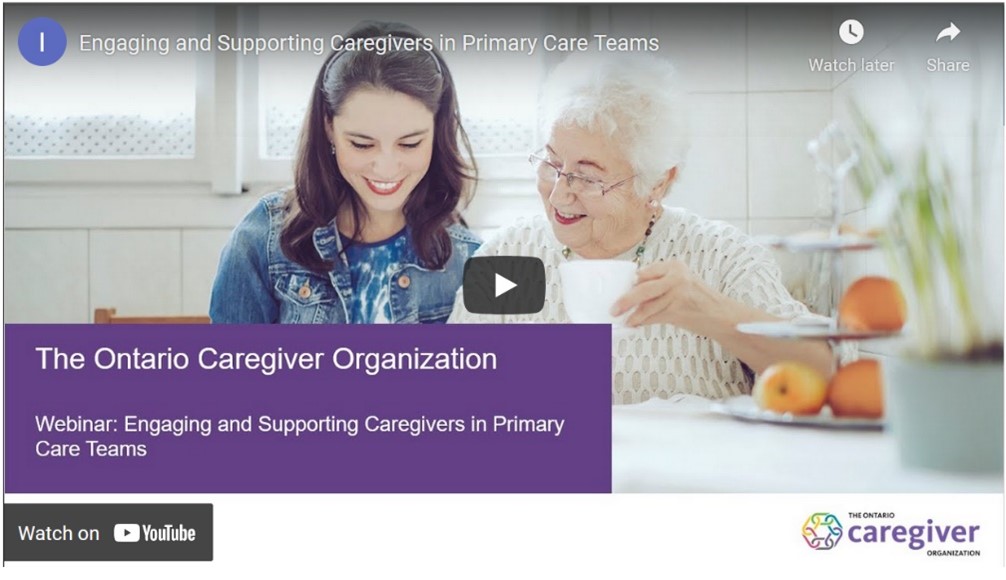
    Last February we cohosted a webinar with OCO, “Engaging and Supporting Caregivers in Primary Care Teams: Working together to improve outcomes and enhance the patient, caregiver, and family experience”. Visit our site for the video and slide deck.


    Transforming Primary Care for Older Canadians Living with Frailty

    Content below developed by the Geriatric Health Systems Research Group

    Members of the Geriatric Health Systems Research Group (University of Waterloo) collaborated with investigators across Canada to submit a grant to the Canadian Frailty Network. The grant focused on supporting primary care through the implementation of tools to enhance risk screening, shared decision-making, and care coordination for older adults. Situated as the patient’s medical ‘Home’, and supporting older adults throughout the whole care journey, primary care is well positioned to address frailty in a proactive, preventive, coordinated and integrated manner, reaching the most people, as early as possible.

    A key output of this grant is an implementation guide, which supports interested primary care practices with implementation at their site. See here for more information, and the step-by-step implementation guide.

    Correspondence to Dr Paul Stolee: stolee@uwaterloo.ca

    Ontario Fall Prevention Collaborative

    Content below developed by the Ontario Fall Prevention Collaborative

    The Ontario Fall Prevention Collaborative is a diverse group of health and social service practitioners and clinicians from across Ontario who come together to share information, analyze trends, and respond collectively to the need for change and innovation in fall prevention among older adults.

    In Ontario, fall prevention initiatives for older adults vary in their scope, approach, implementation, and measurement of outcomes. The heterogeneous, fragmented nature of fall prevention efforts make it difficult to ascertain what interventions are working, how interventions can be improved and where a greater investment of resources or an increased level of co-ordination and collaboration between key stakeholders is required to maximize impact (Dr. Brian Hyndman, 2018).

    The Collaborative advances excellence in fall prevention practice by carrying out applied research and practice development activities that individual practitioners do not have the time/ capacity to address on their own. The work of the Collaborative aligns with the vision for health care in Ontario by prioritizing fall prevention among older adults and emphasizing integrated approaches.

    Current Work:
    The Collaborative completed the second phase of its work by contributing to a prioritized list of falls indicators led by Public Health Ontario as well as a review of clinical practice guidelines for falls risk screening and assessment including recommendations for action in 2022-2023. This report should be coming in the next few weeks and will be posted on the Public Health Ontario website.

    See here for Environmental Scan of Older Adult Fall Prevention Indicators.
    See here for Screening and Assessment Tools for Falls in Older Adults in Ontario.


    Upcoming Events
    Practical Technologies that can Enable Ageing in Place

    May 19 from 9:00-10:00 am

    Dr. Samir Sinha, Director of Geriatrics at Sinai Health, and University Health Network (UHN) and Director of Health Policy Research at the National Institute on Ageing (NIA) will be presenting on Practical Technologies that can Enable Ageing in Place on May 19, from 9:00 – 10:00am EDT. This webinar is presented by Sinai Health, in partnership with the NIA, UHN, and the Primary Care Collaborative.

    The webinar will aim to give health care professionals a better understanding of:

    1. The risks and impacts of at-home medical emergencies
    2. Why older Canadians want to age in place, now more than ever
    3. Practical technologies that can enable ageing in place

    This program has been accredited by the College of Family Physicians of Canada (CFPC) for 1 Mainpro+ credit for those who are interested.
    Register here.

    Transforming Primary Care for Older Adults Living with Frailty
    June 1 from 12:00-1:00 pm

    Investigators from the CFN funded study, “Transforming primary care for older adults living with frailty”, will share key highlights, reflections and developed resources from their implementation work in team-based primary care sites. This national project aimed to improve care for at-risk older adults across Ontario, Quebec and Alberta. The project was designed to address the following areas: consistent risk screening and assessment; care coordination and system navigation; and patient/caregiver engagement and shared decision making.
    Register here.


    In Case You Missed It: Check out eBulletin #116 or other back issues here!
    Questions? Comments? Contact us at improve@afhto.ca.

  • QI in Action eBulletin #116: Role of Primary Care in Vaccine Distribution, QIPs 2022-2023

    In this Issue:

    • Understanding the Role of Primary Care in Vaccine Distribution
    • Quality Improvement Plans 2022/23
    • COVID-19 and Respiratory Virus Test Requisition Form
    • Did You Agree to Be Listed On Online Appointment Booking Platform Bleen?
    • Quality Standard on Transitions from Youth to Adult Health Care Services
    • Recognizing World Delirium Awareness Day
    • Developing A Practice Tool for Prescribing Cascades in Primary Care
    • Upcoming Webinars


    The Role of Primary Care in Vaccine Distribution – Currently recruiting MDs and IHPs!

    AFHTO has partnered with Dr. Rachelle Ashcroft on a study focused on understanding how and in what ways primary care contributes to vaccine distribution, challenges experienced by primary care in the transition of vaccine distribution, as well as generating recommendations about primary care’s ongoing and future roles in vaccine distribution, including COVID-19 boosters.

    This study will be in the format of focus groups with EDs, MDs, NPs, nurses, QIDSS and IHPs.

    • We are actively recruiting MDs. If you are a physician interested in participating, please complete this poll.
    • We are also currently recruiting IHPs. If you are an IHP interested in participating, please complete this poll.

    For any questions, please connect with Sandeep Gill: sandeep.gill@afhto.ca.

    Quality Improvement Plans (QIPs) 2022/23
    Content below developed by Ontario Health (Health Quality Ontario)

    For the past two years, Quality Improvement Plan (QIP) submissions have been on pause while organizations did the necessary work to manage the COVID-19 pandemic in their communities and regions. It has been a difficult time. While we know focused commitment to quality is vital, we also know that our system is facing unprecedented health human resource challenges and instability related to the COVID-19 pandemic. As such, we want to clearly convey to you our expectations regarding your Quality Improvement Plans (QIPs) for 2022/23: This year submission of your QIP to Ontario Health will be considered voluntary.  Please e-mail QIP@OntarioHealth.ca if you have any questions.  As always, the team is here to support you.

    This year’s QIPs will focus on a small number of quality issues that are important to the health care system—issues that have been particularly impacted by COVID-19 and need our attention to help support health system recovery. The small number of priority indicators in this year’s QIPs have been developed in consultation with the Ministry of Health, the Ministry of Long-Term Care, other teams across Ontario Health, and organizational leaders like yourselves. Organizations may also choose to integrate other local issues that are of importance to their communities.  

    Priority indicators by sector are provided in the Appendix below. Supporting documents, including a QIP guidance document, technical specifications for the indicators, and a snapshot of quality priorities in brief for 2022/23, are also available. QIP Navigator, our online QIP development and submission platform, has been updated in preparation for voluntary submission. As usual, organizations can download pre-populated templates from QIP Navigator to support their QIP development process.  

    Individual organizations who choose to submit their QIPs to Ontario Health are encouraged to do so by April 1, 2022. However, in consideration of the current pressures on the health care system, there will be flexibility with timing of submissions and QIP Navigator will be kept open until June 30, 2022.  

    This is the first year that organizations that are part of an OHT will work to submit their organizational-level QIP while also contributing to their OHT’s cQIP. For that reason, and because organizations are continuing to respond to COVID-19, we have limited the number of focus areas for both the cQIP and the organizational-level QIP. Organizations that wish to reflect their cQIP work in their QIP may also include the cQIP indicators in their organizational QIP.

    Annual Planning Materials:

    Please see below for further clarifications by the Ministry of Health, on behalf of Fernando Tavares, A/ Program Manager Primary Health Care Branch

    In follow up to the enclosed distribution from Ontario Health regarding the submission of this year’s Quality Improvement Plans.  We wanted to confirm that the Ministry is supportive of Ontario Health’s plan to make this year’s submission voluntary and confirm that teams are not contractually required to submit this report for 2022-23.

    We continue to encourage all organizations who choose to complete this work to develop and post your 2022/23 QIP on your website and share it with your administrative staff, clinicians, and patients/residents and their family members.

    Further Supports:

    COVID-19 and Respiratory Virus Test Requisition Form
    Please find the Public Health Ontario COVID-19 and Respiratory Form Virus Test Requisition Form adapted to Telus PSS and OSCAR EMRs here.

    If your team has this form implemented within Accuro, please reach out to Sandeep Gill: Sandeep.gill@afhto.ca.

    Did You Agree to Be Listed on Online Appointment Booking Platform Bleen?
    Recently it has come to our attention that many AFHTO member organizations are listed as clinics for patients to book an appointment online on the Bleen platform. We strongly advise you to review the list of clinics here to see if your team is on the list, as this solution is not aligned to the service standard.

    For any associated privacy concerns, please reach out to the Information and Privacy Commissioner (IPC). If your team did not agree to be listed on this website and would like to be removed, please directly reach out to Bleen via phone: 1-866-943-9480 and via an online form here. We have brought this issue to Ontario Health’s attention, and they are working with OntarioMD and the Ministry to bring a resolution to the issue.

    We also encourage you to take this opportunity for patient education if you receive any appointment requests through this platform and advise patients on approved appointment booking practices for your team. If you are interested in exploring funding opportunities for online booking, please click here. For any questions, please connect with Sandeep Gill: sandeep.gill@afhto.ca.

    Content below developed by Ontario Health (Health Quality Ontario)

    New! Quality Standard on Transitions From Youth to Adult Health Care Services
    In February 2022, Ontario Health released the Transitions From Youth to Adult Health Care Services quality standard, developed in partnership with the Provincial Council for Maternal and Child Health.
    When young people transition from youth to adult health care, they are at increased risk for negative health outcomes as they adapt to new services, people, and processes.

    The quality standard is an evidence-based resource that outlines what high-quality care looks like during this critical time. It can be used to help young people, families, and caregivers know what to ask for in their care; to help health care professionals know what care they should be offering; and to help health care organizations measure, assess, and improve their performance in caring for patients.   

    Please share this quality standard within your network and stay tuned for information on an upcoming webinar on this topic. For more information, contact qualitystandards@ontariohealth.ca.

    Recognizing World Delirium Awareness Day
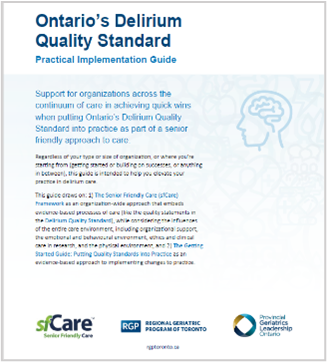
    Delirium is often a complication of respiratory illnesses, such as pneumonia, in older adults. It is a sudden change in how someone thinks, acts, or understands what’s happening to them. See the quality standard addressing what quality care looks like for delirium and accompanied patient guide, from Ontario Health and Provincial Geriatrics Leadership Ontario and more resources here.

    Developing A Practice Tool for Prescribing Cascades in Primary Care

    Are you an Ontario physician, nurse practitioner or pharmacist who provides primary care as part of an interprofessional team?

    Are you interested in reducing medication-related harm?

    A University of Toronto research team wants to learn from clinicians working in interprofessional teams about your experiences and thoughts on interventions that may help to address prescribing cascades.

    What is a prescribing cascade?
    Prescribing cascades occur when a new medication is prescribed to treat the side effects of another medication. These often arise when prescribers attribute patients’ new signs or symptoms to a medical condition rather than a medication side effect. Prescribing cascades are important sources of potentially unnecessary medication use.

    What is being asked of me?
    –    Complete a brief questionnaire (< 10 minutes) and then participate in a up to 1.5-hour discussion group or interview to share your perspectives. You will be invited to participate in a second discussion group or interview (also up to 1.5-hours) if interested.
    –    A $100 gift card will be provided for each discussion group or interview that is attended.

    Do you have questions or want to get involved?
    Please email the team at rx.cascades@utoronto.ca or contact them at (416) 978-4838. This study has been reviewed by the University of Toronto Research Ethics Board (#42135).

    Upcoming Webinars

    Stories from the Ivory Tower, Mar 22, 2022, 12:00 PM – 1:30 PM
    Register here

    In March 2022, HSPN is presenting stories from the ivory tower of university-based evaluation of Ontario Health Teams (OHTs). Evaluators from the HSPN have spent the better part of the past year observing the development of OHTs with an aim to understand:

    1. What factors contribute to the successful implementation and sustainability of OHTs?
    2. What adaptations are OHTs making to improve function/performance/outcomes?
    3. What are the barriers to OHTs’ successful implementation?

    MyPractice: Primary Care Report: Using Data for Improvement – a focus on using the cancer screening indicators to drive improvements in patient care, Thursday March 31st, 2022, 12–1 p.m.

    Ontario Health is hosting a webinar for primary care providers on using the cancer screening indicators in the MyPractice: Primary Care report to drive improvements in patient care. This is the third of an ongoing accredited series that will focus on using data from the MyPractice: Primary Care report for quality improvement. This 1-credit-per-hour Group Learning program has been certified by the College of Family Physicians of Canada and the Ontario Chapter for up to 1.0 Mainpro+Ⓡ credits. The program is part of a series that has been certified for up to 4 Mainpro+ credits.
    Register here

    AFHTO Webinar – Ontario Health And Primary Care, MHA CoE And HCNS
    Friday, April 1, from 11 AM to 12:30 PM
    Register here

    AFHTO has arranged a members’ update and conversation on primary care with Ontario Health, the Mental Health and Addictions Centre of Excellence (MHA CoE), and Healthcare Navigation Service (HCNS). Five speakers will be joining us on Friday, April 1, from 11 AM to 12:30 PM.

    We will be joined by the following speakers:

    • Sacha Bhatia, Population Health and Value Based Health Systems Executive, Ontario Health
    • Zahra Ismail, Senior Director, Primary Care and Social Determinants, Ontario Health
    • Danyal Martin, Director, Clinical Programs, Mental Health & Addictions Centre of Excellence, Ontario Health
    • Graham Woodward, VP, Mental Health and Addictions Centre of Excellence, Ontario Health
    • Mala Shastri, Lead, Co-Design, Patient Populations and Discovery, Ontario Health

    Members are encouraged to join the webinar and are welcome to submit questions by March 21. However, the floor will also be open for Q&As with all speakers, and any we do not get to during the webinar will be followed up on.

    This webinar is open to all members.

    Diabetes Care: Tools and Resources to Support Mental Health Needs, Friday April 8, 2022, 12:30–1:30 p.m.
    Ontario Health is hosting a webinar for endocrinologists, primary care providers, and diabetes educators on screening for mental health needs among people with diabetes, and new, provincially-funded resources available to support them. This is the first of an ongoing series that will highlight Ontario Health’s three diabetes quality standards. Register here.

    Moderator: Dr. David Kaplan

    Panelists:  

    • Marcia Ross, Lived Experience Advisor
    •  Nina Hoyt, Nurse Practitioner, Health Sciences North
    • Dr. Geetha Mukerji, Endocrinologist, Women’s College Hospital
    • Leslie Johnson, Regional Director Mental Health and Addictions, Ontario Shores Centre for Mental Health Sciences

    The links to the diabetes quality standards can be accessed here: Type 1 Diabetes, Prediabetes and Type 2 Diabetes, and Diabetes in Pregnancy.


    In Case You Missed It: Check out eBulletin #115 or other back issues here!
    Questions? Comments? Contact us at improve@afhto.ca.

  • QI in Action eBulletin #115: Role of Primary Care in Vaccine Distribution, Funding Opportunities, Partner Updates

    QI in Action eBulletin #115: Role of Primary Care in Vaccine Distribution, Funding Opportunities, Partner Updates

    In this Issue:

    • Understanding the Role of Primary Care in Vaccine Distribution
    • Clinical Systems Renewal Funding
    • Primary Care Data Reports for Ontario Health Teams (OHTs)
    • Updates from eHealth Centre of Excellence
    • NEW Online Smoking Cessation Program
    • Upcoming Webinars


    New Research Project! We want to hear from you!
    AFHTO has partnered with Dr. Rachelle Ashcroft on a study focused on understanding how and in what ways primary care contributes to vaccine distribution, challenges experienced by primary care in the transition of vaccine distribution, as well as generating recommendations about primary care’s ongoing and future roles in vaccine distribution, including COVID-19 boosters.

    This study will be in the format of focus groups with EDs, MDs, NPs, nurses, QIDSS and IHPs.

    If you are interested in participating, please complete this poll for your availability, by February 16, 2022.

    For any questions, please connect with Sandeep Gill: sandeep.gill@afhto.ca.

    Clinical Systems Renewal Funding
    The Ministry of Health (MOH), through Ontario Health, has approved up to $3.96M in dedicated funding each year in FY2021-22 and FY2022-23 for Ontario Health Teams (OHTs) and In Development (OHT) Teams to support investments that reduce the fragmentation of clinical systems with a focus on Electronic Medical Records (EMRs) and Hospital Information Systems (HIS). Funding is intended for innovative projects that lay a foundation to further streamline healthcare systems resulting in better integrated care outcomes. For more information, please click here.

    Primary Care Data Reports for Ontario Health Teams (OHTs)
    The Primary Care Data Working Group has produced OHT-specific Primary Care Data Reports (PCDR). The reports use standard health administrative measures in primary care in conjunction with measures for attachment to a primary care provider to deliver a standardized document for Ontario Health Teams (OHTs). These reports are intended to provide a deeper understanding of the attributed population of each OHT from a primary care lens. To learn more about the reports, please click here.

    Updates from the eHealth Centre of Excellence: New and upcoming digital health tools for primary care

    The eHealth Centre of Excellence (eCE) has been developing several different decision support tools that can be integrated into primary care EMRs to facilitate access to best practice evidence at the point of care:

    • Development of the Long COVID tool jointly with Ontario Health is nearing completion for Telus PS Suite, with the Oscar version currently in development
    • Development for the Osteoporosis toolkit in Oscar is complete and the Accuro version is now in development; this tool is already available for the PS Suite
    • The Falls Prevention EMR tool developed jointly with the Centre for Effective Practice (CEP) has finished development and should be available soon for PS Suite
    • Work has begun with Surrey Place on the new “Health Check” tool, which aims to help with documenting a comprehensive health assessment for adults with Intellectual & Developmental Disabilities

    These tools will be made available for download directly from the community portal. If you have any questions and would like to see a specific tool developed, please reach out to: EMRtools@ehealthce.ca.

    The eCE Automates team continues to provide virtual assistants or “bots” that help to create more efficient workflows for clinicians and their staff:

    • The COVID-19 vaccination bot is continuing to help clinicians with their COVID-19 vaccine documentation, supporting 3rd and 4th doses within the PS Suite EMR, with development underway to bring this bot to Accuro
    • The new Bernie Lab ordering bot is currently in development with a planned release in the coming months – stay tuned!
    • They are working on a new automation project named ASAPP (Automated Solutions Assisting Priority Populations), which will build on the existing bot processes by running additional advanced algorithms to identify high risk patients

    Feel free to get in touch here if you are interested in learning more.

    Ongoing exploration is occurring through the HEAL (Healthcare Experience and Advancement Lab) initiative to help understand and prioritize future automations within both clinical and administrative spaces. If you are interested in providing input as to what tasks you would like to see automated, consider signing up for HEAL and they will be in touch.

    CAMH STOP on the Net


    NEW Online Smoking Cessation Program: STOP on the Net

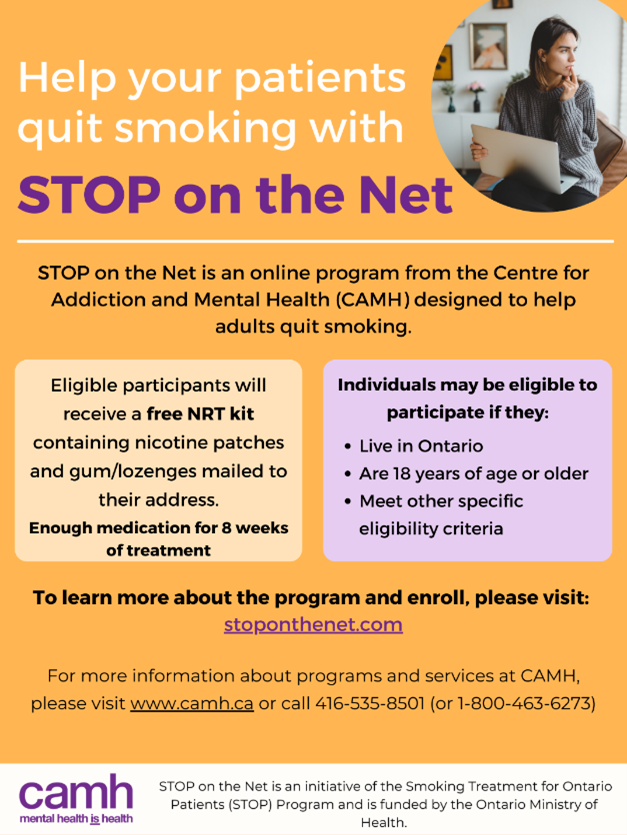
    The Centre for Addiction and Mental Health (CAMH) has launched an online smoking cessation program called STOP on the Net, available to adults in Ontario interested in quitting tobacco cigarette smoking. Eligible participants can receive a free 8-week NRT kit containing nicotine patches and gum/lozenges mailed directly to their address!

    Learn more about STOP on the Net by reading the flyer and visiting www.stoponthenet.com.


    Upcoming Webinars:
    OMD Educates Webinar: Targeting Patient Populations in Primary Care – A Practical Approach
    February 23, 2022

    Learning Objectives:

    • The importance of identifying a specific patient population and how it relates to your practice (Examples: Chronic Disease, Smoking, Diabetes Management, Mental Health, COVID-19 Vaccination Status, etc.).
    • Which digital tools and external reports are available to aid in identifying a specific population (Examples: MyPractice Reports, SARS, Insights4Care (i4C) Dashboard, Searches, EMR specific tools, etc.).
    • Practical tips on how to find and use these tools in Accuro® EMR, PS Suite EMR and OSCAR McMaster (OSCAR PRO).

    This session will include a panel discussion and Q&A followed by virtual breakout room workshops for Accuro EMR, PS Suite EMR and OSCAR McMaster (OSCAR PRO) users that will give you a better understanding of the tools and how to integrate them into clinic workflow

    Presented by Dr. Anil Maheshwari, Dr. Lee Donohue, and Dr. Vineet Nair, OMD Physician Peer Leaders with support from OMD Practice Enhancement Consultants.

    Register here

    MyPractice: Primary Care Report: Using Data for Improvement, February 28, 2022
    Ontario Health is hosting a webinar for primary care providers on using the antibiotic prescribing indicators in the MyPractice: Primary Care report to drive improvements in patient care. This is the second of an ongoing accredited series that will focus on using data from the MyPractice: Primary Care report for quality improvement.
    Register here

    Segmenting your OHT population: Stories from the Field (Part III), February 22, 2022
    Hosted by HSPN
    Registration: Click here

    Supporting caregiver well-being within Ontario Health Teams: Building caregiver resilience and reducing the risk of caregiver burnout, March 2, 2022
    Hosted by Ontario Caregiver Organization
    Registration: Click here


    In Case You Missed It: Check out eBulletin #114 or other back issues here!
    Questions? Comments? Contact us at improve@afhto.ca.


  • QI in Action eBulletin #114: Quality & Knowledge Translation Materials 2021 Recap and COVID-19 Vaccination Digital Tools

    QI in Action eBulletin #114: Quality & Knowledge Translation Materials 2021 Recap and COVID-19 Vaccination Digital Tools

    In this Issue:

    • Quality Improvement & Knowledge Translation Materials – 2021 Recap
    • Updated Omicron Guidance
    • Ontario Health e-Reports
    • Supporting EMR Documentation of COVID-19 vaccinations
    • TELUS PSS Toolbar – Assisting in Reconciling Vaccinations
    • Upcoming Webinars

    quality & knowledge translation


    Quality and Knowledge Translation screenshot

    Within the AFHTO member portal, members can find the Quality and Knowledge Translation section.  

    Under the Quality Improvement Tools and Resources section, members can find COVID-19 tools to help support EMR workflows for COVID-19 vaccination patient population identification and documentation.

    Additionally, QI resources ranging from standardized D2D queries to member initiatives can be found for teams to adapt and implement within their teams.

    Throughout the year, AFHTO has been a part of multiple research initiatives which wouldn’t be possible without you! Check out the recent research publications and presentations on this page.

    Quality and Knowledge Translation webinar screenshot

    2021 has been a year with many challenges, which teams have responded to with their flexibility and resilience. To share the great work of teams, updates and supports, AFHTO collaborated with many partner organizations to organize webinars for teams. These webinars have been archived in this library within this section for your reference.

    As we plan the webinar schedule for 2022, if you have any suggestions for webinar topics, please email improve@afhto.ca.

    Updated Omicron Guidance
    The COVID-19 Omicron Case, Contact and Outbreak Management Interim Guidance has been updated. This will be available on the Ministry’s website in French and English shortly.

    Ontario Health e-Reports
    As we move into the push of COVID-19 third doses, it will be critical to reconcile the patients with a 3rd booster shot to create a list of those without one. As of November 15th OH eReports have included patients that have received their third dose. There is also a new additional OH eReport which includes the full vaccination history of all rostered patients whose vaccination status is on record. All toolkits on the OntarioMD website have also been updated to work with this new report.

    Supporting EMR Documentation of COVID-19 Vaccinations
    The eCE Automates team at the eHealth Centre of Excellence has launched a new process for the Bernie bot that will help primary care clinicians to document their patients’ COVID-19 vaccinations seamlessly and efficiently within their electronic medical records (EMRs). eCE are offering this virtual assistant at no cost to you or your team. Contact them to learn more.

    TELUS PSS Toolbar – Assisting in Reconciling Vaccinations
    The HRM COVID Immunization Maker toolbar allows you to reconcile your patient’s COVID-19 immunization history in the TELUS PS Suite EMR with vaccination reports received via the Ontario Health Report Manager with one click of the mouse.

    The content can be installed into your PS Suite instance as a custom form and will integrate into your records window using a downloadable reminder.

    By ensuring that patient records contain the correct number of COVID-19 vaccines, you can find those patients who are still not fully vaccinated, as well as those who are eligible and best suited for third shots
    To find out more visit this link.

    Illustration of a group of health professionals holding patients up

    Thank you for all your hard work this year, and our very best wishes for this season. We want to continue to capture your team’s hard work. With Omicron set to become the dominant strain this week, we want to capture how many teams have pivoted their operations for the next two weeks to support the province’s request that health system partners prioritize vaccination efforts, either within their own teams or working in the public health or hospital clinics. To share your team’s story, please fill out this survey before midnight today, December 16th.

    Upcoming Webinars:

    The latest on Omicron and what it means for you and your practice
    Friday, December 17th at 8:00-9:30 am

    Dr. Peter Juni, head of Ontario’s Science Advisory Table, will be providing an important update on Omicron and what it means for you, your practice, and our communities. You will also hear from Dr. Sacha Bhatia, Vice President at Ontario Health, about the health system response and what primary care is being asked to prioritize. Finally, Dr. Shane Tepper will discuss organizing to support vaccination and other services in the Peel community.

    Please register here

    Diabetes Care: Tools And Resources To Support Mental Health Needs
    Thursday January 13, 2022, 12:30–1:30 pm

    Ontario Health is hosting a webinar for endocrinologists, primary care providers, and diabetes educators on screening for mental health needs among people with diabetes, and resources available to support them. This is the first of an ongoing series that will highlight Ontario Health’s three diabetes quality standards.  

    Please register here.

    Quality Rounds: The Reality of Virtual Care: Lessons from The Pandemic
    January 28th, 2022, 12:00 – 1:00 pm

    Over the last two years of the pandemic, the popularity and usage of virtual care has increased dramatically. Join us as we hear from patients and providers on the enablers and barriers to delivering and using virtual care during the pandemic, as well as exploring the future opportunities of virtual care in Ontario.

    If you are interested in learning more, please contact Courtney Paxton at Courtney.Paxton@ontariohealth.ca.

    Webinar Series: MyPractice Primary Care Report: Using Data For Improvement
    Please join Ontario Health in this quality improvement webinar series as we learn about the MyPractice: Primary Care Report, a confidential report that includes personalized practice level data, along with suggestions to support you in improving care for your patients. This 1-credit-per-hour Group Learning program has been certified by the College of Family Physicians of Canada and the Ontario Chapter for up to 1.0 Mainpro+Ⓡ credits. The program is part of a series that has been certified for up to 4 Mainpro+ credits.

    • Session: A focus on using the antibiotic prescribing indicators – January 24, 2022; 12:00-1:00 p.m. Register here.
    • Session: A focus on using the cancer screening indicators – February 28, 2022; 12:00-1:00 p.m. Register here


    In Case You Missed It: Check out eBulletin #113 or other back issues here!
    Questions? Comments? Contact us at improve@afhto.ca.

     

  • QI in Action eBulletin #113: Diabetes Care in Primary Care

    QI in Action eBulletin #113: Diabetes Care in Primary Care

    In this Issue:

    • AFHTO 2021 Conference Poster Highlights
    • Your Role In Improving The Population Health Of People At Risk Or Living With Diabetic Foot Complications
    • Query Supports: Identify your Target Population
    • Ontario Health Updates
    • Quality Standards
    • Upcoming Webinars

    AFHTO 2021 Conference Poster Highlights

    At the AFHTO 2021 Conference, we hosted an exhibit of numerous posters highlighting evidence-based, impactful innovations by your colleagues. We encourage you to take a moment to check out these posters and reach out to teams to see how you can implement these innovations too!

    Given November is Diabetes Awareness Month we would like to highlight a few innovations you can implement in your teams to improve diabetes care, all poster innovations presented at the AFHTO 2021 conference.

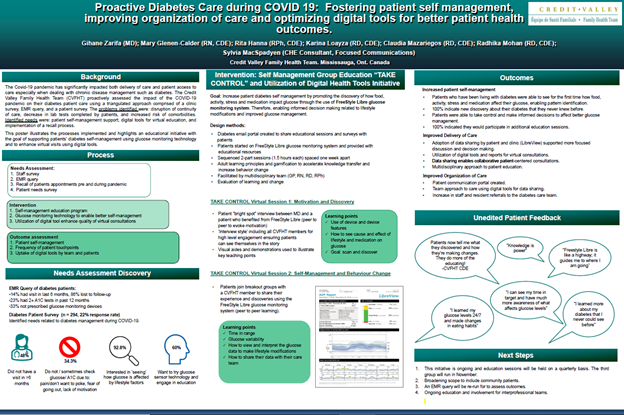
    1) Proactive Diabetes Care

    Proactive Diabetes Care poster

    COVID-19 disrupted the continuity of care for patients and propagated deterioration of chronic conditions such as diabetes. Credit Valley Family Health Team (CVFHT) proactively assessed the impact of the pandemic on their diabetes patient care using a triangulated approach comprised of a clinic survey, EMR query, and a patient survey. CVFHT prioritized the needs, creating a Just in Time intervention which was a proactive virtual educational strategy designed to reduce deterioration of diabetes outcomes, foster patient engagement and improve patient self-management. The 2-part education intervention utilized a team-based approach and was grounded in principles of learning and behavioural psychology with the goal of promoting behaviour change. For more information, please contact: Dr. Zarifa, gihane.zarifa@thp.ca

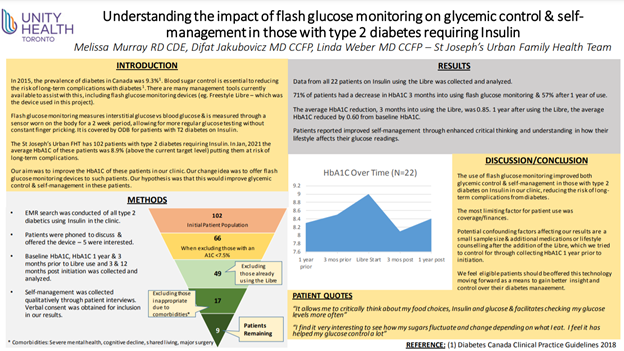
    2) Implement Self Management Tools for Patients

    Implement Self Management Tools for Patients poster

    St. Joseph’s Urban Family Health Team’s initiative aims to improve the glycemic control of those with type 2 diabetes, reducing the risk of long-term complications. Their aim is to ensure all patients eligible, are offered flash glucose monitoring to monitor their glucose and provide them with more insight over lifestyle factors impacting their glycemic control. Their aim is that if this monitoring system does improve indices, that all patients requiring insulin therapy are offered this as an option, to improve their quality of life and reduce the risk of long-term complications. For more information, please contact: improve@afhto.ca

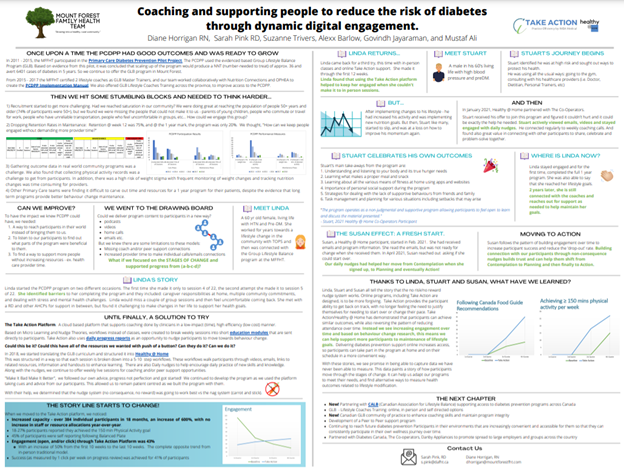
    3) Dynamic Digital Engagement

    Dynamic Digital Engagement poster

    Mount Forest Family Health Team, in partnership with IMA Medical Group, demonstrated how Engagement and Success can be tracked differently within a virtual care model. They also included how engagement over time can be leveraged to build more personalized success experiences that enhance their ability to guide themselves from pre-contemplation to action. For more information, please contact: Sarah Pink, s.pink@dafht.ca and Diane Horrigan, dhorrigan@mountforestfht.com

    4) Updating EMR tools for Accessible and Trackable Data

    Updating EMR tools for Accessible and Trackable Data poster

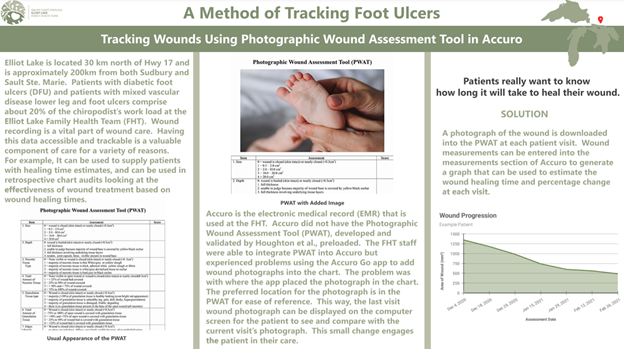
    Wound documentation using a validated tracking tool in combination with proper wound care product selection is a best practice. When Elliot Lake Family Health Team heard from their patients, “Patients really want to know how long it will take to heal their wound” they implemented a tool within their electronic medical record (EMR) to give patients accessible and trackable data. Elliot Lake Family Health Team was able to track wounds and able to predict which wounds will heal and which wounds will be hard to heal. For more information, please contact: Mary Ellen Mitchell, M.Mitchell@elfht.ca

    Wounds Canada- a pair of hands holding another, older hand


    Your Role In Improving The Population Health Of People At Risk Or Living With Diabetic Foot Complications

    Earlier this year, AFHTO, in collaboration with Wounds Canada hosted a webinar to provide an overview of your role to improve the population health of people at risk or living with diabetic foot complications across the full continuum of care settings to improve patient experience, outcomes and costs.
    Click here for the recording and slides.

    Query Supports: Identify your Target Population
    MyPractice: Primary Care Report provides an update on the HbA1c Indicator: % of patients with diabetes who had 2 or more HbA1c tests within the past 12 months, approximately every 6 months. In order to assist you with retrieving data in real time from your EMR, the QI in PC Council has created a number of queries which can be found here. Please note, these queries will have to be adjusted per team, but they provide a reference point. In addition, eCE has created a Diabetes Manager.

    On November 18th the QIPC council shared a process that worked well for London FHT that collaborated with ‘Partnering for Quality’ to develop and create comprehensive searches for guiding data supporting quality improvement initiatives on Diabetes, Congestive Heart Failure, and Chronic Obstructive Pulmonary Disease. Using the foundational approach of identifying suspects for coding patients, to then selecting targets to improve the patient level of care, and displaying the data in PowerBI analytical software, made quarterly reporting easier and initiated further discussion around what targets to select next.

     
    If there is interest in learning more details about how this may work for you contact the Partnering for Quality team about the PFQ-ID Dashboard toolkit. A simple no cost solution for obtaining your EMR data and presenting it back in an efficient usable way for the team.

    Ontario Health Updates: Upcoming events and programs in support of Diabetes Awareness month
    Content below developed by Ontario Health (Health Quality Ontario)

    November is Diabetes Awareness Month around the world. Did you know that this year also marks the 100th anniversary of the discovery of insulin? In Ontario, about one in ten people have some form of diabetes. See below for some upcoming events and resources that can support you in your practice related to care for diabetes:

    MyPractice Primary Care A tailored report for quality care

    Webinar | MyPractice: Primary Care Report: Using Data for Improvement | Monday November 22, 2021 • 12–1 p.m. Ontario Health is hosting a webinar for primary care providers on using the diabetes management indicators in the MyPractice: Primary Care report to drive improvements in patient care. Please register here to join the session. This is the first of an ongoing series that will focus on using data from the MyPractice: Primary Care report for quality improvement.
    This program is part of a series that has been certified for up to 4 Mainpro+ credits.
     
    Quality Standards
    To address gaps in the health care that people with diabetes receive across Ontario, and improve their health outcomes, Ontario Health developed three quality standards:

    • The Type 1 Diabetes quality standard addresses care for people of any age with a diagnosis of type 1 diabetes.
    • The Prediabetes and Type 2 Diabetes quality standard addresses care for children and adults who are at risk of developing prediabetes or type 2 diabetes or who already have a diagnosis of either. It includes the assessment, diagnosis, and management of prediabetes and type 2 diabetes.
    • The Diabetes in Pregnancy quality standard addresses care for people with type 1 and type 2 diabetes who become pregnant and people diagnosed with gestational diabetes. It includes preconception care as well as management of diabetes during pregnancy.

    Included with each quality standard is a patient guide you can use to support your conversations when discussing diabetes care with your patients. Stay tuned for information on upcoming webinars related to diabetes.

    Family physicians can now earn up to 5.5 Mainpro+® credits for reading the diabetes quality standards through the Understanding Quality Standards in Primary Care program. To enroll or to learn more, please contact UnderstandQS@ontariohealth.ca.

    Upcoming Webinars:

    Practical Approaches to Polypharmacy: The Gentle Art of Deprescribing
    Dec 1, 2021 (12-1 pm EST) |
    Register here.

    In this webinar we will explore approaches to the issues and problems around polypharmacy and deprescribing in primary care patients. We will discuss approaches to the integration of patients’ goals and priorities with evidence. In the second part of the webinar, we will demonstrate the TAPER tool (Team Approach to Polypharmacy Evaluation and Reduction), an integrated pathway designed for use in a primary care team-based approach as routine “prevention” in primary care patients with polypharmacy.

    Using Electronic Medical Records to Choose Wisely: Push, Pull, Nudge
    Dec 1, 2021 (12-1 pm EST) | Register here

    Reducing inappropriate antibiotic prescriptions has been a long-standing challenge in primary care. With the increasing adoption of digital tools in primary care practices, how might we take advantage of features within EMRs to help improve antibiotic prescribing?

    Choosing Wisely Talks on December 1 at 12 p.m. ET will explore efforts to work with EMR vendors to embed antibiotic stewardship tools into their digital workflows. Dr. Darren Larsen, family physician and expert in digital health, will share how leveraging EMRs can not only help improve patient care, but also help change clinician behaviour.

    In Case You Missed It: Check out eBulletin #112 or other back issues here!
    Questions? Comments? Contact us at improve@afhto.ca.
     

  • QI in Action eBulletin #112: Ontario Structured Psychotherapy for Alcohol Use Disorder Survey, COVID-19 Guidance Updated, & more

    QI in Action eBulletin #112: Ontario Structured Psychotherapy for Alcohol Use Disorder Survey, COVID-19 Guidance Updated, & more

    In this Issue:

    • Ontario Structured Psychotherapy for Alcohol Use Disorder Survey
    • COVID-19 Guidance: Primary Care Providers in a Community Setting – UPDATED
    • Ontario Health Updates: Upcoming events and programs related to quality standards (QS)
    • Participate in Research
    • Upcoming Webinars

    Ontario Structured Psychotherapy for Alcohol Use Disorder Survey

    The Ontario Structured Psychotherapy program (OSP) has been designed and implemented for people with mild to moderate anxiety and depression. Screening for substance use including Alcohol Use Disorder (AUD) does occur, however people are not disclosing concerns around their alcohol consumption in initial screenings. Clients often disclose concerns related to alcohol consumption after a few sessions which leaves some clinicians unable to adequately meet their clients needs.

    Addictions and Mental Health Ontario (AMHO), along with the Ministry of Health (MOH) and the Mental Health and Addictions Centre of Excellence (MHA CoE), has convened an advisory committee to recommend next steps for an OSP program for clients with mild to moderate AUD. This survey is intended to gather information that would support the committee in making recommendations to support the development of the program.
     
    The survey will take approximately 10-15 minutes to complete and will be open until November 12, 2021. Please note, this survey was initially designed for people working in the mental health and addiction sector. Not all question will be relevant to all providers, so feel free to only complete sections that are relevant to your care setting.

    If you have any questions or further comments, please contact karen.cook@amho.ca.

    COVID-19 Guidance: Primary Care Providers in a Community Setting

    Ministry of Health has released a version 9.0 for the COVID-19 guidance for primary care providers in a community setting on October 19, 2021. Sections that are updated are on In-Person, Screening, Testing, and Occupational Health and Safety. Please keep an eye on the Ministry of Health (MOH) COVID-19 website for regularly updated versions.

    Ontario Health Updates: Upcoming events and programs related to quality standards (QS)
    Content below developed by Ontario Health (Health Quality Ontario)

    RGP Toronto Implementation Coaching Series for Delirium Care

    Delirium quality standard

    Join us this fall for a practical coaching series on how you can use the implementation guide for the Delirium quality standard to change care in your workplace! Come on your own or bring a team.

    This will be a dynamic, interactive coaching series where all levels of implementers are welcome—no preparation required. Whether you are just getting started, are started but stalled, or on a roll, this series is for you!

    Part 1: Assemble a Team | October 28, 2021 • 12:00–1:00 p.m. ET
    In this session you will learn how to create an elevator pitch, provide a case for change, and decide how you will engage various stakeholders. REGISTER HERE

    Part 2: Prioritize a Change Idea | November 25, 2021 • 12:00-1:00 p.m. ET
    In this session you will learn practical methods to set priorities in diverse groups and how to set up two-way communication mechanisms. REGISTER

     Part 3: Create a Plan | December 16, 2021 • 12:00-1:00 p.m. ET
    In this session you will learn how to create a practical action plan, address barriers, and leverage facilitators so that your change sticks. REGISTER

    Mainpro+® Self-Study Program | Understanding Quality Standards in Primary Care | Coming October 2021
    Ontario Health is excited to announce a new opportunity for family physicians to earn Mainpro+® credits by reading the quality standards relevant to primary care. This one-credit-per-hour Self-Learning program has been certified by the College of Family Physicians of Canada and the Ontario Chapter for up to 48.75 credits. To learn more, or to enroll in the program, contact: UnderstandQS@ontariohealth.ca.

    Participate in Research!

    Your opinion matters: Help us develop educational materials for lipid management.

    Researchers at The Knowledge Translation (KT) Program at St. Michael’s Hospital and Women’s College Hospital are collaborating on a study called the “CANHEART Improving Cholesterol Management Study” to improve lipid management and cardiovascular health in Ontario.

    The Community Heart Outcomes Improvement and Cholesterol Education Study (CHOICES) is an Ontario research study being conducted in certain health regions in Ontario with higher than average rates of cardiovascular disease. The study is being funded as part of Canada’s Strategy for Patient-Oriented Research (SPOR) and by the Canadian Institutes of Health Research (CIHR). CHOICES will involve implementing a ‘toolbox’ for cholesterol management to inform and empower people when it comes to the appropriate management of their cholesterol and cardiovascular health. The tools within this ‘toolbox’, such as cholesterol tip sheets, educational videos, and online decision aids, will be widely distributed in the high-risk health regions, to allow people to work with their primary care physician and share in the decision-making process together.

    Currently, we are looking to recruit primary care physicians Ontario wide to review and provide feedback on an online decision aid tool aimed to improve cholesterol management among patients. Participants will be compensated with a $100.00 honorarium for their time.  If you are interested in reviewing the tool and participating in a 30 – 45-minute confidential telephone interview, please contact Research Assistant, Suvabna Theivendrampillai at Suvabna.Theivendrampillai@unityhealth.to

    Are you a Family Physician delivering virtual care?

    A study on digital health and compassionate care led by Dr. Laura Desveaux from Women’s College Hospital is exploring how technology influences interactions in primary care. Family physicians who have experience delivering virtual care (e.g., video visits, asynchronous messaging, and remote monitoring) with their patients are being invited to participate in a 30–45-minute interview over Zoom. The interview will explore your experiences with technology, how you have adapted your practice, and what is needed moving forward. A $75 e-gift card will be provided in recognition of your time. To participate or discuss further, please contact the project lead, Kelly Wu (kelly.wu@wchospital.ca).

    Upcoming Webinars:

    • Delirium Awareness: Untapped Potential for Patient Care and System Transformation, Oct. 27, 2021
      • Provincial Geriatrics Leadership Ontario hosts a webinar with clinical experts to share perspectives in the identification and response to delirium. The session will discuss how care can be transformed by utilizing the delirium quality standard to implement institutional delirium awareness, screening, and monitoring. Register here.
    • Practical Approaches To Polypharmacy: The Gentle Art Of Deprescribing, Nov 3, 2021
      • In this webinar we will explore approaches to the issues and problems around polypharmacy and deprescribing in primary care patients. We will discuss approaches to the integration of patients’ goals and priorities with evidence. In the second part of the webinar, we will demonstrate the TAPER tool (Team Approach to Polypharmacy Evaluation and Reduction), an integrated pathway designed for use in a primary care team-based approach as routine “prevention” in primary care patients with polypharmacy. Register here.
    • Parenting Resilient Children, Nov. 4, 2021
    • CFI@PRI’s first “Rooted in Change: The Centre for Family Initiatives at Pine River Institute Masterclass.” Dr. Brad Reedy of Evoke Therapy Programs will present a formula for increasing resiliency in our children. Topics will include parental anxiety, definitions of Self for parents and children, and how common myths in parenting need to be reconsidered. Register here.

    In Case You Missed It: Check out eBulletin #111 or other back issues here!
    Questions? Comments? Contact us at improve@afhto.ca.
  • QI in Action eBulletin #111: Webinars Repository, COVID-19 third dose, Provider Experience Research & Quality Standard Placemat

    QI in Action eBulletin #111: Webinars Repository, COVID-19 third dose, Provider Experience Research & Quality Standard Placemat

    In this Issue:

    • AFHTO Knowledge Translation & Exchange Webinars Repository Now Available
    • New COVID-19 third dose vaccine eligibility search
    • Seeking pharmacists’ input on experiences and contributions to mental health care during COVID-19
    • Quality Standard Placemat
    • Upcoming Webinars

    AFHTO Knowledge Translation & Exchange Webinars Repository Now Available

    Throughout the year, AFHTO and our partners have continuously provided knowledge translation & exchange webinars on various topics. We continue to support this work on timely and requested topics. To help streamline the process of signing up for upcoming webinars and accessing previous webinars, please refer to this page for a complete list.

    Here is a list of webinars hosted throughout the year – please click the topic area to be taken directly to the webinar recording and if available, supplementary materials:

    Now Available: New COVID-19 third dose vaccine eligibility search

    COVID-19 vaccine eligibility search

    Although two doses of the COVID-19 vaccine provide strong protection against the virus, a third dose may be required for those patients with an increased risk of infection. On August 17, the province released a list of vulnerable populations who are eligible for a third dose, which include transplant recipients, patients with hematological cancers, recipients of an anti-CD20 agent and more. Please note, as eligibility broadens such as the new guidance on September 14th, 2021 eCE is working on assessing changes and aligning efforts. Thus, this query is only up to date to the August 17th eligibility criteria.

    The eHealth Centre of Excellence’s newest EMR vaccine eligibility search will help primary care providers to quickly identify patients from their ambulatory roster who may be eligible.

    You can access the search (for TELUS PS Suite) by downloading it directly from the eHealth Centre of Excellence community portal. More information about COVID-19 Vaccination Support tools offered by the eHealth Centre of Excellence can be found here.

    Note: This search will also be available for OSCAR and Accuro EMRs soon.

    Seeking pharmacists’ input on experiences and contributions to mental health care during COVID-19
    If you are a primary care pharmacist, University of Toronto researchers want to hear from you! Their study seeks to examine primary care team pharmacist contributions to patient mental health care and understand pharmacists’ experiences with collaboration during the COVID-19 pandemic. The 15 to 20 min survey includes a mix of multiple choice and open response questions.

    This study from the University of Toronto is co-led by Dr. Rachelle Ashcroft, Assistant Professor at the Factor-Inwentash Faculty of Social Work, and Dr. Lisa Dolovich, Professor & Dean at the Leslie Dan Faculty of Pharmacy.

    To take the survey, please click on this link: https://bit.ly/SplPharm.

    Quality Standard Placemat
    Content below developed by Ontario Health (Health Quality Ontario)

    Reminder: We want your input on the quality standard placemats!

    Ontario Health has recently developed a tool called the Quality Standard (QS) Placemat that is a resource for primary care providers. The placemat highlights key elements of care for a condition and is an evidence-based, quick-reference tool that concisely summarizes key information from the quality standard and includes links to resources and tools.

    OH is  looking for clinicians willing to review and use any of the QS Placemats for approximately 2 weeks. After that they would then like you to complete a short survey (link below) that will give you the opportunity to provide feedback on the usefulness of the tool.

    If you or one of your colleagues be willing to help us test and provide feedback on the Quality Standard placemats, please complete the following survey by clicking on the link below. OH would appreciate it if you can complete the survey by September 30th, 2021.

    Currently, there are seven quality standard placemats available:

    Survey Link: https://survey.alchemer.com/s3/6387602/Quality-Standards-Placemat-Evaluation

    If you are interested in participating or have any questions, please email Jorge Ginieniewicz at: jorge.ginieniewicz@ontariohealth.ca

    Upcoming Webinars:

    In Case You Missed It: Check out eBulletin #110 or other back issues here!
    Questions? Comments? Contact us at improve@afhto.ca.
  • QI in Action eBulletin #110: COVID-19 Vaccination Reports, Cancer Screening Summary and Quality Standard Placemat

    QI in Action eBulletin #110: COVID-19 Vaccination Reports, Cancer Screening Summary and Quality Standard Placemat

    In this Issue:

    • COVID-19 Vaccination Reports
    • Resuming Cancer Screening During COVID-19
    • Quality Standard Placemat
    • Share your Thoughts on Addressing Patients’ Mental Health Needs as a Pharmacist
    • Upcoming Webinars

    COVID-19 Vaccination Reports
    Currently COVID-19 Vaccination Reports are available to Primary Care Providers in a few ways that are summarized below:

    • Health Report Manager (HRM®):
      • As of May 18, 2021, and onwards, physicians/NPs with access to HRM will receive HRM notifications with vaccination reports for patients for whom the Primary Care Provider (PCP) field was entered in at the time of vaccination. At the moment reports prior to May 18, 2021, will not be sent to the EMRs via HRM but work is being done to capture earlier vaccinations through HRM.
      • As of July 22, 2021, COVID-19 vaccination reports from the provincial COVaxON system are being enhanced with data from the Ministry of Health’s CAPE (Client Agency Program Enrolment) database to match patients to family physicians who practice in a Patient Enrollment Model (PEM). Patients are not always asked to identify their family physician for entry into COVaxON so the addition of CAPE data enables more reports to reach family physicians. If you practice in a PEM, you will now receive many more vaccination reports via HRM. The next improvement OntarioMD (OMD) is working on is a solution to send historical COVID-19 vaccination reports to family physicians.
      • To automate the process of entering these HRM reports into the immunization list of patients, eCE has created a Robotic Process Automation (RPA) (aka bot), which is currently compatible with the Telus PSS EMR. The bot is currently being offered at no cost and with supports from eCE. eCE will run the bot for you so no additional administrative supports will be required on your end. To see a demo of the bot in action, click here. To request more information or express interest in adding this bot to your workflow, please click here.
    • COVaxON Aggregate Primary Care Vaccination Reports              
      • As of July 15, 2021, PEM physicians/clinicians with access to ONEID have access to aggregate eReports from the same portal as the Cancer SAR reports to download a complete list of patients vaccinated up to July 15, 2021. After this date, the report will be updated on a monthly basis.
      • EMR-eReport Patient Vaccination Reconciliation Toolkit were designed to be used with the Ontario Health’s COVaxON Aggregate Primary Care Vaccination Report and are designed for Microsoft Excel, Open Office, and Mac Numbers. These toolkits are designed for TELUS PSS, QHR Accuro and OSCAR EMRs. An FAQ on the aggregate reports can be found here. In addition, an information session slide deck and FAQ document can be found here.
      • Please note, a ONE-ID is required to access these reports. For instructions on completing a ONE® ID self-registration, refer to the ONE® ID CPSO Registration Guide. To assign a delegate further information can be found in the FAQ document here.
    • Clinical Viewers (ConnectingOntario ClinicalViewer and Clinical Connect):
      • These reports are available for physicians/clinicians for any time period, however on a per patient basis. For step by step instructions on how to access ClinicalViewers please refer to this reference document.
    • COVaxON:
      • For physicians/clinicians with access to COVaxON, patients can be queried on a per patient basis to inquire on vaccination status.

    For more information and updates on COVID-19 Vaccination Reports, please refer to the OMD page here.

    Resuming Cancer Screening During COVID-19

    Missed the last ebulletin? Ontario Health (Cancer Care Ontario) has created a summary page for your reference on the resumption of cancer screening during the pandemic.

    Content below developed by Ontario Health (Health Quality Ontario)

    Quality Standard Placemat

    Ontario Health wants your input on the quality standard placemats!

    Ontario Health has recently developed a tool called the Quality Standard (QS) Placemat that is a resource for primary care practitioners. The placemat highlights key elements of care for a condition and is an evidence-based, quick-reference tool that concisely summarizes key information from the quality standard and includes links to resources and tools. To facilitate use at point of care, the placemat can be uploaded and used within EMRs for easy access. We have developed step-by-step user guides to help you add the QS placemats into Accuro, PS Suite and OSCAR EMR systems.

    They are looking for clinicians willing to review and use any of the QS Placemats for approximately 2 weeks. After that they would like you to complete a short survey (link below) that will give you the opportunity to provide feedback on the usefulness of the tool.

    Currently, there are seven quality standard placemats available:

    Would you or one of your colleagues be willing to help them test and provide feedback on the placemats?

    If so, please complete the following survey by clicking on the link below.  They would appreciate it if you can complete the survey by August 25th, 2021.

    Survey Link: https://survey.alchemer.com/s3/6387602/Quality-Standards-Placemat-Evaluation

    If you are interested in participating or have any questions, please email Jorge Ginieniewicz at: jorge.ginieniewicz@ontariohealth.ca

    A new Quality standard placemat has been developed:

    Early Pregnancy Complications and Loss QS Placemat—summarizes content from the Early Pregnancy

    Illustration of a woman with long wavy hair in profile, holding plants in her arms

    Complications and Loss Quality Standard, focusing on care for people experiencing complications, such as pain and vaginal bleeding, and/or the loss of their pregnancy in the first 13 weeks.

    Share your Thoughts on Addressing Patients’ Mental Health Needs as a Pharmacist
    If you are a primary care pharmacist, the research team wants to hear from you! This study seeks to examine primary care team pharmacist contributions to patient mental health care and understand pharmacists’ experiences with collaboration during the COVID-19 pandemic. The 15 to 20 min survey includes a mix of multiple choice and open response questions.

    This study from the University of Toronto is co-led by Dr. Rachelle Ashcroft, Assistant Professor at the Factor-Inwentash Faculty of Social Work, and Dr. Lisa Dolovich, Professor & Dean at the Leslie Dan Faculty of Pharmacy.

    To take the survey, please click on this link: https://bit.ly/SplPharm.

    Upcoming Webinars:

    In Case You Missed It: Check out eBulletin #109 or other back issues here!
    Questions? Comments? Contact us at improve@afhto.ca.