Tag: advocacy

  • AFHTO’s 2022 Pre-Budget Submission

    On February 10, AFHTO submitted our recommendations to the government for their 2022 budget. Our 2022 pre-budget submission was done in collaboration with our five partners in the Primary Care Collaborative.

    With primary care at the foundation, our submission lays out what is needed to help build a province where people can access better care, more integrated care, and more accessible and continuous care.

    Our recommendations are broken into four sections:

    1. Address the HHR crisis and system capacity

    Recruitment and retention of healthcare workers is a challenge that the pandemic is exacerbating. Issues like burnout, illness, and lack of acknowledgement and support, such as the enforcement of Bill 124, are impacting the HHR needed to get through and recover from the pandemic; to care for its long-term impact; and to continue to deliver preventative care and care for acute and chronic conditions. We provided four recommendations. 

    2. Integrate health care across Ontario

    The pandemic shone a spotlight on the fragility of Ontario’s healthcare system. Ensuring integrated and continuity of care will be key; however, integration cannot occur unless there is capacity in the systems that need to integrate. We provided five recommendations.

    3. Prioritize digital and data equity

    The pandemic has exacerbated social isolation, highlighted barriers to accessing healthcare, and emphasized that digital equity is a driver of health equity. Primary care requires funding to support our leading work on digital and data equity – providing safe and trusted health and social services to people who face barriers getting online through broadband and digital devices. We provided four recommendations.

    4. Create a culturally safe healthcare system that addresses health inequities

    Many people have faced and continue to face discrimination and disadvantage, which leads to inequitable health outcomes. Primary care serves populations who face the most barriers: Indigenous Peoples, Francophones, Black populations, people with disabilities and mental health challenges, other racialized groups, recent immigrants and refugees, people who are 2SLGBTQ+, and people living in northern, rural, and remote areas. We provided nine recommendations.


    Our 2022 pre-budget submission can be read here.
     

  • Follow-up on January’s regional calls with EDs and admin leads;update from meeting with the Primary Health Care Branch

    Note: This email is going to executive directors, lead physicians, NP clinical directors, and board chairs

    Dear leadership triad,

    Thank you to all executive directors and admin leads who joined their regional call with us at end of January. It is always helpful to hear from you, and we hope you found the call and the chance to connect with your fellow EDs to be useful.

    This email is a follow-up to provide the information promised during the calls, a summary of our call with the Ministry of Health’s Primary Health Care Branch on February 3, and a few other updates and supports.

    Please see the email from last Friday, February 4, titled “COVID-19 Outpatient Therapies, Vaccination Updates, and Other Updates” for an update on COVID-19 vaccination (including aged 5-11), long COVID, RATs supply, and more.

    Update from the meeting with the Primary Health Care Branch, MOH (February 3)

    • The Annual Operating Plan is scheduled to be due at the end of April, and teams can expect an email on this from the Primary Health Care (PHC) Branch sometime this month. To streamline the process, they will be sending it out as a Microsoft form (i.e., survey), which can be downloaded as a PDF/word document. Teams can enter information into the word document and then copy and paste it into the online survey. Information requested will be the same as previous years, with a bit more on virtual care.
    • Notification on FHT contract extension is expected this week. Teams will need to sign back on this agreement, with a March 15 deadline. E-deposits will then continue.
    • AFHTO raised teams’ concerns about the expenditure guideline requirement that no single profession may account for more than 50% of the total complement unless prior ministry approval is provided in writing.
      • It was noted that if a nurse is needed to do something extensive like mental health, particularly in small and/or rural teams, a case on the nursing compliment going above 50% could be made to the ministry. If there is a compelling case for a higher ratio of nursing staff, FHTs can make a business case for the change through the annual operating plan or through an in-year reallocation request. Teams are encouraged to speak with their senior program consultant.
      • The PHC Branch understands that there is confusion among teams around the role of nursing staff within a FHT and has made a commitment to provide clarity of the role and expectations on nursing-funded positions. Once more information is available, we will share it with you.
    • Members had inquired about using HR funding for recruitment/reallocation expenses. HR funding is not to be used for this purpose, but teams are reminded that per the ARI guidelines there is a tolerance threshold of $10,000 that can be moved between budget categories (HR to overhead) without ministry approval, which can allow you to employ tactics to support recruitment efforts. Anything beyond the tolerance threshold can only be reallocated with written approval from the ministry.
    • Although not confirmed and waiting on dissemination from Ontario Health, the PHC Branch has seen next year’s QIP expectations. The timelines and release are currently with Ontario Health, and PHC Branch was unable to give a timeline for its release as it is now out of their hands.
    • We know that teams continue to make unsolicited funding requests and do not always know why their proposals are rejected. To help support teams with future requests, the PHC Branch has agreed to develop a criteria checklist on what teams should be focusing on when requesting additional funding. This will help teams in preparing a business case. We do not have a timeline to share, but we will follow up with the PHC Branch a couple weeks, if needed. Stay tuned!
    • We also understand that the ministry has reviewed all unsolicited business cases from 2019/20, and the teams that are going to receive additional investments have been notified. We expect an announcement in the coming weeks to highlight the teams, including some that received substantial expansion dollars to support an increased number of patients rostered.
    • With year-end funds and projected surpluses, the ministry will be working with teams expecting a surplus and connecting them with teams in need of funding.  If you project overspending because of COVID, the ministry can help with matchmaking now to another team that is projecting a surplus. Teams are encouraged to contact their senior program consultant as soon as possible to discuss this.

    Pre-budget submission and the 2022 election

    • On February 11, we will be submitting our pre-budget submission with the Primary Care Collaborative. There are 22 recommendations, broken into four sections:
      • Address the HHR crisis and system capacity
      • Integrate health care across Ontario
      • Prioritize digital and data equity
      • Create a culturally safe healthcare system that addresses health inequities
    • We will share this submission with members once completed, and we will expand further on the points to provide an additional resource for election advocacy.
    • If teams have recent stories of success to share that would fall in any of these categories, please send them to Beth MacKinnon to highlight in our advocacy tools.
    • All advocacy tools for the 2022 election will be circulated by the end of February. We encourage you to check out who your local candidates are now and begin outreach to introduce yourself and schedule meetings for March.

    Moving the yardstick on funding for team-based primary care

    • AFHTO is arranging a pilot with a handful of teams in 2-3 regions to look at how we can work better together to maximize resources and expand access to team-based care based on population health needs. The pilot will be used to demonstrate how and why funding would be needed to expand even further.
    • Any group of teams who would like to be part of this pilot and are interested in working together are invited to contact Bryn Hamilton.

    Survey #1: Please complete this survey for the Vaccination Research Study

    • AFHTO has partnered with Dr. Rachelle Ashcroft on a study focused on understanding how and in what ways primary care contributes to vaccine distribution. This includes challenges experienced by primary care in the transition to vaccine distribution, as well as generating recommendations about primary care’s ongoing and future roles in vaccine distribution, including COVID-19 boosters.
    • This study will be focus groups with EDs, physicians, nurses, QIDSS, and IHPs. Please share this poll with team members so they can share interest and provide availability here: https://utorontofsw.qualtrics.com/jfe/form/SV_9ocXZYkcgB5mzPM.
    • Please note, each team member can fill out this poll individually.
    • Please complete this survey by Friday, February 11.

    Survey #2: Please complete the Mental Health Survey

    • AFHTO is supporting the OMA in collectively identifying 2-3 key priorities of mutual interest to strengthen primary care’s capacity to deliver mental health and addiction care and strengthen primary care’s ability to deliver supports to address the needs of people living with moderate-severe depression, anxiety, OCD, and opioid use problems.
    • To support this work, we ask that Executive Directors/Administrative Leads of teams please fill out this quick survey: https://forms.office.com/r/u6Dueg7XV4.
    • Please complete this survey by Friday, February 11.

    A few other things

    • Executive directors and admin leads, please join us on Wednesday, February 23 from 12:00 p.m. to 1:30 p.m. for a meeting on “Ontario Health Teams: Where are we now and what’s next?” The first 30 minutes will be with representatives from the Ministry of Health and Ontario Health, who will provide a brief update and Q&A. The last hour will be a discussion among teams. More information and registration are here.
    • A session is being coordinated with Ontario Health for a broader update on the work they are doing and the chance for teams to ask questions. A date will be shared later this month.
    • A reminder to check out the Monitoring Organizational Performance Toolkit and Dashboard that was developed for boards and introduced last month.
    • The second phase of Ontario’s work to ease public health measures is expected on February 21. More information on the province’s reopening plan can be seen here.  AFHTO, in collaboration with partners, shared concerns on the reopening plan and public health measures with the ministry prior to the first phase of reopening. You can read our letter to the minister here.
    • On February 7, Nadia Surani, Director of the PHC Branch, sent a memo to teams asking them to prioritize vaccination for children if capacity allowed. If you are experiencing ongoing issues with your PHU around vaccine access or need support, please contact us so we can bring concerns to the ministry. Also check out http://www.parenthomework.ca/ for some great practical, parent-facing guidance around children’s vaccination.

    A reminder to keep checking out our COVID-19 section that we regularly update with news, tools, and resources, including the daily situation reports.

    Please contact us any time. We hope you are all keeping well.

    Sincerely,
    Your AFHTO Team

  • Letter to Minister Elliott on Public Health Measures – January 27, 2022

    Letter to Minister Elliott on Public Health Measures – January 27, 2022

    Picture test


    January 27, 2022

    Hon. Christine Elliott Minister of Health
    College Park, 777 Bay St., 5th floor Toronto, ON M7A 2J3

    Dear Minister Elliott,

    We commend the government for expediting vaccinations last month and for beginning the fourth dose for the most vulnerable people. Returning to a modified step two of the “Roadmap to Reopen”, while challenging for many people, was also a good step in managing the spread of the virus.

    We are concerned with the recent announcement to ease these public health measures. In-person school has just returned for children, surgeries have not resumed in hospitals, and ICU numbers and COVID-related deaths continue to rise. Healthcare workers remain inundated with COVID-related cases – those who are even well enough to work. They cannot afford to see demand continue to rise.

    It is too early to relax public health measures. We ask the government extend step two until we have seen at least two weeks of steady decline in COVID-related ICU admissions.

    In addition, we want to reiterate the importance of additional measures to protect people in Ontario from this highly infectious variant. We ask the following:

    1. Repeal Bill 124 to address the shortage of critical healthcare workers and show that they are valued and respected

    • Ontario needs to deliver a comprehensive health human resources strategy to address the strained healthcare workforce and address the severe gaps in health care workers.
    • Healthcare workers have worked tirelessly, often putting themselves and their loved ones at risk. They are tired, frustrated, and leaving in numbers that are irreplaceable.
    • This Bill is impacting the health human resources needed to get through this pandemic, to care for its long-term physical and mental health impact on people in Ontario, and to continue to deliver needed care for acute and chronic conditions.
    • Healthcare workers are critical for our wellbeing and our recovery, and they must be recognized for this. Putting strict limits on their compensation does the opposite.

    2. Amend Directive #6 to make COVID-19 vaccinations mandatory across all healthcare workers

    • By not having a vaccine mandate, the risk to employees’ and patients’ health from COVID-19 outbreaks and the risks to staffing shortages if staff become sick are significant and unpredictable.
    • The risks posed by a vaccine mandate, while a one-time challenge, are more predictable and less likely to impact patient care.

    3. Increase sick days to 10 days

    • We must ensure that all people in Ontario are protected and that we do not create additional hardships on those who cannot afford to be sick.

    4. Access to testing and appropriate PPE

    • Access to PCR, rapid antigen tests, and appropriate PPE, including KN95 or N95 masks, must be made easily available for all residents of Ontario, and the importance of using them clearly communicated. As examples, they should be provided free of charge at pharmacies, primary care clinics, schools, and high-traffic areas, like transit stations.
    • While children are lower risk in terms of severity, they are high risk to older and vulnerable people with whom they have contact, including their loved ones. Regular tests for them should be prioritized.

    5. Access to oral antiviral medication

    • Ensure this is distributed to all primary care offices, once ready, so that there is immediate access for treatments. Please ensure a distribution plan is underway now.
    • It is important to ensure that the distribution plan includes equity strategies so that we do not create further health disparities.

    6. Redefine “fully vaccinated”

    • Advocate to Heath Canada to change the definition of “fully vaccinated” so it encompasses the three-dose vaccine regimen, proven to be more effective than two doses.
    • The current terminology gives a false sense of security and lowers incentive to get a booster. It is also misleading when looking at the number of “fully vaccinated” people in hospitals, which can incite worry on the effectiveness of vaccines.
    • Update the vaccine passport to require three doses for access to the relevant services.

    These measures can help avoid future waves and lessen the pandemic’s impact on all sectors. If COVID-19 cases, hospitalizations, and deaths continue to rise with no appropriate public health measures in place, if preventative care is not prioritized, if diagnoses get delayed, and if hospitals are unable to provide needed care for non-COVID related illnesses, many people in Ontario will pay the price.

    When the sector is overwhelmed with addressing COVID-19 and where there are still mitigation measures the government can use to help, we call on you to act on them.
     

    Sincerely,

    Sarah Sig

    Kavita Sig

    Sarah Hobbs, CEO                                                           Kavita Mehta, CEO
    Alliance for Healthier Communities                            Association of Family Health Teams of Ontario


    Caroline

    Katie

    Caroline Lidstone-Jones, CEO                                     Katie Hogue, President
    Indigenous Primary Health Care Council                 Nurse Practitioner-led Clinic Association


    cc.
    Dr. Catherine Zahn, Deputy Minister, Ministry of Health
    Dr. Kieran Moore, Chief Medical Officer of Health, Ministry of Health
    Patrick Dicerni, Assistant Deputy Minister, Ontario Health Insurance Plan (OHIP), Pharmaceuticals and Devices Division
    Nadia Surani, Director, Primary Health Care Branch, Ministy of Health

    ​See Full PDF Here

  • Bits & Pieces: OHIP renewal inequity, member stories and more

    Bits & Pieces: OHIP renewal inequity, member stories and more

    Your Weekly News & Updates


    In This Issue  
    • Inequity in online renewal for OHIP
    • Practical approaches to polypharmacy: the gentle art of deprescribing slides and video available
    • Member stories
    • Interim Omicron guidance, booster letter and more
    • Seeking input on psychological safety factors
    • Together We Care 2022 Virtual Conference: call for content
    • Call for abstracts – Choosing Wisely Canada
    • Upcoming events regarding Primary Care Data Reports for OHTs and more

    Inequity in online renewal for OHIP

    Inequities in Ontario’s online health card renewal system must be addressed so marginalized people are not left behind.

    The Alliance for Healthier Communities (Alliance), the Association of Family Health Teams of Ontario (AFHTO), the Indigenous Primary Health Care Council (IPHCC), and the Nurse Practitioner-led Clinic Association (NPLCA) call on the government to address the inequities in the online health card renewal system.

    “The ability to renew the Ontario health card online is only available to people who hold a driver’s licence. This needs to change to include those with an Ontario photo card,” says Kavita Mehta, CEO of AFHTO. “There are a number of people who do not or cannot drive, including those with medical conditions. Like those with a licence, they need the same ability to renew online.” Read the full statement here.

    Please share via Twitter or Facebook– the more people aware of this issue, the better.


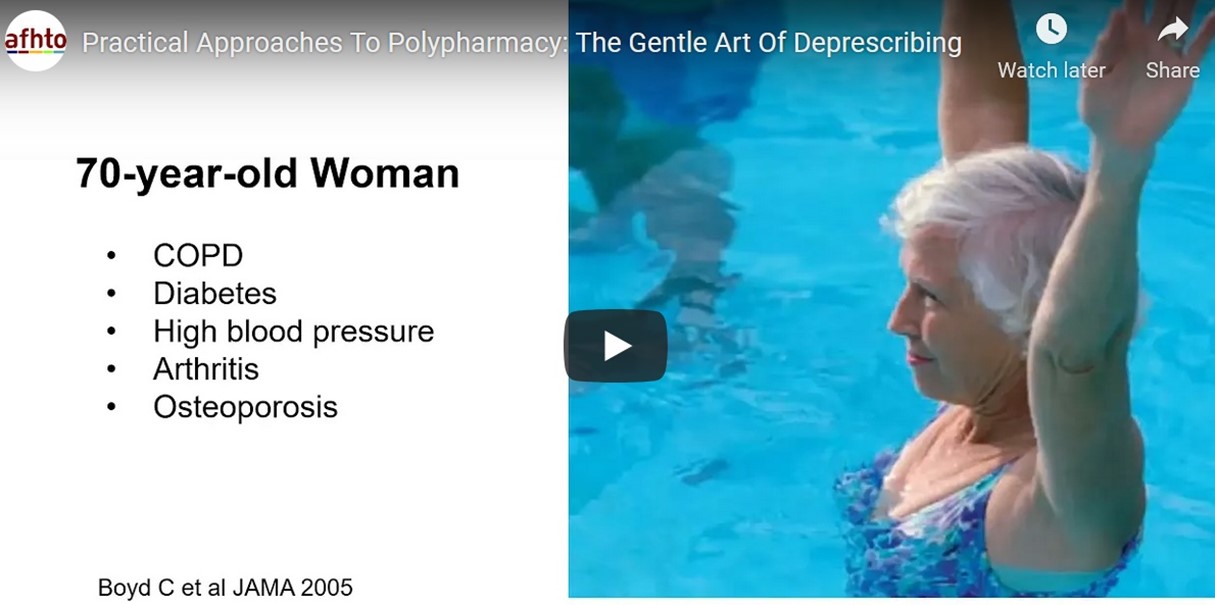
    Polypharmacy webinar slide with picture of elderly woman exercising in pool and her health profile

    Practical approaches to polypharmacy: the gentle art of deprescribing slides and video available

    On Dec. 1 we explored approaches to the issues and problems around polypharmacy and deprescribing in primary care patients. We also demonstrated the TAPER tool. The video and slide deck are now available.


    Member stories

    City of Lakes FHTstepping up to help with routine vaccination during health unit’s pause

    Dryden and Red Lake FHTsDryden Rotary supporting community groups

    Guelph FHTGuelph administers first COVID-19 vaccines to children under 12

    Primacare Community FHThealth hub now open

    Rapids FHT2,000 local children already booked for first COVID-19 shot


    Interim Omicron guidance, booster letter and more

    Recent updates include:

    We continue to update several pages on our site with resources and news:


    Seeking input on psychological safety factors

    In collaboration with the Mental Health Commission of Canada, researchers at the Centre for Studies in Primary Care at Queen’s University and HEC Montreal are inviting health-care workers and leaders to participate in research to identify barriers and facilitators to accessing support for psychological self-care and protection from moral distress.  
     
    Learn more about the study and participate in a Canada-wide survey.


    Together We Care 2022 Virtual Conference: call for content

    The Ontario Long Term Care Association (OLTCA) in partnership with the Ontario Retirement Communities Association (ORCA) will host an online experience for Together We Care (TWC), Monday, April 4 – Wednesday, April 6, 2022. The call for content is open until Dec. 20.


    Call for abstracts – Choosing Wisely Canada

    Choosing Wisely Canada is now accepting abstract submissions to be featured virtually at their National Meeting, on May 25 and May 26, 2022. Deadline is Jan. 28, 2022.


    Bounceback refresher webinars, Dec. 7-15, 2021
    Do you or your staff need a refresher on the BounceBack program and eligibility criteria? Attend an upcoming webinar in English or French. Links to resources also available. Register here.


    Primary Care Data Reports for OHTs, Dec. 8, 2021
    Hosted by Drs. Michael Green and Rick Glazier, INSPIRE-PHC. Find out more here.


    Echo Ontario Bariatric Network Series, starting Jan. 2022
    New series of sessions beginning January focusing on post bariatric surgical care. Register here.


    Diabetes Care: Tools and Resources to Support Mental Health Needs, Jan. 13, 2022
    First of an ongoing series that will highlight Ontario Health’s three diabetes quality standards. Register here.


    Family Medicine Summit 2022, Jan. 18, 28-29, 2022
    Kick-off event, January 18, 2022, with live stream days Jan. 28 & 29. Find out more here.


    Webinar Series: MyPractice Primary Care Report: Using Data for Improvement, Jan. 24 & Feb. 28, 2022
    Next in Ontario Health QI webinar series, focused on using the antibiotic prescribing and cancer screening indicators respectively. Register here.

  • Inequities in Ontario’s online health card renewal system must be addressed so marginalized people are not left behind

    MEDIA STATEMENT 
    December 7, 2021

    The Alliance for Healthier Communities (Alliance), the Association of Family Health Teams of Ontario (AFHTO), the Indigenous Primary Health Care Council (IPHCC), and the Nurse Practitioner-led Clinic Association (NPLCA) call on the government to address the inequities in the online health card renewal system.

    “The ability to renew the Ontario health card online is only available to people who hold a driver’s licence. This needs to change to include those with an Ontario photo card,” says Kavita Mehta, CEO of AFHTO. “There are a number of people who do not or cannot drive, including those with medical conditions. Like those with a licence, they need the same ability to renew online.”

    The Ontario driver’s licence and the Ontario photo card are government-issued cards that show proof of identity and proof of residency, and they are both accepted for in-person renewal. The government does not accept the Ontario photo card for online renewal. 

    “This is concerning at any time, and it is particularly concerning during a pandemic,” says Sarah Hobbs, CEO of the Alliance. “One group that could be disproportionately affected by this practice are people with disabilities. People made more vulnerable by the pandemic, and at higher risk, are also faced with inequitable access to this system. These populations should not be treated differently or be limited to only being able to access in-person ServiceOntario renewals. We call on the government to step up and make the online OHIP renewal system equitable and accessible for all people living in Ontario.”

    Katie Hogue, nurse practitioner and chair of the NPLCA, echoes this concern. “There are many medical circumstances that can prevent people from driving, such as mobility challenges, vision impairment, dementia, and epilepsy. There are also conditions like rheumatoid arthritis, which can keep a person from driving while also making them immunocompromised. The system is not considering these people or their needs.” 

    The CEO of the IPHCC, Caroline Lidstone-Jones notes this concern across the healthcare system. “The pandemic has highlighted inequities in our healthcare system. We must prioritize those who are vulnerable and at-risk. This discrimination is one example of an inequitable system but this one has a quick solution: allow people with a photo card to renew their health card online, the same way those with a driver’s licence can.”

    The associations represent family health teams, community health centres, nurse practitioner-led clinics, Indigenous primary healthcare teams, and other interprofessional models of primary care in Ontario.

    For further information: Beth MacKinnon; 647-234-8605 x1201; beth.mackinnon@afhto.ca

  • Letter to the Premier on Mandatory Hospital Vaccinations

    The Premier’s Office recently requested input from multiple stakeholders on making vaccinations mandatory in hospitals with a province-wide strategy.

    AFHTO agrees this is critical in lowering the risk to employees’ and patients’ health from outbreaks, and it helps to address risks to staffing shortages due to illnesses that can be significant and unpredictable. While there will be one-time challenges with mandatory vaccines, the benefits of doing this outweigh the concerns. The risks posed by a vaccine mandate are more predicable, easier to prepare for, and less likely to impact patient care.

    It is also critical that this mandate be extended to primary care and all other community healthcare providers.

    In collaboration with the Alliance for Healthier Communities, the Nurse Practitioner-Led Clinic Association, and the Indigenous Primary Health Care Council, we submitted our response to the premier’s questions on October 19, 2021.

    Our joint response can be read here


  • Ontario Health Teams

    Originally published April 8, 2019. Last updated October 20, 2021.

    The People’s Health Care Act, 2019, received royal assent in spring 2019, and the first Ontario Health Teams (OHT) were announced in November 2019. There have been two additional announcements since then. To date, there are 50 OHTsGeneral information about the Act is here.

    The OHT Guidance Document was released on April 3, 2019. This document outlines 1) the objectives and requirements of the OHT model and outlines the application and selection process for OHTs; 2) the expectations for OHTs when they reach maturity; and 3) a self-assessment tool to use for groups of providers who are interested in applying to become an OHT. 

    While it is not mandatory, at this time, that primary care teams be part of OHTs, we encourage teams be discussing collaboration with other providers and with one another. The long-term goal is for all ministry-funded health service providers to become part of an OHT. At maturity, teams are expected to offer a full and coordinated continuum of services.


    Progress to date

    • On July 17, 2019, selected teams (31) were invited to submit a full application, and 41 were identified as being in development.
    • The first set of OHT candidates (24) was announced in late November and early December 2019.
    • Another five teams were announced on July 23, 2020.
    • The third announcement was on November 18, 2020, when 13 more teams were announced.
    • The fourth announcement was on September 17, 2021, when eight more teams were announced.
    • Teams are listed here. To date, there are 50 OHTs.


    General information about ONTARIO HEALTH TEAMS


    Governance tools and resources


    Rapid-Improvement Support and Exchange


    Additional tools and resources


    Additional references


    QUESTIONS CAN BE SENT TO ONTARIOHEALTHTEAMS@ONTARIO.CA  

    Click here to sign up for the ministry’s Connected Care Update for regular updates  

  • Bits & Pieces: member stories, rheumatology in primary care and more

    Bits & Pieces: member stories, rheumatology in primary care and more

    Your Weekly News & Updates


    In This Issue  
    • Member stories
    • Rheumatology in primary care: approach to the patient with peripheral joint pain
    • It’s election time! please register for AFHTO’s member consultation forum
    • AFHTO partnering with 19 to Zero
    • Maintaining immunizations for school-age children during Covid-19 and more
    • Merging Quorum groups: Primary Care and COVID-19 Support CoP and register for next meeting
    • Seeking couples for online self-help intervention study
    • Call for applications now open – TUTOR-PHC 2022-2023
    • Upcoming events regarding tapering and stopping opioids and more


    Member stories

    Bruyère Academic FHT – Bruyère Academic FHT – Leaders in Vaccine Efforts

    Central Brampton FHT- Central Brampton FHT QIDSS recognized by OntarioMD

    Central Hastings FHT- Gilmour medical clinic reopens Oct. 5

    North Perth FHT- Mary Atkinson discusses COVID-19 vaccine myths, medical exemptions


    Rheumatology in primary care: approach to the patient with peripheral joint pain

    We’ve updated the name of our Oct. 14 webinar to more accurately reflect the content. This presentation provides an overarching schema of rheumatic diseases, with a focus on types and patterns of articular involvement, and extraarticular and serologic correlates. By the end of the presentation, participants will be able to apply this schema when approaching common rheumatic disease presentations. Find out more and register here.


    It’s election time! please register for AFHTO’s member consultation forum

    The 2022 provincial election is fast approaching, and we need to hear from you! We’re asking all members from teams – physicians, nurse practitioners, executive directors/admin leads, board members, IHPs, QIDSS, and administrative staff – to join our member consultation forum with our government relations firm, Enterprise Canada, on Tuesday, November 16, from 12 PM to 1:30 PM.

    We look forward to this consultation on our proposed election messaging and material. Every member is key in ensuring the importance of team-based primary care in communities is understood, and there is no better time to do this than during health system restructuring – and in the lead up to an election. Please click here for more information and to register!


    AFHTO partnering with 19 to Zero

    AFHTO has partnered with 19 to Zero to help address vaccine hesitancy and to support healthcare workers. 19 to Zero is a dedicated coalition of academics, public health experts, behavioural economists, and creative professionals working to understand, engage with, and ultimately shift public perceptions around COVID-19 behaviours and vaccination. 19 to Zero uses data- and research-informed approaches to support communities and healthcare workers across Canada.

    They have launched public health campaigns, produced, and disseminated tailored resources, translated fact sheets, developed practice change toolkits, and much more! Teams can check out their tools and get more information here!


    Maintaining immunizations for school-age children during Covid-19 and more

    Recent updates include:

    We continue to update several pages on our site with resources and news:


    Merging Quorum groups: Primary Care and COVID-19 Support CoP and register for next meeting

    Ontario Health is merging the “COVID@Home Monitoring for Primary Care” and the “Primary Care Vaccination Support QI CoP” into one new community of practice.  The new group, Primary Care  and COVID-19 Community of Practice will provide one location to ask questions, find resources and share lessons learned.

    There was substantial overlap in membership between these two groups and OH recognizes that primary care is being pulled in several directions currently. Merging the CoP’s will provide one location for members to share resources, grab information or ask questions and will allow them to be responsive to memberships overall needs.

    Any existing member of either group is automatically a member. Simply log into Quorum as you normally would to access this group. The next CoP meeting for this merged group is on Wednesday, October 13th, 2021, from 8:00 am to 9:00 am where you will learn about monitoring pediatric patients who have tested positive for COVID-19 and discuss other COVID-19 related issues affecting primary care. Register here.
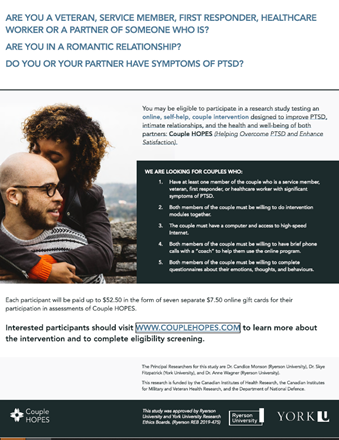

    Couple Hopes Flyer


    Seeking couples for online self-help intervention study

    Researchers from Ryerson and York University are seeking eligible couples for a study testing an online, self-help intervention that improves PTSD symptoms and enhance relationships, Couple HOPES, as profiled in our webinar earlier this year. Find out more here.


    Call for applications now open – TUTOR-PHC 2022-2023
    Transdisciplinary Understanding and Training on Research – Primary Health Care (TUTOR-PHC), is a one-year, pan-Canadian interdisciplinary research capacity building program that has been training primary and integrated health care researchers, clinicians and decision-makers from family medicine, nursing, psychology, epidemiology, social work, occupational therapy, education, policy, and many other disciplines since 2003.  For more information, please visit the website or contact the TUTOR-PHC Project Coordinator at tutor@uwo.ca if you are interested in applying. The deadline to apply is December 6, 2021.


    Public Health 2021 Program, Oct. 6-8, 2021
    Hosted by the Canadian Public Health Association. Find out more.


    Trillium Primary Health Care Research Day, Oct. 15, 2021
    One day provincial meeting of researchers, policy makers, patients, and clinicians interested in primary health care research in Ontario. Register for free here.


    Tapering and Stopping Opioids, Oct. 19, 2021

    Co-hosted with ECHO Ontario Chronic Pain and Opioid Stewardship (UHN). Register here.


    AFHTO 2021 Conference, Oct. 27-28, 2021
    Post-Pandemic Primary Care: Respond, Recover, Rebuild. Members get a significant discount on the registration fee. Find out more here.

  • Truth and Reconciliation Day Statement from the Primary Care Collaborative

    Truth and Reconciliation Day Statement from the Primary Care Collaborative


    Primary Care Collaborative logos


    On the inaugural National Truth and Reconciliation Day being recognized today across Canada, the Primary Care Collaborative values the opportunity and responsibility to acknowledge some of the actions that can help support better understanding of colonization, the trauma of residential schools for Indigenous people and communities, and the ongoing impacts of systemic racism, and the steps to create safer spaces and change for Indigenous health and wellbeing.

    For our collaborative group of primary health care associations, ensuring our staff have the tools they need to support improving Indigenous healthcare experiences and outcomes, is an essential step towards truth and reconciliation. Through the Indigenous Cultural Safety (ICS) Program, offered by the Indigenous Primary Health Care Council, our associations are committed to taking concrete steps towards the respect and understanding at the core of de-colonization work. The ICS Program will help us to better understand our roles as individuals in supporting primary care providers to decolonize health care, and also in organizational change both within our associations and among the partners we work with.

    Through a series of moderated and facilitated sessions, the program facilitates a deeper level of understanding of how colonialism is embedded in health systems and services, and how to motivate change at the organizational levels. The ICS Program also explicitly connects the impacts of racism and discrimination on the health and wellbeing of Indigenous people and communities, with real-world examples of how these impacts play out in people’s lives. Importantly, this program also includes follow-up steps for organizations and providers and offers tools to deepen the learning of the initial program. Ultimately, the ICS Program supports a practical understanding of the truth of colonization for Indigenous people’s experiences, and then some paths for how to support reconciliation.

    The Primary Care Collaborative believes that collective commitments to actions such as mandating Indigenous cultural safety training for public service organizations is what will ultimately change the culture and the mindset of individuals and organizations. Increasing awareness of both historical context and connections to the current environments and conditions that Indigenous people face in health care is an essential foundational step to moving forward together, and to ensuring that Indigenous people’s voices, concerns and trauma are heard and heeded within organizations, policy-making circles and governments alike.

    The Primary Care Collaborative, therefore, remains committed to our own journey of Truth and Reconciliation this year, and on this inaugural day, by committing all of the staff at our associations to undertake ICS Program training, and to engage with other programs such as the University of Alberta’s Indigenous Canada program, or resources and modules from Cancer Care Ontario. In doing so, we also challenge and call on the wider public and government sectors across all of Ontario, who have also engaged with the ICS Program, to set out your organizational plans and commitments to ongoing learning and the steps being taken to promote organizational transformation.

    Taken as a whole, it is these actions, which will outlast Truth and Reconciliation Day that will enable us to start moving on a path where Indigenous people and communities will be able to lead safer, healthier and happier lives, with lowered risk of violence and trauma from colonization’s impacts.

    About the Primary Care Collaborative (PCC):
    We are a coalition of primary care organizations collectively representing 14,000 family doctors, 1,000+ primary care nurse practitioners, 286 primary care teams, 28 Indigenous primary care teams, including northern, rural, and remote teams in Ontario. This alliance of comprehensive primary care organizations joined together by common purpose to build on the collaborative work during the COVID-19 pandemic as we move towards recovery in a time of health system transformation. The PCC provides a collective and cohesive voice with the purpose of advancing equitable person-centred primary care in Ontario and is focused on influencing policy by creating a unified voice towards resolving barriers or challenges that prevent comprehensive primary care from being the foundation of the health system.

    See the pdf version here.

  • Directive 6 Must Apply To Patient-Facing Team-Based Primary Care Providers During COVID-19

    Directive 6 Must Apply To Patient-Facing Team-Based Primary Care Providers During COVID-19

    Picture test

    To: Hon. Doug Ford, Premier
    Hon. Christine Elliott, Deputy Premier, Minister of Health
    Cc: Dr. Kieran Moore, Chief Medical Officer of Health, Ministry of Health
    Matthew Anderson, CEO, Ontario Health
    Helen Angus, Deputy Minister, Ministry of Health (outgoing)
     

    Re: Directive 6 must apply to patient-facing team-based primary care providers during COVID-19

    September 3, 2021

    Dear Premier and Deputy Premier,

    First, we want to take the opportunity to thank your government for the leadership you’ve shown with the
    introduction of the vaccine certificate and Directive #6, which requires the implementation of a mandatory
    vaccine policy for employees, staff, contractors, volunteers and students in certain health care settings. As
    associations representing team-based primary care providers and other front-facing health professionals in every
    community of Ontario, we see Directive #6 as integral to protecting as many people as possible while giving
    options to our providers to mandate policies that work best for their organizations’ environments.
    Directive #6 is also an approach that allows us to take seriously and respond empathically to concerns about
    mistrust in the health system from populations and communities who’ve faced discrimination in the health
    system, while still making it clear to Ontario health care workers that getting vaccinated is a top priority in keeping
    health care settings safe for everyone. Every serious illness and death we can prevent, every outbreak we can
    prevent, every ICU admission we can prevent – will bring us closer to the end of the pandemic.

    So we’re writing to you today to ask you to expand Directive #6 to include team-based primary care settings that
    include our organizations – community health centres, family health teams and nurse practitioner-led clinics.
    Premier, Deputy Premier, as you know, our organizations deliver primary health care and social services to many
    of the populations most vulnerable to COVID-19 and its related impacts. Our members’ staff do outreach, both in
    shelters, urban areas and to isolated seniors; we provide harm reduction services and supports, often meeting
    people where they’re at; and our providers are also on the front lines of testing, community supports and
    vaccination rollout efforts. Simply put, providers at our member organizations are face to face with the virus,
    working with people most vulnerable to it, on a daily basis.

    Our members stand ready to implement Directive #6 and its guidance on how to encourage staff and related
    workers to get a COVID-19 vaccine. Many are ready to use their authority as laid out by the Chief Medical Officer
    of Health to, like University Health Network, go beyond the minimum requirements of the Directive. Your
    leadership can help enable this vital path of actions to get key Ontario health care settings to the highest levels of
    vaccination possible, and to protect more vulnerable Ontarians.

    We hope to hear back from you as soon as possible about the inclusion patient-facing primary care providers in Directive #6, and we are ready to meet to address any concerns or questions.

    Sincerely,
    Sarah Hobbs, CEO, Alliance for Healthier Communities
    Katie Hogue, President Elect, Nurse Practitioner-led Clinic Association
    Kavita Mehta, CEO, Association of Family Health Teams of Ontario (AFHTO)

    See Full PDF Here