Blog

  • Care plans reduce risk of ending up in hospital for patients with severe mental illness: study

    The chances of a patient with a serious mental illness ending up in hospital because of their condition are reduced by almost 40 per cent if they have a care plan, according to the research.

    The study, which tracked 20,000 patients with a severe mental illness through the healthcare system, also found that seeing the same GP reduced the risk of an unplanned hospital admission by around 25 per cent.

    The findings demonstrate the importance of continuity of care at the GP’s for improving health outcomes for patients with a severe mental illness, the authors of the study say.

    Abstract

    Objective: To  investigate  whether  continuity  of  care  in  family  practice  reduces  un-planned hospital use for people with serious mental illness (SMI).Data Sources: Linked administrative data on family practice and hospital utilization by people with SMI in England, 2007-2014.

    Study  Design:  This  observational  cohort  study  used  discrete-time  survival  analy-sis  to  investigate  the  relationship  between  continuity  of  care  in  family  practice  and  unplanned  hospital  use:  emergency  department  (ED)  presentations,  and  unplanned  admissions  for  SMI  and  ambulatory  care-sensitive  conditions  (ACSC).  The  analysis  distinguishes between relational continuity and management/ informational continu-ity (as captured by care plans) and accounts for unobserved confounding by examin-ing deviation from long-term averages.Data Collection/Extraction Methods: Individual-level family practice administrative data linked to hospital administrative data.

    Principal  Findings:  Higher  relational  continuity  was  associated  with  8-11  percent  lower risk of ED presentation and 23-27 percent lower risk of ACSC admissions. Care plans  were  associated  with  29  percent  lower  risk  of  ED  presentation,  39  percent  lower risk of SMI admissions, and 32 percent lower risk of ACSC admissions.

    Conclusions: Family practice continuity of care can reduce unplanned hospital use for physical and mental health of people with SMI.

    Relevant Links:

  • Professional communication networks may improve job satisfaction in primary care: study

    Professional communication networks — described by researchers as “face-to-face interaction about patient care among the health care professionals in a primary care team” — may improve job satisfaction, according to survey results published in Annals of Family Medicine.

    “Team-based care is the cornerstone of relationship-centered health care for patients with chronic illness,” Marlon P. Mundt, PhD, a health economist and professor at the University of Wisconsin School of Medicine and Public Health, told Healio Primary Care. “Forces driving primary care’s transition to the team-based model are the complexity of modern medical care, ever-expanding lists of recommended clinical practice guidelines and a fundamental problem for solo clinicians of too much work and too little time to simultaneously provide acute, chronic and preventive care.”

    “High-functioning, effectively communicating primary care teams are a solution to the difficulty of effectively delivering care to primary care patients with diabetes and other chronic conditions,” Mundt said.

    Abstract

    PURPOSE

    Whereas communication among health care professionals plays an important role in providing the best quality of care for primary care patients, little evidence exists regarding how professional communication contributes to job satisfaction among health care providers, including physicians and clinical staff, in primary care clinics. This study evaluates the extent to which professional communication networks contribute to job satisfaction among health care professionals in primary care clinics.

    METHODS

    A total of 143 health care professionals, including physicians and clinical staff, at 5 US primary care clinics participated in a cross-sectional survey on their communication connections regarding patient care with other care team members and their job satisfaction. Social network analysis calculated core-periphery measures to identify individuals located in a dense cohesive core and in a sparse, loosely connected periphery in the communication network. Generalized linear mixed modeling related core-periphery position of clinic employees in the communication network to job satisfaction, after adjusting for job title, sex, number of years working at the clinic, and percent full-time employment.

    RESULTS

    Average job satisfaction was 5.8 on a scale of 1 to 7. Generalized linear mixed modeling showed that individuals who were in the core of the communication network had significantly greater job satisfaction than those who were on the periphery. Female physicians had lesser overall job satisfaction than other clinic employees.

    CONCLUSIONS

    Interventions targeting professional communication networks might improve health care employee job satisfaction at primary care clinics.

    Relevant Links

  • Bits & Pieces: Made-in-Ontario high impact actions feedback, opioid self assessment & more

    Bits & Pieces: Made-in-Ontario high impact actions feedback, opioid self assessment & more

    Your Weekly News & Updates


    In This Issue  
    • Feedback on Made-in-Ontario high impact actions for Nov. 21 session
    • Member in the media and the Missing Million COPD report
    • Online opioid self-assessment program
    • GoodLife LG TV promotion
    • The Gatehouse programs for adult survivors of childhood sexual abuse – Etobicoke/Toronto
    • Upcoming events on health and climate change, concussions and more

    Feedback on Made-in-Ontario high impact actions for Nov. 21 session
    The primary care virtual community has co-defined a list of High Impact Actions felt to spark meaningful improvements in primary care, building on lessons learned from the UK’s own transformation efforts. The community has also shared insight on the actions they feel are within their control, in addition to where support is needed.

    In our upcoming Nov. 21 session, we’ll be refining and prioritizing the list of Made-in-Ontario High Impact Actions. We’ll also be showcasing examples of where the High Impact Actions are already occurring.

    Please share your feedback on the current list and share examples of where they’re already occurring by clicking here.

    You can also:


    Member in the media and the Missing Million COPD report
    City of Kawartha Lakes FHT: Family health teams a positive change, say majority, although health care cuts a worry

    The Missing Million: according to a report from The Lung Association and Boehringer Ingelheim, more than one million Canadians are living with COPD and don’t know it


    Online opioid self-assessment program
    The Online Opioid Self-Assessment Program is a FREE course developed with funding from Health Canada to improve opioid prescribing. It’s highly interactive and uses assessment as a technique for knowledge exchange and guideline implementation. In order to facilitate active

    learning, a variety of techniques are employed, including videos, case presentations and an assortment of question types to keep you engaged and apply it in practice.
     
    Dr. Andrea D. Furlan MD PhD, ECHO Ontario Co-Chair, developed this interactive course with other colleagues in physiatry, family medicine and addictions medicine. This course is based on the updated 2017 Canadian Opioid Guideline.


    GoodLife TV promotion

    GoodLife LG TV promotion

    GoodLife has launched a contest- all new members who join the membership program before Nov. 30 will be entered to win one of five 50” LG TVs (value approx. $799 each).

    As a reminder, AFHTO members save up to 40% off regular GoodLife Fitness rates. The annual Corporate Membership rate is $519, and the bi-weekly payment is $24. Any identified member on the ‘Bits & Pieces’ mailing list is assigned member IDs on a monthly basis.

    To register, please email info@afhto.ca for your membership ID. Once you’ve received your ID, you can register online.

    For more information:


    The Gatehouse programs for adult survivors of childhood sexual abuse – Etobicoke/Toronto

    1 in 3 girls and 1 in 5 boys will be sexually abused before their 18th birthday.

    The Gatehouse peer-led Adult program’s primary focus is to enable survivors of child sexual abuse to develop positive coping strategies focusing on building healthy boundaries and relationships leading to a more meaningful and grounded life. The programs are offered over the course of 31 weeks in two phases. They also offer a support program for partners/support persons of survivors, the only one in the country aimed at helping foster connection, healthier communication and boundaries from a peer perspective for adult survivors of childhood sexual abuse.

    If you would like a tour, please contact Paula Cordeiro at 416-255-5900 x228 or pcordeiro@thegatehouse.org.

    If your patients are also survivors of childhood sexual abuse, The Gatehouse provides peer support group programs and they don’t have a catchment area. There is no formal referral required. Clients can call 416-255-5900 to schedule an in-person intake to start the process. Their program workbooks are available at www.thegatehouse.org.


    A webcast for IHPs: OHTs and health system transformation, Nov. 14, 2019
    Please join us on from 12 PM to 1:30 PM for an overview of OHTs, and to hear from teams proceeding to full application whose OHT development has included close collaboration with IHPs. They will speak to their work to date and highlight how IHPs are engaged. All members are encouraged to join (not just IHPs!)
    Register today!


    Cyber Security and Data Breaches- How Vulnerable are you? Nov. 20, 2019
    The next Financial Webinar Series webcast co-hosted by AFHTO and Grant Thornton LLP is right around the corner. Join us for an hour on data, cyber security and policies and procedures to mitigate possible issues. Register today!


    OPHA’s Fall Forum:  Health and Climate Change, Nov. 13, 2019
    Explore what’s at stake for individual and community health in the face of a changing climate and how we can work collaboratively across sectors to protect human health. Find out more here.


    What Primary Care Teams Need To Know About CONCUSSION, Nov. 19, 2019
    Remember to register for the Ontario Neurotrauma Foundation’s webinar on concussion. Find out more here.

  • City of Kawartha Lakes FHT survey finds FHTs a positive change, although health care cuts a worry

    The Lindsay Advocate article published October 18, 2019

    By The Lindsay Advocate

    The results are in from the City of Kawartha Lakes Family Health Team’s most recent survey of patients across the local area. The data revealed some interesting findings on how local residents feel about their local care, the family health team approach, the health care system in general and the main challenges to be addressed.

    While the vast majority of respondents indicated they found their health care provider to be caring, friendly and easy-to-talk-to and reported overwhelmingly that their providers are caring, good listeners and thorough, the broader answers were also encouraging.

    A clear majority of patients survey ranked the fact that they feel their care is “patient-centred” as the best part of the care they receive.

    “We are very pleased with this positive feedback about the team from our patients”, said Dr. Eric Ready, Chair of the City of Kawartha Lakes Family Health Team’s Board of Directors. “We are always working to provide the highest quality care,” he added. “Reducing wait times is an ongoing effort and priority for the Board of Directors.”

    Of particular note, 87% of patients responded that family health teams have been a positive change to the health care system. More than 90% stated they were very concerned or somewhat concerned about possible cuts to health care funding.

    Interesting, while shorter wait times and more doctors were identified by the most patients as the keys to “what the perfect health care system would look like”, the close 4th place response was that the system is perfect as is.

    Also, more than half of patients who replied to the survey noted that they felt at least one of their visits to the family health team has prevented a visit to the emergency room (ER), thereby getting immediate care, saving the system money and reducing wait times at the ER.

    The team is also aware that patients identified office hours and appointment wait times as the main challenges of care local. This correlated within the survey where patients said that appointment availability and wait times were the top areas when asked what the health team could do better. Access to transportation was ranked third by patients when asked about the challenges they experience in obtaining care.

    “Our team’s health care professionals get all the credit,” noted Executive Director Mike Perry. “We continue to take steps to reduce time patients have to wait both for an appointment and once in the waiting room. We do have some same or next day appointment, certainly for urgent cases.” The family health team recently implemented a system of automated reminders for patients in order to help increase timely access by reducing the number of patients who do not show up for their appointment. Knowing in advance of patients who cannot attend helps open more appointments sooner.

    Julia Skinner of Bobcaygeon, a member of the team’s Patient Advisory Group, has also reviewed the results. “In addition to the survey, it is wonderful have a voice in local health care,” said explained. “I am very pleased, as a patient, to serve on the team’s Advisory group an provide input from a patient perspective.”

    The survey was replied to by 241 patients which was a response rate of almost 25%; a very high response rate for surveys generally. The survey applied to health care providers of the family health team (e.g. nurse practitioners, pharmacist, registered dietitian, mental health team), not including local physicians. Responses skewed female.

    The City of Kawartha Lakes Family Health team provides primary care to some 36,000 patients at 13 locations across the City. To obtain a family doctor, please contact Danielle at 705.328.9853 Ext. 243.

    To view the full The Lindsay Advocate article, click here.

  • Chatham-Kent’s Physician Recruitment and Retention Task Force to bring more doctors to the area

    The Blackburn News article published November 5, 2019

    By Allanah Wills, Blackburn News

    The Municipality of Chatham-Kent is moving forward with a new Physician Recruitment and Retention Task Force aimed at bringing more doctors to the area.

    On Monday night, council unanimously approved a report that detailed the task force and its initiatives. The program will look at various ways to attract physicians to Chatham-Kent and keep them here including attending family doctor job fairs, enhancing advertising practices and providing financial incentives to new physicians to cover their moving expenses and setup costs.

    In December 2018, Councillor Trevor Thompson brought forward a motion requesting that administrative staff prepare the report looking at a primary care practitioner recruitment and retention program for Chatham-Kent. Almost a year later, Thompson said it feels good to see all the hard work come to fruition.

    “It was a lot of work,” he said. “It took a little bit longer than I was actually hoping for, I would have liked to have seen it back about six months ago. But at the same time, staff did a lot of work to get us to this point and I think really found a good balance.”

    A total of $100,000 towards the Physician Recruitment and Retention Task Force was approved in the 2019 budget and the project will start in 2020. The Chatham-Kent Family Health Team (CK FHT) will look after and distribute the funds on behalf of the other medical groups (Chatham-Kent Family Health Team, Thamesview Family Health Team, Tilbury District Family Health Team, CK Community Health Centres, and the Chatham-Kent Health Alliance) with resource support from the Erie St. Clair LHIN, HealthForce Ontario and the municipality.

    “As soon as we approved the $100,000 there were questions about where does it go to, who does it help? What I wanted to make sure of is that we weren’t just offsetting somebody else’s budget,” Thompson explained. “But, this was new money for a new initiative. [I’m] really happy to see this campaign promise come through, really happy to be addressing a crisis in our community.”

    When Thompson brought forward his original motion in 2018, Chatham-Kent’s rate of family doctors was 76.9 per 100,000 population against the provincial average of 109.4 per 100,000. The report approved by council on Monday recommended that only running the task force for 2020 was not enough to address the chronic doctor shortage and suggested that ongoing funding for the program be referred to the 2021 budget process as well. Thompson said he was pleased to see this option approved.

    “At the time it was one-time funding — $100,000 and from there, who knows what happens. One time isn’t going to bring it, it has to be an ongoing funding request. I’m glad to see that come back again,” he said.

    Now that it’s been given the green light to move forward, the task force will provide council with bi-annual updates on what’s been accomplished and any future initiative plans. Thompson said overall, he believes this is an important step in the right direction.

    “The health of our residents is the economic and the demographic lifeblood of our community,” he exclaimed. “Making this a happier healthier place to live is one of the most important things we can do as Chatham-Kent councillors.”

    To view the full The Blackburn news article, click here.

  • Using ‘New Power’ to Spark Change

    Using ‘New Power’ to Spark Change

    By Dr. Jennifer Young, President, Ontario College of Family Physicians

    Originally posted on OCFP’s website

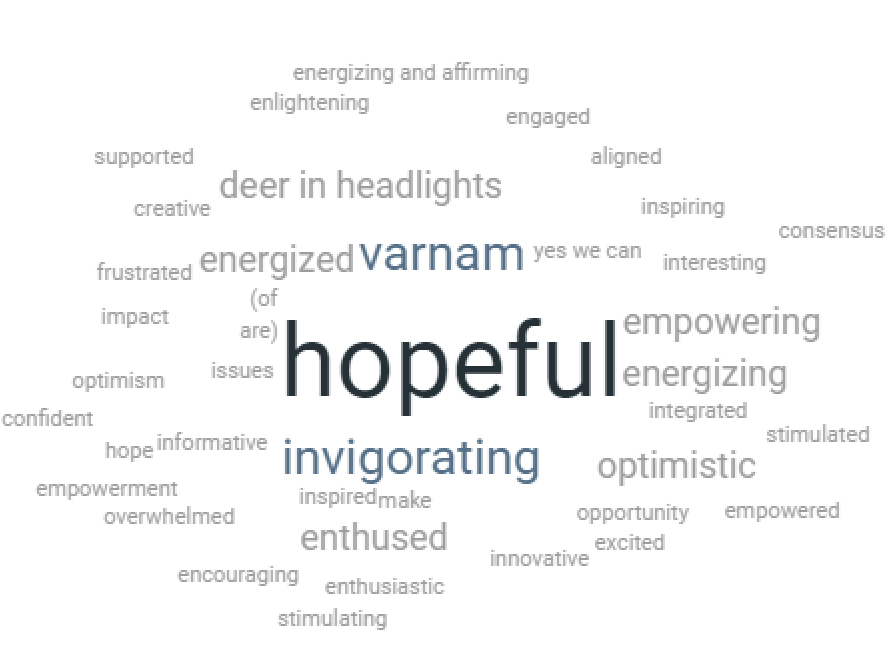
    primary care virtual community word cloud sep 21 2019

    This word cloud summarizes the day that over 40 Ontario leaders of primary care spent together on September 21!  We had the honour to share it with Dr. Robert Varnam, a family physician from the UK who has spearheaded some pretty big transformations within family practices and primary care over the last three years.  

    With significant support and funding from the National Health Service (NHS), Dr. Varnam has put together a list of 10 high impact actions that free up time of family physicians. The time freed up increases their capacity to serve their patients, to increase their work satisfaction and engage in leadership.

    Facilitated by The Change Foundation, our group consisted of representatives from the OCFP, the Section on General and Family Practice, the Association of Family Health Teams of Ontario, the Nurse Practitioners Association of Ontario and primary care clinicians involved in successful innovations in their regions. From the Ministry of Health, Phil Graham (Executive Lead of the Ontario Health Teams) and Nadia Surani (Director of the Primary Health Care Branch) attended for a good portion of the day.

    It was great to see everyone come together to constructively talk about the change from an eco-centric, rather than ego-centric, way. In our own practices, we need to think about how we can each connect to our own ecosystems of health in our communities.

    Learnings from the UK – “New Power” is Enabling Change

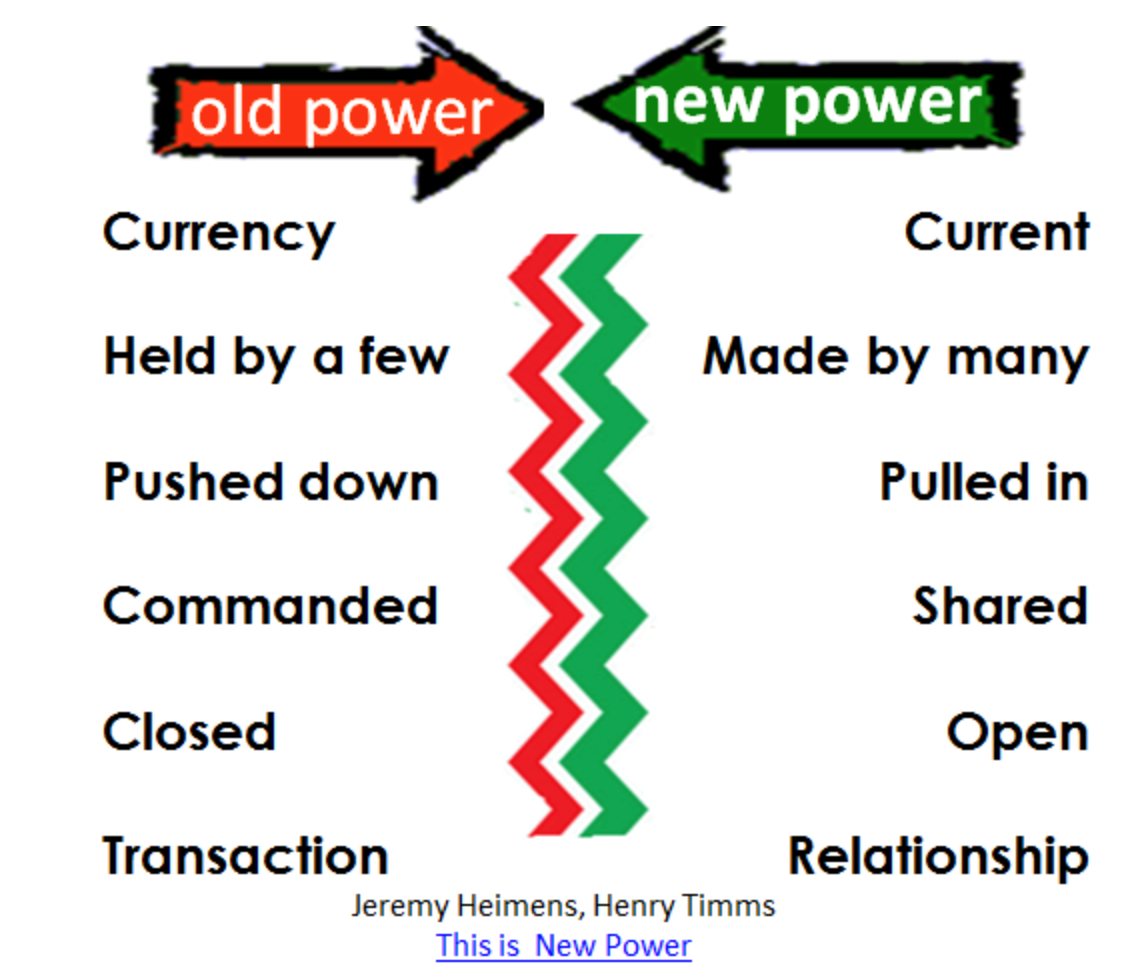
    My key takeaway from the successes of the UK work is that there was investment in the support and spread of innovations that were already happening in practices around the country. There were hours of ‘boots on the ground’ engagement BY family physicians WITH family physicians, with thousands of meetings and connections between clinicians. This “New Power” enables changes to be made by the people most affected by them, informed by their own realities. The process was building on strength, enabling existing resources, gathering great ideas and putting them in a format that is practical and accessible for family physicians.  

    What’s Next – Putting this New Power into Action

    We followed this day with yet another installment of our Primary Care Virtual Community on September 25 where more than 100 people connected online, convened by The Change Foundation. We were demonstrating New Power in action!

    old power vs new power


    The goal of these two events was to come up with our own “High Impact Actions” for Ontario. These actions can be seen to be things that we can do on our own (as are most of the UK 10 High Impact Actions) and changes that require more of a system-level intervention.

    Outlined in this chart is what we’ve come up with – we also welcome your thoughts through this brief survey on where we should prioritize the focus:

    Ways to free up your time for care

    How the system can better support you to care

    • Integrate EMRs – Either single or intra-operable EMR / EHR systems that can both push and pull required information. We know that lots needs to be done outside of our scope, but are you using your EMR to its best ability, have you looked to peer-to-peer support from OntarioMD?
    • Build the Team within your practice by ensuring all are working to top of their scope. Is your reception enabled to triage, is nursing enabled to manage some patient needs? Is there someone designated in your practice to help with system navigation for patients with more complex needs?
    • Patients as Partners – Involving patients more in the way your practice is run, patient portals, education (within your practice and community based) that foster patient self-care or health literacy. Patients are looking for access to their information to allow more shared decision making and accountability.
    • Building connections to address the social determinants of health and incorporating Social Prescribing – An easy first step is to ask the Poverty screen “Do you have troubles making ends meet at the end of the month” and, as needed, connect your patients to 211.ca or your regional Thehealthline.ca.
    • Alternative Consultation – Such as telephone consultation, virtual care via OTN, eConsult, secure email consultations. Are you connected to OTN?  If not, get your ONE ID and check out how great this service can be – from enabling virtual visits to people with transportation challenges to connecting with hundreds of specialists. 
    • Spread Innovation – Our organizations are working on sharing information about what others are doing. RISE (Rapid-Improvement Support and Exchange) is a go-to location for emerging Ontario Health Teams, providing resources for those interested in integration efforts through OHTs.
    • Practice Facilitation and Change Management – Get your MyPractice Report sent to you, take advantage of Peer-to-Peer facilitation that already exists through OntarioMD.
    • Enhance Personal productivity – What about taking a typing course, or a speed reading course?
    • Organize Primary Care – Be part of your ecosystem! Connecting with your community of family physicians is important. Are your local health care organizations (e.g., hospital, FHTs in the area, CHCs) pitching in to support meetings of family physicians? Besides advocating for support for leaders, we also know that there needs to be administrative support for networks of family physicians to meet.  


    • Recognize and Support Primary Continuity (the core team) – This core relationship needs to be recognized in any health transformation as continuity of care allows for best outcomes. Changes that erode this are counter-productive. Access to YOU is important!
    • No patient or practice left behind– Timely access to health care/social care supports such as mental health counselling, social work for all family physicians. This is a message that we have been consistently bringing to the Ministry because it is not acceptable that team-based care is not equitably available.   
    • Clinical Leadership – Ensure that family physicians are at the tables that are talking about health system transformation. Have you joined the meetings in your community about a proposed Ontario Health Team? Do you know who to connect to? We continually reinforce with the government that there be protected time for family physician leadership that is not done off the side of the desk.
    • Navigate and Coordinate – Promote a patient navigator role for those more complex patients within your practices now, and on a system level, we need to recognize the importance of this role in any team-based care.  
    • Streamline and Reduce Admin – Streamline the referral process to tests, specialists, services that need to be available equitably. Central referral processes have been high on the list of priorities within OHTs.   


    Let’s Connect

    Sound overwhelming? Like any change, it is best to start with one small step, something that IS within your control. Be assured that the OCFP is tirelessly speaking up for what makes sense for a practicing family physician and their patients. We want to connect with you, we would love you to connect with us. Visit our website to hear more about our activities and/or join us for the next Primary Care Virtual Community – stay tuned to Twitter/email for updates about the next date. If you are thinking about joining an OHT, check out the OMA map of OHTs, as well as OHT-related resources through our growing online repository and the McMaster Forum’s RISE platform.

    Simply put, we can all look inward to see how we alone can improve. And by looking beyond and building the New Power in our own ecosystem – and sharing those learnings with others – can make changes that sustain and grow. Your input to this change matters.

    “Hopefully”  yours,
    Jennifer

    Dr. Jennifer Young
    OCFP President

  • Bits & Pieces: members in the media, Chatham-Kent FHT’s strategic plan implementation task force & more

    Bits & Pieces: members in the media, Chatham-Kent FHT’s strategic plan implementation task force & more

    Your Weekly News & Updates


    In this Issue:  
    • Members in the media
    • Chatham-Kent FHT’s strategic plan implementation task force
    • HQO seeking volunteers to help develop insomnia disorder quality standard
    • CPSO seeking input on stakeholder engagement
    • Upcoming events on OHTs and IHPs, transitions in care and more

    Members in the media
    Dufferin Area FHT Local agencies to benefit from overhaul of Ontario’s health care bureaucracy

    Ingersoll NPLCNurse practitioners filling health-care gaps, despite lack of funding

    Temagami FHTTemagami FHT marks 10 years in new clinic HQ


    chatham-kent fht strategic plan task force


    Chatham-Kent FHT’s strategic plan implementation task force

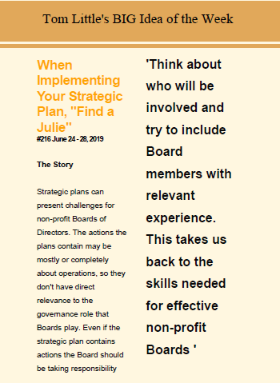
    Once they created their strategic plan, Chatham-Kent FHT’s board formed an implementation task force. CMCS Consulting, who had facilitated their plan, followed up and profiled the task force in their newsletter. Find out how the task force performed here.

    And for more ideas for your own strategic plan, don’t forget we have our own webinar and toolkit posted on our site.


    HQO seeking volunteers to help develop insomnia disorder quality standard
    Health Quality Ontario is seeking volunteers interested in joining an Advisory Committee that will provide advice to support the development of a quality standard focused on people living with insomnia disorder. Apply here. Deadline Nov. 8, 2019.


    CPSO seeking input on stakeholder engagement

    The College of Physicians and Surgeons (CPSO) is currently planning for the implementation of its newly developed Strategic Plan, including the development of a Stakeholder Engagement Framework. The framework’s purpose is to support CPSO in regularly engaging with numerous stakeholders in a way that is meaningful to them and informative to CPSO’s work. This plan will build on the work CPSO is already doing to engage stakeholders, including the public/patients, system partners and physicians.

    Optimus SBR is supporting the framework’s development and is hoping to speak with a few physician leaders who can share their perspectives on the best forums and methods for engagement with their peers. If you are interested in contributing to this initiative, Cole Clementino cole.clementino@optimussbr.com can help coordinate time for further discussion. Thank you in advance for considering participating in this initiative.


    Transition between Hospital and Home: Achieving a Standard of Care, Nov. 6, 2019
    Join HQO for their Quality Round Ontario about the latest evidence to make the transition between hospital and home easier for patients and their families. Learn more here.


    Breathing Inspired: COPD Rehabilitation – Communicating the Diagnosis and Prognosis, Nov .7, 2019
    Join this educational evening held by the Lung Association in Hamilton. Register here


    A webcast for IHPs: OHTs and health system transformation, Nov. 14, 2019
    Please join us on from 12 PM to 1:30 PM for an overview of OHTs, and to hear from teams proceeding to full application whose OHT development has included close collaboration with IHPs. They will speak to their work to date and highlight how IHPs are engaged. All members are encouraged to join (not just IHPs!)
    Register today!


    Cyber Security and Data Breaches- How Vulnerable are you? Nov. 20, 2019
    The next Financial Webinar Series webcast co-hosted by AFHTO and Grant Thornton LLP is right around the corner. Join us for an hour on data, cyber security and policies and procedures to mitigate possible issues. Register today!


    Do you know how to manage Mental Health after Stroke? Nov. 18, 2019
    Free ECHO Ontario Complex Patient Management pop-up session at CAMH and University of Toronto. Join this session which will discuss the link between these conditions, as well as prevention and treatment options. Participants will have the opportunity to ask questions and discuss an anonymized patient case. Register here.


    Annual Scientific Assembly, Nov. 28-30, 2019
    OCFP’s ASA 2019 Conference is designed by family physicians, for family physicians and offers 100+ different sessions on topics ranging from casting to climate change – and everything in between. Find out more here.

  • Ingersoll NPLC and other Nurse practitioners filling health-care gaps, despite lack of funding

    CTV News article published October 26, 2019

    By Avis Favaro, CTV National News and Elizabeth St. PhilipCTV News

    TORONTO — Amid doctor shortages across the country, nurse practitioners have been filling in the health-care gap in many communities, helping to diagnose and treat patients who don’t have access to a family physician.

    But despite growing demand, many clinics can’t get adequate funding to employ enough nurse practitioners (NPs). The issue is evident in communities such as Ingersoll, a rural southwestern Ontario town where many residents often experience long waits for primary care.

    Among the approximately 110,000 people who live in Oxford County, which includes Ingersoll, Elizabeth Wilson considers herself fortunate. Unlike many people in the region who don’t have a family physician, she gets regular and timely care thanks to nurse practitioner Adrienne Bienot.

    Sue Tobin, a nurse practitioner and clinical director in Ingersoll, Ont., meets with physician consultant Dr. Rob Hiemstra.

    NPs are registered nurses with advanced education and training that allows them to diagnose and treat minor illnesses and injuries, screen for the presence of chronic disease and monitor patients with stable conditions.

    “It’s just like going to the doctor…it’s the same to me,” Wilson told CTV News. Even better, she said, is that the nurse practitioner has the time to listen and discuss her problems.

    There are four nurse practitioners at the Ingersoll Nurse Practitioner-Led Clinic, handling more than 2,100 patients. The clinic, which also houses support services such as social workers and mental health counsellors, looks just like a doctor’s office. On the desk in the front office, there are hundreds of applications from people who want to join the clinic as registered patients.

    Like many rural communities across Canada, Ingersoll has seen a number of its doctors retire or die. And while some new ones have been recruited, there aren’t enough physicians to meet the demand.

    Almost a quarter of the doctors in Ingersoll are over the age of 60, and there is only one walk-in clinic. But while other provinces are expanding NP services, Ontario — which has the largest number of nurse practitioner-led clinics in the country — is not funding new NP positions.

    The Nurse Practitioners Association of Ontario said it spoke with 10 NP-led clinics across the province, and found that funding for all of them has been reduced by between three and 10 per cent, with no new funding on the horizon. Only three of the clinics are accepting new patients and five clinics stated that their general practitioners are retiring, but they are not aware of any replacements.

    “We are really hopeful that the ministry is going to see that we have a situation here, that we would like to provide services for these patients,” Ingersoll nurse practitioner Sue Tobin told CTV News. “We have 3,000 that already don’t have a primary care provider, and expect to have about another 3,000 or possibly more who will lose their primary care provider in the next few months.”

    “We could easily hire four to five nurse practitioners and help take care of the situation here,” Tobin added.

    About a quarter of the patients who walk through the ER doors at the Alexandra Hospital in Ingersoll — just down the road form the Nurse Practitioner-Led Clinic — are people who don’t have access to a family doctor or an NP, often referred to as “orphaned” patients.

    “They’re coming in with a rash, an ingrown toenail, sore throat….We will see anyone, but I think if those people have a different avenue to pursue then maybe we will see less of those visits,” said Dr. Max Rachinsky, a physician at the hospital who said that for such patients, ER visits are a last resort.

    “Any solution that would help patients that are orphaned, or patients that don’t have access to primary care, should inevitably reduce some of the volume and maybe some of the pressure and strain that we’re facing in emergency,” he said.

    However, the growing role of nurse practitioners hasn’t always been well-received in Ontario, with some physicians suggesting that NPs don’t provide the same level of care.

    “I don’t think that opinion is well-founded, however, because the nurse practitioners do an excellent job,” said Dr. Rob Hiemstra, a physician consultant at the NP-led clinic in Ingersoll.

    Hiemstra is more than happy to work with NPs at the local hospital and he consults at the clinic once a week on more complex cases. His view is that NP-led clinics are a win for the patients.

    “They get extra attention with longer visits and more spectrum of care, whereas many family doctors are tight for time,” he said. “I think there is a role for more nurse practitioners in clinics such as this one.”

    The Nurse Practitioners Association of Ontario said research shows that NP-led care can be more cost effective, with the average annual cost per patient between $500 and $700. Doctor-led care costs can be as low as $200 or as high as $12,000 per patient, per year, the association said.

    The Ingersoll NP-led clinic also offers a wider range of hours and makes room for same-day or next-day appointments, ready to help more patients who don’t have a family doctor.

    To view the full CTV News article, click here.

  • Dufferin Area FHT and other local agencies to benefit from overhaul of Ontario’s health care bureaucracy

    The Orangeville Citizen article published October 21, 2019

    By Mike Baker, Orangeville Citizen

    Eight months on from the Ford government’s announcement of plans to overhaul Ontario’s health care system, service providers in Dufferin-Caledon feel our community is “well placed” to become one of the provincial leaders in the new movement. 

    In this first instalment of a three-part series, the Citizen is taking an in-depth look into how the government’s plans to dissolve more than a dozen specialized provincial health care agencies, while establishing between 30 and 50 localized Ontario Health Teams, will impact services in Dufferin-Caledon.

    “As far as we are concerned, this is a good thing. It’s a positive move,” said Stacey Daub, who, until last Wednesday (Oct. 9) was the President and CEO at Headwaters Health Care Centre, and co-chair of the Hills of Headwaters Collaborative (HOHC). She has vacated her position at the local hospital to take on a new challenge at a health care facility closer to her Toronto-area home. 

    The reason for this story dates back to Feb. 26, when Health Minister Christine Elliott announced plans to develop a new super-agency called Ontario Health, which would effectively consolidate the 14 Local Health Integration Networks (LHINs) operating across the province, as well as other provincial agencies such as Cancer Care Ontario, eHealth Ontario and Trillium Gift of Life Network. While Ms. Elliott stressed at the time that this move “is not a financial exercise”, it is expected to save approximately $200 million annually by 2021. 

    As a part of this reconstruction, the provincial government wants to build as many as 50 Ontario Health Teams – local organizations that will encourage hospitals, long-term care facilities, home-care agencies and other health service providers to form integrated care entities. 

    Back in July, it was revealed that the Hills of Headwaters Collaborative was one of 31 teams selected by the provincial government to proceed through the application process to potentially become one of the first Ontario Health Teams. 

    So, what exactly is the Hills of Headwaters Collaborative?  It’s a group made up of 36 different health care-related agencies and organizations. Their goal? To create one community working together to improve the health and wellbeing of everyone who lives in and provides care across Dufferin-Caledon. 

    “For years and years, communities like Dufferin County and Caledon have felt that the way the provincial government, being more centralized, has organized health care doesn’t make sense locally,” Ms. Daub told the Citizen. 

    She added, “Right now, the government separately funds a multitude of different organizations to deliver care in communities all across the province. They have different agreements with all those organizations and different funding arrangements too.”

    She added, “Their idea moving forward, and one of the ways to change organizations who focus only on their own service, is to make a major change. They want to essentially create a single funding envelope and single accountability agreement for communities. So, instead of having 20 organizations accountable only to themselves, the Province is saying they want to see these organizations be accountable together for the overall health and wellness of your population.”

    Locally, organizations such as Headwaters Health Care Centre, Dufferin Area Family Health Team, Wellington-Duffer-Guelph Public Health, Caledon Community Services, Dufferin Child and Family Services, Bethell Hospice and the Canadian Mental Health Association of Peel Dufferin have been involved in the HOHC. The group meets bi-weekly to run ideas, issues and stories by one another.

    Through those discussions, the HOHC has identified three key priorities to improve health care services in Dufferin Caledon. Those include improving integration of mental health and addictions services to expand access across our community and improve care, creating an integrated palliative care team, and enhancing services and programs for individuals with complex health care needs, who are currently seeing and dealing with multiple organizations and agencies.

    Lianne Barbour, Executive Director of the Dufferin Area Family Health Team, has served alongside Ms. Daub as co-chair of the HOHC. Speaking to the Citizen last week, she shared her belief that this pending transition was a positive one, both for those involved in the health care sector and residents all across Ontario. 

    “What I try to say to residents is we want this to be so that health care is wrapped around patients. That there are fewer seams, fewer issues. That patients are at the core of everything the primary care provider does, and that they are involved in their decisions and abreast of who is involved in their care and supporting them,” Ms. Barbour said. 

    She also opined that any move from the Province to hand over the ability to make key decisions regarding funding of programming and services to local entities was a positive one.

    “I think what’s most exciting from my perspective is that, for once, we can have funds flow locally to make decisions that matter locally. That’s the biggest thing really,” Ms. Barbour said. “Right now, we all report to various branches of various ministries, either in Ottawa, Kingston or Toronto. For them to understand what happens in Dufferin-Caledon, it’s challenging. If we can make the decisions and put money where it needs to be to help people here, that would be huge.”

    The HOHC submitted a new application to the Province on Oct. 8. While there has been no official timeline discussed regarding when a final decision may be made, Ms. Barbour noted she’s hoping to hear something before the end of 2019. Next steps should the application be approved is for provincial officials to carry out a comprehensive site visit to ensure the community is suitable OHT option. 

    While Ms. Daub is no longer officially involved in the Hills of Headwaters Collaborative, she provided clarity on a number of questions posed by the Citizen prior to vacating her position. When asked  who would essentially lead and make the decisions on behalf of local health care service providers, should HOHC be successful in its application, Ms. Daub noted that would be decided at a later date.

    “Looking at the leadership component and who would make important decisions, you can’t really do that or decide that until you’ve developed trust and relationships. You can’t go from zero to 60 mph overnight. It’s a reasonable question, and I’m sure everyone wants to know the answer, but right now all I can say is we have to co-create that format together as a team,” Ms. Daub said. 

    She did note that the most likely scenario would be the formation of a community board, made up of individuals from different service providers and members of the public.

    As far as relationships go, Ms. Daub is convinced the reason Dufferin-Caledon is even being considered by the Province at this point is due to the collaboration that already exists amongst various service providers in the region. Now, she hopes to see those relationships blossom to further improve health care services in the region.

    “We recently held a symposium for frontline staff from all of the local agencies in our region, and it was magic. I remember the facilitator asked the room who had met somebody new they didn’t know before, and the entire room put up their hand. Then the facilitator asked who had learned about another program or service that would benefit a patient they currently serve and, again, everybody put up their hand,” Ms. Daub said. “So there are all sorts of benefits accruing as we go through this process, but the key is creating a sense of community and having a commitment towards a shared purpose.”

    When asked to explain, in a simple way, what the formation of a OHT here in Dufferin-Caledon would do to improve services for patients and residents, Ms. Daub noted the creation of one entity that can communicate with all health care providers would be a huge step towards accomplishing that goal.

    “For me, a big positive for local residents, something they’d be able to see right away, is the communication between service providers. Having one team, patients would no longer need to share their story 100 times when they go to different places. They won’t feel like they need to tell their primary care (physician) that they went to the hospital – they would have one integrated team who shares information and serves the community together, versus feeling served by various organizations and having to carry their story to many different people and entities,” Ms. Daub stated.

    Building on that notion, Ms. Barbour noted a strong aspect of the HOHC submission centred around an enhanced digital support system.

    “I think it’s key that, eventually, we have the digital tools to support one system where everyone talks to each other. One digital health record,” Ms. Barbour said. “I think there are opportunities on the horizon. There are a lot of tools out there, but there are a lot of dollars and cents involved.”

    In closing, Ms. Daub addressed concerns echoing around the province that this transition could be viewed as a reduction in services.

    “This is absolutely not intended to be a reduction. The goal is to find different ways to release time and energy, so instead of having a physician following up on a million different things, they have a team in place and information at their fingertip ready to use. That way, the physician can spend more time with their patient,” Ms. Daub said. “I don’t see this as a centralization, I see it as creating one team to serve the community and to serve individual patients, to break down those barriers and silos that have existed for far too long.”

    Check in next week for part two of the series, where we will discuss the pending changes with various service providers in the community, and the potential impacts, both positive and negative they may have. Also, we will have comments from Kim Delahunt, the new interim President and CEO of Headwaters Health Care Centre, and new co-chair of the Hills of Headwaters Collaborative.

    To view The Orangeville Citizen article, click here.

  • Bits & Pieces: OHT webcast for IHPs, caregiver resources, high impact actions & more

    Bits & Pieces: OHT webcast for IHPs, caregiver resources, high impact actions & more

    Your Weekly News & Updates


    In This Issue:  
    • A webcast for IHPs: OHTs and health system transformation

    • New resources for caregivers supporting seniors living with frailty

    • High impact actions for Ontario

    • Digital Coalition conference presentation

    • Upcoming events on concussions, cyber security and more


    A webcast for IHPs: OHTs and health system transformation
    All IHPs are invited to join a webcast that has been organised for them to help answer questions and to learn about the work being done at this time of change. Please join us on Thursday, November 14, from 12 PM to 1:30 PM for an overview of OHTs, and to hear from teams proceeding to full application whose OHT development has included close collaboration with IHPs. They will speak to their work to date and highlight how IHPs are engaged.

    We ask this invitation be distributed across teams. While this webcast is organised for IHPs, all members are welcome to join. Please register here.


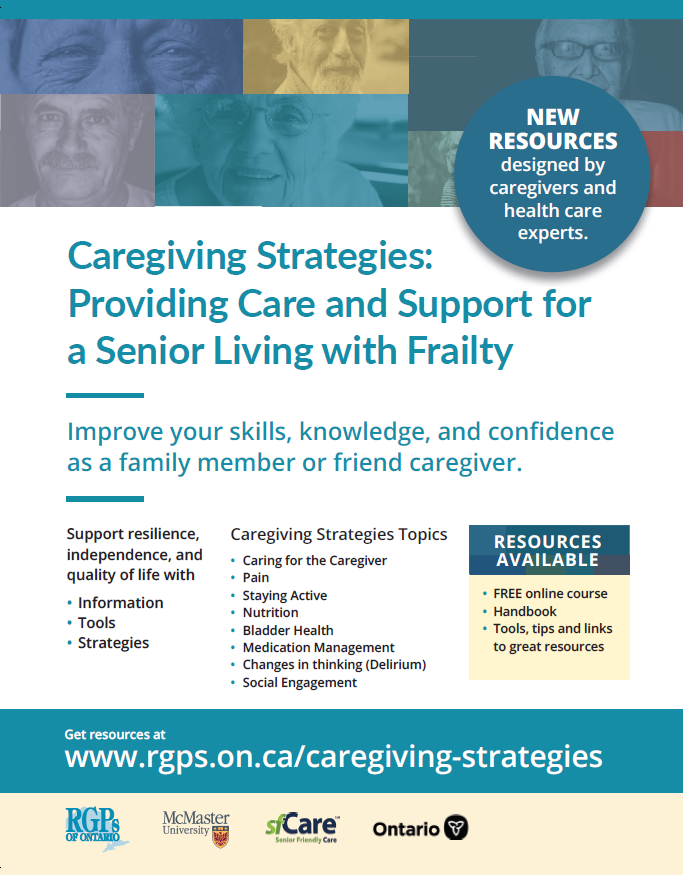
    RGPO caregiver resources poster pic

    New resources for caregivers supporting seniors living with frailty

    Regional Geriatric Programs of Ontario (RGPO) and six project partners from across the province have launched new educational resources for caregivers who are providing care and support for seniors living with frailty.

    Caregiving Strategies: Providing Care and Support for a Senior Living with Frailty was designed by caregivers and health care experts to improve the skills, knowledge, and confidence of family member and friend caregivers.

    Caregiving Strategies consists of:

    • A FREE online course
    • The Caregiving Strategies Handbook
    • Tools, tips and links to great resources

    To access these resources please visit their site.


    primary care virtual community logo

    High impact actions for Ontario

    The synthesis of potential high impact actions for Ontario identified during Sep 21 and 25 sessions of the primary care virtual community is now available.


    Actions include:

    • Integrate EMRs
    • Recognize and Support Primary Continuity (the core team)
    • No patient or practice left behind
    • Alternative consultation

    Find out more here.


    Digital coalition slide pic


    Digital Coalition conference presentation

    Slides are now available for the Bright Lights award winning Digital Coalition’s 2019 conference presentation. You can find them here. And don’t forget, you can find other slides here and posters here.


    Ontario Health System Transformation Webinar: Making Interprofessional Teams Shine, Oct 28, 2019
    RNAO updates on Ontario health system transformation and discussion on how they are tailoring the BPG implementation toolkit to better support practice change. Register here.


    Toronto International Conference on Quality in Primary Care, Nov 16, 2019, Toronto
    Don’t miss your chance to register for this international conference in Toronto. Registration closes in 2 weeks on Friday, November 1st. Find out more here


    Cyber Security and Data Breaches- How Vulnerable are you? Nov 20, 2019
    The next Financial Webinar Series webcast co-hosted by AFHTO and Grant Thornton LLP is right around the corner. Join us for an hour on data, cyber security and policies and procedures to mitigate possible issues. Register today!


    What Primary Care Teams Need To Know About CONCUSSION, November 19, 2019
    The Ontario Neurotrauma Foundation is hosting an evidence-based clinical webinar on concussions, aimed towards primary care teams. Learn more here.