Blog

  • Clinton, North Perth FHTs and Others Accredited with Commendation

    Clinton, North Perth FHTs and Others Accredited with Commendation

    Group Photo of Accreditated Team

    Clinton FHT and North Perth FHT were part of the Huron Perth Sub-Region Accreditation Prototype (HPSAP) that was accredited by Accreditation Canada the week of Oct 21st, 2019. Most of the members of the HPSAP experienced accreditation for the first time, being awarded Accredited with Commendation.

    According to Kimberly Van Wyk, RN, Executive Director of Clinton FHT:
    This is an accreditation prototype where six organizations that have never gone through the accreditation process have voluntarily joined HPHA for the on-site survey. The partner organizations are the Alzheimer Society of Huron County, the Alzheimer Society of Perth County, the Clinton Family Health Team, the North Perth Family Health Team, Knollcrest Lodge, and the Ritz Lutheran Villa/Mitchell Nursing Home.  The purpose is system improvement and standardization of service delivery. All of the organizations were highly engaged in the process. 

    The partners feel there is significant opportunity for collaboration with the changing model of health care in Ontario. This report focuses on progress made by HPHA since the last on-site survey in 2014 as well as the integration of the new teams into the accreditation process. Huron Perth and Area has submitted a proposal to be one of the new Ontario Health Teams and has been shortlisted. Sixty-one partner organizations have signed on. 

    Read more in the report here.

    Name tags

  • Mississauga OHT Announced

    On Nov. 25, 2019, Christine Elliott, Deputy Premier and Minister of Health, was at the University of Toronto Mississauga to announce the Mississauga Ontario Health Team, known as Mississauga Health, as one of the first 24 teams in the province. The aim is to implement a new model of organizing and delivering health care that better connects patients and providers in their communities to improve patient outcomes.

    Mississauga Health reinforces existing partnerships while engaging new partners, focusing on care through the continuum from birth to palliative care, and ensuring seamless transitions.

    AFHTO members in Mississauga Health are Credit Valley FHT, CarePoint Health and Summerville FHT. We look forward to working with the OHT to ensure primary care remains foundational in the transformation.

    Relevant Link:

  • Annual Priorities for the 2020/21 Quality Improvement Plans

    Health Quality Ontario (HQO) has launched the priorities for the 2020/21 Quality Improvement Plans (QIPs).

     
    The 2019/20 QIPs prioritized three core themes: timely and efficient transitions, service excellence, and safe and effective care. These themes remain key priorities and align with the Quadruple Aim of improving the patient and caregiver experience, improving the health of populations, reducing the per-capita cost of health care, and improving the work life of providers. These themes are also consistent with the priorities of the Ministry of Health and the Ministry of Long-Term Care.

    Therefore, only minor changes were made to the QIP priorities for 2020/21. QIPs will continue to be submitted by individual organizations to Health Quality Ontario (soon to become part of Ontario Health) and will be due by April 1, 2020.

    Annual Planning Materials:

  • Bits & Pieces: Ontario Health transfers, treating Adult Major Depressive Disorder & more

    Bits & Pieces: Ontario Health transfers, treating Adult Major Depressive Disorder & more

    Your Weekly News & Updates


    In This Issue  
    • Upcoming transfers to Ontario Health & LHIN transitional regions
    • A webcast for IHPs: OHTs and health system transformation slides and video
    • Care for survivors of blood or marrow transplant therapy
    • Treatment of Adult Major Depressive Disorder (MDD) Tool
    • 2019 spotlight on caregivers and a new helpline
    • Upcoming events on cyber security, the global AIDS crisis and more

    Upcoming transfers to Ontario Health & LHIN transitional regions
    On Nov. 13, Interim CEO of Ontario Health, Susan Fitzpatrick, sent an update on activities underway with the health agency. Transfer orders were issued by the Honourable Christine Elliott, Deputy Premier and Minister of Health, to Cancer Care Ontario, eHealth Ontario, HealthForceOntario Marketing and Recruitment Agency, Health Shared Services Ontario, and Ontario Health Quality Council operating as Health Quality Ontario.

    The transfer orders list December 2, 2019 as the day they will transfer to Ontario Health. Transition of the LHINs will occur at a later date.

    You can find all of the transfer orders on the ministry’s website and Ontario Health’s new website, www.ontariohealth.ca.

    Ontario Health has also aligned the 14 LHINs to five interim and transitional regions. This is not a merger of the LHIN boundaries. Effective November 13, five LHIN CEOs have been appointed as Transitional Regional Leads reporting to the Interim CEO of Ontario Health. Read the full memo on our site.


    ihp oht webinar nov 14 2019

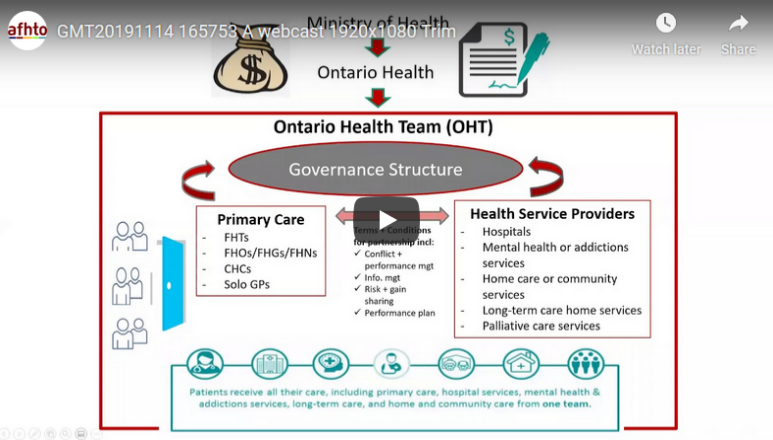
    A webcast for IHPs: OHTs and health system transformation slides and video
    On Nov. 14 IHPs joined a webcast that was organised to help answer questions and to learn about the work being done at this time of change. It was an overview of OHTs, an update from the ministry, and an opportunity to hear from members who are part of OHTs that are proceeding to full application, especially those OHTs that have included close collaboration with IHPs. Slides and video are now available on our site.


    Care for survivors of blood or marrow transplant therapy
    Stem cell transplant is an important treatment for some types of cancer, but it can also increase future health risks.  Long-term follow-up care involves all members of the patient’s health team. Patients commonly need updated immunizations and regular monitoring for cardiovascular risk factors and screening for secondary cancers.

    Please visit the Cancer Care Ontario Survivorship Care after Stem Cell Transplant website to learn more about this unique patient population and find patient education materials.


    Treatment of Adult Major Depressive Disorder (MDD) Tool
    About 7% of Canadians meet the diagnostic criteria for adult major depressive disorder (MDD). The Centre for Effective Practice (CEP) recently developed the Treatment of Adult Major Depressive Disorder (MDD) Tool to help.

    As a highly requested topic by providers, this tool can support primary care providers in treating adult patients (≥ 18 years) who have major depressive disorder. The tool covers treatment options for MDD, which involve psychotherapy and/or pharmacotherapy, as well as complementary and alternative options. The MDD Tool is one of several clinical tools developed as part of the Knowledge Translation in Primary Care Initiative.


    2019 spotlight on caregivers

    2019 spotlight on caregivers and a new helpline

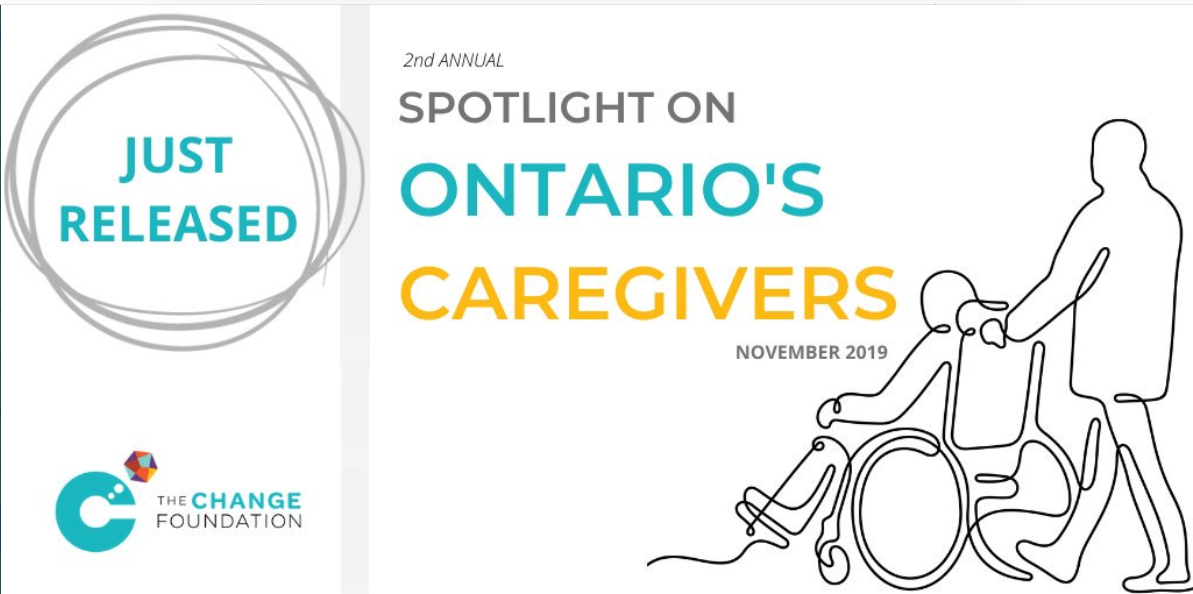
    The Change Foundation has released the second annual Spotlight on Ontario’s Caregivers, done for the first time in partnership with The Ontario Caregiver Organization. Highlights include:

    • While similar numbers of caregivers are involved in organizing care, in 2019 56% of caregivers find the process difficult, compared to only 39% in 2018.
    • The impact on finances is more pronounced in 2019 – 32% said they had faced financial hardships compared to 22% in 2018.
    • Emotional counselling for both the patient and the caregiver is still one area where more support is needed, with 77% of caregivers wishing for a ‘one-stop-shop’ that they can turn to for help and advice.

    To address this last point The Ontario Caregiver Organization recently launched the Caregiver Helpline – a 24/7 resource that caregivers can call or engage in a live chat between 7 a.m. and 9 p.m., Monday to Friday, to find local supports, get information about caregiving and get other important knowledge that caregivers said they need.


    Cyber Security and Data Breaches- How Vulnerable are you? Nov. 20, 2019
    The next Financial Webinar Series webcast co-hosted by AFHTO and Grant Thornton LLP is tomorrow! Join us for an hour on data, cyber security and policies and procedures to mitigate possible issues. Register today!


    Family Medicine, Holistic Care And The Ongoing Global AIDS Crisis, Nov. 26, 2019
    Join Dr. Jane Philpott and Stephen Lewis as they discuss HIV & AIDs care from their unique perspectives. Session will be held in Toronto. Learn more here.


    The Digital Health Toolbox: Enabling High-Performance Teams In The Delivery Of Integrated, Patient-Centred Care Webinar, Nov. 28, 2019
    Learn how to implement digital health tools within your teams after participating in this webinar co-hosted by AFHTO and the eHealth Centre of Excellence (eCE). Register today!


    Transitioning NP Research to Practice Conference, Jan 24, 2020
    Early Bird Registration for NP Global Initiatives’ online NP conference ends next week. Participate in this new organization’s convenient online conference by NPs, for NPs. Learn more here.

  • QI in Action eBulletin #92: How Can Teams Help Meet The E-Service Needs of Patients?

    QI in Action eBulletin #92: How Can Teams Help Meet The E-Service Needs of Patients?

    In this issue

    • What are Patients’ E-service Needs?   
    • Prescription Renewals
    • Consult with any Healthcare Provider Online (Email, Virtual Visits, etc.)  
    • Specialist Referral Confirmations and Notifications
    • How have Other Teams Implemented Digital Health Tools?   
    • Digital Health Week and the QIDS-Essential Summary
    • Resources
    • Upcoming Webinars and Conferences


    What are Patients’ E-service Needs?   
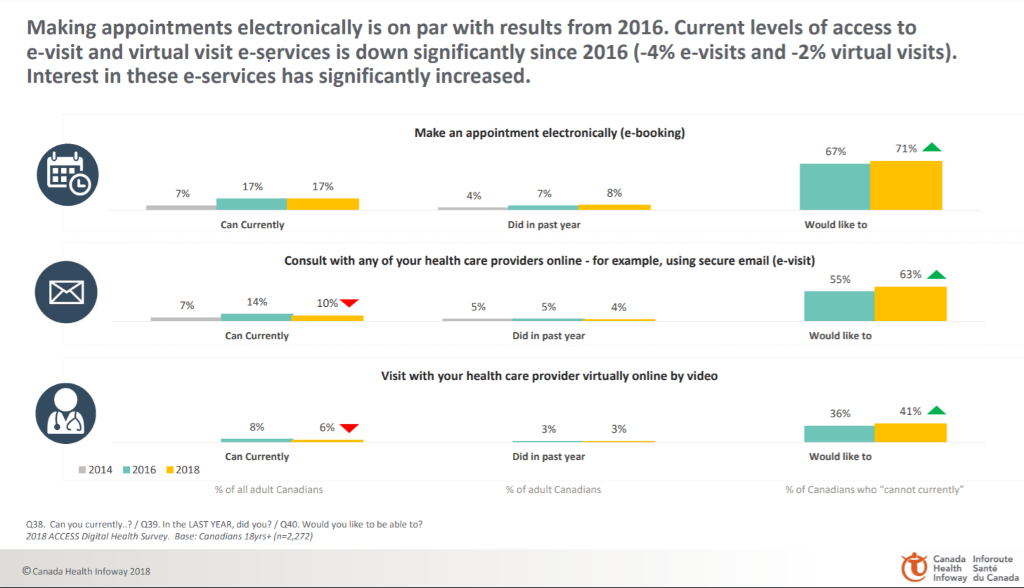
    Canada Health Infoway conducted 4 public surveys throughout Canada between 2014 and 2018 to assess the availability, use and public interest in digital access to their health information and e-services.1 Some of the key takeaways from the survey results were:  

    • The availability of e-services isn’t meeting the demands of Canadians  
    • Canadians accessing their health information online has doubled between March 2017 to March 2018
    • The four e-services that Canadians want the most are1:  
      • Prescription renewal (4 million Canadians have lost or damaged a prescription and as a result 700,000 Canadians have gone without medication)  
      • Online access to health records
      • Specialist referral confirmations and notifications for confirmed appointments with specialists  
      • Online booking for appointments  

    Survey data from Connecting Patients for Better Health 2018 report by Canada Health Infoway

    Survey data from Connecting Patients for Better Health 2018 report by Canada Health Infoway

    However, over the years despite the increased interest for e-services, the access for the services has not increased.  


    Prescription Renewals

    • PrescribeIT allows providers to directly transfer prescriptions to the pharmacies of the patient’s choice. PrescribeIT fully integrates with existing electronic medical records (Telus PSS is live, OSCAR to be available early 2020) and pharmacy management systems. Health Canada has provided Canada Health Infoway the funding to create and launch PrescribeIT and it’s being provided at no charge to prescribers.
      • Benefits include:
        • Enhanced security and patient privacy: prescriptions sent through PrescribeIT are transmitted as data via an encrypted two factor authentication process and details entered directly into the pharmacy software.
        • Rx Dispense notifications in the EMR: Rx dispense, and cancellations notifications are sent to the EMRs when a PrescribeITTM order has been received and processed through the a PrescribeITTM enabled pharmacy.
        • Enhanced Communication: Replace fax or phone calls with secure messaging directly from the EMR (currently available for select PrescribeITTM enabled pharmacies)
        • Renew Rx Requests electronically from the EMR: Reduce administrative work in faxing/scanning renewals


    Consult with any Healthcare Provider Online  

    • Provider to specialist: eConsults are available through OTN for physicians and nurse practitioners to access specialist advice in a timely manner. Non-urgent matters have a response time of an average 2 days! This program also consists of Teledermatology and Teleophthalmology
      • A case study illustrating timely patient care through eConsult use in primary care, can be found here.
      • A case study illustrating the use of eConsult to support timely access to specialist advice, reducing anxiety and decreasing unnecessary referrals, can be found here.
    • Patient to Provider: Interprofessional teams can sign up with ThinkResearch to access VirtualCare allowing family physicians, nurse practitioners, registered nurses, social workers, dietitians and other clinicians to host virtual visits.
      • Virtual visits are a way for patients and providers to communicate directly over a safe, secure, online platform via chat messaging, phone, or video.
      • Since the launch of this program, in collaboration with eCE and the Waterloo Wellington LHIN in March 2018 14,200 virtual visits have been provided.
      • Patient and provider-initiated visits are available
      • Admins (reception/nursing) can triage and book virtual visits, supporting clinical workflow
      • Visit transcripts and attachments can be exported to the EMR via HRM
      • A published case study illustrating the patient experience with virtual visits in primary care can be found here.
      • A published case study on the provider experience with virtual visits in primary care can be found here.
      • Use and benefits of provider-initiated virtual visits are highlighted within a published case study here.


    Specialist Referral Confirmations and Notifications

    • The eHealth Centre of Excellence (eCE) leads the System Coordinated Access (SCA) Program, outlined in the Ontario Health Teams: Digital Health Playbook (August 2019). The SCA Program deploys the Ocean eReferral technology developed from an innovation procurement (with a consortium consisting of ThinkResearch, CognizantMD and the Centre for Effective Practice) to delivering more than 60,000 eReferrals integrated from within primary care EMRs (Telus PSS, QHR Accuro, OSCAR).
      • Providers from the eight LHINs involved in the SCA procurement can gain access to this service within the existing government investment.
      • Learnings from System Coordinated Access in Waterloo-Wellington:
      • Over 38,000 were processed electronically over the last 12 months in Waterloo Wellington within the diabetes, diagnostic imaging and orthopedics referral pathways.
      • Additional services added include Home and Community Care, Mental Health and Addictions.
      • For the referrals sent, 33% of patients included their email address and were enabled to digitally access their referral status and efficiently book and confirm appointments.
      • Patient experience surveys results (N=2,060) show 80%-90% satisfaction.


    How have Teams Implemented Digital Health Tools?   

    • Teams provide Health Records Access Online and Online Appointment Booking in different ways. Some of the publicly available services are:
      • Multiple resources within the Ontario Health Teams: Digital Health Playbook, some of which may be of interest to you:  
        • Immunization Connect Ontario (ICON) is publicly available for patients to look up their immunization records. (The link to this varies depending on your location)  
        • Teams can reach out to EMR vendors to discuss the availability of these features.
      • There are several technology options available to implement online appointment booking. Some teams have reached out to EMR vendors for these features (ex: Medeo, HealthMyself). Some teams use standalone appointment booking software that aren’t integrated with EMRs. Another option is that teams have implemented an appointment booking email address through which patients can email appointment requests.
    • Click here to read more about how teams are (Register for Digital Health webinars below for more information!):
    • Increasing Patient e-communications
    • Providing Online Booking for Appointments
    • Providing Virtual Visits
    • Increasing Access for Unattached Patients through Virtual Care
    • Collaborating to Create and Distribute EMR Forms


    Digital Health Week (Nov 11-17) and the QIDS-Essential Summary

    Let’s celebrate all the digital health initiatives our teams have taken! You can also read about the Making and Meaning of the Quality Improvement Decision Support Program in the QIDS-Essential Summary.

    Join the Digital Health Week conversation by tweeting #ThinkDigitalHealth and share your teams’ stories.

    Resources:


    Upcoming Webinars and Conferences:
    Digital Health Week – November 11-17, 2019

    IHPs OHTs and Health System Transformation Webcast -Nov 14, 2019 12 – 1:30 pm

    Toronto International Conference on Quality in Primary Care – Nov 16, 2019

    The Digital Health Toolbox: Enabling High-Performance Teams in The Delivery of Integrated, Patient-Centred Care Webinar – Nov 28, 2019 12-1 pm

    Increasing Access to Patients through Virtual Care Visits Webinar – Dec 10, 2019 12-1 pm

    References:  
    1 https://www.infoway-inforoute.ca/en/component/edocman/3564-connecting-patients-for-better-health-2018/view-document?Itemid=101


    In Case You Missed It: Check out eBulletin #91 or other back issues here!
    Questions? Comments? Contact us at improve@afhto.ca.

  • Update on Ongoing Health System Restructuring

    This email was sent to the leadership triad

    ***Update on Ongoing Health System Restructuring***
     
    Dear members,

    There has been lots happening locally and provincially with system restructuring, including the first steps in the formation of Ontario Health Teams – with the first ones expected to be announced by the end of this month.

    We’d like to provide an update on several significant milestones that have happened in recent weeks.

    Bill 124
    Bill 124, Protecting a Sustainable Public Sector for Future Generations Act, 2019, received royal assent on November 7. Its purpose is “to ensure that increases in public sector compensation reflect the fiscal situation of the province.” This Act puts a restriction on salary increases of no more than 1% for each 12-month period, with some exceptions.
     
    AFHTO continues to work with the ministry to understand if this may impact future recruitment and retention funding. However, the funding for 18/19, 19/20 and 20/21 was approved in a multi 3-year agreement which is within base funding. At the moment, there are no plans to counter that and signals point to commitment to the R&R funding until the end of the three years. If you have any questions, call your ministry program consultant, and we will keep you updated as we learn more about the new bill and its implementation.
     
    Bill 138
    On November 6, Finance Minister Rod Phillips introduced his first Fall Economic Statement: Plan to Build Ontario Together Act, 2019 (Bill 138).

    Of particular note for health care, Bill 138 includes Schedule 15, which includes changes to the Health Insurance Act, and Schedule 30, which speaks to the modernization of the Personal Health Information Protection Act (PHIPA) to enable more connected care.
     
    Bill 138 also includes the introduction of the Supply Chain Management Act (Government, Broader Public Sector and Health Sector Entities), which is intended to help build an integrated, patient-focused supply chain to support a more connected health system.
     
    A fact sheet and joint deputy minister memo on the Supply Chain Management Act, as well as a memo from H&K Strategies on the Fall Economic Statement, can be seen on our website.
     
    Transfer Notices Issued
    On November 13, transfer notices were issued to the agencies that are integrating to Ontario Health by December 2: Cancer Care Ontario, Health Quality Ontario, eHealth Ontario, Health Shared Services Ontario, and HealthForceOntario Marketing and Recruitment Agency. The 14 LHINs will follow shortly, but for now have been reorganized into five interim and transitional regions with the five interim leads being:

    • Bruce Lauckner who will become the Transitional Regional Lead in western Ontario (and managing Erie St. Clair, Hamilton Haldimand Norfolk Brant, South West and Waterloo Wellington).
    • Renato Discenza who will become the Transitional Regional Lead in eastern Ontario (and managing Champlain, South East and Central East LHINs).
    • Scott McLeod who will become the Transitional Regional Lead in central Ontario (and managing Central, Central West, Mississauga Halton and North Simcoe Muskoka).
    • Tess Romain who will become the Transitional Regional Lead in Toronto (and managing Toronto Central).
    • Rhonda Crocker Ellacott who will become the Transitional Regional Lead in northern Ontario (and managing North East and North West).

    To see the full memo from Interim CEO, Susan Fitpatrick, on the transfer notices, please click here. Ontario Health now also has a website, so visit www.ontariohealth.ca to learn more.
     
    Digital First for Health Strategy
    Yesterday the ministry announced its Digital First for Health Strategy, which includes $3 million in new funding to compensate physicians for 55,000 more video visits provided directly to patients in their location of choice over the next year.
     
    Once this strategy is fully implemented, patients will be able to expect more virtual care options, expanded access to online appointment booking, greater data access for patients, connected tools for frontline providers, and data integration and predictive analytics. As more details emerge, we will be updating our members.
     
    Update on OHTs
    We look forward to the announcement of the first OHTs later this month, and to learning the teams that will be part of the next round of submissions, which are due on December 4.

    Please continue to keep AFHTO up-to-date on your progress, let us know how we can help you, and continue to check out the updates and support tools on our website.
     
    Please also continue to keep your colleagues up-to-date on the ongoing changes, and, if they have not already, encourage they sign up for our weekly e-newsletter by emailing info@afhto.ca and sign up to receive the Connected Care Updates from the ministry.
     
    Yours sincerely,

    Kavita Mehta
    CEO, Association of Family Health Teams of Ontario


  • Ontario Health Memo: Upcoming Transfers to Ontario Health

    Memo sent on Behalf of Susan Fitzpatrick, Interim CEO, Ontario Health

    Good Morning,
     
    As a valued partner in the health care system, I wanted to let you know that earlier today transfer orders were issued by the Honourable Christine Elliott, Deputy Premier and Minister of Health, to Cancer Care Ontario, eHealth Ontario, HealthForceOntario Marketing and Recruitment Agency, Health Shared Services Ontario, and Ontario Health Quality Council operating as Health Quality Ontario. The transfer orders list December 2, 2019 as the day they will transfer to Ontario Health.
     
    You can find all of the transfer orders on the ministry’s website and Ontario Health’s new website, which is www.ontariohealth.ca
     
    As you may be aware, on June 6, the Connecting Care Act, 2019 was proclaimed into force. The government’s Connecting Care Act brought into effect changes that will create the framework for health system transformation in Ontario. Among these changes, 20 health care agencies are coming together through transfer orders issued over the coming months to form Ontario Health. 
     
    Working closely with the ministry and the transferring agency leadership, Ontario Health is approaching this first wave of agency transfers thoughtfully, in order to retain continuity of patient and provider services as Ontario Health gets established. There will be no impact to patient care during or following these transfers.
     
    I also wanted to let you know that Ontario Health has put in place a change that involves aligning the 14 LHINs to five interim and transitional regions. This is not a merger of the LHIN boundaries. Rather, these changes are a means of streamlining the regional oversight as the ministry continues its work to integrate home and community care supports with Ontario Health Teams.
     
    Effective today, November 13th, five LHIN CEOs have been appointed as Transitional Regional Leads reporting to me, as Interim CEO of Ontario Health, for approximately the next year and responsible for the ongoing management of LHIN operations including:
     

    • Coordinating patients’ access to home and community care and long-term care;
    • Continuing the day-to-day administrative oversight of health service providers;
    • Engaging with patients and families through the LHIN patient and family advisory councils;
    • Engaging Indigenous and Francophone peoples, and;
    • Leading and managing LHIN workforces within their region.

     
    The Transitional Regional Leads/LHIN CEOs are: 
     

    • Bruce Lauckner who will become the Transitional Regional Lead in western Ontario (and managing Erie St. Clair, Hamilton Haldimand Norfolk Brant, South West and Waterloo Wellington). 
    • Renato Discenza who will become the Transitional Regional Lead in eastern Ontario (and managing Champlain, South East and Central East LHINs). 
    • Scott McLeod who will become the Transitional Regional Lead in central Ontario (and managing Central, Central West, Mississauga Halton and North Simcoe Muskoka). 
    • Tess Romain who will become the Transitional Regional Lead in Toronto (and managing Toronto Central). 
    • Rhonda Crocker Ellacott who will become the Transitional Regional Lead in northern Ontario (and managing North East and North West). 

    I know that you will join me in expressing my sincerest thanks to the departing LHIN CEOs for their tremendous contributions and years of dedicated service. Ontario has greatly benefitted from their leadership, commitment, ongoing professionalism and excellence ensuring health service planning and delivery in their regions. 
     
    In closing, I wanted to add that everything we aim to achieve will only happen if we work in collaboration with important organizations such as yours. We, at Ontario Health, really look forward to finding opportunities to work together in order to reduce strain on the system, to invest more resources on the frontline and, most importantly, to provide better quality care to all Ontarians.
     
    Sincerely,
     
    Susan Fitzpatrick
    Interim CEO, Ontario Health


    En tant que partenaire important du système de soins de santé, je voulais vous informer que des ordonnances de transfert ont été délivrées par la ministre de la Santé, l’honorable Christine Elliott, à Action Cancer Ontario, cyberSanté Ontario, l’Agence de promotion et de recrutement de Professions SantéOntario, Services communs pour la santé Ontario, et le Conseil ontarien de la qualité des services de santé qui mène ses activités sous le nom de Qualité des services de santé Ontario. Les ordonnances de transfert indiquent le 2 décembre comme date de transfert vers Santé Ontario.
     
    Vous pouvez trouver toutes les ordonnances de transfert sur le site Web du ministère et le nouveau site Web de Santé Ontario, www.ontariohealth.ca
     
    Comme vous le savez peut-être, le 6 juin, la Loi de 2019 pour des soins interconnectés est entrée en vigueur. La Les changements prévus par la Loi pour des soins interconnectés du gouvernement constitueront le cadre de la transformation du système de santé de l’Ontario. Parmi ces changements, 20 organismes de soins de santé se sont regroupés dans le cadre d’ordonnances de transfert délivrées au cours des mois à venir pour former Santé Ontario. 
     
    En étroite collaboration avec le ministère et la direction des organismes transférés, Santé Ontario entame sa première vague de transfert de manière réfléchie, de sorte à préserver la continuité des services offerts aux patients et fournisseurs pendant l’établissement de Santé Ontario. Il n’y aura pas de répercussions sur les soins des patients pendant ou après ces transferts.
     
    Je souhaitais également vous informer que Santé Ontario a mis en place un changement prévoyant l’alignement des 14 RLISS sur cinq régions provisoires et transitionnelles. Il ne s’agit pas d’une fusion des délimitations des RLISS. Ces changements constituent plutôt un moyen de simplifier la supervision régionale pendant que le ministère poursuit son travail d’intégration des soutiens de soins à domicile et en milieu communautaire avec les équipes de Santé Ontario.
     
    À compter d’aujourd’hui, le 2 décembre, cinq directeurs généraux de RLISS ont été nommés comme responsables régionaux de la transition et travailleront sous ma direction, en tant que PDG intérimaire de Santé Ontario pendant un an environ et chargé de la gestion continue des activités des RLISS, notamment :
     

    • Coordonner l’accès des patients à des soins à domiciles et en milieu communautaire et à des soins de longue durée;
    • Poursuivre la supervision administrative quotidienne des fournisseurs de services de santé;
    • Communiquer avec les patients et les familles par l’intermédiaire des conseils consultatifs des patients et des familles des RLISS;
    • Mobiliser les peuples autochtones et francophones;
    • Diriger et gérer la main d’œuvre des RLISS au sein de leur région.

     
    Les responsables régionaux de la transition/PDG des RLISS sont : 
     

    • Bruce Lauckner qui deviendra responsable régional de la transition de l’Ouest de l’Ontario (et directeur des RLISS d’ Érie St. Clair, Hamilton Niagara Haldimand Brant, Sud-Ouest et Waterloo Wellington). 
    • Renato Discenza qui deviendra responsable régional de la transition de l’Est de l’Ontario (et directeur des RLISS de Champlain, du Sud-Est et du Centre-Est). 
    • Scott McLeod qui deviendra responsable régional de la transition du Centre de l’Ontario (et directeur des RLISS du Centre, du Centre-Ouest, de Mississauga Halton, et de Nord-Simcoe Muskoka). 
    • Tess Romain qui deviendra responsable régionale de la transition à Toronto (et directeur général du RLISS du centre de Toronto). 
    • Rhonda Crocker Ellacott qui deviendra responsable régionale de la transition du Nord de l’Ontario (et directeur général des RLISS du Nord-Est et du Nord-Ouest). 
    • Je sais que vous vous joindrez à moi pour remercier sincèrement les directeurs généraux de RLISS qui nous quittent pour leurs immenses contributions et leurs années de service. L’Ontario a grandement bénéficié de leur leadership, engagement, professionnalisme et excellence pour assurer la planification et la prestation de services de santé dans leur région. 

     
    Pour conclure, je souhaiterais ajouter que nos objectifs ne pourront être atteints que si nous travaillons en collaboration avec des organisations importantes telles que la vôtre. À Santé Ontario, nous sommes impatients de trouver des occasions de travailler ensemble pour réduire la pression sur le système, pour investir plus de ressources en premières ligne, et surtout, pour offrir des soins de qualité supérieure à tous les Ontariens.
     
    Cordialement,
     
    Susan Fitzpatrick
    PDG par intérim, Santé Ontario

  • Plan to Build Ontario Together Act, 2019 (Bill 138)

    On November 6, 2019, Finance Minister Rod Phillips introduced his first Fall Economic Statement: Plan to Build Ontario Together Act, 2019 (Bill 138). Bill 138 includes the Supply Chain Management Act (Government, Broader Public Sector and Health Sector Entities).

    The introduction of the Supply Chain Management Act (Government, Broader Public Sector and Health Sector Entities), 2019, is a step to set the stage for the government to work across the sector to build an integrated, patient-focused supply chain, to support a more connected health system.

    The government has been consulting with stakeholders, including AFHTO. This includes ten AFHTO members who stepped forward to participate in a focus group about successes and challenges for the government to consider in building an integrated supply chain. 

    To learn more about the Act, the Ministry of Health and H&K Strategies have provided the following resources:

    There are no immediate changes for the health sector. The legislation would only come into force with a specified regulation, and the ministry will continue to seek stakeholder input along the way.

    If you have feedback or comments on this legislation, you can email healthsupplychain@ontario.ca.

    The ministry is committed to responding to questions within 24 hours.


  • Bits & Pieces: Digital health toolbox and virtual care webinars & more

    Bits & Pieces: Digital health toolbox and virtual care webinars & more

    Your Weekly News & Updates


    In This Issue  
    • Digital health toolbox webinar Nov. 28
    • Increasing access to patients through virtual care visits webinar Dec. 10
    • Members’ stories
    • QIDS-ESSENTIAL: the making & meaning of the Quality Improvement Decision Support program
    • Happy Nurse Practitioner Week
    • Primary Care Virtual Community
    • Upcoming events on Digital health and technology in integrated care and more

    Digital health toolbox webinar Nov. 28

    The current healthcare landscape poses pressure to modernize health care delivery, striving for an integrated, higher-quality patient-centred model.

    Digital health tools, when designed, deployed and maintained to meet user needs, play an important role in enhancing patient and provider experience, and unlocking opportunities for a greater understanding of patient population and the delivery of proactive care, while optimizing the use of resources.

    The Digital Health Toolbox: Enabling High-Performance Teams in The Delivery of Integrated, Patient-Centred Care webinar on Nov. 28 features speakers from the eHealth Centre of Excellence (eCE), who will highlight different tools and how they can be meaningfully used in the delivery of care, including eReferrals and CDPM support. Register today.


    Increasing access to patients through virtual care visits webinar Dec. 10

    Minto Mapleton FHT is a small team that has set an example of how to use multi digital solutions to increase rural patient centred care. They currently use digital tools such as e-faxing, Ocean tablets, Telus apps and much more to increase office efficiency. They are taking advantage of OTN tools and are ranked 4th out of 125 FHTs in the use of eVisits with the most referrals for respirology and psychiatry. They have also piloted the eHealth Centre for Excellence Virtual Care initiative that allows patients remote access to visits.

    Peterborough FHT has been supporting unattached patients since August 2018 through their Virtual Care Clinic (VCC) in Peterborough and a NP-run PFHT Clinic in Lakefield that supports rural unattached patients and seasonal visitors. Along with access to the VCC & PFHT Clinics, PFHT has opened their group programs and services to these patients who can now register online without a referral from a primary care provider thereby removing unnecessary barriers.

    Join this webinar on December 10, 2019 to learn more about their innovative digital health programs.
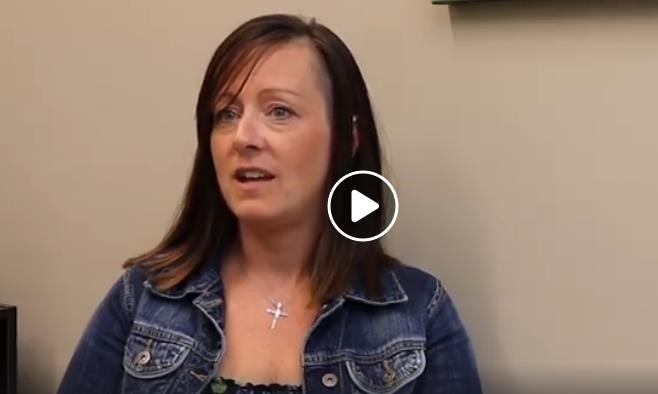

    Christy MacDonald, Clinical care coordinator, Central Lambton FHT

    Members’ stories

    Chatham-Kent, Thamesview and Tilsbury District FHTsChatham-Kent’s Physician Recruitment and Retention Task Force to bring more doctors to the area

    Central Lambton FHTconnecting care at the Central Lambton Family Health Team

    Inner City FHTNew program transitions individuals living with HIV/AIDS out of Toronto’s emergency shelter system

    Summerville FHTSummerville FHT Strategic Plan 2019-2022


    QIDS-ESSENTIAL: the making & meaning of the Quality Improvement Decision Support program

    As the QIDS program turned five last fall, the QIDS Secretariat within AFHTO decided that the milestone merited not just another report or case study but a different kind of account, one that would capture the QIDS journey with a wider lens, from both a philosophical and practice perspective. QIDS-Essential: The Making and Meaning of the Quality Improvement Decision Support (QIDS) Program is the result.


    Happy Nurse Practitioner Week

    Happy Nurse Practitioner Week to all the NPs working in primary care teams across Ontario!

    Thank you for your hard work, your dedication to your patients and your teams. Please take some time this week to reflect on the work that you do and know that you make a difference in the lives of your patients and your communities.
    To celebrate this important week, the NPAO has developed a NP Week Toolkit.

    primary care virtual community with org logos

    Primary Care Virtual Community

    Next webinar: Nov. 21, 2019 | 8 a.m. to 9:30 a.m.

    The Primary Care Virtual Community (PCVC) is a collaboration designed to support the front-line practitioner experience of the Quadruple Aim. The PCVC has been developed by AFHTO and the Ontario College of Family Physicians and is facilitated through The Change Foundation.


    The upcoming webinar will continue a dialogue on 10 Ontario-based “High Impact Actions,” which have been co-defined by the Community, and offer examples of how these actions may already be enabling meaningful improvement in primary care.

    Join the community now and be a part of this important conversation!


    A webcast for IHPs: OHTs and health system transformation, Nov. 14, 2019
    Please join us on from 12 PM to 1:30 PM for an overview of OHTs, and to hear from teams proceeding to full application whose OHT development has included close collaboration with IHPs. They will speak to their work to date and highlight how IHPs are engaged. All members are encouraged to join (not just IHPs!)
    Register today!


    Health Justice Tuesdays – Health and Human Rights Law, Nov. 19, 2019
    Register for the last Health Justice Tuesday session held by one of our members, St Michael’s Hospital Academic FHT. Learn more here.


    Cyber Security and Data Breaches- How Vulnerable are you? Nov. 20, 2019
    The next Financial Webinar Series webcast co-hosted by AFHTO and Grant Thornton LLP is right around the corner. Join us for an hour on data, cyber security and policies and procedures to mitigate possible issues. Register today!


    Digital health and technology in integrated care, Nov. 20, 2019
    The next session of the International Foundation for Integrated Care (IFIC) Canada Virtual Community. Find out more here.

  • QIDS-ESSENTIAL: The Making & Meaning of the Quality Improvement Decision Support program

    Edited introduction from QIDS-Essential: The Making and Meaning of the Quality Improvement Decision Support (QIDS) Program
     
    As the QIDS program turned five in the Fall of 2018, the QIDS Secretariat within AFHTO decided that the milestone merited not just another report or case study but a different kind of account, one that would capture the QIDS journey with a wider lens, from both a philosophical and practice perspective. QIDS-Essential: The Making and Meaning of the Quality Improvement Decision Support (QIDS) Program is the result.

    There is a story to tell about that journey: a narrative less about projects, and more about people. Less about what was done and more about how (and if) it was done; less about data and indicators and more about building collective capabilities, confidence, and communities to make change in the field, from the ground up.

    It’s also a story about progress in primary care performance measurement — in some cases, first steps. It’s a story for the primary care community to learn from and share with each other and all partners in health care.

    The intent is to prompt reflection about the key components and characteristics of that approach. As the quality improvement decision support specialist (QIDSS) positions were introduced, allocated and integrated into FHTs and new measurement tools launched and embraced, what fuelled the momentum? What stalled it? How far did it take FHTs in their sometimes circuitous journey along the data-measurement- performance-and-quality- improvement continuum? What can be leveraged today from the QIDS program to position FHTs as ideal partners in emerging primary care innovations?

    Plenty, as it turns out. If you want to learn more, read QIDS-Essential: The Making and Meaning of the Quality Improvement Decision Support (QIDS) Program. Even though Ministry funding for the AFHTO QIDS Program was cut earlier this year, there is a lot to celebrate from the learnings of the program. AFHTO remains committed to ensuring quality remains a priority in the health system transformation under way by leveraging the great integration work already being done by interprofessional primary care teams in Ontario.