Blog

  • Survey – Novel Coronavirus Preparedness

    Please complete this short survey by Wednesday, February 5. This is to assist the ministry in tracking provider preparedness, identifying need for support, and working with suppliers to distribute resources as needed. 

    Please enter the information in the LHIN column that applies to you, and return the spreadsheet to info@afhto.ca by end of day Wednesday.

    This is a preventative measure to ensure everyone is equipped and prepared to respond if needed.

    Thank you.


  • Ontario Health Chair Thanks Susan Fitzpatrick for her service as Interim CEO

    January 29, 2020

    TO: Ontario Health Stakeholder Partners

    FROM: Bill Hatanaka, Ontario Health Board Chair

    As Susan Fitzpatrick ends her tenure this week as Interim CEO for Ontario Health, I’d like to take a moment to thank her and recognize some of her many achievements.

    Susan joined the organization in April 2019 with a focused goal – to work with the Ontario Health Board of Directors and the Ministry of Health to begin to build the foundation for Ontario Health. In her role as Ontario Health’s Interim CEO she faced a challenging assignment and she achieved significant results. To name just a few, her work was instructive in creating our foundational capabilities in governance, human resources, finance and administration, digital, strategy, engagement, communications and transformation.

    Additionally, under her leadership and working closely with the Ministry of Health, we transferred five provincial agencies and the non-home and community care LHIN Vice Presidents and Directors into Ontario Health to form the basis for an integrated agency. We also established five interim Ontario Health regions and appointed five transitional regional leads to support transition planning while overseeing the ongoing management of LHIN operations. Throughout, Susan continually kept staff abreast of Ontario Health operations and achievements through ongoing bulletins, materials and multiple town halls. Her dedication giving people as much information as she had available, and in as timely a way as she could, was appreciated by us all.

    With this and other important foundational work completed, Susan will now transition to an advisory role to support Matthew Anderson, Ontario Health’s new President and CEO.

    Please join our Board of Directors and me in extending a heartfelt thank you to Susan for her hard work and dedication in navigating Ontario Health over this past year.

    See original letter here.

  • Bits & Pieces: novel coronavirus updates, pre-budget submission & more

    Bits & Pieces: novel coronavirus updates, pre-budget submission & more

    Your Weekly News & Updates


    In This Issue  
    • Novel coronavirus updates
    • AFHTO’s 2020 pre-budget submission
    • We’re on the move
    • Members’ stories
    • Shortening the diagnostic odyssey: rare disease in primary care, Feb. 12
    • Managing proton pump inhibitor use in older adults: tool
    • Eliminating red and white cards posters
    • Upcoming events on Advance Care Planning and more

    Novel coronavirus updates
    We have a page on our site that will provide updates on the Novel Coronavirus as they become available, including the latest situation reports. The Ministry of Health is currently working on guidelines for primary care, along with posters and a website for healthcare providers which we will share once we receive the information. At this point, you can also access information for the public on their site.

    We’ll email the primary care guidelines as soon as they become available.

    The OCFP has also put together Tips for Screening for 2019-nCoV which includes clinic preparedness that you may find helpful.  

    If you have any questions, you can also email EOCOperations.moh@ontario.ca.


    AFHTO’s 2020 pre-budget submission
    AFHTO submitted its recommendations to the Ministry of Finance as part of the 2020 Ontario Pre-Budget Consultations in early January. The submission, “It Takes a Team: Interprofessional Primary Care as the Foundation of Health System Transformation” included the following recommendations are:

    1. Increase access to interprofessional team-based primary care for Ontarians who need it.
    2. Invest in clinical leadership to ensure successful roll-out of Ontario Health Teams.
    3. Embed mental health and addictions support in primary care.
    4. Help end hallway health care by embedding home and community care coordination with primary care.
    5. Support digital health options in primary care

    woman with box

    AFHTO is on the move.

    As of tomorrow, Thursday, Jan. 23, AFHTO staff will be working offsite in preparation for a move to a new location.

    We will each be checking our voicemail periodically but if the matter is urgent, please email the relevant staff member directly.

    Further details including our new location will be announced by early February. We appreciate your patience as we transition to our new space. If you have any questions, please feel free to email info@afhto.ca.


    Members’ stories
    Belleville NPLC: Belleville NPLC requests funding for 2 more NPs & a second clinic in the Quinte-Hastings area

    Essex County NPLC: Essex County NPLC expands its services into Amherstburg


    Shortening the diagnostic odyssey: rare disease in primary care, Feb. 12
    You can easily recognize a patient with hypertension, but do you know how to recognize a rare disease? Roughly 1 in 12 Canadians, are affected by a rare disorder. As each disease affects only a small number of individuals, clinician understanding and expertise may be limited and fragmented. This results in unnecessary diagnostic delays, frequent misdiagnoses, and missed opportunities to treat these patients earlier.

    On Feb. 12 Sanofi Genzyme’s rare disease education webinar will increase your awareness about two rare inherited disorders – Fabry disease and Pompe disease and will highlight why primary care is essential in reducing the long and cumbersome diagnostic delays these patients experience. You may also leave with the realization that these rare diseases are not as rare as you think. Register here.


    Eliminating red and white cards posters

    The Ministry has provided English and French posters that can be placed in your clinics and offices on the elimination of red and white OHIP cards as of July 1, 2020.


    Managing proton pump inhibitor use in older adults: tool
    The Centre for Effective Practice has released their latest clinical tool: Managing Proton Pump Inhibitor Use in Older Adults.

    When the ongoing reason for using proton pump inhibitors (PPIs) is unclear, there may be more risks than benefits to the patient. This tool helps guide discussions and assessments with patients aged 65+ about the potential harms and benefits of PPIs. Download the tool here.


    Quality Rounds Ontario: The Promise of Virtual Care, Feb. 6, 2020
    With opening remarks by Bill Hatanaka, Board Chair, and Matthew Anderson and Incoming President and CEO, Ontario Health. Register today.


    Navigating the World of Advance Care Planning and Goals of Care Conversations, Feb. 18, 2020
    The second webinar in Hospice Palliative Care Ontario’s Winter 2020 Series, presented by Dr. Leah Steinberg. Register now.


    Primary Care Virtual Community, Feb 13, 2020
    The Primary Care Virtual Community brings together leaders in primary care interested in enabling meaningful system change. The virtual community is a collaboration developed by the OCFP and AFHTO and convened by The Change Foundation.

    Join the Community to access past webinar recordings and plan to attend the next webinar on February 13 from 8:00 a.m. to 9:30 a.m. Registration link coming soon!


    Your Patients Are Using Cannabis: Here’s What You Need To Know Conference, Feb 28, 2020
    NPAO’s conference held for primary care providers will help you gain a better understanding of medicinal cannabis. Learn more here.


    Capstone Summit, May 4-5, 2020
    Conference hosted by the Change Foundation to showcase their work with caregivers and formally introduce their new strategic focus. Find out more here.


    Meeting Social Needs in an Integrated Health System: A Role for Social Prescribing, March 25, 2020
    Hosted by the Alliance for Healthier Communities and the Dalla Lana School of Public Health, join James Sanderson, Interim CEO, UK National Academy for Social Prescribing and Director of Personalised Care, National Health Service England as he speaks about how the practice of social prescribing has spread and sustained in the UK. Click here to learn more and to register.

  • AFHTO’s 2020 Pre-Budget Submission

    AFHTO submitted its recommendations to the Ministry of Finance as part of the 2020 Ontario Pre-Budget Consultations in early January. The submission is entitled “It Takes a Team: Interprofessional Primary Care as the Foundation of Health System Transformation.”

    Our recommendations are the following:

    1. Increase access to interprofessional team-based primary care for Ontarians who need it. As the population ages, more people will spend more years living with multiple chronic conditions, significantly increasing strain on health services. Interprofessional primary care teams are integrated around patients and their caregivers to promote, maintain or improve health and wellbeing. As Ontario Health Teams start rolling out, ensure comprehensive primary care is at the heart of the health system, so patients get care from the right provider when and where they need it.

    2. Invest in clinical leadership to ensure successful roll-out of Ontario Health Teams. Primary care providers know patients and their families best. They are the best resource government has for shifting the profession and the health system towards a shared vision and purpose. It is critical that they all be empowered to lead OHT development. Successfully building integrated care in OHTs, led by primary care, will require investing in and supporting clinical leadership.

    3. Embed mental health and addictions support in primary care. Ontario is on the verge of a mental health and addictions crisis. We need to provide continuity of care and can’t wait for the full roll-out of OHTs to achieve this. These resources need to be in the community where the person lives and receives comprehensive care, and not in an expensive acute care centre.

    4. Help end hallway health care by embedding home and community care coordination with primary care. 
    The function and associated resources of community care coordination should be transitioned to primary care. This will bring greater efficiency and patient-centredness to care. Care will be integrated, allowing for seamless transitions for patients. This will allow for greater continuity of care.

    5. Support digital health options in primary care. Patients want convenient access to their health care team and to know their health information is all in one place, so stories don’t have to be repeated over and over again. We recommend government adopt a digital health strategy that is co-designed by providers and patients, and provide billing codes to recognize that care delivered digitally is valued as much as an in-person visit. This cannot happen without modernizing our current model and thinking about how care is delivered. 


    Relevant links:

  • Assistant Chief Medical Officer of Health Letter- novel coronavirus

    January 23, 2020

    Dear Health System Partners,

    I am writing to continue sharing information about the novel coronavirus (2019-nCoV). This outbreak of 2019-nCoV continues to evolve, and there have been some significant developments that I want to bring to your attention.

    1. Case Counts:

    Firstly, the case counts in China (Wuhan, Beijing, Shanghai plus several other provinces) and the surrounding region (Thailand, Japan, South Korea, Hong Kong, Macau) have dramatically increased, from 44 on January 17th, 2020, to more than 500 reported today. The United States Centers for Disease Control and Prevention announced earlier this week (January 21) the first confirmed case of the novel coronavirus in a patient in Seattle who had recently travelled to Wuhan. Among the cases reported to-date, we continue to see a spectrum of illness, with the majority of cases reported as having mild illness. We have seen some individuals listed as in severe or critical condition and, sadly, there have been 17 deaths, all in Hubei Province (Wuhan).

    2. Infections in Health Workers:

    We have learned that several health workers in China have contracted 2019-nCoV. To date, we lack key information needed to interpret this report. For example, we do not know when these health workers first became ill or the Infection Prevention and Control/ Occupational Health and Safety precautions and practices they were using at the time of infection.

    3. Human-to-human transmission:
    There is now evidence of human-to-human transmission of this virus, and the World Health Organization has said that there may now be sustained human-to-human transmission. More information and analysis are needed on this new virus to understand the full extent of the human-to-human transmission and other important details.

    4. Reportable to Public Health:
    Yesterday, the Minister of Health announced an update to the Health Protection and Promotion Act (HPPA) that adds “diseases caused by novel coronaviruses, including SARS and MERS” to the list of Diseases of Public Health Significance under the Designation of Diseases regulation (O. Reg. 135/18) in Ontario. As of yesterday, novel coronaviruses, including Severe Acute Respiratory Syndrome (SARS) and Middle East Respiratory Syndrome (MERS-CoV) and 2019-nCoV, must be reported to local public health officials by those who have a Duty to Report under the HPPA (including physicians, hospitals, laboratories). This new Disease of Public Health Significance has also been designated as communicable, providing Medical Officers of Health with powers under the HPPA to ensure appropriate case and contact management.

    With yesterday’s addition of the novel Coronavirus to the regulations, please see the attached
    case definitions for 2019-nCoV
    .

    5. Infection Prevention and Control/ Occupational Health and Safety:
    At this time, consistent with the guidance in place for MERS-CoV, the ministry is recommending the following for acute care settings. Please note that the ministry is reviewing guidance for other settings and will provide further updates in the coming days:

    Routine Practices and Additional Precautions (Contact, Droplet, Airborne) by health care workers at risk of exposure to a confirmed case, presumptive confirmed case, probable case or person under investigation (or PUI) and/or the patient’s environment. These precautions include:

    • hand hygiene
    • use of airborne infection isolation rooms when possible
    • masking the patient with a surgical mask when outside of an airborne infection isolation room
    • use of gloves, gowns, fit-tested, seal-checked N95 respirators and eye protection by healthcare workers when entering the same room as the patient or when transporting or caring for the patient

    Read the full letter here.

    Relevant Link:

  • We’re on the move

    We’re on the move

    AFHTO is on the move.

    As of tomorrow, Thursday, Jan. 23, AFHTO staff will be working offsite in preparation for a move to a new location.

    We will each be checking our voicemail periodically but if the matter is urgent, please email the relevant staff member directly.

    Further details including our new location will be announced by early February. We appreciate your patience as we transition to our new space. If you have any questions, please feel free to email info@afhto.ca.

  • Essex County NPLC expands its services into Amherstburg

    Windsor Star article published Jan. 21, 2020

    By Mary Caton

    A long-awaited new nurse practitioner clinic opened its doors to patients in Amherstburg this week.

    The Essex County Nurse Practitioner-Led Clinic (ECNPLC) has expanded its services into Amherstburg under a 10-year agreement with the town.

    They also have clinics in Essex and Windsor

    The latest becomes the first tenant to operate in the renovated Amherstburg Community Hub which formerly served as St. Bernard’s elementary school on Richmond Street.

    The town purchased the school from the Windsor-Essex Catholic District School Board two years ago with the goal of creating a hub.

    Pauline Gemmell, ECNPLC’s executive director, wrote a business case for an Amherstburg location in the summer of 2018.

    Her expansion proposal was one of three across the province to receive funding approval from the Ministry of Health and Long-Term Care. Sudbury and North Bay were the other centres to receive financial support.

    Town council approved the necessary renovations to the school in January 2019 following the ministry approval of $650,000 in funding.

    Plans initially called for the clinic to open in the spring of 2019.

    “It was a busy year for construction in this area and it slowed everything down,” Gemmell said. “We weren’t exempt from that. The space is great though, we love it, the only negative was that it took a while to get finished. We’re excited and we know the community has really been waiting for it.”

    The clinic has three full-time nurse practitioners, one full-time registered practical nurse, one half-time social worker, one half-time health promoter and physical therapist. They are in the process of hiring a half-time registered dietician.

    The clinic has the potential to serve 2,400 patients and is now accepting applications.

    “We’re not anywhere close to being full so anyone interested in applying please do,” Gemmell said.

    Applications can be picked up at the clinic, which is open 8:30 a.m. to 4:30 p.m. Monday, Wednesday and Friday and from 10 a.m. to 6 p.m. Tuesday and Thursday.

    Another major hub tenant, Amherstburg Community Services, hopes to move in sometime in March.

    ACS executive director Kathy DiBartolomeo said the extra space in the new facility will allow the organization to offer new programming in addiction services, counselling and outreach.

    “We’ll be able to accommodate more of the demands for all these services because we have more space,” DiBartolomeo said. “We can do workshops and cooking classes and we’ll truly be expanding to all sectors of the community.”

    New services will include Al-Anon, grief support, adolescent counselling and addiction counselling.

    Staff will soon be doing an educational outreach to area elementary and secondary schools to inform guidance counsellors directly of available ACS services.

    “It’s something we’ve always wanted to do and I think the timing is right as our services are increasing,” DiBartolomeo said.

    ACS is currently located on Victoria Street.

    With 20,000 square feet of hub space still available, Mayor Aldo DiCarlo said administration is finalizing negotiations with other interested groups of which there’s been no shortage.

    “We’ve got more interested parties than we have space for,” DiCarlo said. “It’s a good problem to have but we’ll have to make some decisions on who we think fits best in there.”

    To view the full article, click here.

  • Bits & Pieces: new LeaderShift webinars, mental health & addiction QI video & more

    Bits & Pieces: new LeaderShift webinars, mental health & addiction QI video & more

    Your Weekly News & Updates


    In This Issue  
    • New webinars in LeaderShift Applied Leadership E-Learning Series
    • Mental Health and Addiction QI Collaborative Webinar Series Part 2 slides and video
    • Primary Care Virtual Community
    • Transitions between hospital and home quality standard and Alternative Levels of Care
    • Opportunity to join Prenatal Screening Ontario Advisory Committee
    • Upcoming events including NP online conference and more

    New webinars in LeaderShift Applied Leadership E-Learning Series

    Want practical, in-the-trenches insights and skills to help you lead more effectively and enhance your impact? Too busy to get out of the workplace to get them? LeaderShift’s Applied Leadership E-Learning Series is the answer.

    • Short, laser-focused learning on key leadership topics
    • Practical, actionable insights you can use right away
    • Live, interactive online format

    How to Lead With Agility–New!: Leaders today are being called on more and more to navigate the ever-increasing ebb and flow between strategy and operations. The “shelf life” of strategies has been reduced from what used to be the standard of 3-5 years to constantly adapting and adjusting to keep pace with stakeholder demands and current socio-political realities. This topic is especially pertinent for those in the healthcare sector who are now constantly navigating current systems transformation.

    Multiple timeslots available! To learn more, register for free or view previous recordings in this series, visit their website today.


    mental health and addiction qi part 2

    Mental Health and Addiction QI Collaborative Webinar Series Part 2 slides and video

    On Jan. 14, CMHA, AMHO, and AFHTO held the second of a 4-part webinar series on community and primary care QI projects and initiatives with a focus on mental health and addiction. Presenters:

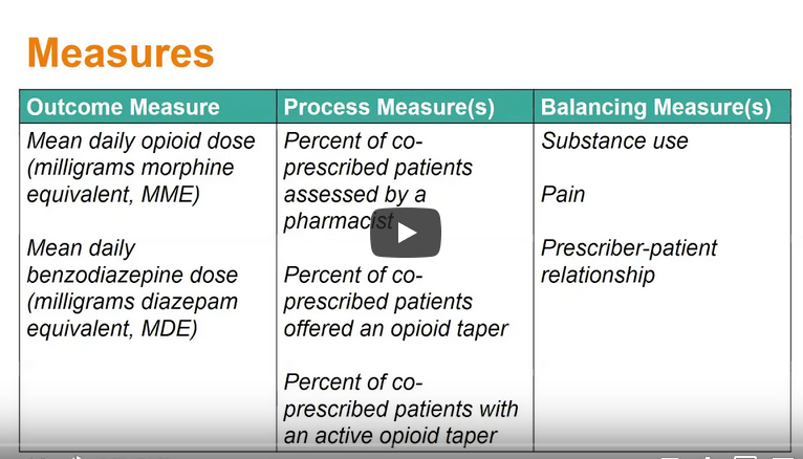
    • Opioid stewardship: implementing pharmacist led assessments for patients co-prescribed opioids and benzodiazepines at an academic family health team – St. Michael’s Hospital Academic FHT
    • BounceBack continues to significantly reduce percentage of participants who withdrew or become unreachable after assessment – CMHA York South Simcoe

    Slides and video are now available on our site.


    primary care virtual community with org logos

    Primary Care Virtual Community

    Space and opportunity to learn, engage and propel meaningful improvements

    The Primary Care Virtual Community brings together leaders in primary care interested in enabling meaningful system change. The virtual community is a collaboration developed by the OCFP and AFHTO and convened by The Change Foundation.

    Join the Community to access past webinar recordings and plan to attend the next webinar on February 13.


    Transitions between hospital and home quality standard and Alternative Levels of Care
    Ontario Health (Quality) has released a new quality standard for transitions between hospital and home. It comes with a patient guide and recommendations for system adoption too. Questions? Contact QualityStandards@HQOntario.ca.  

    And in related news, Continuum Santé has a free webinar on Feb. 5 at 1:00 p.m., ALC in healthcare: Identify, Reduce and Optimize.


    BORN EOI Jan 2020


    Opportunity to join Prenatal Screening Ontario Advisory Committee

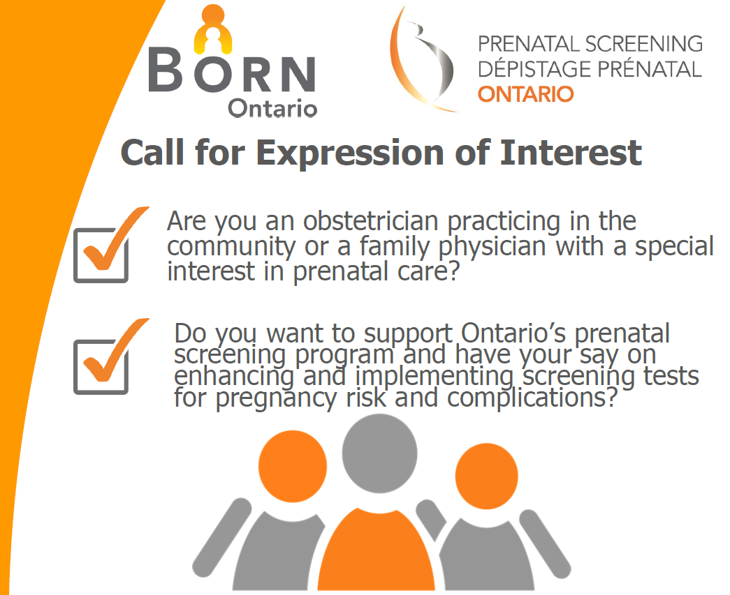
    BORN Ontario is seeking family physicians with a special interest in prenatal care for the Prenatal Screening Ontario Advisory Committee.

    For more information email PSO@BORNOntario.ca. Deadline Jan. 31, 2020.


    See poster pdf.


    Creating Accessible Health Care: Sharing Resources and Lessons Learned, Jan. 23, 2020
    Health Care Access Research and Developmental Disabilities webinar focused on tools to help adults with developmental disabilities become more involved in their health care visits, and to improve communication with health care providers. Register today.


    Transitioning NP Research to Practice, Jan. 24, 2020
    NP Global Initiatives Annual Online Conference. Network in the comfort of your own home or office. Register now.


    Your Patients Are Using Cannabis: Here’s What You Need To Know Conference, Feb 28, 2020
    NPAO’s conference held for primary care providers will help you gain a better understanding of medicinal cannabis. Learn more here.


    ECHO Child and Youth Mental Health, Feb. 2020
    Registration for the winter cycle is now open, with new sessions starting in February. Register now.


    Capstone Summit, May 4-5, 2020
    Conference hosted by the Change Foundation to showcase their work with caregivers and formally introduce their new strategic focus. Find out more here.

  • Alternate payment model is saving province millions at two Alberta clinics

    Excerpt from CBC News, published December 10, 2019

    By Jennifer Lee


    A new report by the Health Quality Council of Alberta reveals two Alberta primary care clinics — using an alternative funding model for doctors — are saving the health-care system millions of dollars a year.

    HQCA studied 10 years’ worth of data from Calgary’s  Crowfoot Village Family Practice and The Taber Clinic, both of which offer a team-based model of care.

    Instead of a fee-for-service payment system used by most Alberta physicians — where doctors bill the province for every patient visit — the two clinics receive yearly block funding from Alberta Health to care for a patient regardless of how often that person is seen.

    “We can say very clearly that the experience at both of those clinics has led to better outcomes for their patients and at a lower cost for the system,” said Andrew Neuner, CEO of  the Health Quality Council of Alberta.

    HQCA found that while these clinics cost the province more upfront, they saved the health care system a combined total of nearly $120 million over 10 years. According to the report, one of the main drivers of the savings is fewer hospital trips.

    “We know that our patients present to the emergency department less than other clinics. We know that our patients get admitted to hospitals less than other clinic patients. And when they do become admitted their length of stay is shorter,” said Dr. Rick Ward, a physician at Crowfoot Village Family Practice, a multi-disciplinary clinic operating under an alternative funding model since 1999.

    The clinic receives a block amount for each of its 24,000 patients — which averages out to $315 per patient/per year, depending on age and gender.

    That basket of funding is used to cover overhead costs, hire other health care providers and pay its physicians.Beyond family doctors, patients have access to health-care professionals ranging from pharmacists and diabetic educators to nurse practitioners and dieticians.

    Because funding doesn’t hinge on the fee for service model — where doctors have to physically see a patient to get paid — Ward said patients may see a different provider depending on their needs.

    “You end up having the right patient problem being seen by the right provider,” he said, adding that there are times when patients’ concerns can also be addressed with a phone call or email.

    Another benefit, according to Ward, is that patients with chronic diseases tend to be healthier because they have access to health-care providers such as dieticians who work on preventative care.

    “What we’ve shown is that despite the fact that we may be a bit more expensive in the front end, the amount of money that we save downstream in medical costs is huge, to the tune of about $4.3 million a year.”

    The cost savings at The Taber Clinic have been even more dramatic. According to the HQCA report, the alternative payment model there saved the healthcare system $7.2 million in 2016-17.

    “As primary health-care providers, we see tremendous benefit to practicing in an alternate funding model, for our patients, ourselves and the health system in Taber,” said Dr. Andrea Hargrove, partner at The Taber Clinic.

    “Our patients benefit from fewer hospital admissions and fewer, more comprehensive, timely clinic visits, from a full functioning multi-disciplinary team. We are hopeful that our model of care can be successfully translated to other communities across the province.”

    Click here to read the full article.

  • Bits & Pieces: member news, Ontario Not-for-Profit Corporations Act update & more

    Bits & Pieces: member news, Ontario Not-for-Profit Corporations Act update & more

    Your Weekly News & Updates


    In This Issue  
    • Member news
    • Reminder – we need your feedback for the 2020 conference
    • Ontario Not-for-Profit Corporations Act update
    • Ministry of Health and related news
    • Rainbow Health Ontario 2020 early bird ends Friday, Jan. 17
    • Upcoming events on Mental Health and Addiction QI and more

    Member news

    Couchiching FHT- A new decade and a new model of health care for Orillia area – per Dr. Kim McIntosh, “In 2020, the local team will focus on frail seniors before the program is expanded to include palliative patients in the second year.

    “I’m really hoping and anticipating mental health and addictions being our third-year population.”

    What is happening with the OHT in your community? Let us know!


    Zayna Khayat, AFHTO 2019 opening plenary speaker


    Reminder- we need your feedback for the 2020 conference

    The conference on Oct. 8-9, 2020 will be undergoing a major revamp, and now we’d like you to weigh in. What should the conference look like? How can we make sure it stays relevant to your needs? Tell us everything! The survey should take less than 5 minutes. Deadline Jan. 20, 2020.


    Ontario Not-for-Profit Corporations Act update
    Per the Ontario Nonprofit Network, there is continued delay for the Ontario Not-for-Profit Corporations Act (ONCA), which means there will be no proclamation in early 2020:
    “The Ontario government gave notice in 2018 that the proclamation … would occur “early 2020”. However, on December 31, 2019, the Ministry of Government and Consumer Services informed us and updated their website that ONCA will not be proclaimed in early 2020. No specific date or timeline was given.” Read more here.


    Ministry of Health and related news
    Phasing out red and white OHIP cardsGovernment to phase out red and white OHIP cards

    Connected Care Update – recruitment has begun for the next Patient Ombudsman as well as for members for the Minister’s Patient and Family Advisory Council.

    Ministry of Children, Community and Social Services memo health care provider billing for completion of ODSP application forms and introduction of the online medical invoice form

    Chief Medical Officer of Health Memo– update on the Novel Coronavirus in China


    Rainbow Health Ontario 2020

    Rainbow Health Ontario 2020 early bird ends Friday, Jan. 17

    The Rainbow Health Ontario (RHO) 2020 Canada’s forum for LGBT2SQ health is happening April 21-23 in Niagara Falls, Ontario. They’re expecting over 400 attendees and are delighted to present keynotes from Dr. James Makokis and author Zena Sharman, as well as 85 sessions featuring over 200 presenters.  

    More information is available on the conference website. Note that their early bird rate at a 15% discount is in effect until Friday, Jan. 17.


    Preparing for Audits, Jan. 15, 2020
    Register early for AFHTO’s upcoming Financial Webinar Series session. Learn how to prepare for audit season. Register now!


    Mental Health and Addiction QI Collaborative Webinar Series – Part 2, Jan. 14, 2020
    Join CMHA, AMHO, and AFHTO for a second of a 4-part webinar series on community and primary care QI projects and initiatives with a focus on mental health and addictions. Register now!


    Your Patients Are Using Cannabis: Here’s What You Need To Know Conference, Feb 28, 2020
    NPAO’s conference held for primary care providers will help you gain a better understanding of medicinal cannabis. Learn more here.


    Pain Management Program Neuropathic Pain Seminar, Feb 8, 2020
    Join St. Joseph’s Hospital in London for an all-day seminar to cover all things having to do with neuropathic pain. Learn more here.


    Together We Care Conference (OTLCA & ORCA), March 30 to April 1, 2020
    Together We Care 2020 is Canada’s largest gathering of long-term care and retirement home professionals, held in Toronto. Learn more here.