Blog

  • Bits & Pieces: interim CEO announced and more

    Bits & Pieces: interim CEO announced and more

    Your Weekly News & Updates


    In This Issue  
    • Interim CEO announced
    • Connect with your peers using AFHTO’s IHP Directory
    • New one-and-done therapy can help curb severe COVID-19 infection and more
    • Open grant: optimizing team-based primary care
    • Updated information about accessing the provincial PPE/testing supplies stockpile
    • Health Connect Ontario is now Health811
    • Seeking older adults with multiple chronic conditions
    • Help address social isolation and loneliness in older adults
    • Upcoming events including Long COVID and more


    Interim CEO announced

    From President and Board Chair, Sara Dalo:

    “I am pleased to share that the AFHTO Board has appointed Bryn Hamilton to become AFHTO’s interim CEO, effective March 27, 2023. Many of you already know Bryn as AFHTO’s Director of Governance and Integration, supporting our membership through her focus on primary care integration, strengthening Board governance practices and supporting health system integration. Bryn has been with AFHTO since 2014 and is well versed in the needs of the members and the health system transformation currently underway. We invite you to join us in welcoming Bryn in her new role!”

    Visit our site to find out more about the recruitment process and sign Kavita’s farewell e-card.


    Connect with your peers using AFHTO’s IHP Directory

    IHPs in AFHTO member teams are encouraged to sign up to AFHTO’s IHP Directory! This directory will help improve AFHTO’s communication to IHPs, and it will support IHP networking, information sharing, and collaboration.

    After you sign up, you will be emailed a link to a spreadsheet with the names, professions, team names, and work emails of all IHPs who have signed up for open communication. You may sort by profession to see the names of those in the same discipline as you.

    AFHTO will be checking the directory and emailing links to new registrants every 1-2 weeks. We look forward to improved communication from AFHTO to IHPs, and across IHPs in AFHTO-member teams!


    New one-and-done therapy can help curb severe COVID-19 infection and more

    Recent updates include:

    We continue to update multiple pages on our site with resources and news:

    Novel Coronavirus (COVID-19) Updates– the original page, with news and updates. You can find links to related pages here as well.


    Open grant: optimizing team-based primary care

    The Foundation for Advancing Family Medicine (FAFM) has launched an open call for proposals supporting primary care practitioners and teams in augmenting and optimizing interprofessional team-based care in their practices. Funding up to $200,000 CAD is available. Deadline Feb. 20, 2023.


    Updated information about accessing the provincial PPE/testing supplies stockpile

    From the Ministry of Public and Business Service Delivery (MPBSD):
    “In November 2022, we informed you that the current Remedy ordering platform will be sunset by April 1, 2023, and replaced with a new system. We have now received information on the new system (the centralized PPE Supply Portal), including instructions on how each primary care practice will need to set up an account to access the new system.” This document outlines the steps required to onboard primary care teams to the PPE Supply Portal and a link to the registration form. Registration deadline is Tuesday, February 28, 2023.


    Health Connect Ontario is now Health811

    Health Connect Ontario has changed its name to Health811.

    The focus and function is still the same – it remains a resource Ontarians can access 24/7 to receive health advice, speak with a registered nurse, get assistance finding local health supports and to find trusted health information. Health811 can be accessed by calling 811 (TTY: 1-866-797-0007) or by going online at Ontario.ca/Health811 or Ontario.ca/Sante811. Read the memo (EN and FR) for more information.


    Seeking older adults with multiple chronic conditions
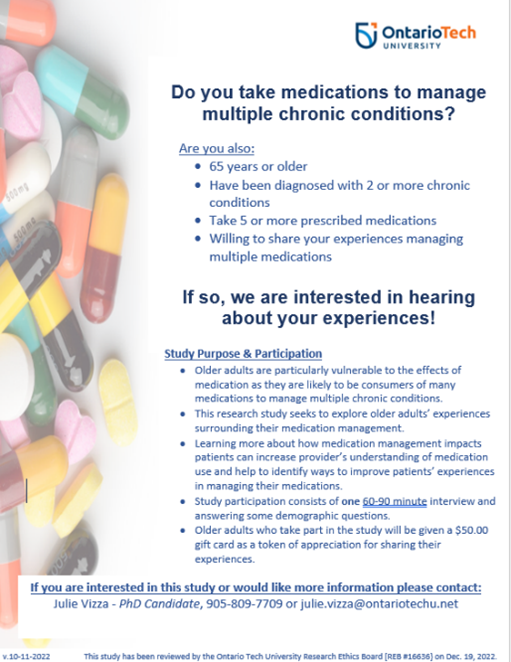
    older adults with multiple chronic conditions recruitment poster linked in the blurb

    A PhD student from Ontario Tech University, Julie Vizza, is looking for participants to take part in a study entitled, “Experiences with medication management in interprofessional care models: A study of older adults with multiple chronic conditions”. It will examine the experiences of older adults who have been prescribed multiple medications to manage multiple chronic conditions and who are followed by a FHT in Ontario.

    Its purpose is to understand the impact of managing multiple medications and how individuals conceptualize their medication management care team. The results will offer important ideas on how care can be improved to better support patients in managing their medications.

    Eligible participants are currently being followed by a FHT in Ontario. See the poster for additional criteria. If you know of any older adults that may be interested in sharing their experiences or to learn more about the study, please contact: julie.vizza@ontariotechu.net.


    Help address social isolation and loneliness in older adults
    The Canadian Coalition for Seniors’ Mental Health has begun a new project on Social Isolation and Loneliness. It’s intended to lead in the development and promotion of Canadian guidelines for health and social service providers to identify and address isolation and loneliness among older adults. The survey’s focus is to learn more about the attitudes, experiences, knowledge, and ideas of people working directly with older adults, regarding the topic of social isolation and loneliness. It should take roughly 10-15 minutes to complete. Find out more here.


    OHT Engagement Learning Series – Session 3 of 7: Equity, Diversity & Inclusion, Feb. 21, 2023
    Hosted by Institute for Better Health and Trillium Health Partners. Register here.


    Sickle Cell Disease: A New Quality Standard for High-Quality Care in Ontario, Feb. 22, 2023
    This session will introduce Ontario Health’s recently released Sickle Cell Disease quality standard and describe how it can drive QI and improve care for Ontarians across the health system. Register here.


    Long COVID, Feb. 24, 2022
    57th in the series “Changing the way we work” on Friday, February 24, 2023, at 7:55-9:15 am, hosted by UofT and OCFP. Register here.


    Strategies to Increase Client and Family Engagement, Feb. 27, 2023
    Hosted by RNAO and presented by Victorian Order of Nurses (VON). Register here.

  • Update on CEO Recruitment Process, Appointment of Interim CEO and Sending Your Best Wishes to Kavita

    Update on CEO Recruitment Process, Appointment of Interim CEO and Sending Your Best Wishes to Kavita

    Message Sent on Behalf of Sara Dalo, Chair of the AFHTO Board of Directors

    Dear Members,

    I am pleased to share that the AFHTO Board has appointed Bryn Hamilton to become AFHTO’s interim CEO, effective March 27, 2023. Many of you already know Bryn as AFHTO’s Director of Governance and Integration, supporting our membership through her focus on primary care integration, strengthening Board governance practices and supporting health system integration. Bryn has been with AFHTO since 2014 and is well versed in the needs of the members and the health system transformation currently underway. We invite you to join us in welcoming Bryn in her new role!

    With Bryn in the role of the Interim CEO, the work has started to recruit our current CEO’s (Kavita Mehta) successor. The AFHTO Board of Directors has established a CEO Selection Committee to recruit  our new CEO and ensure a smooth leadership transition by July 2023. The Committee has engaged Mirams Becker to lead the search. Inquiries may be directed to Sarah Adams, Principal, at sarah@miramsbecker.com.

    As we wind down the time we have with Kavita, I would like to recognize her once again for the contributions to our sector, especially in advancing interprofessional team-based primary care. Kavita, your leadership, passion, and values will not be forgotten. You will be missed and we wish you all the best! If you would like to join us in wishing Kavita farewell with your own best wishes, please leave your message to her on this e-card before her last day on Friday, March 10, 2023: https://ellacard.com/sign/6166bcff-87e1-4bd2-bcb6-fdae8226a1a7.

    Over the next year we will see a lot of changes in AFHTO, but it also mirrors a lot of changes happening in the health care system. I want to take this opportunity to thank all our members for their support and patience as we navigate this new chapter for AFHTO – your ongoing dedication to ensuring the ongoing success and sustainability of the organization is very much appreciated. If you have any questions, please do not hesitate to contact me at any time.

    Yours in Good Health,

    Sara Dalo signature


    Sara Dalo
    Board Chair and President, AFHTO

  • QI in Action eBulletin #126: The Health Equity Questionnaire

    QI in Action eBulletin #126: The Health Equity Questionnaire

    In this Issue:

    • The Health Equity Questionnaire: Standardized Entry of Social Determinants of Health into EMRs
    • Resources for social determinants of health
    • Food for thought
    • Updated Primary Care Data Reports for Ontario Health Teams
    • Help shape the future of virtual health care in Ontario
    • Phase I Guidance for Clinically Appropriate Use of Virtual Care for Primary Care evaluation survey
    • Virtual Care Guidance Statements Checklist for Clinicians and other resources
    • Upcoming Events


    The Health Equity Questionnaire: Standardized Entry of Social Determinants of Health into EMRs

    The Health Equity Questionnaire: Standardized Entry of Social Determinants of Health into EMRs. Below are a group of hands in different watercolours reaching upwards

    To provide the most equitable care for our patients we need to know their social determinants of health. Current EMR specifications don’t require that this information is included in the dataset for each patient and EMRs don’t provide a standardized way to enter it.

    The Health Equity Questionnaire (HEQ) has been developed to allow social determinants of health information to be entered into EMRs efficiently and in a standardized way, allowing it to be easily accessed, updated, and searched.

    Questions and data elements from an extensive set of existing tools were collected, prioritized, and distilled into a practical new format designed around provider workflows. Many stakeholders, including several EDI specialists, were consulted.

    At the time of a visit, clicking on the ‘HEQ’ button in the chart will bring up the Questionnaire form. The provider can then enter any information that may be relevant to the patient’s care and save it to the chart. Clicking the button again will bring up a new copy of the form which is pre-populated with any previously entered data and can be updated as needed. The form is designed to display all the information in an “at a glance” view which means that all the information is shown in one window without any clicking or scrolling.

    The questions can also be sent directly to the patient via secure messaging. They can then answer any of the questions that they’re comfortable with and their responses will be automatically entered directly into their charts. If an HEQ form is not already in the chart, then a new one will be created. If there is an existing form in the chart, then it will simply be updated with their responses.

    Care must be taken to ensure that the patient understands why the questions are being asked, that the information will be treated with the same confidentiality as the rest of their medical information, that it will only be used to provide them with the best care possible, and that they only need to provide whatever responses they’re comfortable with.

    A video demonstration of the tool is available here.

    The toolkit can be downloaded from the TELUS Health Practice Solutions Community Portal by navigating in Chatter to Groups, Active Groups and then the East Wellington Family Health Team group. Plans are in progress to migrate the toolkit to the other main EMRs as well.

    Questions and feedback are welcome and can be directed to Dr. Kevin Samson kevin.samson@ewfht.ca.

    Resources for social determinants of health
    Webinars and conference sessions

    Select Resources

    Food for Thought

    Updated Primary Care Data Reports for Ontario Health Teams
    INSPIRE PHC has posted the updated Primary Care Data Report for all of Ontario. These reports track key primary care health system indicators and guide attachment strategies in Ontario Health Teams (OHTs). The Primary Care Data Working Group produced reports specific to each OHT and are intended to provide a deeper understanding of the attributed population of each OHT. Find out more.

    Help shape the future of virtual health care in Ontario
    Help shape the future of virtual health care in Ontario! We are looking for patients and caregivers in Ontario to take a 15 to 20-minutes survey on the experiences and expectations with virtual care appointments as a patient or caregiver with a doctor, nurse, or another healthcare professional in a family practice. This study from the University of Toronto and the Bruyére Research Institute is led by Dr. Rachelle Ashcroft and Dr. Simone Dahrouge.

    To take the survey, please click one of the links below:

    As part of the recruitment efforts, primary care clinics will have the opportunity to receive a customized report based on the template regarding the experiences of their patients with virtual care. In addition, you can view the report last year on virtual care that was shared broadly to key decision makers. Should you be interested in participating or learning more, please contact Simon Lam, research coordinator, at sck.lam@utoronto.ca.

    Phase I Guidance for Clinically Appropriate Use of Virtual Care for Primary Care evaluation survey
    Ontario Health is conducting an evaluation of the ‘Phase I Guidance for Clinically Appropriate Use of Virtual Care for Primary Care’ developed in collaboration with an Expert Panel. You’re invited to complete this survey to capture your awareness of, access to and adoption of the Phase I Guidance for Clinically Appropriate Use of Virtual Care for Primary Care.   

    You may access the survey here.  

    The survey should take approximately 5-10 minutes to complete, and your responses will remain anonymous. If you have any questions or concerns regarding the survey, please do not hesitate to contact Mimosa Zhao by email at zhao@theevidencenetwork.com.


    Upcoming Events

    Sickle Cell Disease: A New Quality Standard for High-Quality Care in Ontario
    February 22, 2023, 12:00pm
    This session will introduce Ontario Health’s recently released Sickle Cell Disease quality standard and describe how it can drive quality improvement and improve care for Ontarians across the health system. Register here.

    Media Messaging on Equity: How do we do better?
    March 6, 2023, 4:30 pm
    The third-annual Vohra Miller Lectures in Critical Public Health Issues in collaboration with the Institute for Pandemics puts a spotlight on the media’s handling of equity issues, including health equity, during the COVID-19 pandemic and beyond. What are the forces that shape media coverage of equity matters? What does the future of the media landscape hold and, what are the possibilities? Register here.

    In Case You Missed It: Check out eBulletin #125 or other back issues here!
    Questions? Comments? Contact us at improve@afhto.ca.

  • Bits & Pieces: 2023 pre-budget submission and more

    Bits & Pieces: 2023 pre-budget submission and more

    Your Weekly News & Updates


    In This Issue  
    • 2023 pre-budget submission and a new Canada Health Transfer agreement
    • Collaboration in team-based primary care during the COVID-19 pandemic: study
    • COVID vaccinations and digital supports materials
    • Member stories
    • Coming soon: Updated High Risk OBSP genetic assessment referral criteria and forms
    • Seeking participants for an online survey about improving osteoarthritis care
    • Seeking patients for early detection of Mild Cognitive Impairment and Alzheimer’s disease
    • Upcoming events including Using Culturally Safe Practices to Build Meaningful Relationships with Indigenous Communities and more


    2023 pre-budget submission and a new Canada Health Transfer agreement

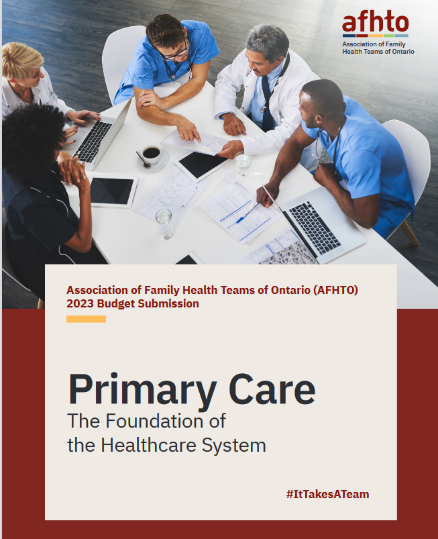
    over of AFHTO 2023 prebudget submission titled Primary Care: The Foundation of the Healthcare System. It's an overhead view of five people in blue scrubs and white coats meet around a white table with coffee, paper and laptops.

    On February 6, 2023 AFHTO submitted our recommendations to the government for their 2023 budget. Recommendations 1 and 2 of our 2023 pre-budget submission was done in collaboration with partners in the Primary Care Collaborative and recommendation 3 and 4 are two other recommendations AFHTO is advocating for.

    Our recommendations are broken into four sections:

    1. Make team-based primary care available to more Ontarians through an investment of an additional $75 million per year for 10 years.
    2. Address the health human resource (HHR) crisis in primary care through the creation of a primary care HHR table.
    3. Provide mental health and addictions services and home and community care in coordination with primary care.
    4. Provide resources to support the implementation of primary care networks (PCNs) and recognize PCNs as the organizing model for primary care.

    Read more here.

    And in related news, read the Primary Care Collaborative’s release on today’s meeting between the Prime Minister and premiers here:


    Collaboration in team-based primary care during the COVID-19 pandemic: study

    Now published in BMJ Open, “A qualitative study of collaboration in interprofessional primary care teams during the COVID-19 pandemic” is our study with Drs. Rachelle Ashcroft, Catherine Donnelly and others. “Results revealed the importance of collaboration for provider well-being, and the challenges of providing collaborative team-based primary care in the pandemic context. Caution against converting primary care collaboration to predominantly virtual modalities postpandemic is recommended.” Read more here.


    COVID vaccinations and digital supports materials

    Recent updates include:

    We continue to update multiple pages on our site with resources and news:

    Novel Coronavirus (COVID-19) Updates– the original page, with news and updates. You can find links to related pages here as well.


    Member stories

    Markham FHTDr. Allan Grill on how primary care is dealing with demand

    St. Michael’s Hospital Academic FHTDr. Tara Kiran contributes to The Globe and Mail– “We need bold reform to fix family health care”


    Coming soon: Updated High Risk OBSP genetic assessment referral criteria and forms

    Ontario Health wishes to inform everyone of some upcoming changes to the High Risk Ontario Breast Screening Program (OBSP). The High Risk OBSP was launched in 2011 to support organized screening of people at high risk for breast cancer. The program now screens approximately 13,000 participants each year with mammography and screening breast magnetic resonance imaging (MRI) (or screening breast ultrasound if breast MRI is not medically appropriate). Read the full email here.


    Seeking participants for an online survey about improving osteoarthritis care

    With funding from the Arthritis Society, Dr. Anna Gagliardi and University Health Network (UHN) researchers interviewed 27 women with osteoarthritis (OA) and 31 healthcare professionals to identify strategies needed to improve OA care for diverse women, and possibly other disadvantaged groups. They are now seeking women with OA, family physicians, and healthcare researchers to participate in a two-round online survey. They will ask you to complete the Round One online survey (about 20 minutes). A few weeks later, they will send you anonymous results, and ask you to complete the Round Two survey (about 10 minutes).

    ELIGIBLE WOMEN:
    — Have suspected or confirmed osteoarthritis
    — Are aged 40 or older
    — Were born in or have lived in Canada for 10 years or more
    — Can speak and understand English language
    — Represent the following ethno-cultural group(s): Chinese, Filipino, Indian, Pakistani, African, Caribbean
    ***If you are a woman interested in participating or wish to learn more about the study, please contact: Angelina.abbaticchio@uhn.ca. Women will receive an e-giftcard for their participation.

    ELIGIBLE HEALTHCARE PROFESSIONALS:
    — Are a family physician practicing in Canada
    — AND/OR are a researcher in the area(s) of health services research on OA or inequities in women’s health
    ***If you are a healthcare professional interested in participating or wish to learn more about the study, please contact: madeline.theodorlis@uhn.ca.


    Seeking patients for early detection of Mild Cognitive Impairment and Alzheimer’s disease

    The Alzheimer Society of Toronto (AST), Toronto Memory Program, Retispec and Summerhill Optometry are conducting a study, funded by the Davos Alzheimer’s Collaborative. The aim is to enable early detection of Mild Cognitive Impairment and Alzheimer’s disease through increased awareness and assessment in accessible community-based settings. While they have 3 assessment locations in Toronto, they are also open to travel to your location if there is significant interest. Cognitive Assessments are delivered by trained social workers. The completed assessments will be provided to the patient’s primary care provider for interpretation and follow-up. AST will provide services to those diagnosed with mild cognitive impairment or dementia.
    The study is open to individuals 65 years and over who are experiencing memory problems, but do not have a diagnosis of Mild Cognitive Impairment or Dementia.

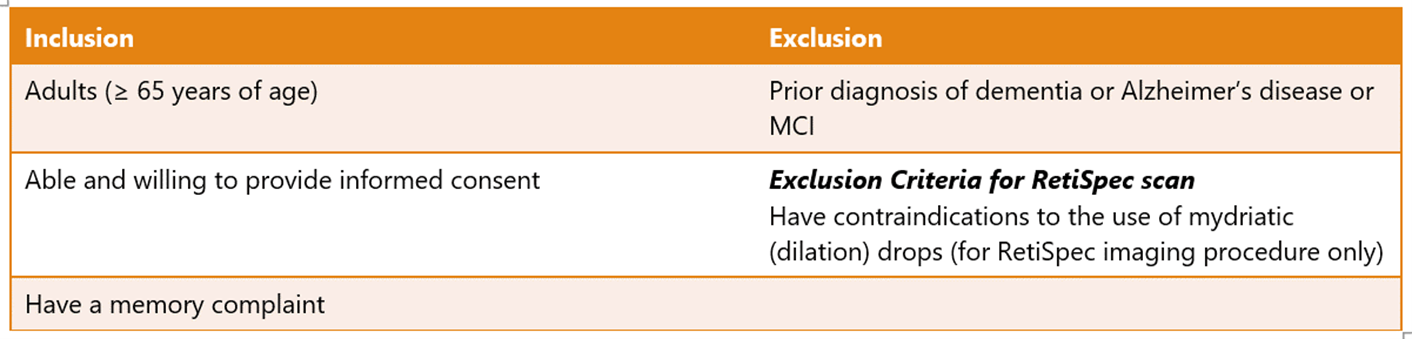
    Inclusion and Exclusion Criteria:

     Inclusion - Adults (≥ 65 years of age); Able and willing to provide informed consent; Have a memory complaint. Exclusion- Prior diagnosis of dementia or Alzheimer’s disease or MCI; Exclusion Criteria for RetiSpec scan Have contraindications to the use of mydriatic (dilation) drops (for RetiSpec imaging procedure only)

    To learn more:

    If you would like to find out more by speaking to someone directly, please contact Sangeeta Semwal at DACstudy@alz.to or 416-708-8423.


    Canadian Health and Well-Being In Developmental Disabilities, Feb. 8, 2023
    Digital conference hosted by Temerty Faculty of Medicine, University of Toronto. Find out more here.


    Using Culturally Safe Practices to Build Meaningful Relationships with Indigenous Communities, Feb. 9, 2023
    Hosted by Indigenous Primary Health Care Council. Register here.


    New Horizons Speaker Series webinar, Feb.10, 2023
    What are the roles of virtual only clinics and technology-enabled care in the future of the health care system? How will these shape the future of primary care in Ontario? Join U of T Department of Family and Community Medicine faculty members for this discussion. Register here.


    Cybersecurity and Canadian Health Care: Where do vulnerabilities lie? Feb. 14, 2023
    Hosted by The Globe and Mail. Register here.


    OHT Engagement Learning Series – Session 3 of 7: Equity, Diversity & Inclusion, Feb. 21, 2023
    Hosted by Institute for Better Health and Trillium Health Partners. Register here.


    Strategies to Increase Client and Family Engagement, Feb. 27, 2023
    Hosted by RNAO and presented by Victorian Order of Nurses (VON). Register here.
  • Primary Care Leaders Urge Canada’s Premiers and Federal Government to Strike a Deal That Focuses on Expanding Team-Based Primary Care Including Access to a Primary Care Provider

    Primary Care Leaders Urge Canada’s Premiers and Federal Government to Strike a Deal That Focuses on Expanding Team-Based Primary Care Including Access to a Primary Care Provider

    TORONTO, Feb. 6, 2023 /CNW/ – The Primary Care Collaborative (PCC) is encouraging Premiers across the country, and the federal government, to strike a new Canada Health Transfer agreement that will focus on expanding team-based care and ensure that every Canadian has access to a family doctor or nurse practitioner within an interprofessional team.

    At this critical time, political leaders across the country can make a real impact on Canada’s ongoing healthcare crisis. Research shows that high-performing healthcare systems are based on a strong foundation of comprehensive primary care. But millions of Canadians from coast to coast, including the Indigenous peoples and communities of Canada, are currently unable to access the care they deserve.

    That is why the Premiers and Federal Government need to ensure that team-based models of care are at the centre of a renewed Canada Health Transfer Agreement. Doing so will ensure that we are building a cost-effective healthcare system where people can access better, more integrated, more accessible and continuous care.

    In team-based models of care, patients can access primary care from a family physician or nurse practitioner, but the benefit to the patient and the system comes from the larger team, which also includes interprofessional healthcare providers, including nurses, social workers, dietitians, pharmacists and many others. These healthcare providers work as a team to meet patients’ health and social needs, including their mental health needs.

    A special focus should be placed on Canada’s Indigenous communities, many of which do not have access to Indigenous Primary Health Care. Access to culturally appropriate and safe care is critical to ensure that Indigenous Peoples and communities are supported and able to thrive.

    With primary care at the foundation, the Primary Care Collaborative’s 2023 Ontario Budget submission lays out what is needed to help build a healthcare system where people can access better care. With increased funding from the Canada Health Transfer Agreement, we are recommending that the Ontario government: 

    • Makes team-based primary care available to more Ontarians through an investment of an additional $75 million per year for 10 years;
    • Addresses the health human resource (HHR) crisis in primary care through the creation of a primary care HHR table; and
    • Invests in primary care for Indigenous Peoples.

    About the Primary Care Collaborative (PCC):
    We are a coalition of primary care organizations collectively representing 14,000 family doctors, 1,000+ primary care nurse practitioners, 286 primary care teams, 28 Indigenous primary care teams, including northern, rural, and remote teams. This alliance of comprehensive primary care organizations joined together for a common purpose to build on the collaborative work during the COVID-19 pandemic as we move towards recovery in a time of health system transformation. The PCC provides a collective and cohesive voice with the purpose of advancing equitable person-centred primary care in Ontario and is focused on influencing policy by creating a unified voice towards resolving barriers or challenges that prevent comprehensive primary care from being the foundation of the health system. Learn more about the PCC here.

    Click here for the full article

    SOURCE Primary Care Collaborative

    For further information: Kavita Mehta, Chief Executive Officer, kavita.mehta@afhto.ca

    French Translation below


    Les responsables des soins primaires exhortent les premiers ministres des provinces et des territoires et le gouvernement fédéral à conclure une entente portant sur l’expansion des soins primaires dispensés en équipe, y compris l’accès à un fournisseur de soins primaires   

    TORONTO, 6 février 2023 /CNW/ – Le Groupe collaboratif de soins primaires (Primary Care Collaborative – PCC) invite les premiers ministres des provinces et des territoires et le gouvernement fédéral à conclure une nouvelle entente de Transfert canadien en matière de santé portant sur l’expansion des soins dispensés en équipe afin que chaque Canadienne et Canadien ait accès à un médecin, une infirmière praticienne ou un infirmier praticien au sein d’une équipe interprofessionnelle. 
    En cette période critique, les dirigeants politiques canadiens peuvent avoir une incidence réelle sur la crise des soins de santé qui perdure au pays. Les études montrent que les systèmes de soins de santé très performants sont fondés sur des soins de santé primaires complets. Cependant, des millions de Canadiennes et Canadiens d’un bout à l’autre du pays, y compris les peuples et les communautés autochtones, sont incapables d’avoir accès aux soins auxquels ils ont droit.
    C’est pourquoi les premiers ministres des provinces et des territoires et le gouvernement fédéral doivent s’assurer que les modèles de soins dispensés en équipe sont au cœur d’une nouvelle entente de Transfert canadien en matière de santé. Ainsi, il sera possible d’établir un système de soins de santé ayant un bon rapport coût-efficacité au sein duquel les personnes peuvent recevoir des soins continus meilleurs, plus intégrés et plus accessibles.   
    Dans les modèles de soins dispensés en équipe, les patients peuvent recevoir des soins primaires d’un médecin de famille, d’une infirmière praticienne ou d’un infirmier praticien; cependant, les avantages pour le patient et le système proviennent de l’équipe élargie, qui comprend des fournisseurs de soins de santé interprofessionnels, notamment du personnel infirmier, des travailleurs sociaux, des diététistes et des pharmaciens. Ces fournisseurs de soins de santé travaillent en équipe pour satisfaire aux besoins des patients en matière de soins de santé et de services sociaux, y compris leurs besoins en matière de santé mentale. 
    Une attention particulière devrait être accordée aux communautés autochtones du Canada, dont plusieurs n’ont pas accès à des soins de santé primaires à l’intention des Autochtones. L’accès à des soins respectueux des valeurs culturelles est essentiel afin d’aider les peuples et les communautés autochtones et de leur permettre de s’épanouir.  
    Reposant sur les soins primaires, le mémoire du Groupe collaboratif de soins primaires pour le budget de l’Ontario de 2023 précise ce qui est nécessaire pour créer un système de soins de santé au sein duquel les personnes ont accès à de meilleurs soins. Grâce au financement accru provenant de l’entente de Transfert canadien en matière de santé, nous recommandons au gouvernement de l’Ontario les mesures suivantes :  
    •    Améliorer l’accès aux soins de santé primaires dispensés en équipe pour les Ontariennes et Ontariens grâce à un investissement additionnel de 75 millions $ par année pendant 10 ans; 
    •    S’attaquer à la crise des ressources humaines du secteur de la santé quant aux soins primaires par la création d’une table sur les ressources humaines en santé à ce sujet;  
    •    Investir dans les soins primaires pour les peuples autochtones. 
    À propos du Groupe collaboratif de soins primaires :
    Nous sommes une coalition d’organisations offrant des soins de santé primaires, qui ensemble, représentent 14 000 médecins de famille, plus de 1 000 infirmières praticiennes/infirmiers praticiens, 286 équipes prodiguant des soins primaires, 28 équipes de soins de santé primaires autochtones, y compris des équipes en milieu nordique, rural et éloigné. Cette alliance d’organisations offrant des soins de santé primaires complets s’est formée dans le but commun de tirer parti du travail collaboratif accompli au cours de la pandémie de la COVID-19 alors que nous nous dirigeons vers le rétablissement en période de transformation du système de santé. Le Groupe collaboratif de soins primaires forme une voix commune et cohérente ayant pour but d’améliorer les soins de santé primaires équitables axés sur la personne en Ontario, et il tente d’influencer les politiques en faisant front commun afin d’éliminer les obstacles et les difficultés qui empêchent les soins de santé primaires d’être le fondement du système de santé. Pour en lire davantage sur le Groupe collaboratif de soins primaires, cliquez ici.
    SOURCE : Groupe collaboratif de soins primaires
     
    Pour de plus amples renseignements : Kavita Mehta, directrice générale, kavita.mehta@afhto.ca

  • AFHTO’s 2023 Pre-Budget Submission

    On February 6, 2023 AFHTO submitted our recommendations to the government for their 2023 budget. Recommendations 1 and 2 of our 2023 pre-budget submission was done in collaboration with partners in the Primary Care Collaborative and recommendation 3 and 4 are two other recommendations AFHTO is advocating for.
    With primary care at the foundation, our submission lays out what is needed to help build a province where people can access better care, more integrated care, and more accessible and continuous care.

    Our recommendations are broken into four sections:

    1. Make team-based primary care available to more Ontarians through an investment of an additional $75 million per year for 10 years. 

    Every Ontarian deserves access to comprehensive and equitable care where and when they need it. It’s time for Ontario to commit to ensuring access to a comprehensive interprofessional primary care team for every person who needs it. This would be achievable with a commitment to invest $75 million per year for the next 10 years in team-based care.

    2. Address the health human resource (HHR) crisis in primary care through the creation of a primary care HHR table

    In addition, we need to attract healthcare providers to care for our aging and increasingly complex patients. The retention and attraction of healthcare workers in primary care is a challenge we cannot face alone. We are proposing to create a primary care HHR table for future HHR and capacity planning that includes all PCC partners, the Ministry of Health and Ontario Health.

    3. Provide mental health and addictions services and home and community care in coordination with primary care. 

    We need a health system that is truly integrated. Care coordination and system navigation is a key function of primary care and should be foundational in realizing the vision of OHTs. To be most effective, critical mental health and addictions and home and community care supports must be embedded in primary care—the most effective setting to facilitate seamless transitions in care and offer patients a single point of contact in their health care journey.

    4. Provide resources to support the implementation of primary care networks (PCNs) and recognize PCNs as the organizing model for primary care. 

    PCNs will enable horizontal integration, enhancing the capacity of primary care physicians and nurse practitioners to support each other and their patients while facilitating local care planning with their respective OHTs. PCNs will benefit all primary care physicians and nurse practitioners practising under all funding models by streamlining supports and available resources.

    Our 2023 Pre-Budget submission can be read here.

    The PCC Pre-Budget submission can be read here.

  • Your Health: A Plan for Connected and Convenient Care

    This email was sent to EDs/Admin leads, board chairs and lead MDs/NPs of AFHTO member teams

    Dear Triad Members,

    Today Health Minister Sylvia Jones launched Your Health: A Plan for Connected and Convenient Care, a plan that sets the vision and direction for Ontario’s health system strategy for the next few years. With a strategy focused on the patient experience by developing system capacity through increasing the health workforce, expanding ways people can access care and investing in health infrastructure, the plan focuses on three pillars:

    1. The right care in the right place – increasing access to care in community-based settings that improve convenience and relieve pressure on hospitals, long term care facilities and other areas of the health care system;
    2. Faster access to care – focused on cutting wait times which has led to delayed care, including backlogs for non-urgent surgeries and diagnostic procedures like MRI and CT scans;
    3. Hiring more health care workers – which includes new commitments to tackle the HHR crisis through further education and training, especially in hospitals, primary care settings, long term care homes and home care.

    In the first pillar, the plan talks about bringing together primary care. Two new commitments were announced that will help support organizing primary care and expanding access to team-based care:

    1. An investment of $30 million to create up to 18 new teams and help bridge the gap in accessing interprofessional primary care for vulnerable, marginalized, and unattached patients to ensure they are able to connect to care where and when they need it. In addition, this expansion will support primary care integration within Ontario Health Teams and sustain direct service delivery in existing interprofessional primary care teams that are experiencing increased operating costs.
    2. Create a connected health care system through Ontario Health Teams by supporting collaboration and engagement with primary care providers across the province through the creation of primary care networks. Every Ontario Health Team will include a group of primary care providers organized in a network to be part of decision-making and to improve access to care for patients.

    AFHTO has been advocating for years around expansion of team-based care and we were pleased to see the first large investment to expand teams in the province in a number of years. The details of what the implementation will look like (new teams or expansion of already existing teams) is still being worked through and we hope to provide you with more information as we continue to dialogue with the Ministry and Ontario Health.

    As part of that first commitment, it is also our assumption that already existing teams will be able to access funding to offset their increased operating costs. Once again, we will provide you with further details as they become available as we know many of you are dealing with increased costs that cannot be managed within your already constrained budgets.

    The formation of primary care networks is something that has happened organically in many OHT regions across the province and having this acknowledged in the plan is the first step toward organizing primary care and giving the important voice that the sector needs into local OHT planning, decision-making and collaboration. AFHTO, along with our partners at the Ontario College of Family Physicians and the OMA Section on General and Family Practice, has been advocating for the creation of these networks of family physicians, nurse practitioners and community specialists (where appropriate) in order to truly ensure primary care is the foundation of the OHTs and the health care system.

    The plan also provided details around increasing the health workforce by increasing the number of training spots for health care professionals every year including:

    • 455 new spots for physicians in training (160 undergraduate and 295 postgraduate)
    • 52 new physician assistant training spots
    • 150 new nurse practitioner spots
    • 1,500 additional nursing spots

    Expanding education and training programs through the Learn and Stay grant was announced as was the “As of Right” to allow health care workers registered in other provinces and territories to immediately start working and caring for people without first having to register with one of Ontario’s health regulatory colleges.

    What is not mentioned in the plan is a compensation strategy to address wage inequity between sectors and the need to increase salaries to keep up with inflation and cost of living. The government confirmed that there is separate work being done around this as they are looking at all sectors to support ongoing retention strategies. A reminder that AFHTO is working with our partners on a Compensation Market Salary Review to provide government with data to highlight the disparity in salary levels in the community/primary care level.

    There is a lot to digest in this plan and over the next few weeks we will provide you with more information as we find out more details. While we had hoped for more investments to ensure more Ontarians have access to team-based care, this is great news for team-based care which we hope will lead to further investments over the next few years.

    As always, please reach out if you have any questions.

    Yours in Good Health,

    The AFHTO Team

    Resources:

  • Bits & Pieces: member stories, welcome to Taryn and more

    Bits & Pieces: member stories, welcome to Taryn and more

    Your Weekly News & Updates


    In This Issue  
    • Member stories
    • Welcome to Taryn Jacquard
    • OurCare survey results are here
    • Fee code for Long COVID and more
    • New quality standard – sickle cell disease
    • Reports and relevant news – improving access in rural Canada and boosting balance
    • Population Health: Governance (free course), starts Jan. 31, 2023
    • Upcoming events including COVID vaccinations and digital supports and more


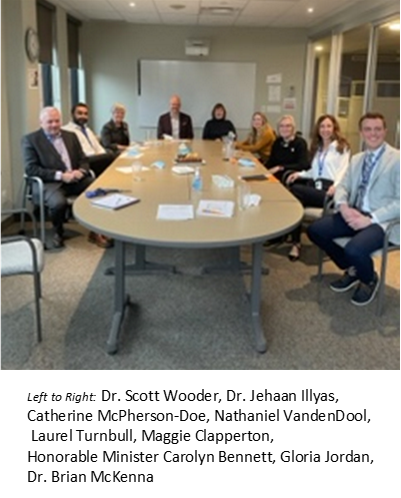
    A group of people in business clothes sit around a table in a meeting room with a white board behind them.


    Member stories

    Hamilton FHT– the Hon. Carolyn Bennett, federal Minister of Mental Health and Addictions and Associate Minister of Health visited Hamilton FHT to discuss their primary care and mental health integrated service model (picture right)

    City of Lakes FHT OMA research finds virtual care not associated with strain on emergency departments

    Harrow Health Centre and Windsor FHTsWindsor and Harrow Health Centre FHTs Receive grant for oral health care support


    Taryn is wearing a white T-shirt and jeans. She's sitting on the floor with her back against a white wall.

    Welcome to Taryn Jacquard

    We’re happy to introduce Taryn Jacquard as our new executive assistant and programs coordinator, ensuring that the CEO, Board, and Director of Governance and Integration are well supported in their roles.  

    She brings with her over ten years of experience working in not for profit, providing support to executives, boards, and national associations.  She has deep family connections to health care and is incredibly passionate about the well-being and availability of care to those in Ontario.

    Prior to joining AFHTO, Taryn ran her own business, offering administrative support to businesses and associations. Welcome to the team!


    OurCare survey results are here

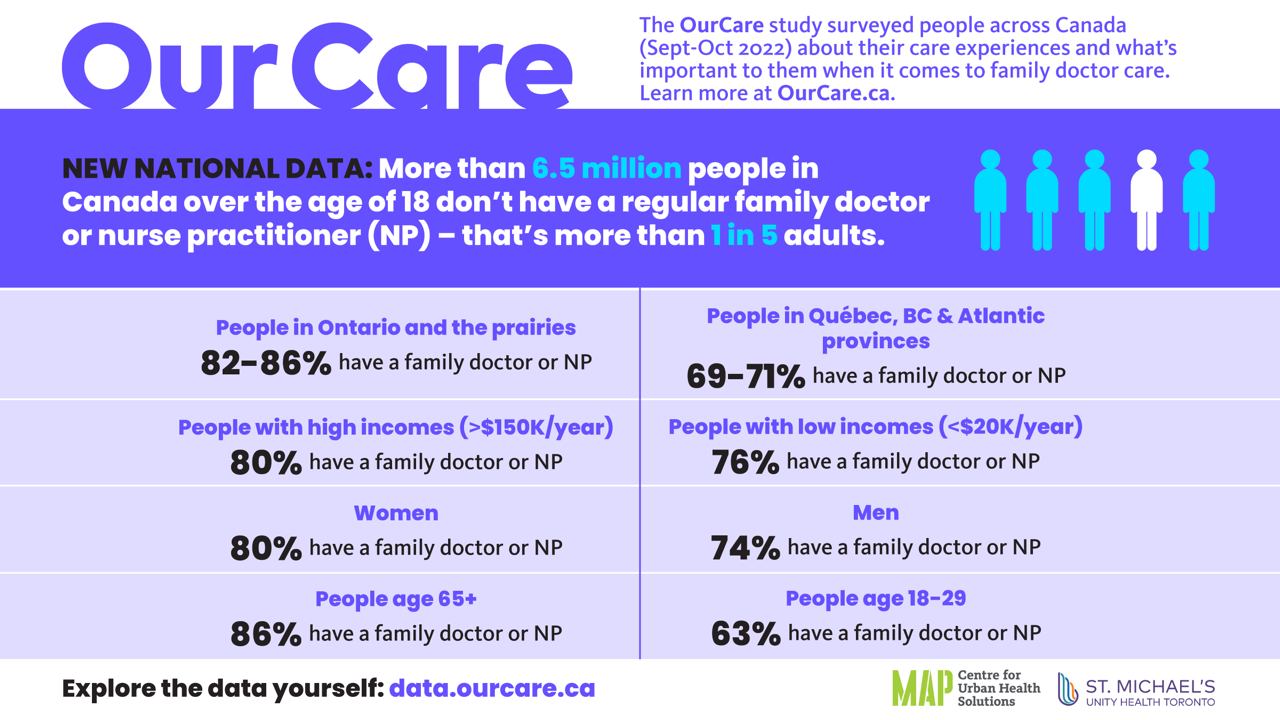
    OurCare survey results

    Overall, 77% of people in Canada age 18+ have a family doctor or nurse practitioner (NP) who they see regularly for care. That means:

    More than 6.5 million people in Canada don’t have a regular family doctor or NP – that’s more than 1 in 5 adults. Find out more at data.ourcare.ca. You can also read more about the survey results in a recent Healthy Debate article. 


    Fee code for Long COVID and more

    Recent updates include:

    We continue to update multiple pages on our site with resources and news:

    Novel Coronavirus (COVID-19) Updates– the original page, with news and updates. You can find links to related pages here as well.


    New quality standard – sickle cell disease

    Ontario Health has developed a new quality standard that outlines what high-quality care looks like for people with sickle cell disease. The standard can be used to help: 

    • Patients, families, and caregivers know what to ask for in their care  
    • Health care professionals know what care they should be offering  
    • Health care organizations improve the quality of care they provide

    To learn more about how you can use it to improve care for people with sickle cell disease, please register for a webinar on February 22, 12 – 1 p.m. ET. For more information, please contact QualityStandards@OntarioHealth.ca.


    Reports and relevant news – improving access in rural Canada and boosting balance


    Population Health: Governance (free course), starts Jan. 31, 2023
    Offered by Universiteit Leiden via Coursera, this course combines the Population Health perspective with theories of healthcare system governance. Find out more.


    COVID vaccinations and digital supports, Feb. 3, 2023
    56th in the series “Changing the way we work” by UofT and OCFP. Register here.


    Canadian Health and Well-Being In Developmental Disabilities, Feb. 8, 2023
    Digital conference hosted by Temerty Faculty of Medicine, University of Toronto. Find out more here.


    Using Culturally Safe Practices to Build Meaningful Relationships with Indigenous Communities, Feb. 9, 2023
    Hosted by Indigenous Primary Health Care Council. Register here.


    New Horizons Speaker Series webinar, Feb.10, 2023
    What are the roles of virtual only clinics and technology-enabled care in the future of the health care system? How will these shape the future of primary care in Ontario? Join U of T Department of Family and Community Medicine faculty members for this discussion. Register here.


    Cybersecurity and Canadian Health Care: Where do vulnerabilities lie? Feb. 14, 2023
    Hosted by The Globe and Mail. Register here.


    OHT Engagement Learning Series – Session 3 of 7: Equity, Diversity & Inclusion, Feb. 21, 2023
    Hosted by Institute for Better Health and Trillium Health Partners. Register here.

  • Updated Guidance for MHA Funding & Reporting Requirements

    Dear EDs and Admin Leads,

    As you are aware, we released guidance on potential options for you to direct your MHA funding.

    There is updated guidance from the Ministry of Health on (1) procurement guidelines and (2) inclusion of capital costs. The IPHCC has also provided details on a draft list of questions that you will be asked to answer in April via survey – there is no action to take at this point.

    1. Procurement Guidelines: If you are planning to partner with MindBeacon, AskForHelp.ca, or other provincial organizations that provide MHA services, you may need to spend over $10,000. Please note that the standard OPS procurement guidance will not apply in this case. The Ministry of Health will issue a formal notice on this exception, which you can share with your auditor (and Board) to assist with planning.

    2. Capital Costs: As you may be aware, initial guidance from the Ministry of Health stated that funding could not be used towards capital costs (e.g., leasehold improvements, equipment). However, to assist teams with maximizing the funds received, that guidance has since changed. You may now be eligible to direct funds toward capital costs, subject to approval from your MOH contact. Please reach out to your MOH contact for the required approvals.

    Please note that with these updates, you are still required to spend your funds on or before March 31st, 2023, or they will be subject to reconciliation and unspent funds will be recovered by the Ministry.

    3. Reporting Requirements: The IPHCC has been asked to lead a report back to the Ministry on how the MHA funds have been spent by all interprofessional team based models. IPHCC is working in collaboration with the Nurse Practitioner-Led Association (NPLCA), the Alliance for Healthier Communities (Alliance) and AFHTO on this report, with the hope that we can use the information to advocate for continued support of MHA in interprofessional primary care.

    You can find the list of draft questions here – much of the information was included on AFHTO’s initial guidance to teams, so you will likely have this information already. We ask that you please complete the survey with as much information as possible once it is officially released by the IPHCC, mostly likely in April. As you know, our goal is to make the case to government for sustainable funding. We appreciate you taking time to gather this information that will support future advocacy work.

    If you have any questions or concerns, please contact us at any time. Thank you as always for the services, programming, and support that you provide to your patients and community that are experiencing MHA issues and concerns.

    Yours in good health,

    The AFHTO Team

  • NPLC and FHT Contracts

    This email was sent to EDs/Admin leads, board chairs and lead MDs/NPs of AFHTO member teams

    Dear triad members,

    By now you would have received letters from the Ministry of Health with regards to the NPLC and FHT contracts for the upcoming fiscal year.

    In the letter to the NPLCs, the Ministry noted that it was implementing section 15.10 of the contracts:

    • The Ministry reserves the right to assign or transfer its roles and responsibilities under this Agreement to an agency of the Crown, upon giving the Clinic 60 days written notice of its intention to do so. In the event of any such assignment or transfer shall not require a formal assignment agreement, and upon such assignment or transfer, all references to the Ministry shall automatically apply to the Crown agency.

    As such, the Ministry intends to transfer the contract management and oversight of the NPLCs to Ontario Health, effective April 1, 2023. All provisions in the NPLC Agreement shall remain in full force and effect. The Ministry, along with Ontario Health, will be holding a Q&A about the transition and any questions the NPLCs have on Monday, February 6th from 12:00 to 1:00 p.m. If you didn’t get a meeting invite, please contact your Ministry Senior Program Consultant.

    A separate letter went to FHTs that now notes that the FHT contract has been extended for another year. Your contract now expires on March 31, 2024. You MUST sign back your letters before March 15, 2023 to enable ongoing funding to flow to your FHT into the next fiscal year.

    We understand many of you will have questions on the NPLC transition process and what this might mean for the potential of a future transition of the FHT contracts to OH. We’re speaking regularly with MOH and OH and hope to have a Q&A in the spring for FHTs, once we have a better idea of what the next steps will be with the future of the FHT contract.  

    We also recognize the extensive feedback our members provided during consultations over the last year on ways to strengthen the FHT contract, and we provided these recommendations to the Ministry in November 2022. These recommendations will still be kept under consideration and are being discussed internally at the MOH and OH. While we won’t see changes to the FHT contract for another year, amendments to the attestation and Schedule A might happen sooner and this may require action from you prior to March 31, 2023. Alongside government, we will keep you apprised of expectations and timelines.

    AFHTO is here to support you as we continue building relations with OH, ensuring support mechanisms through them are clear, and as we work toward a more streamlined process for contract management.
    We will continue to work with you, with MOH, and with OH on next steps.

    Please do not hesitate to contact us if you have any questions.

    Sincerely,
    Your AFHTO Team