Category: Uncategorized

  • Announcing the AFHTO 2015 Bright Lights Award Winners!

    AFHTO has awarded nine innovators for their work in making meaningful improvements in patient health, how patients experience their care, and how efficiently healthcare resources are used. The awards recognize individuals for their leadership and the work being conducted to improve the value of services delivered by primary care teams in Ontario. Winners were selected from over 50 nominations. The Bright Lights Award recipients are listed below.  Click on the links in the names below to read a summary of their achievements. Guelph Family Health Team Awarded for population-based primary health care: Planning and integration for the community

    Windsor Family Health Team Awarded for population-based primary health care: Planning and integration for the community

    • Health Equity: Providing Transgender Primary Healthcare, and
    • A Systems Approach to Comprehensive Health Promotion Planning
    • Video announcing award

    Centre for Family Medicine Family Health Team, Chronic Pain Clinic Awarded for optimizing capacity of interprofessional teams

    • Reversing the Silent Epidemic of Chronic Pain: An Interprofessional and Teaching Chronic Pain Clinic
    • Video announcing award

    South East Toronto Family Health Team, Patient Advisory Council Awarded for transforming patient’ and caregivers’ experience and health

    Mount Sinai Academic Family Health Team Awarded for transforming patient’ and caregivers’ experience and health

    Central Lambton Family Health Team Awarded for building the rural health care team: Making the most of available resources

    Markham Family Health Team Awarded for advancing manageable, meaningful measurement

    Markham Family Health Team Awarded for leadership and governance for accountable care

    Prince Edward Family Health Team, Hospital@Home Program Awarded for clinical innovations keeping people at home and out of the hospital

    Six of these nine award recipients will also receive education grants. The Bright Light Awards were presented during an awards dinner on the evening of October 28th, in the midst of AFHTO’s 2015 Conference, “Team-Based Primary Care: The Foundation of a Sustainable Health System.” The dinner was attended by over 200 people including AFHTO members, senior representatives from government, key agencies and associations. Keynote speakers, Deputy Minister of Health and Long-Term Care Dr. Bob Bell and Dr. Danielle Martin, family physician and Vice-President of Medical Affairs at Women’s College Hospital FHT and founder of Canadian Doctors for Medicare, joined in celebrating the successes of the award nominees and winners. The call for nominations for the 2016 Bright Light Awards will go out in June 2016. All AFHTO members are welcome and encouraged to participate. [envira-gallery id=”19571″] For additional event photos, please contact info@afhto.ca.

  • 2015 IHP Sessions & Networking

    Interprofessional Collaboration as the anchor of team based primary care

    AFHTO members are made up of diverse teams of professionals working together to provide excellent patient care. This interactive workshop, hosted by AFHTO’s IHP Communities of Practice, guided FHT/NPLC staff and providers through exercises designed to strengthen interprofessional collaboration. This 3 hour workshop was divided into two segments. Members could attend one or both of these.

    (I) Knowing How to Play and What to Build in the Sandbox We Call Primary Healthcare — A Vision for Ontario’s Primary Care Teams

    Presented by Dr. Ivy Oandasan, Professor, Department of Family and Community Medicine, University of Toronto

    Click here to access the slides from the workshop. Ivy Oandasan Head Shot Workshop for all staff and health care providers in FHTs and NPLCs to develop building a common understanding of what it looks like and what it means to work in an interprofessional team. By the end of this interactive workshop participants will:

    1. Learn from and celebrate successes of our collective advancement of interprofessional collaboration
    2. Identify structures, processes, practices and behaviors required to foster an interprofessional quality focused and patient centred culture of primary care

    Commit to being agents of change within our own primary care settings supporting tangible, feasible and measurable interprofessional collaboration possibilities.

    (II) Profession-Based Networking Sessions

    Presented by the AFHTO Community of Practice Leads

    This was an opportunity for all members to meet, mingle and share insights with peers in similar roles from across Ontario. Agendas for each session were developed by their Community of Practice Lead. The AFHTO IHP Communities of Practice are a member-driven initiative, led by dedicated IHP volunteers from teams across the province and supported by AFHTO. They provide resources, advice and opportunities for staff and clinicians in primary care teams. The following groups and communities of practice participated and hosted a networking session:

    Administration Nurse (RN/RPN) Physician & Quality Improvement Decision Support Specialist (QIDSS)
    Chiropodist Nurse Practitioner Physiotherapist
    Chiropractor Occupational Therapist Psychologist
    Health Promoter Pharmacist Registered Dietitian
    Mental Health and Social Worker Physician Assistant Respiratory Therapist

      To learn more about and join an IHP Community of Practice click here.

    Accreditation

    • Attendance at this program was certified Canadian College of Health Leaders members (CHE / Fellow) for up to  1.5 Category II credits.
    • This program was accredited by the College of Family Physicians of Canada and the Ontario Chapter for up to 3 Mainpro-M1 credits.

    Archive


  • Data to Decisions: What Difference is it Making?

    “We felt that it was the best way to see where we rate according to other teams to use for improvement work within our team”- AFHTO Member

    Data to Decisions (D2D) is a summary of the performance of primary care teams across Ontario on a small number of indicators that are both meaningful to providers and possible to measure. D2D is grounded in Ontario’s Primary Care Performance Measurement Framework (PCPMF) and reflects Barbara Starfield’s principles of comprehensive, patient-centered care. It’s intended to help members compare their performance to that of peers, focus local improvement efforts and also give primary care teams a voice in the future of performance measurement in primary care. A project of the Association of Family Health Teams of Ontario (AFHTO), D2D was made possible through the investment in more than 30 Quality Improvement Decision Support Specialists (QIDS Specialists) across Ontario. ASSESSING IMPACT Following the release of the second iteration of the D2D report in June 2015, AFHTO began a developmental evaluation to collaboratively understand and increase the impact of D2D on:

    • Participation in Performance Measurement
    • Access to Data
    • Use of Data
    • Quality of Care

    WHAT’S THE DIFFERENCE?

    • Team characteristics: Better scores on team climate and changes in QI goal orientation
    • EMR use: Increased data standardization despite no change in EMR functionality
    • QI activity: More conversations with physicians and board re: QI and performance
    • Physician ambassadors: associated with better team characteristics
    • Performance on processes/outcomes of care: No change on the core D2D indicators (old data, 8 month interval)

    Learn more about selected findings to date here. WHAT’S NEXT?  The D2D journey continues with release of D2D 3.0 in January 2016. The focus is on increasing participation and encouraging teams to make decisions from data. To that end, AFHTO is assembling strategies for improvement that are aligned with the way teams work to achieve their goals. The information on this page is also available as a pdf here.

  • Patients as Partners in Primary Care: A Journey towards Comprehensive Measurement

    Ontario’s primary care sector is moving towards a more comprehensive, patient-centered approach to quality health care delivery. To fully understand whether primary care has reached this goal of quality, there needs to be a way to measure both the comprehensiveness and patient-centered aspects of care. We developed a survey in collaboration with volunteer patient representatives from Patients Canada, incorporating discussions with a broader group of representatives. The main objective was to determine which indicators are most important to patients and in what way. You can learn more about the process here. This information would then be incorporated into a composite quality “roll-up” indicator, based on performance on common indicators weighted according to their relative priority to patients. The resulting indicator would better reflect the comprehensiveness and patient-centeredness of care.

    “Over half of the participants indicated that they want an equal partnership with their doctor when it comes to decision-making around their care.”

    Results: An important finding of the survey was that over half of the participants indicated a desire for an equal partnership with their doctor when it comes to decision-making around their care. This validates the original premise that it was important to ask patients what is important to them and further emphasizes the need to incorporate patient input concretely into measurement of quality in primary care.

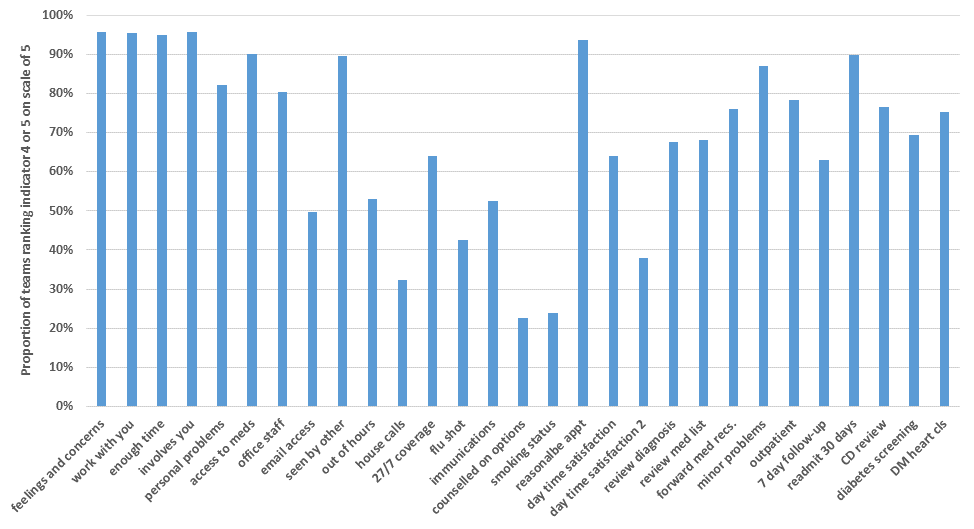
    Importance of indicators to patients

    patients as partners handout pic- 2016-01-27 The results show that patients do consider certain indicators more important than others, the most important ones being those related to their experience of being heard and involved in their care. Based on these data, weights were derived to calculate a composite measure of quality which was first included in AFHTO’s membership wide performance measurement report, Data to Decisions (D2D) 2.0. Conclusion: Overall, this collaborative project was successful in determining what is important to patients and how it is important. The partnership between Patients Canada and AFHTO is continuing through joint submissions to conferences. Future inquiries into patients’ values regarding their care should similarly involve collaboration with patients throughout the entire development and implementation process. WHAT’S NEXT?  AFHTO is continuing work on measurement in primary care with each iteration of D2D which will include an updated quality “roll-up” indicator with input from patients and doctors. The information on this page is also available as a pdf here.

  • Standardized EMR Queries: Using EMRs Better

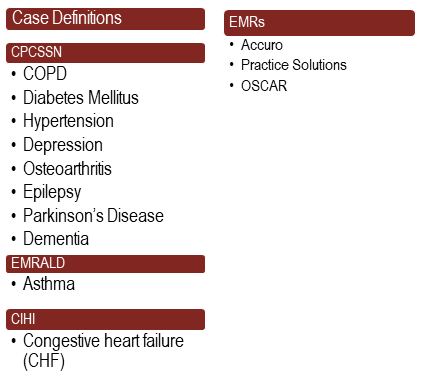
    AFHTO’s Algorithm Project was established in 2014 with a small group of QIDS Specialists interested in data mapping. The group quickly realized that there was a need to develop and test standard EMR queries to enhance the ability of all teams to extract and analyze EMR data, and to facilitate data clean-up initiatives. One year later the Algorithm Project team, composed mostly of volunteers, has established their mission to develop, test and deploy consistent queries based on the formally tested case definitions developed and published by CPCSSN and EMRALD. This work builds on the ALIVE project. The team’s goal is to improve access to clinical data through the development of standard queries for three major EMRs so that teams across the province can collect data on the chronic conditions as shown below.

    Goals of having consistent clinical data:

    • Deliver consistent searches for multiple disease conditions across multiple EMRs
    • Allow for easy and consistent identification of correct patients not previously identified
    • Offer early treatment, hopefully mitigating disease progression
    • Improve patient outcomes
    • Reduce costs to the healthcare system

    Results (learn more about the team’s methodology and the results here):

    • COPD query: this query was developed in collaboration with the Ontario Lung Association (OLA) and the University of Toronto Practice Based Research Network (UTOPIAN)
    • Diabetes query: this query was developed in collaboration with a number of FHT clinicians
    • CHF query: this query was developed in collaboration with Cardiac Care Network and eHealth Center of Excellence
    • Depression query: this query was developed in collaboration with St Michael’s Hospital, Hamilton FHT and eHealth Center of Excellence

    Currently working on

    • Hypertension
    • Queries on opioid use

    Summary of impact:

    The Algorithm Project team is a member-driven initiative, established by the QIDS Specialists in response to a need they identified within their teams. The spontaneous emergence of this group is an example of the positive impact of the ground-up approach to effective use of EMRs. Additionally, the team’s success illustrates the value of having the people using the technology bringing about the change. The standardized queries developed have shown that while EMR data quality issues have historically resulted in more emphasis being placed on data standardization efforts, it is possible to work with EMR data in its current state to get started on the QI journey.

    • Spread Beyond AFHTO

      • Accuro has uploaded the COPD query and made it accessible to all users across the province via the Accuro Alerts Publisher
      • The OLA has shared the COPD query with their network and continues to encourage all providers caring for patients with COPD to use this as a tool to identify patients with a diagnosis of COPD
      • All Telus PS queries are available for download from the Telus Community Portal
      • Query case definition criteria is being used for OntarioMD dashboard specifications
      • Depression query is being used as the basis for the CAMH Optimum project to identify patients in the EMR with treatment-resistant depression
    • A ground-up approach works for getting started

      • Through the development of standardized queries, customized to meet the needs of all teams, it is possible to extract reliable and meaningful data from the EMR without modifying functionality – teams are already doing this!
      • Converting the diabetes case definition into a standard query, we now have teams creating more accurate diabetes registries – physicians are validating the lists, teams are coding their patients in a consistent way and updating their cohorts accordingly
    • Getting value out of EMR data starts with people

      • Despite no change in EMR functionality, data standardization is increasing.
      • Feasible solutions for extracting data and using it to improve have been developed and implemented through QIDS Specialists and the EMR CoPs
    NOTE: All queries are tested and validated prior to release. However, changes that take place after the queries are released may affect how accurate they are. Such changes could include EMR software updates, new medications, and changes to standard clinical definitions. They may result in false positives, that is, patients being flagged who do not have the specified condition. They may also result in false negatives, that is, patients not being flagged who do have the condition. Queries are also limited by the quality of your EMR data. Please exercise judgement when using them, as they are meant to support and complement a chart review, not to replace it.


    WHAT’S NEXT? 

    Members can see updates about the Algorithm Project team in our Members Only section here.  

  • EMR Communities of Practice: Increasing Quality and Access to EMR Data

    Access to data in primary care is difficult, largely because the quality of data in Electronic Medical Records (EMRs) is poor. While it is important to improve the quality of data going into EMRs, it is also worthwhile to get better at using the data and systems as they are. Over 30 Quality Improvement Decision Support Specialists (QIDSS) are dispersed across the province to help members access and use data better to improve care, supported by our Quality Improvement in Primary Care Community of Practice.

    EMR COP handout pic-2016-01-27

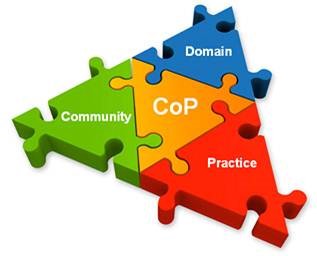
    Change Concept – EMR Communities of Practice (CoPs): AFHTO convened CoPs for 4 EMRs (TELUS PS, QHR’s Accuro, OSCAR, P&P) to engage EMR vendors, QIDS Specialists, Physicians, Interdisciplinary Healthcare Providers, and practice staff to continuously improve user expertise and access to EMR data. Unlike most EMR “user groups” the CoPs have the following characteristics:

    • have equality of members
    • focus on issues in common
    • are led by users (QIDSS, physician, etc.)
    • set priorities collectively via action item list
    • solve problems collaboratively through sharing of best practices
    • are accountable to the community
    • have their own social networking platform
    • meet regularly

    Objectives

    1. Leverage the wisdom of the field
    2. Change conversations with EMR vendors to expedite improvement
    3. Identify data extraction tools and processes

    Lessons Learned Outcome Measures

    1. Rapid spread of solutions – 67 teams have implemented standard queries to improve access to data in custom forms, an item assigned high priority by 86% of the Telus PS CoP members.
    2. Improved vendor role and engagement – Vendor representatives invited to participate are product managers and developers as well as sales staff. They participate as equal members – with rapid resolution to problems posted on the online forum.
    3. Use of solutions beyond AFHTO membership – A query to more accurately identify patients with COPD is being spread to all EMR users through partnership with the Ontario Lung Association.

    Access to good quality EMR data remains a challenge, with low maturity in EMR use and low functionality. Integration with other systems is increasing but still problematic. Increase in the spread of standard EMR data entry and extraction tools, however, illustrates that people and processes can increase the value of the technology, with the goal of being able to show improvements in care.

    EMR CoPs have transitioned to OntarioMD

    The EMR communities of practice (CoP) have transitioned from AFHTO to OntarioMD effective March 31, 2020. AFHTO would like to thank all members for their continuous support and participation. We would also like to sincerely thank CoP leads for their dedication to these groups! We look forward to a smooth transition. 

    OntarioMD is in the process of updating membership lists for existing CoPs. Please take a few minutes to fill in this form through which contact info is being collected. OntarioMD will use this information to send all meeting invitations and updates regarding the CoPs after March 31, 2020. Moving forward, the central contact email will be communities@ontariomd.com.

    Listserv emails have been updated to: 

    • For OSCAR users: oscaromdcop@emaildodo.com
    • For Accuro users: accuroomdcop@emaildodo.com
    • For Telus PS users: telusomdcop@emaildodo.com
    • For P&P users: p-pomdcop@emaildodo.com

    If you have any comments, questions or concerns about this transition, please take a few minutes to fill out the following surveys: 

    Thank you for your continued support and participation in these important meetings!


  • Data to Decisions eBulletin #21

    Please vote here to refine indicators for next iterations of D2D. If you’ve had any concerns or questions about these indicators, please voice them! Click here to learn more about emerging evidence that high quality comprehensive, patient-centered care costs less. Like a good argument? Come to the Family Feud between Emerg and family doctorss about who could or should be doing what to help keep patients out of the Emerg department. Want ICES data for your team and for D2D 3.0? Join the 70 teams who have already signed up on the HQO portal to get team-level administrative (i.e. ICES) data, including data for D2D indicators NOT available in the physician-level reports. Deadline is Oct 30 – physician agreement is needed in order to sign up. Help spread the word about D2D. Invite others to sign up for the eBulletin online.  What is D2D? Data to Decisions (D2D) is a member-wide summary of performance on indicators that are both possible for members to measure and that are meaningful to members. See the D2D page for more information.

  • AFHTO 2015 Conference: Tips for your arrival and stay at the conference

    It’s now one week to the AFHTO 2015 Conference on October 28 & 29! We look forward to seeing you all as we welcome close to 900 delegates from around the province. To ensure a smooth experience, please see below for some helpful tips for planning your arrival and stay at the conference:

    Planning your Conference Experience

    • Today is the deadline to pick your sessions and ensure your personalized schedule will be printed on your name badge. Click on the “Edit/change registration” icon in your confirmation email to do so.
    • The conference program is available online and a printed kit will be handed out on arrival.
    • Displays at the Conference: Feel free to visit our poster and exhibit displays during your breaks.
    • Wi-Fi will be available to conference attendees for 1 device per person (smartphone, tablet, computer or other electronic device).
    • For information on our Concurrent Sessions, Opening and Closing Plenaries, Bright Lights Awards Dinner, and all other conference sessions click here .

    Conference On-site Registration opens at 7:30 AM on both Oct. 28 and 29

    • Conference registration is in Convention Centre North, Second Floor. For a map of the convention centre see page 3 of the registration kit.
    • If you can no longer attend the conference and someone else is taking your place, please forward your registration confirmation e-mail to him/her to show it at the registration desk

    Sharing your AFHTO experience

    • The official AFHTO hashtag is #afhto2015 – be sure to follow @afhto on twitter and “like” AFHTO on Facebook for regular updates at the conference.

    Hotel Registration & Directions

    As you may have heard, there was a recent flooding at this venue. Westin staff have assured us that their meeting space was not affected and as such, the conference will proceed as scheduled. For those who have booked rooms, we’re working with hotel staff to minimise any potential disruption to your stay and we’ll be sure to provide further updates as soon as we receive them.

    • Hotel room registration is in the main building.
    • Check-in is at 3:00 PM and check-out is at 12:00 PM.
    • Coat and bag check will be available in the Convention Centre North, street level foyer
    • Directions:
    From Pearson: Toronto Hotel Airport Shuttle Pearson Express By car:   Maps and Directions Parking in and near the hotel Public Transit:   TTC:                      www.ttc.ca GO Transit:          www.gotransit.com VIA:                       www.viarail.ca

    This program has been accredited by the College of Family Physicians of Canada and the Ontario Chapter for up to 17 Mainpro-M1 credits. Attendance at this program entitles certified Canadian College of Health Leaders members (CHE / Fellow) to 2.5 Category II credits for Oct 27th Governance in Primary Care; 1.5 Category II credits for Oct 28th pre-conference (Leadership and IHP Sessions); 4 Category II credits for the Conference towards for their maintenance of certification requirement.

  • AFHTO 2015 Conference: Invitation to submit questions for closing plenary

    The AFHTO 2015 Conference culminates with the closing plenary – “Evolution of a sustainable health system – Where do we go from here?” Please read below then reply  to submit questions you would like the panel to address.

    With the Minister’s release last Thursday of the Report on behalf of the Primary Health Care Expert Advisory Committee, the door is now open for consultation and feedback. Given this opportunity:

    Unfortunately, Deputy Minister Dr. Robert Bell has had to withdraw from the closing panel due to an unavoidable scheduling conflict. He is keen to speak with AFHTO members and has been re-scheduled to open the Bright Lights Awards dinner instead.

    Once again, AFHTO members are invited to reply to submit questions you would like to have answered in the discussion “Evolution of a sustainable health system – Where do we go from here?” by the panelists:

    • David Price, Co-Chair, Primary Health Care Expert Advisory Committee and Chair, Department of Family Medicine, McMaster University and Hamilton Health Sciences Centre
    • Sean Blaine, incoming AFHTO President + Lead Physician, STAR FHT (Stratford)
    • Paul Huras, CEO, SE-LHIN
    • Cathy Faulds, OCFP President + Lead Physician, London FHT
    • Kavita Mehta, Executive Director, South East Toronto FHT + an AFHTO Past President
    • Sonia Mastroianni, Patient Advisory Committee member, South East Toronto FHT