Category: Uncategorized

  • Data to Decisions eBulletin #68: The good news about cost continues!

    The good news about cost continues! D2D 5.0 shows a continuing downward trend in healthcare costs among patients of teams, particularly those supported by QIDSS. Want the rest of the story? See all the highlights from D2D 5.0 here and check out your performance on the interactive report. Want ideas about how to use your D2D report – even (or especially!) if you don’t find all the indicators useful? Join our webinar on October 12th  to hear how others are using D2D to improve data quality, start debates about meaningful measurement, and even improve care. Frustrated by a lack of progress with diabetes outcomes? Join our Diabetes Care Community of Practice, and tap into the knowledge and experience of others who are tackling the same hard problems. “Too many emails!” We hear you. Even though enough of you are reading this to put the eBulletin into “superstar” category (thanks!), we know most of you can’t read every issue. From now on, your eBulletin will be a monthly mailout – one small step toward Inbox Zero. In Case You Missed It: Check out eBulletin #67 or peruse other eBulletin back issues here!

    D2D 5.0 Timeline


    Help spread the word about D2D – invite others to sign up for the eBulletin online. 

  • Algonquin FHT Physician-Pharmacist Team the First to Use E-Prescription Software

    Muskoka Region article published October 2, 2017. Article in full pasted below. Alison Brownlee, Huntsville Forester MUSKOKA — Muskoka has kick-started the end of the paper-based medical prescription era across Canada. Dr. David Mathies and Dr. Caroline Correia, who are Algonquin Family Health Team members, and Bill Coon, owner and pharmacist at Muskoka Medical Centre Pharmacy, were the first physician-pharmacist team to electronically send and receive a patient medicine e-prescription through a soon-to-be national software system called PrescribeIT. “In the short term for us, I think the benefits are all patient care,” Coon told muskokaregion.com. Canada Health Infoway launched the physician-designed and federally funded e-prescribing initiative in Huntsville in August. Rollout to other provinces and territories will start in 2018. The software allows for digital transfers of prescriptions between the physician and pharmacist electronic patient medical record systems — eliminating paper prescriptions and print outs while enabling direct messaging between pharmacists and physicians. “The big thing for us is being able to real-time send a question back to the doctor immediately,” said Coon. “And you get and answer right away through the system without transferring it through a secretary and dispensary assistant.” The software, he said, would give pharmacists more access to patient information, resulting in more integrated patient care, especially since patient prescriptions can come not only from family doctors, but also specialists and emergency rooms, as examples. Dr. Correia had applied to host the software launch, following a general call for applications, while she was on maternity leave, but as the launch was scheduled earlier than expected, her colleague Dr. David Mathies stepped in to assist. “They were looking for a small community where the physicians and pharmacists worked well together,” said Dr. Mathies. “And where they were using the electronic medical records that coincided with their first steps.” Plus, he said, the office and the pharmacy were steps away from each other in the same building, which made manually double-checking the digital information easier. He said the e-prescribing system was more efficient because it offered direct communication between doctors and pharmacists without involving front office staff in transferring calls or handling paper. And, he said, the prescription information, including drug and dose, got mapped immediately into his electronic medical record, as well as the pharmacist’s, for the patient. “The other side benefits? We can hopefully manage opiate prescriptions better (and) we can manage compliance with prescriptions better,” he said. Dr. Mathies added, though, the new software cannot be used for every patient as not all physicians and pharmacies have access to it yet. “It’s still in a limited production run,” he said. Tania Ensor, a director with Canada Health Infoway, said the independent, not-for-profit organization funded by the federal government had a health-care mandate that included protecting patient data from commercial use and preventing brand-influenced prescribing and dispensing. E-prescriptions, said Ensor, sidestep handwritten and autofax prescription loss, transcription error and miscommunication. “It’s actually a much safer system for patients, as well as easier for doctors and pharmacists,” she said. The new secure system would also cut down on fraud and misuse caused by stolen prescription pads or duplicated prescriptions, she noted. “And that is safer for everybody,” she said. “(And) because (physicians and pharmacists) are getting rid of wasteful time — they’re not spending time on faxes and phone calls and rekeying in information — they have more time for patient care.” Click here to access the Muskoka Region article.

  • MOL Healthcare Sector Plan – Primary Care Webinar Oct. 4

    Be prepared! The MOL has initiated their random site inspections of FHTs and CHCs to determine compliance with the OHSA and associated regulations. AFHTO has partnered with Public Services Health & Safety Association (PSHSA) to help our members get ready – our online Health & Safety Resources Webpage is now live! We have added sample policies and a Health and Safety Resource Manual, in addition to other resources…be sure to check it out! Missed the August health & safety webinar? By popular demand, we’re offering a second session on October 4th from 1-2 pm. Register now. Password- AFHTO2
  • Exploratory Indicator: Individualized HbA1C Target

    Interpretive Notes Steps to Improvement Data Quality Actions

    For technical notes, please see page 31 of the Data Dictionary.

    Interpretive Notes

    Tips to help you understand the data and put it in context.

    • This indicator does not measure how many patients’ HbA1C level meets their target, or how many have a particular target. It measures how many patients have an individualized target set and recorded in the EMR.
    • Developing individualized targets that treat patients as individuals with unique circumstances and needs allows us to ensure that we are delivering the right care to each patient. Standardized HbA1C targets do not take into account the complexity and diversity of our patient populations. Even targets that vary by age may not be sufficiently flexible; for example, a frail elderly person should have a higher target than a relatively robust person, even if their age is the same. Developing individualized targets that treat patients as individuals with unique circumstances and needs, allows us to ensure that we are delivering the right care to each patient(1).
    • Using individualized targets allows us to count how many patients are getting the right care for diabetes, not just how many are meeting an arbitrary standard.
    • Including this exploratory indicator in D2D is the first step towards including this measure and other patient-centered measures in the diabetes care composite indicator.
    • Learn about other team’s experiences recording individualized HbA1c. Contact your peers for support or if you are interested in implementing a similar initiative.

    Steps to Improvement

    Concrete steps you can take to improve care, based on your data. Assuming you have established that the data are good enough to direct action AND that improving performance in this area is a priority for your team, you may wish to discuss the following options with your clinical leaders, Quality Improvement committees, team staff and/or patients:

    • See what your peers told us in D2D 5.0 about their approaches to recording individualized HbA1C targets in their D2D 5.0 submissions.
    • Contact your peers and work with them to either spread any processes they find have helped them, or collaboratively test some new changes that might work for you AND them.
    • If you are a TELUS PS Suite user, consider using one of these tools developed by fellow AFHTO members. 
      • This Encounter Assistant  has two checkboxes for HbA1C targets: A1C <0.07 or A1C 0.071-0.085. Clinicians can check off either box after discussion with the physician responsible for determining the patient’s target. The individualized target is then appended to the patient’s cumulative patient profile and visible to all care providers. It was developed by Denis Tsang, RD at CareFirst FHT and is available for download from the Telus PS Community Portal.
      • This Diabetes Care Toolbar  allows you to customize HbA1c targets for patients with diabetes. It captures the target HbA1c and indicates whether the patient is meeting the target. The clinician is also able to change the target for each patient. It was developed Dr. Kevin Samson, Physician and IT Lead; Hope Latam, former QIDS Specialist; and Joel Wilson, current QIDS Specialist at East Wellington FHT. and is available for download on the Telus PS Community Portal.
    • Check out self-management resources from the Ministry of Health and Long-Term Care to help you support your patients in managing their own care. There’s a localized program available in each of the 14 LHIN regions!
    • Check out the resources from the Diabetes Learning Event: Improving Diabetes Care; Improving Diabetes Outcomes

    Reference:

    1. S. Ali Imran, Rémi Rabasa-Lhoret, Stuart Ross. Targets for Glycemic Control. Canadian Diabetes Association Clinical Practice Guidelines Expert Committee. Can J of Diabetes 2013;37(supp 1):S31-S34.

    Data Quality Actions

    Tips to help you understand the quality of your data and, if necessary, take steps to improve it.

    Estimate the impact of data quality

    • Access the Imperfect Data Impact Calculator to find out whether the data quality issue(s) you think you have would change your initial decision regarding the need to improve.

    The data are almost certainly not a definitive estimate of your team’s actual performance. However, they might be “good enough” to help you decide if your team needs to improve or not. To determine if the data are “good enough” for that, estimate how likely it is that one or more of the issues outlined in the interpretive notes above are a problem with your team. Then, run the “imperfect data impact calculator” to see if the issue(s) could lead to a different decision related to the need for improvement. To use the Imperfect Data Impact Calculator, work with your clinical leaders and staff to establish an approximate impact of data quality.  Is the data quality issue causing your performance to look like TWICE or HALF or 10% (or other number) less or more than it actually is? Plug that number into the “imperfect data impact calculator.” It will show you whether the data quality issue(s) you think you have would change your initial decision regarding the need to improve. You may find it hard to generate consensus about the impact of data quality issues on the level of performance shown in the D2D report. In that case, consider the following options:

    • Track the next 10 (or 20 or other small number) encounters to get a better estimate of the extent of the data quality issue. Perhaps the rate among these patients will shift your team’s overall rate to be TWICE or HALF or 10% (or some other number) of the rate in the report. Plug that number into the “imperfect data impact calculator” and proceed accordingly.
    • Experimenting with possible “error” rates to see how much error (e., TWICE or HALF or 10% of some other number) would be needed to change the decision made based on the performance of the indicator in D2D. If, in the opinion of the team, such an amount of error is reasonable, then it may be worth considering efforts to improve data quality. Alternatively, if that amount of error is considered unlikely, then the data are probably good enough to support the initial decision regarding the need to improve care, based on the performance shown in D2D.

    If the Imperfect Data Impact Calculator points to the same decision (i.e., a need to improve or NOT) even after data quality issues are considered, the data are likely “good enough” for you to whether you need to improve care.

    • If your data ARE “good enough,” the next step is to consider strategies to improve, assuming this area of care is a priority for your team.
    • If your data ARE NOT “good enough,” you may then consider taking action to improve your data quality, before or at the same time as you try to improve processes of care.

    Increase the quality of the data

    Divide the number of patients with diabetes who have an individualized HbA1C target recorded in the EMR (numerator) by the total number of patients with diabetes (denominator). This data comes from your EMR.

     If the “imperfect data impact calculator” shows that the issues in your data may not be good enough for you to decide to change processes of care, you might consider:

  • D2D 5.0: Demonstrating the value of primary care teams – AGAIN!

    D2D 5.0: Demonstrating the value of primary care teams – AGAIN!

    The results are in for D2D 5.0. As usual, AFHTO members have full access to all the data through the interactive report. A summary of performance at the province and LHIN levels is available on AFHTO’s public web page. Some of the highlights from this most recent release of D2D are listed below.

    • The good news about cost continues! D2D 5.0 shows a continuing downward trend in healthcare costs among patients of teams, particularly those supported by QIDSS.
    • High quality STILL is related to lower cost: AFHTO members keep showing that measuring quality in a way that reflects what matters to patients helps demonstrate the value of team-based primary care.
    • Participation in measurement remains high and growing: A few new teams joined two-thirds of their peers to contribute even more data for more indicators, compared to previous iterations.
    • Quality improvement activity remains high too: Performance is holding. Conversations are continuing and integration between EMRs and hospitals is growing. Stay tuned for more analysis coming soon from the new “team characteristics” aspect of D2D.
    • Sub-region reporting is here: AFHTO members can now compare performance to peers within their own sub-region. External partners can connect with teams in the sub-regions for more information.
    • Opening up to learning: 36 teams have taken the big step to completely open reporting. They and their peers can now easily contact each other to compare notes on performance.
    • Coming soon – FINALLY! What makes a high performing team? Thanks to nearly 90 teams who shared data about their team’s characteristics, AFHTO members can now start to unravel the mystery of what makes a high performing team.

    What’s Next?

    After Data, then Decisions! The next steps with D2D are about using the data. AFHTO members are invited to a post-launch webinar on October 12th to share stories about using D2D to move beyond measurement to improvement. In the meantime, members can check out change ideas and other resources to support improvement through AFHTO’s Information to Action initiative.

    Good news re: cost

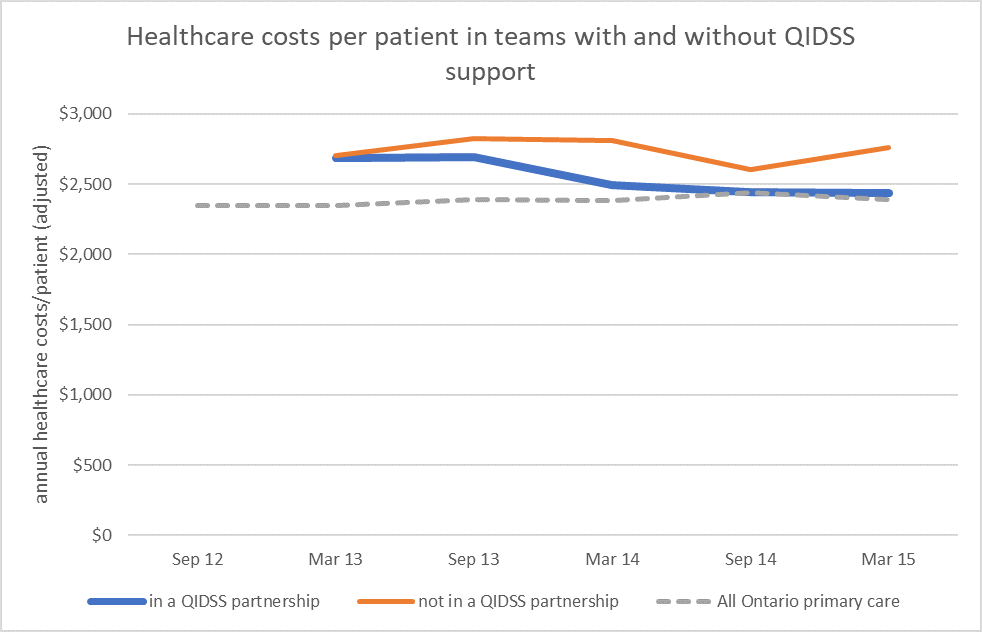
    The average healthcare cost per person (adjusted for patient complexity) is on a downward trend, especially for teams supported by QIDSS.  The average healthcare costs for each patient served by teams with QIDSS support is just under $2500 per year as of March 2015, the most recent year for which data are available.  D2D 5.0 is showing that these costs are starting to drop, even while costs across the province are relatively stable.  This is consistent with other analyses which illustrate that the introduction of team-based care in Ontario was associated with moderate improvements in processes related to some aspects of chronic disease management (Kiran et al., 2015)

    D2D 5.0 healthcare cost graph


    High quality is related to lower costs

    The relationship between higher quality and lower healthcare system cost persists in D2D 5.0. The relationship remains stronger among non-rural teams, for whom just under half of the variation in total cost (not including LTC institutionalization costs) is explained by variation in the composite quality score, once patient complexity is considered. (The Quality Roll Up Indicator is a composite score based on 14 measures covering as many of Starfield’s 4Cs (first Contact accessibility, Coordination, Comprehensiveness, and Continuity) and weighted according to what’s important to patients). The strength and robustness of the analysis continues to grow slowly with the addition of new teams to the data set each iteration and the increasing amount of data available for each contributing team. Work continues to validate the structure of the QRU to further reduce the data capture burden associated with the generation of the composite measure.

    Participation remains high and growing

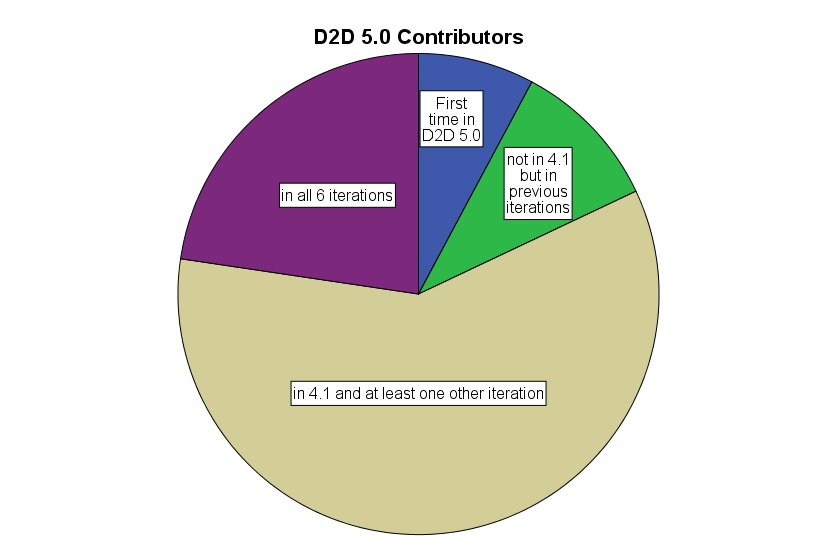
    • 122 (66%) teams contributed to D2D 5.0, slightly up from 117 teams in D2D 4.1. The history of contribution among D2D 5.0 teams is shown in figure 1. Overall, 172 (or 93% of 184 teams) have contributed to at least one iteration, with 22% of members contributing to only one iteration and 64% contributing to 3 or more (data not shown).

    D2D 5.0 contributors

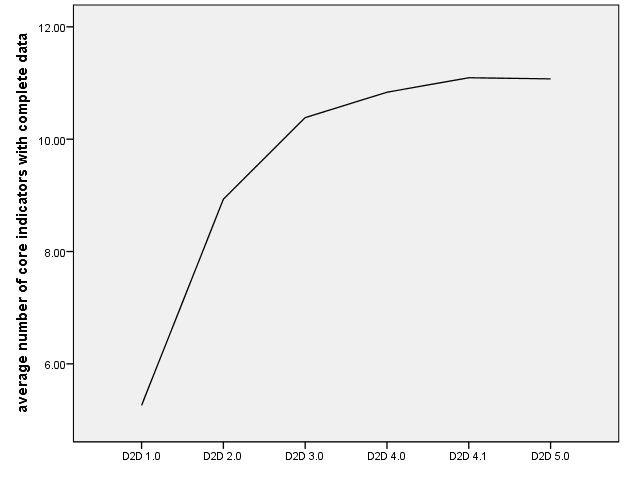
    • More data being contributed for each team: The average number of indicators for which teams had complete data has gone up steadily, plateauing at an average of about 11 out of 15. Work is underway to validate the Quality Roll-Up indicator’s structure with the hope of reducing the number of indicators required to generate it. This might reduce and focus data capture burden for teams.

    D2D 5.0 more data contributed


  • AFHTO 2017 Conference: Last day for early-bird registration & only day to get free André Picard book with reception ticket

    AFHTO 2017 Conference “Improving Primary Care Together

    Early-bird registration closes tonight! Join over 850 of your colleagues from as we learn how to improve health, health care, and value for the people of Ontario.


    TODAY ONLY – the next 25 people who register for the Bright Lights Reception get a free copy of André Picard’s latest book,

    MATTERS OF LIFE AND DEATH: Public Health Issues in Canada.

    •  Our closing plenary speaker, Mr. Picard will also be signing his books at the Bright Lights Reception.
    • Early bird prices are only $25 (members) & $40 (non-members)
    • Bright Lights nominees are also eligible.
    • Register now
    Attendance entitles certified Canadian College of Health Leaders members (CHE / Fellow) to 1.75 Category II credits for Oct 24th and 6 Category II credits for the Conference toward their maintenance of certification requirement. Other accreditation details will be updated as they are confirmed.


  • Event updates for AFHTO members: 2017 Conference, Medication Management & Geriatrics Update Course

    AFHTO 2017 Conference “Improving Primary Care Together

    Join us as we hear from:

     Don’t miss out on this chance to learn and connect with your peers. Early-bird registration closes next Monday, October 2, 2017.

    Attendance entitles certified Canadian College of Health Leaders members (CHE / Fellow) to 1.75 Category II credits for Oct 24th and 6 Category II credits for the Conference toward their maintenance of certification requirement. Other accreditation details will be updated as they are confirmed.

    Managing Medication as a Team

    There’s still room for you at Managing Medication as a Team a full-day learning event for anyone who works at a FHT or NPLC and want to learn more about their role in helping to better manage patient medications. We’ll take an in-depth look at four common aspects of interprofessional medication management and share some ideas your peers have developed that you can use in your own settings.

    Topics to be covered:

    • Managing polypharmacy and deprescribing
    • Medication management to support transitions in care
    • Medication management for chronic disease
    • Managing health to reduce the need for medication

    Registration is just $25; lunch and snacks are provided; and we’ve secured a great rate of $149 at a nearby hotel! Consider bringing your whole team, to put the inter- in interprofessional.

    Ready to register? Online registration is open until November 9th.

    Want to know more? Check out the workshop FAQ, or reach out to us.

    5th Annual Toronto Geriatrics Update Course

    Dear AFHTO Members,

    Sinai Health System and University Health Network proudly present the 5th Annual Toronto Geriatrics Update Course taking place on Friday October 27th and Saturday October 28th at the Michener Institute, 222 St. Patrick St., Toronto, ON.

    We invite you to attend our annual Geriatrics CPD Course which has been designed to provide front-line practitioners with the latest practical and evidence-based knowledge they need to better manage the care of their older patients. This two-day CPD Course will feature high quality/interactive lectures and will focus on the assessment and management of geriatric syndromes and common issues that arise in the care of an older patient.

    The early bird rate for the course ends on September 29th, but as a member of AFHTO, you may still attend the Toronto Geriatrics Update Course for the lower rate. You just need to enter the coupon code: 2017update.

    Below you will find additional information including our program agenda, directions to our venue, and registration details:

    I look forward to seeing you at this year’s event!

    Best Wishes,

    SAMIR

    Dr. Samir K. Sinha, MD, DPhil, FRCPC
    Peter and Shelagh Godsoe Chair in Geriatrics and
    Director of Geriatrics, Sinai Health System and the University Health Network

  • Exceptional Access Program (EAP) Update – New Online Service

    This Message is Being Sent out on Behalf of the Ministry of Health and Long-Term Care’s Ontario Public Drug Programs Division The Exceptional Access Program at the Ministry of Health and Long-Term Care is developing a new online service for prescribers which will allow them to research, create, and manage exceptional access program requests for their patients. The Exceptional Access Program (EAP) facilitates patient access to drugs not funded on the Ontario Drug Benefit (ODB) Formulary, or where no listed alternative is available. The new online service (to be called The Special Authorization Digital Information Exchange [SADIE]) will deliver two core advancements in the EAP service: 1) an online digital service for prescribers to manage EAP requests; and 2) automation of the many currently manual back office processes. The online service will create a digital channel for prescribers to access the EAP program, research drug criteria and availability, create, submit, and manage requests, receive notifications and alerts from the ministry for tasks such as responding to requests for additional information, submitting renewals, etc. The introduction of automation to many manual processes, including to the adjudication process itself, will provide real-time, automated responses for many drug requests ensuring that patients receive timely decisions on funding for drugs. As part of the implementation of this new service, the ministry has been reaching out to various prescriber groups and drug manufacturers to make them aware of SADIE and to engage them with respect to what this service needs to be able to do in order to meet the needs of the various stakeholder groups. In addition, this session will provide a sneak peek into how SADIE will look and its functionality. When: Friday, September 29th, 2017 from 1:00 to 2:30 ONLINE (with audio if your computer has mic/speakers) https://ali.health.gov.on.ca/AFHTO DIAL-IN for AUDIO: 416-212-8012/1-866-633-0848 / Conf Id 5749341#

  • Guelph FHT and Partners Open New Rapid Access Addiction Clinic

    The Record article published September 20, 2017. Article in full pasted below. Johanna Weidner, Waterloo Region Record Guelph has a new rapid access addiction clinic, the first of its kind in the area. While it officially opens Friday, the clinic has been providing treatment and support to people struggling with addiction since June. “Regularly, the clinic exceeds capacity,” said Kristin Eidse of Stonehenge Therapeutic Community. “It just really speaks to the demand and need for this type of service in our community.” The new clinic is a collaboration of five local agencies whose officials started talking a year ago about how to offer specialized addiction medicine to serve a vulnerable population that struggles to get the help it needs due to the stigma around addictions and the wait for care. “It’s not something that exists in our region,” Eidse said. Along with Stonehenge, which provides residential and community addictions treatment, the initiative was headed by the Canadian Mental Health Association, Guelph Family Health Team, Guelph Community Health Centre and Sanguen Health Centre. The clinic is currently running without additional funding, using resources from all the agencies. They are hoping for funding, considering that the province announced $222 million last month to fight the opioid crisis, including expanding rapid access clinics across the province. In Waterloo Region, work continues on opening two rapid access centres in Cambridge and Kitchener-Waterloo. Rapid access clinics are unique in providing immediate help without a referral. “People just need to walk in,” Eidse said. “It maximizes their motivation.” The Guelph clinic is open one day a week, and services are covered by OHIP. Patients are seen by an addiction counsellor, addiction medicine physician and peer support worker — unique among the rapid access centres. “That really increases the welcoming atmosphere of our clinic,” Eidse said. The work of the clinic is intended to be a short-term intervention, with the average person coming back for three to four followup visits. People are connected with an addictions counsellor and other programs and resources in the community to continue toward recovery. “It’s a place to get started on that road,” Eidse said. People of any age and any type of substance use can come to the clinic. Alcohol use has been most common, followed closely by opioid use. The majority are struggling with more than one substance. During the three-month pilot, which saw 61 patients come in, the average age was 43. The youngest was 19 and the oldest was 76. “It’s really showing substance use doesn’t discriminate. It affects everyone,” Eidse said. Waterloo Region residents are welcome, but the clinic is primarily focused on providing care to Guelph and Wellington County residents. “We’ve had incredible feedback from the patients so far,” said Eidse, adding that the average rating is 4.7 out of five. Patients say they appreciate the welcoming atmosphere, easy and quick access, and withdrawal support. For many who have walked through the door, it’s helped to make significant changes. “I’ve been able to see what an amazing difference this type of clinic can make.” Find out more at raacguelph.ca. Click here to access The Record article

  • AFHTO 2017 Conference: join Dr. Jeremy Petch & André Picard at Bright Lights Reception; early bird closes Oct. 2!

    Don’t miss out! Early-bird registration closes on October 2, 2017.

    Join Dr. Jeremy Petch at the Bright Lights Awards Reception as he speaks on the importance of storytelling. Then take a deeper dive into our own stories, great initiatives and programs delivered by your peers across Ontario, including updates on the accomplishments of past Bright Lights winners. Learn how these could apply to your team, all in a relaxing environment at the end of the day.

      Dr. Jeremy Petch is the Manager of the Li Ka Shing Centre for Healthcare Analytics Research and Training of St. Michael’s Hospital, and an Assistant Professor at the Institute of Health Policy, Management and Evaluation at the University of Toronto. He is an editor of Healthy Debate and the co-creator of Faces of Health care. He is an avid photographer who uses images and storytelling to illuminate the human side of the healthcare system.
      Also at the reception: Come see our closing plenary speaker André Picard who will be signing copies of his latest book, MATTERS OF LIFE AND DEATH: Public Health Issues in Canada.

      Additionally, attendance entitles certified Canadian College of Health Leaders members (CHE / Fellow) to 1.75 Category II credits for Oct 24th and 6 Category II credits for the Conference toward their maintenance of certification requirement. Other accreditation details will be updated as they are confirmed.