Author: sitesuper
-
Ingersoll NPLC & partners’ pilot reduces emergency service needs
The Oxford Situation Table is a panel of 15 agencies including the OPP, Woodstock Police, the Ingersoll NPLC and community organizations working together to mobilise services in rapid response to potential crisis situations. Recently released results from the Oxford County pilot project chaired by an Ingersoll NPLC staff member show a positive impact in the community.
Community Service coordinator and councillor Lisa Longworth of Ingersoll NPLC, the situation table’s project manager and chair, said there was a need for cross-sector collaboration as none of the organizations involved “could address the risk by themselves.” With an increase in police reports of incidents related to domestic violence, mental health and social disorders, the panel was established to identify community members at elevated risk and arrange for intervention depending on their situation.
Their goal is to reduce the need for emergency services such as hospitalization, repeated police visits, severe injury or death. During the pilot project 44 cases of people or families at an elevated risk were identified. Of those 44 cases, 74% were connected to appropriate services for help, 13% refused service, 8% were informed about services, 3% were deceased, and 2% relocated. The Ministry of Community Safety and Correctional Services has begun implementing similar situation tables across Ontario. To learn more, please visit the links below:
-
Learn more about the work behind D2D
At is heart, D2D is a summary of members’ practice data which will empower them in their quality-improvement efforts. We work with patients, member teams, and other stakeholders to choose meaningful indicators of quality; we assist teams in measuring their own performance; and we provide a platform for teams to see how their performance compares to other, similar teams across Ontario. There are many facets to D2D. It is a program which involves multiple partnerships and the invaluable commitment and contributions of our members. AFHTO has created a series of one-page handouts highlighting just a few of these, as well as the exciting results we have seen to date. Stay tuned for more! Data to Decisions: What Difference is it Making? Data to Decisions 2.0: Results Patients as Partners in Primary Care Standardized EMR Queries Increasing Quality & Access to EMR Data
-
Data to Decisions eBulletin #20
Stay tuned for help in developing a CHF registry: Hot on the heels of producing standardized EMR queries for COPD and Diabetes, QIDSS are now working on a Congestive Heart Failure (CHF) query, ETA Jan 2016. Watch for updates here. D2D, one bite at a time. Check out the new bite-size bits of information to help you sign up and use D2D in your team:
- Patients as Partners
- EMR Communities of Practice
- Standardized EMR Queries
- D2D 2.0 Results: Comparator Data
- D2D Impact Assessment
Click here to get team-level administrative (ICES) data from HQO. Nearly 60 teams already signed up. Deadline is Oct 30 — ensure you have received physician agreement first before requesting the report. What’s next with D2D? See the D2D page on AFHTO’s website for more information. Help spread the word about D2D. Invite others to sign up for the eBulletin online.
-
More Ontarians should have access to team-based primary care (Opinion)
Our patients are lucky. Our team is lucky. Most Ontarians today have a family doctor but only 1 in 4 Ontarians has access to a primary care team that integrates other health professionals. About 250,000 Ontarians belong to a Community Health Centre (CHC) and about 3 million belong to a Family Health Team like the one we practice in. Community Health Centres have been around a long time and have had a focus on serving marginalized populations. Family Health Teams were introduced just ten years ago in an effort to improve access and primary care for all Ontarians. But a decade after they were introduced, only a portion of Ontarians can access Family Health Teams. And what’s more worrying, certain groups seem less likely to belong to one. Research has found thatpatients living in urban areas, new immigrants, and those who are sicker are less likely to be a patient at a Family Health Team. Why is access to Family Health Teams so unequal? The reasons are complex but to some degree it comes down to money. Physician groups can only apply to become a Family Health Team if they agree to change how they get paid. Instead of getting a fee per patient visit, they must agree to switch to salary or capitation payment. In capitation, physicians get a set fee per patient per year, regardless of the number of visits, with the amount varying based on the patient’s age and sex. In some jurisdictions, capitation payments also take into account patients’ medical complexity or social vulnerability. But, in Ontario, the capitation formula only adjusts for age and sex. That means that a doctor paid by capitation in Ontario gets the same annual amount to look after a healthy 20 year old male who only comes to the doctor once a year as they would to look after a 20 year old male with type 1 diabetes and depression who needs to be seen monthly. Not surprisingly, doctors with sicker patients are less likely to want to get paid by capitation in Ontario – and so less likely to become a Family Health Team. To make things more complicated, Ontario physicians paid by capitation are also eligible to earn bonuses. One of these bonuses, the Access Bonus, pays physicians up to $50,000 more in a year if their patients don’t see physicians practicing in another clinic. As it turns out, switching to a capitation model was attractive for many rural and small town physicians because they easily qualified for the Access Bonus. Their patients often didn’t have any walk-in clinics to go to. But, many urban physicians knew they would never qualify for the Access Bonus – not because they didn’t try to see their own patients, but because many of their patients would go to walk-in clinics because they were more convenient. This means that Family Health Teams are less likely to care for groups that live primarily in urban areas, like recent immigrants or people who are homeless or underhoused. So we end up with an inequitable system. Many Ontarians with the greatest needs for team-based primary care are least likely to have access. Some call this the inverse care law. Getting out of this mess will be difficult, but we suggest two potential first steps. One is changing the capitation “formula” so that it accounts for a patient’s medical complexity or social vulnerability. Another is modifying or eliminating the Access Bonus. But instead of moving in this direction, the government has restricted entry of physicians into capitation models and therefore also Family Health Teams, perpetuating and potentially exacerbating current inequities. Many organizations in the U.S. are trying to shift family doctors from fee-for-service payment to capitation. They should be mindful when they design their payment systems that they improve equity and not make it worse. We get paid through capitation and we like the flexibility it gives us. It means we can spend more time with patients when we need to and also have an incentive to provide care by phone or email. But ironically, we know that in our current system, we would make more money if we served healthier patients. That kind of incentive is just wrong. Our team at St. Michael’s has unique relationships with the hospital and university that has made becoming a Family Health Team financially practicable – despite our urban setting and our mission to serve the sick and the poor. Other physicians (and their patients) aren’t as lucky. We love working in a Family Health Team. We know our patients benefit from the excellent team that can help them with everything from medication side effects to how to eat healthier to how to decrease their household debt. All Ontarians deserve the same. Tara Kiran and Rick Glazier are family doctors at the St. Michael’s Hospital Family Health Team. -
AFHTO 2015 Conference: registration is still open / pick your sessions early
Presentations are being finalised, menus are being selected and posters are being created. Everything is being set up for the AFHTO 2015 Conference. Now all we need is you. There is still time for you and your colleagues to register for energising discussions, forward-looking plenaries, and networking with your peers. If you’ve already registered, don’t forget to pick your sessions if you haven’t already done so as some of them have limited space available. Just click on the Edit/change registration icon in your confirmation email titled “AFHTO 2015 CONFERENCE: REGISTRATION CONFIRMATION – Do Not Delete”. - Register an individual or team for the conference
- Members receive a 50% discount on registration (contact us for your access code).
- Find out more about registration fees and discounts
- Book discounted travel with Bearskin Air, Porter Airlines and/or VIA Rail Canada
- Conference and registration FAQs
Attendees at the AFHTO 2015 Conference will spend two session-packed days studying innovations in primary care, strengthening partnerships and addressing the challenges facing Ontario’s primary care teams. Highlights include diverse and relevant topics across 7 core themes:
Concurrent Sessions Posters Interprofessional Collaboration as the Anchor of Team-Based Primary Care Effective Governance for Quality in Primary Care Leadership Session: Leading primary care through the next stage EMR Communities of Practice Meetings (vendors included) This program has been accredited by the College of Family Physicians of Canada and the Ontario Chapter for up to 17 Mainpro-M1 credits. Attendance at this program entitles certified Canadian College of Health Leaders members (CHE / Fellow) to 2.5 Category II credits for Oct 27th Governance in Primary Care; 1.5 Category II credits for Oct 28th pre-conference (Leadership and IHP Sessions); 4 Category II credits for the Conference towards for their maintenance of certification requirement. - Register an individual or team for the conference
-
Health Link Leaders: Forming a Link (Sept 27)
AFHTO’s Health Link Community of Practice met on September 21st. This communique provides an overview and highlights key items discussed:
- Shaping the Future: Advanced Health Links Mode
- Health Link CoP: Building a Partnership with the Ministry
- NSM Integrate Project
- Care Coordination Tool
- Primary Care Update: what we know & what we’re doing about it
Shaping the Future: Advanced Health Links Model
In June 2015, the Ministry of Health and Long-Term Care announced the introduction of the Advanced Health Link Model , to be introduced over the course of the 2015-16 fiscal year. Based on the learnings from 69 established Health Links, the Advanced Health Link model identifies four areas of focus that include enhanced performance management and oversight, elements of standardization, funding model redesign (including sustainability planning) and wider system integration. The Advanced Health Link model also illustrates the accountability of LHINs for their respective local Health Links. Through this renewed commitment to advance Health Links, the Ministry has acknowledged the need for stable, operational base funding and for better alignment between primary care and strengthened integration/collaboration, specifically with primary care teams. The evolution from the ‘pilot phase’ to a more mature state will also put in place formal processes to identify and disseminate emerging/best practices as a way to build on the successes achieved to date. A health links guide will be released end of September or early October that will set out the new expectations of the model, including key functions of lead organizations.
Health Link CoP: Building a Partnership with the Ministry
The Health Link CoP was pleased to have Ministry representation at the September 21st meeting, including the acting Director (Michael Robertson) and his colleagues from the Capacity Planning and Priorities Branch as well as representation from the Primary Care Branch. Through open and transparent discussions, members highlighted a number of ongoing challenges for FHT led Health Links, including:
- Timing of funding: it is widely recognized that the absence of stable base funding creates significant challenges in terms of sustainability, planning, HR retention, and maintaining the ongoing momentum of health links. Many FHTs are faced with the risk of using reserves to bridge the funding gap or obtaining loans from health service partners, such as hospitals or CCACs.
- Reporting burdens: Streamlining and/or minimizing the numerous reporting obligations (for some FHTs this includes reports to: HQO, LHIN, Ministry, CCAC and/or hospital) could minimize the associated work load and promote more consistent, standardized reporting. The movement to reporting through the Self Reporting Initiative (SRI) could also help to enhance consistency.
- Inconsistent direction: there has been some concern with inconsistent direction being received across the FHT led health links between the Ministry and the LHIN. For example, the Ministry contract identifies physician engagement as an eligible expense, however many LHINs have been providing conflicting advice. There is a desire to improve standardized messaging, materials and expectations, and develop a more common approach across the LHINs.
Member leadership from the CoP, with the support of AFHTO, will continue to work closely with the Ministry in finding possible solutions to the challenges identified. There is a strong commitment from the Ministry to maintain ongoing communication and participation with the Health Link CoP!
NSM Integrate Project
The Health Link CoP continues to be a platform to share achievements and spread success stories! The Integrate Project was launched by Cancer Care Ontario and the approach is being piloted in select regions of Ontario (from 2014-2017). Members received an overview of INTEGRATE project piloted in the North Simcoe Muskoka LHIN. This project is enabling early identification and management of patients who could benefit from a palliative care approach across settings. The collaborative method is transforming the palliative care system from one with a lack of service integration and fragmentation to a system with integrated care across care sites and improved patient related outcomes.
Care Coordination Tool (CCT)
East Toronto Health Link (ETHeL) is going live with its first published CCT on Wednesday, September 23rd – despite the very tight timelines and delay in funds, they are on track to meet this deliverable for the Ministry and Orion! The administrative burden/challenges that arose from the management of this initiative have been highlighted to the Ministry with the intent to inform subsequent roll-outs of the Care Coordination Tool, including the need to provide input to the Ministry on non-clinician feedback as it pertains to implementation. Further conversations with the Ministry are planned to occur before the end of the CCT proof of concept in March. Just a reminder that ETHeL has already done a legal review on all three agreements (DSA, ESPA and EULA) and comments from the lawyers are available for use by any Health Link that will be participating in the CCT proof of concept. In addition, ETHeL has its agent agreement (for authoring model #3) that they are happy to share for any Health Links using that model. If you would like any of this information please contact Kavita at kavita.mehta@setfht.on.ca.
Primary Care Update: what we know & what we’re doing about it
Over forty AFHTO members from around the province – the combination of AFHTO’s Physician Leadership Council (PLC) and ED Advisory Council (EDAC) – came together on September 17th to dialogue with the Ministry to gain further clarity on what is known (and not known) as it plans for primary care. One of the key messages is that work to develop policy and strategy is underway and that there will be further discussion and consultation as this progresses. For further details from this meeting please see the meeting summary and/or full report [PDF].
Members expressed interest in conducting a face to face meeting in early 2016. Further details will be provided over the coming months. For any further questions, or if you are interested in participating on the Health Link CoP, please contact: Marg Alfieri (Chair, Health Link CoP) Health Link Manager, KW4 Health Link Centre for Family Medicine FHT margalfieri@icloud.com Bryn Hamilton Provincial Lead, Governance & Leadership Program 647-234-8601 Bryn.Hamilton@afhto.ca -
AFHTO 2015 Conference: The early bird takes flight today (Sept. 28th). Register before prices go up!
Don’t miss out on this opportunity to join thought-provoking plenaries, vibrant discussions and networking with your peers. Register before early-bird rates end Monday (Sept. 28th). Ontario’s health system is transforming to become more sustainable and person-centred; primary care is the critical component. Now is the time for leaders and collaborators to ask – how are we strengthening primary care to fill this need?
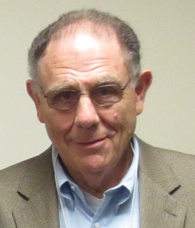

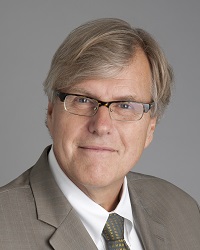
Ed Wagner Opening Plenary Team-Based Primary Care: The Foundation of a Sustainable Health System Danielle Martin Bright Lights Awards Dinner Celebrating primary care innovations Robert Bell Closing Plenary Evolution of a Sustainable Health System: Where do we go from here? Early-bird registration closes this Monday, September 28, 2015.
- Register an individual or team for the conference
- Members receive a 50% discount on registration (contact us for your access code).
- Find out more about registration fees and discounts
- Reserve a room at the Westin Harbour Castle. Discounted rates end September 28, 2015.
- Book discounted travel with Bearskin Air, Porter Airlines and/or VIA Rail Canada
- Conference and registration FAQs
Attendees at the AFHTO 2015 Conference will spend two session-packed days studying innovations in primary care, strengthening partnerships and addressing the challenges facing Ontario’s primary care teams. Highlights include such diverse and relevant topics across 7 core themes:
This program has been accredited by the College of Family Physicians of Canada and the Ontario Chapter for up to 17 Mainpro-M1 credits. Attendance at this program entitles certified Canadian College of Health Leaders members (CHE / Fellow) to 2.5 Category II credits for Oct 27th Governance in Primary Care; 1.5 Category II credits for Oct 28th pre-conference (Leadership and IHP Sessions); 4 Category II credits for the Conference towards for their maintenance of certification requirement.
- Register an individual or team for the conference
-
FHTs lead to improved diabetes care / Auditor’s report on CCACs
Two important reports were released in this past week:
- CMAJ published evidence that the combination of physician payment reform and team-based care led to improved diabetes care. “Our study suggests that Ontarians might be healthier if everyone had access to team-based care” said lead author Dr. Tara Kiran of St. Michael’s Hospital Academic FHT.
- The Auditor General’s Special Report on CCACs instructs government to “take a hard look” at CCACs and the delivery of home and community-based care. As health system reforms move forward, AFHTO joins with its colleagues on the Ontario Primary Care Council to call on government and others in Ontario’s health system to ensure primary care is supported to fulfill this central role in coordinating care.