Click on the following links to access: 1. Technical notes 2. Interpretive notes 3. Data quality actions – Actions and ideas to consider and discuss with clinical leads and other members of the team 4. Potential actions related to processes of care – Actions and ideas to consider and discuss with clinical leads and other members of the team Note: The files linked above are updated regularly. Please refresh your internet browser to clear its memory, this will ensure that you see the most updated material. Most internet browsers will save a copy of the PDF file and show you an out of date version. Please see the Members-only page of AFHTO web site for online forums specific to each indicator so that members can share with and learn from others working on similar issues.
Author: sitesuper
-
What the mandate for Minister of Health and Long-Term Care means for AFHTO members
This afternoon the Premier publicly released the mandate letters sent to each of her Ministers. These letters outline the specific priorities that each member of cabinet and their ministry will focus on. The mandate letter addressed to the Minister of Health and Long-Term Care begins by pointing out government’s overall priorities, i.e. growing the economy, creating jobs, fiscal prudence. The Health Minister is specifically mandated to “lead the shift toward a sustainable, accountable system that provides co-ordinated quality care to people, when and where they need it.” The priorities named in the Health Minister’s letter include: “Bringing forward a plan to ensure that every Ontarian who wants one has a primary care provider.” The Liberal election platform articulated that one of the steps needed to make this a reality is to “Improve the recruitment and retention of community-based primary care teams.” AFHTO continues to press this commitment, working in an environment where the Treasury Board President’s mandate letter says, “You will help ensure that any modest wage increases negotiated are absorbed by employers within Ontario’s existing fiscal plan through efficiency and productivity gains, or other trade-offs, so that service levels continue to meet the public’s needs.”
The Health Minister’s mandate letter provides the possibility for the role of primary care to be strengthened. Statements include:- You will foster collaboration across the system and make the necessary trade-offs to shift spending to where Ontario will get the best value for our health care dollars — which must be shared between our health system partners.
- Ensuring that patients receive timely access to the most appropriate care in the most appropriate place — and that the needs of Ontario’s patients are at the centre of the system.
- Championing the delivery of quality co-ordinated care to patients by making the best use of the skills and capacity of all our health care providers, hospitals, community clinics and organizations, long-term care homes and others. You will take the lead in ensuring that changes are informed by evidence — and that Ontario’s precious health care dollars improve quality of care and health outcomes for patients and families.
- Continuing to ensure that our system has the health human resources it requires to deliver quality and efficient care. This includes exploring appropriate expanded scope of practice for providers and more models for collaborative care.
While primary care is not specifically named in these statements, AFHTO believes the strength of evidence that investment in a strong primary care system leads to better health and lower costs, combined with the evidence we anticipate will emerge as we progress with our “Data to Decisions: Advancing Primary Care” initiative, give us ample opportunity to build the strength of our sector. “Accountability and transparency” is a strong theme throughout the letter. One of the many references states:
- You will now work with them (health care administrators, institutions and providers), as outlined below, to continue to drive accountability, transparency and quality throughout the system, while limiting expenditure growth.
- One of the outlined specifics is “Exploring options to further strengthen the framework for ensuring that the community sector and LHIN-funded health service providers are accountable for delivering quality patient care, including expanding the Excellent Care for All Act.”
AFHTO is well-positioned to address these issues with and on behalf of members. We have already begun to work with the leaders of our member FHTs and NPLCs to develop a common statement of principles and priorities for governance and accountability. This will guide our continuing work to advocate for our members and be a resource to support you. We look forward to receiving responses to our leadership survey from board chairs, lead MDs/NPs and executive directors, and building from the results at our Toward the Next Ministry Contract session immediately before the AFHTO conference.
- To access the mandate letter to the Minister of Health and Long-Term Care, go to http://www.afhto.ca/wp-content/uploads/2014-09-25-Health-Minister-mandate-letter.pdf
- To access all of the mandate letters, go to http://www.ontario.ca/government/mandate-letters
-
AFHTO 2014 Conference: Minister & keynote speakers confirmed; Registration still open
We are very pleased to welcome the Hon. Dr. Eric Hoskins and other keynote speakers: Special Keynote: Hon. Dr. Eric Hoskins, Minister of Health and Long-Term Care
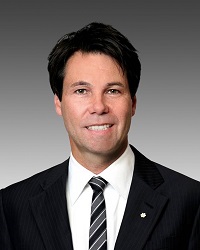 Dr. Eric Hoskins was first elected to the Ontario legislature as the MPP for St. Paul’s in 2009. He was re-elected in 2011 and 2014. Minister Hoskins currently serves as Minister of Health and Long-Term Care. He was appointed as Minister of Economic Development, Trade and Employment in February 2013. He has previously served as Minister of Children and Youth Services and Minister of Citizenship and Immigration. Minister Hoskins is also a renowned humanitarian, family doctor and a proud Ontarian with a long and dedicated record of public service. Opening Plenary: “In Partnership with Patients” Wednesday, October 15, 2014 from 12:00 PM to 1:45 PM
  Dr. Sholom Glouberman, President of Patients Canada Dr. Sholom Glouberman, President of Patients Canada and Philosopher-in-Residence at Toronto’s Baycrest Centre for Geriatric Care, will lead conference participants in a thought-provoking exercise designed to prepare you for the conference sessions ahead and challenge you to think differently about how we plan and deliver primary care. Dr. Sholom Glouberman is a well-respected and knowledgeable health care systems policy analyst and teacher, and he is the president and founder of Patients Canada. In 2005, Sholom underwent a major surgical procedure and became a patient. He thought he could manage his experience as a patient in the system, but he was wrong. He now works to create a whole new education for patients – however sophisticated they are – to cope with the complexities and difficulties posed by being a patient in the system for any length of time. He believes that strengthening the patient voice is critical to improving everyone’s healthcare experience. Closing Plenary: “In partnership with patients: How far have we come? How far must we go?” Thursday, October 16, 2014 from 1:00 PM to 2:30 PM Ask the experts: What do patients think about the innovations and knowledge shared at this “In Partnership with Patients” conference? A group of thoughtful and articulate patients will join Sholom Glouberman, President of Patients Canada, and Cathy Fooks, CEO of the Change Foundation and senior health leaders to reflect on what they saw and heard in the conference sessions. From their perspective – Where did they see promising progress? What is their advice for strengthening the patient-provider partnership and optimizing the patient experience? Click here for plenary description and further details. Register for the AFHTO Conference today!
- Click here to view the conference program.
- Register you and your team for the conference before 5pm today
- Reserve a room at the Westin Harbour Castle – group rate available until 5pm today
- Book discounted travel arrangements with Porter Airlines and/or VIA Rail Canada
We look forward to seeing you there!
-
Data to Decisions 1.0 report launches Oct.1: Sign up now for interactive info sessions
The on-line tool — Data to Decisions 1.0: Advancing Primary Care (D2D 1.0) — will be launched on AFHTO’s members-only website on October 1st. D2D 1.0 is a summary of primary care data that are currently available, comparable and mean the most to AFHTO members in their efforts to advance quality of care for their patients. The report displays data submitted anonymously by 50 teams. It can be used by ALL members – whether or not your team has contributed data. The report will be accompanied by a suite of supporting materials to help teams use the data to advance their work to improve quality for their patients. Register now for information and education on using D2D 1.0 in your team.
- Webinars:
- Open to all members.
- Click on links below to register for one of two available sessions:
- Effective Governance for Quality in Primary Care workshop:
- Open to FHT and NPLC board members, Lead MDs/NPs and EDs, FREE OF CHARGE
- Tues., Oct 14, 2014: 10:30-4:30
- Includes overview of D2D 1.0 and role of Board in performance measurement and reporting.
- Click here to register.
- Pre-conference professional session:
- Open to physicians and Quality Improvement Decision Support Specialists (QIDSS) registered to attend the AFHTO conference
- Wed., Oct 15, 2014, 10:00 AM – 12:00 noon
- Introduces physicians to D2D 1.0, with QIDSS co-facilitating
- Click here for more information
- AFHTO conference concurrent session:
- “Primary care performance measurement – why bother?” See Concurrent Session D6-b
- Open to all conference attendees
- Thurs., Oct 16, 2014: 9:30-10:15
To help evaluate the impact of D2D 1.0 and to design additional supporting materials to further fuel local QI efforts, we are also sending out a “baseline” survey to EDs, to be completed in consultation with their clinical leaders. An advisory panel of AFHTO members will also provide additional feedback regarding the content of supporting materials to help AFHTO members use the report to full advantage.
- Webinars:
-
Advice on managing budgets until funding letters are received
AFHTO met with MOHLTC’s Primary Health Care Branch to discuss questions around funding for FHTs and NPLCs. From this we can provide the follow advice for members:
- Funding approval process: The process for approving any one-time funding or increases to base is still underway in the ministry. Meanwhile, FHTs and NPLCs can be confident in planning for and using their base budgets.
- Definition of “base budgets”: While many teams experienced adjustments in their base funding last fiscal, PHC Branch has not recommended any further adjustment this year. Base budget is equal to what you currently received each month, times twelve.
- Make full use of available funds: The ministry reports that a large number of teams are still returning unspent funds, and at the same time, requesting additional funding in their yearly budget submission.
- FHTs and NPLCs have the right to request re-allocation of funds as needed during the fiscal year.
- Q1 recoveries are coming soon – plan ahead and make your requests to re-purpose funds for other needs.
- To make a request, EDs are encouraged to submit an accurate budget forecast in their quarterly financial reports, along with a request to re-purpose funds, supported by the justification for the request.
- Ministry consultants are to collaborate with EDs to ensure that relevant program needs can be met within current budget by allowing flexibility in allocation of existing funds.
- Example: Funding for OTN replacement equipment. OTN funding came through eHealth Ontario, and funding is no longer available. Primary Health Care Branch does not fund OTN equipment, however, they have worked with groups to re-allocate existing budgets to cover the cost.
- Physiotherapy funding requests are still in process: Funding for approved PT positions will be added to base. As a result, notice of approval for these positions should come just before the FHT/NPLC funding letters.
Reminder: Registration is still open for Leadership and Governance events
- For board chairs, Lead MD/NPs and EDs
- Take place immediately before AFHTO Conference at the Westin Harbour Hotel, Toronto
- NO COST to participate.
- Effective Governance for Quality workshop, October 14 from 10:30 am to 4:30 pm.
- Leadership Session – Towards the next Ministry contract – on October 15 from 10 AM – 12 noon
- Session will be informed by results of a survey sent out to board chairs, Lead MD/NPs and EDs. Please respond by Sept.26.
-
Resources and opportunities available to FHTs and NPLCs
FHT and NPLCs are invited to participate in the following initiatives. Click on each link below for more information:
- Apply for funding for a one-year Breastfeeding Community Project
- Organizations are invited to submit a proposal for a small grant for a one year long breastfeeding community project. The deadline for applications is Monday October 20, 2014 at 11am.
- Apply to participate in the Heart&Stroke Hypertension Management Program (HMP)
- The MOHLTC has provided funding to allow the HMP to expand to additional primary care sites and aboriginal communities in Ontario this year. HMP provides primary care teams support throughout program planning, implementation, start up and sustainable management.
- Sites are invited to share their interest by e-mailing hmp@hsf.on.ca.
- Invitation from HQO to field test QIP Navigator
- HQO is offering three opportunities for people to test the improved QIP Navigator and suggest further improvements. Interested individuals are invited to attend one of the virtual sessions to test the QIP Navigator, click here for session dates.
- For more information on the QIP Navigator and QIP submission process, please contact QIP@hqontario.ca.
- Apply for funding for a one-year Breastfeeding Community Project
-
Resources and opportunities available to FHTs and NPLCs
FHT and NPLCs are invited to participate in the following initiatives. Click on each link below for more information:
- Apply for funding for a one-year Breastfeeding Community Project
- Organizations are invited to submit a proposal for a small grant for a one year long breastfeeding community project. The deadline for applications is Monday October 20, 2014 at 11am.
- Apply to participate in the Heart&Stroke Hypertension Management Program (HMP)
- The MOHLTC has provided funding to allow the HMP to expand to additional primary care sites and aboriginal communities in Ontario this year. HMP provides primary care teams support throughout program planning, implementation, start up and sustainable management.
- Sites are invited to share their interest by e-mailing hmp@hsf.on.ca.
- Invitation from HQO to field test QIP Navigator
- HQO is offering three opportunities for people to test the improved QIP Navigator and suggest further improvements. Interested individuals are invited to attend one of the virtual sessions to test the QIP Navigator, click here for session dates.
- For more information on the QIP Navigator and QIP submission process, please contact QIP@hqontario.ca.
- Apply for funding for a one-year Breastfeeding Community Project
-
Invitation to participate in shaping the next Ministry contract
You are invited to participate in shaping the relationship between the Ministry and the FHT/NPLC by:
- Responding to a survey on the key principles and priorities for new contracts, by Sept. 26, please.
- Participating in “Towards the next Ministry contract” – the annual leadership session immediately before the AFHTO conference– Wednesday , Oct.15, 10 AM – 12 Noon, Westin Harbour Castle, Toronto
Contracts and public governance Contracts are the means through which an organization receives money and is held accountable for delivering what’s expected in exchange for those funds. In the public sector, they articulate what government, on behalf of the public, wants the publicly-funded organizations to do, what it’s prepared to pay, and how accountability will be enforced. The contract is a critical ingredient for effective governance between government (on behalf of the public) and the organization’s board of directors, and through the board, to govern the use of public resources for optimal public benefit. Governance and quality of care In primary care, emerging evidence tells us that the governance and leadership are key factors affecting the ability to develop high functioning interprofessional teams that see improvements in “Triple Aim” measures – better health, better patient experience, lower cost of care. The question is, to what extent do existing Ministry-FHT/NPLC contracts help or hinder boards in achieving these outcomes? Opportunity to shape contract content For FHTs, current contracts will expire on March 31, 2016. For NPLCs and all models of interprofessional primary care, contracts are expected to evolve toward greater consistency and alignment among the various models. Through AFHTO, members have the opportunity to influence the content of the next set of contract templates – how interprofessional primary care organizations and their purpose is described in the contract and the nature of the funding and accountability arrangements. This content can greatly influence the next stage of evolution for interprofessional primary care. Current state of contracts A number of governance and operational issues have been raised which can be related directly to the terms of the contract and the limitations set by the framework. For example:
- Reporting focuses on activities, not outcomes.
- The people who make critical contributions toward achieving those outcomes are not all included within the scope of accountability within the contract. Currently it is limited to those positions directly funded through the contract and excludes people who work within the team but are employed by other publicly-funded organizations (e.g. CCAC case managers, diabetes educators). For all but NPLCs and FHTs with blended-salary model physicians, current contracts exclude the key role of physicians.
- The reporting burden is seen to be very high, with relatively low value in the data collected.
- There are significant restrictions on how funds can be used.
- Many have expressed the need for greater clarity in the relationship between funding and meeting patient/community needs and expectations.
Participate in the survey (by September 26, please) and the October 15 Leadership Session This survey is the first step in shaping the relationship between the Ministry and FHTs/NPLCs, through the contractual agreement. The results will be used to design the content for “Towards the next Ministry contract” – the annual Leadership Session immediately before the AFHTO conference, taking place Wednesday, Oct.15, 10 AM – 12 Noon. The objective for the Session is to develop a common statement of principles and a set of agreed priorities to guide AFHTO’s work toward new contract template.
-
Rural or Urban
Definition
Self-described nature of the community the health team is located in (rural vs urban)
Interpretive notes
Potential actions
-
AFHTO 2014 Conference: One week left to register at “early-bird” rate, prices go up at 5pm on Sept. 22

Book by September 22 to take advantage of discounted rates
AFHTO has obtained an extension for preferred accommodation rates at The Westin Harbour Castle, and so the deadline for reduced rates for conference registration is also extended. Register for the conference: To qualify for early-bird rates, payment must be received by Sept. 22, at 5:00 PM EST. As of Sept. 22 all conference registration fees increase by $75 per person; Awards Dinner fee increases by $25 per person. Members must enter a validation code for further discounts. Discounted travel and accommodation arrangements for conference attendees:
- Reserve a room at the group rate of $199 per night by September 22, 2014 at 5:00 PM EST. Room rate and availability cannot be guaranteed after this date.
- Book discounted travel arrangements with Porter Airlines and/or VIA Rail Canada.
AFHTO members – take advantage of additional FREE programs available to you immediately before the conference:
- Profession-based programs to develop relationships and share experiences with peers from across Ontario
- For board chairs/members, executive directors and lead MD/NPs of AFHTO member organizations. (Please note these are not open to other FHT/NPLC team members):
- Towards the Next Ministry Contract: This 2-hour facilitated session is designed to develop a common statement of principles and a set of agreed priorities to guide AFHTO’s advocacy on behalf of members. It will build on findings from a survey of FHT/NPLC leaders (to go out by Sept.17).
- Effective Governance for Quality in Primary Care: This is evidence-based training program is delivered by delivered by FHT and NPLC peer leaders. Click for more information on the session and to register.
- NOTE: QIDS Specialist Professional Development Program is being deferred to later this year.
Go to the AFHTO 2014 Conference webpage for conference program details and frequently asked questions. Conference Highlights:
- View the Conference Schedule-at-a-Glance for the overall agenda
- 48 concurrent sessions (listed by time and listed by theme) and 72 posters in 7 thematic streams
- Updated list of EMR User Sessions now available, sessions are hosted by the Community of Practice for each EMR vendor to explore common practices and challenges in EMR use.
- Education Credits available:
- This program has been reviewed by the College of Family Physicians of Canada and is awaiting final accreditation by the College’s Ontario Chapter.
- Attendance at this program entitles certified Canadian College of Health Leaders members (CHE / Fellow) to 4.75 Category II credits toward their maintenance of certification requirement.