Author: admin

  • Plan to Build Ontario Together Act, 2019 (Bill 138)

    On November 6, 2019, Finance Minister Rod Phillips introduced his first Fall Economic Statement: Plan to Build Ontario Together Act, 2019 (Bill 138). Bill 138 includes the Supply Chain Management Act (Government, Broader Public Sector and Health Sector Entities).

    The introduction of the Supply Chain Management Act (Government, Broader Public Sector and Health Sector Entities), 2019, is a step to set the stage for the government to work across the sector to build an integrated, patient-focused supply chain, to support a more connected health system.

    The government has been consulting with stakeholders, including AFHTO. This includes ten AFHTO members who stepped forward to participate in a focus group about successes and challenges for the government to consider in building an integrated supply chain. 

    To learn more about the Act, the Ministry of Health and H&K Strategies have provided the following resources:

    There are no immediate changes for the health sector. The legislation would only come into force with a specified regulation, and the ministry will continue to seek stakeholder input along the way.

    If you have feedback or comments on this legislation, you can email healthsupplychain@ontario.ca.

    The ministry is committed to responding to questions within 24 hours.


  • Bits & Pieces: Digital health toolbox and virtual care webinars & more

    Bits & Pieces: Digital health toolbox and virtual care webinars & more

    Your Weekly News & Updates


    In This Issue  
    • Digital health toolbox webinar Nov. 28
    • Increasing access to patients through virtual care visits webinar Dec. 10
    • Members’ stories
    • QIDS-ESSENTIAL: the making & meaning of the Quality Improvement Decision Support program
    • Happy Nurse Practitioner Week
    • Primary Care Virtual Community
    • Upcoming events on Digital health and technology in integrated care and more

    Digital health toolbox webinar Nov. 28

    The current healthcare landscape poses pressure to modernize health care delivery, striving for an integrated, higher-quality patient-centred model.

    Digital health tools, when designed, deployed and maintained to meet user needs, play an important role in enhancing patient and provider experience, and unlocking opportunities for a greater understanding of patient population and the delivery of proactive care, while optimizing the use of resources.

    The Digital Health Toolbox: Enabling High-Performance Teams in The Delivery of Integrated, Patient-Centred Care webinar on Nov. 28 features speakers from the eHealth Centre of Excellence (eCE), who will highlight different tools and how they can be meaningfully used in the delivery of care, including eReferrals and CDPM support. Register today.


    Increasing access to patients through virtual care visits webinar Dec. 10

    Minto Mapleton FHT is a small team that has set an example of how to use multi digital solutions to increase rural patient centred care. They currently use digital tools such as e-faxing, Ocean tablets, Telus apps and much more to increase office efficiency. They are taking advantage of OTN tools and are ranked 4th out of 125 FHTs in the use of eVisits with the most referrals for respirology and psychiatry. They have also piloted the eHealth Centre for Excellence Virtual Care initiative that allows patients remote access to visits.

    Peterborough FHT has been supporting unattached patients since August 2018 through their Virtual Care Clinic (VCC) in Peterborough and a NP-run PFHT Clinic in Lakefield that supports rural unattached patients and seasonal visitors. Along with access to the VCC & PFHT Clinics, PFHT has opened their group programs and services to these patients who can now register online without a referral from a primary care provider thereby removing unnecessary barriers.

    Join this webinar on December 10, 2019 to learn more about their innovative digital health programs.
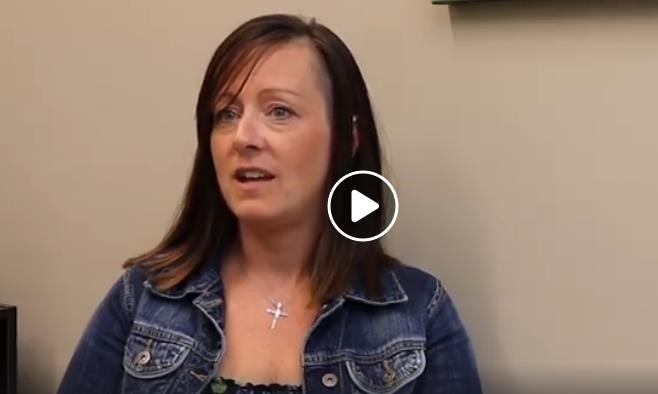

    Christy MacDonald, Clinical care coordinator, Central Lambton FHT

    Members’ stories

    Chatham-Kent, Thamesview and Tilsbury District FHTsChatham-Kent’s Physician Recruitment and Retention Task Force to bring more doctors to the area

    Central Lambton FHTconnecting care at the Central Lambton Family Health Team

    Inner City FHTNew program transitions individuals living with HIV/AIDS out of Toronto’s emergency shelter system

    Summerville FHTSummerville FHT Strategic Plan 2019-2022


    QIDS-ESSENTIAL: the making & meaning of the Quality Improvement Decision Support program

    As the QIDS program turned five last fall, the QIDS Secretariat within AFHTO decided that the milestone merited not just another report or case study but a different kind of account, one that would capture the QIDS journey with a wider lens, from both a philosophical and practice perspective. QIDS-Essential: The Making and Meaning of the Quality Improvement Decision Support (QIDS) Program is the result.


    Happy Nurse Practitioner Week

    Happy Nurse Practitioner Week to all the NPs working in primary care teams across Ontario!

    Thank you for your hard work, your dedication to your patients and your teams. Please take some time this week to reflect on the work that you do and know that you make a difference in the lives of your patients and your communities.
    To celebrate this important week, the NPAO has developed a NP Week Toolkit.

    primary care virtual community with org logos

    Primary Care Virtual Community

    Next webinar: Nov. 21, 2019 | 8 a.m. to 9:30 a.m.

    The Primary Care Virtual Community (PCVC) is a collaboration designed to support the front-line practitioner experience of the Quadruple Aim. The PCVC has been developed by AFHTO and the Ontario College of Family Physicians and is facilitated through The Change Foundation.


    The upcoming webinar will continue a dialogue on 10 Ontario-based “High Impact Actions,” which have been co-defined by the Community, and offer examples of how these actions may already be enabling meaningful improvement in primary care.

    Join the community now and be a part of this important conversation!


    A webcast for IHPs: OHTs and health system transformation, Nov. 14, 2019
    Please join us on from 12 PM to 1:30 PM for an overview of OHTs, and to hear from teams proceeding to full application whose OHT development has included close collaboration with IHPs. They will speak to their work to date and highlight how IHPs are engaged. All members are encouraged to join (not just IHPs!)
    Register today!


    Health Justice Tuesdays – Health and Human Rights Law, Nov. 19, 2019
    Register for the last Health Justice Tuesday session held by one of our members, St Michael’s Hospital Academic FHT. Learn more here.


    Cyber Security and Data Breaches- How Vulnerable are you? Nov. 20, 2019
    The next Financial Webinar Series webcast co-hosted by AFHTO and Grant Thornton LLP is right around the corner. Join us for an hour on data, cyber security and policies and procedures to mitigate possible issues. Register today!


    Digital health and technology in integrated care, Nov. 20, 2019
    The next session of the International Foundation for Integrated Care (IFIC) Canada Virtual Community. Find out more here.

  • QIDS-ESSENTIAL: The Making & Meaning of the Quality Improvement Decision Support program

    Edited introduction from QIDS-Essential: The Making and Meaning of the Quality Improvement Decision Support (QIDS) Program
     
    As the QIDS program turned five in the Fall of 2018, the QIDS Secretariat within AFHTO decided that the milestone merited not just another report or case study but a different kind of account, one that would capture the QIDS journey with a wider lens, from both a philosophical and practice perspective. QIDS-Essential: The Making and Meaning of the Quality Improvement Decision Support (QIDS) Program is the result.

    There is a story to tell about that journey: a narrative less about projects, and more about people. Less about what was done and more about how (and if) it was done; less about data and indicators and more about building collective capabilities, confidence, and communities to make change in the field, from the ground up.

    It’s also a story about progress in primary care performance measurement — in some cases, first steps. It’s a story for the primary care community to learn from and share with each other and all partners in health care.

    The intent is to prompt reflection about the key components and characteristics of that approach. As the quality improvement decision support specialist (QIDSS) positions were introduced, allocated and integrated into FHTs and new measurement tools launched and embraced, what fuelled the momentum? What stalled it? How far did it take FHTs in their sometimes circuitous journey along the data-measurement- performance-and-quality- improvement continuum? What can be leveraged today from the QIDS program to position FHTs as ideal partners in emerging primary care innovations?

    Plenty, as it turns out. If you want to learn more, read QIDS-Essential: The Making and Meaning of the Quality Improvement Decision Support (QIDS) Program. Even though Ministry funding for the AFHTO QIDS Program was cut earlier this year, there is a lot to celebrate from the learnings of the program. AFHTO remains committed to ensuring quality remains a priority in the health system transformation under way by leveraging the great integration work already being done by interprofessional primary care teams in Ontario.

  • Care plans reduce risk of ending up in hospital for patients with severe mental illness: study

    The chances of a patient with a serious mental illness ending up in hospital because of their condition are reduced by almost 40 per cent if they have a care plan, according to the research.

    The study, which tracked 20,000 patients with a severe mental illness through the healthcare system, also found that seeing the same GP reduced the risk of an unplanned hospital admission by around 25 per cent.

    The findings demonstrate the importance of continuity of care at the GP’s for improving health outcomes for patients with a severe mental illness, the authors of the study say.

    Abstract

    Objective: To  investigate  whether  continuity  of  care  in  family  practice  reduces  un-planned hospital use for people with serious mental illness (SMI).Data Sources: Linked administrative data on family practice and hospital utilization by people with SMI in England, 2007-2014.

    Study  Design:  This  observational  cohort  study  used  discrete-time  survival  analy-sis  to  investigate  the  relationship  between  continuity  of  care  in  family  practice  and  unplanned  hospital  use:  emergency  department  (ED)  presentations,  and  unplanned  admissions  for  SMI  and  ambulatory  care-sensitive  conditions  (ACSC).  The  analysis  distinguishes between relational continuity and management/ informational continu-ity (as captured by care plans) and accounts for unobserved confounding by examin-ing deviation from long-term averages.Data Collection/Extraction Methods: Individual-level family practice administrative data linked to hospital administrative data.

    Principal  Findings:  Higher  relational  continuity  was  associated  with  8-11  percent  lower risk of ED presentation and 23-27 percent lower risk of ACSC admissions. Care plans  were  associated  with  29  percent  lower  risk  of  ED  presentation,  39  percent  lower risk of SMI admissions, and 32 percent lower risk of ACSC admissions.

    Conclusions: Family practice continuity of care can reduce unplanned hospital use for physical and mental health of people with SMI.

    Relevant Links:

  • Professional communication networks may improve job satisfaction in primary care: study

    Professional communication networks — described by researchers as “face-to-face interaction about patient care among the health care professionals in a primary care team” — may improve job satisfaction, according to survey results published in Annals of Family Medicine.

    “Team-based care is the cornerstone of relationship-centered health care for patients with chronic illness,” Marlon P. Mundt, PhD, a health economist and professor at the University of Wisconsin School of Medicine and Public Health, told Healio Primary Care. “Forces driving primary care’s transition to the team-based model are the complexity of modern medical care, ever-expanding lists of recommended clinical practice guidelines and a fundamental problem for solo clinicians of too much work and too little time to simultaneously provide acute, chronic and preventive care.”

    “High-functioning, effectively communicating primary care teams are a solution to the difficulty of effectively delivering care to primary care patients with diabetes and other chronic conditions,” Mundt said.

    Abstract

    PURPOSE

    Whereas communication among health care professionals plays an important role in providing the best quality of care for primary care patients, little evidence exists regarding how professional communication contributes to job satisfaction among health care providers, including physicians and clinical staff, in primary care clinics. This study evaluates the extent to which professional communication networks contribute to job satisfaction among health care professionals in primary care clinics.

    METHODS

    A total of 143 health care professionals, including physicians and clinical staff, at 5 US primary care clinics participated in a cross-sectional survey on their communication connections regarding patient care with other care team members and their job satisfaction. Social network analysis calculated core-periphery measures to identify individuals located in a dense cohesive core and in a sparse, loosely connected periphery in the communication network. Generalized linear mixed modeling related core-periphery position of clinic employees in the communication network to job satisfaction, after adjusting for job title, sex, number of years working at the clinic, and percent full-time employment.

    RESULTS

    Average job satisfaction was 5.8 on a scale of 1 to 7. Generalized linear mixed modeling showed that individuals who were in the core of the communication network had significantly greater job satisfaction than those who were on the periphery. Female physicians had lesser overall job satisfaction than other clinic employees.

    CONCLUSIONS

    Interventions targeting professional communication networks might improve health care employee job satisfaction at primary care clinics.

    Relevant Links

  • Bits & Pieces: Made-in-Ontario high impact actions feedback, opioid self assessment & more

    Bits & Pieces: Made-in-Ontario high impact actions feedback, opioid self assessment & more

    Your Weekly News & Updates


    In This Issue  
    • Feedback on Made-in-Ontario high impact actions for Nov. 21 session
    • Member in the media and the Missing Million COPD report
    • Online opioid self-assessment program
    • GoodLife LG TV promotion
    • The Gatehouse programs for adult survivors of childhood sexual abuse – Etobicoke/Toronto
    • Upcoming events on health and climate change, concussions and more

    Feedback on Made-in-Ontario high impact actions for Nov. 21 session
    The primary care virtual community has co-defined a list of High Impact Actions felt to spark meaningful improvements in primary care, building on lessons learned from the UK’s own transformation efforts. The community has also shared insight on the actions they feel are within their control, in addition to where support is needed.

    In our upcoming Nov. 21 session, we’ll be refining and prioritizing the list of Made-in-Ontario High Impact Actions. We’ll also be showcasing examples of where the High Impact Actions are already occurring.

    Please share your feedback on the current list and share examples of where they’re already occurring by clicking here.

    You can also:


    Member in the media and the Missing Million COPD report
    City of Kawartha Lakes FHT: Family health teams a positive change, say majority, although health care cuts a worry

    The Missing Million: according to a report from The Lung Association and Boehringer Ingelheim, more than one million Canadians are living with COPD and don’t know it


    Online opioid self-assessment program
    The Online Opioid Self-Assessment Program is a FREE course developed with funding from Health Canada to improve opioid prescribing. It’s highly interactive and uses assessment as a technique for knowledge exchange and guideline implementation. In order to facilitate active

    learning, a variety of techniques are employed, including videos, case presentations and an assortment of question types to keep you engaged and apply it in practice.
     
    Dr. Andrea D. Furlan MD PhD, ECHO Ontario Co-Chair, developed this interactive course with other colleagues in physiatry, family medicine and addictions medicine. This course is based on the updated 2017 Canadian Opioid Guideline.


    GoodLife TV promotion

    GoodLife LG TV promotion

    GoodLife has launched a contest- all new members who join the membership program before Nov. 30 will be entered to win one of five 50” LG TVs (value approx. $799 each).

    As a reminder, AFHTO members save up to 40% off regular GoodLife Fitness rates. The annual Corporate Membership rate is $519, and the bi-weekly payment is $24. Any identified member on the ‘Bits & Pieces’ mailing list is assigned member IDs on a monthly basis.

    To register, please email info@afhto.ca for your membership ID. Once you’ve received your ID, you can register online.

    For more information:


    The Gatehouse programs for adult survivors of childhood sexual abuse – Etobicoke/Toronto

    1 in 3 girls and 1 in 5 boys will be sexually abused before their 18th birthday.

    The Gatehouse peer-led Adult program’s primary focus is to enable survivors of child sexual abuse to develop positive coping strategies focusing on building healthy boundaries and relationships leading to a more meaningful and grounded life. The programs are offered over the course of 31 weeks in two phases. They also offer a support program for partners/support persons of survivors, the only one in the country aimed at helping foster connection, healthier communication and boundaries from a peer perspective for adult survivors of childhood sexual abuse.

    If you would like a tour, please contact Paula Cordeiro at 416-255-5900 x228 or pcordeiro@thegatehouse.org.

    If your patients are also survivors of childhood sexual abuse, The Gatehouse provides peer support group programs and they don’t have a catchment area. There is no formal referral required. Clients can call 416-255-5900 to schedule an in-person intake to start the process. Their program workbooks are available at www.thegatehouse.org.


    A webcast for IHPs: OHTs and health system transformation, Nov. 14, 2019
    Please join us on from 12 PM to 1:30 PM for an overview of OHTs, and to hear from teams proceeding to full application whose OHT development has included close collaboration with IHPs. They will speak to their work to date and highlight how IHPs are engaged. All members are encouraged to join (not just IHPs!)
    Register today!


    Cyber Security and Data Breaches- How Vulnerable are you? Nov. 20, 2019
    The next Financial Webinar Series webcast co-hosted by AFHTO and Grant Thornton LLP is right around the corner. Join us for an hour on data, cyber security and policies and procedures to mitigate possible issues. Register today!


    OPHA’s Fall Forum:  Health and Climate Change, Nov. 13, 2019
    Explore what’s at stake for individual and community health in the face of a changing climate and how we can work collaboratively across sectors to protect human health. Find out more here.


    What Primary Care Teams Need To Know About CONCUSSION, Nov. 19, 2019
    Remember to register for the Ontario Neurotrauma Foundation’s webinar on concussion. Find out more here.

  • City of Kawartha Lakes FHT survey finds FHTs a positive change, although health care cuts a worry

    The Lindsay Advocate article published October 18, 2019

    By The Lindsay Advocate

    The results are in from the City of Kawartha Lakes Family Health Team’s most recent survey of patients across the local area. The data revealed some interesting findings on how local residents feel about their local care, the family health team approach, the health care system in general and the main challenges to be addressed.

    While the vast majority of respondents indicated they found their health care provider to be caring, friendly and easy-to-talk-to and reported overwhelmingly that their providers are caring, good listeners and thorough, the broader answers were also encouraging.

    A clear majority of patients survey ranked the fact that they feel their care is “patient-centred” as the best part of the care they receive.

    “We are very pleased with this positive feedback about the team from our patients”, said Dr. Eric Ready, Chair of the City of Kawartha Lakes Family Health Team’s Board of Directors. “We are always working to provide the highest quality care,” he added. “Reducing wait times is an ongoing effort and priority for the Board of Directors.”

    Of particular note, 87% of patients responded that family health teams have been a positive change to the health care system. More than 90% stated they were very concerned or somewhat concerned about possible cuts to health care funding.

    Interesting, while shorter wait times and more doctors were identified by the most patients as the keys to “what the perfect health care system would look like”, the close 4th place response was that the system is perfect as is.

    Also, more than half of patients who replied to the survey noted that they felt at least one of their visits to the family health team has prevented a visit to the emergency room (ER), thereby getting immediate care, saving the system money and reducing wait times at the ER.

    The team is also aware that patients identified office hours and appointment wait times as the main challenges of care local. This correlated within the survey where patients said that appointment availability and wait times were the top areas when asked what the health team could do better. Access to transportation was ranked third by patients when asked about the challenges they experience in obtaining care.

    “Our team’s health care professionals get all the credit,” noted Executive Director Mike Perry. “We continue to take steps to reduce time patients have to wait both for an appointment and once in the waiting room. We do have some same or next day appointment, certainly for urgent cases.” The family health team recently implemented a system of automated reminders for patients in order to help increase timely access by reducing the number of patients who do not show up for their appointment. Knowing in advance of patients who cannot attend helps open more appointments sooner.

    Julia Skinner of Bobcaygeon, a member of the team’s Patient Advisory Group, has also reviewed the results. “In addition to the survey, it is wonderful have a voice in local health care,” said explained. “I am very pleased, as a patient, to serve on the team’s Advisory group an provide input from a patient perspective.”

    The survey was replied to by 241 patients which was a response rate of almost 25%; a very high response rate for surveys generally. The survey applied to health care providers of the family health team (e.g. nurse practitioners, pharmacist, registered dietitian, mental health team), not including local physicians. Responses skewed female.

    The City of Kawartha Lakes Family Health team provides primary care to some 36,000 patients at 13 locations across the City. To obtain a family doctor, please contact Danielle at 705.328.9853 Ext. 243.

    To view the full The Lindsay Advocate article, click here.

  • Chatham-Kent’s Physician Recruitment and Retention Task Force to bring more doctors to the area

    The Blackburn News article published November 5, 2019

    By Allanah Wills, Blackburn News

    The Municipality of Chatham-Kent is moving forward with a new Physician Recruitment and Retention Task Force aimed at bringing more doctors to the area.

    On Monday night, council unanimously approved a report that detailed the task force and its initiatives. The program will look at various ways to attract physicians to Chatham-Kent and keep them here including attending family doctor job fairs, enhancing advertising practices and providing financial incentives to new physicians to cover their moving expenses and setup costs.

    In December 2018, Councillor Trevor Thompson brought forward a motion requesting that administrative staff prepare the report looking at a primary care practitioner recruitment and retention program for Chatham-Kent. Almost a year later, Thompson said it feels good to see all the hard work come to fruition.

    “It was a lot of work,” he said. “It took a little bit longer than I was actually hoping for, I would have liked to have seen it back about six months ago. But at the same time, staff did a lot of work to get us to this point and I think really found a good balance.”

    A total of $100,000 towards the Physician Recruitment and Retention Task Force was approved in the 2019 budget and the project will start in 2020. The Chatham-Kent Family Health Team (CK FHT) will look after and distribute the funds on behalf of the other medical groups (Chatham-Kent Family Health Team, Thamesview Family Health Team, Tilbury District Family Health Team, CK Community Health Centres, and the Chatham-Kent Health Alliance) with resource support from the Erie St. Clair LHIN, HealthForce Ontario and the municipality.

    “As soon as we approved the $100,000 there were questions about where does it go to, who does it help? What I wanted to make sure of is that we weren’t just offsetting somebody else’s budget,” Thompson explained. “But, this was new money for a new initiative. [I’m] really happy to see this campaign promise come through, really happy to be addressing a crisis in our community.”

    When Thompson brought forward his original motion in 2018, Chatham-Kent’s rate of family doctors was 76.9 per 100,000 population against the provincial average of 109.4 per 100,000. The report approved by council on Monday recommended that only running the task force for 2020 was not enough to address the chronic doctor shortage and suggested that ongoing funding for the program be referred to the 2021 budget process as well. Thompson said he was pleased to see this option approved.

    “At the time it was one-time funding — $100,000 and from there, who knows what happens. One time isn’t going to bring it, it has to be an ongoing funding request. I’m glad to see that come back again,” he said.

    Now that it’s been given the green light to move forward, the task force will provide council with bi-annual updates on what’s been accomplished and any future initiative plans. Thompson said overall, he believes this is an important step in the right direction.

    “The health of our residents is the economic and the demographic lifeblood of our community,” he exclaimed. “Making this a happier healthier place to live is one of the most important things we can do as Chatham-Kent councillors.”

    To view the full The Blackburn news article, click here.

  • Using ‘New Power’ to Spark Change

    Using ‘New Power’ to Spark Change

    By Dr. Jennifer Young, President, Ontario College of Family Physicians

    Originally posted on OCFP’s website

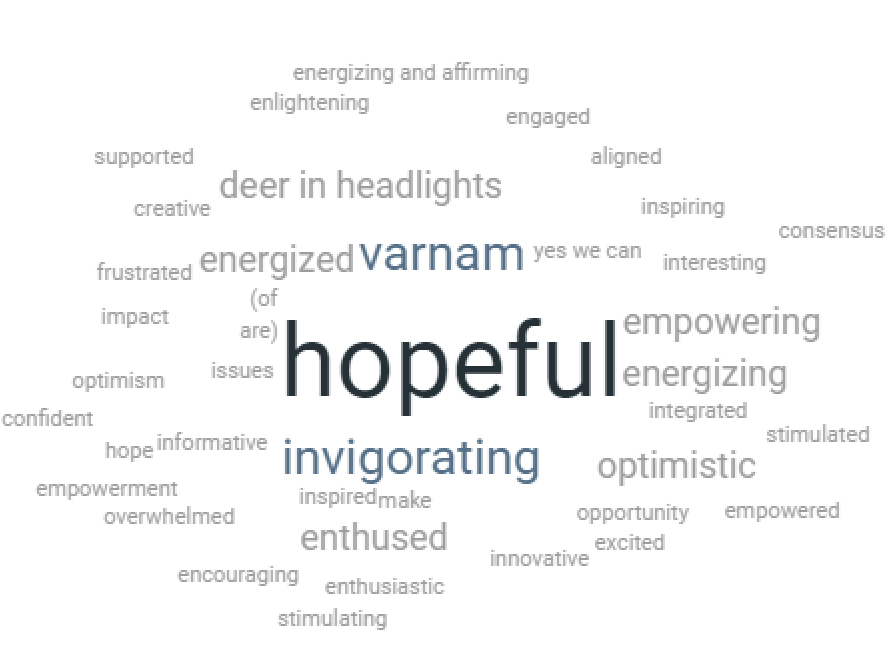
    primary care virtual community word cloud sep 21 2019

    This word cloud summarizes the day that over 40 Ontario leaders of primary care spent together on September 21!  We had the honour to share it with Dr. Robert Varnam, a family physician from the UK who has spearheaded some pretty big transformations within family practices and primary care over the last three years.  

    With significant support and funding from the National Health Service (NHS), Dr. Varnam has put together a list of 10 high impact actions that free up time of family physicians. The time freed up increases their capacity to serve their patients, to increase their work satisfaction and engage in leadership.

    Facilitated by The Change Foundation, our group consisted of representatives from the OCFP, the Section on General and Family Practice, the Association of Family Health Teams of Ontario, the Nurse Practitioners Association of Ontario and primary care clinicians involved in successful innovations in their regions. From the Ministry of Health, Phil Graham (Executive Lead of the Ontario Health Teams) and Nadia Surani (Director of the Primary Health Care Branch) attended for a good portion of the day.

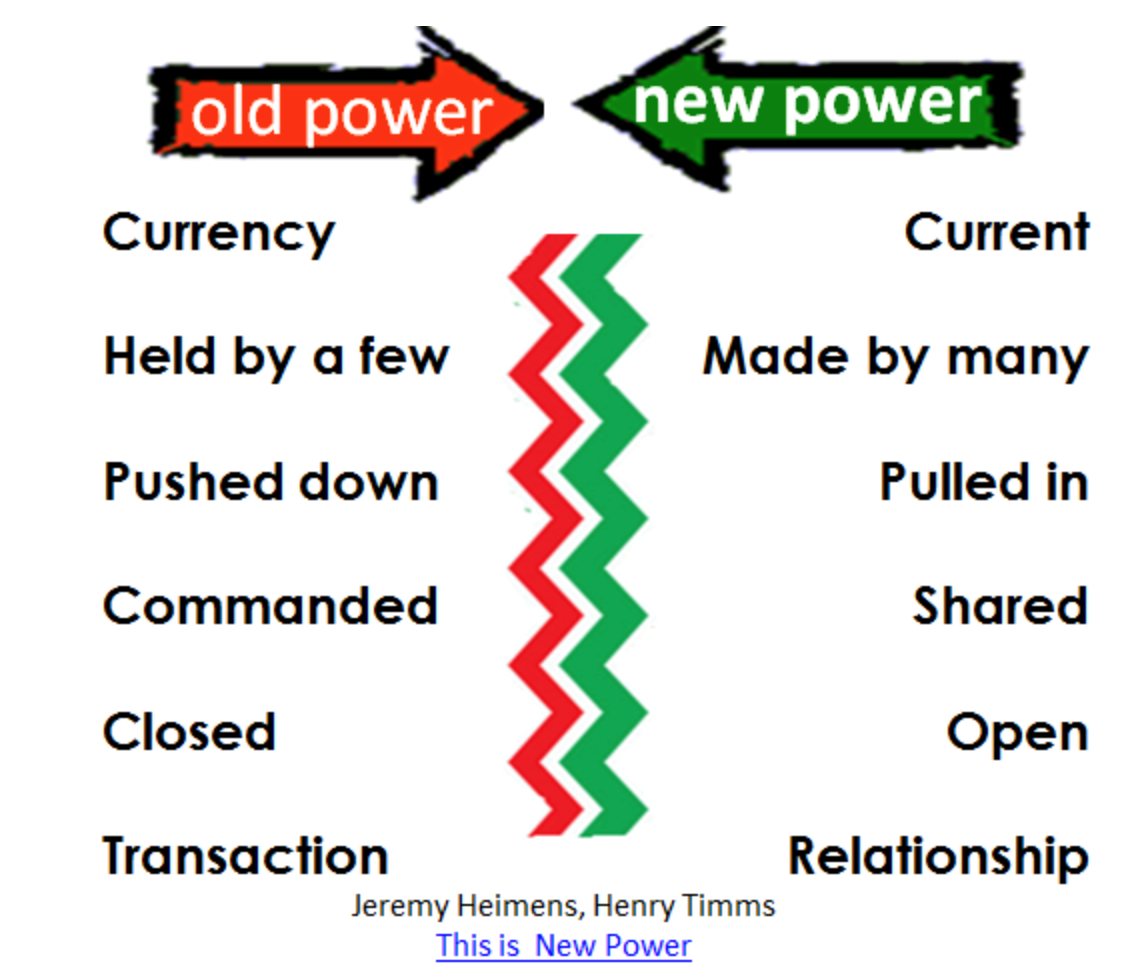
    It was great to see everyone come together to constructively talk about the change from an eco-centric, rather than ego-centric, way. In our own practices, we need to think about how we can each connect to our own ecosystems of health in our communities.

    Learnings from the UK – “New Power” is Enabling Change

    My key takeaway from the successes of the UK work is that there was investment in the support and spread of innovations that were already happening in practices around the country. There were hours of ‘boots on the ground’ engagement BY family physicians WITH family physicians, with thousands of meetings and connections between clinicians. This “New Power” enables changes to be made by the people most affected by them, informed by their own realities. The process was building on strength, enabling existing resources, gathering great ideas and putting them in a format that is practical and accessible for family physicians.  

    What’s Next – Putting this New Power into Action

    We followed this day with yet another installment of our Primary Care Virtual Community on September 25 where more than 100 people connected online, convened by The Change Foundation. We were demonstrating New Power in action!

    old power vs new power


    The goal of these two events was to come up with our own “High Impact Actions” for Ontario. These actions can be seen to be things that we can do on our own (as are most of the UK 10 High Impact Actions) and changes that require more of a system-level intervention.

    Outlined in this chart is what we’ve come up with – we also welcome your thoughts through this brief survey on where we should prioritize the focus:

    Ways to free up your time for care

    How the system can better support you to care

    • Integrate EMRs – Either single or intra-operable EMR / EHR systems that can both push and pull required information. We know that lots needs to be done outside of our scope, but are you using your EMR to its best ability, have you looked to peer-to-peer support from OntarioMD?
    • Build the Team within your practice by ensuring all are working to top of their scope. Is your reception enabled to triage, is nursing enabled to manage some patient needs? Is there someone designated in your practice to help with system navigation for patients with more complex needs?
    • Patients as Partners – Involving patients more in the way your practice is run, patient portals, education (within your practice and community based) that foster patient self-care or health literacy. Patients are looking for access to their information to allow more shared decision making and accountability.
    • Building connections to address the social determinants of health and incorporating Social Prescribing – An easy first step is to ask the Poverty screen “Do you have troubles making ends meet at the end of the month” and, as needed, connect your patients to 211.ca or your regional Thehealthline.ca.
    • Alternative Consultation – Such as telephone consultation, virtual care via OTN, eConsult, secure email consultations. Are you connected to OTN?  If not, get your ONE ID and check out how great this service can be – from enabling virtual visits to people with transportation challenges to connecting with hundreds of specialists. 
    • Spread Innovation – Our organizations are working on sharing information about what others are doing. RISE (Rapid-Improvement Support and Exchange) is a go-to location for emerging Ontario Health Teams, providing resources for those interested in integration efforts through OHTs.
    • Practice Facilitation and Change Management – Get your MyPractice Report sent to you, take advantage of Peer-to-Peer facilitation that already exists through OntarioMD.
    • Enhance Personal productivity – What about taking a typing course, or a speed reading course?
    • Organize Primary Care – Be part of your ecosystem! Connecting with your community of family physicians is important. Are your local health care organizations (e.g., hospital, FHTs in the area, CHCs) pitching in to support meetings of family physicians? Besides advocating for support for leaders, we also know that there needs to be administrative support for networks of family physicians to meet.  


    • Recognize and Support Primary Continuity (the core team) – This core relationship needs to be recognized in any health transformation as continuity of care allows for best outcomes. Changes that erode this are counter-productive. Access to YOU is important!
    • No patient or practice left behind– Timely access to health care/social care supports such as mental health counselling, social work for all family physicians. This is a message that we have been consistently bringing to the Ministry because it is not acceptable that team-based care is not equitably available.   
    • Clinical Leadership – Ensure that family physicians are at the tables that are talking about health system transformation. Have you joined the meetings in your community about a proposed Ontario Health Team? Do you know who to connect to? We continually reinforce with the government that there be protected time for family physician leadership that is not done off the side of the desk.
    • Navigate and Coordinate – Promote a patient navigator role for those more complex patients within your practices now, and on a system level, we need to recognize the importance of this role in any team-based care.  
    • Streamline and Reduce Admin – Streamline the referral process to tests, specialists, services that need to be available equitably. Central referral processes have been high on the list of priorities within OHTs.   


    Let’s Connect

    Sound overwhelming? Like any change, it is best to start with one small step, something that IS within your control. Be assured that the OCFP is tirelessly speaking up for what makes sense for a practicing family physician and their patients. We want to connect with you, we would love you to connect with us. Visit our website to hear more about our activities and/or join us for the next Primary Care Virtual Community – stay tuned to Twitter/email for updates about the next date. If you are thinking about joining an OHT, check out the OMA map of OHTs, as well as OHT-related resources through our growing online repository and the McMaster Forum’s RISE platform.

    Simply put, we can all look inward to see how we alone can improve. And by looking beyond and building the New Power in our own ecosystem – and sharing those learnings with others – can make changes that sustain and grow. Your input to this change matters.

    “Hopefully”  yours,
    Jennifer

    Dr. Jennifer Young
    OCFP President

  • Bits & Pieces: members in the media, Chatham-Kent FHT’s strategic plan implementation task force & more

    Bits & Pieces: members in the media, Chatham-Kent FHT’s strategic plan implementation task force & more

    Your Weekly News & Updates


    In this Issue:  
    • Members in the media
    • Chatham-Kent FHT’s strategic plan implementation task force
    • HQO seeking volunteers to help develop insomnia disorder quality standard
    • CPSO seeking input on stakeholder engagement
    • Upcoming events on OHTs and IHPs, transitions in care and more

    Members in the media
    Dufferin Area FHT Local agencies to benefit from overhaul of Ontario’s health care bureaucracy

    Ingersoll NPLCNurse practitioners filling health-care gaps, despite lack of funding

    Temagami FHTTemagami FHT marks 10 years in new clinic HQ


    chatham-kent fht strategic plan task force


    Chatham-Kent FHT’s strategic plan implementation task force

    Once they created their strategic plan, Chatham-Kent FHT’s board formed an implementation task force. CMCS Consulting, who had facilitated their plan, followed up and profiled the task force in their newsletter. Find out how the task force performed here.

    And for more ideas for your own strategic plan, don’t forget we have our own webinar and toolkit posted on our site.


    HQO seeking volunteers to help develop insomnia disorder quality standard
    Health Quality Ontario is seeking volunteers interested in joining an Advisory Committee that will provide advice to support the development of a quality standard focused on people living with insomnia disorder. Apply here. Deadline Nov. 8, 2019.


    CPSO seeking input on stakeholder engagement

    The College of Physicians and Surgeons (CPSO) is currently planning for the implementation of its newly developed Strategic Plan, including the development of a Stakeholder Engagement Framework. The framework’s purpose is to support CPSO in regularly engaging with numerous stakeholders in a way that is meaningful to them and informative to CPSO’s work. This plan will build on the work CPSO is already doing to engage stakeholders, including the public/patients, system partners and physicians.

    Optimus SBR is supporting the framework’s development and is hoping to speak with a few physician leaders who can share their perspectives on the best forums and methods for engagement with their peers. If you are interested in contributing to this initiative, Cole Clementino cole.clementino@optimussbr.com can help coordinate time for further discussion. Thank you in advance for considering participating in this initiative.


    Transition between Hospital and Home: Achieving a Standard of Care, Nov. 6, 2019
    Join HQO for their Quality Round Ontario about the latest evidence to make the transition between hospital and home easier for patients and their families. Learn more here.


    Breathing Inspired: COPD Rehabilitation – Communicating the Diagnosis and Prognosis, Nov .7, 2019
    Join this educational evening held by the Lung Association in Hamilton. Register here


    A webcast for IHPs: OHTs and health system transformation, Nov. 14, 2019
    Please join us on from 12 PM to 1:30 PM for an overview of OHTs, and to hear from teams proceeding to full application whose OHT development has included close collaboration with IHPs. They will speak to their work to date and highlight how IHPs are engaged. All members are encouraged to join (not just IHPs!)
    Register today!


    Cyber Security and Data Breaches- How Vulnerable are you? Nov. 20, 2019
    The next Financial Webinar Series webcast co-hosted by AFHTO and Grant Thornton LLP is right around the corner. Join us for an hour on data, cyber security and policies and procedures to mitigate possible issues. Register today!


    Do you know how to manage Mental Health after Stroke? Nov. 18, 2019
    Free ECHO Ontario Complex Patient Management pop-up session at CAMH and University of Toronto. Join this session which will discuss the link between these conditions, as well as prevention and treatment options. Participants will have the opportunity to ask questions and discuss an anonymized patient case. Register here.


    Annual Scientific Assembly, Nov. 28-30, 2019
    OCFP’s ASA 2019 Conference is designed by family physicians, for family physicians and offers 100+ different sessions on topics ranging from casting to climate change – and everything in between. Find out more here.