Author: admin

  • The Primary Care Collaborative

    The Primary Care Collaborative

    Primary Care Collaborative logos


    COVID-19 shows the vital roles primary care providers play every day for community health and wellbeing and health system cooperation in Ontario


    Toronto, March 29, 2021 – During COVID-19, we see again and again across Ontario that communities – from people living in large urban centres to smaller cities to towns and rural areas – depend on their local family physicians, family health teams, community health centres, Indigenous primary health care teams, nurse practitioner-led clinics, and other primary care providers in a public health crisis. These providers and organizations are, quite literally, lifelines for the people they serve. The trusted relationships people have with their family doctors, nurse practitioners, healers, mental health professionals and other primary care providers are at the core of local COVID-19 responses, from testing and other direct COVID-19 care, to supports for food security and chronic disease management, to providing credible and culturally safe vaccination information, to knowing how to care for themselves and their loved ones. When the challenges have never been bigger, and the isolation unlike at any other time in our lives, your community providers are there.

    Today, we are announcing we’ve formed the Primary Care Collaborative (PCC), an alliance of comprehensive primary care organizations joined together by common purpose to build on the collaborative work of COVID-19 as we move towards recovery in a time of health system transformation.

    Together, our organizations represent more than 20,000 primary care providers and team members. As Ontario’s primary care providers continue to support their communities through trusted local relationships, partnerships with social services and other providers, and by working with decision makers, we’re committed to ensuring that health system policies and funding acknowledge primary care’s vital role and place in community health and wellbeing. Speaking with one voice, we will advance shared priorities in primary care such as expanded access to teams and better links to home care and mental health supports. The PCC knows that for health care integration and transformation to work for people – for those using the health system and those looking for services to stay well – primary care needs to be the foundation of Ontario’s health system. Robust and well-supported primary care is the heart of all world-class health systems, and people living in Ontario should expect no less. During COVID-19, this is a given. In recovery, when many echo effects of the pandemic will be felt for years to come, it will be of utmost importance.

    QUOTES FROM MEMBERS OF THE PRIMARY CARE COLLABORATIVE

    “The Indigenous Primary Health Care Council appreciates the importance of this collaborative opportunity to strengthen and unify the voice of primary care practitioners across the province. Primary care is the foundation for a high quality, sustainable and integrated system; evidence shows that jurisdictions with high performing primary care place it at the centre of health care delivery. The IPHCC is especially thankful to our partners in the PCC for recognizing that our community-driven Indigenous-governed interprofessional primary care models include Traditional healers and Cultural Service Providers. This is an integral part of promoting a wholistic approach to health and wellbeing for Indigenous people. Great things can happen when the right people come together, and I look forward to advancing our vision for a robust health care system that addresses not just the physical wellbeing of an individual but to the social, emotional, cultural and spiritual wellbeing of the whole community.” Caroline Lidstone-Jones, CEO, Indigenous Primary Health Care Council

    “The Alliance for Healthier Communities’ member centres provide community-based comprehensive primary health care across Ontario, and they are essential to addressing barriers to health and wellbeing that marginalized populations face. Health equity – that is, the idea that everyone deserves a chance to live their healthiest life, but that many people face barriers to doing so – is only achievable where trusted relationships can be built in and by the community. The Alliance is committed to working with our partners in the PCC to ensure the cornerstone of our health system – primary care – can continue to step up for the people in Ontario who face barriers. We have seen throughout the pandemic that we are stronger when we work together, and we look forward to continuing to work collaboratively to build a better future.” Sarah Hobbs, CEO, Alliance for Healthier Communities

    “The Nurse Practitioner-Led Clinic Association is proud to be working with this strong group of primary care association leaders. Often a person’s first point of contact with the health care system, primary care is integral for the health and wellbeing of not only patients, but also the communities in which they live. NPLCs have focused on whole person care since our inception, with nurse practitioner leadership at all levels of the organization. By coming together, this collaborative will provide a united voice for primary care and will allow for us to advocate for health care initiatives across the province.” Jennifer Clement, Past-President, Nurse Practitioner-Led Clinic Association

    “Across the world, cost-effective and high-performing health systems share a common characteristic – they are based on a foundation of comprehensive primary care, which is supported through a team. Primary care is the first point of contact into the health system; jurisdictions that commit to robust investments in primary care are able to move quicker into achieving the Quintuple Aim, ensuring there is a lens towards equitable and accessible care, close to home. AFHTO is pleased to be working with our comprehensive primary care partners to ensure there is a unified voice for primary care, especially as we move towards the daunting task of post-pandemic recovery. We know that this work can only be achieved if we truly work together and we look forward to our ongoing collaboration.” Kavita Mehta, CEO, Association of Family Health Teams of Ontario

    “Ontarians turn to primary care more often than any other part of the health system. Providing high-quality care is truly a team sport. The Ontario College of Family Physicians is pleased to be working together with our primary care partners to create a unified voice – as family physicians, nurse practitioners, interprofessional healthcare providers and team-based primary care. This collaboration will only strengthen our ability to achieve comprehensive, continuous, coordinated and equitable health care for all patients and families across Ontario as envisioned by the Patient’s Medical Home.” Leanne Clarke, CEO, Ontario College of Family Physicians

    “Primary care is foundational to a high performing healthcare system, and the sector is stronger when it is united. This is why the Ontario Medical Association Section on General & Family Practice (SGFP) is so pleased to be part of this newly formed Primary Care Collaborative (PCC) with our partners that also support comprehensive primary care. SGFP represents the 15,000 family doctors in Ontario in advocacy and negotiations and is dedicated to building a united vision for a more integrated, equitable and unified sector. We know that there are many challenges ahead for the healthcare system, and this past year has underscored that incredible things can happen when strong leaders come together in shared purpose. By working collaboratively during much of this pandemic, the PCC has been successful in collectively advocating for and advancing solutions that have made a positive impact on the sector and the health and wellbeing of Ontarians. SGFP is looking forward to continuing to work with PCC to bring out the best in care for Ontarians and to support primary care to thrive in our province.” Dr. David Schieck, Ontario Medical Association, Section on General & Family Practice

    Return to: Primary Care Collaborative Updates


    Media contact for interview requests, comments or inquiries:

    Paula Myers,

    Manager, Membership and Communications

    Association of Family Health Teams of Ontario

    Email: paula.myers@afhto.ca

    Phone: (647) 234-8605 extension 1200
     

  • Joint Letter on Vaccine dose intervals for Indigenous populations

    To:    Premier Doug Ford
    Christine Elliott, Deputy Premier, Minster of Health

    Cc:    Dr. Dirk Huyer, Coordinator, Provincial Outbreak Response
    Greg Rickford, Minister of Indigenous Affairs
    Dr. David Williams, Chief Medical Officer of Health (MOH)

    Re: Changes to dosing schedule for COVID-19 Vaccine Distribution to Urban Indigenous populations

    March 26, 2021

    Dear Premier Ford and Minister Elliott,

    We write to you today, urgently, with regards to the announcement made on March 18, 2021 that, while on-reserve First Nations people will receive their second vaccine doses within 21-28 days, those living in urban areas will have to wait up to four months for their second doses.

    Indigenous adults were prioritized within the vaccine framework with good reason; due to historical health barriers linked to colonialism and continued pervasive anti-Indigenous racism, Indigenous people living everywhere in Ontario – on reserve and in urban areas – face health vulnerabilities that others living in Ontario do not. For those living in urban areas, this includes higher rates of homelessness and transient housing, overcrowded housing, and poor health status, among other factors. In addition, there are still many Indigenous people living in urban areas who have yet to receive their first shots. This sudden change to the priority of Indigenous people undercuts the confidence and trust in the vaccines themselves, and in the system that is distributing them, as well as the providers tasked with reaching marginalized Indigenous people. This is, simply put, unacceptable, and frankly avoidable.

    We are standing in solidarity with the Indigenous Primary Health Care Council and asking that, at bare minimum, those Indigenous people living in urban areas who’ve already received their first doses of vaccines be grandfathered in, and permitted to receive their second doses within 21-28 days. This allows for continuity of care, and confidence in this process and the vaccine itself.

    Premier, Minister, there is already mistrust mounting in Indigenous communities because of this confusion. There are different approaches being taken across Public Health Units, further adding to the potential for miscommunication and misinterpreted guidance. These moments risk seeing the spread of COVID-19 into First Nations communities, and creating more challenges for all. Urban Indigenous vaccine strategies must be delivered consistently across the province to avoid these ambiguities and variances in the delivery of COVID-19 care for the Indigenous population.
     
    As many Alliance members serve urban Indigenous populations across the province, alongside the members of the Indigenous Primary Health Care Council, we look forward to working with you to ensure that the clearest possible plan and strategies can be enabled to ensure the safety of all Indigenous communities in the province.

    Sincerely,

    Sarah Hobbs, CEO, Alliance for Healthier Communities
    Kavita Mehta, CEO, Association of Family Health Teams of Ontario Leanne Clarke, CEO, Ontario College of Family Physicians

    cc.:
    Shawn Batise, Deputy Minister, Indigenous Affairs
    Nadia Surani, Acting Director, Primary Care Branch, Ministry of Health

    See the pdf version here.

  • Overview of the 2021 Ontario Government Budget

    2021 Ontario Budget – Ontario’s Action Plan: Protecting People’s Health and Our Economy
    An overview of the Ontario government’s budget

    March 25, 2021

    Overview
    Yesterday, March 24, the government released the 2021 Ontario Budget entitled “Ontario’s Action Plan: Protecting People’s Health and Our Economy.” This budget builds on the investments announced last March in “Ontario’s Action Plan: Responding to COVID-19” and on the 2020 budget that was introduced last November. It has two major areas of focus:

    • Protecting People’s Health: An allocation of $16.3B to protect people’s health, including more than $1B to support the administration, distribution, and roll-out of the COVID-19 vaccine and $2.3B in 2021-22 for a comprehensive testing strategy.
    • Protecting Our Economy: An investment of $23.3B to support families, workers, and small businesses impacted by the public health measures put in place to manage the spread of the virus.

    The $16.3B for health care and $23.3B for the economy, makes total direct support $39.6B. An additional $11.3B was announced to improve cash flow for people and businesses. This makes the total supports committed by the government to be $51B over four years.

    AFHTO is disappointed that there were no funding announcements made to support primary care or team-based primary care. Post-pandemic recovery cannot happen without investments in the community and within primary care, and the sector needs help to improve the health and well-being of all Ontarians.

    There were also no investments in paid sicks days for people who can’t afford to stay home when sick. There were some mental health and vulnerable populations supports although they were not significant, and none flow directly to primary care.

    We will continue to work with our partners and to advocate for the importance of primary care in the pandemic response and the integral role the sector plays in supporting the most vulnerable populations. We thank you for all the work you do, day in and day out, to support your patients and your communities.   

    Here is an overview of the budget:

    Protecting People’s Health

    • Defeating COVID-19
      • $1B for a province-wide vaccination plan.
      • $2.3B for testing and contact tracing.
      • $1.4B for PPE, including more than 315 million masks and 1.2 billion gloves.
      • An additional $5.1B has been invested in hospitals since the pandemic began, including $1.8B announced for 2021-22 to continue providing care for COVID-19, to address surgical backlog, and to address current patient needs.
      • $3.7 million in 2021–22 to help remove transportation barriers for persons with disabilities and older adults with limited mobility to travel to their vaccination appointments.
      •  $50 million to support community‐led vaccination efforts in First Nations and urban Indigenous communities.
      • Ontario has invested over $100 million in IPAC funding and, building on this investment, is investing $50 million in 2021–22 to ensure IPAC resources and expertise are available across the health system, including hospitals and public health units.
    • Fixing long-term care
      • $933M over four years, for a total of $2.6B, to support building 30,000 new long-term care beds.
      • $246M over the next four years to improve living conditions in existing homes, including providing air conditioning.
      • $4.9B over four years to increase average direct daily care to four hours a day and to hire more than 27,000 providers, including PSWs and nurses.
      • Expanding the Community Paramedicine for Long-term Care Program by investing $160M over three years to support 33 communities.
    • Caring for People
      • An additional $175M for 2021-22 for people struggling with mental health and addiction problems. This is a part of the already announced $3.8B over 10 years.
      • There will be an additional $2.1M over three years to support victims of crime, such as domestic violence and human trafficking.
      • $12.5M over three years to enhance mental health services available to OPP staff.
      • Four new mobile mental health clinics across the province.
      • $8.4M over three years in a crisis call diversion program to provide supports, which may include diversion to appropriate mental health services. Mental health workers will be embedded in OPP communications centres.
      • $1.6M over two years to support the Anti-Racism and Anti-Hate Group program.

    Protecting Our Economy

    • Supporting workers and families
      • Ontario Jobs Training Tax Credit for 2021 of up to $2,000 per recipient for a total of roughly $260M.
      • Supporting parents with a child benefit through a third round of payments, totaling $1.8B since last March. The payment will be $400 per child and $500 for each child with special needs.
      • To support parents with childcare and getting back to work, a 20% enhancement of the CARE tax credit is proposed for 2021.
      • A Seniors’ Home Safety Tax Credit for 2021 to provide an estimated $30M in support for about 27,000 seniors.
    • Supporting jobs:
      • A second round of the Ontario Small Business Support Grant payments, from which approximately 120,000 small businesses will benefit from an additional $1.7B in relief.
      • $400M over three years to the tourism, hospitality, and culture industries.
      • Ontario is investing $2.8 billion in broadband, bringing the province’s total investment to nearly $4 billion over six years, beginning in 2019-20.
      • Temporarily enhancing the Regional Opportunities Investment Tax Credit with an additional $61M.
    • Supporting communities:
      • To support faith-based and cultural organizations, Ontario will be making up to $50M available for grants to eligible organizations.
      • To support Ontario’s municipalities, the government is providing almost $1B in additional financial relief in 2021 to help preserve public services and support economic recovery.

    You can find full details of the “Ontario’s Action Plan: Protecting People’s Health and Our Economy” online, including the province’s economic and fiscal outlook, and borrowing and debt management.


  • Bits & Pieces: phase 2 guidance, cancer screening rock stars needed and more

    Bits & Pieces: phase 2 guidance, cancer screening rock stars needed and more

    Your Weekly News & Updates


    In This Issue  
    • Cancer screening rockstars needed
    • Reminder- Supporting Older Persons at Home, March 25
    • COVID-19 vaccine roll-out & hesitancy in Indigenous communities
    • Guidance on phase 2 prioritization for COVID-19 vaccination and more
    • National Newcomer Navigation Network – N4
    • Virtual health care for patients with developmental disabilities- study
    • Excellence through Quality Improvement (E-QIP) Conference
    • Upcoming events including Wise Practices for COVID Vaccinators and more


    Cancer screening rockstars needed

    Don’t leave your team’s stories untold!
    In a recent Bits & Pieces, you may have seen Ontario Health (Cancer Care Ontario)’s guidance for resuming breast, cervical and colorectal cancer screening. In collaboration with our primary care partners and Ontario Health (Cancer Care Ontario), we will host a webinar to further explore this document and share stories from teams resuming cancer screening.

    If your team has initiated a cancer screening program to resume and catch up on screening, please fill this member initiative webform to let us know! If you are interested in sharing your story during our webinar, please email Sandeep Gill sandeep.gill@afhto.ca by this Friday, Mar. 26.

    Questions? Email us at improve@afhto.ca 


    Reminder- Supporting Older Persons at Home, March 25

    COVID-19 highlighted numerous barriers and challenges to providing integrated care for older persons living in the community.

    Join Provincial Geriatrics Leadership Ontario in a discussion on how to better support older persons in the community using lessons learned during the first year of the COVID-19 pandemic.

    We will discuss needs in primary care – focusing on the role of interprofessional teams – and offer some resources and tools to better support team-based care for older persons.

    We will also discuss how specialized geriatric service programs in your area can provide support to primary care clinicians.


    Indigenous vaccine page screenshot


    COVID-19 vaccine roll-out & hesitancy in Indigenous communities
    Indigenous communities are prioritized for the COVID-19 vaccine rollout, but the historic reasons for that prioritization-including systemic racism- may also contribute to vaccine hesitancy within the communities.

    In response we have compiled resources from Akausivik Inuit FHT and Sioux Lookout First Nations Health Authority to help combat it. Visit our site for the full list.


    Guidance on phase 2 prioritization for COVID-19 vaccination and more

    Recent updates include:

    We continue to update several pages on our site with resources and news:


    National Newcomer Navigation Network – N4

    N4 is a national network for professionals from Canada’s Healthcare and Social Service sectors to connect, learn and collaborate in their work with newcomers (immigrants and refugees).

    While newcomers make up over 20% of Canadians and face many barriers to receiving care or services, they are often overlooked as needing help to navigate our systems.

    N4 provides a one-stop platform for professional development, education, virtual discussions, networking, and the sharing of data and resources. N4 promotes inter-sectoral collaboration to encourage sharing of expertise, economies of effort, and promotion of leading and best practices in the field of newcomer navigation.

    Membership is free thanks to funding from Immigration, Refugees and Citizenship Canada (IRCC). You can become a member here.


    Virtual health care for patients with developmental disabilities- study

    A University of Toronto PhD candidate is currently recruiting for a study on virtual primary care for adults with developmental disabilities. This work is being conducted together with the Azrieli Adult Neurodevelopmental Centre at CAMH.

    The goal is to learn how to deliver high quality virtual care to patients with developmental disabilities, when virtual care is not appropriate, and what supports are needed to be successful. As part of this study they are interviewing primary care providers.

    See the flyer here.

    If anyone is interested in learning more about the study you can contact  avra.selick@camh.ca or 416-535-8501 x30127.


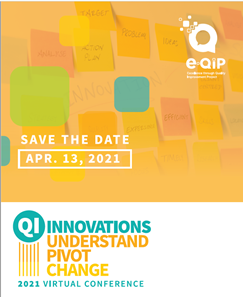
    Save the date april 13, 2021 E-QIP QI Innovations: Understand-Pivot-Change 2021 virtual conference


    Excellence through Quality Improvement (E-QIP) Conference

    The Excellence through Quality Improvement Project (E-QIP), Quality Improvement Innovations: Understand-Pivot-Change 2021 Conference will be on Tuesday, April 13, 2021. Hosted by CMHA Ontario, this one-day virtual conference is being offered for FREE.

    It will bring together Ontario’s leading quality improvement experts in the mental health and addiction sector. Visit their site.


    Wise Practices for COVID Vaccinators, Mar. 23, 2021
    Learn how to actively design and deliver vaccination services to support high quality, safe experiences for Indigenous patients. You’ll walk away with wise practices & strategies for working in a culturally safe & respectful way.
    Find out more here.


    BounceBack refresher webinar, Mar. 25, 2021

    The BounceBack communications and marketing team invites you to a 30-minute refresher presentation on BounceBack, a free CBT skill-building program designed to help individuals 15+ manage low mood, mild to moderate anxiety or depression, stress or worry.


    OHT Virtual Engagement Series Second Session (RISE OHT Webinar), Mar. 25, 2021
    Join the Ministry as they discuss the details around the core components of the OHT Performance Measurement Framework. They’ll be identifying Cohort 1 OHT-selected indicators and OHT evaluation approaches to help you understand OHT evaluation and key measurement supports.
    Learn more here.


    Foundations to QI (IDEAS) Program e-Learning Course, Mar. 31 & Apr. 1, 2021
    E-QIP is holding this comprehensive introductory QI course designed for the community mental health sector. You’ll be well versed in a common language and approach to QI with the aim of improving client care, experience and outcomes after this course.
    Find out more here.


    Lessons from vaccine pilots, evolving guidance, and more, Mar 26, 2021
    The COVID-19 CoP, held by the OCFP and the University of Toronto DFCM, will be discussing lessons learned and new guidance around COVID-19 vaccines and rollout.
    Learn more here.


    ECHO Managing COVID-19 in Primary Care, Starting Apr. 13, 2021
    UHN’s ECHO series is back- now with 12 parts. Join other primary care providers in this interactive online program.
    Find out more here.

  • See a video tour of a Georgian Bay FHT drive-thru COVID-19 vaccine clinic

    Collingwood Today article published March 14, 2021

    By Erika Engel, Collingwood Today

    While the term drive-thru usually refers to a coffee run, in Collingwood and Wasaga Beach, it’s also the method of delivery for vaccines against COVID-19. 

    Just like the coffee chains, you arrive to the local drive-thru clinics and check-in to confirm your (pre-booked) order – one dose please. At the next stop you hand over the paperwork and get a quick needle in the arm. Then you pull ahead and wait 15 minutes before you’re clear to head home. 

    “The only thing you don’t get is a coffee at the end of it,” joked Gaynor Edwards, clinical director for Georgian Bay Family Health Team (GBFHT), and one of the organizers for the drive-thru clinics. 

    Here’s a video of the whole process: 

    Each location – one at the Collingwood Legion and one at the Wasaga Beach Rec Plex – operates in partnership between the Georgian Bay Family Health Team and the Simcoe Muskoka District Health Unit. They were originally set up as COVID-19 assessment centres for swab testing, and still operate under that role when they’re not being used as vaccine clinics. 

    Edwards said it’s a very different inside the tents when staff are running vaccine clinics instead of test sites. 

    “The mood has lifted enormously,” said Edwards. “The people coming through are really happy to be here. The mood has lifted for all of us – patients and providers.” 

    Vaccine supply is limited right now and the clinics are being run as supply is available. Waiting lists are full and it’s tough to get an appointment, even for those who fit the limited eligibility criteria. 

    “We’re looking forward to more and more vaccine and a process that will enable us to ramp up to the fullest capacity,” said Edwards. “I think there is a lot of frustration that certain groups in the community aren’t getting vaccinated yet, but I think we all want to just put out to everybody that it is coming, it’s coming quickly and hopefully – maybe by the end of June – everybody will have received a first vaccine who wants it. That’s certainly what we’re hoping for.” 

    Vaccine appointments can only be made by following the online or phone booking process set up by the province. You can find information on eligibility and registering for an appointment on the Simcoe Muskoka District Health Unit website here.

    Please note, you cannot book an appointment through your doctor’s office or through the Georgian Bay Family Health Team at this time.

    Read the full article here

  • March 19th Update on COVID-19 Vaccination Roll Out

    Dear Members,
    We are writing to provide you with an update from our united Primary Care COVID-19 Vaccination Collaborative (PC-VAC*). This week’s key messages that we shared with vaccine decision-makers can be found here.  

    The projections from the Ontario COVID-19 Science Advisory Table and Modelling Consensus update on COVID-19 Table on March 11 suggests that vaccination in long-term care has paid off but progress has otherwise stalled. There are increasing concerns about variants of concern (VOC) that are spreading across Ontario and our behaviour over the next few weeks will determine what our summer will look like.

    However, given that VOCs make up nearly half of the confirmed cases being reported and there has been an increase in ICU numbers trending up, the Ontario Hospital Association and the Science Advisory Table have indicated that Ontario has entered a third wave of the COVID-19 pandemic.     

    Key Updates:

    Primary Care Vaccination Pilot Community of Practice:
    Together with Ontario Health (OH), the primary care associations have formed a Community of Practice to support those involved in vaccinations in these regions. Initially the CoP will include those participating in the pilot and will scale as other PHUs are included. If you are currently participating in the pilot and would like to join the CoP, you can register for the upcoming series of connecting calls here weekly Thursdays from 8 am to 9 am.

    Resources are available on the Quorum Community Space Primary Care Vaccination Pilot CoP. If you have trouble signing up for Quorum, please message janine.theben@ontariohealth.ca for assistance.

    COVaxON:
    OntarioMD will be providing additional training and onboarding on COVaxON (the vaccine registration system) for clinical providers, initially focused on those who are directly involved in vaccine pilots, including support for technical questions that arise throughout the process. You can register for training directly. A Clinical Workflow Training recording is also available.

    If you are beginning to participate in vaccine administration with your PHU and are not yet connected, below are OMD contacts by existing pilot site:

    COVID-19 Vaccine Eligibility EMR Searches
    Version 1.0 of COVID-19 Vaccine Eligibility EMR Searches are now available, created by the eHealth Centre of Excellence. This work is based on the Vulnerable populations and COVID-19 resource published by the Public Health Agency of Canada (PHAC) and informed by the COVID-19: Vaccines Resource developed by the Centre for Effective Practice (CEP).

    It aims to equip Primary Care with resources for your EMR which will enable you to identify and prioritize ambulatory patients from within your roster who are in greatest need of the COVID-19 Vaccination to avoid negative healthcare outcomes. Version 1.0 of the searches are all available to download right now from our Community site for all three EMRs.

    IMPORTANT: The Province of Ontario has announced the focus for Phase Two of Ontario’s vaccination distribution plan. The list of eligible health conditions provided in this announcement does not align with the Version 1.0 searches currently released by the eHealth Centre of Excellence. Their team is hard at work putting together Version 2.0 of our COVID-19 Vaccine Eligibility EMR Searches which will align with the health conditions listed in the Province’s announcement.

    COVID-19 Vaccination in Canada: an educational series for primary care professionals
    “COVID-19 vaccination in Canada” is now certified for up to 1 Mainpro+® credits.  This self-learning series from DFCM and the Ontario College of Family Physicians is designed to provide primary care professionals with the knowledge and skills to support Canada’s COVID-19 vaccination effort. Added is a new module on viral vector vaccines that includes extensive information on the AstraZeneca vaccine and available information on the Janssen vaccine. There is also updated content throughout the series including on the vaccine rollout, dosing interval and more. To learn more and to register please click here.

    The next COVID-19 Community of Practice for Ontario Family Physicians is on Friday, March 26th from 8:00 a.m. to 9:00 a.m. and will include dialogue with some of the family physicians involved in the AZ pilot sites. Click here to register.  Previous COVID-19 Community of Practice sessions can be found here.

    New Resources:

    Find resources from previous weeks here.

    Finally, the OMA has relaunched its burnout survey to understand the impact of COVID-19 on physician burnout. Physicians are invited to complete this 5-7 minute survey.

    We look forward to continually updating you on the provincial vaccination strategy. Please do not hesitate to contact us if you have any questions or ideas.

    Yours in good health,

    The AFHTO Team

    *Ontario Primary Care COVID-19 Vaccination Collaborative:

    • Alliance for Healthier Communities
    • Association of Family Health Teams of Ontario
    • Indigenous Primary Health Care Council
    • Nurse Practitioner-Led Clinic Association/Nurse Practitioners’ Association of Ontario
    • Ontario College of Family Physicians
    • Ontario Medical Association Section on General and Family Practice
    • Ontario’s Academic Chairs of Family Medicine
  • Bits & Pieces: community investment grants, free legal services and more

    Bits & Pieces: community investment grants, free legal services and more

    Your Weekly News & Updates


    In This Issue  
    • CIRA community investment grants
    • Happy Nutrition Month
    • Members’ stories
    • Family Justice Centre -free legal services
    • AstraZeneca COVID-19 vaccine & thromboembolic events, MOH updates and more
    • COVID-19 support available for isolated seniors and people with physical disabilities
    • OMA burnout survey
    • White papers on population health management and population segmentation
    • Upcoming events including supporting older persons at home and more


    CIRA community investment grants

    AFHTO members and/or their partners may be eligible for Canadian Internet Registration Authority (CIRA)’s Community Investment Program grants.

    Applications for more than $1 million in grants for Canadian internet projects are now open. They’re looking for not-for-profits, charities, and researchers with projects to improve Canada’s internet – with a special focus on students and northern, rural, and Indigenous communities. Learn more on how to apply. Deadline is April 14.


    Nutrition month 2021 -colourful pics of people and food


    Happy Nutrition Month

    March is Nutrition Month, and tomorrow is Dietitian’s Day. We appreciate our registered dietitians and their ongoing commitment to teamwork and helping patients #FindYourHealthy!


    Members’ stories

    Elliot Lake FHT Elliot Lake Health Team plans first mass vaccination clinic this week

    Grandview Medical Centre & Two Rivers FHTsVaccination clinic now open at Langs in Cambridge

    Guelph FHT Guelph FHT to operate 2 new vaccination clinics


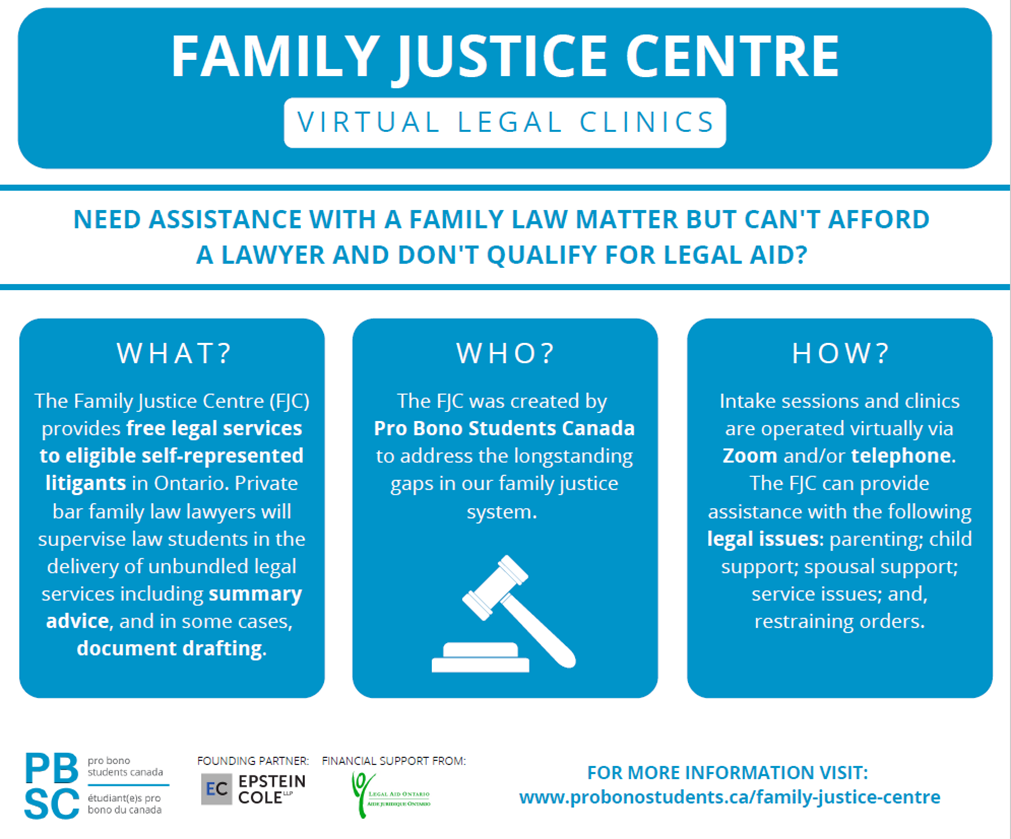
    Infographic- English

    Family Justice Centre -free legal services

    There is a substantial and long-standing disparity in the ability of Ontarians to access the family justice system. In some jurisdictions, upwards of 80% of litigants begin their court cases self-represented. The inequity in access has been exacerbated by the COVID-19 pandemic, and the backlogs caused by court closures and the inability of people to pay for legal services due to job and/or income loss.
     
    Pro Bono Students Canada (PBSC) recently launched Family Justice Centre (FJC) to bridge this gap.

    Through the creation of public legal education resources and regularly held virtual legal clinics, family lawyers in private practice and law students provide FREE unbundled legal services (summary advice, document preparation, legal education, and legal coaching) to individuals who are unable to afford a lawyer. Learn more by visiting their website.


    AstraZeneca COVID-19 vaccine & thromboembolic events, MOH updates and more

    Recent updates include:

    We continue to update several pages on our site with resources and news:


    know a senior?

    COVID-19 support available for isolated seniors and people with physical disabilities

    Do you know an isolated, low income senior or person living with a physical disability, without family or community support, who needs help getting essentials during the current COVID-19 pandemic?  
    The Ontario Community Support program helps those in need get meals, groceries, medicine, and other essentials delivered through Meals on Wheels so that they can safely isolate at home. Service is available through March 2022.

    To identify a local community provider and request service, visit their site or dial 211 or 1-877-330-3213 (toll free). TTY service is also available at 1-888-340-1001.


    OMA burnout survey

    The OMA has relaunched its burnout survey to understand the impact of COVID-19 on physician burnout. The results will be compared to findings from the burnout survey completed in March 2020 to assess the impact of the pandemic on burnout over the past year. You can complete the survey here.


    White papers on population health management and population segmentation

    Health System Performance Network (HSPN)’s three supporting white papers on population health management and population segmentation are now available on their site.

    They will hosting their next webinar on OHT Improvement Measures from Health Administrative Data: Where are OHTs Starting From? on March 23 from 12:00 to 1:30 p.m. Click here to register.


    Supporting Older Persons at Home – Learning and Collaboration During the COVID-19 Pandemic and Beyond, Mar. 25, 2021

    Cohosted with Provincial Geriatrics Leadership Ontario, join us for a discussion on how to better support older persons in the community using lessons learned during the first year of the COVID-19 pandemic. Register here.


    Primary Care and the Digital Health Revolution, Mar. 17, 2021

    The University of Toronto’s webinar, hosted by the Sandra Rotman Centre for Health Sector Strategy, will cover the digital revolution in primary care, and how providers and patients are changing in response to it.
    Learn more here.


    Wise Practices for COVID Vaccinators, Mar. 23, 2021
    Learn how to actively design and deliver vaccination services to support high quality, safe experiences for Indigenous patients. You’ll walk away with wise practices & strategies for working in a culturally safe & respectful way.
    Find out more here.


    The COVID-19 vaccine: An interactive panel discussion, Mar. 18, 2021
    DFCM City Wide Research Rounds from 4:30-6:30 p.m. Join on Zoom.


    Lessons from vaccine pilots, evolving guidance, and more, Mar 26, 2021
    The COVID-19 CoP, held by the OCFP and the University of Toronto DFCM, will be discussing lessons learned and new guidance around COVID-19 vaccines and rollout.
    Learn more here.


    Workplace investigation training course
    Training managers and/or HR people to conduct internal investigations by McDonald HR Law and Noxon Workplace Investigation. Learn more here.

  • QI in Action eBulletin # 105: Ontario Health Submission March 2021

    QI in Action eBulletin # 105: Ontario Health Submission March 2021

    In this Issue:

    • A new tool for primary care providers: Quality Standard Placemats
    • Quality Improvement Plans – Update
    • A Peoples’ Panel on how race and ethnicity data should be used for health data research in Ontario
    • Upcoming Webinars

    Content below developed by Ontario Health

    A new tool for primary care providers: Quality Standard Placemats

    Quality standards outline what high-quality care looks like for conditions or processes where there are large variations in how care is delivered in Ontario. They are based on the best evidence and designed to help you know what to do to reduce gaps and variations in care – there are over 25 quality standards developed by Ontario Health, in collaboration with health care professionals, patients, and caregivers across Ontario.

    Ontario Health is pleased to share a newly developed tool called the Quality Standard (QS) Placemat that is a resource for primary care practitioners. The placemat highlights key elements of care for a condition and:

    • is an evidence-based, quick-reference tool that concisely summarizes key information from the quality standard
    • includes links to helpful resources and tools
    • can be used to facilitate patient-centered discussions

    Three quality standard placemats have been developed to date:

    Illustration of someone touching their lower back with pain radiating from it

    Low Back Pain QS Placemat – summarizes content from the Low Back Pain Quality Standard, focusing on care for people 16 years of age and older with persistent or recurrent episodes of acute lower back pain. French version.


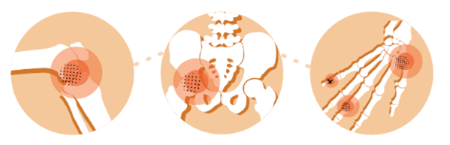
    3 pics of parts of the skeleton- knee, hip, hand- with pain radiating


    Osteoarthritis QS Placemat – summarizes content from the Osteoarthritis Quality Standard, focusing on care for adults with osteoarthritis of the knee, hip, or hand (i.e., thumb or fingers). French version.


    Acute low back pain and osteoarthritis represent two of the most common clinical conditions encountered on a daily basis in the primary care setting. We have received feedback from primary care providers that concise, evidence-based materials help to not only support dialogue between patients and providers, but also support clinical decision-making regarding patients presenting with acute low back pain and osteoarthritis.
     

    • Dr Colin Wilson, Primary Care Clinical Lead, Ontario Health

    Hear more from Colin here

    2 men seated facing each other, one with hand raised with pen and notepad in the other hand


    Anxiety Disorders Quality Standard (QS) Placemat – summarizes the Anxiety Disorders Quality Standard, highlighting the key elements of diagnosis, assessment, and treatment, as well as includes links to helpful resources and tools. French version.


    The placemats can also be uploaded and used within EMRs for easy access. Resources to support adding these tools into your EMR system will be added on Quorum soon, so please stay tuned for more information!

    In the context of the ongoing COVID-19 pandemic, we are observing an increasing unease among individuals in the communities and families. As health care providers, it is critical for us to appropriately diagnose anxiety disorders and differentiate them from other conditions that may arise in these uncertain times.

    • Dr. David Kaplan, Chief, Clinical Quality, Ontario Health

    Hear more from David here

    Access the quality standard and related resources at the links below:

    We would like to hear from you about how we can support you and if there are other topics you would find helpful for future QS placemats. Please email qualitystandards@ontariohealth.ca  

    Upcoming Events: Webinar
    As part of the release and dissemination of the quality standard, Ontario Health and Provincial Geriatrics Leadership Ontario will be co-hosting a webinar for health care providers about delirium, in alignment with World Delirium Awareness Day on March 17, 2021.

    Webinar | Delirium – A New Quality Standard for an Important Health Concern| Wednesday March 17, 12–1 p.m.  
    Provincial Geriatrics Leadership Ontario and Ontario Health co-host a webinar with clinical experts to share information and resources to support patients who are at risk for delirium or who are experiencing symptoms of delirium. The session will review delirium and its significance to COVID-19 infection, introduce key statements from the quality standard, and showcase related resources available to support people who are at risk for delirium or who are experiencing symptoms of delirium. Please register here to join the session.

    Quality Improvement Plans – Update from OH(Q)
    Last April, QIP submissions for 2020/21 were paused to allow organizations to focus on supporting their staff, health care providers, and communities during the COVID-19 pandemic. The QIP Navigator remained open so that organizations that had the capacity to continue working on their submissions were able to do so. We will be closing the 2020/21 cycle in Navigator on March 24, 2021.

    As we look ahead to the 2021/22 QIPs, we understand that organizations continue to be under unprecedented pressure related to the COVID-19 pandemic and that this will likely continue for the next several months. As such, we are making adjustments to the 2021/22 QIP to help ensure that organizations are able to focus their efforts on responding to urgent needs related to COVID-19. While quality improvement is of critical importance in our collective response to COVID-19, for now, the pause on the program will continue.

    We will monitor the situation and will share a revised approach in the coming months, ensuring that it is responsive to circumstances in the health system and that you have sufficient time to prepare. The approach to 2021/22 will be designed to provide organizations with flexibility to reflect where they are with their quality improvement efforts given the pandemic, local needs, pressures, and goals for the recovery period. We encourage organizations to continue with their local quality improvement initiatives and we will be in touch soon.  

    As always, please do not hesitate to contact us at QIP@OntarioHealth.ca if you have any questions.

    A Peoples’ Panel on how race and ethnicity data should be used for health data research in Ontario
    ICES is working together with the Tamarack Institute and Digital Justice Lab to lead a Peoples’ Panel on how race and ethnicity data should be used for health data research in Ontario. Through this Peoples’ Panel, ICES seeks to recognize the ways that science has perpetuated racism and understand the complexities in the use of race, ethnicity, and immigration data.

    The Peoples’ Panel will involve 30-60 diverse and representative individuals who will meet weekly for 5 weeks starting on March 17, 2021. ICES is seeking regular people—no experience in health, science or policy needed. If you live in Ontario and have an interest in how race data is used, and especially if you identify as racialized individual, they invite you to express your interest in being part of the Peoples’ Panel. Participants will be compensated.

    Learn more and apply

    Upcoming Webinars:
    OHT Improvement Measures from Health Administrative Data: Where are OHTs Starting From?
    March 23, 2021 (12:00 – 1:30 pm EST)
    Click here for more information and to register.

    Supporting Older Persons At Home – Learning And Collaboration During The COVID-19 Pandemic And Beyond
    March 25, 2021 (12-1 pm EST)
    COVID-19 highlighted numerous barriers and challenges to providing integrated care for older persons living in the community. Join Provincial Geriatrics Leadership Ontario in a discussion on how to better support older persons in the community using lessons learned during the first year of the COVID-19 pandemic. We will discuss needs in primary care – focusing on the role of interprofessional teams – and offer some resources and tools to better support team-based care for older persons. We will also discuss how specialized geriatric service programs in your area can provide support to primary care clinicians. Click here to learn more and register.

    Interested in sharing your teams’ initiatives in a future webinar? Email Sandeep Gill – Sandeep.gill@afhto.ca to learn more about the AFHTO KTE Webinar Schedule!

    In Case You Missed It: Check out eBulletin #104 or other back issues here!
    Questions? Comments? Contact us at improve@afhto.ca.

  • Guelph FHT to operate 2 new vaccination clinics opening in Guelph

    Guelph Today article published March 11, 2021

    By Kenneth Armstrong, Village Media

    A pair of new large vaccination clinics are set to join the Guelph landscape within the next week, one on the University of Guelph campus and the other at SkyJack  in the city’s north end.

    The clinic at University Centre at U of G will be open to the public and operated by the Guelph Family Health Team, said its executive director Ross Kirkconnell by phone on Wednesday.

    That clinic will begin to see about 300 people per day starting on Monday, said Kirkconnell, but once vaccine supply ramps up could expand to see many more.

    “We are looking at this as a large site with capacity to do a lot of Guelph residents there,” said Kirkconnell. “We are building it so that it can support up to two-thousand people a day and evenings and weekends will definitely be where we go when we have enough vaccine.”

    People seeking vaccines will still need to preregister with Wellington-Dufferin-Guelph Public Health via its web page.

    Doctors, nurses and other members of the Guelph Family Health Team will administer the vaccines, while the U of G is providing the location and some behind-the-scenes logistical help.

    “They (U of G) are bringing in student volunteers and other helpers around parking and way finding and all of that,” said Kirkconnell. “They have great facilities — we all know that. So really, it’s been us organizing the clinical side of it and the university doing the logistics of the space and working together all along.”

    Kirkconnell said members of the Guelph Family Health Team have been eager to get as many vaccines in arms as possible.

    “For our family doctors, they have busy practices but they know this is important. This is a short-term, everybody doing their part. It’s really heartening to see how people have signed up and are stepping up to do this,” said Kirkconnell. 

    Starting Monday, when someone gets a notification that it is their turn to receive a vaccination they will be given a choice as to which site to go, said Kirkconnell. 

    On Thursday, Linamar Corporation and Skyjack are launching a Community Vaccination Clinic at 201 Woodlawn Rd. W. that will also be used by the general public.

    “I am just so proud of our Vaccination Clinic Team, made up of dedicated people from inside and outside of our company, for the work they have done to launch the clinic in just a few short weeks,” said Linamar CEO Linda Hasenfratz in a press release.

    “We could not have achieved that without close collaboration with the Wellington-Dufferin-Guelph Public Health Unit and a strong unified team. We have created a fantastic partnership here in WDG that is a great example for other communities to follow. Vaccinating our entire population is the single most important factor toward getting back to a normal life and we are proud to play a role in that in our community.”

    When the U of G clinic opens on Monday, a total of five active clinics will be servicing Wellington-Dufferin-Guelph. 

    Vaccinating 75 per cent of the people in the region by August will require an all-hands-on-deck approach, said Dr. Dr. Nicola Mercer, medical officer of health and CEO of WDG Public Health in a press release.

    “Linamar’s participation is a key component of this approach and demonstrates the importance of working with partners including our large private corporations to quickly and efficiently reach this goal,” said Mercer.

    Guelph Family Health Team has been involved in the fight against COVID-19 from the start, including partnering with Guelph General Hospital to open the local testing centre.

    “Ever since we all first heard it on the news, before it was called COVID, we were preparing. This is just part of the work that we need to do,” said Kirkconnell. “We are all just ready to see the end of this and we feel like we can make it happen more quickly if we all step up.”

    Read the full article here

  • COVID-19 Vaccine Roll-out & Hesitancy in Indigenous Communities

    Vaccine Distribution Update

    Shared by Lambton Public Health

    Shared May 2021

    See this video of Kyle Stonefish, Community Health Supervisor for Walpole Island First Nation, who explains how COVID-19 has affected Indigenous communities in southwestern Ontario, and why everyone should seriously consider getting vaccinated. It also speaks to the need to continuing to engage in COVID-safe behavior after one’s vaccination. Viewers are welcome to share as you please.


    Shared by Akausivik Inuit FHT

    Revised March 10, 2021

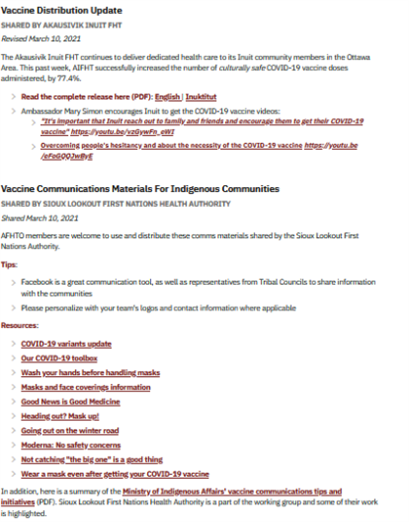
    The Akausivik Inuit FHT continues to deliver dedicated health care to its Inuit community members in the Ottawa Area. This past week, AIFHT successfully increased the number of culturally safe COVID-19 vaccine doses administered, by 77.4%. 


    Vaccine Communications materials for Indigenous Communities

    Shared by Sioux Lookout First Nations Health Authority

    Shared March 10, 2021

    AFHTO members are welcome to use and distribute these comms materials shared by the Sioux Lookout First Nations Authority.

    Tips

    • Facebook is a great communication tool, as well as representatives from Tribal Councils to share information with the communities
    • Please personalize with your team’s logos and contact information where applicable

    Resources:

    In addition, here is a summary of the Ministry of Indigenous Affairs’ vaccine communications tips and initiatives (PDF). Sioux Lookout First Nations Health Authority is a part of the working group and some of their work is highlighted.

    Return to: COVID-19 Vaccination Information