Dear Executive Directors and Administrative Leads,
AFHTO is grateful for your hard work and creativity in utilizing the one-time MHA funding provided in January.
Now is the time for you to showcase the breadth and impact of your work and make the case for this to become baseline funding for wellness and MHA care.
Due by end of day Friday, April 28, this Final Evaluation is mandatory for all teams. The evaluation has been designed as a 20-30 min rapid-selection survey to be mindful of your time. Please only complete one response per organization.
Please click here to complete the survey: https://www.surveymonkey.com/r/W23CDVV
As you may be aware, IPHCC (in collaboration with Alliance for Healthier Communities, AFHTO and NPLCA) is leading the development of this funding evaluation report to the Ministry of Health. They are supported in this work by Dr. Javed Alloo, Colliers Project Leaders, and Community Storytelling. If you have any questions about this evaluation, please contact Angela.Picot@colliersprojectleaders.com.
Thank you again for all your hard work. Your response to this evaluation will support efforts to make this funding more sustainable.
Author: admin
-
Bruyère Academic FHT pilot project cuts opioid use among patients with chronic pain
Ottawa Citizen Published Apr 08, 2023
By Andrew Duffy
An Ottawa pilot project has significantly reduced opioid use among patients with chronic pain by treating it with the kind of comprehensive program used to treat other chronic diseases.
As part of the pilot project introduced at the Bruyère Academic Family Health Team, a staff nurse met with patients to discuss how lifestyle changes — improvements to exercise, diet, drinking, smoking and sleep habits — could help them manage their own pain and reduce their reliance on opioids.
Personal histories were reviewed, including traumatic childhood events, and those with unresolved issues were referred to social workers or psychologists.
Patients were also encouraged to plan specific, measurable steps before their next visits with the nurse.
Results of the two-year pilot study, recently published in the Canadian Family Physician journal, showed that 21.6 per cent of patients reported a reduction in their pain levels. Nearly half (46.9 per cent) said their pain interfered less with daily activities.
By the end of the study, 42.9 per cent of patients who used opioids had reduced their dosages. One participant completely eliminated opioid use.
“We basically found that their opioid ingestion went down, their pain scores went down, and the pain was interfering less in their lives than before,” said Dr. Hillel Finestone, the study’s lead investigator.
Finestone, a specialist in physical medicine and rehabilitation at Bruyère, said the study held important implications for the estimated 7.6 million Canadians living with chronic pain and the family physicians most often tasked with treating them.
“Chronic pain interferes with so many facets of daily living. It can often lead to depression, anxiety and addiction,” Finestone said.
-
Guide for Interprofessional Primary Care Teams – Roles, Responsibilities, and Scopes of practice
Dear Members,
AFHTO has released updated guidance regarding roles, responsibilities, and scopes of practices within the Interprofessional Primary Health Care Team. The guidance document is available on AFHTO’s website. This document has been validated by relevant associations and stakeholders to ensure it captures critical and updated information – we thank our colleagues and stakeholders for their efforts and collaboration with this work.
Though extensive, this document does not serve as an exhaustive review of health care practitioners and their potential roles in a primary care team or a replacement of the current roles and responsibilities you may have identified within your IHP team. Rather, it serves as a guide to provide basic information to aid in the design, coordination, and scope of work of an Interprofessional Primary Health Care Team.Next Steps:
Collaboratively with our partners, we will hold a webinar series which will focus on each scope of practice. The purpose of this is to bring colleagues together and have a deep dive conversation around challenges, success factors, and changing roles using the guidance document as a starting point. Plans are underway to begin this work in Summer 2023. This discussion will also be included as a session at AFHTO’s conference this Fall.
Going forward, the guidance document will be updated as required to be inclusive of the full scope of practice within the interprofessional health team and to reflect the changing roles and responsibilities. The webinar series and conference session will inform the next update.If you have any questions, please feel free to contact us.
-
Bits & Pieces: Ontario Hepatitis C Elimination Roadmap and more
Your Weekly News & Updates
In This Issue - Ontario charting the path to eliminate hepatitis C by 2030
- Member stories
- New digital tools with implementation support- heart failure; anxiety disorders and depression
- Help advise which health care services and medical devices should be publicly funded
- Refreshed Indigenous relationship and cultural awareness courses
- Upcoming events including How can peer counsellors extend interprofessional teams, and more
Ontario charting the path to eliminate hepatitis C by 2030
The Ontario Hepatitis C Elimination Roadmap is guiding policy and practice action to end hepatitis C as a public health threat by 2030. This is a collaborative, multi-sector initiative led by hepatitis C experts and with contributions from government, clinicians, community and more. AFHTO has been one of the partners in its development.
Expanding the number of primary care providers who can deliver hepatitis C care is essential to reach elimination. Hepatitis C care is easier than ever, however is still primarily delivered by specialists. As trusted, familiar providers, you can expand access to care, particularly among priority populations.
Hepatitis C is among the most burdensome infectious diseases in Ontario. However, an effective cure, widespread testing and proven prevention strategies mean elimination is within reach. Visit on.endhepc.ca find out more.
Member stories
Cottage Country FHT – Gravenhurst council endorses expansion plans
Grandview Medical Centre & Two Rivers FHTs – Pilot program underway for mental health and addictions treatment
Norfolk FHT – Team moving to enhance services
New digital tools with implementation support- heart failure; anxiety disorders and depression
Evidence2Practice Ontario (E2P) makes it easier for primary care clinicians to access up-to-date, evidence-based information at point-of-care. Working with topic experts across Ontario, E2P is developing a suite of user-friendly digital tools that seamlessly integrate quality standards and best practices into EMRs.
E2P is currently focused on three common conditions in primary care settings: heart failure (available now in TELUS PS Suite EMR); anxiety disorders and depression in adults (available in late April in OSCAR Pro and Accuro QHR EMRs); and pre-diabetes and type 2 diabetes (coming this summer). They also provide complimentary MainPro+ accredited change management and academic detailing sessions (1-on-1 discussions with a clinical pharmacist). Clinicians can sign up via the E2P website.
E2P brings together multi-disciplinary, cross-sector expertise under the joint leadership of the Centre for Effective Practice, eHealth Centre of Excellence and North York General Hospital. It’s funded by the Ministry of Health as part of Ontario’s Digital First for Health Strategy, with support from Ontario Health.
Help advise which health care services and medical devices should be publicly funded
Ontario Health is seeking expressions of interest for the Ontario Health Technology Advisory Committee (OHTAC) and the Ontario Genetics Advisory Committee (OGAC), a standing sub-committee of OHTAC. This group of experts helps make evidence-based funding recommendations to the Ministry of Health regarding which health care services and medical devices should be publicly funded. Deadline April 19, 2023.
Refreshed Indigenous relationship and cultural awareness courses
Providing care that acknowledges, respects, and incorporates cultural and language considerations is an essential part of person-centred care. Ontario Health’s Indigenous Relationship and Cultural Awareness courses have undergone a major refresh and now contain current content with a more interactive look and feel.
These courses have been designed to summarize 500 years of history into bite-sized chunks of information, providing you with knowledge about First Nations, Inuit, Métis, and urban Indigenous peoples, including their governance structures, communities, and histories. All courses are free self-paced learning modules publicly available to all.
Certified by the College of Family Physicians of Canada, you can register today and earn up to 19.5 Mainpro+ credits.
Surgical Site Infections Quality Standard Webinar, Apr. 13, 2023
This session will introduce Ontario Health’s recently released Surgical Site Infections quality standard and describe how it can drive quality improvement and improve care for Ontarians across the health system. Register here.
QI Innovations: Better Data, Better Decisions, Better Outcomes, Apr. 18, 2023
This year’s free QI Innovations conference is for mental health and addiction providers and system planners who are interested in data driven decision making and quality improvement. Register here.
ONCA Compliance Webinar, Apr. 20, 2023
Hosted by Mills & Mills LLP, this free webinar will address steps organizations can take and what to be mindful of as we approach the Oct 2024 deadline. Register here.
Autistic people and the COVID-19 pandemic – what have we learned so far? Apr. 27, 2023
Hosted by CAMH. Register here.
How can peer counsellors extend interprofessional teams and enhance care? Apr. 28, 2023
Part of the DFCM New Horizons Speaker Series, join a virtual fireside chat on incorporating peer counsellors into interprofessional care teams to enhance care. Register here.
Eating Disorders Quality Standard Webinar, May 5, 2023
This session will introduce Ontario Health’s recently released Eating Disorders quality standard and describe how it can drive quality improvement and improve care for Ontarians across the health system. Register here. -
Grandview Medical Centre & Two Rivers FHTs partner with OHT for Community Mental Health and Addictions Clinic
CambridgeToday Published an article Apr 7, 2023
By CambridgeToday Staff
For the past three weeks, the Cambridge North Dumfries Ontario Health Team (CND OHT) has been piloting an eight-week Community Mental Health and Addictions Clinic (CMAC) in Cambridge with the help of several community partners.
The CMAC, located on Wing C, Level 3 of Cambridge Memorial Hospital, is intended to improve quick access to mental health and addictions treatment, improve the patient experience in navigating treatment and alleviate system pressures.
“It can be very difficult for people who need help with mental health or addictions in Cambridge to get help,” said Dr. Craig Albrecht, lead CMAC physician in a press release.
“Long wait lists and fragmented services are familiar problems for patients, and for health providers trying to help. The hope is that a clinic like this will provide faster and more concrete connections to existing people and services, especially when people have urgent concerns and are sitting on waiting lists. The approach of our local OHT is a huge opportunity to help our system work better together for everyone.
Jessica Hill, a CMAC peer worker, said issues with mental health and addiction remain highly stigmatized in the community.
“That is why it is so important for safe spaces like this to be available for individuals dealing with these specialized needs. I look forward to welcoming individuals from within the community into a non-judgmental space where they can be provided the care they need from a multidisciplinary team of professionals,” she said in the release.
The CMAC is being coordinated by several CND OHT members and staffed by community partners, including:
- Langs
- Waterloo Region Nurse Practitioner-Led Clinic
- Canadian Mental Health Association – Waterloo Wellington
- Two Rivers Family Health Team
- Porchlight Counselling and Addictions Services
- Grandview Medical Centre Family Health Team
- House of Friendship
- Region of Waterloo Paramedic Services
- Region of Waterloo Public Health
The staff team includes a prescriber, counsellors, peer workers, outreach workers and a CMHA service coordinator.
The goal of the CMAC is to address immediate needs and ensure a comprehensive follow-up plan is put in place for each client. Services offered at the clinic include clinical evaluation, counselling services, follow-up planning and service coordination.
To reduce barriers and increase accessibility to the clinic, no appointment is necessary, patients of all ages are accepted at the clinic, and health card is not required, nor is a referral from a primary care provider.
To date, the clinic has seen over 40 individuals, ranging in age from 7 to 91 years.
In addition to these initial visits, over 64 follow-ups have been completed, resulting in over 109 patient encounters in just three weeks. All clients surveyed indicated that they were very satisfied with the care received at the CMAC.
On Tuesday, Region of Waterloo Paramedic Services began a pilot to bring patients with appropriate mental health and addictions conditions to the CMAC.
This change is being made in collaboration with the Cambridge Memorial Hospital Emergency Department and will allow paramedics to divert mental health and addictions calls.
The CND OHT and Region of Waterloo Paramedic Services are working in partnership to evaluate the impact of this pilot.
Early evaluation and feedback from the community has suggested that the CMAC is already having a significant impact.
The CND OHT recognizes the value and importance of the CMAC and is in the process of submitting funding proposals to secure funding so that this clinic can become a permanent resource for the Cambridge and North Dumfries communities.
A clinic patient describes the benefit of quick access to support services.
“I have been struggling with severe depression and anxiety for over 2 years. I’ve tried multiple different programs, but everything is a 10 month wait. We need something accessible that will be easier. I’m in crisis mode and it is a 9+ month wait anywhere else. CMAC has been able to help me this week. We need more programs like CMAC. Where they have accessibility to programs and help me now.”
Further information about the clinic can be found at www.cndoht.com.
The Cambridge North Dumfries Ontario Health Team (CND OHT) is a collaborative of over forty health and social service provider agencies from Cambridge, North Dumfries and the Waterloo Region.
The CND OHT envisions a community where people access seamless and integrated services to ensure the health and wellbeing of our diverse populations.
The Ontario government introduced Ontario Health Teams to support a connected health care system centred around patients, families and caregivers. Ontario Health Teams strengthen local services, making it easier for patients to navigate the system and transition between providers.
For more information about the CND OHT, visit cndoht.com.
-
Submission re Bill 60, Your Health Act, 2023
Submission to the Standing Committee on Social Policy
Submitted in partnership with the Association of Family Physicians (AFHTO), Alliance for Healthier Communities, Indigenous Primary Health Care Council (IPHCC) and Nurse Practitioner-Led Clinic Association (NPLCA)
Re: Bill 60, Your Health Act, 2023
March 27, 2023
For many Ontarians, primary health care is the entryway into the healthcare system. It takes a team of health professionals who can provide convenient and high-quality health and social services to deliver the best care possible for patients.
As partners, we are aligned with the government’s goal to increase access to services for Ontarians. Bill 60, Your Health Act, 2023 is part of this initiative. We are committed to working with the government on health policy that will uphold the principles necessary to provide Ontarians with the care they need. This submission highlights further clarification and recommendations regarding Bill 60 to ensure an equitable and sustainable approach to the delivery of care provided under this act.
Response to Your Health Act, 2023
We are aligned with the intention of the proposed Your Health Act, 2023 to make care more accessible, connected and convenient for Ontarians. However, to ensure we are continuing to build a healthcare system that is equitable and accessible, we are asking for further clarification on the following areas in Schedules 1 and 2 of the Your Health Act, 2023.
Clarification 1: Definition of “integrated community health services centre” We are seeking further clarification to the definition of “integrated community health services centre” means, subject to any exemptions set out in the regulations, (b) a health facility, including a community surgical and diagnostic centre, or a class of health facilities, that is prescribed; (“centre de services de santé communautaire intégré”)” Specifically, we are seeking further explanation about what “a class of health facilities, that is prescribed” means. Furthermore, we would like confirmation that integrated community health service centres will focus on surgical and diagnostic centres to relieve the backlog of designated procedures aligned to the government’s commitments and plans and not extend into other areas of health care provision such as primary care. Further regulations and information should be considered to provide specific restrictions to what integrated community health service centres looks like to avoid potential risk to the existing and future public systems.
Clarification 2: Regulated Professions Amendments and liability concerns We are seeking further clarification on the “as of right” rule which would allow healthcare workers licensed in other provinces work in Ontario without registering with the Ontario colleges. We are concerned regarding the liability of practice of these healthcare workers who are awaiting registration with an Ontario regulatory college but are providing care to patients under this act. We support all efforts to improve the current health human resources shortages in Ontario. We are seeking further clarifications of who would be responsible and liable for the credentialing of these out-of-province workers should an adverse event or issue arise.
Clarification 3: Protecting public health human resources We appreciate the government including the requirement of “(e) a detailed staffing model for the proposed integrated community health services centre and evidence of the sustainability of this model and the public commitment to protect the HHR in the public system”. We are seeking clarification on how the government plans to enforce this requirement. Further information on the implementation of this requirement will be significant to support the retention of public health human resources in the healthcare workforce who work in primary care.
Clarification 4: Ensuring integration and connectivity with the public health care system Access to proper follow up and post-op care can have a major impact on the outcomes for patients. We recognize the inclusion of “(g) the potential impact on the co-ordination of health services, based on consultations with health system partners;”. We would appreciate further clarity on the government’s intentions to require these clinics delivering health services to integrate with health system partners. The government will need to consider the impacts on the public system and provide requirements for integration and reporting procedures for a truly co-ordinated approach to care.
Clarification 5: Equitable access to care for Ontarians We are pleased to see that the principles of equity are built into amendments of the act; “h) a description of how the proposed integrated community health services centre will address the health equity needs of diverse, vulnerable, priority and underserviced populations, taking into account linguistic needs, in the region specified in the call for applications;”
As encouraged through our continued work with the government, we will need to make it clear that no one is left behind due to inequitable barriers to accessing health care. The government must ensure that the expanded access to publicly funded health care is patient-centred and that access to care will consider the needs of diverse, vulnerable and underserviced populations. We request a specific focus on ensuring Indigenous communities have access to culturally safe care, Francophones can access services in French, and all marginalized populations are also provided with convenient, connected and coordinated health care services at no cost to patients. As we continue to work with the government towards implementing the amendments outlined in the Your Health Act, 2023, we must work together to ensure that the Government of Ontario, in partnership with leaders in primary health care, continues to support those who work in primary care teams to improve health outcomes for Ontarians. Thank you for your consideration.
For Information, please contact:
Bryn Hamilton, Interim CEO, AFHTO
The Association of Family Health Teams of Ontario (AFHTO) is a not-for-profit association that provides leadership to promote high-quality, comprehensive, well-integrated interprofessional primary care for the benefit of all Ontarians. We are an advocate and resource for family health teams, nurse practitioner-led clinics, and other interprofessional models.
The Alliance for Healthier Communities (Alliance) is the voice of a vibrant network of over 100 community-governed comprehensive primary health care organizations across Ontario, including Community Health Centres, Indigenous Primary Healthcare Organizations – Community Family Health Teams, and Nurse Practitioner-Led Clinics. Alliance members share commitments to advancing health equity through interprofessional comprehensive primary health care.
The Nurse Practitioner-Led Clinic Association (NPLCA) is the voice of nurse practitioner-led clinics (NPLCs) across Ontario. Nurse practitioners are the lead primary care providers of these interprofessional teams that improve the quality of care through enhanced health promotion, disease prevention, primary mental health care, and chronic disease management, while supporting care coordination and navigation of the healthcare system.
The Indigenous Primary Health Care Council (IPHCC) is an Indigenous- governed, culturebased, and Indigenous-informed organization. Its key mandate is to support the advancement and evolution of Indigenous primary health care services provision and planning throughout Ontario. Membership includes Indigenous Primary Health Care Organizations across the province.
-

Bits & Pieces: systems innovation grant and more
Your Weekly News & Updates
In This Issue - Youth Opportunities Fund- applications open
- Welcome to Michael Scarpitti
- OurCare & Healthy Debate: Give me a primary-care provider who understands me
- Connect with your peers using AFHTO’s IHP Directory
- Relevant news and reports- prenatal care for refugees
- Want to be a part of PSHSA’s HC Advisory Council?
- RNs needed as research volunteers
- Upcoming events including Surgical Site Infections Quality Standard Webinar, and more
Youth Opportunities Fund- applications open
AFHTO members and/or partners may be eligible to apply for the Systems Innovation Stream of Ontario Trillium Foundation’s (OTF) Youth Opportunities Fund, a grant worth up to $250,000 per year for 2 to 5 years.
- The System Innovations Stream supports collaboratives that are strengthening the quality and responsiveness of systems so they work better for youth facing systemic barriers.
- Lead Organization Registration Deadline: June 2, 2023
- Grant Application Deadline: June 20, 2023
Information Sessions: April 6 and 19, 2023
Welcome to Michael Scarpitti
We’re happy to introduce Michael Scarpitti, our new Director, Strategic Communications and Government Relations.
Michael joins AFHTO with a strong background in health systems policy and strategy. Prior to joining AFHTO, he led health systems transformation work for the Canadian Mental Health Association, Ontario Division, supporting the integration of mental health and addictions agencies into Ontario Health Teams.
Michael has a strong interest in value-based health care and the role of primary care in the patient experience. As a consultant with Saskatchewan’s Ministry of Health, he provided strategic direction on connected care services and the implementation of the Patient’s Medical Home. In his spare time, he enjoys teaching pharmacoeconomics to students studying regulatory affairs at the post-graduate level. Michael has an M.Sc. from the Faculty of Health Sciences at McMaster University and an MPA from the School of Policy Studies at Queen’s University.
Welcome Michael to the team!
OurCare & Healthy Debate: Give me a primary-care provider who understands me
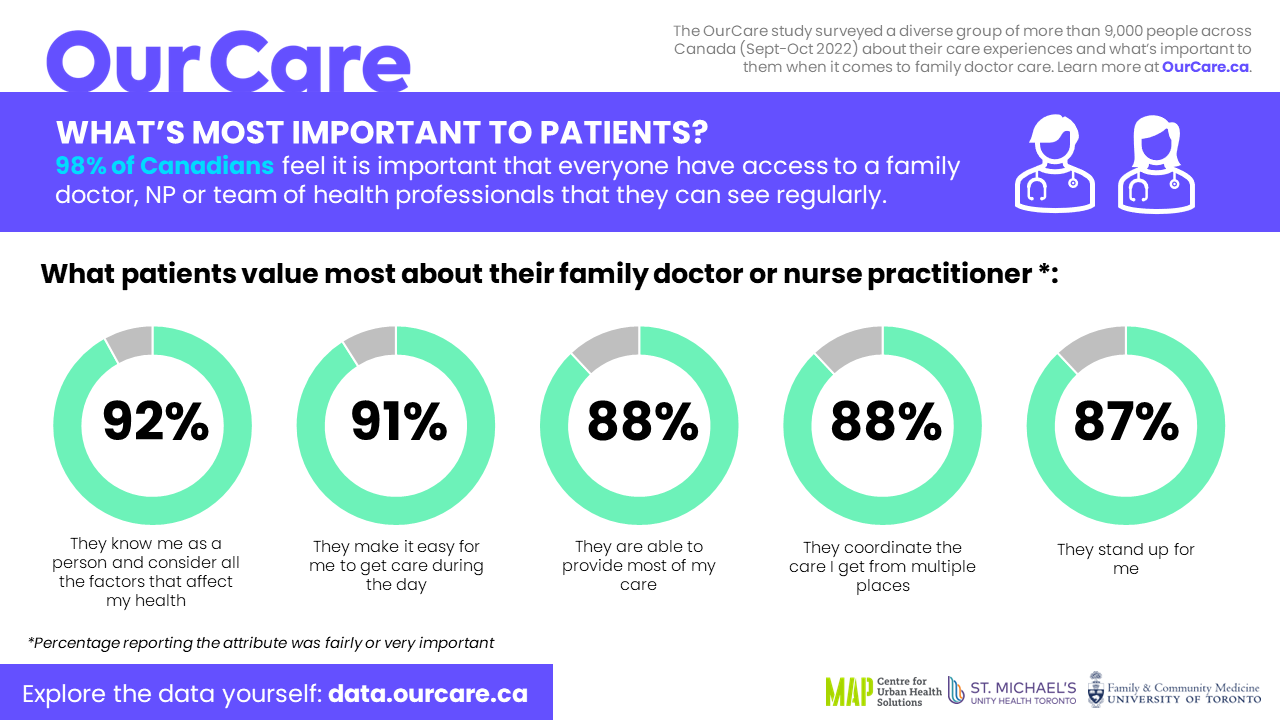
Find out what patients and caregivers value most in a primary-care provider and health-care system in the latest blog published for the special series by Healthy Debate and OurCare, Give me a primary-care provider who understands me.
And are you interested in how virtual care should be integrated into our system? Check out the second post, Virtual care must be integrated into public system, not driven by profit .
Connect with your peers using AFHTO’s IHP Directory
IHPs in AFHTO member teams are encouraged to sign up to AFHTO’s IHP Directory! This directory will help improve AFHTO’s communication to IHPs, and it will support IHP networking, information sharing, and collaboration.
After you sign up, you will be emailed a link to a spreadsheet with the names, professions, team names, and work emails of all IHPs who have signed up for open communication. You may sort by profession to see the names of those in the same discipline as you.
AFHTO will be checking the directory and emailing links to new registrants every 1-2 weeks. We look forward to improved communication from AFHTO to IHPs, and across IHPs in AFHTO-member teams!
Relevant news and reports- prenatal care for refugees
- Receipt of adequate prenatal care for privately sponsored versus government-assisted refugees in Ontario, Canada: a population-based cohort study – CMAJ, April 03, 2023
Want to be a part of PSHSA’s HC Advisory Council?
Public Services Health & Safety Association would like an AFHTO member to sit on its health care advisory council. You can find terms of reference here. If you’re interested, please contact info@afhto.ca.
RNs needed as research volunteers
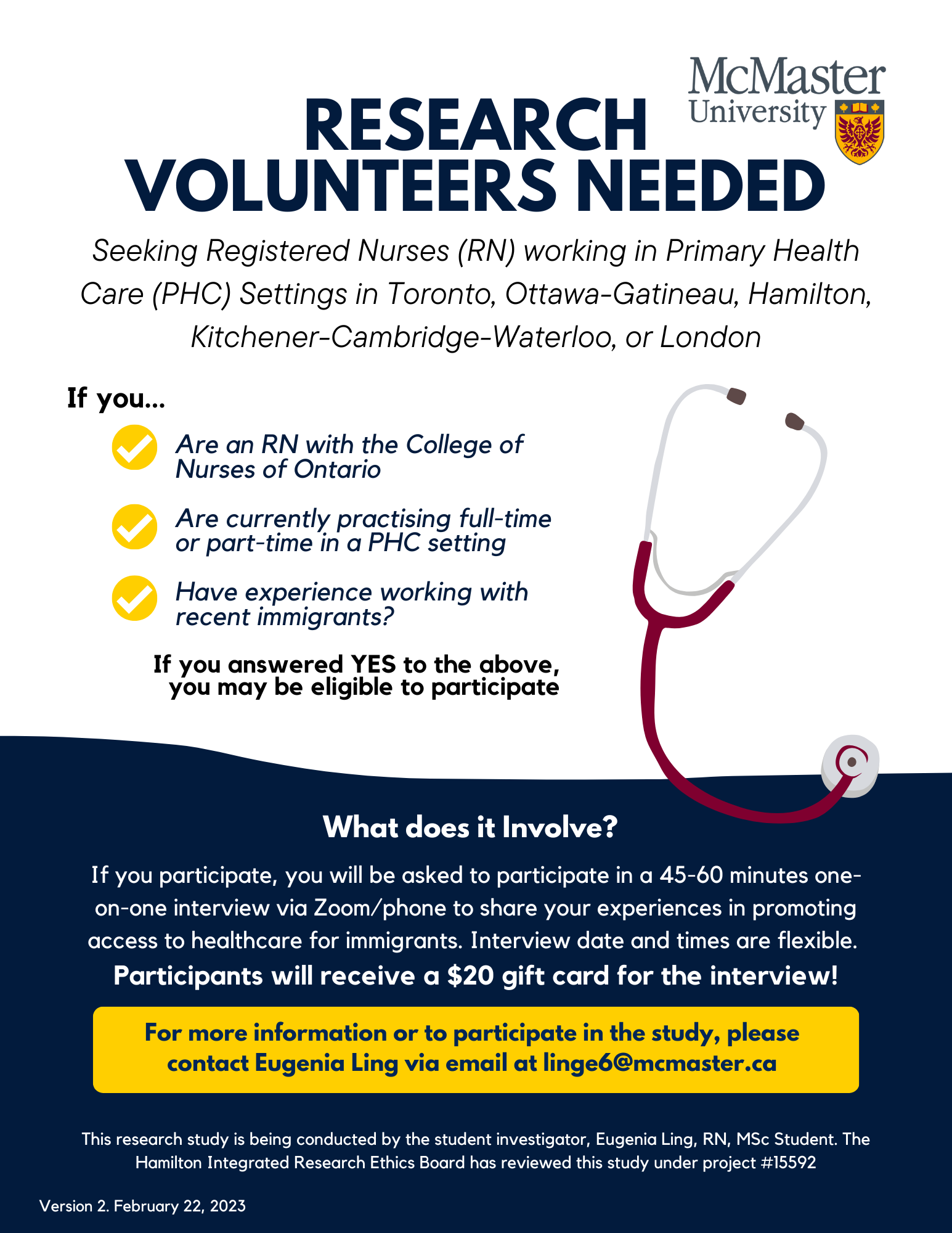
Researchers from the School of Nursing at McMaster University are looking for volunteers who are Registered Nurses working in primary health care settings within Toronto, Ottawa-Gatineau, Hamilton, Kitchener-Cambridge-Waterloo, or London. The purpose of the study is to understand how Registered Nurses working in primary health care settings facilitate access to health care for recent immigrants. Potential participants will be screened during an initial telephone call to determine if they are eligible for the study.
The study involves a one-on-one interview that will take approximately 45-60 minutes and will involve one session. The interview will take place using Zoom (or by phone) and interview date and times are flexible. All participants will receive a $20 gift card following completion of the interview.
For more information about this study, or to volunteer for this study, please contact Eugenia Ling via email: Linge6@mcmaster.ca.
Surgical Site Infections Quality Standard Webinar, Apr. 13, 2023
This session will introduce Ontario Health’s recently released Surgical Site Infections quality standard and describe how it can drive quality improvement and improve care for Ontarians across the health system. Register here.
QI Innovations: Better Data, Better Decisions, Better Outcomes, Apr. 18, 2023
This year’s free QI Innovations conference is for mental health and addiction providers and system planners who are interested in data driven decision making and quality improvement. Register here.
Autistic people and the COVID-19 pandemic – what have we learned so far? Apr. 27, 2023
Hosted by CAMH. Register here.
How can peer counsellors extend interprofessional teams and enhance care? Apr. 28, 2023
Part of the DFCM New Horizons Speaker Series, join a virtual fireside chat on incorporating peer counsellors into interprofessional care teams to enhance care. Register here. -

Bits & Pieces: 2023 Ontario budget and more
Your Weekly News & Updates
In This Issue - Overview of the 2023 Ontario government budget
- Farewell to Abisola Otepola
- PCC submission re Bill 60, Your Health Act, 2023
- Reminder- CPS Full Access free trial ends April 1
- Chronic noncancer pain management: Integration of a nurse-led program in primary care
- Upcoming events including DFCM New Horizons Speaker Series with Dr. Kwame McKenzie, and more
Overview of the 2023 Ontario government budget
Last Thursday the government released their 2023 Ontario Budget, Building a Strong Ontario. This budget was largely a reinforcement of “Your Health: A Plan for Connected and Convenient Care”. Introduced in February 2023, it focused on three pillars: The Right Care in the Right Place, Faster Access to Care, and Hiring More Health Care Workers.
Most relevant, the provincial budget recommitted to connect Ontarians to additional primary care teams by investing $60 million over two years. We have confirmed this is the same $30 million that was announced in February, carried over 2 years resulting in a total investment of $60 million dollars. While this is a step in the right direction, we are disappointed there was not more of a commitment over the longer term.
The health human resources crisis that currently exists was acknowledged through additional investments in nursing, medical school education and home care, but none were made for primary care nor any mention of dropping the appeal to retain Bill 124. However, much needed support in mental health and addictions was welcomed. Read full details on our site.
Farewell to Abisola Otepola
It is with genuinely mixed feelings we announce that Abisola Otepola will be leaving AFHTO for new opportunities.
Abisola has been with AFHTO since last May as Director of Policy and Stakeholder Relations. Many have you had the pleasure of working with her as she has led our efforts on the compensation review and IHP guidance document, details of which are to be released soon.
We’re going to miss Abisola but know she will bring so much to her future endeavours. Please join us in giving her our sincerest best wishes. Her last day with AFHTO will be April 14 – any questions related to her work can be directed to info@afhto.ca.
PCC submission re Bill 60, Your Health Act, 2023
On Mar. 27, members of the PCC including AFHTO presented our submission to the Standing Committee on Social Policy on Bill 60, Your Health Act, 2023. “We are committed to working with the government on health policy that will uphold the principles necessary to provide Ontarians with the care they need. This submission highlights further clarification and recommendations regarding Bill 60 to ensure an equitable and sustainable approach to the delivery of care provided under this act.” Read the submission here.
Reminder- CPS Full Access free trial ends April 1
On Feb. 23, we sent an email, “Introducing our new benefit- discount on CPS Full Access”, to all member EDs and Admin Leads. If you spend time clarifying prescriptions, use CPS Full Access, a Canadian-developed platform that features up-to-date Canadian information such as:
- Current drug shortages.
- Health Canada–approved product names, indications, dosing and patient information.
- Warnings, recalls and safety alerts.
- Evidence-based therapeutic content and algorithms.
- Drug tables with price ranges.
This is a reminder that the free trial expires April 1. After that, members can get a 40% discount. Login information for the trial is available on our site at the triad level only (i.e., accessible just to EDs/Admin Leads, lead clinicians and board members). This benefit is being offered on a trial basis for a year, at which time we will assess participation rates. If you have any questions, please feel free to email info@afhto.ca.
Chronic noncancer pain management: Integration of a nurse-led program in primary care
Problem addressed Chronic noncancer pain is often excessively managed with medications (most notably opioids) instead of nonpharmacologic options or multidisciplinary care—the gold standards.
Objective of program To offer an effective alternative to pharmacologic management of chronic noncancer pain in primary care.
Learn more about the successful integration of this nurse-led program at Bruyère Academic FHT.
DFCM New Horizons Speaker Series with Dr. Kwame McKenzie, Mar. 31, 2023
Join a conversation with Dr. Kwame McKenzie, CEO of Wellesley Institute and Professor of Psychiatry at U of T, on how family doctors and primary care providers can better link their work in education, research, and quality improvement to the social determinants of health, and how to partner with organizations that serve communities to be more socially accountable in their work. Learn more here.
Surgical Site Infections Quality Standard Webinar, Apr. 13, 2023
This session will introduce Ontario Health’s recently released Surgical Site Infections quality standard and describe how it can drive quality improvement and improve care for Ontarians across the health system. Register here.
QI Innovations: Better Data, Better Decisions, Better Outcomes, Apr. 18, 2023
This year’s free QI Innovations conference is for mental health and addiction providers and system planners who are interested in data driven decision making and quality improvement. Register here.
Autistic people and the COVID-19 pandemic – what have we learned so far? Apr. 27, 2023
Hosted by CAMH. Register here. -
Overview of the 2023 Ontario Government Budget
2023 Ontario Budget – Building a Strong Ontario
An overview of the Ontario government’s budgetMarch 24, 2023
Overview
Yesterday the government released their 2023 Ontario Budget, Building a Strong Ontario. This budget focuses on five pillars:- Building Ontario’s Economy for Today and Tomorrow
- Building Highways, Transit and Infrastructure Projects
- Working for Workers
- Keeping Your Costs Down
- Better Services for You
“With the budget’s significant focus on ways to combat the affordability crisis and tumultuous economic times, the government has made a strategic decision in this budget to shift the public dialogue from health care to those files.”- Enterprise Canada’s Health Care Analysis
This budget was largely a reinforcement of “Your Health: A Plan for Connected and Convenient Care”. Introduced in February 2023, it focused on three pillars: The Right Care in the Right Place, Faster Access to Care, and Hiring More Health Care Workers.
Most relevant, the provincial budget recommitted to connect Ontarians to additional primary care teams by investing $60 million over two years. We have confirmed this is the same $30 million that was announced in February, carried over 2 years resulting in a total investment of $60 million dollars. While this is a step in the right direction, we are disappointed there was not more of a commitment over the longer term.
The health human resources crisis that currently exists was acknowledged through additional investments in nursing, medical school education and home care, but none were made for primary care nor any mention of dropping the appeal to retain Bill 124. However, much needed support in mental health and addictions was welcomed.
For additional information, please read:
- Enterprise Canada’s Full Budget Analysis
- Enterprise Canada’s Health Care Analysis
- 2023 Ontario Budget, Building a Strong Ontario
- Highlights of the 2023 Budget, Building a Strong Ontario
Summary of Health Care Investments:
Team-Based Care:
- $60 million over two years to expand existing teams and create up to 18 primary care teams in communities with the greatest need ($30 million was previously announced for 2022-2023 and this commits this funding into 2023-2024).
HHR Recruitment and Education:
- The government is providing an additional $3.3 million over the next three years, beginning in 2023–24, to expand access to dual credit opportunities in health care‐related courses for an additional 1,400 secondary students.
- The province is expanding the Ontario Learn and Stay Grant to add more health care professionals in underserved and growing communities. Applications will open this spring for the 2023–24 academic year, targeting up to 2,500 postsecondary students who enrol in – nursing programs in Northern, Eastern and Southwestern Ontario; medical laboratory technologist/medical laboratory sciences programs in Northern and Southwestern Ontario; and paramedic programs in Northern Ontario.
- $200 million in 2023-2024 to extend supports to address immediate health care staffing shortages, as well as to grow the workforce, including investments in the Enhanced Extern Program and the Supervised Practice Experience Partnership Program
- $100.8 million over the next three years to expand and accelerate the rollout of undergraduate and postgraduate seats.
- $33 million over three years to add 100 undergraduate seats beginning in 2023, as well as 154 postgraduate medical training seats to prioritize Ontario residents trained at home and abroad beginning in 2024
- $51 million over three years to support the Dedicated Offload Nurses Program to support timely 911 responses by hiring health care workers focused exclusively on transferring ambulance patients to hospital care, allowing paramedics to respond to more calls.
Home Care and Seniors Supports
- $569 million in 2023-2024, including nearly $300 million to support contract rate increases to stabilize the workforce. (part of the government’s previous commitment to invest up to $1 billion over three years for home care.)
- $174 million over two years, starting in 2024-2025, to continue the Community Paramedicine for Long-Term Care Program to serve all eligible seniors across Ontario.
- The government is investing an additional $5 million annually for three years starting in 2022–23 to support 6,500 people with dementia to live independently in their homes and to be engaged in their community. (Previously announced in 2022 budget)
Hospital and Long-Term Care Capital Investments
- The government is making a multibillion-dollar investment in hospital infrastructure. This is included in a 10-year plan to invest more than $48 billion in hospital infrastructure, including over $32 billion for more than 50 hospital projects that would add 3,000 new beds. (Previously announced in 2022 budget)
- A four per cent increase in base operating funding for hospitals.
- $72 million in 2023-2024 to increase surgeries at community surgical and diagnostic centres. (This builds on $300 million as part of the surgical recovery strategy and $18 million for diagnostics and surgeries in existing facilities.)
- $5.5 million in 2023-2024 to build new Behavioural Specialized Units in long-term care homes, including approximately 70 new specialized beds, to expand care for individuals with complex needs.
- $1.2 million to the Ontario Personal Support Workers Association to promote the PSW profession in the long-term care sector to help with recruitment.
Access to MHA
- $425 million over three years, including a five per cent increase in the base funding of community-based mental health and addictions service providers. (Builds on an investment of $3.8 billion over 10 years included in the Roadmap to Wellness.)
- $202 million each year in the Homelessness Prevention Program and Indigenous Supportive Housing Program to help those experiencing or at risk of homelessness, struggling with mental health and substance use, those escaping intimate partner violence, community organizations that deliver housing services.
Other Health Care
- The government commits to expanding the scope of practice for pharmacists to cover additional minor ailments including mild to moderate acne, canker sores, diaper dermatitis, yeast infections, pinworms and threadworms, nausea and vomiting in pregnancy.
- The government is investing $3.1 million in 2023–24 for an expansion of the Ronald McDonald House Charities Ottawa House.
- To support children and youth with complex special needs, the government is investing $12 million over three years to fund 14 additional beds at Safehaven, a not‐for‐profit organization providing residential and respite care at community sites in the Greater Toronto Area.
This budget only goes a little further for primary care teams. Most critical will be our support to government as they roll out the investment in primary care to focus on those communities with higher rates of patients not attached to teams and/or those that have historically faced greater barriers to funding to meet population health needs.
We will be in close communication with Ministry officials, especially considering the context of the recent federal-provincial agreements and their implications for primary care. We will keep members apprised of ongoing developments and urge each of you to stay in touch with your local MPPs as local advocacy could be a game changer in influencing the development of this expansion. #ItTakesATeam